
Review · BARCELONA
Barcelona Markets Tour
Barcelona’s market culture makes more sense when you see it beside the city’s churches, old streets, and buried neighborhoods. This two-hour walking tour begins at La Boquería and ends at El Born, linking food stalls with the story of how Barcelona grew.
I like the small tastings, especially the Catalan olives and nougat, and I like that the tour is not limited to food. You also get the odd little story behind the caganer tradition, a look at Santa Maria del Mar, and a visit to a former market now preserved as an archaeological site.
The main drawback is time. Two hours moves quickly, and you may wish for another 30 minutes at La Boquería to shop and eat on your own. The route is easy, but market crowds and narrow old streets can make some stops feel brief.
Key points
- La Boquería sets the tone: Learn how Catalan foods are sold and enjoyed while tasting olives and nougat.
- Three districts in one walk: The route connects La Rambla, the Gothic Quarter, and El Born without needing public transport.
- Food and architecture share the stage: See Barcelona Cathedral, Santa Maria del Mar, and the colorful roof of Santa Caterina Market.
- A curious Catalan custom: Stop at a caganer shop to hear the story behind one of Catalonia’s strangest holiday figures.
- The past is visible in El Born: Walk through the remains of a medieval neighborhood and market beneath the former market hall.
- Optional food-and-wine finish: Upgrade to cured meats, premium cheeses, pa amb tomàquet, and wine with a sommelier in a private room.
Starting at La Boquería with a taste of Catalonia
Meet your guide outside Dunkin’ Donuts, where you will look for an ExperienceFirst sign. It is a practical meeting point near La Rambla, though you should arrive with a few minutes to spare because this part of Barcelona can be crowded and noisy.
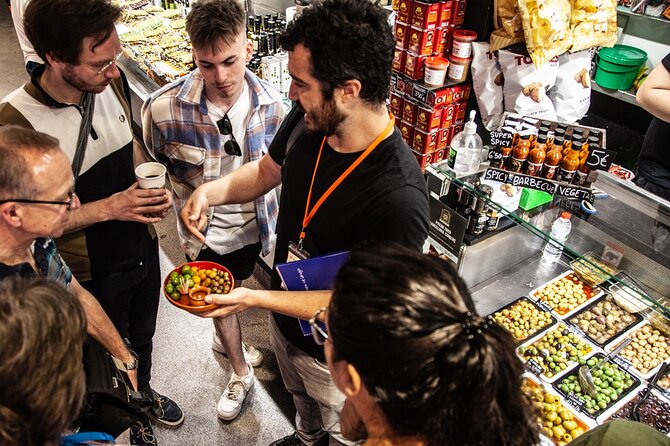
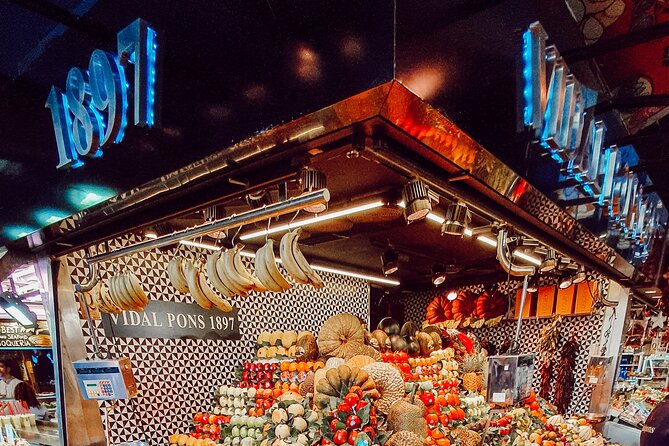
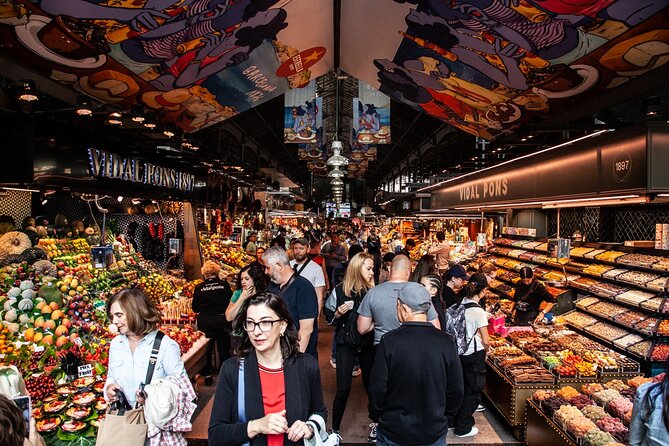
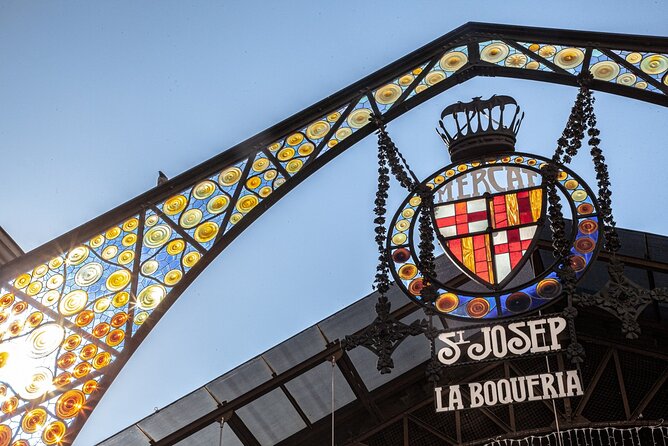
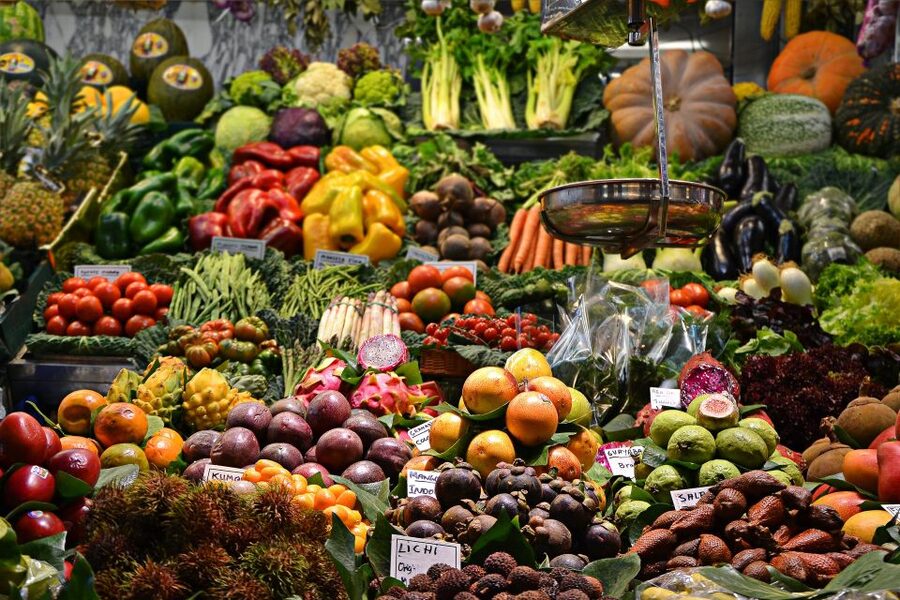
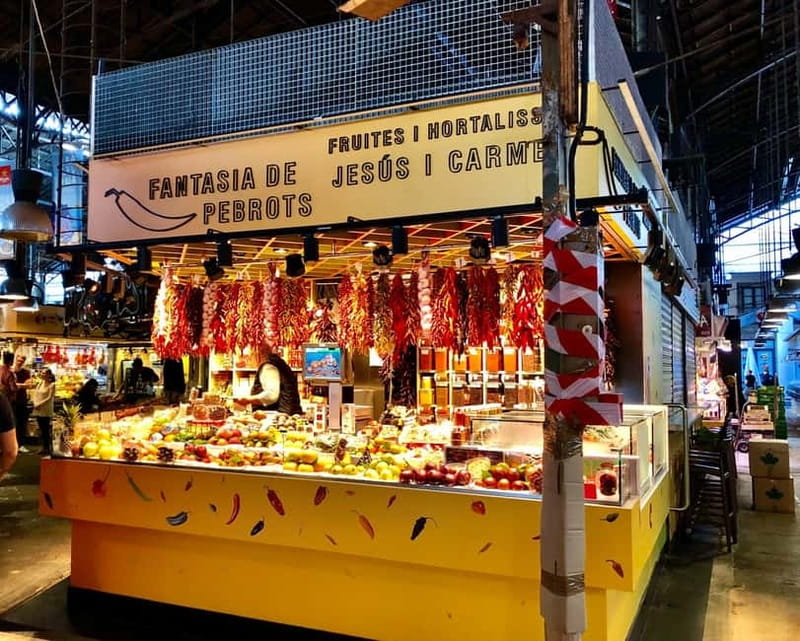
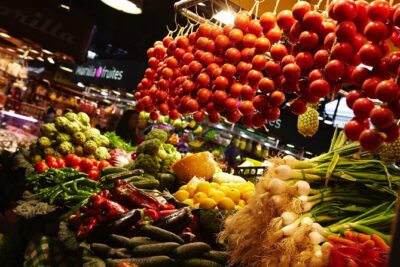
La Boquería is the natural first stop. It is more than a place to buy lunch. The market gives your guide a way to explain Catalan ingredients, shopping habits, and the difference between browsing a market for pleasure and using it as part of daily life.
You walk through its patterned aisles with the guide pointing out products and local customs. The exact stalls may vary, but you can expect a pair of small tastings, including Catalan olives and nougat, known locally as turrón.
I like this opening because it gives you something concrete to taste before the tour becomes more historical. You are not only looking at piles of produce or hanging cured meats. You are learning how certain foods fit into local traditions.
You also have time to buy food for yourself. That matters because the included samples are small. If you see fruit, ham, sweets, seafood, or another local item you want to try, your guide can suggest what is worth buying and where you may get better value.
The tradeoff is that La Boquería is popular. It can feel packed, especially around the main aisles, and two hours does not allow for a leisurely meal. If you want to sit down and eat your way through the market, plan a return visit after the tour.
A few more market tours around Barcelona worth a look
- Barcelona: Paella Cooking Experience & Boqueria Market Tour
★ 4.8 · 3,661 reviews - Barcelona Paella Cooking Class with Market Visit, Tapas & Sangria
★ 5.0 · 2,531 reviews - Barcelona: Paella Cooking Class with Market Visit and More
★ 4.9 · 711 reviews
La Rambla and the remains of an old market street
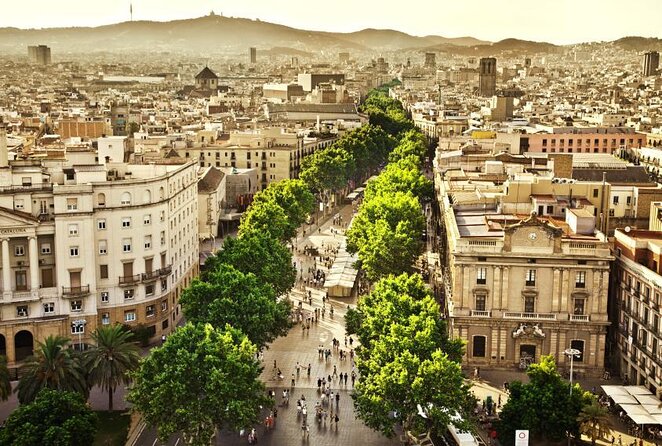
From La Boquería, the group moves onto La Rambla. Today, the promenade is lined with cafés, flower stalls, and constant foot traffic. The tour helps you picture its earlier role as a market area rather than treating it as just a path between attractions.
Your guide also points out the unusual Miró mosaic along the promenade. It is easy to walk past if you are focused on shops and people, so having someone identify it gives the stroll more purpose.
This section is useful for getting your bearings. La Rambla connects several parts of central Barcelona, and the tour uses it as a bridge from the food market to the older quarters. You will hear local stories and historical details while continuing on foot rather than stopping for a long lecture.
Several guides have been singled out for making this part especially engaging. Cal is known for his enthusiasm for La Rambla and the surrounding streets. Other guides, including Nicholas and Eoghan, have been praised for connecting everyday food and modern city life with Barcelona’s past.
That variety is worth keeping in mind. Your guide may shape the experience more than the fixed route does. The strongest guides on this tour appear to bring personal interest in the markets, offer restaurant suggestions, and adjust explanations to the group.
Santa Caterina Market and Barcelona’s changing neighborhoods
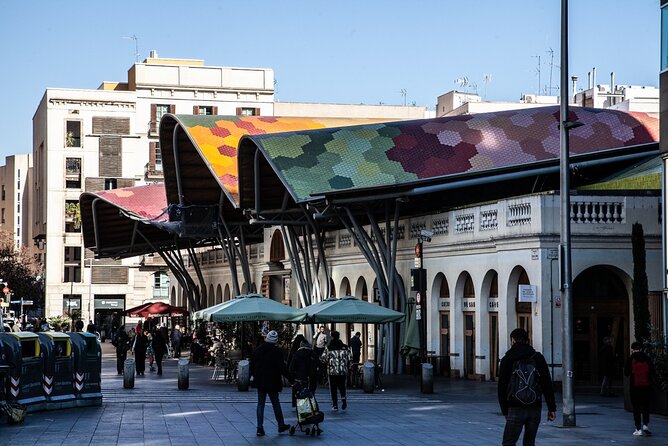
The next market is Santa Caterina, the city’s first covered market. Its most memorable feature is the undulating roof, made with bright colors that ripple across the building.
Inside and around the market, the focus shifts from the famous food hall at La Boquería to a place that gives you a different idea of local shopping. The guide explains the market’s place in the city and points out ruins connected with a medieval monastery.
I like having both markets in the same tour. La Boquería is the celebrated name, while Santa Caterina helps you see that Barcelona’s market tradition is broader than one busy attraction. The contrast also makes the tour more useful if you plan to shop for food during the rest of your stay.
The stop is still guided, not a long free-shopping period. You will have opportunities to buy something, but the main purpose is to understand the market and the surrounding neighborhood. If you want to compare prices or collect picnic supplies, ask your guide where to return later.
The route is wheelchair and stroller accessible, which is helpful in a city where old districts can sometimes be awkward to cross. Still, accessible does not mean completely free of crowds. A wheelchair or stroller should be manageable on this walk, but crowded market aisles may require patience.
The caganer shop and a very Catalan joke
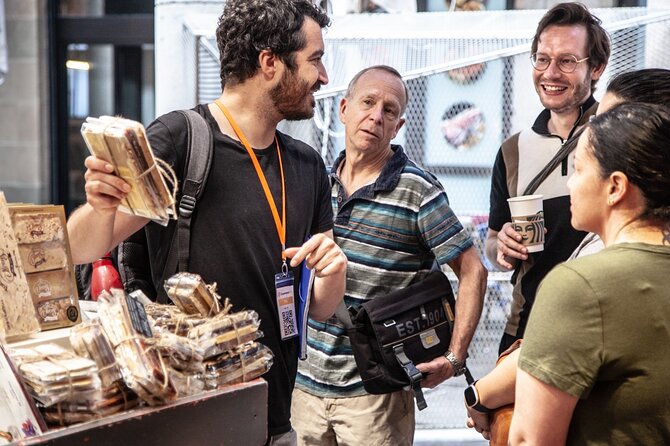
The caganer stop adds humor to the route. A caganer is a small figure associated with Catalan Christmas traditions, and the shop gives your guide a place to explain why this unusual character appears in local culture.
This is the sort of brief stop that can make a city feel more distinctive. You are not simply moving from one famous building to another. You are hearing about a custom that may otherwise seem baffling when you encounter it in a shop.
The subject is playful, but the explanation also gives you a glimpse of Catalan identity and humor. The guide can explain the tradition in context, and you may see how the figures have been adapted into many different forms.
Do not expect a long shopping session here. It is a cultural stop and a conversation starter. If your group includes children, this may be one of the easiest moments for them to remember.
Same stalls, a different way to shop and eat:
- Ultimate Barcelona Food Tour with visit to a Local Market
★ 5.0 · 507 reviews - Half-Day Spanish Cooking Class & Boqueria Market Tour
★ 4.9 · 383 reviews - Barcelona Markets Tour
★ 5.0 · 376 reviews - Interactive Paella & Market: Bottomless Wine & Rambla Views
★ 5.0 · 376 reviews
Santa Maria del Mar and the Born neighborhood
The walk continues to Santa Maria del Mar, often called the Cathedral of the Sea. The church brings a strong architectural pause after the markets and the busy streets.
The tour includes a guided look at the church, but the available information does not promise a full interior visit or a long guided service inside. Think of this as an architectural and historical stop along the route rather than a dedicated church tour.
From there, you continue into El Born. This neighborhood has a different feel from La Rambla, with narrower streets and a strong connection to Barcelona’s medieval and early modern past. The route uses the district to show how food, trade, religion, and city growth were tied together.
The Born area is also where the tour makes its most striking historical stop. You finish at the former El Born Market, a large market building now protecting the remains of an older neighborhood and market beneath it.
El Born Market and the city beneath the city
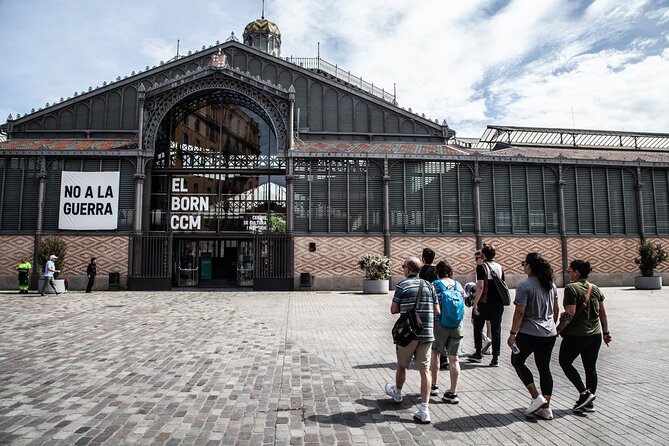
The remains at El Born are the payoff for anyone who enjoys seeing history in physical form. Instead of only hearing that Barcelona changed over time, you can look down at the surviving streets and structures of the Born neighborhood.
The site preserves remnants of a medieval city and market area, with the market hall above it. The tour explains how the area changed and why the remains were kept rather than erased during redevelopment.
This is where the experience becomes more than a food walk. You began with olives and nougat, but you end by seeing how people lived, traded, and moved through an earlier Barcelona.
I would pay close attention during this final section. It can be easy to spend the whole tour thinking about what to eat next, especially after La Boquería. The archaeological remains give the route a useful ending and help connect the city’s present-day markets with its older commercial life.
The tour finishes at Plaça Comercial, 12, in El Born. That location is convenient if you want to continue exploring the neighborhood, find a restaurant, or return to the market area for another look.
What you actually taste, and what costs extra
The standard experience includes two small tastings at La Boquería and an olive oil tasting in El Born. The food is meant to introduce you to local flavors rather than replace lunch.
The olives and nougat are the clearest examples provided. You may also receive guidance about cured meats, Iberian ham, breads, pastries, mushrooms, seafood, and other market products as you walk, but you should not assume every item is included in the price.
Anything you buy at the markets is extra. That is not a flaw, but it is important to budget for it. A few small purchases can quickly turn a $34 walking tour into a more expensive food outing, especially at La Boquería.
The optional upgrade changes the final part of the experience. You can end with cured meats, premium cheeses, Catalan tomato bread, or pa amb tomàquet, and wines served in a private room for the group. A professional sommelier leads the tasting with your guide.
The upgrade makes sense if you want a sit-down finish and a more structured food experience. It is less necessary if your main goal is the markets, architecture, and neighborhood walk. The base tour already includes tastings, so you are not left without food if you skip it.
Is $34 a fair price for two hours?
At $34 per person, the tour offers reasonable value if you want a guided introduction to several central areas in one outing. You are paying for an English-speaking guide, the market explanations, three neighborhoods, historical stops, and the included tastings.
The price is particularly fair for a first day in Barcelona. You can get your bearings, learn where the markets are, and collect ideas for restaurants and later shopping. Guides such as Alberto, Valentina, Eoghan, and Cal have been noted for adding food advice and local context beyond the basic route.
The value is weaker if you mainly want a long meal. This is a walking tour with samples, not an all-you-can-eat food crawl. You also need to accept that the schedule may limit time at La Boquería, which is the place most likely to tempt you into lingering.
The tour has a 4.8 rating from 46 reviews, with especially strong praise for guide personality, historical storytelling, pacing, and the small-group feel. Those qualities matter because the route itself is easy to follow independently. The guide is what turns a map walk into a useful introduction to Barcelona’s food traditions and old quarters.
Who will enjoy this Barcelona market walk?
I would recommend it to first-time visitors who want food, architecture, and history in one compact experience. It also suits families, since the tastings, market displays, caganer shop, and stories give children several different things to focus on.
It works well for groups with mixed interests. One person can care about Catalan food, another about churches and architecture, and another about the city’s medieval remains. The tour gives each of them something to follow.
It is also a good choice for anyone who prefers a moderate walking route. The tour is described as easy-paced, lasts two hours, and is accessible for wheelchairs and strollers. Wear comfortable shoes and bring water, since you will be outdoors between market and church stops.
I would choose a different format if you want a serious cooking lesson, a long restaurant-style lunch, or extensive free time at every market. You may also want a separate visit to La Boquería if tasting and shopping are your top priorities.
Should you book the Barcelona Markets Tour?
Book it if you want a practical introduction to Barcelona’s markets with plenty of local context. The best parts are the contrast between La Boquería and Santa Caterina, the oddball caganer story, and the final look at the old neighborhood beneath El Born Market.
Treat the tour as a guided orientation, not a full-day food feast. Arrive ready to walk, taste a little, ask questions, and note places you want to revisit. If you want a relaxed culinary finish, add the wine, cheese, cured meat, and pa amb tomàquet tasting. If you would rather spend your money at the stalls, keep the base tour and return to La Boquería afterward.
FAQ
How much does the Barcelona Markets Tour cost?
The tour costs $34 per person. The optional wine and food tasting upgrade is separate.
How long does the tour last?
The walking tour lasts two hours.
Where does the tour begin?
Meet outside Dunkin’ Donuts in Barcelona. Your guide will be holding an ExperienceFirst sign.
Where does the tour finish?
The tour ends at Plaça Comercial, 12, 08003 Barcelona, Spain.
What language is the tour conducted in?
The live tour guide speaks English.
Which markets are included?
The route includes La Boquería, Santa Caterina Market, and El Born Market.
What food tastings are included?
The tour includes two small tastings at La Boquería and an olive oil tasting in El Born. The listed examples include Catalan olives and nougat.
Can I buy additional food during the tour?
Yes. Food you purchase at the markets is not included, and you have some time to buy items if you wish.
Is the tour wheelchair and stroller accessible?
Yes. The walking tour is accessible for wheelchairs and strollers.
What should I bring?
Bring comfortable shoes, water, and comfortable clothes.
Just added around Barcelona
- Barcelona La Boqueria & Sant Antoni Private Food Experience★ 5.0 · 7 reviews
- Spanish Oysters, Cava and Ibérico Ham at Barcelona’s La Boqueria Market★ 5.0 · 8 reviews
- Taste of Barcelona: Boqueria Market, Tapas & History Tour★ 4.5 · 22 reviews
- Barcelona Tapas Cooking & Cocktail Class with Veronique & Mattias★ 5.0 · 3 reviews
- Cook Paella & Tapas + Market Tour in Barcelona (4-Course Meal)★ 5.0 · 2 reviews
- Private Barcelona Market Tour & Paella Cooking Class with Josh★ 5.0 · 4 reviews
- Eat Barcelona 3 Covered Markets & Hands On Mini Cooking Workshop★ 5.0 · 2 reviews
- Market Gourmet Visit and Spanish Culinary Experience in Barcelona★ 5.0 · 34 reviews
Barcelona Market Tours, compared.
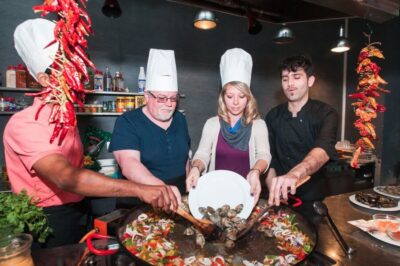
Paella Cooking Experience & Boqueria Market Tour
Read our review →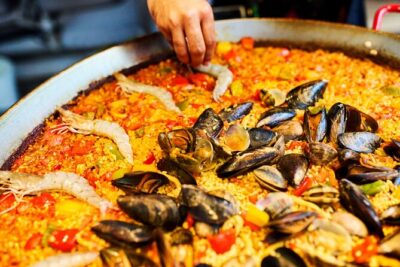
Barcelona Paella Cooking Class with Market Visit, Tapas & Sangria
Read our review →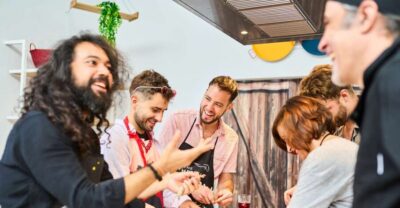
Paella Cooking Class with Market Visit and More
Read our review →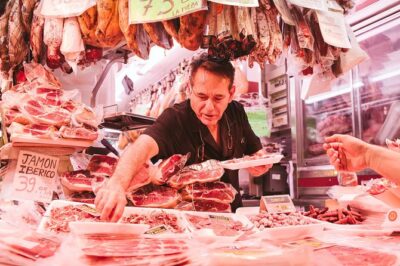
Ultimate Barcelona Food Tour with visit to a Local Market
Read our review →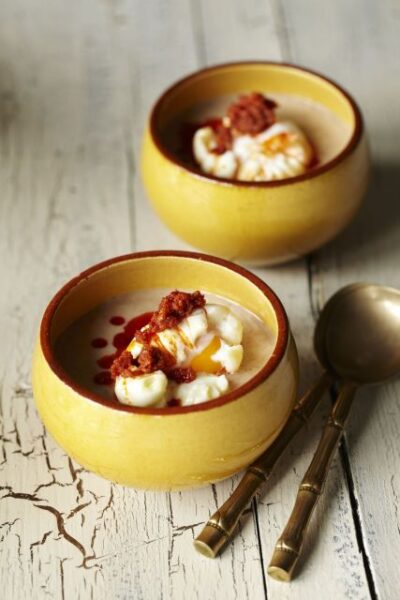
Half-Day Spanish Cooking Class & Boqueria Market Tour
Read our review →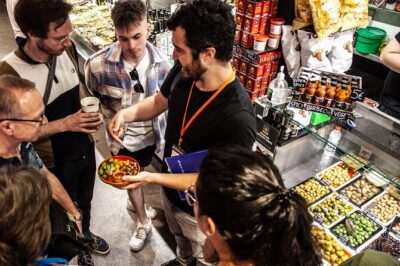
Interactive Paella & Market: Bottomless Wine & Rambla Views
Read our review →
La Boqueria Market and Paella Cooking Class in Barcelona
Read our review →Browse the lists this tour appears in