Review · HO CHI MINH CITY
From Ho Chi Minh: 3-Day Mekong Tour&Cai Rang Floating Market
Cai Rang Floating Market is the star here, but the real appeal is the journey through the Mekong Delta’s smaller waterways, orchards, villages, and market towns. You move by bus, boat, bicycle, and on foot, so the region never feels like a quick roadside stop. Cai Be’s fruit islands and the early morning market in Can Tho give you two very different views of river life.
I like the mix of nature and local culture. You can paddle through narrow canals, cycle past orchards, visit a coconut candy workshop, hear Southern Vietnamese folk music, then turn to Khmer architecture, Cham culture, Buddhist temples, and lotus fields. I also like the human touch: guides including Vi, Leo, Lâm, and Daisy have been praised for clear explanations, humor, and the ability to adjust plans when needed.
The main drawback is the pace. Day two begins at 6:00 in the morning, and day three starts at the same hour, with plenty of road travel and several stops. Accommodation is not included in the $189 price, and the forest and Chau Doc portion may feel like more time than you need if your only goal is Cai Rang Market.
Key points at a glance
- Cai Rang before breakfast: Reach the famous floating market early, when boats gather along the Hau River tributaries.
- Cai Be by boat and bicycle: Visit orchards, island villages, an old house, and family workshops producing coconut sweets and crispy rice snacks.
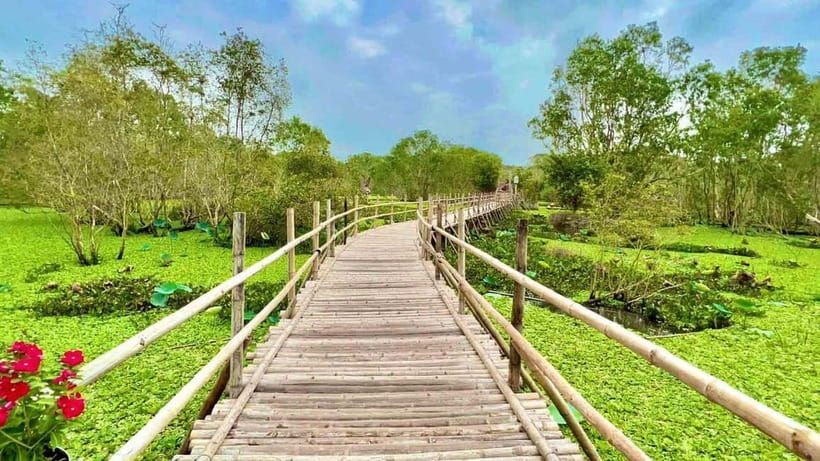
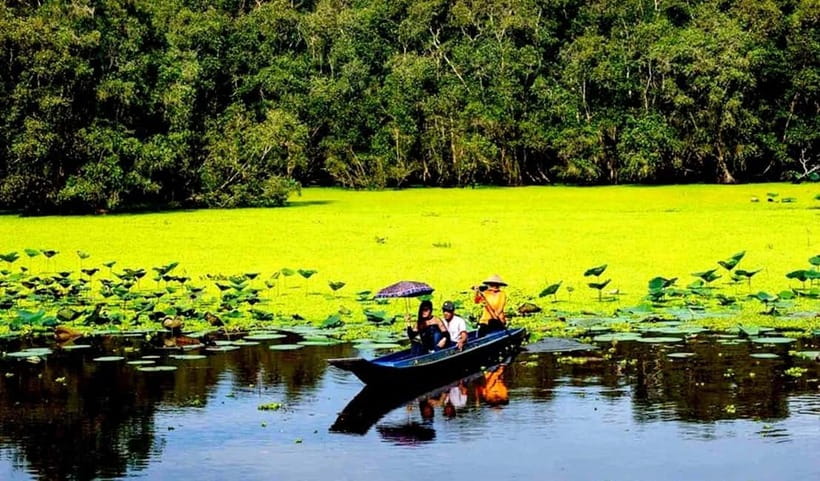
- Tra Su by rowing boat: Travel through a green wetland area in An Giang known for its plants and wildlife.
- Culture beyond the usual Mekong stops: See Munir Ansay Pagoda, a Khmer temple, a Cham village, Hang Temple, and Ba Chua Xu Temple.
- A full three days for $189: Transport, boat trips, bicycles, entrance fees, an English-speaking guide, and several meals are covered, but lodging is extra.
- A demanding schedule: Early starts and long transfers reward organized visitors who want to see several corners of the delta.
What the $189 tour really gives you

At $189 per person, this is not simply a transfer to Cai Rang Floating Market. You get three days of transport, boat trips, bicycle rental, admission fees, an English-speaking guide, lunch on days one and two, dinner on day two, and lunch on day three. Breakfast is provided at the hotels, though the hotel cost itself is not part of the listed price.
That makes the tour good value if you want a broad introduction to the southern Mekong Delta without arranging each boat, guide, and local transfer yourself. You visit four main areas: Cai Be, Can Tho, Chau Doc, and Dong Thap. The itinerary also adds several smaller cultural stops that would be difficult to fit together independently.
The catch is that three days can feel packed. You will spend time on roads between the river towns, and the early starts leave little room for lazy mornings. If you want one relaxed market visit and a lot of downtime, a shorter trip may suit you better. If you want to connect the market with temples, wetlands, villages, and local food, the price is easier to justify.
Solo visitors should also check the room arrangement. The listed single-room supplement is 900,000 Vietnamese dong when you travel alone. Since accommodation is excluded, confirm exactly what room and hotel arrangements apply before paying.
More Floating Market Tours in Ho Chi Minh City
- From HCM: Mekong Delta & Cai Rang Floating Market 2-Day Tour
★ 4.5 · 1,183 reviews - Cai Rang Floating Market & Mekong Delta 2-Day Tour from HCM City
★ 5.0 · 942 reviews - Mekong Delta & Cai Rang Floating Market 2-Day Tour from HCMC
★ 5.0 · 813 reviews
Day one: Cai Be’s orchards and island villages
The tour leaves Ho Chi Minh City at 7:30 in the morning and heads toward Cai Be. This first day introduces the delta at a gentle scale, with boats, canals, gardens, and small communities replacing city traffic.
After reaching Cai Be, you take a boat on the Tien River. The river ride is more than transport. It lets you see how homes, orchards, and small businesses sit around the waterways that support daily life. Cai Be is known as a fruit-growing area, often described as a fruit basket of the Lower Mekong, and the garden visits help explain why.
You move through village paths and see older houses, local workshops, and family-run businesses. One stop focuses on coconut fudge and crispy rice popcorn. These visits are practical rather than polished museum displays. You see how familiar snacks are made, taste the results, and get a direct look at small-scale work.
Fresh fruit and Southern Vietnamese folk music add a distinctly local feel. The music is not the reason to book the trip, but it gives the stop some character and keeps the day from becoming a simple sightseeing circuit.
A paddle through narrow canals follows. This is one of the quieter parts of the itinerary, with the boat moving at a slower pace than the larger river craft. The channels offer a close look at the delta’s waterways, though the exact feel depends on water conditions and the group’s timing.
Lunch takes place in a local garden, with a chance to prepare and eat Vietnamese dishes. That wording suggests participation rather than a standard restaurant meal, so you should expect a social, hands-on stop. The meal is included, but extra drinks or personal purchases are not listed as covered.
After lunch, you cycle through orchards and speak with island residents about ordinary life. The bicycle section helps you see more than a boat window allows. You can notice the paths, gardens, and homes at a slower speed, though anyone who dislikes cycling should ask the guide about alternatives before setting out.
Ba Kiet’s ancient house is another useful stop. It gives the day an architectural detail beyond fruit and river travel. Rather than racing through famous landmarks, you get a sense of how older homes fit into the culture of the delta.
The day ends with a boat ride back to Cai Be, followed by the transfer to Can Tho for the night. It is a satisfying first day, but not a short one. Pace yourself, especially if you arrived in Ho Chi Minh City after a long flight.
Day two: Cai Rang at first light
Breakfast is scheduled for 6:00, followed by a boat ride on the tributaries of the Hau River. The timing matters. Cai Rang Floating Market is most active in the morning, and an early arrival gives you the best chance to see trading boats gathered on the water.
Cai Rang is not a stage set for visitors. It is a working market where boats bring produce and sell goods from the river. Look for the tall poles used to show what each boat has for sale. The market’s appeal comes from watching commerce take place on moving water, with larger boats and smaller craft sharing the same space.
The market is also one of the busiest parts of the trip, so it may feel crowded and noisy. You should bring a phone or camera with a secure strap, keep your belongings close, and accept that the boat ride can be less calm than the narrow canals at Cai Be.
After the market, a walking visit to a local noodle factory shows how another everyday product is made. This pairs well with the market because you have just seen food moving through the regional economy. The stop is not only about tasting noodles. It gives you a practical link between agricultural production, local work, and the meals served across the delta.
Munir Ansay Pagoda follows. This Khmer temple is noted for its distinctive design and offers a change from river scenery. The stop also reminds you that the Mekong Delta is not culturally uniform. Khmer traditions are part of southern Vietnam’s story, and the temple gives you a chance to see that influence in a direct, visual way.
The tour then heads to Con Son tourist area, where you visit a fruit plantation and sample seasonal fruit. This is another chance to see how the delta supports itself through gardens and small farming operations. Seasonal fruit means the exact selection can change, so expect variety rather than one fixed tasting menu.
Lunch comes before the road trip to Chau Doc. This is where the schedule starts to feel intense. You have already been up early, visited a market, walked through a factory, seen a pagoda, and toured a plantation. The transfer gives you a break, but it also takes time.
Tra Su Forest by rowing boat
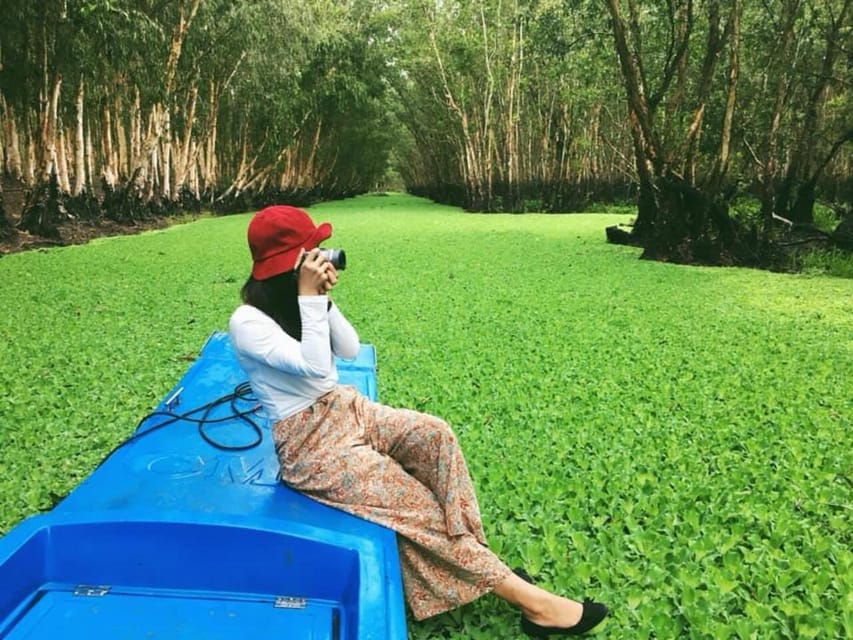
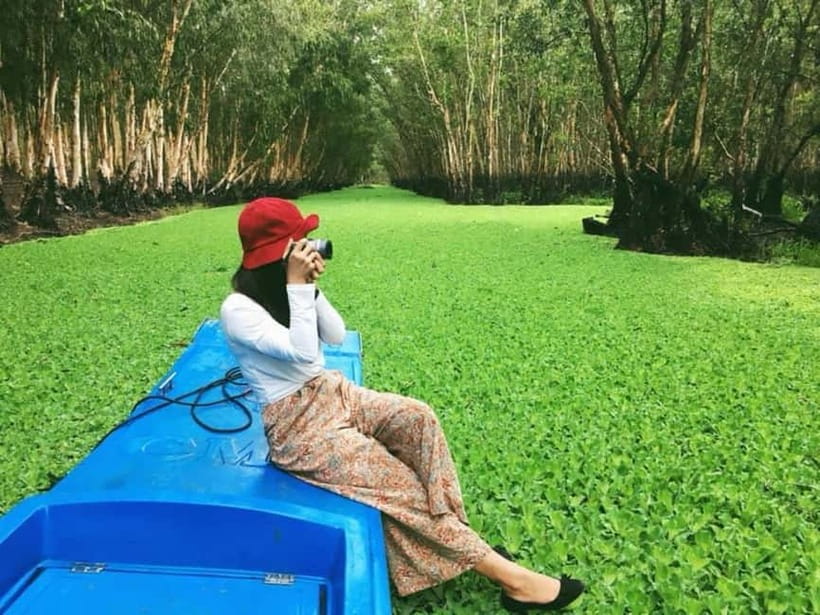
Tra Su Forest is one of the strongest nature stops on the route. It is an extensive wetland area in An Giang with a mix of plants and wildlife, and the best way to see it is by small rowing boat.
The boat carries you through green waterways and gives you a closer view of the forest than a road stop would. You can expect a quiet, enclosed setting after the open river and busy market. The appeal is the contrast: Cai Rang shows people and trade on the water, while Tra Su focuses on plants, birds, and still channels.
Do not treat this as a fast photo stop. The rowing boat section is the reason to visit the forest, and its pleasure comes from moving slowly. On the other hand, the forest may feel less exciting if you prefer active sightseeing, historic monuments, or long stretches of free time.
After Tra Su, you check into your hotel in Chau Doc and have dinner at a local restaurant. The overnight stop breaks up the route and gives you a base for the next morning’s cultural visits. Hotel comfort can vary because accommodation is not part of the listed price, so confirm the arrangement in advance.
More Floating Market Tours in Vietnam
- Cai Rang Floating Market & Mekong Delta Private 1-Day Tour
★ 5.0 · 197 reviews - Small-group 2-Day Mekong Delta: Floating market, Cooking Class…
★ 5.0 · 194 reviews - Ho Chi Minh: 1-Day Mekong Delta Tour-Floating Market & Islet
★ 4.7 · 184 reviews - Mekong Delta Cai Rang Floating Market To The Contryside Road
★ 5.0 · 184 reviews
Day three: floating village, Cham culture, and Chau Doc Market
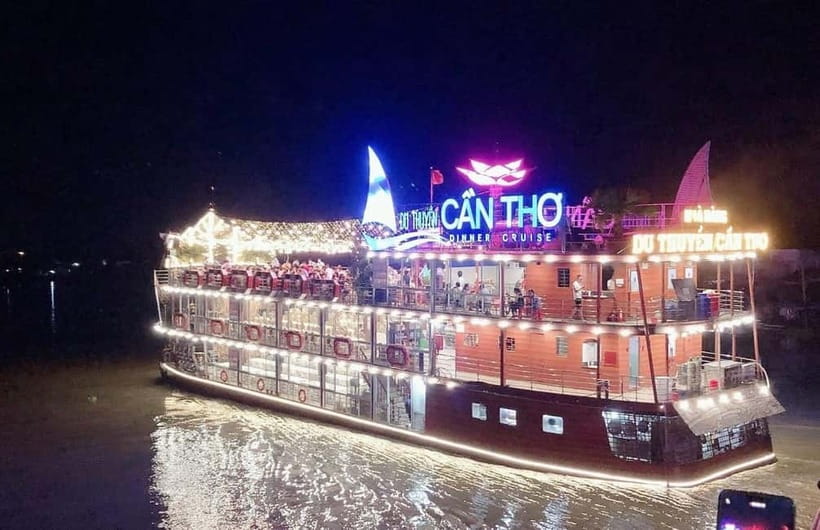
The final day begins at 6:00 with checkout and breakfast. You first visit a floating village and a Cham village, learning about the Cham people and their ties to the Mekong Delta.
These stops add cultural depth to the trip. The delta is not only canals and fruit gardens. Communities with different religious and cultural traditions have shaped the area, and the Cham village gives you a chance to explore that story beyond the major city sights.
Next comes Chau Doc Market. This is a land-based market, with fresh produce, handmade goods, local foods, and imports from Cambodia. Compared with Cai Rang, it gives you more freedom to walk, browse, and study details at close range.
The market is a good place to notice how border trade shapes local life. You may find unfamiliar ingredients, packaged foods, and household goods alongside everyday Vietnamese produce. The strong smells and tight lanes are part of the experience, though visitors who dislike crowded markets may want to stay near the guide.
The tour then continues to Hang Temple on Sam Mountain. You walk up a mountain path through greenery to reach a sanctuary inside a cave. The setting is quieter than the market, and the cave temple’s Buddhist sculptures provide one of the trip’s most striking cultural moments.
The walk is not described as a major climb, but you should still wear shoes that suit uneven paths. The cave setting can also be dim, so take care with photography and follow instructions around the sculptures.
Ba Chua Xu Temple follows. This is an important religious site for local people, and the visit gives you time to observe prayer and devotion rather than simply check off another building. You can offer prayers for good fortune if that is meaningful to you, but respectful behavior matters more than any ritual.
After lunch, the route pauses at lotus fields when the flowers are in bloom. This is a pleasant visual change after the cave and market. Lotus season affects what you see, so do not assume the fields will always be at peak flower.
The final listed stop is Go Thap historical site in Dong Thap. It extends the trip beyond the best-known delta attractions and places the return journey in a wider historical setting. After that, you travel back toward Ho Chi Minh City.
Guides and the value of local explanation
The guide can shape this trip as much as the scenery. Vi has been praised for being friendly and clear, while Leo is noted for staying available throughout the route. Lâm has been described as articulate, reliable, and humorous, with a strong grasp of everyday life along the Mekong.
Daisy has also made a strong impression, adding information about Vietnam and its people and listening carefully to questions and requests. These details matter because the itinerary includes many short visits. Without explanation, a noodle factory, pagoda, market, or old house could blur into the next stop.
The company has also adjusted plans for groups continuing to Cambodia, allowing them to cover planned sights despite a changed route. That suggests some flexibility, but you should not assume every group will receive the same alteration. Tell your guide early if you have a border crossing or fixed onward travel.
Who should book this three-day route?
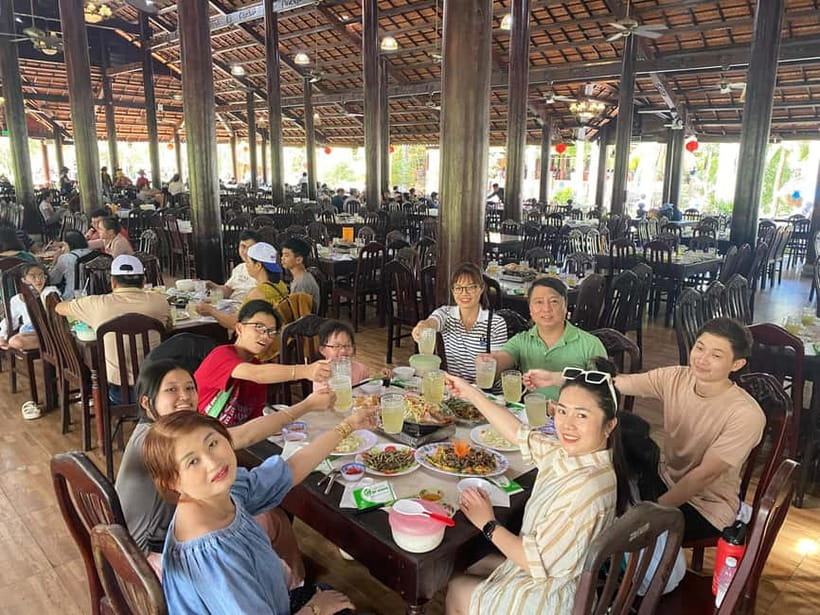
I would choose this tour if you want variety and prefer having transport, boats, admissions, and explanations organized for you. It suits first-time visitors to the Mekong Delta, photographers who want both river scenes and markets, and anyone curious about the region’s Khmer, Cham, and Buddhist influences.
It also works well for visitors who want to continue toward Cambodia, provided the timing is confirmed before departure. The mix of Cai Be, Cai Rang, Tra Su, Chau Doc, and Dong Thap gives you a far broader picture than a one-day trip from Ho Chi Minh City.
I would hesitate if your main goal is only Cai Rang Floating Market. One direct overnight trip focused on Can Tho could be more efficient. The same applies if you dislike 6:00 starts, frequent changes of transport, or long days on the road.
The tour has a rating of 4.8 from 10 reviews, with repeated praise for the guides, the variety of activities, and the balance of nature and culture. One useful caution is that the route feels intense, especially around Tra Su and Chau Doc. That is not a flaw for everyone, but it is the central choice you are making.
Final decision: a strong choice for a full Mekong sampler
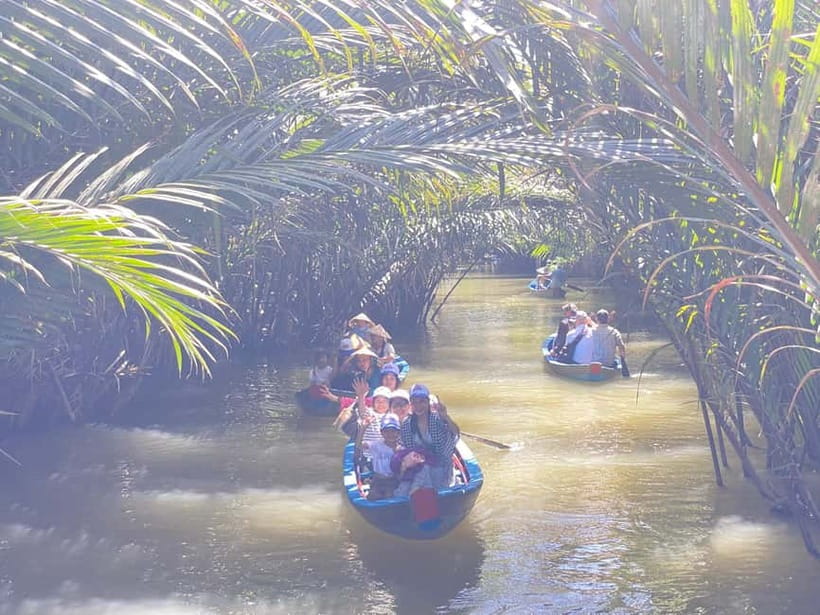
Book this tour if you want the Mekong Delta in several forms: working river markets, fruit islands, narrow canals, wetlands, temples, villages, and local food. The best feature is the range of experiences packed into three days, supported by guides who can explain what you are seeing.
Skip it if you want a slow, restful stay or only need a market visit. For everyone else, $189 is a fair price for the included transport, boats, bicycles, admissions, guide, and meals, as long as you budget separately for accommodation and accept the early starts.
FAQ

How long is the Mekong Delta tour?
The tour lasts three days, traveling from Ho Chi Minh City through Cai Be, Can Tho, Chau Doc, and Dong Thap before returning to Ho Chi Minh City.
What time does the tour leave Ho Chi Minh City?
Hotel pickup is scheduled for 7:30 on day one.
What time do the second and third days begin?
Day two begins with breakfast at 6:00. Day three also starts at 6:00 with checkout and breakfast.
Is accommodation included in the $189 price?
No. Accommodation is listed separately from the tour price. A single-room supplement of 900,000 Vietnamese dong applies when you travel alone.
Which floating markets are included?
The itinerary includes Cai Rang Floating Market on day two and a visit to Chau Doc Market on day three. It also includes a floating village near Chau Doc.
Is an English-speaking guide included?
Yes. An English-speaking guide is included. Guides named in the tour information include Vi, Leo, Lâm, and Daisy, though your assigned guide may vary.
What meals are included?
Lunch is included on day one, lunch and dinner on day two, and lunch on day three. Breakfast is provided at the hotel, while accommodation itself is not included.
Are boat rides and bicycles included?
Yes. Boat rides and bicycle rental are included, along with entrance fees to the listed sites.
Can I cancel the booking?
You can cancel up to 24 hours in advance for a full refund. The booking option also allows you to reserve now and pay later.
More Shopping Tours in Ho Chi Minh City
- Mekong Delta ‘Cai Rang’ Floating Market 2-Day Tour
★ 5.0 · 176 reviews - HCM: 2-Day Mekong Delta Floating Market with Cooking & Bike Ride
★ 5.0 · 133 reviews - Mekong day tour Visit Cai Rang Floating Market pick up in Sai Gon
★ 5.0 · 117 reviews - 1 Day Private Cai Rang Floating Market and My Tho Boat Tour
★ 5.0 · 101 reviews
More Markets in Ho Chi Minh City
- Chef Vu Cooking Class Plus Market Trip in Saigon Center (Pick up by Cyclo)
★ 5.0 · 477 reviews - Immersive Cooking Class & Market Tour By Local Chef+Cookbook
★ 4.8 · 426 reviews - Immersive Cooking Class & Wet Market Tour by Local Chef +Cookbook
★ 5.0 · 367 reviews - Authentic Vietnamese Cooking Class with Market Visit in HCMc
★ 5.0 · 182 reviews
Just added around Ho Chi Minh City
- From HCM: Mekong Delta Floating Market 3days exit Phnom Penh★ 3.4 · 7 reviews
- Ho Chi Minh City: History Museum and Ben Thanh Market Tour★ 3.9 · 4 reviews
- Saigon: Floating Market and Food Tasting Tour by Scooter★ 5.0 · 2 reviews
- Free E-Sim Saigon Foodie Market Tour★ 4.5 · 2 reviews
- Private Cai Rang Floating Market & My Tho Boat tour 1 Day★ 5.0 · 5 reviews
- Mekong Delta 2 Days: Floating Markets & Cultural Exploration★ 4.7 · 84 reviews
- Mekong Delta 2 Days: Floating Markets & Cultural Exploration★ 4.7 · 3 reviews
- Ho Chi Minh: Group Cai Rang Floating Market 1 Day Tour★ 5.0 · 3 reviews
Floating Market Tours, compared.
Damnoen Saduak Market and Maeklong Railway Market
Read our review →
The Old Siam: Damnoen Saduak and Maeklong Railway Market
Read our review →
Train Market & Floating Market with Boat Ride
Read our review →
Ayutthaya & Ayothaya Floating Market Day Trip
Read our review →
Half-Day Railway Market and Floating Market Tour in Thailand
Read our review →
Cooking Class Hoi An:Local Market, Basket Boat, Fishing & Cooking
Read our review →