
Review · MALAGA
Malaga: Taste Andalusian Flavours & Local Market Delights
Malaga’s food story comes alive one small plate at a time on this 3.5-hour walk through the Old Town and Atarazanas Market. You’ll move from a traditional pastry to olive oils, seafood, Iberian ham, fried eggplant, local drinks, and more than 10 Andalusian tastes.
I like the focus on family-run taverns and traditional bodegas, rather than a string of places built only for sightseeing. I also like the range: Ricardo, one of the guides, keeps a good pace while tying the food to Malaga’s past and present. The main drawback is the walking, and the tour is not suitable for wheelchair users or people with mobility impairments.
Key points at a glance
- Atarazanas Market is the food center of the morning or afternoon, with seafood, olives, produce, and regional specialties.
- More than 10 tastings create a full meal, including Iberian ham, Manchego cheese, gazpacho, fried fish, and Malaga-style sweets.
- The drink list is part of the experience, with vermouth, red wine, beer, water, and sweet Malaga wine.
- Guide Ricardo earned special praise for his pace and food history, a useful combination on a walking tour.
- The route favors local character over formal dining, with small taverns and family-run spots away from the main tourist paths.
- Tell the company about dietary needs in advance, since the menu and stops can change.
Start in Plaza Enrique García-Herrera
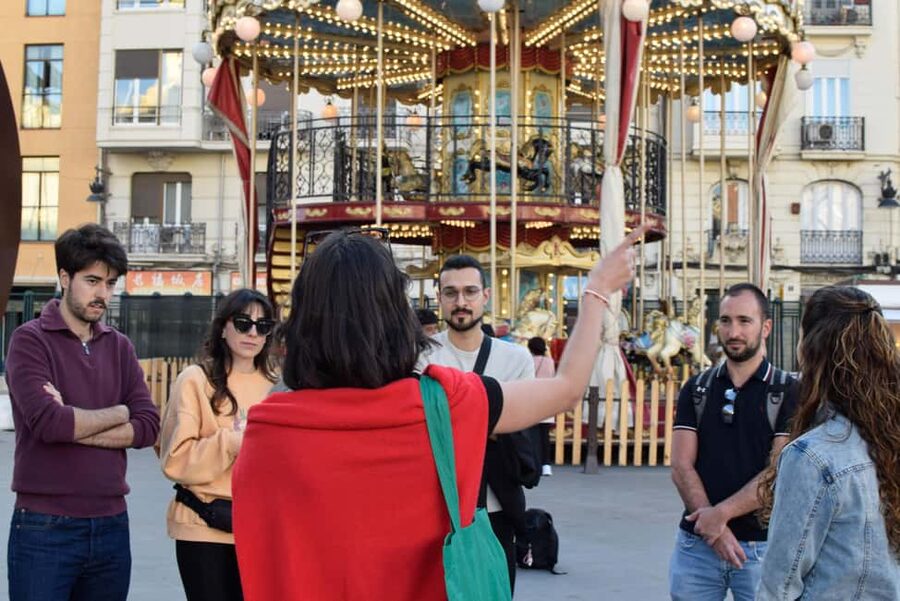
Your meeting point is Plaza Enrique García-Herrera in Malaga’s Centro Histórico. Look for the guide with an orange umbrella. It is a simple meeting arrangement, but a useful one in the narrow streets of the Old Town, where a generic address can leave you circling the wrong block.
The tour is conducted in English. Ricardo has led some departures, and his approach combines food with stories about Malaga’s culture and past. One especially useful detail is the pace: a previous guest found it comfortable, which matters when you are eating several times while walking between stops.
You should arrive ready to eat, but not stuffed. The first taste is a traditional Malaga pastry, setting the tone for a route that treats food as part of daily life rather than a series of isolated samples.
More Local Market Tours in Spain
- Ultimate Barcelona Food Tour with visit to a Local Market
★ 5.0 · 507 reviews - Madrid Tapas & Paella Cooking Experience with Local Market Visit
★ 5.0 · 432 reviews - Gran Canaria: Puerto de Mogán Local Market Day Trip
★ 4.2 · 137 reviews
A sweet beginning in Malaga’s Old Town
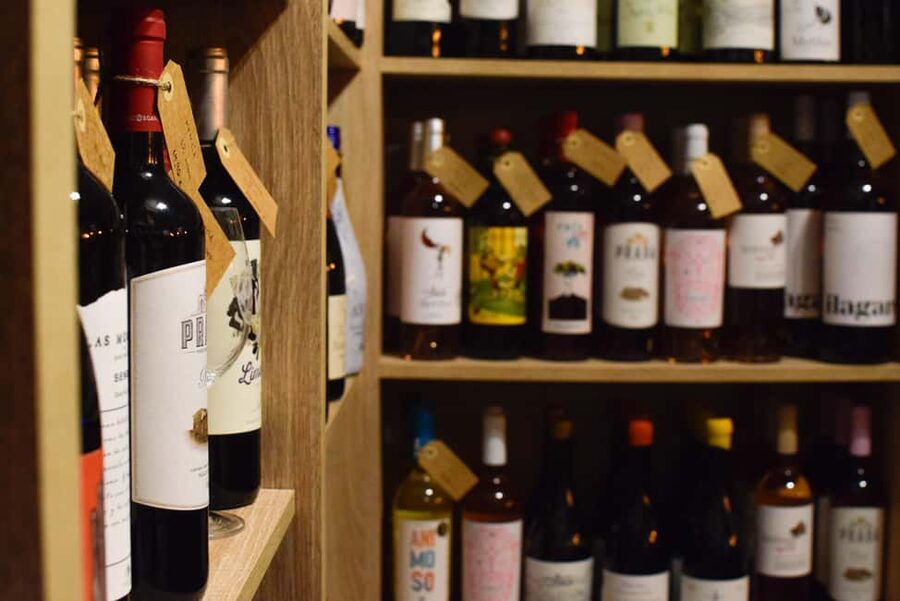
Starting with a local sweet gives you an easy introduction to Andalusian food. You get something familiar and approachable before the tour moves into stronger flavors, salty seafood, cured meats, and alcoholic drinks.
As you walk through the Old Town, your guide connects the food to Malaga’s Moorish influences, Mediterranean setting, and modern food culture. The supplied details do not name each street or building on the route, so you should think of this as a food-focused walk through the historic center, not a full sightseeing tour.
That distinction is useful. You will see parts of the center while moving between eateries, but the purpose is to understand what people eat and drink in Malaga. If you want a detailed architectural tour, this will not replace one. If you like learning about a place through its table, the format makes sense.
Atarazanas Market, Malaga’s main food stop
The visit to Atarazanas Market is one of the strongest parts of the experience. This large, historic market gives you a look at the ingredients behind Andalusian cooking: fresh seafood, seasonal produce, olives, and regional products.
Market visits can be either rushed photo stops or useful lessons. Here, the guide is meant to introduce you to vendors and explain how local foods fit into Malaga’s eating habits. You might learn why certain seafood appears on local menus, how olive products are used, or which ingredients belong in simple Andalusian dishes.
The market is also where the tour’s range becomes clear. You are not limited to tapas served in polished dining rooms. You see the raw materials, then taste some of the finished results later. That connection gives the meal more meaning.
Markets can be noisy and crowded, and stalls may not all be operating in the same way each day. The itinerary and menu can change according to availability, weather, and other conditions. You should enjoy the market for what it is, rather than expect every listed food to appear in exactly the promised order.
Tasting ten or more Andalusian specialties
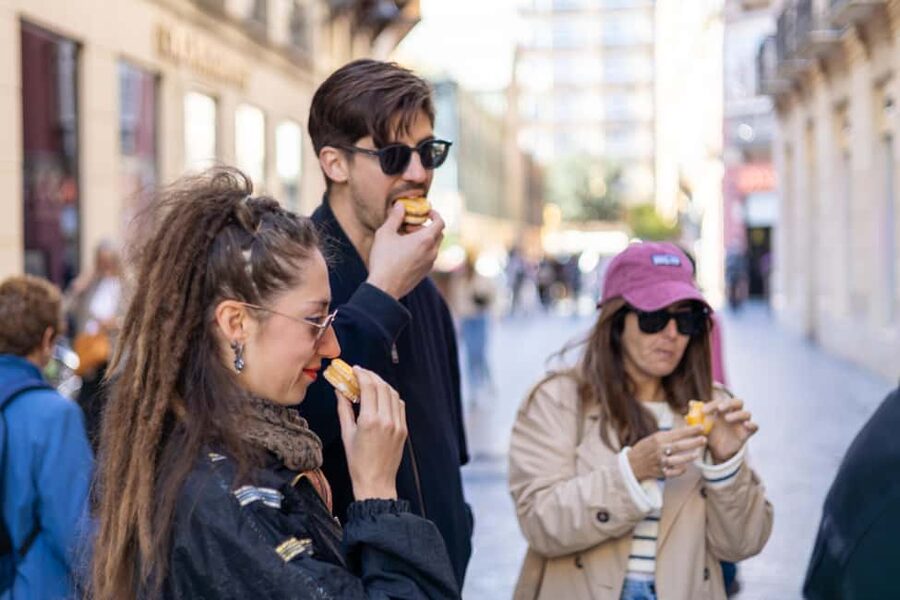
The food list is long enough to count as lunch for many people. You receive more than 10 tastings, with several foods served in small portions so you can sample a wide range without committing to one large dish.
The savory selection includes Iberian ham, Malaga-style salami, Manchego cheese, seasoned chorizo with blood sausage, olives, gazpacho, and Andalusian-style fried fish. These foods cover several sides of southern Spanish eating: cured meats, cheese, cold soup, fried seafood, and simple seasoned products.
Iberian ham and Manchego cheese offer familiar Spanish flavors, but the local angle comes through in the Malaga-style salami and the blood sausage. Gazpacho brings a cool, fresh contrast to the richer meats and fried food.
The fried fish is especially fitting for a coastal city. You should expect a regional preparation rather than a fine-dining presentation. The point is to taste a dish connected to everyday Andalusian eating, ideally in a casual setting where people share plates and conversation.
More produce and farmers markets in Spain:
- Barcelona: Street Food & Sightseeing Tour with Local Market
★ 4.9 · 84 reviews - Tasty Barcelona Street Food Tour With Local Market Visit
★ 4.5 · 24 reviews - Girona Morning Food Tour & Local Market
★ 5.0 · 16 reviews - A Coruña: Local Market Shopping and Cooking Workshop
★ 5.0 · 16 reviews
Olive oil tasting with real local context
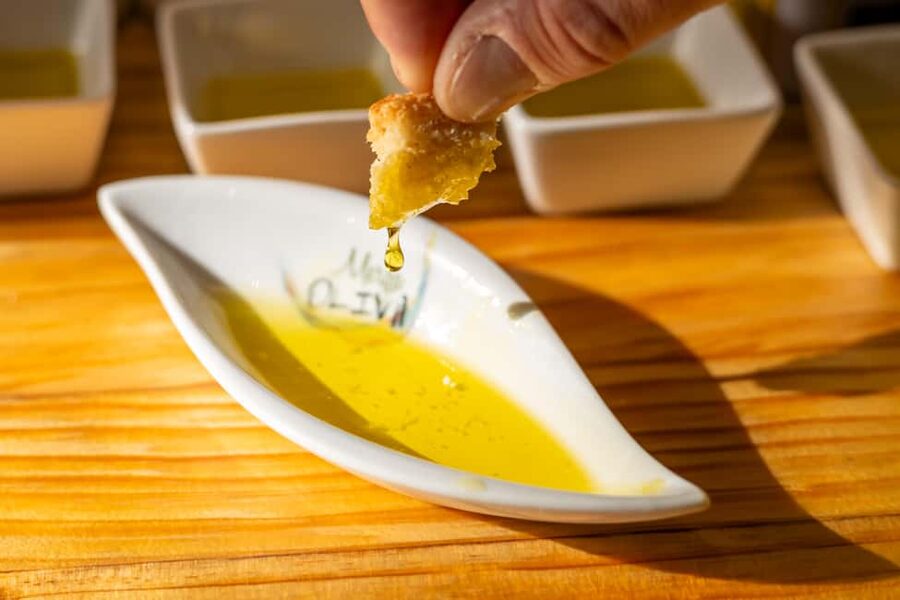
One unusual inclusion is a tasting of more than 10 types of extra virgin olive oil. That is a lot of oils for one food walk, and it may appeal most to people who enjoy comparing subtle differences.
Your guide can help you pay attention to changes in fruitiness, bitterness, and peppery heat. Even if you are not an olive oil specialist, tasting several versions side by side can sharpen your sense of what makes Spanish oil different from the bottle you normally use at home.
This portion also adds value because olive oil is not just a condiment in Andalusia. It is a basic part of cooking, dipping, dressing, and serving food. The tasting helps explain why a plain piece of bread, tomato, or salad can taste quite different with a good local oil.
The drawback is that personal taste varies. If you dislike strong olive oil or prefer a fast-moving food tour, this could feel more instructional than exciting. For food-minded visitors, though, it is one of the more distinctive parts of the route.
Seafood, fried eggplant, and the sweet side
The tour includes Andalusian-style fried fish and fried eggplant with molasses. Together, they show how frying appears in both savory and sweet-leaning dishes.
The eggplant is particularly interesting because the molasses adds a sweet finish to a vegetable that is usually associated with savory cooking. It is a good example of the contrast often found in Andalusian food, where salty, sweet, smoky, and sharp flavors can share the same plate.
You will also taste Malaga-flavored gelato. The precise flavor or preparation is not specified, so do not expect a particular recipe. Think of it as a dessert stop that brings a local drink or flavor profile into a cold, easy-to-eat form.
A secret dish is included as well. Since the exact item is intentionally not given, you cannot plan around it for dietary reasons. Contact the company ahead of time if you have allergies or dietary restrictions, and explain what you need before the tour begins.
Local drinks, from vermouth to Malaga wine

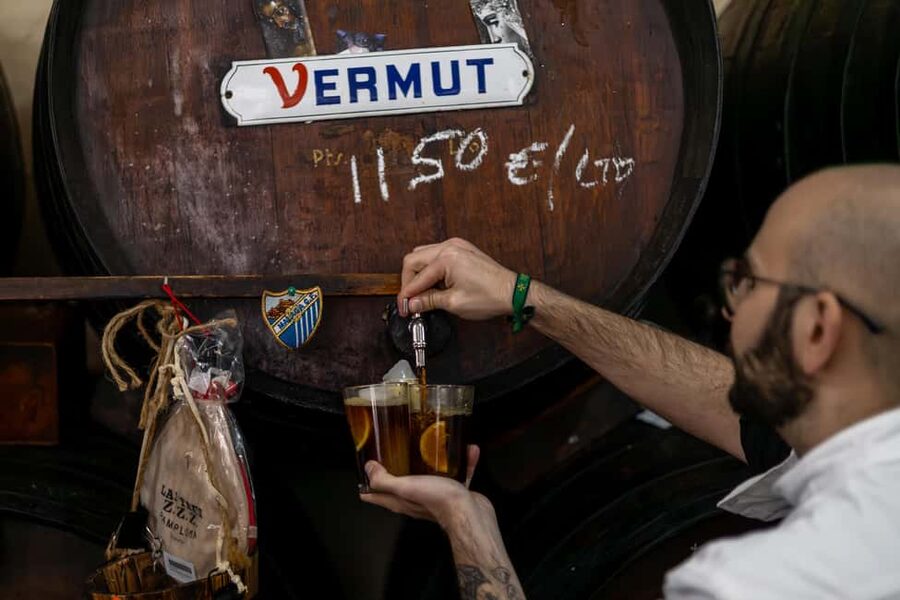
Drinks are not an afterthought here. The package includes vermouth, red wine, beer, water, and sweet Malaga wine. That gives you a taste of the social side of Andalusian food, where a small dish and a drink often belong together.
Malaga wine is the local highlight. It is known in the region for sweet styles, and the tour uses it as part of the city’s food identity. You will not simply hear about the drink. You get to try it alongside the food, which makes the explanation easier to remember.
Vermouth and red wine broaden the comparison. Beer gives you a familiar option, while water is included for balance. Since several alcoholic drinks may appear during the 3.5-hour route, pace yourself. You can enjoy the tasting without treating every stop as a full drink.
Anyone avoiding alcohol should mention that before the tour. The listed drinks include water, but the exact nonalcoholic alternatives are not specified.
Small taverns instead of tourist dining rooms
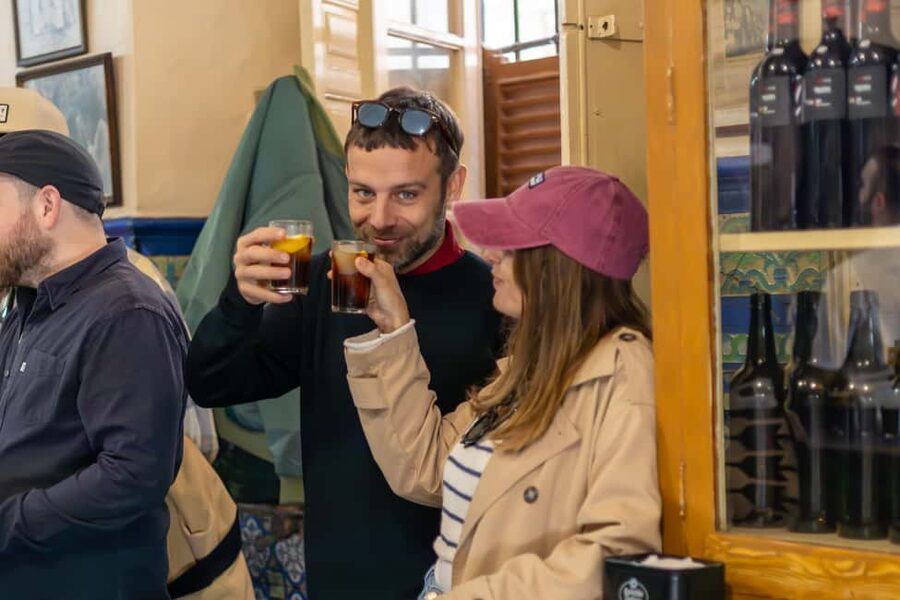
The tour promises stops at beloved family-run places and traditional bodegas. These are the settings that can make a food walk feel connected to local life. You are not just tasting a dish; you are seeing the kind of place where Malagueños meet, share plates, and linger over conversation.
The experience is designed to take you away from the most obvious tourist paths. That does not mean every stop will be secret or completely unknown, but it does suggest a preference for places with a neighborhood feel rather than restaurants chosen mainly for a view.
Small venues come with tradeoffs. Seating may be less formal, the route may require standing, and the menu can depend on what is available that day. That is part of the appeal, but it also means you should come with a flexible attitude.
If you want a polished meal with a fixed menu and a guaranteed table, book a restaurant. If you want to see how food fits into daily social life, these smaller stops are more useful.
How much food do you really get for $95?
At $95 per person, this is not a cheap snack walk. The price needs to be measured against the amount included: a traditional pastry, more than 10 food tastings, a large olive oil comparison, several drinks, a market visit, and a guide for 3.5 hours.
For a visitor planning to buy lunch, several drinks, and separate market tastings, the price can be reasonable. You are also paying for the guide’s route planning and explanations, not just the food itself. The value is strongest if you want context and variety, rather than simply the lowest-cost meal in Malaga.
The price is less appealing if you eat very little, avoid most of the listed foods, or prefer to choose your own restaurants. The menu includes cured meats, cheese, seafood, fried dishes, alcohol, and a secret item, so selective eaters should check their options in advance.
Pickup and drop-off are not included. You need to reach Plaza Enrique García-Herrera yourself, then make your own way back after the final stop. Because the meeting point is in the Old Town, allow enough time to find it without rushing.
Walking, timing, and who will enjoy it most
The tour lasts 3.5 hours and involves a fair amount of walking. Comfortable shoes are essential. You will be moving through the Old Town, entering a market, and stopping at several food venues, so this is not a sit-down tasting with one fixed address.
The tour is not suitable for wheelchair users or people with mobility impairments. The supplied information does not give a group size, so you should not assume a private or unusually small group.
I would recommend it most to first-time visitors who want an edible introduction to Malaga, food lovers who enjoy trying many small portions, and people who like history explained through everyday customs. It also suits anyone who wants a planned route through the center without spending time researching market stalls and local taverns.
It may not suit you if you want a formal cooking lesson, a dedicated wine tasting, or a slow restaurant lunch. It is also a poor fit if you need guaranteed dishes, have serious dietary restrictions that were not discussed ahead of time, or find several hours of walking difficult.
What the guide adds to the meal
A food tour succeeds or fails on the guide’s ability to control the pace and make each stop feel connected. Ricardo received particular praise for both. He was described as keeping a good pace and showing clear care for the food and local history.
That combination matters. A guide who talks too long can make a food walk drag, while a guide who says too little leaves you with a pile of samples and no real understanding. The best moments should come from the link between the dish, the place, and the people who eat it.
The tour is conducted in English, so you can ask questions about the foods and drinks as you go. The experience provider is Secret Food Tours, and guide assignments may vary, so Ricardo is not guaranteed for every departure.
Practical advice before you book
Contact the company in advance with any dietary requirement. The itinerary and menu can change based on location availability, weather, and other circumstances, so the more clearly you explain your needs, the better the guide can respond.
Wear comfortable shoes and avoid scheduling another heavy meal immediately afterward. Ten or more tastings, drinks, and a pastry add up quickly, even when portions are small.
The booking terms are flexible: you can cancel up to 24 hours before the activity for a full refund, and you can reserve now and pay later. Starting times depend on availability, so check the date you want before making plans around it.
Should you book this Malaga food walk?
Book it if you want a broad, social introduction to Andalusian food, especially if Atarazanas Market, local taverns, olive oil, seafood, and Malaga wine all sound appealing. The mix of more than 10 tastings and history makes the $95 price easier to justify than a simple tapas crawl.
Skip it if you need step-free access, dislike walking, avoid most of the menu, or prefer a fixed restaurant meal. For everyone else, this is a practical way to get oriented in Malaga’s food culture early in a visit. Ricardo’s comfortable pace and attention to the story behind the dishes are the qualities to look for, though the exact guide and menu can vary.
FAQ
Where does the Malaga food tour meet?
The meeting point is Plaza Enrique García-Herrera in Malaga’s Old Town. The guide will have an orange umbrella and a big smile.
How long does the experience last?
The tour lasts 3.5 hours. Starting times depend on availability.
What language is the tour conducted in?
The tour is conducted in English with a live guide.
How many tastings are included?
You receive more than 10 Andalusian tastings, including food and local specialties.
What foods are included?
Included foods can include a traditional Malaga pastry, more than 10 types of extra virgin olive oil, olives, Iberian ham, Malaga-style salami, Manchego cheese, seasoned chorizo with blood sausage, gazpacho, fried fish, fried eggplant with molasses, Malaga-flavored gelato, and a secret dish.
Are drinks included?
Yes. The included drinks are vermouth, red wine, beer, water, and Malaga wine.
Is the tour suitable for wheelchair users?
No. The tour is not suitable for wheelchair users or people with mobility impairments, and it involves a fair amount of walking.
More Shopping Tours in Spain
- Spanish Cooking Class & Triana Market Tour in Sevilla
★ 5.0 · 760 reviews - Seville: 3.5-Hour Spanish Cooking Class & Triana Market Tour
★ 4.9 · 751 reviews - Valencia: Paella Cooking Class with Central Market Tour
★ 5.0 · 721 reviews - Barcelona: Paella Cooking Class with Market Visit and More
★ 4.9 · 711 reviews
More Markets in Spain
- Barcelona: Paella Cooking Experience & Boqueria Market Tour
★ 4.8 · 3,661 reviews - Barcelona Paella Cooking Class with Market Visit, Tapas & Sangria
★ 5.0 · 2,531 reviews - Paella Cooking Class, Wine Tasting & Central Market in Valencia
★ 5.0 · 1,150 reviews - Valencian paella cooking class, tapas and visit to Ruzafa market.
★ 5.0 · 828 reviews
Just added around Spain
- Explore Bilbao’s Flavors Mercado de la Ribera and Old Town★ 4.5 · 3 reviews
- CERTAL Exclusive Tour: LA RIBERA Market + GASTROBARS Bilbao (3h)★ 4.5 · 12 reviews
- Barcelona La Boqueria & Sant Antoni Private Food Experience★ 5.0 · 7 reviews
- Spanish Oysters, Cava and Ibérico Ham at Barcelona’s La Boqueria Market★ 5.0 · 8 reviews
- Taste of Barcelona: Boqueria Market, Tapas & History Tour★ 4.5 · 22 reviews
- Barcelona Tapas Cooking & Cocktail Class with Veronique & Mattias★ 5.0 · 3 reviews
- Cook Paella & Tapas + Market Tour in Barcelona (4-Course Meal)★ 5.0 · 2 reviews
- Private Barcelona Market Tour & Paella Cooking Class with Josh★ 5.0 · 4 reviews
Local & Farmers Market Tours, compared.
Hanoi Cooking Class: Culture, Local Market & Meaning CSR Impact
Read our review →
Cooking Class and Lunch at a Tuscan Farmhouse with Local Market Tour from Florence
Read our review →
Cooking Class Hoi An:Local Market, Basket Boat, Fishing & Cooking
Read our review →
Hoi An Cooking Class(Local market,Basket Boat,Fishing & Cooking)
Read our review →
Old Dubai tour: Local Market, Tasting, Dubai creek with Abra ride
Read our review →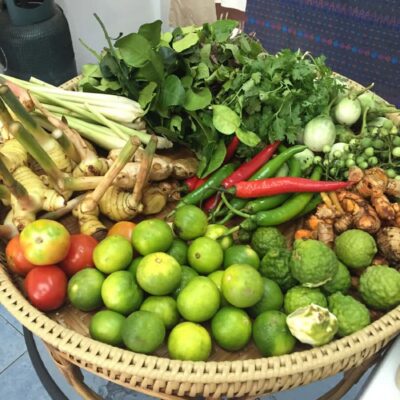
Half Day Easy Thai Cooking Class & Local Market Tour
Read our review →
Cancun Street Food Tour with Food Stalls, Local Market and Murals
Read our review →
Browse the lists this tour appears in