
Review · SICILY
Palermo, a tour of unique monuments and colorful markets
Palermo’s best sights are packed into a walkable center, but the city makes you work to connect them. This three-hour tour ties together the Teatro Massimo, Capo Market, Palermo Cathedral, and Quattro Canti, adding legends about a ghost, a secret sect, and the Florio family along the way.
I like the route for two clear reasons: it mixes grand monuments with ordinary Palermo life at the market, and it gives you a guide to explain what you are seeing instead of leaving you to decode the city alone. The guide also offers advice on food, transport, and further visits. The main drawback is pace. Ten stops in three hours means some places receive only a short look.
Key points to know before booking
- Capo Market adds local flavor: Spend about 25 minutes in an old Arab market and get the chance to sample Palermo street food.
- The Cathedral visit is included: Entry is free when religious services do not prevent access.
- The route covers major central sights: You move from Piazza Massimo through the Capo district, Cathedral, Via Vittorio Emanuele, Quattro Canti, and Piazza Pretoria.
- Legends are part of the appeal: Hear about the ghost of Teatro Massimo and the underground world of the Beati Paoli.
- The group stays fairly small: A maximum of 20 people makes a walking tour easier to follow than a large city group.
- The price is reasonable for a three-hour orientation: At $34.83 per person, the value depends on how much you want context, food advice, and help planning the rest of your Palermo stay.
Why this route works for a first look at Palermo
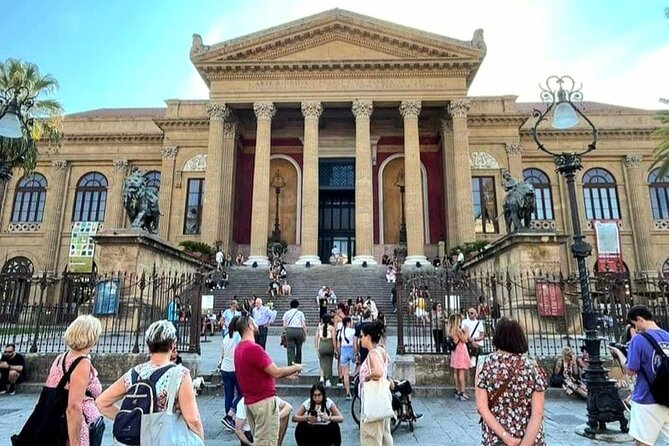
The walk begins at Piazza Giuseppe Verdi, in front of Teatro Massimo, at 10:30 a.m. This is a useful meeting point because it is central, served by public transport, and surrounded by restaurants and other services.
The route is not just a parade of churches. It moves through several layers of Palermo: Baroque squares, Norman-Arab architecture, old city walls, a traditional market, opera culture, and streets that still serve as the main spine of the historic center. I like that mix. You get Palermo’s formal side and its everyday side in the same morning.
At roughly three hours, the tour works well as an arrival-day activity. You can learn the shape of the center, note places you want to revisit, and ask the guide for help with food, transport, and other visits. Since the walk ends at Quattro Canti, you are left in a useful central position rather than far from the sights.
The pace will suit you best if you enjoy seeing many places with a running explanation. It is less suitable if you want long, quiet visits inside every church or palace.
A few more market tours around Italy worth a look
- Cooking Class and Lunch at a Tuscan Farmhouse with Local Market Tour from Florence
★ 5.0 · 4,831 reviews - Rome: Colosseum, Roman Forum & Trajan’s Market Exterior Tour
★ 4.3 · 2,038 reviews - Taste of Testaccio: Special 15 Year Anniversary Edition
★ 5.0 · 1,658 reviews
Piazza Olivella and the first Baroque details
The first stop is Piazza Olivella, a scenic Baroque square with the church of Sant’Ignazio and the National Archaeological Museum nearby. You spend about 15 minutes here, enough to get a first sense of Palermo’s layered architecture.
This opening stop helps put the city into context. Palermo is not a place with one single visual style. Ancient remains, medieval churches, Baroque decoration, and later civic buildings often sit close together. A guide can point out those changes quickly, which is useful when you are still learning how to read the center.
The National Archaeological Museum is not part of the tour’s included visits, so do not expect a museum tour here. Think of Piazza Olivella as an orientation stop and a chance to see one of the city’s attractive public spaces before the route reaches Teatro Massimo.
Puppet theater and Palermo’s living traditions
The tour then pauses for about 10 minutes at the Teatro dell’Opera dei Pupi, known as the most famous Puppet Opera theater in Palermo. Sicilian puppet theater is part of the island’s cultural identity and is recognized by UNESCO as intangible cultural heritage.
The stop is short, but it adds a useful counterpoint to the grand opera house nearby. Palermo’s performance traditions are not limited to formal opera. The puppet theater reflects a popular art form built around storytelling, heroic characters, and local craft.
You may want to return for a performance if your schedule allows, but this walking tour does not include a puppet show. The value here is the introduction and the setting. It gives you another way to understand Sicilian culture beyond monuments and royal tombs.
Teatro Massimo and the Florio family
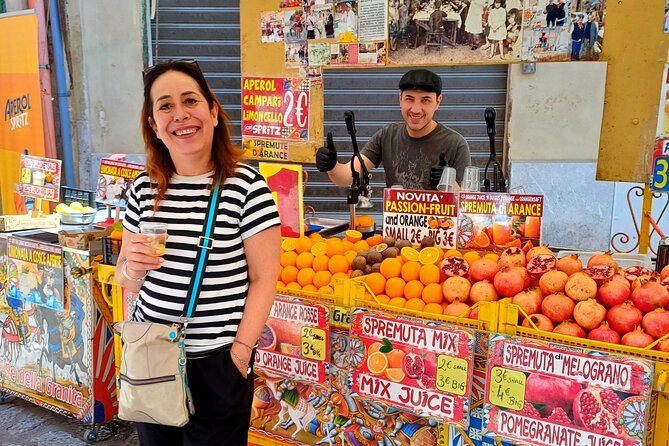
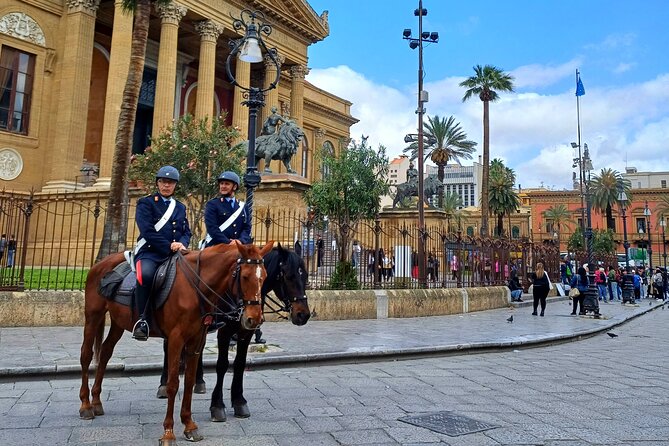
At Piazza Giuseppe Verdi, the tour turns to Teatro Massimo, Italy’s largest opera house. The stop lasts about 15 minutes and focuses on the square, the opera house, Palermo’s belle époque, and the Florio family.
The Florios were one of Palermo’s most important industrial and commercial families, and their story helps explain the city’s period of wealth and ambition. The guide also tells the mysterious legend of the theater’s ghost, a detail that adds a bit of drama without requiring a long visit inside.
The tour does not list an interior theater visit, so plan on seeing the building from the square rather than touring the auditorium. That is a limitation if opera-house interiors are your main reason for coming. Still, the exterior is a strong starting point, and the story of the Florios gives the surrounding streets more meaning.
Starting here also makes practical sense. The theater is easy to find, and the square is a clear landmark for a group meeting at 10:30 a.m.
Same stalls, a different way to shop and eat:
- Small Group Cooking Class & Market Food Tour in Florence
★ 5.0 · 1,574 reviews - Bologna Food & Market Tour with 6 Tastings, Pasta, Wines & More
★ 5.0 · 1,328 reviews - Venice Street Food Tour with Local Guide with Local Food Market Visit
★ 5.0 · 822 reviews - Seaview Cooking Class & Taormina local flavors with Chef Mimmo
★ 5.0 · 665 reviews
Ancient walls and the gate into Capo Market
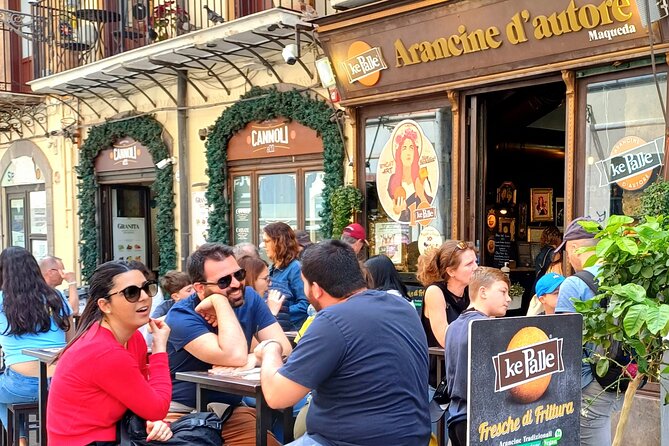
After Teatro Massimo, the route reaches the Mura, Bastione e Porta Carini, where you see a section of Palermo’s old walls and one of the city’s former gates. The stop takes about 10 minutes.
This is a brief look, not a detailed military-history visit. Its main purpose is to lead you physically and historically into the Capo district. Passing through an old gate toward a market makes the transition easy to understand: Palermo’s defensive city and its trading city are part of the same urban story.
I appreciate stops like this because they explain how the route fits together. Without a guide, you might photograph the wall and move on. With some context, you see the gate as an entrance into one of the city’s long-running commercial quarters.
Capo Market and the taste of street food
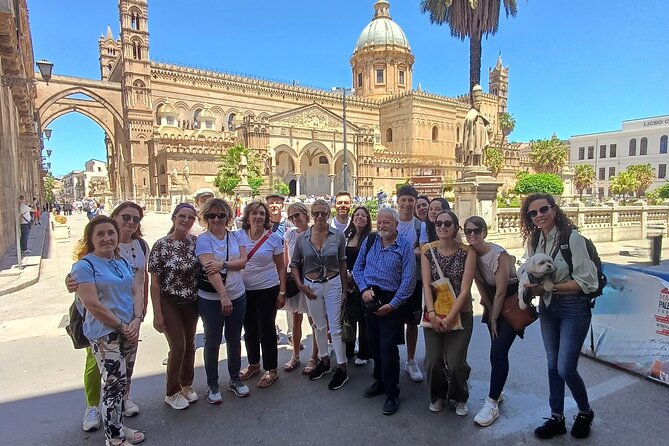
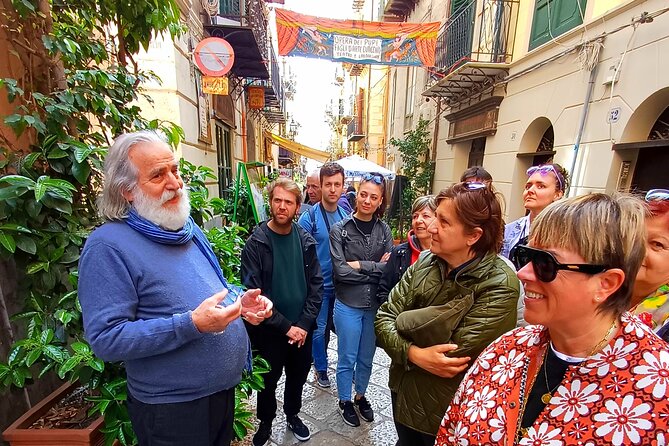
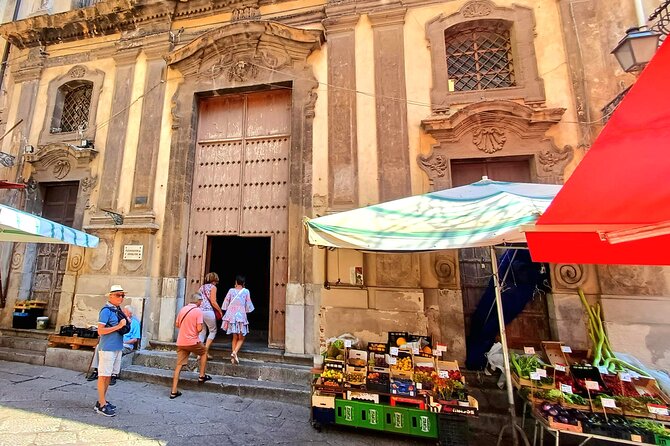
The Capo Street Market receives the longest stop, about 25 minutes. It is described as an ancient Arab market and one of the main places to encounter Palermo’s street cuisine.
This is the most atmospheric part of the walk. Market streets show you how Palermo functions day to day, with food, movement, vendors, and neighborhood life rather than only polished monuments. The tour allows a free stop to taste local specialties, so bring a little cash and appetite. The price of any food is not stated, so ask the guide what is worth trying and what each item costs before buying.
The market is also where the tour becomes less formal. You are not simply listening to dates and architectural labels. You are getting practical food guidance and a look at the city’s cooking culture. That is a strong reason to take the walk early in your stay.
Do not expect a full food tour, though. Twenty-five minutes is enough for an introduction and perhaps a taste, not a long meal or a series of seated courses. If street food becomes your main interest, ask the guide for suggestions for a later visit.
The Beati Paoli and Palermo’s underground legends
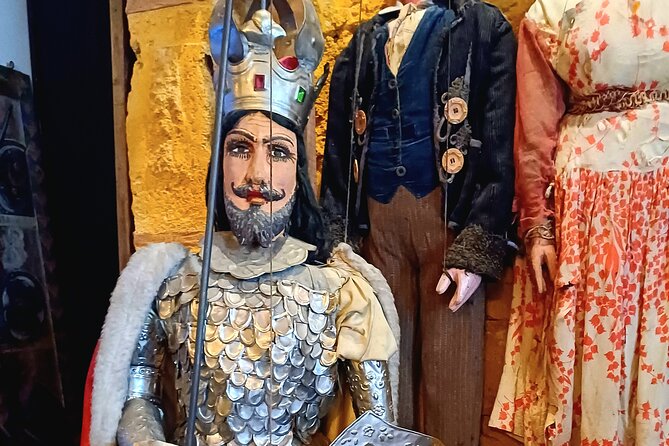
The next stop is Grotta dei Beati Paoli, reached after the market. You spend about 10 minutes learning about the Beati Paoli, an alleged secret sect associated with avenging wrongs suffered by poor people in past centuries.
This part of the tour brings in the darker side of Palermo’s storytelling. The subject is linked to underground spaces, secrecy, and popular legends. It offers a welcome change after the market’s noise and food stalls.
The supplied details do not promise an extensive underground exploration or a formal cave entry. Treat this as a story stop rather than a long subterranean visit. If you are curious about how legend and social memory shape Palermo, it should be one of the more memorable explanations on the route.
Palermo Cathedral and the birth of a kingdom
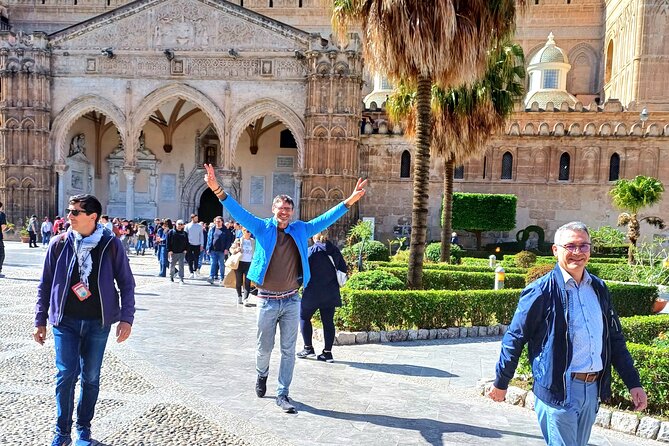
The walk then reaches Palermo Cathedral, with about 20 minutes devoted to the site. Entry is included when religious services do not prevent access.
The cathedral was built in 1185 in a Norman-Arab style and is listed as a UNESCO World Heritage site. It is also presented as the place where the kingdom of Sicily was founded, and it contains the tombs of the first kings of Sicily.
That combination makes the cathedral more than a pretty church stop. It connects Palermo to the royal and political history of Sicily. The Norman-Arab style also reflects the island’s blend of cultures, a point that is easier to grasp when a guide draws your attention to it on site.
The biggest practical caution is the condition on entry. Religious services can limit or prevent access, even though cathedral admission is included. You should dress and behave appropriately for a religious building, and remain flexible if the guide needs to explain the exterior instead.
Twenty minutes is enough to see the main interior areas if access is available, but it is not enough for every detail. If the cathedral becomes a highlight for you, plan a separate return visit.
Via Vittorio Emanuele, Palermo’s oldest street
From the cathedral, the route follows Via Vittorio Emanuele, described as Palermo’s oldest street. The stop lasts about 15 minutes and focuses on the monuments, art, and history lining this major route.
This street is important because it links several of the tour’s key locations. You are no longer moving between isolated sights. You are following one of the central lines of the old city, with churches, palaces, and civic spaces appearing along the way.
The guide’s role matters here. A long historic street can blur into a succession of façades if you do not know what to watch for. The tour gives you a framework for noticing how Palermo’s major buildings relate to one another.
As with the other walking sections, wear comfortable shoes. The tour is three hours long and includes market streets, squares, and central roads. The description does not specify the exact walking distance or surface conditions, so plan for a normal city walk rather than a short sightseeing transfer.
Quattro Canti and Piazza Pretoria
The tour ends at Quattro Canti, the famous Baroque intersection at the center of old Palermo. You spend about 15 minutes here, looking at the bright, symbolic square and its four decorated corners.
This is a good place to finish because several major routes meet here. You can continue walking after the tour, return toward the cathedral, or use the nearby streets to reach restaurants and other central sights. The guide can also offer advice for further visits and transport.
Before the tour ends, the route makes one more stop at Piazza Pretoria, about 15 minutes away. The square is known for its Renaissance fountain and the historic buildings around it, including the convent of Santa Caterina. The convent is associated with several famous Sicilian desserts.
Piazza Pretoria gives the tour a strong visual finish. The fountain is the main focus, while Santa Caterina adds a food connection after the Capo market. If you like pairing architecture with local cuisine, ask the guide which Sicilian sweets are connected with the convent and where to try them later.
What $34.83 gets you
At $34.83 per person, this is fairly priced for a three-hour guided walk with a maximum group size of 20. You are paying for an authorized, certified professional guide, the explanation of ten central stops, and cathedral entry when services allow.
The value is strongest if this is your first time in Palermo. A good guide can save you from wandering past important details and can help you decide what deserves a second visit. The help with transport, food, and later sightseeing also adds practical value, especially if you have only a short stay.
The value is weaker if you prefer exploring alone or want long interior visits. Most stops last 10 to 15 minutes, and the market gets 25 minutes. The tour gives you range and context, not deep time at each monument.
The group cap is useful. Twenty people is not tiny, but it is manageable for a city walk. Stay close to the guide at crossings and in the market, and arrive at Piazza Giuseppe Verdi a little early so you can find the group without rushing.
How the guide affects the experience
The guide is authorized, certified, and expected to explain both Palermo’s monuments and daily Sicilian life. The strongest praise attached to this experience centers on clear explanations and a guide who remains available for questions and advice.
That matters on this route because the subjects shift quickly. In one hour, you can move from opera and the Florios to an old city gate and market food. Then the focus changes again to royal tombs, secret societies, Baroque planning, and desserts.
A guide who connects those subjects makes the walk feel like one story rather than ten unrelated stops. You should use the final part of the tour to ask about places you want to see next. The included assistance specifically covers further visits, transport, and gastronomy.
Who should book this Palermo walk?
I would choose this tour for a first or second day in Palermo, especially if you want a quick orientation before exploring on your own. It suits visitors who enjoy history but also want food, legends, markets, and practical local advice.
It is also a sensible option for anyone who finds Palermo’s center difficult to read alone. The route includes the main monuments, but it does not pretend the city is only a museum. Capo Market and the street-food pause bring you closer to daily life.
Families and mixed-interest groups may like the variety. Opera fans get Teatro Massimo, culture lovers get the Puppet Opera theater, architecture fans get the cathedral and Baroque squares, and food-focused visitors get the market and the Santa Caterina connection.
You may want a different plan if you need step-by-step accessibility information, a long food tasting, or detailed interior tours. The supplied details say most people can participate and that service animals are allowed, but they do not provide a full mobility assessment or a precise route length.
Free cancellation is available up to 24 hours before the 10:30 a.m. start time. Changes or cancellations inside that window are not refunded, and poor weather can lead to a new date or a full refund.
Should you book it?
Book this tour if you want a well-rounded introduction to central Palermo with a professional guide, a market stop, and entry to the cathedral when possible. The route covers enough ground to help you understand the city without taking an entire day.
Skip it if your priority is slow photography, long museum visits, or a dedicated food tour. At $34.83, the best value comes from the explanations, local stories, and planning help, not from the number of admission tickets.
For most first-time visitors, I would book it early in the stay. The tour is normally reserved about nine days ahead, and its ending at Quattro Canti leaves you well placed to continue exploring.
FAQ
How long does the Palermo walking tour last?
The tour lasts approximately three hours.
Where does the tour begin?
It begins at Piazza Giuseppe Verdi, in front of Teatro Massimo, at 10:30 a.m.
Where does the tour end?
The tour ends at Quattro Canti, also called Piazza Vigliena, in the center of Palermo.
Is entry to Palermo Cathedral included?
Yes, free entry to the Cathedral is included when religious services do not prevent access.
Does the tour visit Capo Market?
Yes. The route includes about 25 minutes at Capo Street Market, an old Arab market in Palermo.
Can I taste Palermo street food during the tour?
The market stop includes an opportunity to pause and taste typical Palermitan street food. Food prices are not specified in the tour details.
How many people can join the tour?
The group has a maximum of 20 travelers.
Is the tour suitable for most people?
The tour details state that most travelers can participate. Service animals are allowed, and the meeting point is near public transportation.
Can I cancel for a full refund?
Yes. You can cancel at least 24 hours before the local start time for a full refund. Cancellations or changes made less than 24 hours before the start are not refunded.
Just added around Italy
- Cesarine: Market Tour & Home Cooking Class in Catania★ 4.0 · 6 reviews
- Small Group Market tour and Dining Experience at a Cesarina’s home in Brindisi★ 4.5 · 6 reviews
- Small Group Market tour and Cooking class in Brindisi★ 4.5 · 8 reviews
- Food markets tour with a local!★ 4.5 · 39 reviews
- Private Market Tour and Cooking Class in Bologna with Giovanna C★ 5.0 · 20 reviews
- One day tour Christmas markets Innsbruck – Bressanone – Vipiteno★ 4.5 · 11 reviews
- Cesarine: Market Tour & Home Cooking Class in Bari★ 5.0 · 5 reviews
- Cesarine: Small Group Market tour and Dining in Altamura★ 3.0 · 2 reviews
Sicily Market Tours, compared.
Markets and monuments: walking tour and street food in Palermo
Read our review →
Palermo in 2 hours Main monuments and historic markets
Read our review →
From market to Table Cooking lesson with a local in Sicily
Read our review →Browse the lists this tour appears in