Review · BANGKOK
Private 4 days : Bangkok, Floating market and Ayutthaya
Bangkok is at its most rewarding when you move through it at street level, and this four-day private trip does exactly that. You ride local trains, buses, boats, and tuk-tuks, then switch to private transport for the floating markets and Ayutthaya. The route links royal temples with flower stalls, canal villages, railway commerce, and evening street food.
I like the private format, which lets your guide adjust the pace for your group rather than shepherding you through a fixed crowd. I also like the mix of ordinary city life and major sights, from Chinatown snacks and the flower market to the Grand Palace, Wat Arun, and the Buddha head caught in a tree at Ayutthaya.
The main consideration is stamina. Four days bring a lot of walking, stairs, heat, traffic, and early starts, while several meals and some market costs are extra. The price is also a serious commitment if you are traveling alone, though it makes more sense for a small group sharing a private guide and transport.
Key points to know before booking
- Private for your group: You travel with your own English-speaking guide rather than joining a large coach party.
- Bangkok by local transport: The first two days use sky trains, subway trains, buses, boats, taxis, and tuk-tuks where appropriate.
- Two different market experiences: Mae Klong is built around an active railway, while Damnoen Saduak is explored by boat.
- Ayutthaya by private car: The final day covers major temples and includes a small boat ride around the historic park.
- Guides named in the feedback: Time, Gwen, and drivers O and Savang received specific praise for being polite, helpful, and fun.
- Dress and weather matter: Cover your shoulders and knees for the Grand Palace and temples, and bring sun protection for long outdoor periods.
Four days that connect Bangkok’s many faces
This is not a single sightseeing loop repeated each day. The plan moves through several versions of central Thailand: modern Bangkok, old royal Bangkok, the working waterways around the capital, and Ayutthaya’s ruined temples.
That variety is the strongest reason to consider it. You get the headline sights, but you also spend time at places that explain how the city works. The flower market runs around the clock. Chinatown is a food district rather than a museum piece. The canals show homes, temples, and daily movement along the water.
Because this is a private activity, the guide can make the day easier for your own group. The available feedback specifically names Time and Gwen as guides, with O and Savang serving as drivers on different arrangements. Their described strengths were politeness, good local knowledge, patience, and a sense of humor. Guide assignments can change, so treat those names as examples rather than a guarantee.
The schedule is full. I would choose this trip if you want someone else to handle the route and explain what you are seeing. I would not choose it if you prefer slow mornings, long restaurant meals, or several hours alone at each temple.
More Floating Market Tours in Bangkok
- Bangkok: Damnoen Saduak Market and Maeklong Railway Market
★ 4.5 · 26,723 reviews - The Old Siam: Damnoen Saduak and Maeklong Railway Market
★ 4.5 · 10,992 reviews - Bangkok: Train Market & Floating Market with Boat Ride
★ 4.7 · 9,547 reviews
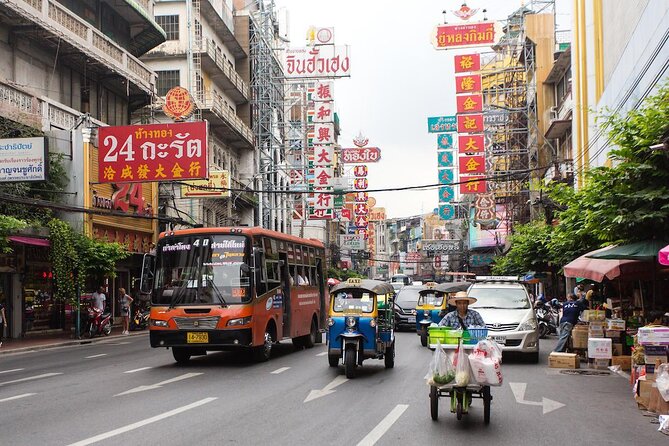
Day one: Chinatown after dark and Bangkok’s old center
The first meeting is at 5 p.m. at your Bangkok hotel, provided it is in the city area and not near the airports. That late start is useful if you arrive during the day, and evening is a good time for Chinatown.
You reach Chinatown using local public transport and a tuk-tuk. The exact mix can include the sky train, subway, bus, or another suitable option. This is more than a practical transfer. You see how Bangkok residents move around, and your guide has a chance to explain the city while you are on the way.
Chinatown street food
You have about an hour to walk along the famous food streets and try local dishes and desserts. Food costs are not included, so bring Thai baht or another accepted form of payment. The guide can help you understand what you are ordering, but the plan does not promise a set tasting menu.
This stop suits curious eaters who like to sample rather than sit down for a formal dinner. Portions can be small, so you can try several things without committing to one large meal. If you have allergies or dietary needs, give those details when booking. The operator specifically asks for dietary information in advance.
Pak Khlong Talat flower market
A tuk-tuk ride takes you to Pak Khlong Talat, Bangkok’s flower market. It operates 24 hours, so this is not a quick daytime market that closes before you arrive. You have about 20 minutes to look around.
The visit is short, but the setting gives you a different view of Bangkok commerce. Flowers move through the market day and night, and the stop works well as a sensory change after Chinatown’s food stalls. Do not expect a long shopping session. Think of it as a brief, vivid look at a working market.
More Floating Market Tours in Thailand
- Half-Day Railway Market and Floating Market Tour in Thailand
★ 4.5 · 3,924 reviews - Bangkok: Damnoen Saduak, Train Market & Mahanakhon Day Trip
★ 4.7 · 2,162 reviews - From Bangkok: Damnoen Saduak Floating Market Guided Tour
★ 4.4 · 2,020 reviews - Damnoen Saduak Floating Market and Maeklong Railway Market Tour
★ 4.5 · 1,588 reviews
Giant Swing and Loha Prasat
The route then continues by tuk-tuk to Sao Chingcha, better known as the Giant Swing. You have around 15 minutes at this landmark. It is a photo stop, but its location also helps you orient yourself within the old city.
Next comes Wat Ratchanatdaram, home to Loha Prasat. You have another 15 minutes here. The striking feature is the golden prasat, or hall, set along Ratchadamnoen Road. The time is enough for an introduction and a look around, but not for a slow architectural study.
Khao San Road is optional. You can browse, shop, or try more snacks, then return to your hotel by tuk-tuk and local transport. This flexibility is welcome. Khao San is not essential for every visitor, especially after a full evening on foot, but it gives first-time visitors a chance to see one of Bangkok’s best-known walking streets.
Day two: gold, royalty, canals, and a reclining Buddha
The second day starts at 8 a.m. and focuses on Bangkok’s major temples. The use of local transport continues, with the route potentially including trains, boats, taxis, buses, and tuk-tuks.
You need to dress carefully. For the Grand Palace and temple visits, sleeveless tops with scarves, shorts, leggings, and ripped pants are not allowed. Wear clothing that covers your shoulders and knees from the start. This avoids wasting time buying or borrowing suitable cover-ups.
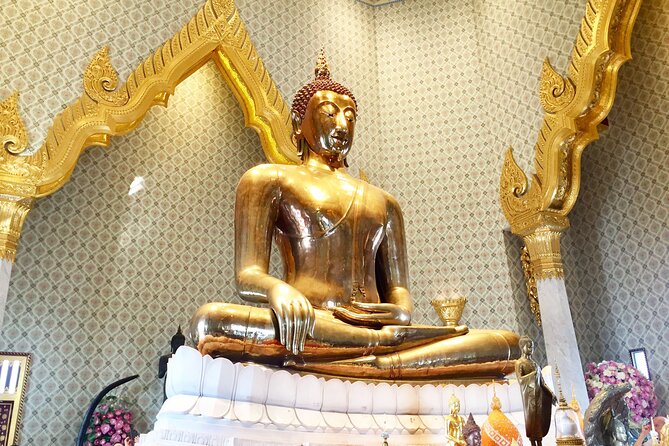
Wat Traimit and the solid Gold Buddha
Your first stop is Wat Traimit, the Temple of the Golden Buddha. The visit lasts about an hour, and admission is included. You will climb roughly 100 steps to reach the Gold Buddha hall, so comfortable shoes are important.
The image is described as solid gold, weighing 5.5 tonnes and valued at 250 million US dollars. Those figures provide scale, but the more useful part of the visit is seeing the statue in its temple setting and learning why it is such a notable object in Bangkok.
The stairs make this stop less comfortable for anyone with limited mobility. The tour information says most people can participate, but it does not promise step-free access. Ask the operator directly if your group needs a specific accessibility arrangement.
The Grand Palace and Temple of the Emerald Buddha
The Grand Palace receives about 90 minutes. Built from 1782, it is the major royal and religious sight on this route. The Temple of the Emerald Buddha is within the complex, so this stop combines palace buildings, temple spaces, and national religious symbolism.
Expect a concentrated visit rather than a quiet one. The site is a must-see, but it can feel demanding in the heat, especially after the first temple. Your guide is particularly useful here because the complex contains many details that are easy to miss when you are simply taking photographs.
A private long-tail boat through Bangkok Noi
After the palace, you take a private canal tour for about an hour. Bangkok Noi was once known as the Venice of the East, and the boat provides a strong contrast with the formal royal complex.
You see temples, village areas, houses, and life along the water. This is one of the most valuable parts of the trip because it shifts your attention from famous buildings to the city’s waterways. The boat is private for your group, and the activity fee is included according to the plan.
Wat Arun and Wat Pho
Wat Arun, the Temple of Dawn, follows the canal ride. You have about 45 minutes to see the temple and its large stupa, which dates back to the Ayutthaya period. Lunch is optional, so confirm with your guide how much time is available before deciding to eat.
The route then continues to Wat Pho by local transport. The temple is known for its reclining Buddha and for traditional Thai massage. You have about an hour here, and admission is included.
Day two packs in four major sights plus a boat ride. I like the progression, from gold to royal architecture, then from the river to two famous temples. The drawback is that it leaves little room for lingering. If you want detailed photography, extended prayer time, or a long lunch, tell your guide early.
Day three: the railway market and Damnoen Saduak
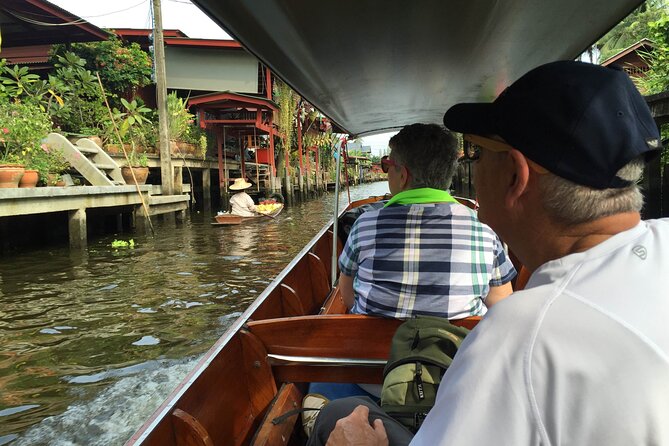
The third day changes pace and setting. Pickup is from your Bangkok hotel, except for hotels near the airports, and the route uses private transport. That matters because the markets are outside the central city and the road journey can be tiring when handled without a guide.
Mae Klong Railway Market
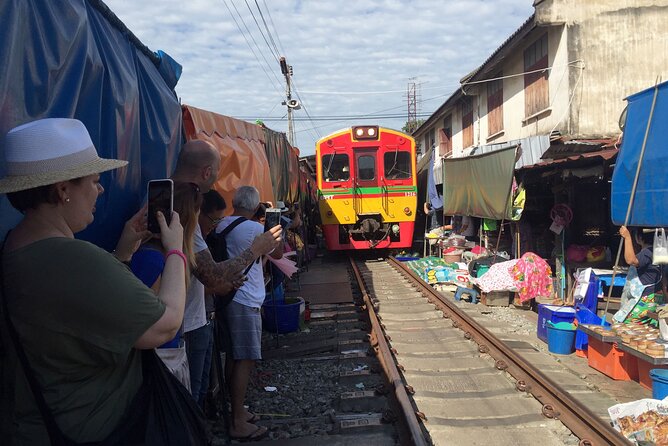
Mae Klong Railway Market, also called Hoop Rom Market, is the first stop. You have about 30 minutes. The market is built around a railway line, so the tracks are part of the setting rather than a decorative backdrop.
The short visit gives you time to walk through the stalls and see how the market fits into the railway space. The tour does not state that a train passage is guaranteed at your exact visit time, so do not book this day solely for a dramatic train moment. Any admission or market cost not included in the plan is extra.
Damnoen Saduak by private boat
From the market, you continue to a pier and board a private boat for roughly 30 minutes to reach Damnoen Saduak Floating Market. The market visit and canal sightseeing together take about 90 minutes.
This is the chance to see commerce conducted from boats and along narrow waterways. The boat ride is the reason to visit with a private arrangement: your group can view the canals without being folded into a large shared party. Still, floating markets can feel busy and commercial, and prices for purchases are not part of the tour fee. Treat shopping as optional, not as part of the paid package.
Lunch is optional before Wat Bang Kung. Since the day includes road travel, boat travel, and walking, I would plan to eat rather than assume you can wait until dinner.
Wat Bang Kung
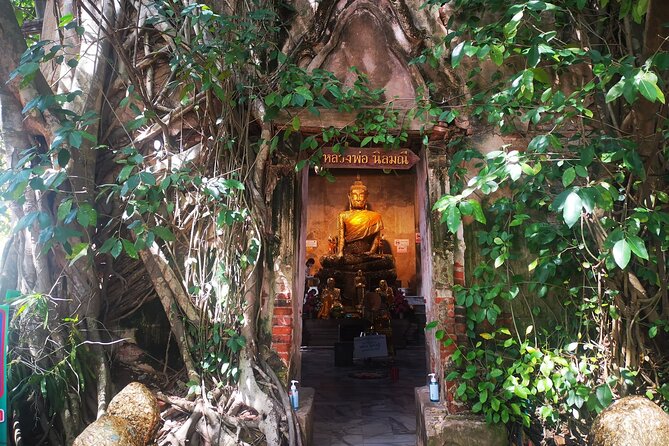
Wat Bang Kung is known for a temple hall surrounded by sacred trees. The setting is unusual, and it provides a calmer final stop after the market activity.
After the visit, private transport returns you to Bangkok. The listed transport time is about 30 minutes, though traffic can affect any Bangkok-area journey. This day is best for you if markets and local commerce interest you more than another set of grand temples.
Day four: Ayutthaya’s Buddha images and royal ruins
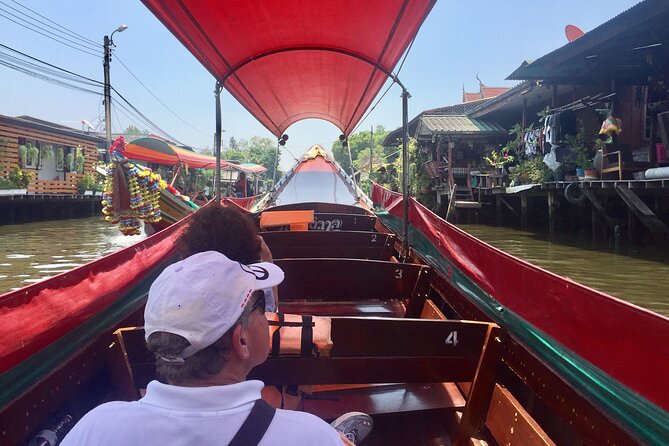
The final day begins at 8 a.m. with a private car transfer from Bangkok to Ayutthaya. This is the easiest day for your group logistically because you are not piecing together public transport between widely spaced temple sites.
Ayutthaya is a UNESCO World Heritage site and was once the royal center of the kingdom. The day combines major monuments with a private small boat ride, giving you both close views on foot and a wider view from the water.
Wat Mahathat
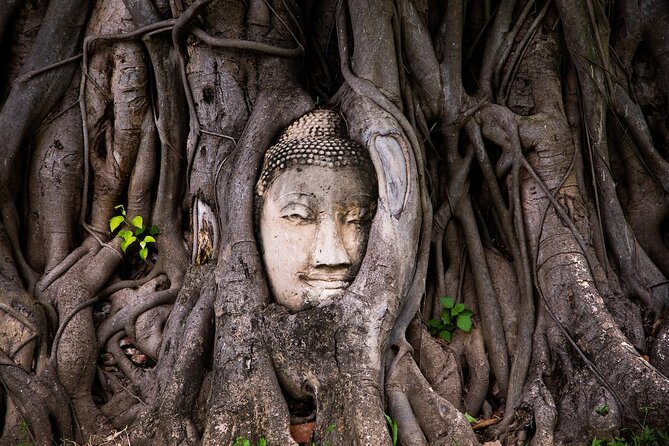
Wat Mahathat is your first temple, with about 45 minutes on site. The famous Buddha head set among tree roots is here, along with a large stupa in the center of the temple area.
This is one of those places where a guide helps with context and crowd flow. The tree-root image is instantly recognizable, but the wider temple ruins make the stop more than a single photograph. Admission is included.
Wat Phanan Choeng
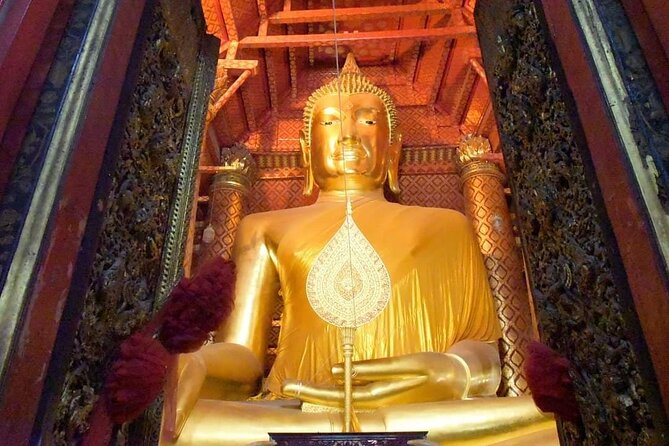
Next is Wat Phanan Choeng, also for about 45 minutes. The main attraction is a large golden seated Buddha inside the main hall. The temple remains important to local Thai worshippers as well as people visiting Ayutthaya, so you should behave respectfully and follow your guide’s instructions about temple etiquette.
Lunch is optional. As on the previous day, this means you should budget separately and allow time for the meal.
A boat around the historic park
A private small boat tour lasts about an hour. From the water, you see temples, houses, villages, and everyday life along the river. The ride adds scale to Ayutthaya. Ruins can blur together after several hours on foot, while the boat lets you rest and view the old city from a different angle.
This activity is listed as included, along with the day’s specified admissions and transport. Bring sun protection because the boat offers exposure to the weather.
Wat Phra Sri Sanphet
The last major stop is Wat Phra Sri Sanphet, which once served as the royal chapel inside the former Ayutthaya palace. Its design later helped provide a model for Bangkok’s Grand Palace and the Temple of the Emerald Buddha.
That connection makes this an especially good final stop. After seeing the Bangkok palace on day two, you can now compare it with the earlier royal center. The visit lasts about an hour, enough time to understand the site without turning the day into a long archaeological lecture.
What the $738.48 price means
At $738.48 per person, this is not a budget sightseeing package. The value depends heavily on group size. A couple or small family pays more per person than a larger private group, but you are paying for four days of guiding, private touring arrangements, specified transport, admission fees, boat trips, and accident insurance.
The price includes an English-speaking guide, transportation and activities listed in the plan, and the admissions specifically marked as included. One dinner is listed among the inclusions, but several lunches and other meals are optional. Personal spending, tips, gratuities, accommodation, airport transfers, and fees not listed are extra.
Group discounts are offered, which may improve the price for a larger party. The private format also has real value if you want help with local transport on days one and two, or if your group needs a flexible pace. If you are comfortable arranging Bangkok’s temples, trains, boats, and Ayutthaya yourself, you can likely spend less independently. This package is buying convenience, explanation, and coordination.
Who should book this private trip?
I would recommend it for first-time Bangkok visitors who want the big sights but also want street-level experiences. It works particularly well for families or professional groups with only a few free days, since the route covers a great deal without requiring you to arrange each transfer.
The tour also suits you if you like trying local food, riding public transport, seeing canals, and visiting working markets. The guides named in the feedback, especially Time and Gwen, were praised for being polite, helpful, and fun, which matters on a packed schedule.
I would hesitate if you dislike early starts, stairs, heat, or organized sightseeing. The program is not designed for long unplanned breaks. You should also avoid booking it if your hotel is near the airport and you need guaranteed pickup, since airport-area hotels are excluded from the standard pickup arrangement.
Confirmation is provided at booking, children must be accompanied by an adult, and the activity runs in all weather. Wear light clothing that still meets temple rules, and carry a hat, sunglasses, sunblock, and a camera. Missing the tour because you arrive late or fail to appear does not qualify for a refund.
Should you book it?
Book this if you want a private introduction to Bangkok with Ayutthaya and the floating markets added without having to plan the transport yourself. The strongest features are the mix of public and private travel, the two boat experiences, and the chance to compare Bangkok’s palace with Ayutthaya’s former royal center.
Skip it if you want a cheap, slow-paced holiday or prefer to choose restaurants and temple stops on the spot. At this price, the trip makes the most sense when shared by a group that values a dedicated guide, a broad route, and help navigating Bangkok’s busy transport network.
FAQ
Is the tour private?
Yes. Only your group participates in the activity, with an English-speaking guide providing service according to the planned route.
Does the tour include accommodation?
No. Accommodation is not included, so you need to arrange your own hotel in Bangkok.
Are airport transfers included?
No. Airport transfer is excluded from the package, though it can be booked directly with the provider.
What should I wear to the Grand Palace?
Wear clothing that covers your shoulders and knees. Sleeveless shirts with scarves, shorts, leggings, and ripped pants are not allowed at the Grand Palace and temple visit.
Are meals included?
One dinner is listed among the inclusions. Lunches and other optional meals are not included, and personal food expenses are extra.
What is the cancellation policy?
You can receive a full refund when you cancel at least six full days before the start time. Cancelling two to six full days ahead allows a 50 percent refund. Cancellations less than two full days before the start time are not refunded.
More Private Market Tours in Thailand
- Private Tour: Floating Markets of Damnoen Saduak Cruise Day Trip from Bangkok
★ 3.5 · 199 reviews - Floating Market & Train Market Private Tour(Premium Service)
★ 5.0 · 112 reviews - Maeklong Railway & Floating Market Tour (Private & All-Inclusive)
★ 5.0 · 108 reviews - Private Tour to Railway Market Floating Market and Ayutthaya
★ 5.0 · 104 reviews
More Private Market Tours in Bangkok
- Private Excursion to Maeklong Railway and Floating Markets
★ 5.0 · 850 reviews - Floating and Railway Market (Optional Waterfall): Private Tour
★ 5.0 · 827 reviews - Private Excursion to Floating Market and Ayutthaya World Heritage
★ 5.0 · 515 reviews - Private Tour to Railway Market and Damnoen Saduak Floating Market
★ 5.0 · 200 reviews
Just added around Bangkok
- Bangkok Udomsuk Thai Cooking Class with local market tour★ 5.0 · 5 reviews
- Morning Buddhist Almsgiving, Grand Palace and Flower Market Tour in Bangkok★ 3.5 · 9 reviews
- Floating & Railway Markets and Erawan Waterfall [Optional Luxury]★ 5.0 · 43 reviews
- Discover Ayutthaya at Sunset: Historic Temples & River Cruise★ 4.5 · 29 reviews
- Floating Market & Railway Market near Bangkok★ 4.0 · 5 reviews
- Silom Thai Cooking School with Fresh Market Tour★ 5.0 · 73 reviews
- Ayutthaya Floating Market Admission Ticket with Transfer★ 5.0 · 2 reviews
- Train & Floating Market Food Adventure + Scenic train ride★ 5.0 · 102 reviews
Floating Market Tours, compared.
Damnoen Saduak Market and Maeklong Railway Market
Read our review →
The Old Siam: Damnoen Saduak and Maeklong Railway Market
Read our review →
Train Market & Floating Market with Boat Ride
Read our review →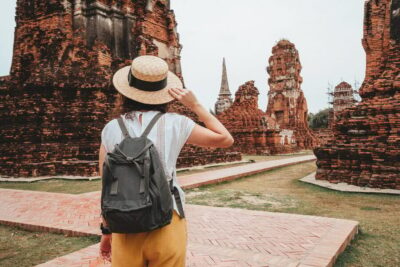
Ayutthaya & Ayothaya Floating Market Day Trip
Read our review →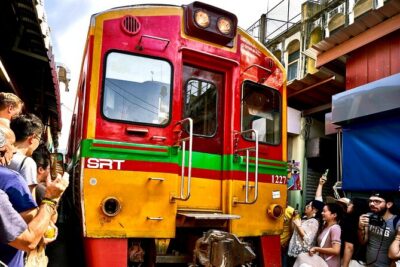
Half-Day Railway Market and Floating Market Tour in Thailand
Read our review →
Cooking Class Hoi An:Local Market, Basket Boat, Fishing & Cooking
Read our review →