
Review · CHINA
3-Hour Herbal Wholesale TCM Market and a Local Wet Market Tour
Chengdu’s wholesale markets show a side of the city that temples and teahouses cannot. In three hours, you move from piles of Sichuan peppercorns and dried chilies to the earthy, medicinal smells of a Chinese herb market, then into a local wet market. Lance and his partner guide the walk and explain what you are seeing in plain terms.
I like the sharp focus on Sichuan food culture, especially the chance to compare different peppers, turmeric, and huajiao from several places of origin. I also like the relaxed pace. You have time to ask about local routines, Chinese medicine, and ingredients instead of being hurried from one sight to the next.
The main drawback is that this is a market walk, not a polished sightseeing tour. The covered herb market can smell intense, the experience involves walking and standing, and the tour’s appeal depends on your interest in food, medicine, and ordinary city life.
Key points at a glance
- More than 10 kinds of chili peppers: See how broad Sichuan’s pepper culture really is, beyond the familiar red dried chili.
- Huajiao from different origins: Compare the famous Sichuan peppercorn with other pepper varieties sold in the city.
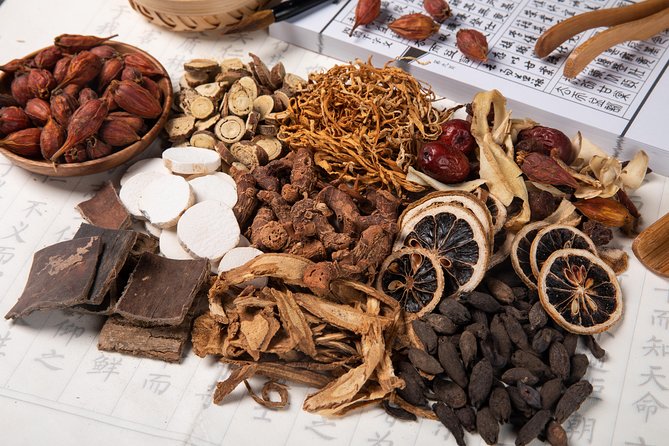
- Thousands of TCM herbs and plants: The herb market offers a close look at ingredients used in Traditional Chinese Medicine.
- Two very different markets: Move from wholesale spices and medicinal goods to a local wet market with food and daily commerce.
- Private three-hour walk: Your group participates alone, making it easier to ask questions and set the pace.
- A useful starting point: The walk begins at Wenshu Yuan Monastery, a well-known Chengdu meeting point near public transportation.
Why this Chengdu market walk feels different
Many city tours focus on landmarks. This one focuses on ingredients, smells, trade, and the practical side of life in Chengdu. You are not simply looking at a display of Sichuan products. You are seeing the goods in the places where they are sold in quantity.
That distinction matters. A small shop may show you one attractive jar of peppercorns. A wholesale market lets you see the range: different sizes, colors, origins, and forms. You may notice how much of Sichuan cooking depends on dried ingredients that keep well and can be bought in bulk.
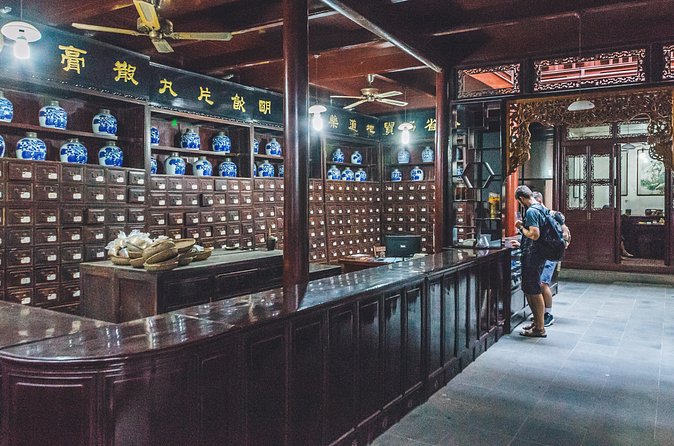
The TCM portion adds another layer. Traditional Chinese Medicine is part of Chinese culture, and the market gives you a visual introduction to its plant-based ingredients. You may see dried roots, herbs, and other natural materials arranged for sale. The experience is most useful if you approach it as cultural education, not as a medical consultation.
Lance and his partner are central to the experience. Their role is to explain what you are seeing and connect the market goods with Chinese cuisine, medicine, and everyday Chengdu life. The small private format should suit you if you prefer asking direct questions rather than listening to a fixed speech in a large group.
More wet and camel markets in China:
- Beijing: Dumpling-Making Class with wet Market visit
★ 5.0 · 9 reviews - 4-Hr Shanghai Layover Tour: Maglev, Wet Market, Food, Landmarks
★ 5.0 · 8 reviews - Hangzhou Insider Mini-Hike: TCM, Hill Views and Wet Market
★ 5.0 · 3 reviews
Meeting at Wenshu Yuan Monastery
The walk begins at Wenshu Yuan Monastery, 66 Wen Shu Yuan Jie, in Qingyang District. This gives you a clear place to meet and puts the tour near public transportation.
The monastery itself is not described as a formal stop on the market route, so treat it mainly as the meeting point. Plan to arrive with enough time to find the entrance and locate your guide. A phone with the mobile ticket and booking confirmation is useful, especially in a busy city where small street details can be hard to spot.
The activity returns to the meeting point at the end. That makes planning easier than a tour that leaves you across town. You can pair it with other Chengdu sightseeing before or after, but leave room for the full three hours rather than scheduling something immediately afterward.
Pickup is offered, though the stated start and end point is Wenshu Yuan Monastery. Confirm the pickup arrangement when booking if you want door-to-door collection.
Following the spices through Chengdu
The first major focus is Chengdu’s wholesale spice trade. The market is intended for variety, not just for a quick look at the ingredients used in mapo tofu or hot pot.
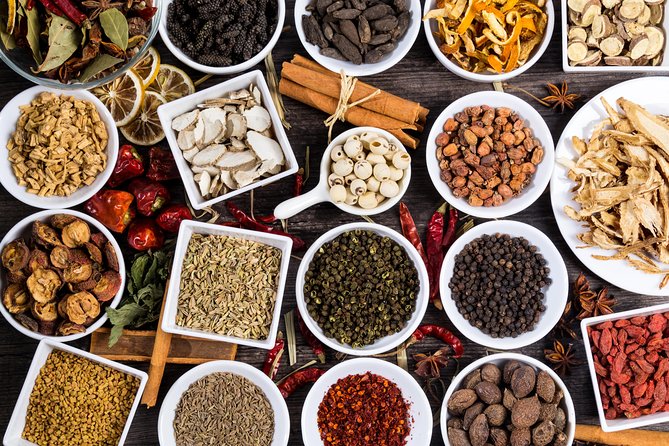
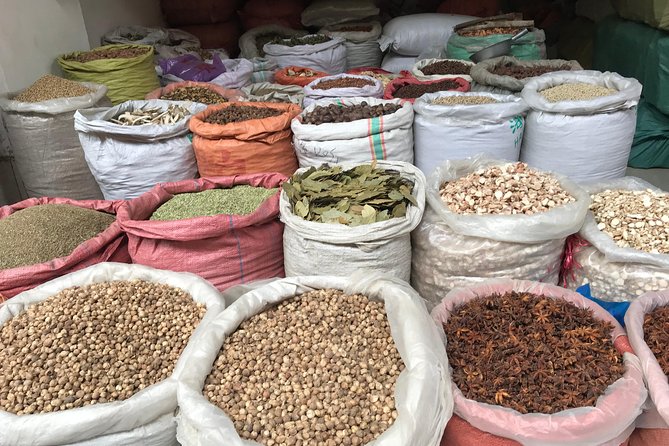
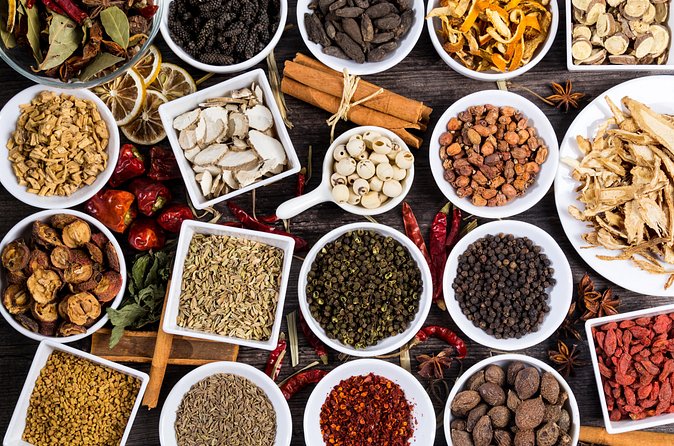
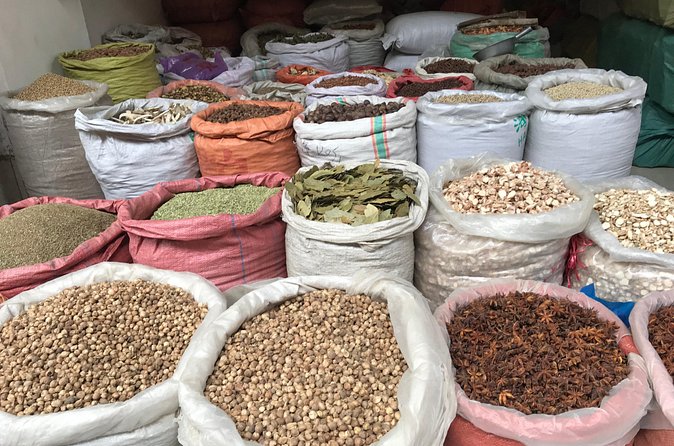
You can expect to encounter turmeric, several types of non-Sichuan peppers, and more than 10 kinds of chili peppers. The range is one of the tour’s strongest features. Sichuan cooking is often reduced to one idea of heat, but this market shows that heat can come from different chilies, while fragrance, color, and the numbing quality of huajiao add separate elements.
Huajiao, or Sichuan peppercorn, is especially important. It is not simply a hot pepper. Its characteristic numbing sensation is part of the flavor profile that makes Sichuan food distinctive. Seeing different huajiao varieties from different places of origin helps you understand that even a familiar ingredient can have regional differences.
You may also find spices that are less common in ordinary city markets. That makes this a useful stop for anyone who cooks Chinese food or wants to bring home ingredients, though the provided information does not specify which products are permitted through customs or how purchases are handled. Check your home country’s rules before buying dried food or plant products.
The market setting also has practical value. Wholesale goods are sold in a working environment rather than arranged mainly for tourists. You should expect a more direct, functional experience, with the focus on what is being sold and how it is used.
Inside the Traditional Chinese Medicine market
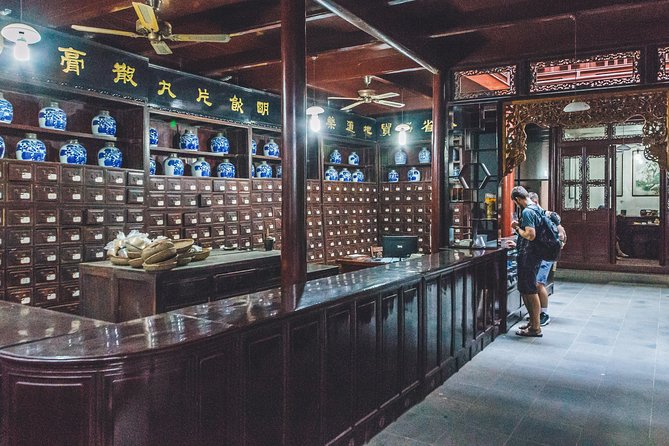
The covered TCM market changes the mood of the walk. The smell is a major part of the experience. Dried herbs and plants create an intense mix of earthy, woody, sweet, and medicinal scents.
The market contains more than a thousand types of herbs and Chinese medicinal products. That scale can be difficult to grasp from a short visit, but it gives you a sense of how broad the traditional system is. Instead of seeing one or two familiar ingredients, you encounter a whole commercial world built around natural materials.
This is where a guide adds real value. Without explanation, dried roots and unfamiliar plants can look like random bundles. Lance and his partner can connect the goods with the role TCM has played in Chinese society over thousands of years, including its perceived contribution to the development and prosperity of the Chinese nation.
Keep your expectations sensible. This is not presented as a clinical appointment, diagnosis, or treatment session. You are learning about a cultural and commercial tradition. If you have a serious health concern, use a qualified medical professional rather than relying on anything said during a sightseeing walk.
The market may be fascinating if you enjoy botany, food traditions, history, or old systems of daily care. It may be less appealing if you dislike strong smells or prefer attractions with clear visual displays and little explanation.
A few more market tours around China worth a look
- Mini Group Xian Day Tour to Terracotta Army, City Wall, Pagoda and Muslim Bazaar
★ 5.0 · 1,320 reviews - Half-Day Chengdu Cooking Class with a Local Market Visit
★ 5.0 · 465 reviews - Shanghai Day Tour to Zhujiajiao Water Town, Yu Garden, Bazaar, Bund
★ 5.0 · 162 reviews - Organic Chinese Dumpling Class with Market Walk
★ 5.0 · 88 reviews
The local wet market and everyday Chengdu
The second market brings the focus back to food and daily life. Unlike the herb market, a local wet market is tied to ordinary shopping. You get a closer look at how ingredients enter home kitchens and restaurant cooking.
The available details do not provide a stall-by-stall list, so you should not expect a fixed menu or guaranteed tasting. The value is in seeing the market as a living part of Chengdu, with local food products and routines rather than a staged cultural show.
This stop also helps connect the spice market to the food on your plate. Chengdu’s cooking depends on the relationship between fresh produce, dried chilies, peppercorns, herbs, and other seasonings. Seeing these ingredients in separate markets gives you a more practical understanding of how local cuisine is built.
The walk is described as easygoing rather than packed with activity. That suits you if you like pausing to look, asking questions, and taking in the atmosphere. It may disappoint you if you want constant action, tastings, demonstrations, or a long list of formal attractions.
What the three-hour format gives you
Three hours is a useful length for this experience. It is long enough to cover the spice market, the TCM market, and the local wet market without turning the outing into a full-day commitment.
The time also supports conversation. The strongest part of this tour is not the number of locations. It is the chance to ask about Chinese medicine, ingredients, pepper origins, and local Chengdu routines while you are standing in front of the products.
Because the activity is private, only your group participates. That can make a big difference in a market. You do not have to compete with a large crowd to hear the guide, and you can spend more time on the subjects that interest you. A food enthusiast might want to discuss chili varieties, while someone interested in TCM may prefer to ask about herbs and traditional uses.
The pace is described as relaxed and easygoing. I see that as a strength, but it also tells you what not to expect. This is not a high-energy route with one attraction after another. It is a close look at a few connected parts of Chengdu life.
Price, private format, and overall value
The listed price is $46.16 per person. Value depends on how much you want from a market visit. If you only want to wander through a spice or wet market on your own, the cost may seem high. You could see commercial activity without paying for a guided tour.
The price makes more sense if you want interpretation. The products can be unfamiliar, the TCM market can be hard to understand at a glance, and the private format gives you direct access to Lance and his partner. You are paying for context and navigation as much as for the walk itself.
Group discounts are available, which may improve the value if you are traveling with several people. The activity is booked, on average, 22 days ahead, so I would reserve early if your Chengdu dates are fixed. That advance booking pattern also suggests that you should not assume a last-minute place will be available.
Confirmation arrives at booking, and a mobile ticket is offered. The tour is near public transportation, and most people can participate. The experience requires good weather. If poor weather causes cancellation, you are offered another date or a full refund.
Free cancellation is available up to 24 hours before the start time. Inside that window, the payment is not refunded and changes are not accepted. The cut-off follows local time, so check the clock in Chengdu rather than relying on your home time zone.
Who should book this experience?
I would choose this walk if you want to understand Chengdu through food, trade, and local customs rather than through major sights alone. It is a particularly good match for people interested in Sichuan cooking, peppers, Traditional Chinese Medicine, markets, or photography of everyday commerce.
The private format also suits you if you prefer a quiet pace and plenty of questions. Families, couples, and small groups may appreciate having the guide’s attention to themselves, although the provided information does not specify a minimum age or child policy.
You should think twice if you dislike strong odors, crowded commercial settings, or walking through working markets. You should also skip it if you want a tasting-heavy food tour. The focus is on seeing and understanding ingredients, not on a guaranteed series of meals.
Should you book the Chengdu market walk?
Book it if you want the parts of Chengdu that do not appear on a standard sightseeing route. The combination of wholesale spices, more than a thousand TCM herbs, and a local wet market gives you a clear look at how food and traditional medicine fit into city life.
The tour is strongest when you are curious and willing to slow down. Lance and his partner provide the human connection, while the private format lets you shape the questions. At $46.16, it is a fair choice for a guided cultural walk, especially if you are sharing the experience with a group and using the available discount.
Skip it if you need polished exhibits, guaranteed tastings, or a fast schedule. For everyone else, this is a thoughtful three-hour addition to a Chengdu visit, with enough unusual detail to change how you see Sichuan food afterward.
FAQ
Where does the tour start?
The tour starts at Wenshu Yuan Monastery, 66 Wen Shu Yuan Jie, Qingyang District, Chengdu, Sichuan, China, postal code 610084.
Where does the tour finish?
The activity ends back at the meeting point at Wenshu Yuan Monastery.
How long does the market tour last?
The walking tour lasts approximately three hours.
What markets are included?
The experience includes a Sichuan spice wholesale market, a Traditional Chinese Medicine herb market, and a local wet market.
What can I see at the spice market?
You can see turmeric, more than 10 kinds of chili peppers, different types of peppers, and huajiao from different places of origin.
How many herbs are found in the TCM market?
The market includes more than a thousand types of different herbs and Chinese medicinal products.
Is this a private tour?
Yes. Only your group participates in the private activity.
Can I cancel for a full refund?
Yes. You can cancel at least 24 hours before the start time for a full refund. Cancellations or changes made less than 24 hours before the start time are not accepted for a refund.
More Shopping Tours in China
- Xi’an: Terracotta Army, Lunch, City Wall, Pagoda, Bazaar
★ 5.0 · 72 reviews - Organic Xiao Long Bao Soup Dumpling Class & Market Walk
★ 5.0 · 62 reviews - Chengdu: Cooking Class with Fresh Market Half Day Experience
★ 5.0 · 42 reviews - Private Guangzhou Food Tour Michelin Restaurant&Local Food Market
★ 5.0 · 32 reviews
Just added around China
- Three-Hour Private Chengdu Tea Wholesale Market Tour★ 5.0 · 4 reviews
- Half-day Dandan Noodles Cooking Class with a Local Market Visit★ 5.0 · 8 reviews
- Private Tour to Pearl Market Acrobatic Show & Peking Duck Dinner★ 5.0 · 5 reviews
- Private Distinctive Market Tour with Shaomai Lunch and Full Massage in Beijing★ 5.0 · 2 reviews
- Small Group Beijing Temple of heaven and Summer Palace with Pearl market★ 5.0 · 3 reviews
- Half Day Tour:Market Shopping Acrobatic Show & Peking Duck dinner★ 5.0 · 2 reviews
- Lama Temple, Hutong and Silk & Pearl Market Private Day Tour★ 5.0 · 5 reviews
- Full-Day Private Tour Panjiayuan Antique Market and Beijing Capital Museum★ 5.0 · 3 reviews
Wet & Camel Market Tours, compared.
Singapore Market to Table Culinary Experience (Wet Market Tour included)
Read our review →
Immersive Cooking Class & Wet Market Tour by Local Chef +Cookbook
Read our review →
Chef Samuel’s Private Malaysian Cooking Class with Wet Market Tour
Read our review →

Cairo Unusual Day Tour Visit Camel Market in Birqash
Read our review →
4-Hr Shanghai Layover Tour: Maglev, Wet Market, Food, Landmarks
Read our review →
Hangzhou Insider Mini-Hike: TCM, Hill Views and Wet Market
Read our review →Browse the lists this tour appears in