
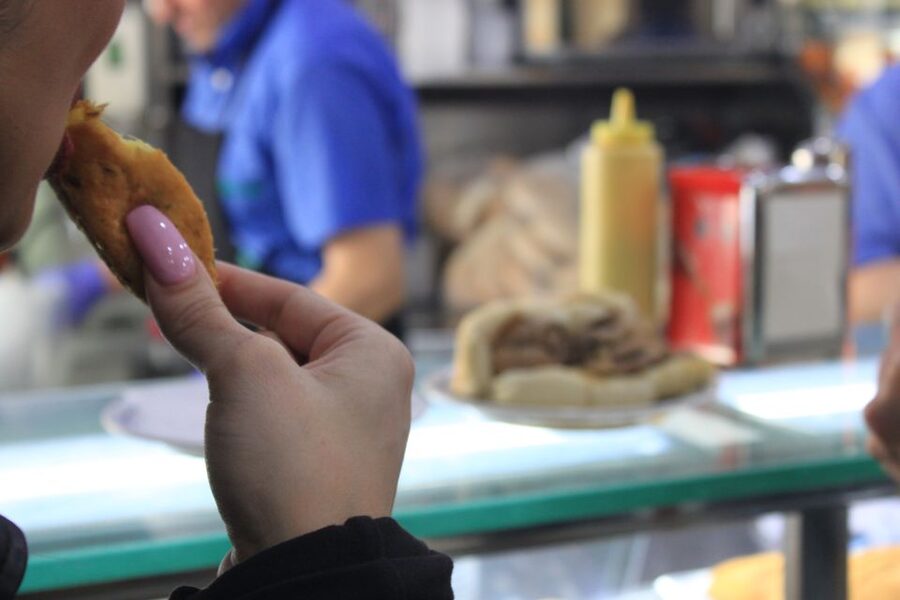
Review · LISBON
Lisbon: Local Market, Food, and Culture Walking Tour
Lisbon’s food culture makes the most sense when you follow it on foot, from market counters and traditional shops to a ferry ride and a seafood stop across the river. This three-hour tour links those pieces with tastings of Pastel de Nata, fish soup, shrimp patty, bifana, Ginjinha, cheese, wine, and coffee.
I like the small group size, capped at 12, and the way the ferry to Cacilhas adds a fine view of Lisbon without turning the tour into a sightseeing bus ride. I also like the relaxed guide style. Luis, Bruno, Alexandra, and Tania have each been praised for mixing food with useful stories about local life. The main catch is the amount of walking, plus timing can be tricky at Time Out Market, which may be winding down by midafternoon.
Key points to know before you book

- The tour crosses the Tagus by public ferry: The short ride to Cacilhas adds a change of scene and a view back toward Lisbon.
- You get a full tasting menu: Expect Pastel de Nata, Portuguese coffee, fish soup, shrimp patty, salty snacks, bifana, Ginjinha, cheese, and a wine tasting.
- The route ends at Rossio Square: You finish in central Lisbon, rather than returning to the original market meeting point.
- The group stays small: A maximum of 12 people makes it easier to ask questions and keep up with the guide.
- Comfortable shoes matter: This is a walking tour with several food stops, city streets, and ferry transfers.
- The experience suits curious eaters: Food restrictions must be shared in advance so arrangements can be made.
Why this food walk gives you more than a meal

Food is a useful way to understand Lisbon. A pastel is not only a sweet snack, and a bifana is not merely a pork sandwich. Each stop gives you a small look at how people eat during an ordinary day, from a quick coffee in the morning to seafood, wine, and simple counter food.
I like that this route does not keep you in one polished tasting room. You begin at Mercado da Ribeira, move across the water to Cacilhas, then return to the central streets of Baixa and Rossio. The changes in setting help the city feel lived-in rather than arranged for sightseeing.
The guide fills in the gaps. You hear about Lisbon’s past and present while moving between stops, so the history has a practical setting. Instead of looking at a building and receiving a long lecture, you may be discussing Portuguese eating habits while holding a small glass of Ginjinha or waiting for a local snack.
The tour lasts three hours, though one guide-led outing has run longer. That is useful if you want a generous introduction to Lisbon’s food, but less useful if you have a train, museum booking, or dinner reservation immediately afterward.
More Local Market Tours in Portugal
- Porto Local Market Visit & Cooking Class / Showcooking
★ 5.0 · 206 reviews - Porto: Local Market Tour & Cooking Class/Showcooking
★ 4.9 · 32 reviews - Madeira : Santo de Serra Local Farmers’ Market half day trip
★ 4.3 · 26 reviews
Starting at Time Out Market and Mercado da Ribeira
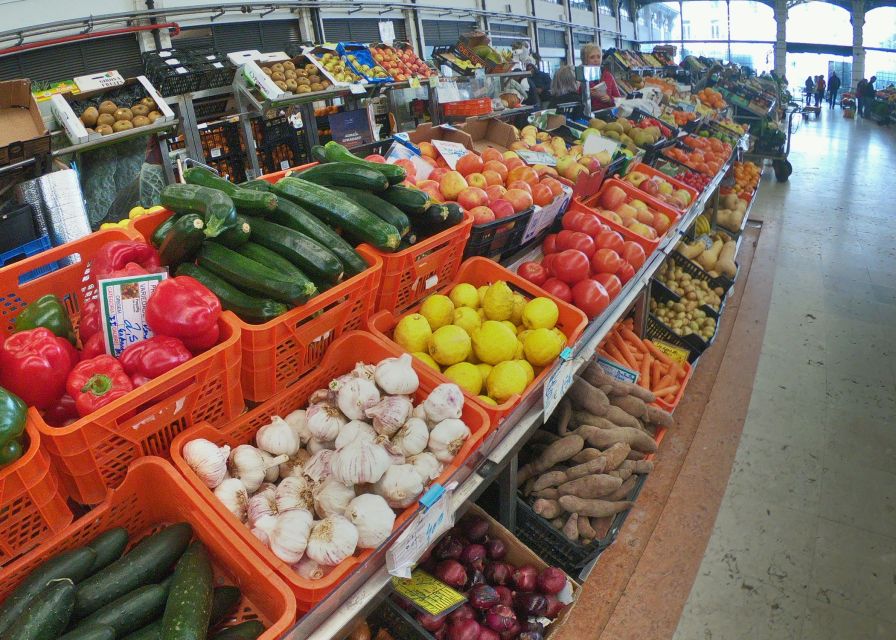
Meet on the river side, at the front entrance of Time Out Market Lisboa. The market is one of the city’s best-known food halls, but this tour uses it as a starting point rather than treating it as the whole experience.
The opening stop includes a coffee and a Pastel de Nata. Think of this as a Portuguese-style breakfast: strong coffee with a small custard tart, usually best eaten warm and fresh. It is a gentle start, especially if you are not ready for a large meal first thing.
The market stop lasts about 30 minutes and includes time for a photo and tasting. It is a useful introduction to the city’s food scene because you can see many Portuguese flavors gathered in one place. At the same time, Time Out Market can feel busier and more commercial than the smaller places later in the route.
Timing deserves attention. If your start time is later in the day, some stalls may be closing or packing up. One afternoon arrival found the market winding down around 2 p.m. You can still enjoy the stop, but an earlier departure may give you a better sense of the market at work.
The opening location is easy to reach in central Lisbon, but do not confuse the market with the final meeting point. You begin here, then travel across the river before returning to the city center.
The ferry to Cacilhas and a different side of Lisbon
The ferry crossing takes about 15 minutes. It is one of the nicest details of the route because the transport is part of the experience, not just a way to fill time between tastings.
From the water, you get a view back toward Lisbon while the guide continues the conversation. The trip also changes the mood. After the market and city streets, you arrive in Cacilhas on the south bank, where seafood takes the leading role.
You should keep your expectations practical. This is a short public ferry journey, not a sightseeing cruise with a narrated route. Its value comes from the view, the local connection, and the simple pleasure of crossing the Tagus as part of your day.
The ferry also means the tour has a few moving parts. Stay close to the guide and wear shoes that can handle walking between the landing and food stops. The route is not designed for wheelchair users or people with mobility impairments, and it is not recommended for pregnant women.
Seafood in Cacilhas
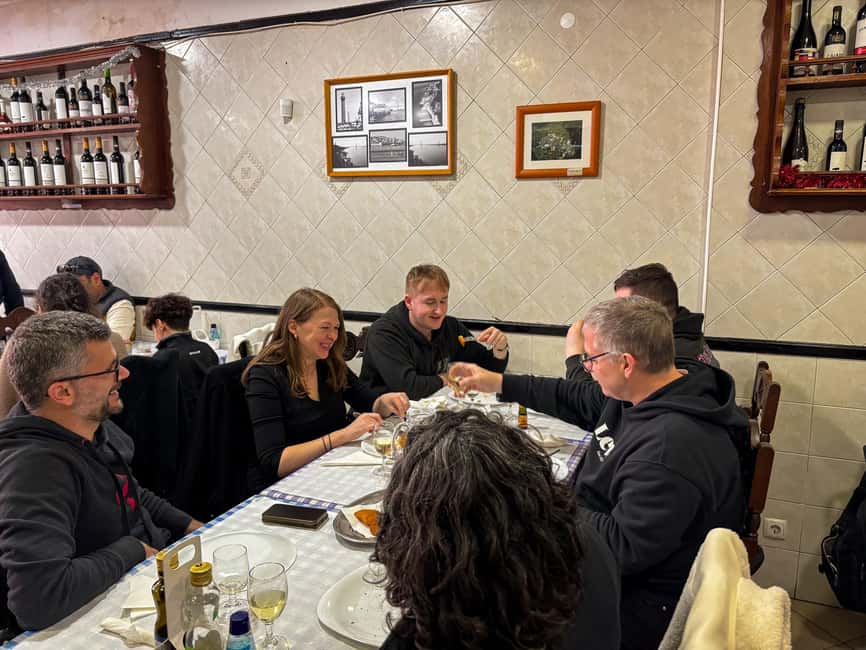
Cacilhas is the tour’s clearest change of scene. Here, seafood gets top billing, and the tasting stop lasts about 45 minutes.
You can expect fish soup and a shrimp patty. These are modest portions rather than a full restaurant lunch, but they give you a chance to try familiar Portuguese flavors in a setting away from the main tourist center.
The fish soup is especially useful for understanding the country’s everyday cooking. It is the sort of dish that says more about local food habits than an expensive showcase plate. The shrimp patty adds a different texture and a more portable, snack-like taste.
I like this part of the route because it links the food to the river. Seafood is not presented as an abstract national symbol. You have crossed the Tagus, looked back at Lisbon, and then sat down to eat food connected to the water and the south-bank setting.
Do not expect a long free period in Cacilhas. The stop is organized around tasting and conversation, with about 45 minutes available. If you want to explore the area at length, you would need to return separately.
More produce and farmers markets in Portugal:
- Porto: Cooking Class with Local Market Visit
★ 5.0 · 15 reviews - South of Lisbon: Local Market & Canned Sardines Factory Tour
★ 5.0 · 2 reviews - Hanoi Cooking Class: Culture, Local Market & Meaning CSR Impact
★ 5.0 · 5,147 reviews - Cooking Class and Lunch at a Tuscan Farmhouse with Local Market Tour from Florence
★ 5.0 · 4,831 reviews
Returning to Baixa for traditional bites
After another 15-minute ferry ride, the tour returns to Lisbon and continues through Baixa. This central district is a natural place to connect food with the city’s daily rhythm.
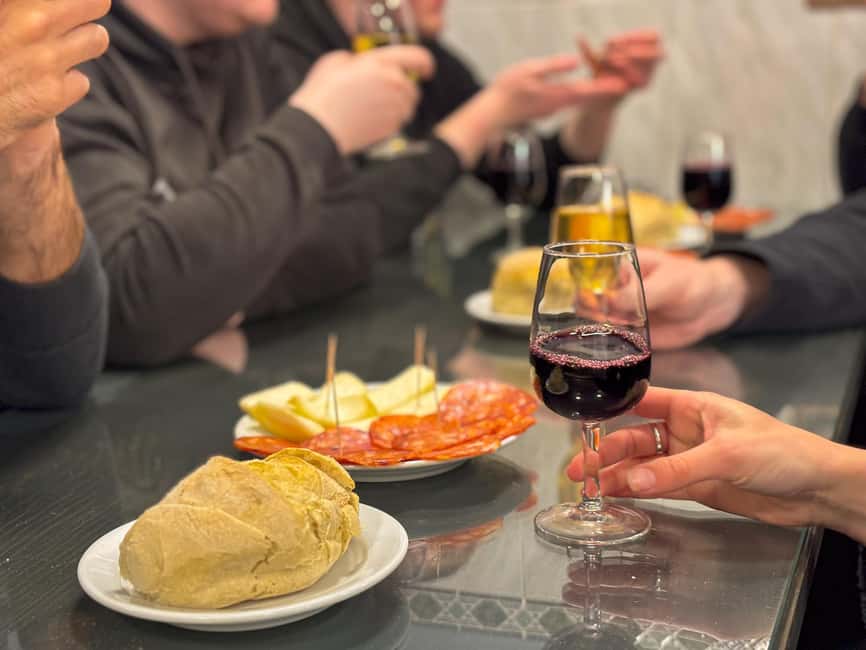
The Baixa tasting stop lasts about 45 minutes and includes more of the foods listed in the tour menu, such as salty delicacies, cheese, Portuguese wine, and possibly the local snacks associated with the route. The exact order can vary, since food service and timing do not always run like a railway timetable.
This section works well for people who want more than sweets. You have already had coffee, a custard tart, soup, and seafood. Now the tastings move toward savory items and drinks, giving you a broader sense of Portuguese flavors.
The guide’s role matters here. Bruno has been praised for being friendly, informative, and fun, while Alexandra has been singled out for answering questions and keeping a good balance between eating and explanation. Tania has also been praised for adding useful history and culture while keeping the pace enjoyable.
Those names may not be your guide on the day, but they give you a fair idea of the tone to expect: informal, social, and focused on conversation rather than a formal lecture.
Rossio Square, bifana, Ginjinha, and the final tasting

The last stop is Rossio Square, where the tour finishes. The area is one of central Lisbon’s main gathering points, so it is a convenient place to continue sightseeing, find a café, or make your way to another part of the city.
The final 45-minute tasting may include a bifana, Ginjinha, and additional cheese or wine. A bifana is a simple Portuguese pork sandwich, often served as a quick and satisfying snack. It is not fancy, and that is the point. You get a taste of the kind of food that fits into ordinary city life.
Ginjinha is a small serving of sour cherry liqueur. It is one of Lisbon’s signature drinks and usually arrives in a tiny glass, so do not expect a full cocktail. It is sweet, strong, and best treated as a tasting rather than a reason to skip lunch.
The Rossio finish gives the tour a useful ending. You are not left beside the market after spending the afternoon on the other side of the river. You finish in a central square, with Lisbon’s streets and transport links close by.
What the $82 price includes
At $82 per person, the tour is not the cheapest way to eat in Lisbon. You could buy a pastry, coffee, bifana, and drink on your own for much less. The price makes more sense if you want the guide, the ferry crossings, the planned sequence of stops, and several tastings without having to choose every place yourself.
The small group limit helps the value. With no more than 12 people, the guide can answer questions and keep the group together more easily than on a large coach-style outing. You are paying partly for access to a local route and partly for the convenience of having food, transport, and commentary arranged.
The value also depends on your appetite and interests. If you only want a big lunch, this may feel expensive because the food comes in tasting portions. If you want a broad sample of Portuguese snacks and drinks, the price is easier to justify.
I would compare it with the cost of a separate food tour plus ferry tickets and several small purchases. The tour is most useful on your first days in Lisbon, when you need an introduction to local dishes and want help deciding what to order later.
Walking, weather, and practical comfort
Bring comfortable shoes, ideally tennis shoes or another pair you can wear for several hours. The route involves city walking, ferry transfers, and multiple stops. It is not suitable for wheelchair users or people with mobility impairments, and the activity is not recommended for pregnant women.
Bring water. Lisbon can feel hot in summer, so sunscreen is sensible. In winter, take a jacket, especially because the ferry crossing can feel cooler than the streets.
The tour may use two languages, with English, Spanish, or Portuguese offered. If you need a fully English-only group, check the arrangements before booking. A bilingual tour may be perfectly manageable, but it can take a little longer to explain each point.
Tell the provider about food restrictions in advance. The route includes seafood, dairy, meat, pastry, alcohol, and other prepared foods, so early notice is important if substitutions are needed.
You also need to plan around the meal pattern. The tour provides many samples, but the portions are not described as a full breakfast, lunch, or dinner. Depending on your appetite and start time, you may still want a proper meal afterward.
Who will enjoy this Lisbon food tour most
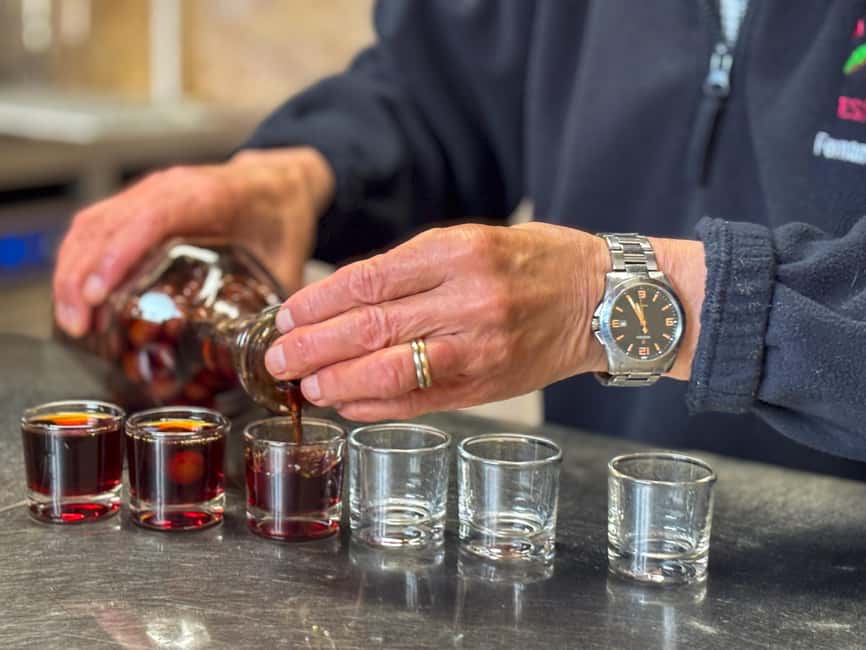
I would recommend it to first-time visitors who want a quick, well-organized introduction to Portuguese food and central Lisbon. It is also a good fit if you enjoy asking questions and prefer a guide who mixes history with eating rather than giving a long sightseeing talk.
It suits couples, friends, and solo visitors who like a social small-group setting. The tasting sequence gives you plenty to discuss, and the ferry crossing breaks up the walking.
You may want a different plan if you need step-free access, dislike seafood, avoid alcohol, or want to spend a long time at each market and neighborhood. The tour includes several kinds of food, but advance notice is needed for restrictions.
It is also not ideal for someone who prefers a slow afternoon with one long restaurant meal. This is a moving route with several short stops, and the value comes from variety.
Should you book it?
Book this tour if you want to sample Lisbon’s food while learning how the city fits together. The strongest features are the small group, the ferry ride to Cacilhas, the mix of sweet and savory tastings, and the guides’ informal approach. Luis, Bruno, Alexandra, and Tania have all been praised for making the food and cultural explanations easy to enjoy.
I would choose an earlier start if possible, since Time Out Market may be winding down later in the day. Wear good shoes, bring water, and leave some room in your schedule because the tour can run beyond three hours.
At $82, this is a guided introduction rather than a bargain meal. For someone who values local context, several tastings, and a ready-made route, it is a fair use of an afternoon. For a visitor mainly chasing a cheap lunch, it is less convincing.
FAQ
Where does the Lisbon food tour start?
It starts at the front entrance of Time Out Market Lisboa, on the river side.
Where does the tour finish?
It finishes at Rossio Square in central Lisbon.
How long does the tour last?
The scheduled duration is three hours. One guide-led outing has lasted longer, so avoid booking another activity too tightly afterward.
What foods and drinks are included?
The tastings include Pastel de Nata, Portuguese coffee, Ginjinha, bifana, fish soup, shrimp patty, salty delicacies, cheese, and Portuguese wine.
Does the tour include a ferry ride?
Yes. You take a ferry from Lisbon to Cacilhas, with a crossing of about 15 minutes, then take another ferry back to Lisbon.
What languages are available?
The tour is offered in English, Spanish, and Portuguese. Up to two languages may be spoken during one tour.
Is the tour suitable for people with mobility impairments or wheelchair users?
No. The experience is not suitable for people with mobility impairments or wheelchair users. It is also not recommended for pregnant women.
More Food and Drink Tours in Portugal
- Lisbon Market and Food Tour with Cooking Class and Lunch
★ 5.0 · 117 reviews - Authentic Market & Food Tour in Portimão, Algarve
★ 5.0 · 38 reviews - Setúbal: Winery & Fish Market Tasting Tour from Lisbon
★ 5.0 · 35 reviews - Bolhão Market Guided Food Tour
★ 4.5 · 23 reviews
More Market Walking Tours in Portugal
- Bangkok: City Highlights Temple and Market Walking Tour
★ 4.5 · 3,990 reviews - Tokyo Tsukiji Fish Market Food and Culture Walking Tour
★ 5.0 · 3,184 reviews - Marrakech: Ben Youssef, Secret Garden, & Souks Walking Tour
★ 4.6 · 2,802 reviews - Marrakech: Colorful Medina Souks Guided Walking Tour
★ 4.7 · 2,470 reviews
Just added around Portugal
- From Market to Table with Paula (Loulé) – Private Cookery Class★ 5.0 · 21 reviews
- West Algarve Tour Visit Tavira Olhão Market and Ayamonte in Spain★ 5.0 · 2 reviews
- Quarteira Town & Gypsy Market Tour with Beach Bliss★ 3.5 · 14 reviews
- Loule Traditional Market Tour★ 4.5 · 17 reviews
- Quarteira Market & Town Bus Trip from Albufeira★ 4.0 · 13 reviews
- Loulé Market and Town Half-Day Bus Round Trip from Albufeira★ 4.5 · 14 reviews
- Authentic Algarve: Loulé Town Tour and Markets★ 4.0 · 19 reviews
- Algarve Wines Tasting Shared Experience at Mercado Municipal de Silves★ 5.0 · 11 reviews
Local & Farmers Market Tours, compared.
Hanoi Cooking Class: Culture, Local Market & Meaning CSR Impact
Read our review →
Cooking Class and Lunch at a Tuscan Farmhouse with Local Market Tour from Florence
Read our review →
Cooking Class Hoi An:Local Market, Basket Boat, Fishing & Cooking
Read our review →
Hoi An Cooking Class(Local market,Basket Boat,Fishing & Cooking)
Read our review →
Old Dubai tour: Local Market, Tasting, Dubai creek with Abra ride
Read our review →
Half Day Easy Thai Cooking Class & Local Market Tour
Read our review →
Cancun Street Food Tour with Food Stalls, Local Market and Murals
Read our review →
Browse the lists this tour appears in