Review · TOKYO
Tokyo Tsukiji Fish Market Food and Culture Walking Tour
Tsukiji is best understood with something in your hand and a guide beside you. This three-hour walk takes you through the outer market, where you might see sea urchin, tuna being cut, pufferfish in tanks, kitchen tools, and stalls selling foods you would probably miss alone. I especially like the mix of small tastings and local context, plus the chance to finish with sushi or a seafood bowl.
I also like that the guides can make a crowded market easier to handle. Guides such as Kiyo, Naz, Shoko, Masa, and Yuki have helped visitors find good stalls, understand unfamiliar ingredients, and even choose items to take home. The main catch is important: this is not a tour of the old wholesale tuna auction market, and food portions may feel light if you arrive hungry.
Key points at a glance
- Start at a striking temple: Meet at the main gate of Tsukiji Honganji Temple, then walk into the market with your guide.
- Taste more than sushi: Samples can include dashi soup, green tea, fish cakes, Japanese omelette, Wagyu beef, seasonal fruit, tuna, and sushi or a seafood bowl.
- See the outer market at work: Stalls sell seafood, cooking ingredients, kitchen tools, and other Japanese food products.
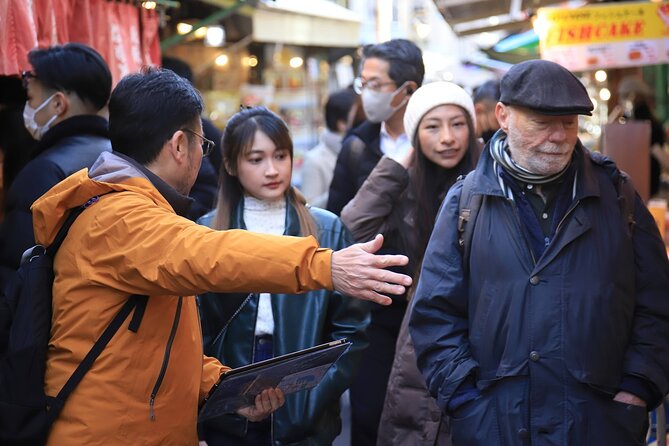
- Expect a flexible guide-led walk: Small groups make it easier to hear explanations, navigate narrow lanes, and pause for shopping.
- Market days matter: The Tsukiji Uogashi wholesale section is closed Wednesdays, Sundays, and some holidays, affecting several tastings.
- Best for fish eaters: Vegetarian, halal, gluten-free, allergy-related, and fish-free diets cannot be accommodated.
Starting at Tsukiji Honganji Temple
Your meeting point is the main gate of Tsukiji Honganji Temple, at 3-chome-15-1 Tsukiji. Pay close attention to this detail. The instructions specify the front side of the temple, not the back side, where some map directions may lead you.
The temple gives the tour a useful opening scene. Before the food stalls and narrow market lanes, you get a sense of the neighborhood’s religious and architectural character. Several guides have included the temple in their introduction, and it can be an easy place to overlook if you visit Tsukiji on your own.
The tour leaves at the stated start time. The guide cannot wait for late arrivals, and a late start does not extend the three-hour schedule. I would arrive early, especially if you are coming by public transportation and need a few minutes to find the correct gate.
Wear shoes suited to walking and standing. You will spend much of the morning or afternoon on your feet, moving through crowded commercial lanes rather than strolling along a quiet sidewalk.
More Fish Market Tours in Japan
- Tokyo: Tsukiji Fish Market Food and Walking tour
★ 5.0 · 1,724 reviews - Tokyo: Tsukiji Fish Market Guided Walking Tour
★ 4.9 · 1,397 reviews - Tokyo Sushi Making Class in Tsukiji with Professional Chef
★ 5.0 · 1,177 reviews
Tsukiji Jogai Market: the real focus of the tour
The first main section is Tsukiji Jogai Market, the outer market. Allow roughly 90 minutes here. This is the part that gives you the strongest sense of Tsukiji as a food district rather than a single market hall.
The old central wholesale market moved to Toyosu, but the outer market around Tsukiji remains active. Shops sell seafood, produce, seasonings, prepared foods, knives, cooking tools, and other supplies used in Japanese kitchens. The setting is busy and practical. It is not staged as a museum, so lanes can feel tight and the flow of shoppers can be brisk.
Your guide explains why chefs come here for fresh ingredients and points out products that may not be obvious to a first-time visitor. You might see boxes of uni, large tuna being cut, or pufferfish in tanks. Those details matter because the market is easier to appreciate when you understand what you are seeing and why it matters to Japanese cooking.
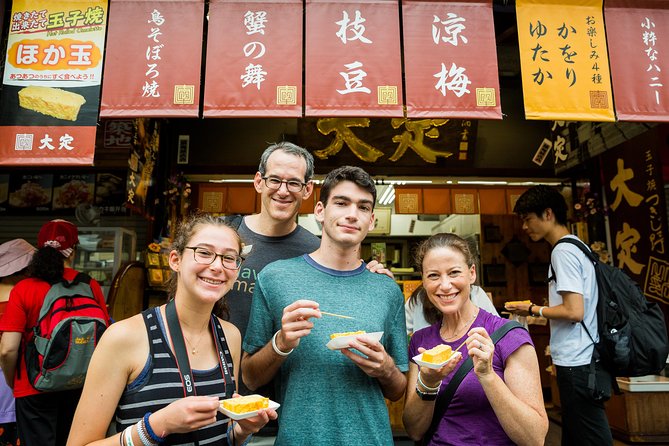
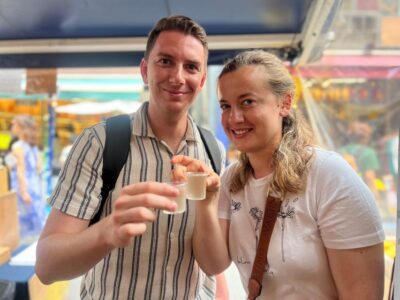
Food samples begin along the way. Dashi soup and green tea may be part of the early tastings, followed by items such as fish cake, Japanese omelette, fruit, and Wagyu beef on a skewer. Depending on the day and the shops that are open, you may also taste tuna or other seafood.
The tasting style is varied rather than restaurant-sized. Think a series of bites that introduce you to ingredients, textures, and everyday foods. Some people find this ideal because it leaves room for discovery after the tour. If you want a large breakfast, eat something small beforehand.
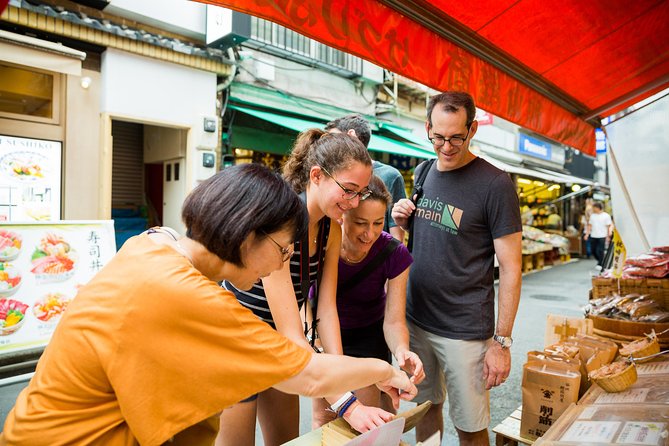
The most praised part of the experience is often the guide’s ability to choose stops. A market this large can easily become a series of random purchases. A good guide helps you spend your time on worthwhile samples and explains how the ingredients are used. Shoko, for example, has helped people select foods and spices to take home, while other guides have added suggestions about when to return for the best market experience.
The old Tsukiji Market and the lost wholesale-market expectation
The itinerary includes about 30 minutes in the old Tsukiji Market area. This is where clear expectations matter most.
If you picture the former wholesale fish market, with the famous tuna auction and wholesale activity, you may be disappointed. The old inner market is no longer operating in its former location. This tour focuses on the outer market and related areas, not a visit to the old wholesale auction floor.
That does not make the tour pointless. It simply changes what you are buying. You are paying for a guided food walk through the active Tsukiji district, not access to the former central wholesale market.
The distinction is especially important if the tuna auction is the main reason you want to book. In that case, check the current arrangements for Toyosu separately. For a first visit to Tsukiji, though, the outer market still offers plenty to see, eat, and learn.
The guide may also connect the food to Japanese customs and local history. Several guides have been praised for explaining ingredients in plain English and for making unfamiliar foods less intimidating. One particularly useful feature is the chance to ask how locals use products at home, rather than treating each sample as a one-bite curiosity.
Kitchen tools and shopping between tastings
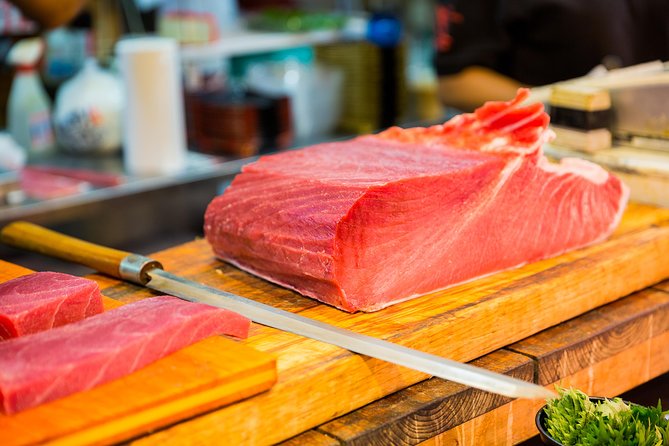
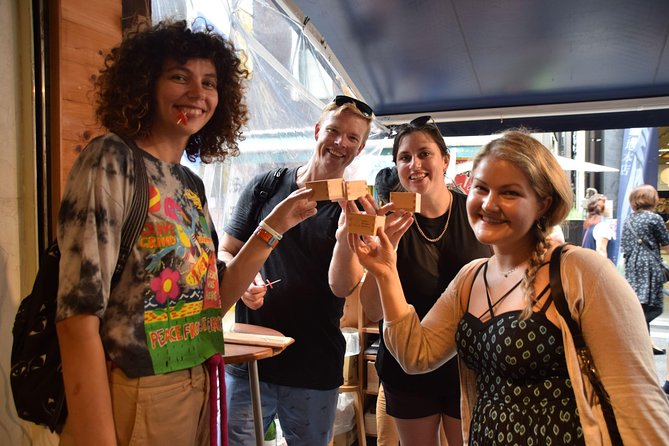
At some point, the walk may include a stop for kitchen tools. This is a practical addition if you want a Japanese knife, cooking utensil, spice, or other food-related souvenir.
Do not assume every item is included in the tour price. Shopping purchases and personal expenses are extra. The value here is the guidance. A market shop can be hard to assess when you do not know what the labels say or which products are useful for your cooking.
Small groups help at this stage. You can ask questions without holding up a large crowd, and there may be time to browse. One guide was even able to take a group to an additional shop after the scheduled tour ended, although you should not count on extra time being available.
More Fish Market Tours in Tokyo
- Tsukiji Fish Market Guided Tour and Sushi Making with Pro Chef
★ 5.0 · 775 reviews - Tokyo: Tsukiji Fish Market Food and Culture Walking Tour
★ 4.7 · 757 reviews - Tsukiji Fish Market: Street Food & Culture Walking Tour
★ 5.0 · 669 reviews - Tsukiji Fish Market Small-Group Food Walking Tour
★ 5.0 · 621 reviews
Tsukiji Uogashi and the wholesale side of the district
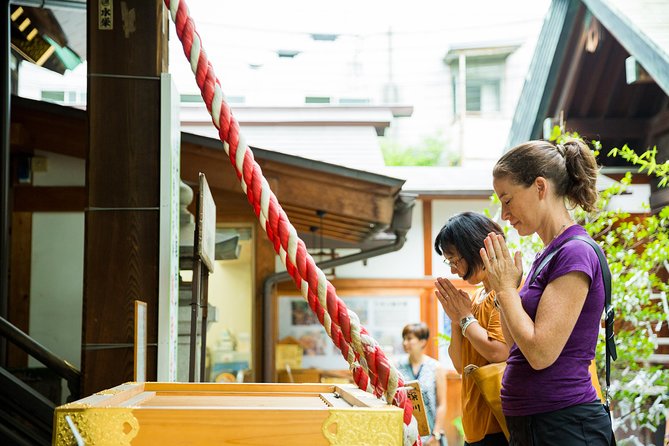
The Tsukiji Uogashi section takes about 30 minutes. Here you pass through a smaller wholesale market area with many kinds of fresh fish. It gives you another look at the supply side of Japanese food, beyond the ready-to-eat stalls.
This is also the most schedule-sensitive stop. The Uogashi wholesaler market is closed on Wednesdays, Sundays, and other market holidays. On those days, the tour cannot provide every listed tasting. Japanese omelette, fish cake, and fruit may be unavailable because the relevant shops are closed.
That does not mean the whole tour is cancelled. It means the exact mix of food changes. If seeing the wholesale section and trying those particular items matters to you, avoid the closed days when possible.
The market may feel crowded and noisy, but that is part of the point. A guide helps you keep moving, avoid blocking shop entrances, and understand what is happening around you. The walk is not physically extreme, but it does require moderate fitness and comfort with standing.
The final meal: sushi or a seafood bowl
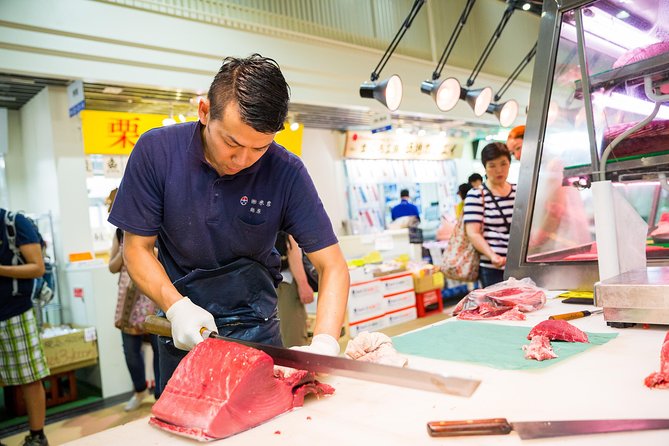
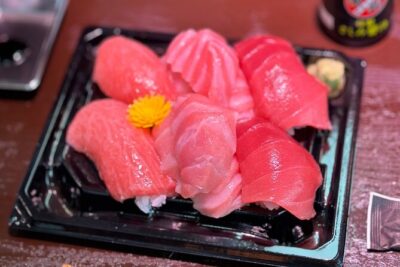
The tour ends with a meal of either sushi or a seafood bowl, depending on the day and timing. This final stop lasts about 30 minutes and gives the tasting route a more substantial finish.
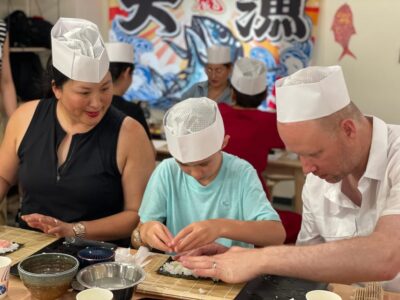
The exact meal is not guaranteed in advance. Some groups have had sushi, while others have received a seafood bowl. A few experiences have included a preparation demonstration, such as watching fish being cut before making sushi. Those details can make the final stop more memorable, but the restaurant and presentation may vary.
This is also where opinions can differ. Many people consider the fish excellent and appreciate ending with a proper meal. Others find the last restaurant stop too tourist-oriented or feel that the overall food quantity is less than expected for the price.
My advice is simple: treat the lunch as part of a guided market visit, not as a full food crawl. You will receive lunch and snacks, but the value also comes from finding the stalls, learning what you are eating, and avoiding the uncertainty of ordering alone.
What the guides add
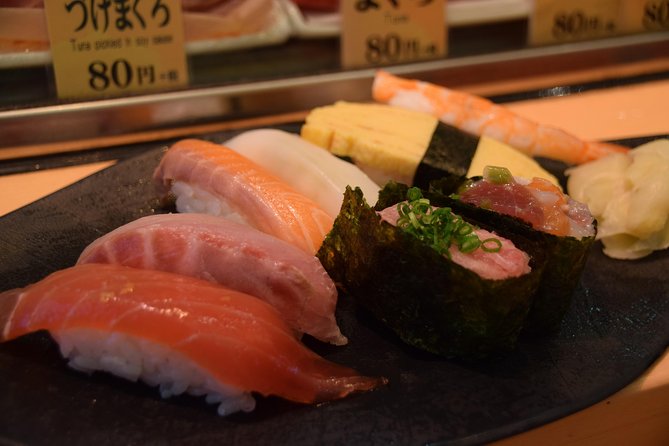
The guide is central to this experience. Tsukiji is easy enough to wander, but much harder to interpret. The best guides turn a walk past stalls into a lesson in ingredients, shopping habits, food customs, and neighborhood history.
Specific guides praised for their warmth, clarity, or strong local direction include Kiyo, Naz, Miky, Kayoko, Joy, Mieko, Shibuya, Yuki, KK, Shoko, Sean, Take, Nick, Yuko, and Masa. Guide assignments can change, so you should not book expecting one particular person unless the provider confirms it.
The strongest guide experiences share a few traits:
- Clear explanations in English
- Help navigating tight market lanes
- Practical advice about foods and souvenirs
- A relaxed pace for questions and photos
- Willingness to adjust stops when the group has a particular interest
Masa, for example, has been praised for a calm pace and a good sense of humor. Shoko has offered cooking tips and shopping help. Nick has linked tastings with nearby sights and finished with a well-regarded sashimi meal. These details show what a strong guide can add, but the experience can depend on the individual guide.
There have also been weaker experiences. Some people have found a guide too quiet, inexperienced, or slow, with long waits and little energy. That matters on a food walk because the guide sets the rhythm. The high overall rating suggests that most departures go well, but no guided tour guarantees the same personality or pace every time.
Is $99.49 a fair price?
At $99.49 per person, this is not the cheapest way to eat around Tsukiji. You can walk through the outer market independently and buy individual snacks for less.
The price makes more sense if you value help with navigation and interpretation. You receive a three-hour guided walk, several tastings, lunch, and local explanations. You also save the time and guesswork involved in choosing stalls, understanding unfamiliar foods, and locating the relevant market sections.
I would see the value this way:
Good value for you if:
- This is your first visit to Tsukiji
- You want to try foods beyond standard sushi
- You like cultural background with your meal
- You are nervous about ordering in a busy market
- You want help finding kitchen goods or food souvenirs
- You prefer a planned route to random browsing
Less convincing value if:
- You already know Tsukiji well
- You want a large meal
- You expect access to the former wholesale market
- You do not eat fish
- You prefer choosing every dish yourself
- You are happy to explore independently
The listed group maximum is 20 people, though some departures are much smaller. A small group makes a real difference in narrow market lanes and when listening to the guide. You should not assume every departure will be intimate, but a smaller group is one of the experience’s strongest advantages when it occurs.
Dietary limits and practical planning
This tour is built around seafood. If you cannot eat fish, you cannot join the tour. Vegetarian, halal, gluten-free, and allergy-related requests cannot be accommodated.
The drinking age in Japan is 20. If you are under 20, the provider offers a different drink. Other personal food and drink purchases are not included.
The tour runs for about three hours and returns to the meeting point. Transportation to Tsukiji is not included, so you arrange your own route to the temple. The meeting point is close to public transportation, but the exact journey depends on where you are staying.
Free cancellation is available if you cancel at least 24 hours before the start time. Cancellations or changes inside that window are not refunded or accepted, and late arrival on the day also means no refund.
Who should book this Tsukiji walk?
I would book this for a first-time Tokyo visitor who wants an easy introduction to Japanese food culture. It is especially useful if you are curious about uni, fish cakes, dashi, Wagyu, Japanese omelette, or seafood bowls but do not know where to begin.
It also suits couples, families with older children who can manage a three-hour walk, and anyone who wants cultural explanations rather than a simple list of restaurant stops. The guides can make the market more approachable, and the temple start adds another layer to the morning.
I would skip it if your main goal is the old tuna auction, a private food tour, or a large multi-course meal. I would also skip it if you have serious dietary restrictions, since the provider cannot adapt the menu.
Should you book it?
Book this tour if you want a guided introduction to the outer Tsukiji Market, with a broad range of tastings and a final sushi or seafood-bowl meal. The best parts are the local guidance, the variety of small samples, and the chance to see how a working food district fits together.
Go in with the right picture. You are not entering the former wholesale auction market, and the food may be more snack-sized than feast-sized. Arrive on time, wear good shoes, avoid closed market days if possible, and eat only a light breakfast. With those expectations, the $99.49 price can be reasonable for a well-led first look at one of Tokyo’s most rewarding food neighborhoods.
FAQ
Where does the Tsukiji food tour begin?
Meet your guide at the main gate of Tsukiji Honganji Temple, located at 3-chome-15-1 Tsukiji, Chuo City, Tokyo. Use the front side of the temple, not the back side.
How long does the tour last?
The tour lasts approximately three hours and finishes back at the meeting point.
What food and drinks are included?
Lunch and snacks are included. Tastings may include dashi soup, green tea, fish cakes, Japanese omelette, Wagyu beef, seasonal fruit, tuna, and either sushi or a seafood bowl. The exact food depends on the day.
Is the old wholesale fish market included?
The tour visits the outer Tsukiji Market and Tsukiji Uogashi, but it does not provide access to the former wholesale market at its old location.
Which days is the Tsukiji Uogashi section closed?
The Uogashi wholesale market is closed on Wednesdays, Sundays, and other market holidays. On those days, some tastings, including Japanese omelette, fish cake, and fruit, may not be available.
Can the tour accommodate dietary restrictions?
No. The tour cannot accommodate vegetarian, halal, gluten-free, or allergy-related requests. You also cannot join if you do not eat fish.
More Market Walking Tours in Tokyo
- Bangkok: City Highlights Temple and Market Walking Tour
★ 4.5 · 3,990 reviews - Marrakech: Ben Youssef, Secret Garden, & Souks Walking Tour
★ 4.6 · 2,802 reviews - Marrakech: Colorful Medina Souks Guided Walking Tour
★ 4.7 · 2,470 reviews - Air Raid Shelter + St. Nicholas Market Walking Tour
★ 5.0 · 1,950 reviews
More Market Walking Tours in Japan
- Tsukiji Fish Market: Street Food & Culture Walking Tour
★ 4.8 · 259 reviews - Tokyo: Guided Walking Tour of Tsukiji Market with Breakfast
★ 4.4 · 134 reviews - Tokyo: Tsukiji Market Walking Tour & Sushi Cooking Class
★ 4.6 · 122 reviews - Tokyo: Guided Walking Tour of Tsukiji Market with Lunch
★ 4.4 · 24 reviews
Just added around Tokyo
- Tokyo: Tsukiji Market Guided Tour & Sushi-Making Experience★ 4.4 · 11 reviews
- Tokyo: Tsukiji Market and Hama-rikyu Gardens Guided Tour★ 4.8 · 73 reviews
- Tokyo: Private Tsukiji Street Food & Sake with Local Guide★ 5.0 · 3 reviews
- Tokyo : Tsukiji Fish Market Food Walking & Shrine Visit Tour★ 5.0 · 3 reviews
- Tokyo: Tsukiji Fish Market Culture Tour with Sashimi Tasting★ 4.6 · 54 reviews
- Tokyo: Tsukiji Fish Market Foodie and Educational Tour★ 5.0 · 4 reviews
- Tokyo: Guided Walking Tour of Tsukiji Market with Lunch★ 4.4 · 24 reviews
- Tokyo’s Kitchen: Tsukiji Market Food & Culture Walk★ 4.7 · 74 reviews
Fish Market Tours, compared.

Tokyo Sushi Making Class in Tsukiji with Professional Chef
Read our review →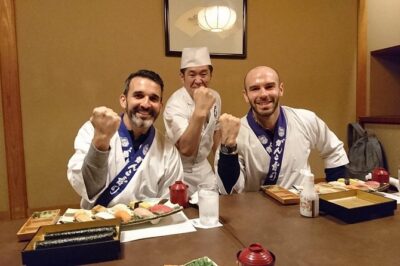
Tsukiji Fish Market Guided Tour and Sushi Making with Pro Chef
Read our review →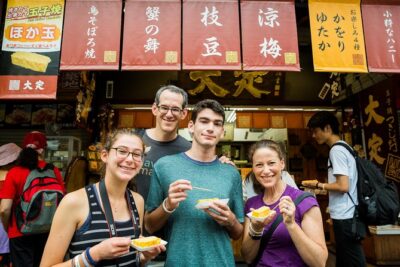
Tsukiji Fish Market Food and Culture Walking Tour
Read our review →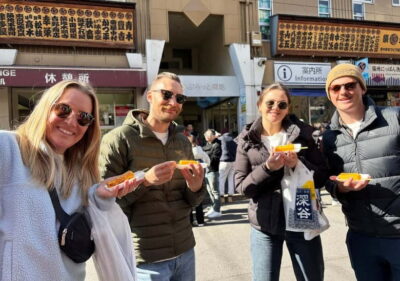
Tsukiji Fish Market: Street Food & Culture Walking Tour
Read our review →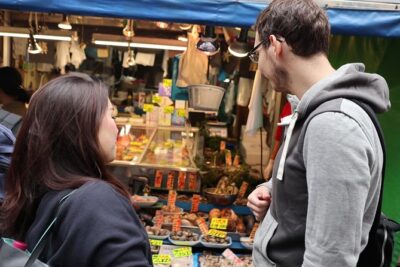
Tsukiji Fish Market Small-Group Food Walking Tour
Read our review →