
Review · ISTANBUL
Istanbul Grand Bazaar: From Rooftops to the Secret Passages
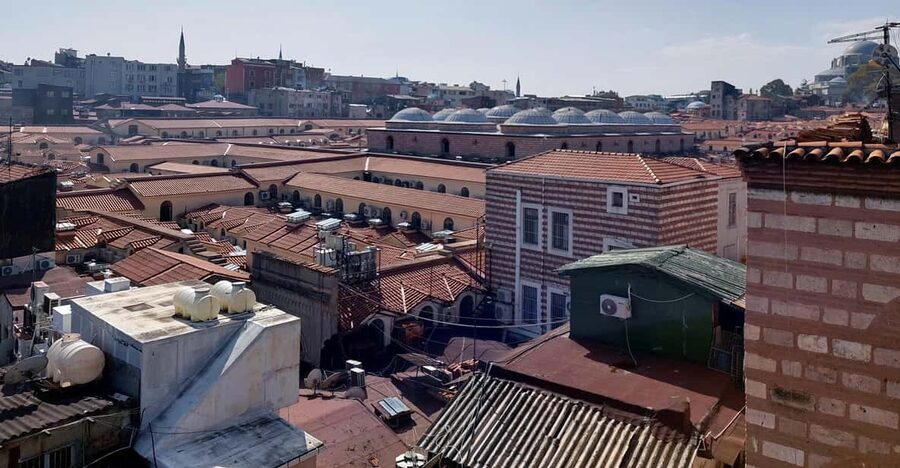
The best part of this Grand Bazaar tour is not the main shopping lanes. It is the backstage bazaar, where you may climb to rooftops, enter working ateliers, pass through narrow corridors, and meet artisans who keep old trades alive. Guide Mertcan is especially praised for making the maze understandable and connecting its shops to Istanbul’s wider story.
I like two things here: the rooftop views give you a rare sense of the bazaar’s scale, and the route gets you into places you would probably miss alone, including upper-floor workshops and quieter hans. The main drawback is physical: there are many stairs, uneven surfaces, and tight passages, so this is not the right pick if climbing is difficult.
Key points to know before you book
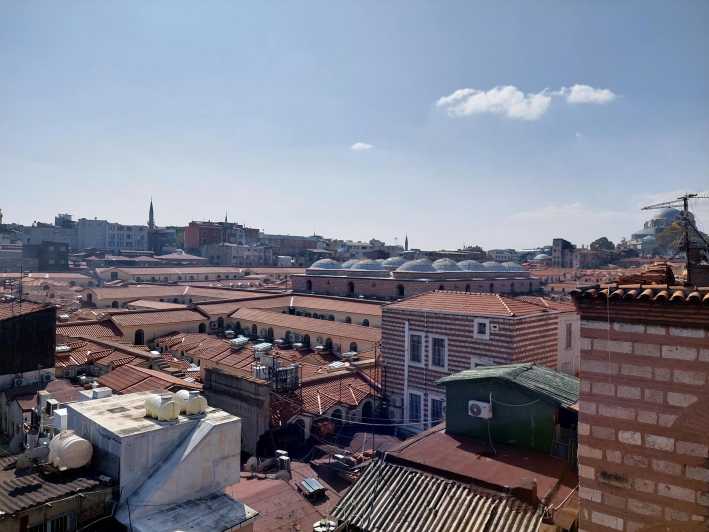
- Rooftop access: See the tiled roofs of the Grand Bazaar from above, with excellent photo opportunities.
- Working workshops: Visit artisan spaces linked to silver, gold, pottery, tiles, miniature art, and other traditional trades.
- A history-led walk: Learn how the bazaar developed as a meeting place for merchants, pilgrims, craftsmen, and shoppers from East and West.
- Not mainly a shopping tour: You will pass many tempting shops, but the focus is orientation, stories, and access behind the public lanes.
- Tea and local advice: Turkish tea or apple tea is included, along with food suggestions and tips on where to shop.
- Stair-heavy route: Wear sturdy shoes and tell the guide if you need to skip upper floors or rooftops.
Why this Grand Bazaar tour is different
Istanbul’s Grand Bazaar can be tiring on a first visit. The covered lanes are packed with lamps, carpets, leather, jewelry, ceramics, souvenirs, and sales pitches. The building feels less like one market than a small city with its own streets, districts, shortcuts, and working quarters.
That is why this tour works best as an introduction. Instead of simply walking through the obvious lanes, you learn how the bazaar functions. You see the public face, then move into passages and upper floors where craftsmen work, shopkeepers store goods, and long-established trades continue away from the main flow.
The tour lasts about two to two and a half hours and costs $31 per person. For that price, you are paying less for a formal monument visit than for access and orientation. A self-guided wander costs nothing, but it can leave you lost, unsure which areas are worth your time, and uncertain about where to shop. Here, the guide adds a route, context, introductions, and practical advice.
I would not book this expecting a relaxed afternoon of browsing. The walk keeps moving, and one particularly useful description compares it to a survey of the bazaar: you see many sections and learn where to return later. If a print, piece of jewelry, or handmade object catches your eye, ask the guide to allow time for a closer look.
More Spice Market Tours in Istanbul
- Istanbul: Hagia Sophia, Blue Mosque and Grand Bazaar Tour
★ 4.5 · 222 reviews - Small-Group Bosphorus Cruise and Istanbul’s Egyptian Bazaar
★ 3.5 · 208 reviews - Istanbul: Hagia Sophia, Blue Mosque, and Grand Bazaar Tour
★ 4.5 · 162 reviews
Starting at Constantine’s Column and Çemberlitaş
The meeting point may vary by booking option, but the listed starting choices are around Constantine’s Column on Vezirhan Caddesi. This is a useful place to begin because it puts the Grand Bazaar into the larger story of old Istanbul rather than treating it as an isolated shopping center.
The first walking section leads through Çemberlitaş, with a photo stop and an introduction to the surrounding area. From here, the guide starts building a sense of place. You are not just heading toward shops. You are moving through a historic part of the city where monuments, religious buildings, commercial streets, and old trade routes sit close together.
The pace matters. A guide who knows the route can get you oriented before the bazaar becomes confusing. Several people found that the market felt far less overwhelming after this introduction. That is a real benefit if your first instinct on entering is to stare at the signs and hope you are going in the right direction.
Nuruosmaniye Mosque and the edge of the market
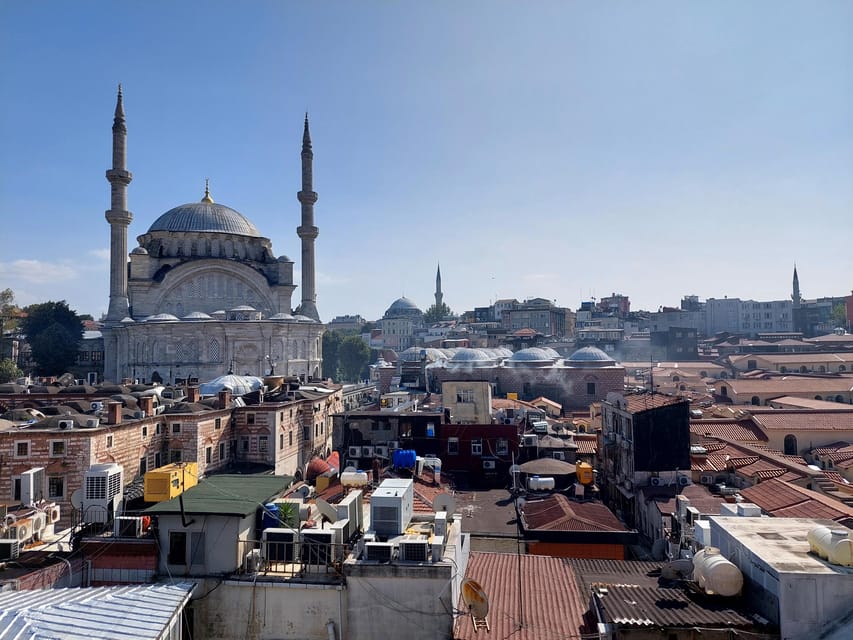
The route continues to Nuruosmaniye Mosque, another photo stop on the walk toward the bazaar. The mosque helps show how closely worship, commerce, and daily life have always been linked in this part of Istanbul.
You may not spend a long time inside the mosque itself, since the itinerary lists it as a photo stop and walk. Its value here is as a landmark and orientation point. The guide uses nearby buildings and streets to explain the relationship between the Grand Bazaar and the surrounding commercial quarters.
This early section also gives you a chance to settle into the tour. You will need comfortable shoes, and it is worth carrying water, even though tea is included later. The walk is not described as strenuous in the usual hiking sense, but the combination of city walking, stairs, and uneven flooring becomes demanding for some people.
Kalcılar Han and the working side of commerce
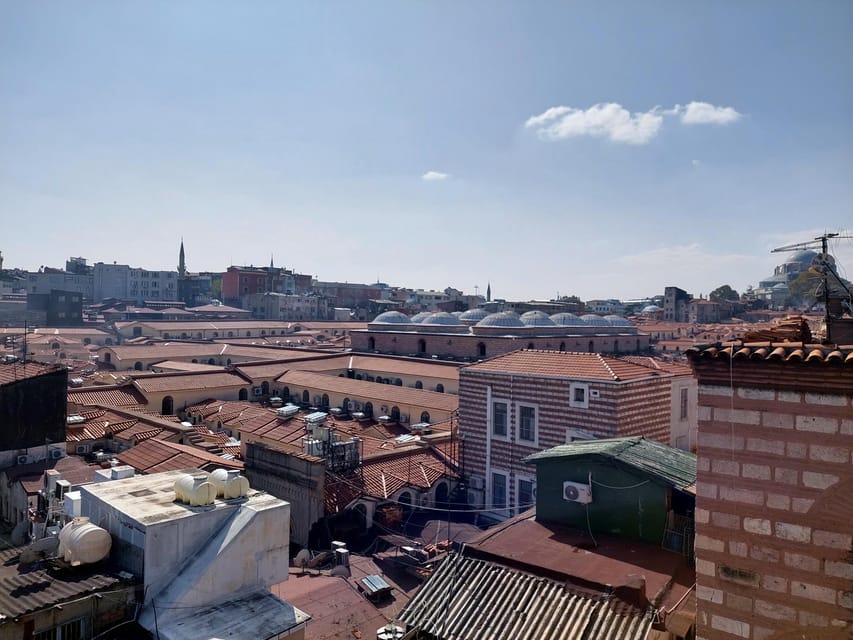
Kalcılar Han Gümüşçüler Çarşısı offers an early look at the specialist side of the market. The name points toward silver trading and workshops, and the route uses this area to move beyond the polished storefronts aimed at casual shoppers.
A han is a commercial courtyard or trading complex, and these spaces help explain why the bazaar has never been only a row of retail stalls. Goods were made, stored, traded, repaired, and shipped through connected buildings. The guide’s stories bring that system into focus.
This is one of the places where the tour’s local access matters. You may see a shop from the outside on your own, but you are less likely to know which doorway leads to a working studio or how one lane connects with another. The experience is strongest when you pay attention to the people and processes rather than rushing to photograph every display.
More Spice Market Tours in Turkey
- Private Istanbul Shopping in Grand Bazaar with Personal Shopper
★ 5.0 · 68 reviews - Private 5-6h: Topkapi + Hagia Sophia + Blue Mosque + Grand Bazaar
★ 5.0 · 67 reviews - Istanbul: Blue Mosque, Basilica Cistern & Spice Bazaar Tour
★ 4.9 · 30 reviews - Istanbul Grand Bazaar and Egyptian Bazaar Shopping Tour
★ 4.0 · 28 reviews
Zincirli Han and the first rooftop perspective
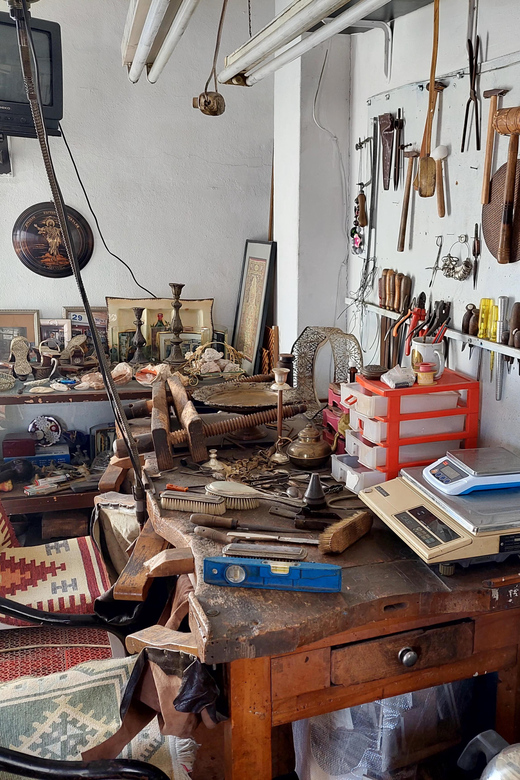
Zincirli Han is listed as a guided visit, and it is one of the tour’s main stops. Here, the atmosphere shifts away from the broad public lanes. You can expect courtyards, narrow passages, and access to parts of the complex that are easy to overlook.
The rooftop sections are the signature feature. Climbing above the market changes your sense of its size. From street level, the Grand Bazaar can feel like a maze with no clear edges. From above, the roofs and adjoining structures show how extensive the old commercial quarter really is.
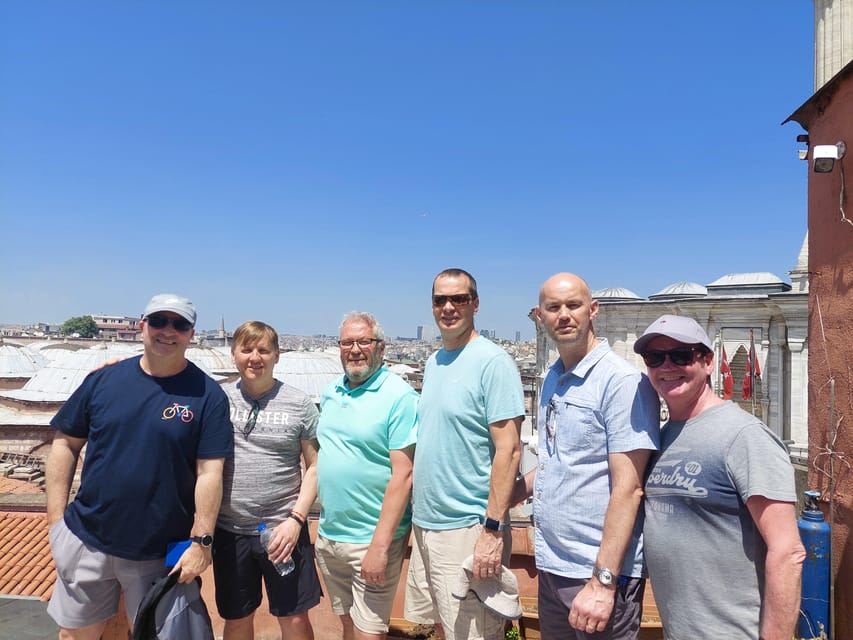
The views are also a welcome break from the close-packed corridors below. Bring a camera, but keep your attention on your footing. The route involves stair climbing, and some stairs may feel steep or awkward. One practical advantage of a small group or private booking is that it should be easier to tell the guide when you need a pause, though the tour still requires a reasonable level of mobility.
Eirene Tower and artisan encounters
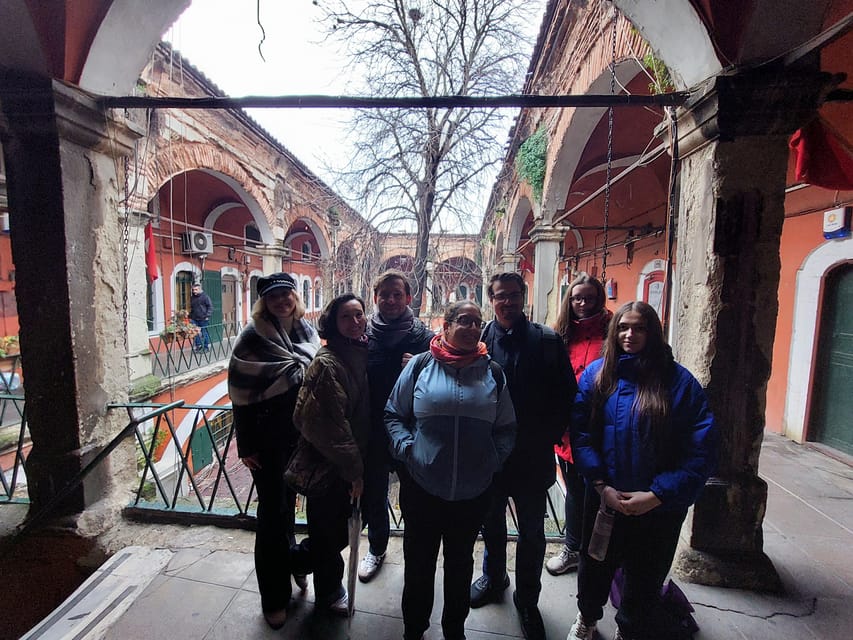
The stop at Eirene Tower Sanat Galerisi adds an art and workshop element. This is not simply a procession from one photo point to another. You get a chance to see how the bazaar’s traditions continue through artists and craftspeople working today.
The exact people you meet can vary, but the experience has included contact with silversmiths, goldsmiths, tile and pottery makers, artists, and other shop owners. One particularly memorable encounter is with a retired silversmith who had produced hundreds of thousands of silver pieces during his working life.
That kind of meeting is more valuable than a quick explanation beside a display case. It gives you a human connection to the craft. You begin to see jewelry, tiles, pottery, and decorative objects as the result of years of skill, not just merchandise arranged for tourists.
The guide also helps you separate genuine craft work from the standard sales circuit. That does not mean every purchase becomes a bargain, but it gives you a better starting point. Several people appreciated that there was no hard sell during the visits. You can look, ask questions, and decide for yourself.
Sağır Han and the quieter passages
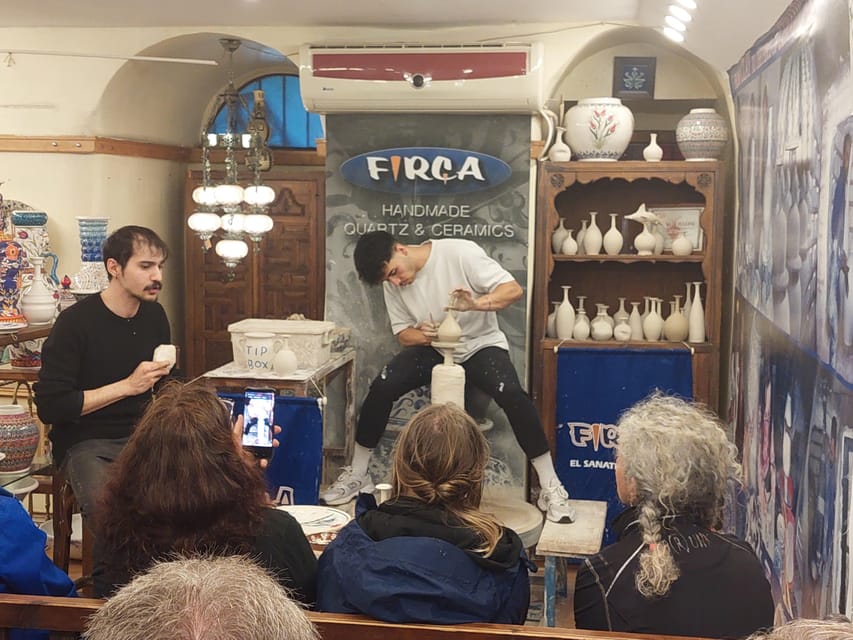
Sağır Han is another guided visit, and it continues the tour’s focus on the parts of the bazaar that are easy to miss. The route may lead through less familiar corridors, upper-floor workspaces, and back passages where the market feels more like a working district than a tourist attraction.
This is where a good guide earns the fee. The public entrances are easy to find. The internal logic of the bazaar is not. A guide can explain why certain trades cluster together, how different parts of the market connect, and which lanes are better suited to browsing, eating, or returning for a purchase.
You will also hear about the bazaar as an economic center. Its story includes spice merchants, silk traders, sword makers, pilgrims, jewelers, and international exchange between East and West. The guide ties those older roles to the market’s present-day activity, including its importance in gold and jewelry trading.
The history is not delivered as a long lecture. It comes through specific buildings, trades, people, and routes. That keeps the walk lively and helps you remember what you are seeing.
The Grand Bazaar itself, with better bearings
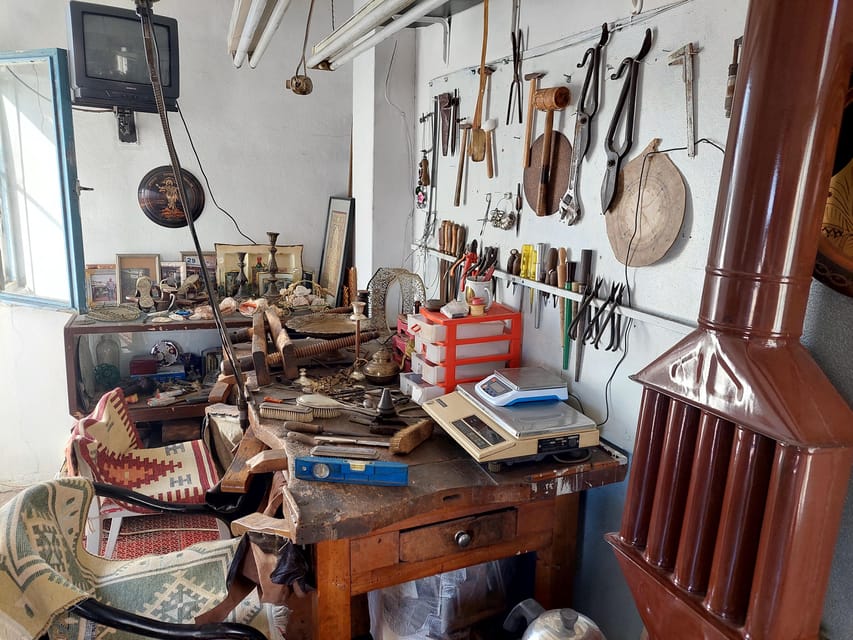
The route eventually brings you into the main Grand Bazaar for walking, photographs, and some shopping. By this point, the crowded lanes should feel less anonymous. You will have learned the names and character of several sections and seen how the public market relates to the quieter spaces behind it.
This is also the point where the tour’s limits become clear. You do not get a long, leisurely block of shopping time. The focus remains on seeing the bazaar as a whole and learning how to return later.
I recommend treating the tour as your orientation day, then coming back on your own if you want to buy. That way, you can shop with a better idea of where you are and with more confidence about comparing prices. If you see something you truly want during the walk, ask before moving on. One person regretted not buying a small print because there was not enough time to return to the shop.
Bring Turkish lira in cash if you plan to purchase anything. The market’s cash-based traditions are part of the story, and the guide can explain more about how transactions work. You should not feel obliged to buy, but it helps to be ready if a craft item catches your eye.
Tea, food tips, and the human side of the market
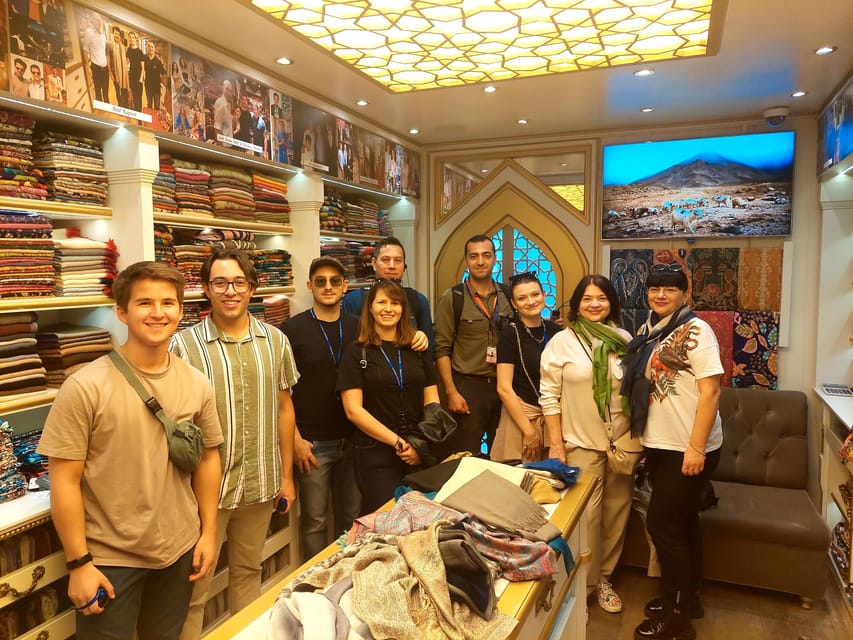
Turkish tea or apple tea is included, often served during a stop with a rooftop view. This is a small detail, but it improves the rhythm of the experience. After the stairs and narrow lanes, sitting briefly with tea gives you time to absorb what you have seen.
Food advice is included too, with suggestions for kebap, baklava, and other local choices. The tour does not appear to be a food walk, so do not book it expecting several tastings. Think of the recommendations as useful follow-up advice for after the tour.
The best encounters are often informal. You might meet a shop owner, artist, or craft worker and hear about the trade directly. The guide’s introductions make those exchanges feel less like a sales stop and more like a look at how people actually work inside this old market.
What the $31 price really buys you
At $31 per person, the tour is good value if you care about access, context, and a smoother first visit. The entrance to exclusive rooftops, a live guide, tea, local tips, and food suggestions are included. Private and small-group options are available, which can make the experience more personal.
The price is less attractive if you only want time to shop. You can enter the Grand Bazaar without booking a tour, walk the main lanes, and spend your money directly on goods. This activity earns its cost by showing you the structure behind the storefronts and by helping you avoid a confused first wander.
The rating is 4.8 from 337 reviews, and the most consistent praise centers on the same features: the rooftop views, the unusual passages, the artisan contacts, the useful orientation, and Mertcan’s friendly, well-informed guiding. A few guide names appear differently in individual comments, but Mertcan is the name most often associated with the experience.
The tour is offered in English and Turkish. You can choose a private or small-group format. Cancellation is free up to 24 hours before the start, and reserve-now-pay-later booking keeps the cost off your card until closer to the activity.
Who should book, and who should skip it
I would book this tour if you are visiting the Grand Bazaar for the first time, feel uneasy in maze-like markets, or want to understand the place beyond carpets and souvenir shops. It is also a strong choice if you have already visited Istanbul and found the bazaar confusing or too commercial. The behind-the-scenes route gives a repeat visitor a different reason to return.
It suits curious shoppers who want to learn before buying. Afterward, you will be better placed to compare goods and return to sections that interest you.
I would skip it if you want a slow shopping afternoon, dislike stairs, or have trouble with uneven floors and tight passages. Some sections can be skipped if you tell the guide, but you would miss part of what makes the tour special. Wear sturdy shoes, keep your hands free where possible, and leave room in your schedule for the route to run closer to two and a half hours.
FAQ
How long does the Grand Bazaar rooftop tour last?
The tour lasts approximately 2 to 2.5 hours. Starting times vary, so check availability when booking.
How much does the experience cost?
The listed price is $31 per person.
What languages are available?
The live tour is offered in English and Turkish.
Is the tour private or shared?
Private and small-group options are available.
Where does the tour start?
There are three listed starting options around Constantine’s Column and Vezirhan Caddesi. The exact meeting point depends on the option booked.
What places are included on the route?
The route includes Çemberlitaş, Nuruosmaniye Mosque, Kalcılar Han Gümüşçüler Çarşısı, Zincirli Han, Eirene Tower Sanat Galerisi, Sağır Han, and the Grand Bazaar.
Is rooftop access included?
Yes. Entrance to exclusive rooftops is included in the tour.
Is tea included?
Yes. Turkish tea or apple tea is included.
Is this mainly a shopping tour?
No. The focus is on the Grand Bazaar’s history, workshops, passages, rooftops, and working culture. There is some shopping time, but it is limited.
Is the tour suitable for someone who has difficulty with stairs?
The route includes a lot of stair climbing, uneven surfaces, and upper-floor visits. If stairs are difficult, tell the guide, since some sections may be skipped, but the tour may not be fully suitable.
More Shopping Tours in Istanbul
- Sailing Through Culture Bosphorus and Spice Bazaar Tour
★ 3.5 · 26 reviews - Morning Bosphorus Cruise and Spice Bazaar
★ 3.5 · 25 reviews - Private Bosphorus Cruise and Egyptian Bazaar with Motor Yacht
★ 4.0 · 24 reviews - Istanbul Shore Excursion: Small-Group Bosphorus Cruise and Istanbul Egyptian Bazaar
★ 4.0 · 23 reviews
More Markets in Istanbul
- Istanbul: Hagia Sophia, Blue Mosque, Cistern & Bazaar Tour
★ 4.9 · 189 reviews - Culinary Backstreets of the Bazaar Quarter
★ 5.0 · 118 reviews - Private Guided Tour Hagia Sophia, Cistern, Topkapi and Bazaar
★ 5.0 · 79 reviews - Shopping in Grand Bazaar
★ 4.0 · 28 reviews
Just added around Istanbul
- Istanbul: Private Local Food & Markets Experience★ 4.9 · 27 reviews
- Rug Shopping Private Tour with expert Grand Bazaar★ 5.0 · 5 reviews
- Roman Aqueduct, Sehzade Mosques &Women’s Market★ 5.0 · 6 reviews
- Istanbul: Afternoon Bosphorus Cruise and Spice Bazaar Tour★ 4.3 · 8 reviews
- Istanbul Private Shopping Tour – Grand Bazaar & Spice Market★ 5.0 · 3 reviews
- Istanbul Old City to Grand Bazaar Tour★ 4.9 · 8 reviews
- Istanbul: Guided Topkapi and Grand Bazaar with Small Group★ 4.7 · 3 reviews
- Istanbul: Dolmabahce Palace and Grand Bazaar Tour★ 5.0 · 11 reviews
Grand Bazaar & Spice Market Tours, compared.
Local Markets & Khan el Khalili Private Shopping Tour
Read our review →
Cairo VIP Guided Tour to Khan El-Khalili Market with Lunch
Read our review →
Old Delhi Food-Spice Market-Temples Tour Soon Featured on NETFLIX
Read our review →Old Delhi Odyssey: A Tour of Religion, Spice Market, & Best Food
Read our review →
Old Cairo and Khan El Khalili Bazaar: Private Half-Day Tour
Read our review →
Small-Group Bosphorus Cruise and Istanbul’s Egyptian Bazaar
Read our review →
Cairo Sightseeing Tour (Giza Pyramids + Museum + Khan el Khalili Bazaar)
Read our review →
Private Tour: Giza Pyramids, Sphinx, Egyptian Museum, Khan el-Khalili Bazaar
Read our review →Browse the lists this tour appears in