
Review · CHIANG MAI
Chiang Mai: Local Food and Markets Guided Walking Tour
Chiang Mai’s best food lessons often happen beside a market stall, not in a formal cooking class. This 150-minute walking tour takes you from Chansom Memorial Bridge through flower stalls and Warorot Market, with stops for steamed rice skin dumplings, dinosaur-shaped pa thong ko, mango sticky rice, and Hakka-style noodles.
I like the way the route mixes food with local life. You are not simply seated at one restaurant. You see flowers, herbs, produce, clothes, Chinese-Thai snacks, and the small eateries locals use. I also like the guides’ personal touch. Guides such as Koi, Nom, Patty, Banana, and Sunny have helped visitors order, explain unfamiliar dishes, and adjust the route when a stall is closed.
The main catch is that food is not included in the $48 price, so bring cash for each tasting. The tour is also a fairly brisk walk, and the late 2:30 pm departure can miss some of the planned restaurants as they close early.
Key points to know before you book
- Four food stops with very different flavors: Try sweet khao kriab pak moh, fried pa thong ko, mango sticky rice, and savory Hakka noodles.
- Warorot Market is the main stage: You browse one of Chiang Mai’s best-known markets for snacks, produce, clothes, and everyday goods.
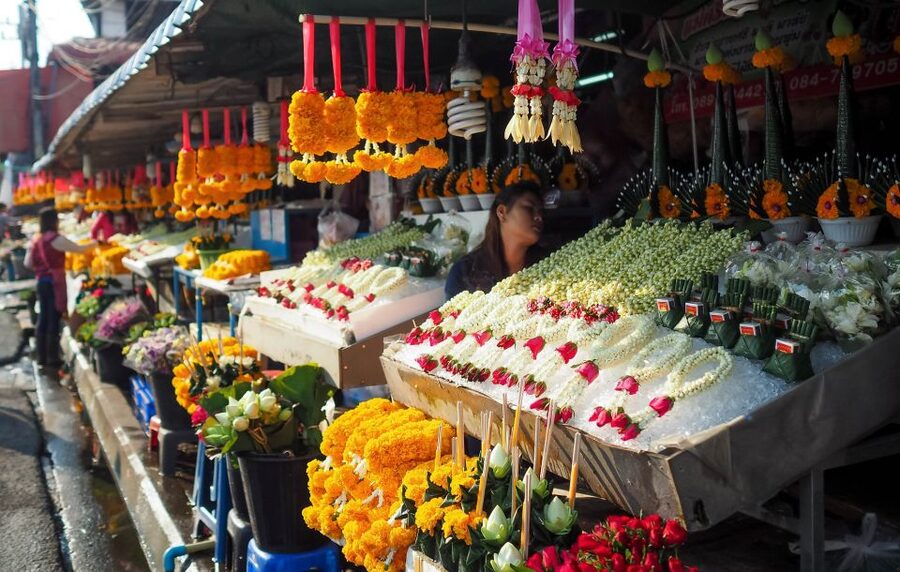
- The flower market adds color without adding a separate attraction: Ton Lamyai’s flowers and herbs make a pleasant contrast to the food stalls.
- Your guide does the ordering work: Guides have helped with busy stalls, seating, explanations, photographs, and substitutions when businesses close.
- Morning departures are the safest choice: The itinerary works best before early-afternoon restaurant closures.
- Budget for extra tasting costs: Food and drinks are paid directly at the stalls, so carry Thai baht.
A food walk that begins with a sweet local snack
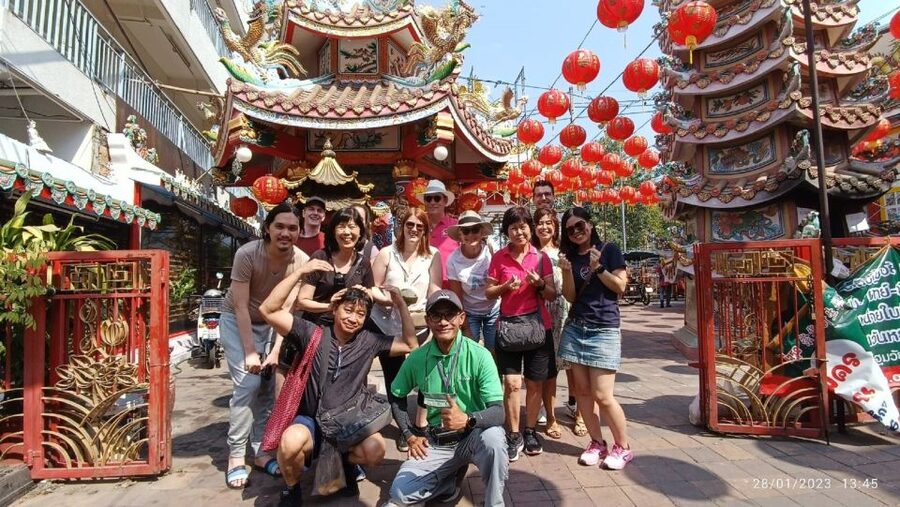
I like this tour because it gives you a useful first look at Chiang Mai without asking you to commit to a full-day food program. You meet at Chansom Memorial Bridge, also called Khua Khaek, opposite Ton Lamyai Flower Market on Praisanee Road. From there, your guide leads you into the food neighborhoods near the Ping River and the city markets.
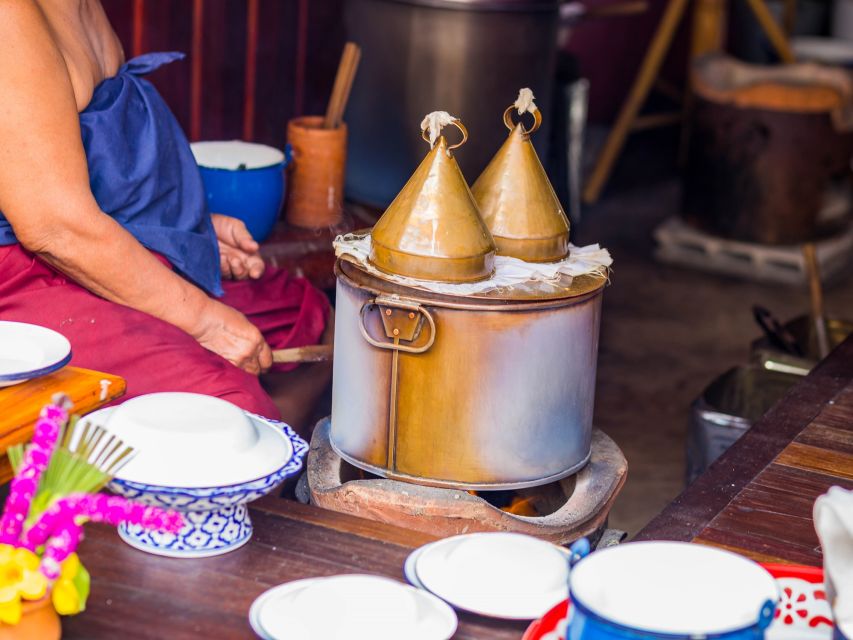
The first stop is Lung Khajohn Wat Ket. The specialty here is khao kriab pak moh, a steamed rice skin dumpling usually filled with peanuts. It is soft, slightly chewy, and sweet rather than savory. This is a good opening taste because it is small, distinctive, and not the sort of snack you are guaranteed to spot on your own.
Your guide can explain how the dish fits into the local food scene and help you understand what you are eating. That matters in Chiang Mai, where a short name on a Thai sign tells you very little if you cannot read the script.
The tour does not promise a fixed number of bites or a set amount at every stop. Tastings are at your own expense, and the exact route can change with weather, stall availability, and opening hours. I would carry small notes and coins rather than relying on one large bill at every counter.
More market walks in Chiang Mai:
- Bangkok: City Highlights Temple and Market Walking Tour
★ 4.5 · 3,990 reviews - Tokyo Tsukiji Fish Market Food and Culture Walking Tour
★ 5.0 · 3,184 reviews - Marrakech: Ben Youssef, Secret Garden, & Souks Walking Tour
★ 4.6 · 2,802 reviews
Ton Lamyai Flower Market brings a welcome change of pace
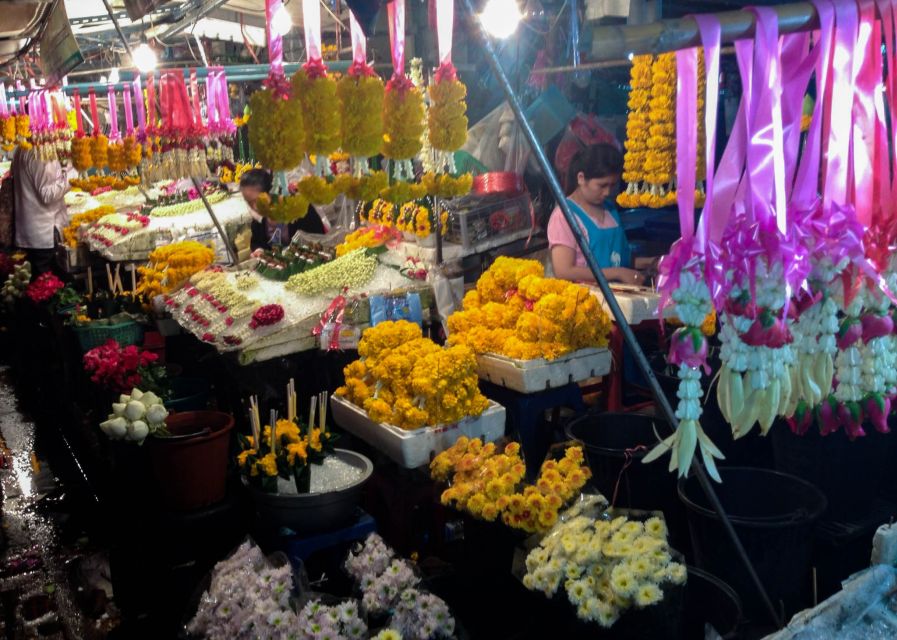
After the first snack, you pass through Ton Lamyai Flower Market. The market is directly opposite the meeting point, so it is not an out-of-the-way detour. Expect flowers and herbs, with the colors and scents offering a break from the cooking smoke and fried food.
This part of the walk is also useful for getting your bearings. The market is practical, not a staged attraction, and it gives you a look at the goods used in homes, restaurants, and ceremonies. I would keep your camera ready, but remember that this remains an active market where people are shopping and working.
The route is outdoors and on foot, so comfortable shoes matter. One person reported covering about 2.5 miles, which gives you a better idea of the walking than the official 150-minute duration alone. The pace can feel quick between food stops, especially around busy market lanes.
You should also expect heat, sun, and occasional insects. Sunglasses, a hat, sunscreen, and repellent are sensible additions. There is no hotel pickup or drop-off, so allow extra time to reach the bridge, particularly in morning traffic.
Go Neng serves Chiang Mai’s playful fried dough
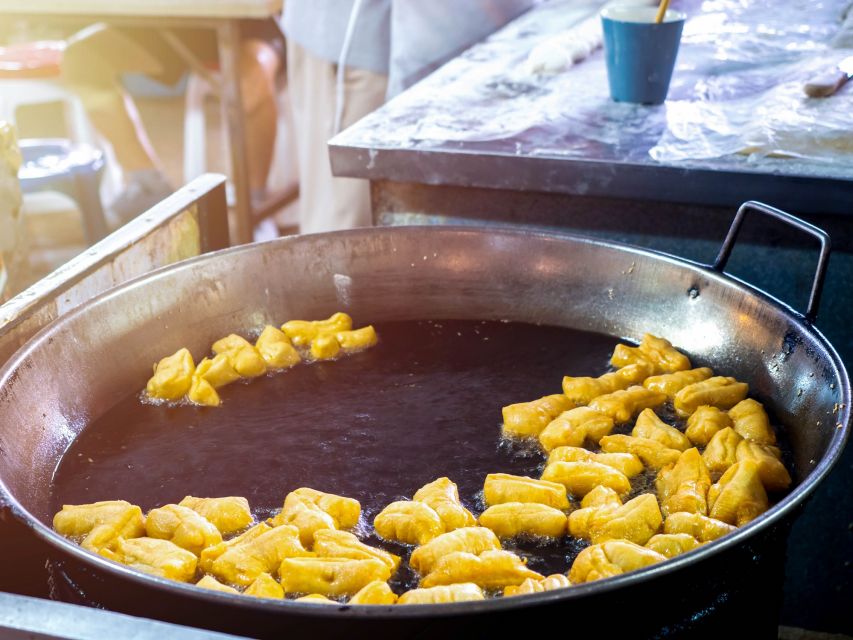
The next stop is Go Neng, known for pa thong ko, Chinese-style deep-fried dough. The pieces are shaped in unusual forms, and some look like small dinosaurs. That odd shape is part of the fun, but the real appeal is the contrast between the crisp outside and soft interior.
Pa thong ko is a familiar local snack, often enjoyed with a drink or other breakfast foods. Here, it becomes an easy way to talk about Chinese influence in Chiang Mai’s food traditions. Your guide can help you understand how a snack with Chinese roots became part of everyday Thai eating.
Some people will find this stop less exciting than the dumplings or noodles. It is fried and fairly simple, so I would not expect a complex dish. Still, it is a memorable stop, especially if you are curious about foods that look different from what you see in a standard Thai restaurant.
The morning timing makes sense here. A morning walk lets you see the markets opening and gives you a better chance of finding the planned vendors operating normally. The 2:30 pm departure may use alternative stalls instead, since several restaurants on the usual route close by early afternoon.
Warorot Market is the tour’s main food classroom
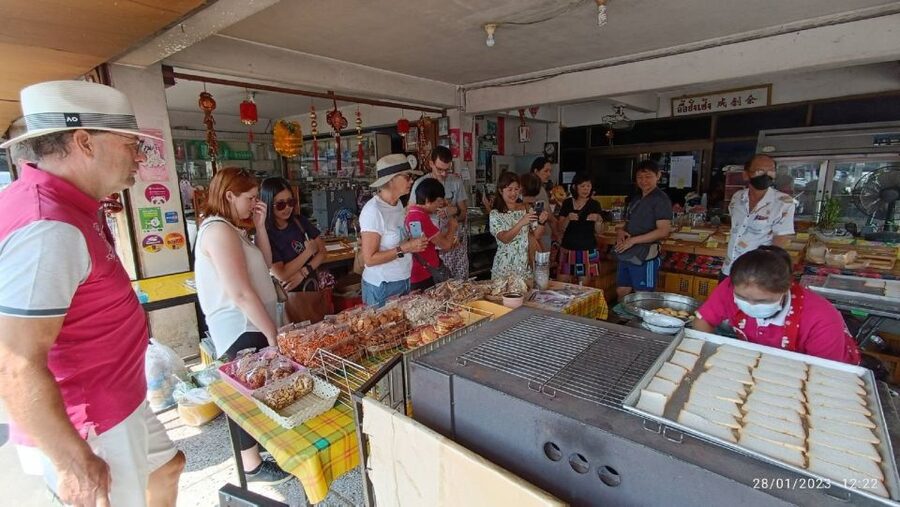
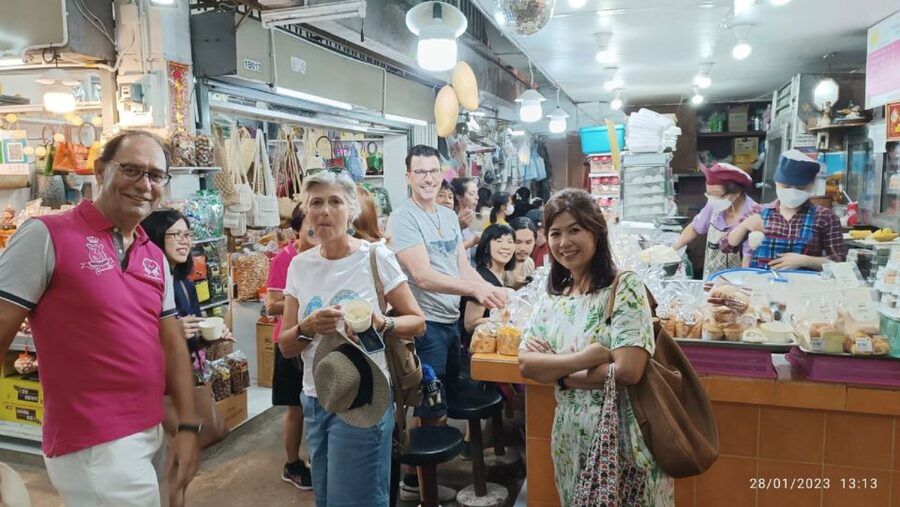
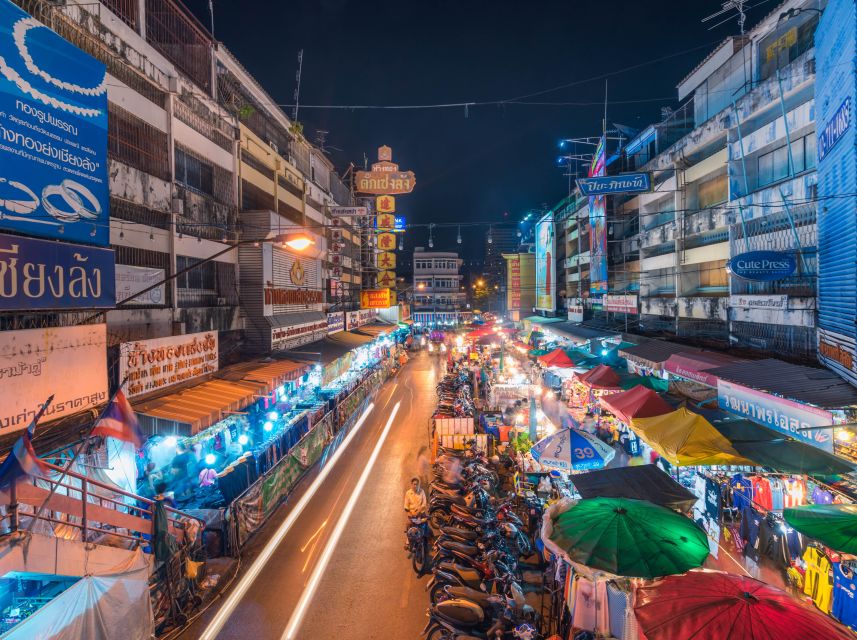
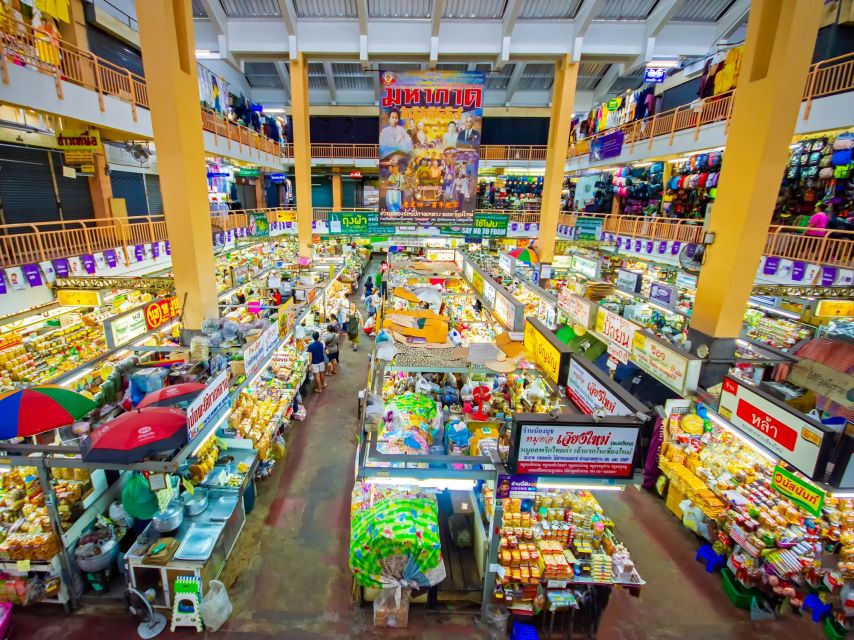
Warorot Market, locally known as Kad Luang, is the largest and most substantial section of the walk described here. You do not simply pass through it on the way to lunch. Your guide takes you around stalls selling snacks, produce, clothes, and other everyday goods, explaining what matters and helping you sort familiar foods from unfamiliar ones.
This is where having a local guide pays off. You can stop at a stall because something looks interesting, but you may not know its name, ingredients, texture, or the best way to eat it. Guides including Nom, Koi, and Banana have been praised for explaining food customs, suggesting dishes, and answering questions in English.
The market also adds cultural context. Chiang Mai’s food is not just a list of northern Thai recipes. The area’s Chinese-Thai connections show up in noodles, fried snacks, tofu, sausages, and market traditions. A guide can point out those links while you walk, along with buildings, temples, and neighborhood details along the route.
One scheduled stop may occasionally be closed. That is not necessarily a bad thing if your guide handles the change well. Guides have redirected groups to other stalls, found places with seating, and adjusted when crowds or holiday closures made the original plan impractical. The tradeoff is that you should see this as a flexible market walk rather than a restaurant reservation tour.
More food and drink tours in Chiang Mai:
- Chiang Mai: Evening Local Street Food Market Tour
★ 4.8 · 604 reviews - Fresh Local Market Tour – Food tour in Chiang Mai
★ 5.0 · 113 reviews - Dubai: Old Town, Creek, Museums, Souks, & Street Food Tour
★ 4.8 · 10,816 reviews - Dubai: Old Town, Souks, Street Food, Guided Tour & Abra Ride
★ 4.9 · 7,170 reviews
Mango sticky rice supplies the sweet middle course
Inside or around Warorot Market, you look for a stall selling mango sticky rice. This is a familiar Thai dessert, but it tastes different when bought fresh at a market counter rather than served as a polished restaurant plate.
The dish combines ripe mango, coconut-scented sticky rice, and a sweet topping. It is filling, so do not eat a large meal right before the tour. The walk includes several tastings, and the final noodle dish can be substantial.
The dessert stop also helps break up the savory and fried foods. The sequence is not a formal meal with courses, and one person found the route a little zigzagged because dessert appears before the final savory stop. I see that as a minor planning quirk rather than a serious flaw, but it is worth knowing if you prefer a straight route.
Bring cash for this stop. The price of individual foods is generally modest, but you pay at each location instead of settling one food bill at the end. One parent also noted that this arrangement was inconvenient with a young child, even though the guide was flexible and helpful.
Thana Ocha ends the walk with Hakka-style noodles
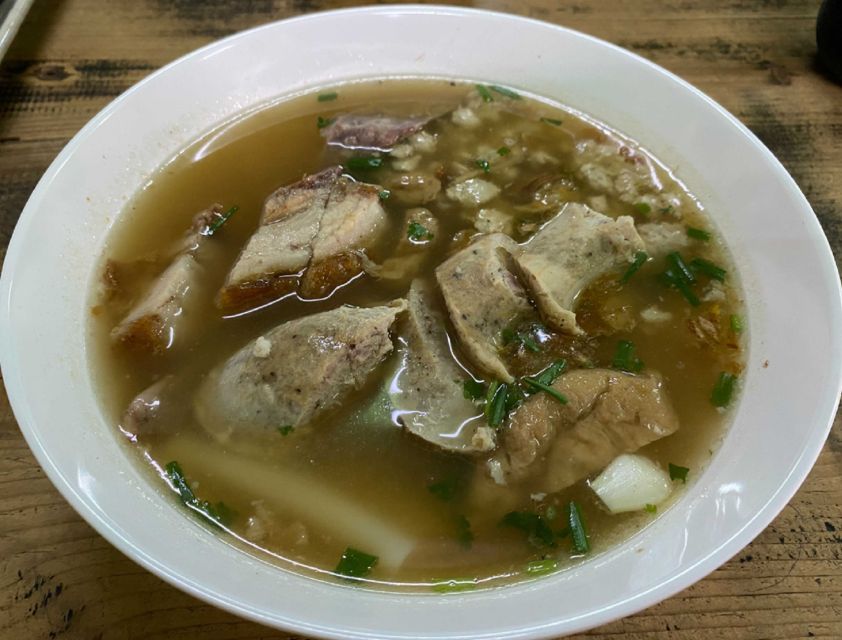
The final named stop is Thana Ocha, where you can try Hakka-style noodles with stuffed tofu, fish sausage, and wontons. After the sweet snacks, this is the dish that makes the tour feel like lunch rather than a series of samples.
The bowl combines noodles with several toppings, so you get different textures in one serving. The stuffed tofu and fish sausage also give your guide more to explain about the Chinese influence on Chiang Mai’s food. It is a stronger finish for anyone who wants something savory and filling.
Several people singled out the first dumpling stop and the last noodle stop as the best parts of the route. That matches the structure of the walk: the dumpling is unusual and local-feeling, while the noodles provide a satisfying meal. If you are especially interested in northern Thai food, ask your guide how the Hakka dish differs from khao soi and other noodle dishes associated with Chiang Mai.
The route finishes at Ton Lam Yai Market, near the flower market and the original meeting area. You are not left at a remote restaurant, which makes it easy to continue exploring the markets afterward.
What the guide adds to the experience
The guide is the most important variable on this tour. A good guide turns four food stops into a lesson about ingredients, customs, local habits, and neighborhood life. Guides named Koi, Patty, Nom, Banana, Sunny, Nancy, Pimpi, and Watsana Chaiya have all been associated with warm, useful service on different departures.
That does not mean you can choose one of them when booking. Your guide may be someone else, and the language options are English and Thai. Still, the pattern is clear: the guide is expected to lead the walking route, explain the foods, and help with ordering.
I especially value the practical help. Guides have pre-ordered at crowded stalls, found seats, carried shopping bags, taken photographs, and offered restaurant or night-market suggestions. They have also adjusted the pace and food choices for families and changed plans when businesses were closed.
The amount of explanation may vary. One person found the tour too quick and wanted more detail, while others felt they received a city walk along with the food tour. If you want a long sit-down lesson about Thai cuisine, this may feel light. If you want someone to remove the uncertainty from busy market ordering, it is a better fit.
Price, timing, and what you actually receive
At $48 per person, the tour is not the cheapest way to eat in Chiang Mai. The cost covers the guide, walking tour, and carbon-emissions offset credits, but not the food. You should think of the price as payment for access, translation, route planning, and local context rather than for a large included meal.
The value improves if you are new to Chiang Mai or nervous about ordering at market stalls. In roughly two and a half hours, you can sample several specialties and learn places to return to on your own. It also saves you from spending your first days guessing which stalls are worth trying.
The value is weaker if you are already comfortable in Thai markets and can find Warorot Market without help. You may prefer to spend $48 on several independent meals instead. The tour also has only about four main tasting stops, so do not book it expecting an all-day crawl.
Multiple start times make it easier to fit into a short Chiang Mai stay. I would choose a morning slot whenever possible. At 2:30 pm, the guide may need to substitute other street-food stalls because restaurants on the planned route often close early.
Cancellation is flexible up to 24 hours before the activity, and you can reserve now and pay later. Those terms help if your Chiang Mai schedule is still shifting, but they do not change the need to arrive at the bridge 10 minutes early. The guide can wait only 10 minutes, and traffic may take longer than navigation apps suggest.
Who should book this Chiang Mai food walk
I would recommend it to first-time visitors who want a quick introduction to local food without spending a full day cooking or touring. It is also useful on your first day, since the guide can point you toward restaurants, markets, and dishes to try later.
It suits people who enjoy walking and trying small portions of unfamiliar food. Couples, solo visitors, and small groups can all benefit, especially if nobody in the group wants to take charge of ordering.
I would think twice if you have mobility limits, heart or respiratory problems, or are pregnant, since the tour is an outdoor walk with a fairly quick pace. It is not suitable for vegans, and no vegan option is available. The food choices may also be difficult if you have strict dietary restrictions, since the stops center on noodles, dumplings, fried dough, sticky rice, tofu, fish sausage, and wontons.
Should you book it?
Book this tour if you want a guided introduction to Chiang Mai’s everyday food markets, especially if you are unsure how to order or which snacks are worth your time. Choose a morning departure, wear good shoes, and bring cash for the tastings.
Skip it if you want a long, slow food seminar, a private restaurant meal, or food included in the headline price. For most first-time visitors, the mix of Warorot Market, Ton Lamyai’s flowers, unusual snacks, and Hakka noodles makes the $48 worthwhile, provided you understand that the guide and access are included, but the bites are not.
FAQ
How long does the Chiang Mai food tour last?
The activity lasts 150 minutes, or about two and a half hours.
Where does the tour meet?
Meet at Chansom Memorial Bridge, also called Khua Khaek, opposite Ton Lamyai Flower Market on Praisanee Road.
Where does the tour finish?
The tour finishes at Ton Lam Yai Market.
Is hotel pickup included?
No. Hotel pickup and drop-off are not included.
What foods can I try?
Possible tastings include Hakka-style noodles, mango sticky rice, pa thong ko fried dough sticks, and khao kriab pak moh steamed rice skin dumplings.
Is food included in the tour price?
No. Food and tasting costs are paid separately at the stalls and restaurants.
What languages does the guide speak?
The tour is available with an English or Thai-speaking guide.
Is there a vegan option?
No vegan option is available, and vegans are listed as unsuitable for this activity.
Is a morning departure better than the 2:30 pm slot?
Yes. Morning departures are recommended if you want to follow the planned stops, since many restaurants close by early afternoon. The guide may use alternative street-food stalls for the 2:30 pm departure.
More Walking Tours in Chiang Mai
- Marrakech: Colorful Medina Souks Guided Walking Tour
★ 4.7 · 2,470 reviews - Air Raid Shelter + St. Nicholas Market Walking Tour
★ 5.0 · 1,950 reviews - Tokyo: Tsukiji Fish Market Food and Walking tour
★ 5.0 · 1,724 reviews - Tokyo: Tsukiji Fish Market Guided Walking Tour
★ 4.9 · 1,397 reviews
More Food in Chiang Mai
- Bangkok by Night: Temples, Markets and Food Tuk-Tuk Tour
★ 5.0 · 3,752 reviews - Chef Guided Food Tour of Pike Place Market
★ 5.0 · 3,733 reviews - Bangkok: Markets, Temples and Food Night Tour by Tuk Tuk
★ 4.9 · 2,371 reviews - London Bridge & Borough Market Food Tour with 7 Authentic Dishes
★ 5.0 · 1,972 reviews
Just added around Chiang Mai
- Chiang Mai: Half Day Morning Cooking Class with Market Tour★ 4.9 · 10 reviews
- Chiang Mai: Half Day Cooking Class at Organic Farm★ 4.8 · 96 reviews
- Full Day Thai Cooking Class in Organic Farm and Market★ 5.0 · 3 reviews
- Chiang Mai Light: Tuk Tuk Night Tour with Temples & Markets★ 5.0 · 7 reviews
- Chiang Mai: Traditional Thai-Akha Cooking Class& Market Tour★ 5.0 · 25 reviews
- Chiang Mai: Morning Cooking Class with Market Visit★ 4.9 · 81 reviews
- Chiang Mai : Cook in Farm, Market tour & Go by a Local Train★ 4.8 · 6 reviews
- Chiang Mai: Half Day Evening Cooking Class with Market Tour★ 4.9 · 19 reviews
Market Walking Tours, compared.
Tokyo Tsukiji Fish Market Food and Culture Walking Tour
Read our review →
Ben Youssef, Secret Garden, & Souks Walking Tour
Read our review →

Air Raid Shelter + St. Nicholas Market Walking Tour
Read our review →
Nishiki Market Brunch Walking Tour (7 Tastings + Brunch)
Read our review →Tsukiji Fish Market Food and Culture Walking Tour
Read our review →Browse the lists this tour appears in