
Review · TORONTO
Toronto’s Multicultural Heart – Kensington & Chinatown Walk
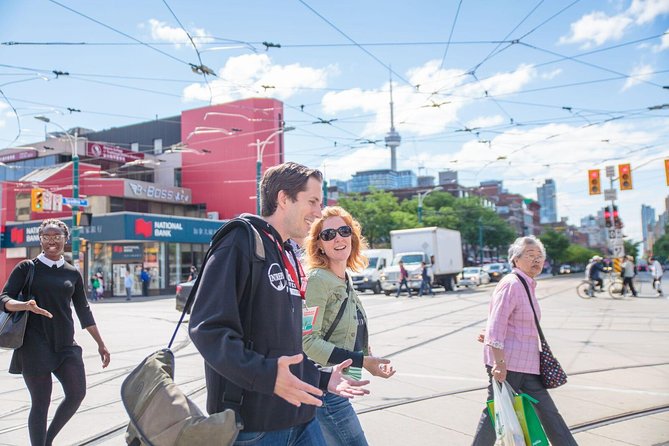
Toronto’s best neighborhood experience may be the walk from the Art Gallery of Ontario to Dragon City Shopping Centre. In a few city blocks, you move from Kensington Market’s murals, bakeries, vintage stores, and independent spirit into Chinatown’s food shops, restaurants, and long immigrant story.
I like the small groups of up to 12 and the way the tour uses coffee, tea, and a local snack to keep the history tied to real places. I also like the guides’ personal approach. Kieran, Jackie, Robert, Aaron, Roydon, and others have led this walk, and several guides have tailored the pace and conversation to the group.
The main drawback is that this is a walking and standing tour, not a sit-down history lesson. Some people have found the commentary less engaging than expected, and one booking problem left a pair without a guide. Book at least a little ahead, especially since this experience is often reserved 36 days before the date.
Key points to know before you go
- Two neighborhoods in one morning: Walk from Kensington Market into Chinatown, with both areas close enough to visit in one outing.
- A café stop and local bite: Coffee or tea and a snack from a street vendor or market stall are included.
- Street art is part of the story: Expect murals, graffiti-covered brick walls, colorful lanes, and the work of local artists.
- A small-group format: The maximum is 12 people, with a private upgrade available.
- A useful starting point: The walk begins by the Art Gallery of Ontario and finishes at Dragon City Shopping Centre.
- Best for curious walkers: Comfortable shoes matter, and you should be ready for plenty of walking and some standing.
Why Kensington Market and Chinatown work so well together
Toronto has grand civic buildings and major museums, but these two neighborhoods show how the city works at street level. Kensington Market and Chinatown sit side by side, yet they have different identities, different shopping patterns, and different visual styles.
That contrast gives the walk its shape. Kensington Market feels informal and bohemian, with independent businesses, cafés, bakeries, vintage shops, bars, and walls covered in commissioned and unofficial art. Chinatown is more commercial and concentrated, with restaurants, shops, historic monuments, and activity along Dundas Street West and Spadina Avenue.
I like this pairing because you are not spending three hours on one narrow subject. You get food, immigration stories, small businesses, public art, and practical suggestions for the rest of your visit. The tour also helps you understand why these neighborhoods matter beyond their photo appeal.
The experience begins at the southwest corner of McCaul Street and Dundas Street West, beside the Art Gallery of Ontario. That is a handy meeting point if you are already visiting the museum or exploring downtown on foot. The start time is 10:00 a.m., and the walk finishes at the Dragon City Shopping Centre at the southwest corner of Spadina Avenue and Dundas Street West.
More walking tours in Canada:
- Hidden Toronto: Kensington Market & Chinatown Walk
★ 4.8 · 63 reviews - Toronto: 2-Hour Kensington Market Chinatown Walking Tour
★ 4.2 · 37 reviews - Calgary Food Walking Tour: Calgary Farmers Market
★ 5.0 · 18 reviews
Entering Kensington Market through coffee, food, and street art
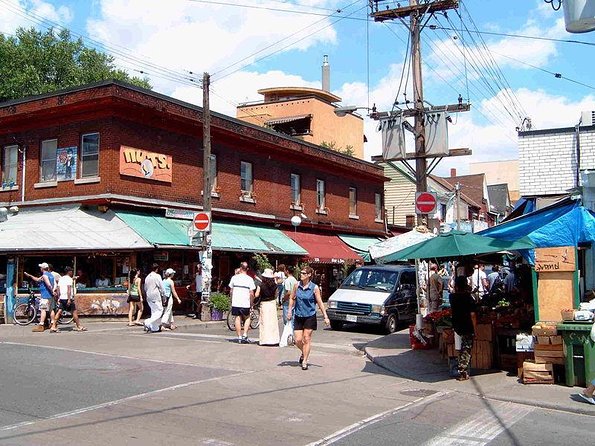
Kensington Market gets the first major portion of the walk. The neighborhood developed from a working-class Jewish market into a bohemian district shaped by many waves of immigration. Your guide explains that change while pointing out the businesses and streets that give the area its current character.
The included café stop makes a difference. Instead of hearing a long talk about neighborhood change while standing on a sidewalk, you sit down with coffee or tea and get a moment to look around. Several guides have also included coffee and a pastry or cake, although the exact food item can vary.
A local snack is another useful touch. The goal is not a full meal, so arrive having eaten breakfast. Think of the food stop as a small introduction to the area’s international cooking and market culture. Additional snacks and drinks are not included, but you will have plenty of chances to note places for lunch later.
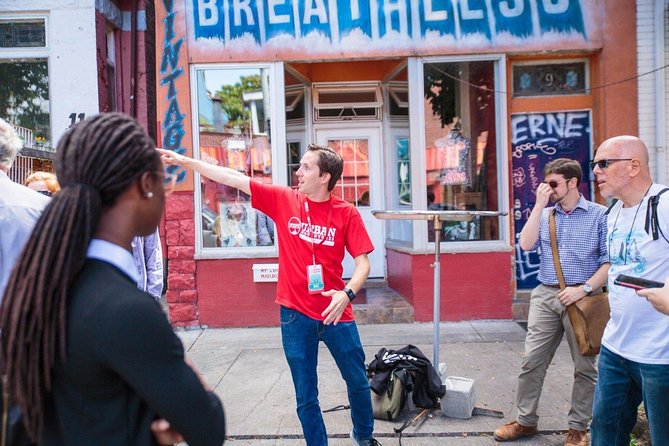
Kensington’s independent character is one of the main themes. The area has a strong dislike of large chain businesses, and the walk points out the cafés, bakeries, vintage stores, specialty shops, and small bars that keep the neighborhood distinct. I would pay attention to the guide’s recommendations here, since the practical value of the tour is often knowing where to return after the walk.
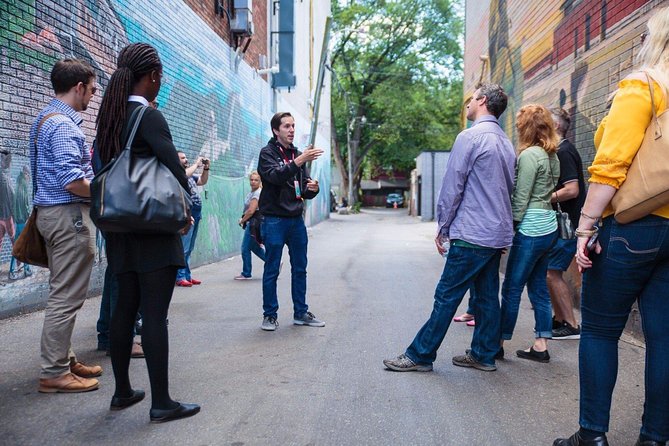
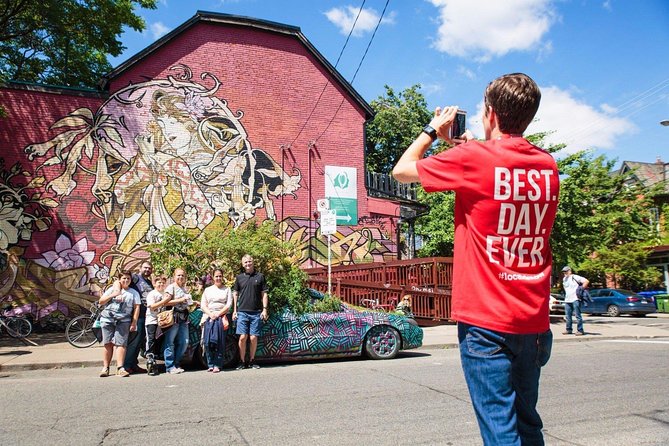
The street art gives the neighborhood much of its color. Bare brick walls have been covered with murals and graffiti, often with the permission of building owners. The art is not treated as background decoration only. Guides such as Jackie have connected it to specific artists and to the way local businesses use the walls around them.
The hidden lanes are worth noticing too. You may find colorful passageways and walls that are easy to miss if you simply follow the main road. This is one reason a guide adds value: you are not just strolling through the market, you are being shown details that are easy to pass without context.
Chinatown’s food streets and immigrant stories
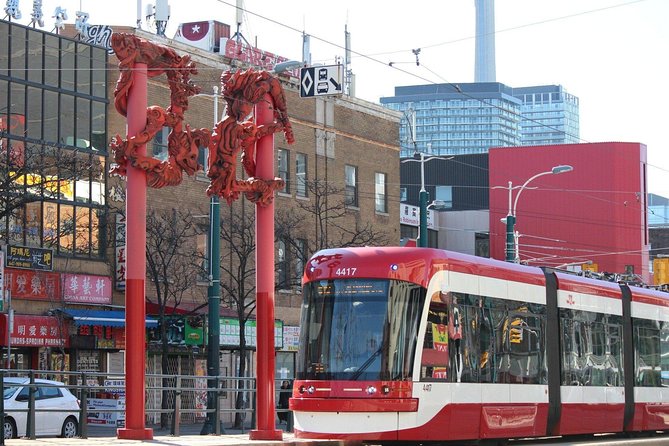
From Kensington Market, the walk moves into Chinatown. This part focuses on the development of Toronto’s Chinese community, which began taking shape in the late 19th century. Your guide places local buildings, shops, restaurants, and monuments within that longer story.
Chinatown is one of the busier parts of this route. Dundas Street West and Spadina Avenue carry a steady flow of people, shops, and food businesses. The setting is less bohemian than Kensington Market, but that change is exactly what makes the combined tour work.
The guide may point you toward restaurants for after the walk. That advice is especially useful because Chinatown offers many choices, and the tour gives you a chance to ask direct questions about what fits your appetite or plans. The food focus remains modest, though. This is not a restaurant crawl, and you should not book it expecting several full tastings.
The historical side is equally important. You learn about the role of immigration in shaping Toronto and about the challenges faced by Chinese and other immigrant communities. Several guides have been praised for explaining these subjects through local stories instead of delivering a string of dates.
That personal style can change the feel of the tour. Robert has been described as tailoring the walk to the group’s interests and abilities. Kieran has handled plenty of questions with patience and humor. Jackie has kept teenagers interested while linking the neighborhoods to Toronto’s past. These details matter because a walking tour depends heavily on the person leading it.
What the guides add to the experience
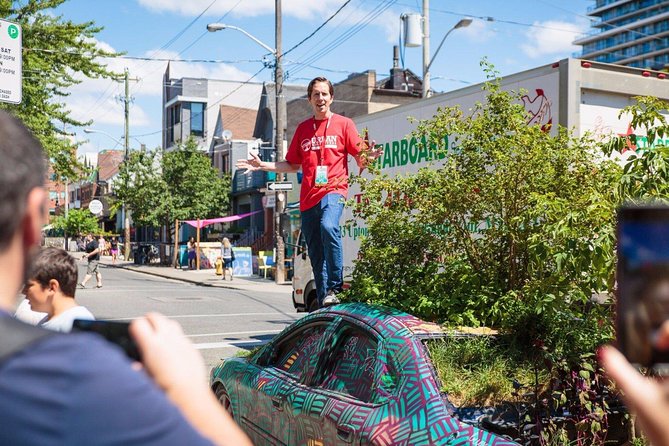
The company uses several guides, so the exact style will depend on who leads your departure. Names associated with this walk include Kieran, Jackie, Robert, Aaron, Roydon, Richard, Jennifer, Thomas, Jason, and Rob.
The strongest guide experiences share a few traits. The leader tells stories rather than reciting facts, asks questions, notices what interests the group, and connects the history to shops, murals, cafés, and food stops. One guide used quiz questions to make the walk more interactive. Another made the experience feel almost like spending time with a well-informed local friend.
That does not mean every departure will feel identical. One person found the walk too much like a simple stroll and wanted more active commentary. Another described a fair amount of standing, which is worth remembering if you expect constant movement.
I would choose this tour for the guide access more than for the route alone. You can walk through Kensington Market and Chinatown independently, but you will miss the local stories, personal recommendations, and small details that give the streets meaning. If you prefer to explore silently at your own pace, save the $64.25 and walk the area yourself.
A few more market tours around Canada worth a look
- The Only Locally Owned Non-Touristy Food Tour by Spade & Palacio
★ 5.0 · 701 reviews - Toronto: St Lawrence Market Food Tour with 6 Food Tastings
★ 5.0 · 685 reviews - Granville Island Market Food Tour by Vancouver Foodie Tours
★ 5.0 · 552 reviews - Toronto’s First Food Tour: Taste the World in Kensington Market
★ 5.0 · 526 reviews
Is the $64.25 price fair?
At $64.25 per person, this is not the cheapest way to see Kensington Market and Chinatown. The price includes the guide, the café stop, and a local snack, but not extra food, drinks, transportation, or hotel pickup.
The value depends on how much you want from the three hours. If you are new to Toronto and want a clear introduction to two central neighborhoods, the cost can be reasonable. You get a compact route, local context, a small-group setting, and suggestions for where to eat and shop afterward.
The value is stronger if you happen to receive a guide who adapts the walk to your interests. A private or nearly private departure has allowed some groups to ask many questions and set the pace around their abilities. The tour can feel personal when the group is small.
For a budget-minded visitor, the tradeoff is simple. You could explore the same streets without paying an admission fee, since the neighborhood stops themselves are free. You would not get the included snack and café visit, and you would need to research the area’s history and best side streets yourself.
Timing, walking effort, and group size
The experience lasts about three hours, although the stated neighborhood portions are roughly one hour in Kensington Market and one hour in Chinatown, with time for meeting, transitions, food, and conversation. Plan your morning around the full three-hour window rather than assuming you will be finished after two hours.
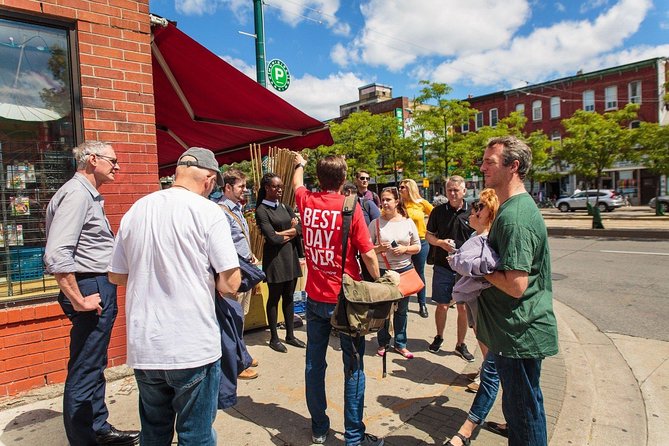
This is a real walking tour. Wear shoes you can use comfortably for several hours, and expect some standing while the guide explains a building, mural, shop, or local story. The route is near public transportation, but hotel pickup and drop-off are not provided.
The maximum group size is 12. That is small enough for questions without making the outing feel like a large procession. An upgrade to a private tour is available if you want a more personal schedule or have a family group with particular interests.
Children under six can join free, but you need to tell the provider in advance. The tour is described as child-friendly, and older children and teenagers have stayed engaged when guides used stories, questions, art, and food to keep the walk moving.
Who should book this Toronto walk?
I would recommend it to first-time visitors who want more than Toronto’s central sights. It is also a good fit if you like food, street art, independent shops, immigration stories, and small neighborhood details.
Families with older children can do well here, especially with an engaging guide. The café stop and snack break add variety, while the murals give younger participants something concrete to look for. Solo visitors may also appreciate the easy social setting and the chance to ask a local for restaurant ideas.
This is less suitable if you have limited walking ability, dislike standing, or want a formal museum-style presentation. It is also not the right choice for anyone expecting a full food tour. The samples are a pleasant part of the route, not the main event.
Because the experience is often booked well ahead, I would reserve before your trip if the timing matters. There is free cancellation up to 24 hours before the start time. Cancellations or changes inside that window are not refunded or accepted.
Should you book Toronto’s Multicultural Heart?
Book this walk if you want a friendly introduction to two distinctive Toronto neighborhoods and value the stories behind the storefronts. The café stop, local snack, murals, and restaurant tips give the route more substance than a simple point-to-point stroll.
I would be more cautious if you are looking for a tightly scripted tour with constant movement or several substantial tastings. The quality depends strongly on the guide, and the walk includes standing. Still, the small group, useful local advice, and combination of Kensington Market with Chinatown make this a smart first neighborhood tour for many visitors.
FAQ
Where does the Toronto Kensington Market and Chinatown walk begin?
It begins at the southwest corner of McCaul Street and Dundas Street West, beside the Art Gallery of Ontario in Toronto.
Where does the tour finish?
The walk ends at Dragon City Shopping Centre, at the southwest corner of Spadina Avenue and Dundas Street West.
What time does the tour start?
The listed start time is 10:00 a.m.
How long does the experience last?
The tour lasts approximately three hours. The main Kensington Market and Chinatown portions are described as about one hour each, with additional time for meeting, transitions, and food or café stops.
Is food included?
A coffee or tea at a neighborhood café and a local snack from a street vendor or market stall are included. Additional snacks and beverages are not included.
Is hotel pickup provided?
No. Hotel pickup and drop-off are not included, so you need to reach the starting point independently.
How many people can join the tour?
The maximum group size is 12 people. A private tour upgrade is also available.
Can children join?
Yes. The experience is child-friendly, and children under six may join free of charge. You should inform the provider if you are bringing a child under six.
What happens if I need to cancel?
You can cancel at least 24 hours before the start time for a full refund. Cancellations and changes made less than 24 hours before the start time are not refunded or accepted.
Just added around Canada
- Calgary Food Walking Tour: Calgary Farmers Market★ 5.0 · 18 reviews
- Hidden Toronto: Kensington Market & Chinatown Walk★ 4.8 · 63 reviews
- Toronto: Private Food Discovery at the St Lawrence Market★ 4.9 · 19 reviews
- Toronto: 2-Hour Kensington Market Chinatown Walking Tour★ 4.2 · 37 reviews
- Ottawa: Taste of the ByWard Market Food Tour★ 4.9 · 50 reviews
- Ottawa: Evening Taste of the ByWard Market Food Tour★ 4.6 · 21 reviews
- Montreal: Jean-Talon Market & Beyond Locally Owned Food Tour★ 5.0 · 50 reviews
- Kensington Market ‘Taste the World’ Food Tour★ 4.5 · 4 reviews
Walking Tours, compared.
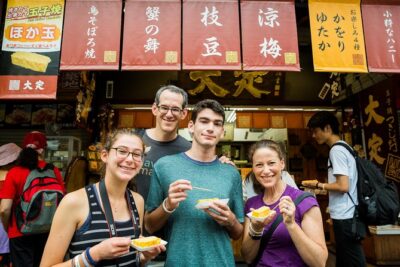
Tokyo Tsukiji Fish Market Food and Culture Walking Tour
Read our review →
Ben Youssef, Secret Garden, & Souks Walking Tour
Read our review →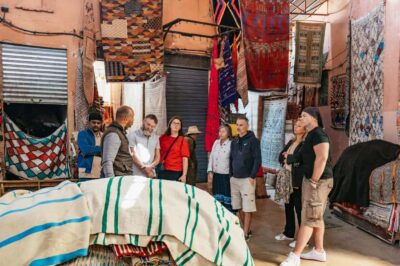
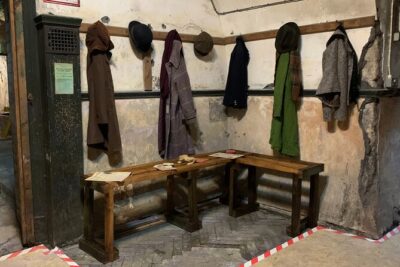
Air Raid Shelter + St. Nicholas Market Walking Tour
Read our review →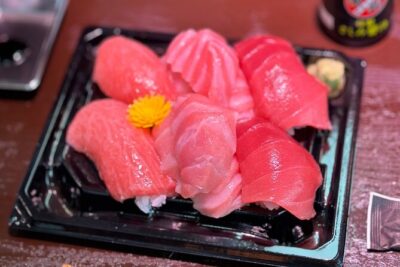
Nishiki Market Brunch Walking Tour (7 Tastings + Brunch)
Read our review →![Frida Kahlo VIP [Museum Tickets Included] Walk, Markets & Churros](https://1.marketescapes.com/wp-content/uploads/frida-kahlo-vip-museum-tickets-included-walk-markets-churros-400x267.jpg)
Frida Kahlo VIP [Museum Tickets Included] Walk, Markets & Churros
Read our review →Browse the lists this tour appears in