
Review · CHIANG MAI
Chiang Mai: Cooking Class with Market and Pickup
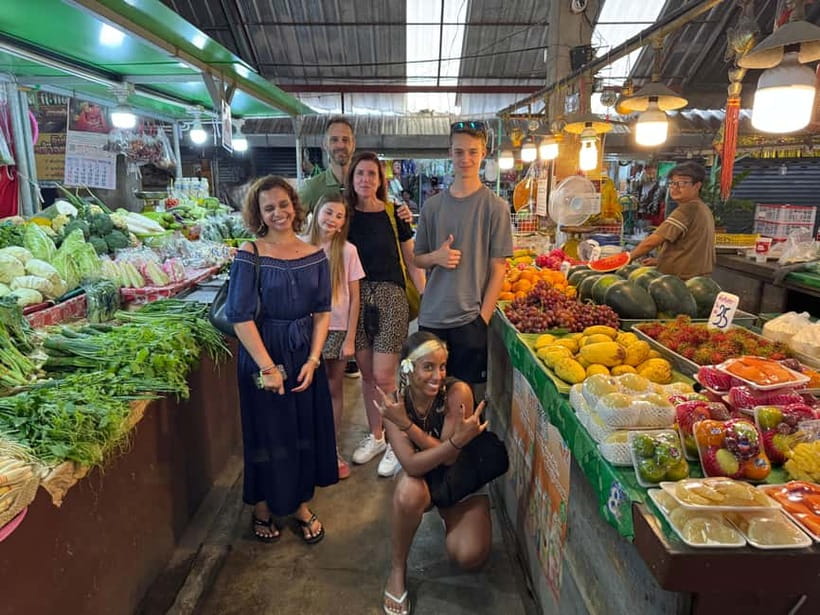
The best part of this Chiang Mai cooking class happens before anyone turns on a stove: you visit a local market and learn what those unfamiliar Thai herbs, vegetables, and eggplants are for. Back at Daddy’s Kitchen, you cook several dishes yourself rather than watching a demonstration, with your own wok, tools, and station.
I especially like the choice of dishes, since couples can pick different recipes and compare results. I also like the friendly teaching style. Instructors such as Cha-em, New, Tu, and Wave explain each step in English, keep the pace lively, and make the class workable even if your cooking skills stop at boiling water.
The one thing to consider is the amount of food. You may cook three or four dishes, plus mango sticky rice, so arrive hungry. The morning class can also run into your first proper meal of the day, and alcohol is not included.
Key points to know before booking
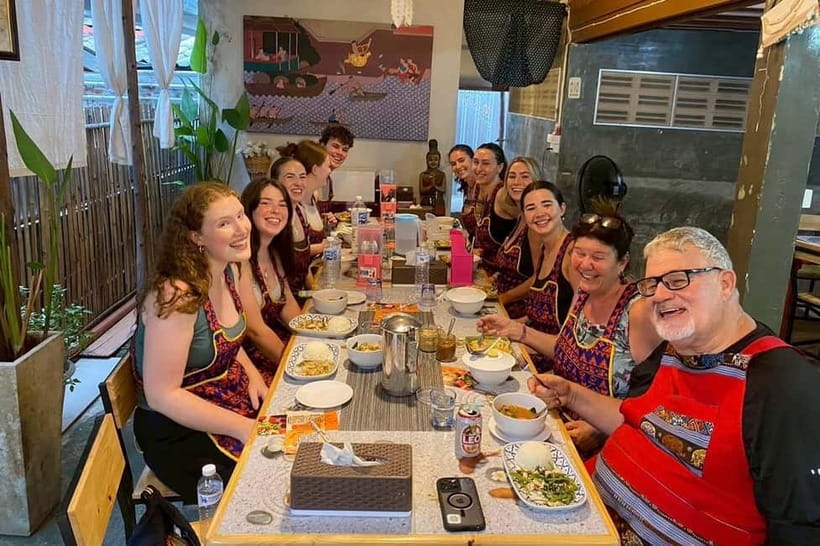
- Your own cooking station: Each participant gets a wok, utensils, ingredients, and a personal place to work.
- A useful market visit: The opening trip introduces Thai herbs, vegetables, and spices before you cook with them.
- Choose your menu: Options include soups, stir-fries, curries, and, in some sessions, khao soi.
- Strong English instruction: Cha-em, New, Tu, Wave, and other instructors guide the class with humor and clear demonstrations.
- A very filling three and a half hours: The class lasts 210 minutes and can include several savory dishes plus mango sticky rice.
- Good value at $25: Pickup, drop-off, ingredients, cooking equipment, class instruction, dessert, a digital recipe book, and activity photos are included.
From Chiang Mai hotel pickup to the fresh market
This experience begins with hotel pickup in Chiang Mai Province. You are asked to wait in the hotel lobby 30 minutes before the class starts, which gives the driver time to gather the small group and deal with Chiang Mai traffic.
Transport matters here. A cooking class without pickup can mean finding your way across town before breakfast or dinner, but this package takes care of the journey both ways. Transport receives a 90 percent perfect score, and the booking information makes clear that pickup communication is an important part of the service.
The group is limited to 10 people. That is small enough for the instructor to keep an eye on your chopping, seasoning, and stove work without turning the lesson into a private class. You will share the experience with people from different countries, but still get your own cooking space.
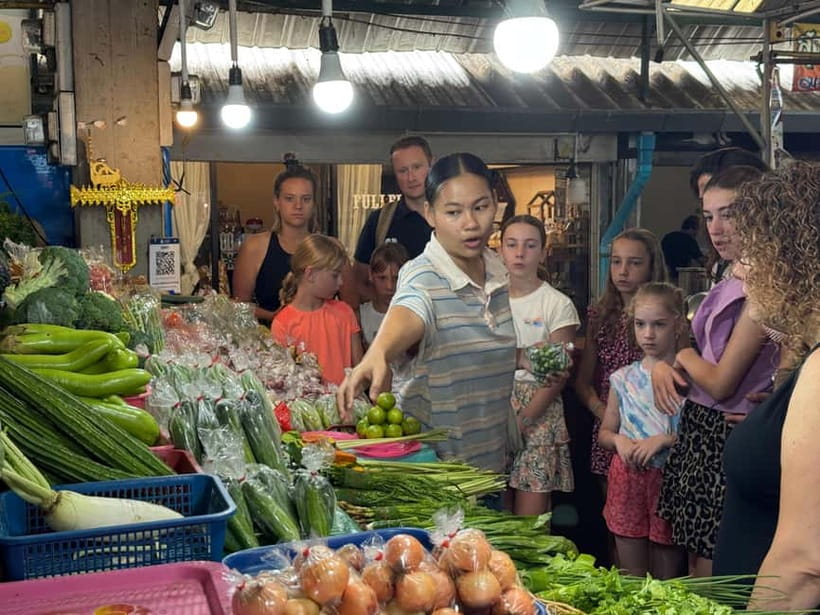
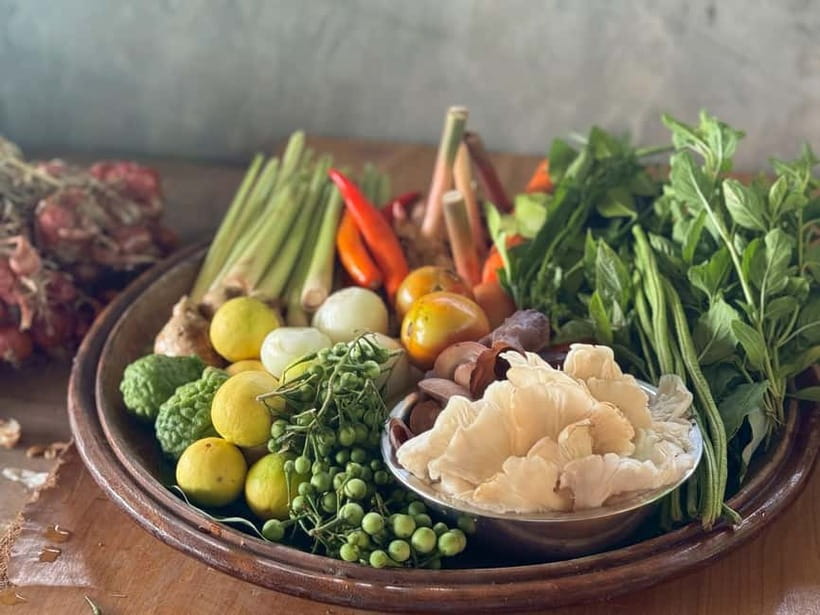
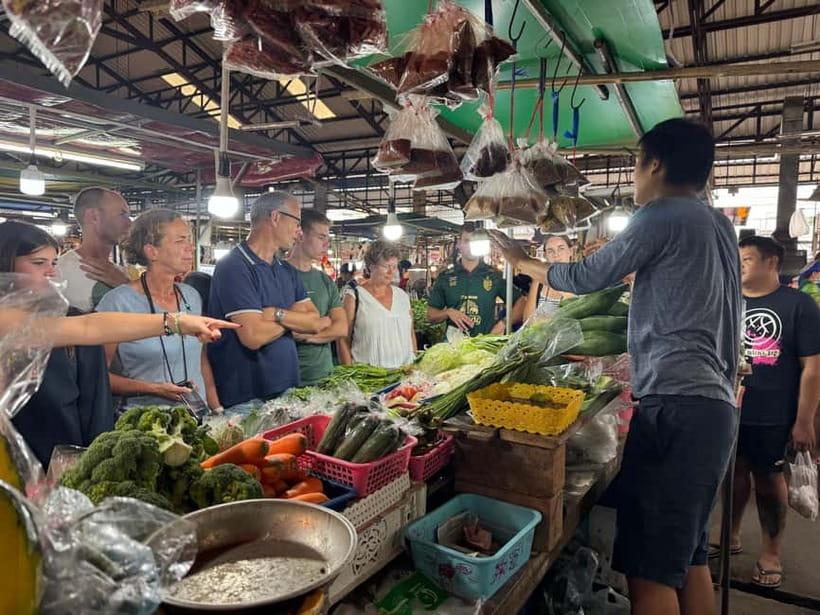
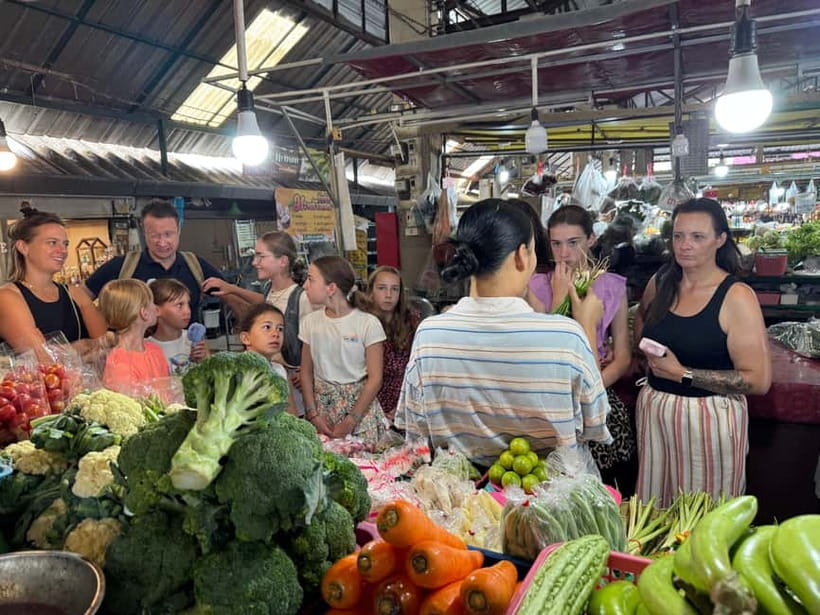
The first stop is a local fresh market. This is not just a quick shopping errand. Your guide introduces the ingredients used in the class, including Thai herbs, vegetables, and spices. You might encounter several kinds of eggplant, an especially useful lesson since Thai eggplants can look quite different from the large purple variety familiar in many Western kitchens.
This market visit gives the cooking class some needed context. Thai recipes often depend on ingredients that are easy to overlook when they are already chopped and placed in a bowl. Seeing them whole, hearing their names, and learning how they fit into a dish makes it easier to recognize them later in a Chiang Mai market or an Asian grocery store at home.
The market can also be the most sensory part of the morning or afternoon. You are seeing ingredients at their source, then taking those same basic building blocks back to the kitchen. The drawback is that the market portion is an introduction rather than a long food tour, so book this for the cooking, not for an extended market excursion.
More Market Cooking Classes in Chiang Mai
- Chiang Mai: Cooking Class, Market & Thai Herbs Garden Tour
★ 4.9 · 4,824 reviews - Chiang Mai: Authentic Cooking Class with Market & Farm Visit
★ 4.9 · 4,546 reviews - Chiang Mai: Evening Cooking Class and Local Market Visit
★ 4.9 · 648 reviews
A family-style kitchen with your own wok
After the market, you return to Daddy’s Kitchen for a welcome drink and snack. The setting is described as a Thai family home atmosphere, which gives the class a more personal feel than a large commercial demonstration kitchen.
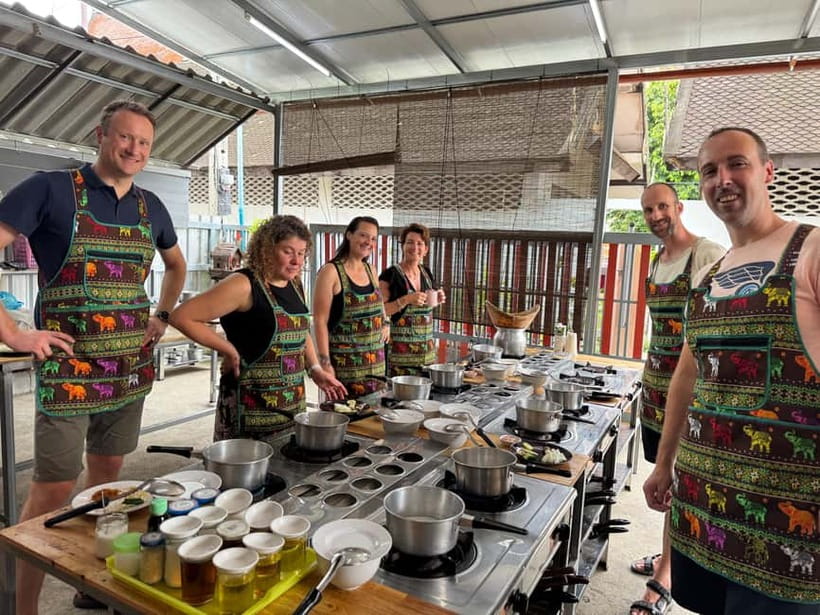
The main practical advantage is your individual station. You do not take turns with a single wok or stand at the back of a room trying to see what the chef is doing. You receive your own wok and cooking utensils, and the ingredients are provided for you.
The kitchen team prepares some of the setup so the class can keep moving, but you still handle the important work yourself. You prepare and cook your chosen dishes under guidance, learning how ingredients are combined, measured, and timed.
This format works well for beginners. The instructor breaks down the process into manageable steps, and the recipes are designed to be achievable during a short class. You are not expected to arrive with Thai cooking experience. At the same time, you still get enough control to adjust your choices and see how the dish comes together.
The class is conducted in English. The strongest praise goes to the instructors’ teaching and personality. Cha-em is repeatedly described as funny, warm, and easy to follow, while New is noted for keeping the group on track. Tu, Wave, Emy, Kimmy, Toey, and others are also praised for clear explanations and good energy.
Names and instructors may vary by session. That is worth knowing if you see a particular chef mentioned in a booking description or past experience. The consistent feature is the hands-on teaching style rather than one guaranteed instructor.
Choosing soup, stir-fry, curry, and dessert
The menu is one of the class’s best features. You can choose from several options rather than cook exactly the same dishes as everyone else.
The choices described for some sessions include:
- Three types of soup
- Three stir-fry options
- Four curry choices
- Mango sticky rice
- Khao soi in some menu selections
The exact menu may vary, so check the available choices when you book. The useful point is that a couple can select different dishes. One person might cook a soup while the other chooses a stir-fry, giving you more flavors to sample between you.
The curry lesson can include making the curry paste, which adds a useful extra step. Curry paste is where much of the flavor begins, and preparing it yourself helps you understand why Thai curries taste different from one another.
The class can produce three or four dishes per person, depending on the session and menu. One account describes a soup, a main dish, a curry or khao soi, and sticky rice, while another notes four dishes each. This is a lot of food for a 210-minute activity.
That quantity is excellent value, but it affects your schedule and appetite. If you book a morning class, do not plan a large breakfast. Your first cooked dishes may arrive around 10:30 a.m. In the evening, the class can function as your dinner, which is one reason the 5:30 p.m. session appeals to many people.
What you actually learn at the stove
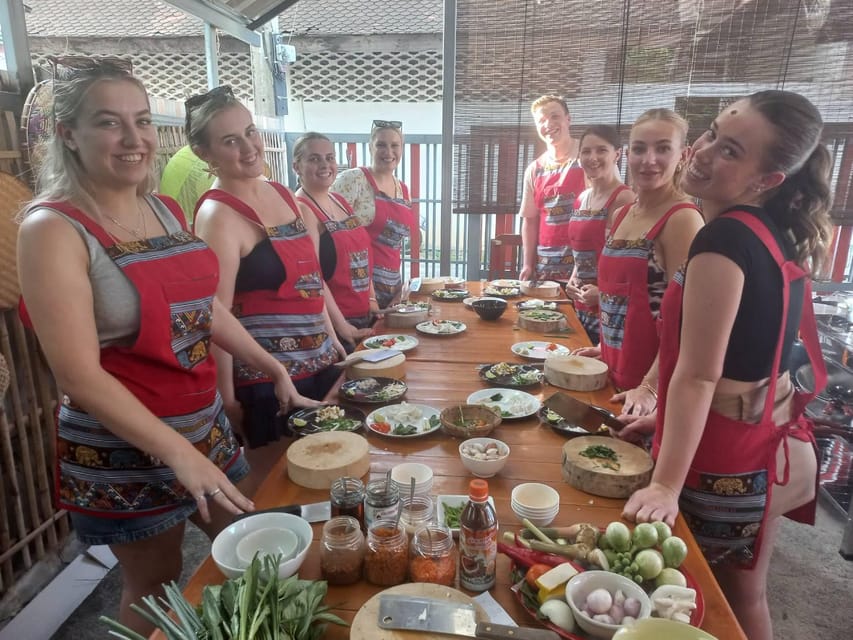
This is not a class where you watch a chef make food and then receive a plate. You chop, stir, season, and cook your own meal, with the instructor guiding the process.
The teaching style is informal and active. You learn how the ingredients work together, how to follow the recipe, and how to manage several steps without losing track. The instructors use humor to keep the class relaxed, but the organization is serious enough to keep everyone moving.
The pre-prepared ingredients help the class fit into three and a half hours. You get the hands-on parts that matter, without spending the whole session waiting for every ingredient to be washed and portioned. This makes the experience approachable for people with no cooking background.
If you are already a confident cook, you may not learn advanced kitchen technique. The value lies more in learning Thai ingredients and recipes in their local context than in mastering professional skills. You also get to taste the result immediately, which is a good test of your seasoning and timing.
The class uses fresh herbs and ingredients. That matters because Thai food depends on fragrance as much as heat. Fresh ingredients give you a better sense of how the food is meant to taste, and the market visit explains where those flavors begin.
The one limitation is that the class is built for a group. You will get help, but not constant one-to-one coaching. A participant who needs close attention with every knife cut or cooking step should tell the instructor early.
More Market Cooking Classes in Thailand
- Evening Cooking Class in Organic Farm with Local Market Tour
★ 5.0 · 394 reviews - Cooking Morning Class Chiang Mai Visit Organic Garden and Market
★ 5.0 · 211 reviews - Cooking Evening Class Chiang Mai Visit Organic Garden and Market
★ 5.0 · 187 reviews - Half-Day Cooking Class with Market Tour
★ 5.0 · 163 reviews
Mango sticky rice closes a very full meal
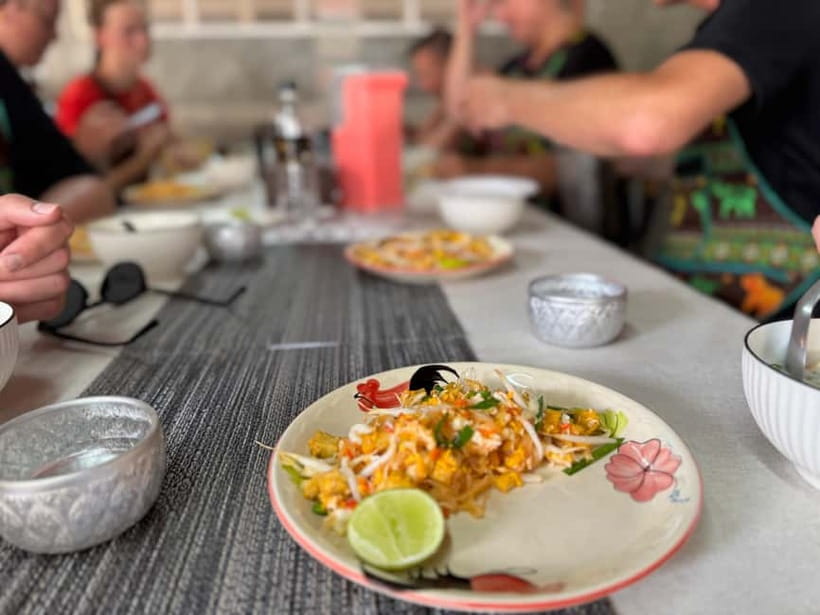
Dessert is included, and the finishing dish is mango sticky rice. It gives the class a sweet ending after the savory cooking and adds another familiar Thai food to your recipe collection.
Not everyone will love the dessert as much as the soups, curries, or stir-fries. Taste is personal, and one group found the mango sticky rice less popular than the first three dishes. Still, it is useful to have a complete Thai meal rather than finish after the main courses.
The portions are generous enough that you should plan around the class. You will not leave hungry, but you may not need dinner afterward. For the $25 price, the amount of food is a major part of the value.
The class also creates a social meal without making you sit through a formal group dinner. You cook beside other participants, taste the dishes, and compare choices. Solo visitors can join comfortably, while couples and friends can intentionally choose different recipes to try more dishes.
Why $25 is strong value
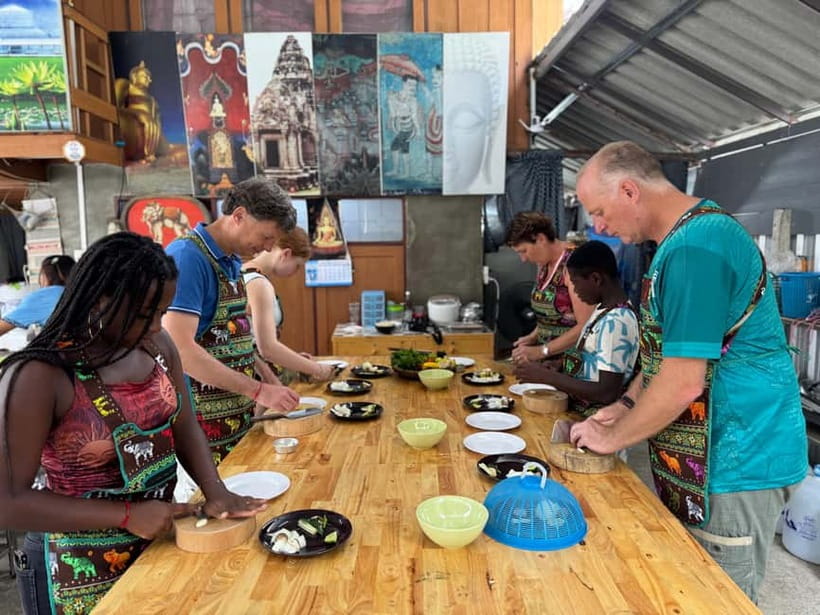
At $25 per person, the price covers more than a recipe lesson. You receive hotel pickup and drop-off, the market visit, instruction, ingredients, your cooking station, a wok, utensils, dessert, and the digital recipe book.
You also receive photos from the activity. That is a small extra, but it helps preserve the memory of the class without asking you to stop cooking to take pictures.
The individual station is especially important when judging value. Some inexpensive cooking lessons rely on shared equipment or demonstrations. Here, you get to do the work yourself, which gives the class a more useful result when you return home.
A digital recipe book extends the value beyond your Chiang Mai stay. You can use the recipes later and try to recreate the dishes with ingredients available in your own country. The instructor’s willingness to answer later recipe questions is also mentioned in the experience, though you should treat that as a personal courtesy rather than a guaranteed formal service.
Alcohol is not included, but alcoholic drinks are available for purchase. Do not book this expecting a drinking-focused food tour. The main product is cooking, eating, and learning.
The cancellation terms are friendly: you can cancel up to 24 hours before the activity for a full refund. You can also reserve now and pay later, which helps if your Chiang Mai schedule is still changing.
Who will get the most from this class
I would choose this for a first visit to Chiang Mai when you want an activity that combines food, local shopping, and practical instruction. It gives you a look at ingredients you might otherwise pass without recognizing.
It suits complete beginners especially well. The class is structured, the ingredients are supplied, and the chefs explain the steps in English. You can feel proud of the result without needing to know how to balance Thai flavors before you arrive.
Experienced home cooks can enjoy it too, particularly if you want to learn curry paste, khao soi, or Thai vegetables. Just keep your expectations realistic: this is a friendly group lesson, not an advanced culinary workshop.
Couples should take advantage of the menu choice. Pick different dishes, then share samples. Solo participants also fit naturally into the small group, and the social setup gives you an easy way to meet people without committing to a full-day tour.
Families with older children may also find it suitable, but children under five are not allowed. The activity is not suitable for people over 95, according to the booking information. No special skill level is required, but alcohol and drugs are not permitted.
A few practical tips for the best session
Arrive at your hotel lobby 30 minutes before the start time. Pickup is included, but late arrivals can disrupt a small class more than they would a large sightseeing bus.
Wear something comfortable for cooking and expect to eat a lot. The class provides the cooking equipment and ingredients, but an apron to keep is not included. If you want a souvenir apron, you may need to arrange one separately.
If you have strong food preferences or allergies, ask about the menu and ingredients before booking. The supplied information confirms a range of dishes, but it does not promise that every dietary need can be accommodated.
For the fullest meal experience, consider the evening session. You can cook your dinner and avoid trying to fit another large meal around four dishes. The morning class works well if you want the rest of your day free, but eat lightly beforehand.
Finally, keep the digital recipe book. The fresh herbs in Chiang Mai are part of what makes the class special, but the recipes can help you adapt the dishes at home with the ingredients you can find.
Should you book Daddy’s Kitchen?
Yes, if you want a practical Thai cooking class with pickup, a short market visit, and plenty of food for a modest price. The strongest reasons to book are the individual cooking stations, menu choice, lively English-speaking instructors, and recipe book you can use after Thailand.
I would skip it only if you want a long market tour, a private lesson, or a quiet tasting experience with little cooking. For everyone else, this is a well-priced three and a half hours that turns a meal into something you understand and can try again at home. With a 4.9 rating from 1,365 reviews, it is also one of the safer bets for a food-focused activity in Chiang Mai.
FAQ
How long does the Chiang Mai cooking class last?
The activity lasts 210 minutes, or three and a half hours. This includes hotel pickup and drop-off, the market visit, cooking, and the meal.
Is hotel pickup included?
Yes. Hotel pickup and drop-off are included. You should wait in your hotel lobby 30 minutes before the class starts.
How many people are in the group?
The class is limited to 10 participants, making it a small-group experience.
Is the class taught in English?
Yes. English is the listed language for the activity.
Do I need cooking experience?
No. The class is suitable for skilled cooks and beginners. The teaching is hands-on, and the chef guides you through the preparation and cooking.
Do I get my own cooking equipment?
Yes. Each participant receives a cooking station, wok, and cooking utensils.
What food is included?
Ingredients, hands-on instruction, and mango sticky rice dessert are included. Depending on the menu and session, you may choose soups, stir-fries, curries, or khao soi.
Is alcohol included?
No. Alcoholic drinks are not included, though they are available for purchase.
Do I receive recipes after the class?
Yes. A digital recipe e-book in PDF format is provided. Photos from the activity are also provided.
More Markets in Chiang Mai
- Chiang Mai: Evening Local Street Food Market Tour
★ 4.8 · 604 reviews - Chiang Mai: Kalare Night Bazaar Boxing Stadium Muay Thai
★ 4.7 · 507 reviews - Chiang Mai: Elephants, Sticky Waterfalls, Market and Temple
★ 4.9 · 227 reviews - Chiang Mai Temples and Market Tuk-Tuk Evening Night Tour
★ 4.5 · 201 reviews
More Cooking Classes in Chiang Mai
- Morning Cooking Class in Organic Farm with Local Market Tour
★ 5.0 · 157 reviews - Chiang Mai: Traditional Thai Cooking Class with Market Tour
★ 4.8 · 137 reviews - Chiang Mai: Half Day Cooking Class at Organic Farm
★ 4.8 · 96 reviews - Chiang Mai: Morning Cooking Class with Market Visit
★ 4.9 · 81 reviews
Just added around Chiang Mai
- Chiang Mai: Half Day Morning Cooking Class with Market Tour★ 4.9 · 10 reviews
- Chiang Mai: Half Day Cooking Class at Organic Farm★ 4.8 · 96 reviews
- Full Day Thai Cooking Class in Organic Farm and Market★ 5.0 · 3 reviews
- Chiang Mai Light: Tuk Tuk Night Tour with Temples & Markets★ 5.0 · 7 reviews
- Chiang Mai: Traditional Thai-Akha Cooking Class& Market Tour★ 5.0 · 25 reviews
- Chiang Mai: Morning Cooking Class with Market Visit★ 4.9 · 81 reviews
- Chiang Mai: Half Day Evening Cooking Class with Market Tour★ 4.9 · 19 reviews
- Chiang Mai: Sticky Waterfall by Local Truck with Market Stop★ 4.8 · 26 reviews
Market Cooking Classes, compared.
Hanoi Cooking Class: Culture, Local Market & Meaning CSR Impact
Read our review →
5 Traditional Dishes Hanoi Cooking Class with Market Trip
Read our review →
Cooking Class and Lunch at a Tuscan Farmhouse with Local Market Tour from Florence
Read our review →
Cooking Class, Market & Thai Herbs Garden Tour
Read our review →
Authentic Cooking Class with Market & Farm Visit
Read our review →
Paella Cooking Experience & Boqueria Market Tour
Read our review →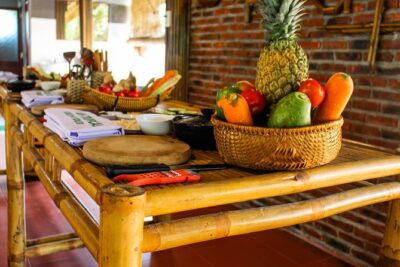
Cooking Class Hoi An:Local Market, Basket Boat, Fishing & Cooking
Read our review →Browse the lists this tour appears in