
Review · HANOI
5 Traditional Dishes Hanoi Cooking Class with Market Trip
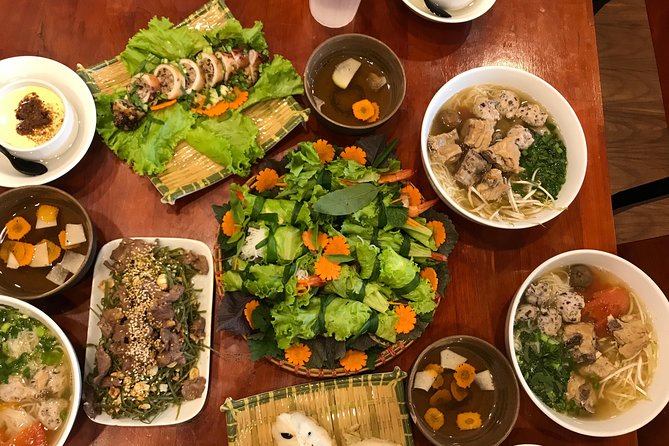
Five dishes in just over three hours makes this Hanoi cooking class more than a quick demonstration. You visit the city’s largest market, choose ingredients with a local chef, then return to the cooking studio to prepare a full Vietnamese meal. The menu includes pho bo, bun cha, fried spring rolls, papaya salad, and egg coffee or chocolate.
I like the small maximum group of 10, which gives you a real chance to chop, mix, roll, and season rather than sit at the back of a crowded room. I also like the practical souvenir: a cookbook and certificate, so the class can continue in your own kitchen. The main drawback is pace. Five dishes take careful coordination, and some jobs, including cooking the barbecue pork, may be handled for you.
Key points at a glance
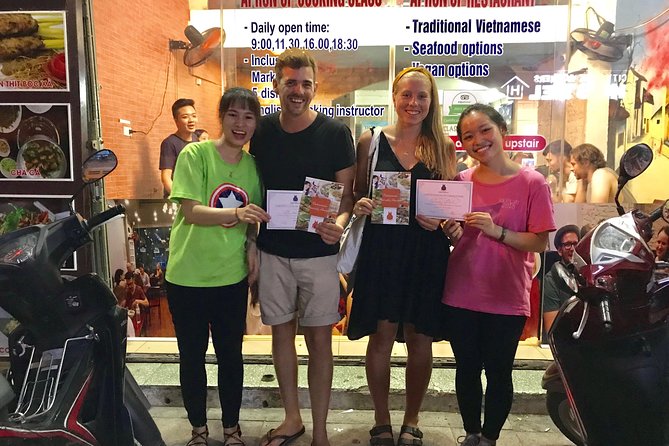
- Market visit first: Shop for fresh produce and spices at Hanoi’s largest market with your English-speaking chef.
- Five Vietnamese dishes: Prepare pho bo, bun cha, fried spring rolls, papaya salad, and egg coffee or chocolate.
- Small cooking group: The maximum is 10 people, with specific instructions and shared workstations.
- Guides make the difference: Instructors named in guest feedback include Perla, Vy, Emmy, Lynn, Bella, Coco, Sunny, Kim, and Winnie.
- A full meal at the end: Eat what you prepare, with complimentary rice vodka and coffee or tea.
- Useful take-home items: You receive recipes in a cookbook and a certificate.
Starting in Hanoi’s Old Quarter
The class begins at 8 P. Gia Ngư in the Hàng Bạc area of Hoàn Kiếm. That puts you right in Hanoi’s Old Quarter, a practical starting point if you are already staying nearby. Hotel pickup and drop-off are not included, so you need to make your own way to the meeting point.
The total session lasts about three hours and 15 minutes. That is long enough to include shopping, cooking, eating, and questions without turning the class into a full-day commitment. The experience ends back at the same meeting point, which makes it easy to continue exploring the Old Quarter afterward.
This is a mobile-ticket activity, and confirmation is provided when you book. The group limit of 10 matters here. A cooking lesson can become frustrating when one instructor has to watch 20 pairs of hands, but this format is small enough for the chef to give direct help.
You may be paired with another participant for some of the cooking. One participant specifically noted that the class worked best with two people sharing tasks. If you are traveling alone, that can be a good way to meet someone, but it also means you may not personally complete every part of every recipe.
More Market Cooking Classes in Hanoi
- Hanoi Cooking Class: Culture, Local Market & Meaning CSR Impact
★ 5.0 · 5,147 reviews - Vietnamese Food Cooking Class in Hanoi with Market Experience
★ 5.0 · 778 reviews - Hanoi: 5 Local Dishes Cooking Class with Meal & Market Visit
★ 5.0 · 420 reviews
Shopping for ingredients at Hanoi’s largest market
The market visit gives the class a useful beginning. Instead of handing you a premeasured bowl of ingredients, the chef shows you what goes into Vietnamese cooking and helps select the produce and spices used later in the kitchen.
This part is not simply a shopping errand. It gives you context for the flavors on the menu. You can see the herbs, vegetables, seasonings, and other ingredients in their everyday setting, then recognize them when they appear on the worktable.
The local guide is especially important here. Names attached to this class include Perla, Vy, Emmy, Lynn, Bella, Coco, Sunny, Kim, and Winnie. Your instructor will not necessarily be one particular person, but the strongest feedback consistently points to the guides’ clear English, humor, patience, and ability to explain unfamiliar foods.
The market stop may also be the most useful part for cooks who want to repeat the recipes at home. You learn what ingredients look like before they are cleaned, chopped, or packaged. That helps more than a recipe alone, especially if you are shopping in a Vietnamese market or an Asian grocery store later.
You should expect a working market rather than a polished food hall. Keep your attention on the group and the cooking instructions, and bring only what you need. The tour information does not promise hotel transport, so allow enough time to reach Gia Ngư Street before the start.
Preparing five Vietnamese classics
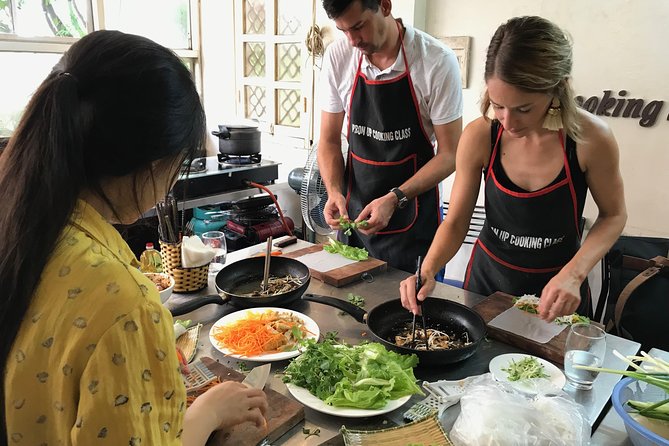
Back at the cooking facility, the class shifts from watching to doing. The planned menu is:
- Pho bo, beef noodle soup
- Bun cha, Hanoi-style barbecue pork with noodles
- Nem ran, fried spring rolls
- Papaya salad
- Egg coffee or chocolate
That is a generous menu for a three-hour session. You are not making five large restaurant portions alone from scratch. The class works by sharing jobs, preparing several dishes at once, and receiving help from the chef and kitchen staff.
Pho bo
Pho gives you a look at the balance behind one of Vietnam’s best-known dishes. The class covers the ingredients and preparation used for beef noodle soup, rather than treating pho as a mysterious broth that only restaurants can make.
The exact amount of step-by-step work can vary. One participant felt that some of the broth preparation was done for the group, while still finding the class active and useful. That is a fair expectation: you will learn the method and take part, but you may not build every stage from an empty pot.
More Market Cooking Classes in Vietnam
- Hanoi Cooking Class and Market Tour in Ancient House
★ 5.0 · 379 reviews - Rose Kitchen Hanoi: Market, Cooking & Culture Tour + Free PickUp
★ 5.0 · 342 reviews - Hanoi: Cooking Class in a Local Villa with Market Tour
★ 4.9 · 320 reviews - Hanoi Maya Kitchen: Traditional Cooking Class & Market Tour
★ 5.0 · 287 reviews
Bun cha
Bun cha is closely tied to Hanoi, so it is a particularly good choice for a local cooking lesson. The dish combines barbecue pork, noodles, herbs, and dipping flavors in a way that shows how Vietnamese meals balance savory, fresh, sweet, and sharp notes.
The pork may be cooked by the staff rather than by each participant. This is one of the few clear limits to the hands-on promise, but it also helps the class stay on schedule. Five dishes would take much longer if each person had to grill every item independently.
Nem ran
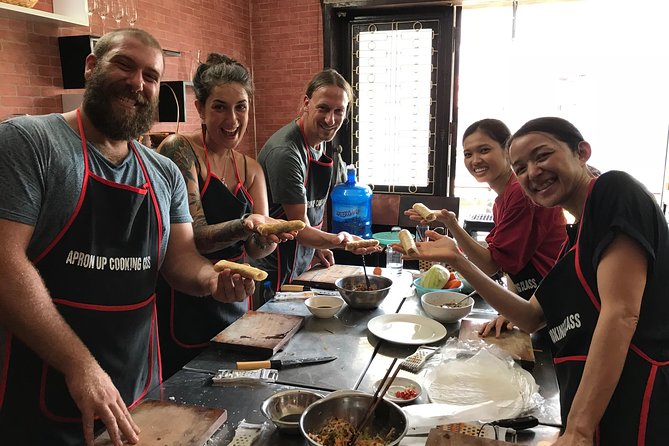
Fried spring rolls are one of the more practical recipes to learn. You can take part in assembling and rolling them, and the finished dish provides an immediate reward for careful technique.
This is also a good shared task. One person can prepare filling while another rolls, and the instructor can correct the shape before frying. If you have never handled spring-roll wrappers, the chef’s guidance is more useful than a written recipe by itself.
Papaya salad
The papaya salad adds a fresh contrast to the noodle soups and fried food. It also gives you a chance to work with the herbs, vegetables, and seasonings introduced at the market.
The dish is a useful reminder that Vietnamese cooking is not only about long-simmered broth or grilled meat. The meal is built from several textures and temperatures, and the salad helps keep the final spread from feeling heavy.
Egg coffee or chocolate
The final item is a sweet drink, with egg coffee or chocolate listed as the choice. Egg coffee is one of Hanoi’s signature specialties, so it gives the class a memorable finish and shows that coffee can be part of a dessert course rather than only a morning drink.
Coffee and tea are included. The class also includes rice vodka, served as part of the meal and social time after cooking. If you do not drink alcohol, the supplied information does not specify a nonalcoholic substitute, so it is sensible to tell the instructor when you arrive.
How hands-on is the cooking?
The best way to think about this class is guided participation, not a private chef lesson. You should expect to chop, mix, roll, season, and help assemble the dishes. You will also watch demonstrations and share tasks with the group.
The class has to manage several recipes at once. Some participants praised the organization, noting that the chef moved the group through five dishes in roughly two and a half hours. Others wanted more step-by-step guidance, since multiple preparations were happening together.
Both impressions can be true. A well-run group class needs a brisk pace, and that means the instructor may move on while you are still processing one technique. If you want detailed personal coaching for every single step, a private class would likely suit you better. If you want a lively introduction and a lot of food in a short session, the format works well.
The instructors’ teaching style is a major part of the experience. Perla is described as clear and engaging, Vy as funny and attentive, Emmy as friendly and helpful, and Sunny as passionate and inclusive. Coco is noted for involving children, while Lynn is praised for explaining market foods and keeping the group involved.
Dietary needs can be accommodated in some cases. Vegetarians and people who do not eat red meat are taught vegetarian versions. Allergy adjustments are also described as possible, including for a child in one family group. You should still communicate your needs before cooking begins, since the class handles several dishes and shared ingredients.
Eating the meal you helped prepare
The final meal is the payoff, and there is plenty of it. You sit down with the group and eat the dishes prepared during the session rather than receiving a token sample.
That shared meal is one of the class’s strongest features. You have just worked through a sequence of recipes, so the flavors make more sense than they would in a restaurant. You can connect the finished pho to the market ingredients, compare the fresh salad with the fried spring rolls, and see how bun cha fits into Hanoi’s food culture.
Rice vodka is included, along with coffee or tea. The meal is also a social pause after the busy cooking period. You may be sharing a table with people from several countries, which gives the experience a friendly, informal finish.
The class is praised for producing food that is both local and approachable. The recipes are not presented as difficult restaurant secrets. They are dishes you can reasonably try again, especially with the cookbook in hand.
One small practical point: a lot of food is prepared in a short time, and kitchen staff may handle some preparation and cleanup. One participant appreciated the help but noted that the support staff did much of the clearing and some advance work. If you measure value by doing every job yourself, this may feel less complete. If you value a smooth class and a proper meal, the assistance is useful.
Value at $35.07 per person
At $35.07 per person, this is good value for a three-hour-and-15-minute activity in central Hanoi. The price covers the market visit, English-speaking chef, cooking instruction, five dishes, the meal, coffee or tea, rice vodka, recipes, and a certificate.
The best value comes from the combination of activities. A basic cooking demonstration might cost less, but it would not give you the market visit or the chance to prepare and eat a full spread. A market walk alone would show you ingredients without teaching you how to use them.
The value is also stronger for couples, families, and small groups who will share the work. A solo participant still receives the same class, but may be paired with someone else for chopping and preparation. Children can take part, and the instructor named Coco is specifically praised for including younger participants.
I would not book this mainly for the certificate. It is a pleasant extra, but the useful souvenirs are the cookbook and the cooking skills. I would also not choose it if your main goal is a slow, highly technical lesson focused on one dish. The appeal is range, local food, a market visit, and a complete meal.
Small concerns to keep in mind
The class receives an overall rating of 5 from 4,894 reviews, with 100 percent recommendation shown in the supplied information. That points to a very reliable experience, but the practical limitations still matter.
First, the schedule is full. Shopping, five recipes, eating, and cleanup all fit into a little over three hours. You need to be ready to listen and move between tasks.
Second, not every cooking job belongs to you. Barbecue pork and some preparation may be completed by staff. The class remains hands-on, but it is not the same as preparing an entire restaurant menu independently.
Third, one participant raised a hygiene concern. The information does not give specific sanitation standards, so I would keep normal food-safety expectations in mind and ask the instructor about any concern you have before starting.
Finally, the named chef can vary. Perla, Vy, Emmy, Lynn, Bella, Coco, Sunny, Kim, and Winnie are all associated with the experience, but you should not book expecting one specific instructor unless the provider confirms that directly.
Who should book this Hanoi cooking class?
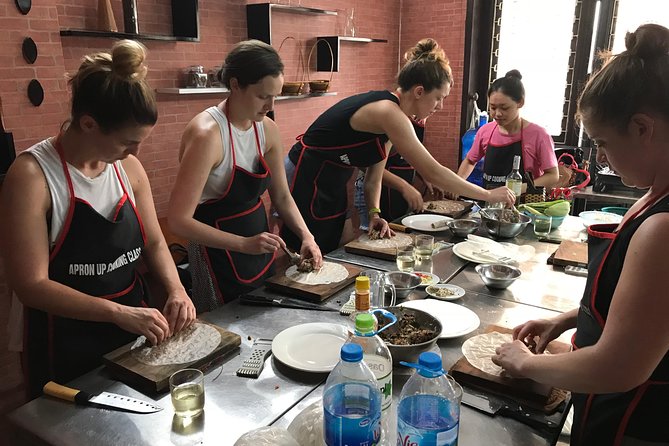
I would recommend it to you if you want an active introduction to Vietnamese food and prefer making a meal to simply watching a chef demonstrate. It is particularly well suited to couples, families, food-focused visitors, and anyone staying in or near Hanoi’s Old Quarter.
You should also consider it if your time in Hanoi is short. The market stop and meal give you a compact look at local ingredients, cooking methods, and everyday flavors without taking up an entire day.
I would hesitate if you dislike group activities, do not want to share cooking jobs, or need every dish prepared from start to finish by your own hands. The pace may also feel brisk if you want long explanations for each ingredient.
For most people, though, the combination is hard to beat at this price: a small group, a local market, five recognizable Vietnamese dishes, a generous meal, and recipes to take home. Book it if you want to eat Hanoi with a little more understanding than you had when you arrived.
FAQ
How long does the Hanoi cooking class last?
The experience lasts approximately three hours and 15 minutes.
Where does the activity begin?
It begins at 8 P. Gia Ngư, Hàng Bạc, Hoàn Kiếm, Hà Nội 08404, Vietnam.
Where does the activity end?
The class ends back at the meeting point.
What dishes will I learn to prepare?
The menu includes pho bo, bun cha, nem ran or fried spring rolls, papaya salad, and egg coffee or chocolate.
Are vegetarian options available?
Yes. Vegetarians and people who do not eat red meat will learn a vegetarian version.
What is included in the price?
The activity includes an English-speaking chef, coffee or tea, rice vodka, the market visit, cooking instruction, the prepared meal, a cookbook, and a certificate.
How many people can join the class?
The activity has a maximum of 10 participants.
More Markets in Hanoi
- Weekend Hanoi Night Market & Street Food Tour
★ 4.5 · 47 reviews - Hanoi’s Culinary: Authentic Cooking Class and Local Market
★ 4.8 · 5 reviews - Hanoi: Vietnamese Cooking Class- Market Tour with Local Chef
★ 5.0 · 2 reviews - 2 Day Sapa-Bac Ha Market: Night Train& Homestay-Bus Ha Giang
★ 5.0 · 2 reviews
More Cooking Classes in Hanoi
- Hanoi: Maya Traditional Cooking Class & Market Tour
★ 4.9 · 243 reviews - Hanoi: Old Quarter Market Tour and Cooking Class with Meal
★ 4.8 · 192 reviews - Hanoi Cooking Class: Market Tour, Free Recipe & Beverages
★ 5.0 · 10 reviews - Hanoi Food Adventure: Vietnamese Market Tour & Cooking Class
★ 4.8 · 5 reviews
Just added around Hanoi
- Weekend Hanoi Night Market & Street Food Tour★ 4.5 · 47 reviews
- Hanoi: Vietnamese Cooking Class- Market Tour with Local Chef★ 5.0 · 2 reviews
- Hanoi Cooking Class: Market Tour, Free Recipe & Beverages★ 5.0 · 10 reviews
- Hanoi Food Adventure: Vietnamese Market Tour & Cooking Class★ 4.8 · 5 reviews
- Hanoi’s Culinary: Authentic Cooking Class and Local Market★ 4.8 · 5 reviews
- 2 Day Sapa-Bac Ha Market: Night Train& Homestay-Bus Ha Giang★ 5.0 · 2 reviews
- Mini Hanoi Coffee Workshop: Pick Any Signature Coffee You Like★ 5.0 · 160 reviews
- Hanoi: Old Quarter Market Tour and Cooking Class with Meal★ 4.8 · 192 reviews
Market Cooking Classes, compared.
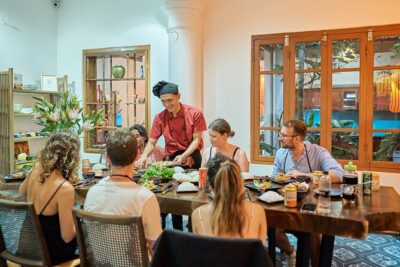
Hanoi Cooking Class: Culture, Local Market & Meaning CSR Impact
Read our review →
Cooking Class and Lunch at a Tuscan Farmhouse with Local Market Tour from Florence
Read our review →
Cooking Class, Market & Thai Herbs Garden Tour
Read our review →
Authentic Cooking Class with Market & Farm Visit
Read our review →
Paella Cooking Experience & Boqueria Market Tour
Read our review →
Cooking Class Hoi An:Local Market, Basket Boat, Fishing & Cooking
Read our review →
Hoi An Cooking Class(Market,BasketBoat Crabfishing&Cooking Class)
Read our review →Browse the lists this tour appears in