Review · NEW DELHI
Delhi: Old Delhi’s Street Food, Temples & Spice Market Tour
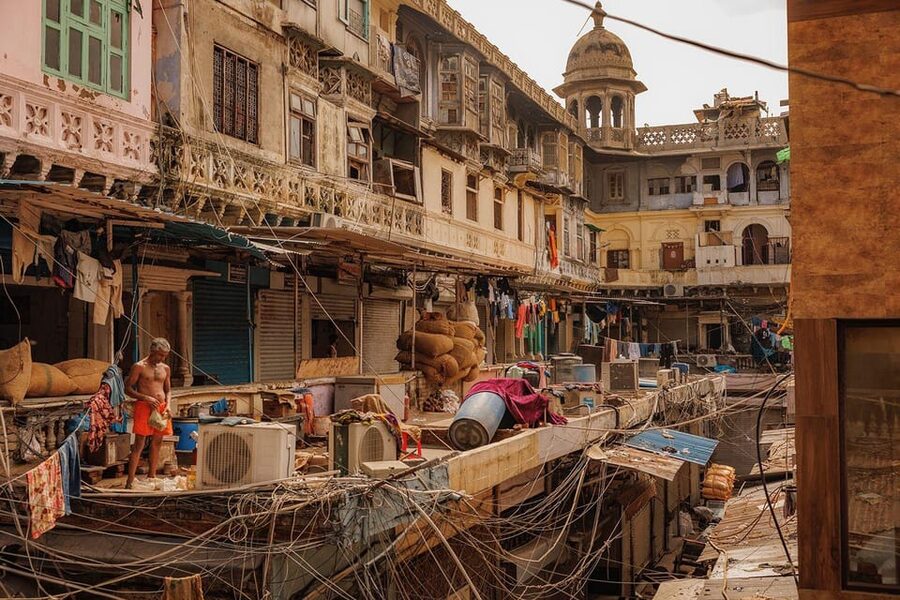
Old Delhi makes the most sense when you follow your appetite. This three-hour walk with guide JD combines street food, temples, a Sikh community kitchen, the spice market at Khari Baoli, and a rickshaw ride through Chandni Chowk. You get a quick but substantial introduction to one of Delhi’s most intense neighborhoods.
I like the focus on tested food stalls, which takes some guesswork out of eating on the street. I also like the visit to the Sikh gurdwara kitchen, where thousands of people eat for free and you may help make chapati. The main drawback is pace: three hours covers a lot, so expect walking, noise, crowds, strong spice dust, and little time to linger at each stop.
Key points to know before booking
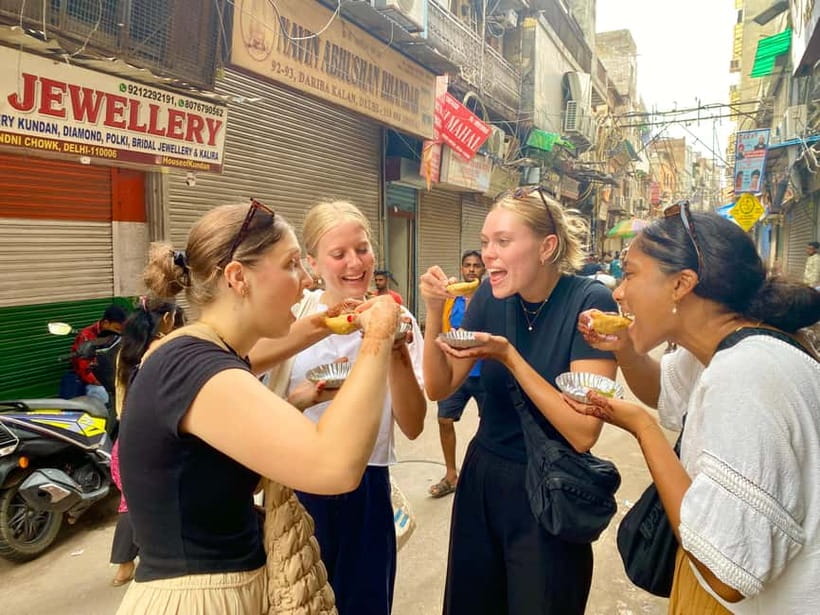
- Street food with a safety plan: Taste a range of sweet, savory, spicy, and cooling foods selected by JD, with drinks such as lassi, tea, and water included.
- A working Sikh kitchen: Visit a gurdwara where more than 15,000 people are fed free each day, and possibly lend a hand with chapati preparation.
- Khari Baoli spice market: Walk through Asia’s largest spice market, then head to higher floors for striking views over the market.
- Religious sites beyond the usual checklist: See the historic Jain temple and Sikh gurdwara, and learn how each place is used.
- Old Delhi by rickshaw: Save some walking time while enjoying a close-up look at Chandni Chowk’s traffic and trading streets.
- Useful local advice: JD offers tips on negotiating, saving money, shopping, and moving around India.
Why this Old Delhi tour works
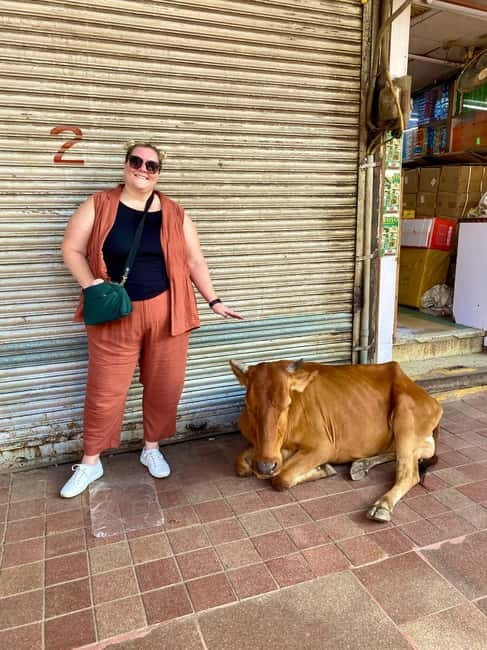
Old Delhi is not a place that rewards a loose plan. Streets twist around one another, pedestrians share space with rickshaws, shopkeepers, delivery carts, cows, scooters, and visitors, and the best food stalls can be easy to miss. A local guide gives the chaos some shape.
JD’s approach is part food guide, part cultural interpreter, and part navigator. You are not simply handed a plate and told what it is. The tour explains ingredients, preparation, and the background of each dish. That matters if you want more than a snack crawl.
The food is the main draw, but the religious stops give the walk more meaning. A Jain temple, a Sikh gurdwara, a mosque in the Old Delhi area, and the presence of the Red Fort all point to the many communities that have shaped this part of Delhi. You see how worship, trade, cooking, and daily life sit side by side.
The price is $42 per person. For three hours, that is a fair deal if you take advantage of the included food, drinks, guide, and rickshaw ride. You would pay separately for each snack and drink, and the guide’s local access is part of the value. Shopping, metro tickets, taxis, and personal purchases cost extra.
More Spice Market Tours in India
- Old Delhi Food-Spice Market-Temples Tour Soon Featured on NETFLIX
★ 5.0 · 304 reviews - Old Delhi Odyssey: A Tour of Religion, Spice Market, & Best Food
★ 5.0 · 284 reviews - Old Delhi & Spice Market Tour
★ 5.0 · 98 reviews
Meeting at Lal Quila Metro Station
The meeting point is Gate No. 1 at Lal Quila, also called Red Fort, Metro Station. The listed map location is 28.656378, 77.236511. If you arrive at Gate No. 4, you need to cross to Gate No. 1 using the underpass.
This is useful information because the station has multiple exits, and Old Delhi can feel confusing from the moment you come above ground. Arrive with the guide’s contact details available. One person had trouble finding the meeting point without Wi-Fi, so downloading the booking information before leaving your hotel is sensible.
The tour ends back at Lal Quila Metro Station. That makes it easier to continue sightseeing around the Red Fort or return by metro. The tour does not include your metro ticket or transport to the starting point.
Jain temple and the first look at Old Delhi
The first listed stop is Sri Digambar Jain Lal Mandir, with about 16 minutes for a guided visit. This is a useful opening because it introduces Jain beliefs and temple customs before the food and market noise take over.
You should be ready to remove your shoes and socks and walk barefoot inside the temple. Conservative clothing is required, with no shorts for men or women. A long-sleeved shirt, long trousers, and a scarf or stole are recommended. If you do not have a scarf, one may be available at the temple.
This is not a long temple visit, so expect a short explanation rather than an extended religious lecture. The value comes from seeing a working place of worship and learning basic etiquette. Ask questions if you want more context, since the guide’s explanations are meant to connect the site with daily life in India.
Chandni Chowk, one bite at a time
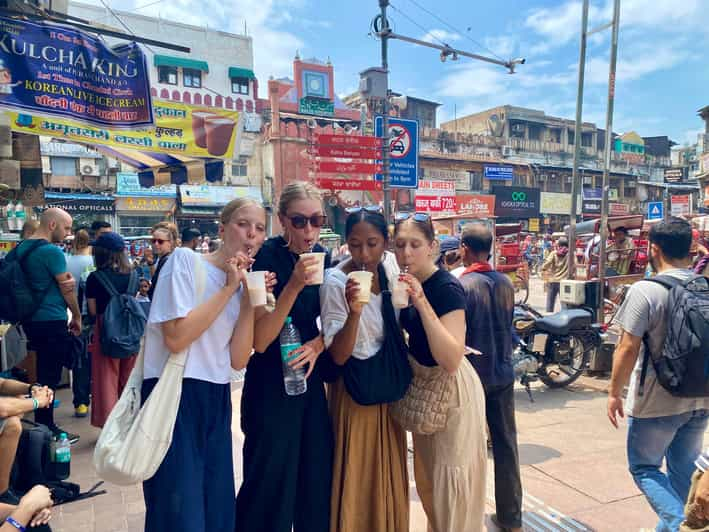
From the Jain temple, you walk about nine minutes to Chandni Chowk. This is where the tour changes gear. The street scene becomes louder, tighter, and more crowded, with shops, food counters, old buildings, and constant movement competing for your attention.
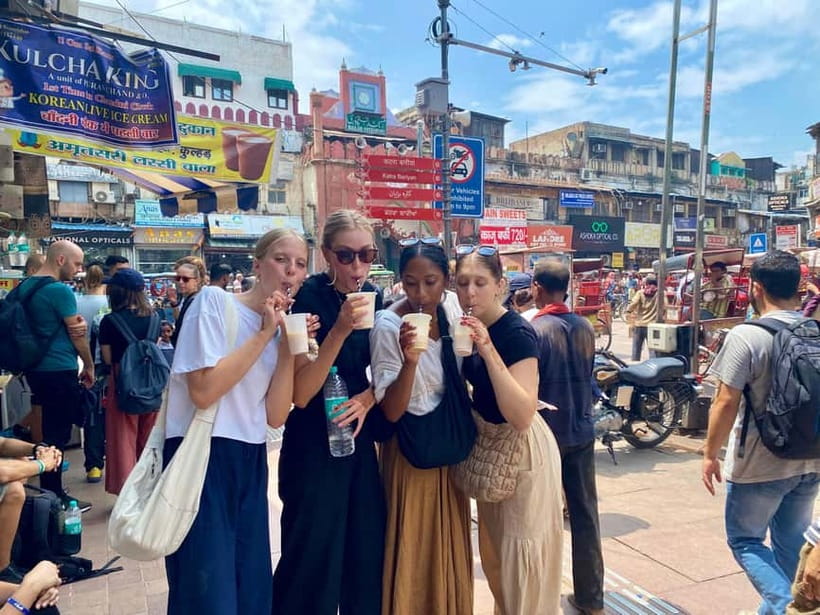
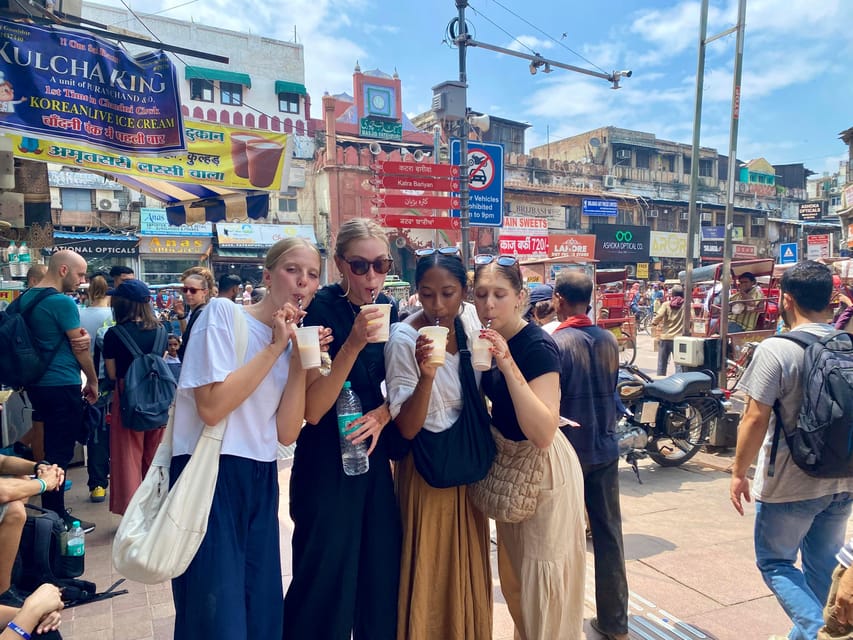
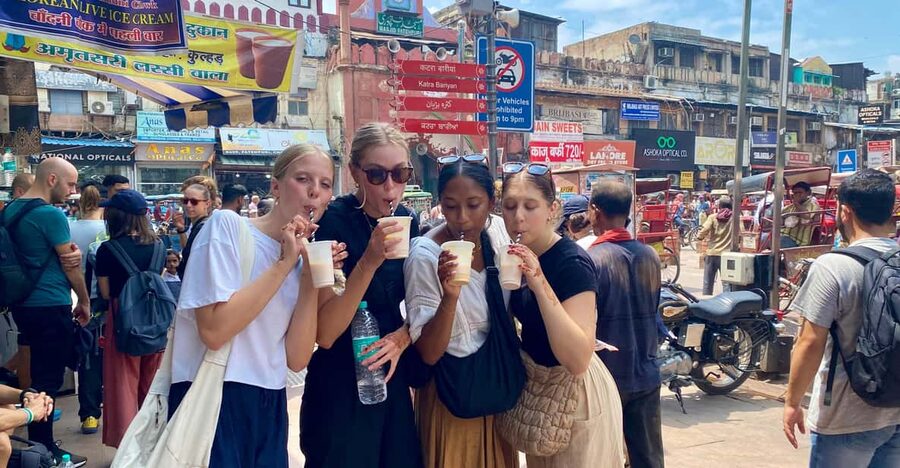
The food tasting is spread through the Old Delhi portion of the walk rather than treated as one seated meal. You can expect several kinds of Indian street food, with a mix of sweet, savory, mildly spicy, and chilled items. Lassi, tea, and water are included, so you do not need to budget separately for the drinks served during the tour.
The guide explains the ingredients and the story behind the foods. That makes a real difference when a dish is unfamiliar. You learn what you are tasting instead of relying on appearance, smell, or guesswork.
Food safety is a central part of this experience. JD selects stalls he has tried and tested, which gives cautious eaters a practical way to sample street food. No guide can remove every food risk, and people with serious allergies should ask detailed questions before eating. Still, having one person make careful local choices is far easier than selecting random stalls in an unfamiliar market.
Bring wet wipes, tissues, and hand sanitizer. The tour specifically recommends them, and they are useful in any busy food market. An optional N95 or N99 mask may help if dust or spice powder bothers you.
More Spice Market Tours in New Delhi
- Old Delhi Street Food and Spice Market Tour
★ 5.0 · 12 reviews - Delhi Private City Tour With Spice Market In 8 Hours – By Car
★ 5.0 · 9 reviews - Old Delhi Temples and Spice Market Tour
★ 5.0 · 5 reviews - Old Delhi: Khari Bawli – Asia’s Largest Spice Market
★ 5.0 · 3 reviews
A Sikh gurdwara and its huge community kitchen
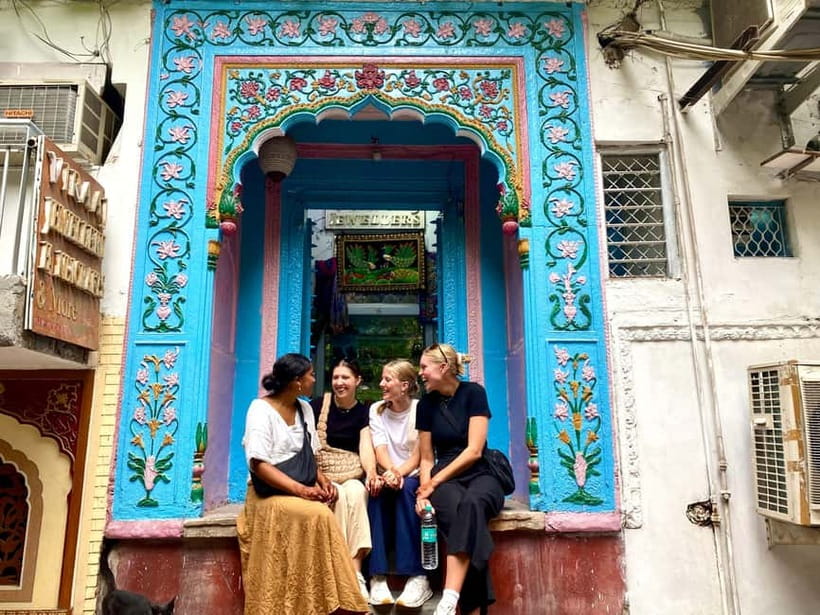
The visit to the Sikh gurdwara is one of the most worthwhile parts of the route. This is not just a quick look inside a religious building. You also see the langar, the community kitchen where more than 15,000 people eat free meals each day.
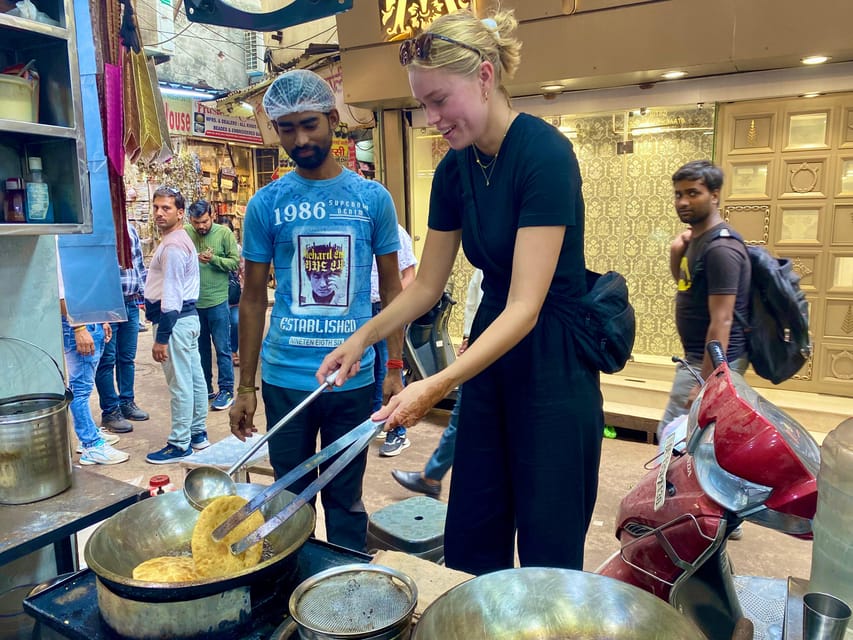
The kitchen shows Sikh service in a practical way. Volunteers help prepare and serve food for worshippers and anyone else who comes in, regardless of faith. Depending on the day and the kitchen routine, you may help make chapati. That small act can be more memorable than another formal monument visit because it lets you see the religious value of service in action.
Dress modestly and bring a head covering. A scarf or stole is useful, and you should be ready to remove shoes and socks and go barefoot in temple areas. Follow the guide’s instructions about where to walk, what to touch, and when photography is appropriate.
I would give this stop your full attention. The food tastings are fun, but the gurdwara adds a human side to the tour. It also gives you a break from buying and consuming. Here, food is shared as a community duty rather than sold as a product.
Khari Baoli and the spice market
The route continues toward Khari Baoli, reached after a walk of about 28 minutes. This section may feel long if the heat is high or your footwear is poor. Wear comfortable shoes, though remember that you will still need to remove them at religious sites.
Khari Baoli is known as Asia’s largest spice market. You will see sacks, piles, colors, and powders associated with the trade, along with the sharp smell of ground spices. The atmosphere can be physically intense. One suggested expectation is coughing and sneezing as spice dust hangs in the air, so bring tissues and consider the recommended mask.
The guide also takes you to higher floors for views over the market. The second and third-floor viewpoints offer a useful change of scale. At street level, the market feels packed and close. From above, you can better understand its size and layout, and you have a good place for photographs.
The tour includes a visit to a secret spice mansion, though the exact details are not specified. Treat this as an added stop rather than a formal museum visit. The appeal is the chance to see an old trading space or building that you would be unlikely to find while wandering alone.
A rickshaw ride through Chandni Chowk
The rickshaw ride is not a sightseeing cruise. It is a short, practical way to experience Old Delhi’s traffic from inside it. You move through market streets at close range, with shops and pedestrians passing just a few feet away.
For many people, this will be the easiest way to grasp how the district works. A rickshaw can slip through spaces that feel difficult to cross on foot, and it gives your legs a brief rest. At the same time, it is not quiet or smooth. Expect traffic noise, sudden stops, and close contact with the street.
The ride is included in the $42 price, along with the guide and tastings. That helps the tour feel fairly priced, especially since transport is integrated into the route rather than added as an optional charge.
The Red Fort and Old Delhi landmarks
You see the Red Fort from outside, rather than entering it. This is important if you are hoping for a full fort visit. The exterior stop gives you a sense of the monument’s scale and its place beside the old market district, but it does not replace an admission visit.
The tour also includes a view of a 370-year-old mosque described as the second largest mosque. The available details do not specify a full interior visit, so you should think of this as an exterior or nearby landmark stop unless the guide tells you otherwise.
These brief landmark views work best as part of the wider walk. The tour is not designed as a detailed architectural study. Instead, it connects major sites with food stalls, religious spaces, and commercial streets. You get a broad picture of Old Delhi rather than a long stop at one monument.
Photos, bargaining, and everyday advice
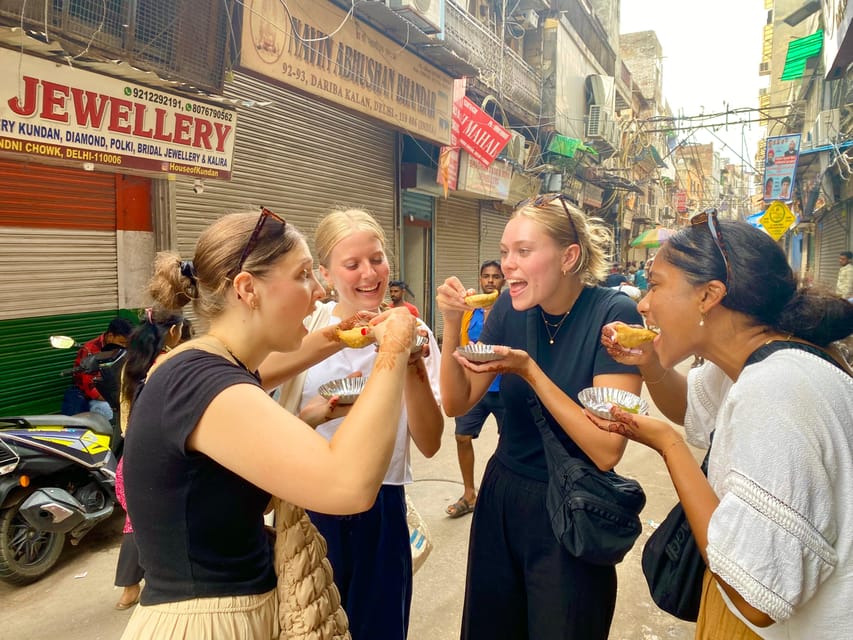
JD is also described as taking photographs during the experience. That can be useful when you are busy eating, walking, or trying to keep up with the group. You should still ask before photographing people, worshippers, or workers, especially inside religious spaces.
The tour includes advice on negotiating and saving money in India. This is practical for anyone planning to shop in Chandni Chowk or other markets. You can ask about reasonable prices, when bargaining makes sense, and how to avoid paying more simply because you are unfamiliar with local buying habits.
An important advantage is that the route does not promise shopping stops or pressure you to buy souvenirs. That leaves you free to browse, purchase spices, or simply look. Personal expenses are not included, so carry only the cash you expect to use.
Timing, comfort, and who should book
Three hours is enough for a strong introduction, but not enough for slow exploration. You will walk, stand, ride a rickshaw, eat several times, visit religious sites, and pass through a spice market. Build in extra time afterward if you want to visit the Red Fort interior or shop in Chandni Chowk.
This tour suits a first day in Delhi, especially if Old Delhi feels intimidating. It also fits solo visitors who want a local guide and a structured route. English and Hindi are available, and the guide’s friendly, conversational style makes the experience less formal than a standard monument tour.
It is less suitable if you dislike crowds, strong smells, barefoot temple visits, or uncertain street surfaces. Babies under one year and people over 95 are listed as not suitable. The tour also asks you to wear comfortable clothes and avoid shorts.
Because the route covers food and temples in one short visit, you should not expect a deep examination of every religion, monument, or dish. Its strength is variety. You get many small windows into Old Delhi, linked by a guide who knows how to move through the area.
Free cancellation is available up to 24 hours before the tour, and you can reserve now and pay later. Starting times depend on availability. Alcohol and drugs are not allowed.
Should you book the Old Delhi food tour?
I would book this if you want to taste street food but feel unsure about where to eat, or if you want Old Delhi explained rather than simply crossed off a list. The strongest parts are the tested food stops, the Sikh kitchen, the spice market viewpoints, and JD’s practical guidance.
The $42 cost is good value when you count the included food, drinks, rickshaw ride, and three hours of guiding. Just arrive prepared for a fast, noisy walk. Wear modest clothing, bring wipes and a scarf, download your meeting details, and leave room for a little uncertainty.
If you want a slow Red Fort visit or a quiet architectural tour, choose something else. If you want food, faith, markets, photography, and a close look at daily life packed into one energetic route, this is a smart introduction to Old Delhi.
FAQ
Where does the Old Delhi tour start?
The tour starts at Gate No. 1 of Lal Quila, or Red Fort, Metro Station in Old Delhi. If you arrive at Gate No. 4, use the underpass to cross to Gate No. 1.
Where does the tour finish?
The tour finishes back at Lal Quila Metro Station.
What food and drinks are included?
All food tastings are included, along with drinks such as lassi, tea, and water.
Is the rickshaw ride included?
Yes. The rickshaw ride and guide fee are included in the tour price.
What languages does the guide speak?
The tour is available in English and Hindi. The guide named in the experience details is JD.
What should I wear to the temples?
Wear conservative clothing, including long trousers or another form of clothing that covers the legs, and a long-sleeved shirt. Shorts are not allowed for men or women. Bring a scarf or stole for head covering, and be prepared to remove your shoes and socks and walk barefoot.
Can I cancel or pay later?
You can cancel up to 24 hours in advance for a full refund. The tour also allows you to reserve now and pay later.
More Street Food Market Tours in New Delhi
- Dubai: Old Town, Creek, Museums, Souks, & Street Food Tour
★ 4.8 · 10,816 reviews - Dubai: Old Town, Souks, Street Food, Guided Tour & Abra Ride
★ 4.9 · 7,170 reviews - Chef Guided Food Tour of Pike Place Market
★ 5.0 · 3,733 reviews - London Bridge & Borough Market Food Tour with 7 Authentic Dishes
★ 5.0 · 1,972 reviews
More Street Food Market Tours in India
- Mumbai: Street Food and Night Markets Tour
★ 4.9 · 719 reviews - Mumbai Street Food & Night Markets
★ 5.0 · 225 reviews - Mumbai Street Food and Evening Bazaar Tour
★ 5.0 · 172 reviews - Agra: Street Food Walking Tour, Spice Market, & Tuk-tuk Ride
★ 4.9 · 102 reviews
Just added around New Delhi
- Old Delhi Street Food and Spice Market Tour★ 5.0 · 12 reviews
- Old Delhi Temples and Spice Market Tour★ 5.0 · 5 reviews
- Old Delhi: Khari Bawli – Asia’s Largest Spice Market★ 5.0 · 3 reviews
- Delhi Markets: A Cultural Shopping Experience with an Expert★ 4.8 · 13 reviews
- Delhi: Half-Day Old Delhi Private Guided Tour with Markets★ 5.0 · 2 reviews
- Old Delhi Odyssey: A Tour of Religion, Spice Market, & Best Food★ 5.0 · 284 reviews
- Old Delhi & Spice Market Tour★ 5.0 · 98 reviews
- Private Half-Day Delhi Flower Market Tour★ 5.0 · 5 reviews
Grand Bazaar & Spice Market Tours, compared.
Local Markets & Khan el Khalili Private Shopping Tour
Read our review →
Cairo VIP Guided Tour to Khan El-Khalili Market with Lunch
Read our review →
Istanbul Grand Bazaar: From Rooftops to the Secret Passages
Read our review →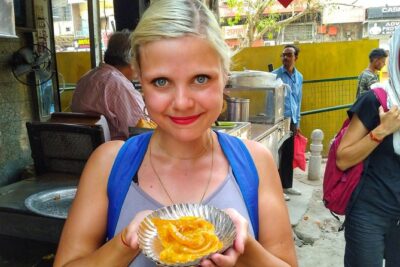
Old Delhi Food-Spice Market-Temples Tour Soon Featured on NETFLIX
Read our review →Old Delhi Odyssey: A Tour of Religion, Spice Market, & Best Food
Read our review →
Old Cairo and Khan El Khalili Bazaar: Private Half-Day Tour
Read our review →
Small-Group Bosphorus Cruise and Istanbul’s Egyptian Bazaar
Read our review →