Review · BANGKOK
Floating Markets and Bridge on River Kwai Tour from Bangkok
Damnoen Saduak Floating Market and the River Khwae Bridge make an unusual pair: one is a noisy, colorful food market on canals, the other a solemn wartime site in Kanchanaburi. This full-day trip lets you see both without arranging separate transport across Thailand.
I like the longtail boat ride into the market and the chance to pair rural Thailand with important World War II sites. I also like that lunch, museum entry, hotel transport from selected hotels, and a guide are built into the $85.17 price.
The catch is distance. You spend much of the 10-hour day in a vehicle, and the floating market can feel crowded and commercial. The optional small canoe ride costs extra, but it is likely the most enjoyable way to get close to the canals.
Key points at a glance
- The market visit begins by boat: A longtail speedboat carries you through canals toward Damnoen Saduak.
- The smaller canoe costs extra: Set aside about 150 baht if you want a slower, closer look at the market.
- Kanchanaburi adds serious historical context: The JEATH War Museum, cemetery, and bridge explain the human cost of the wartime railway.
- The day includes a long westbound drive: The route passes salt fields, rice paddies, and rural areas outside Bangkok.
- Lunch and basic admissions are included: The optional market canoe and train ride, if selected, are separate considerations.
- Guide quality matters: Guides such as Nikko, Yelli, and Suki have been singled out for clear explanations and kind, helpful service.
Why combine Damnoen Saduak with the River Khwae Bridge?
Bangkok is a natural base for this trip, but the two main stops are far apart. Damnoen Saduak lies southwest of the capital, while Kanchanaburi is west of Bangkok. Getting to both on your own means arranging several transfers, watching the clock, and finding a way back before evening.
This tour handles the long-distance travel in an air-conditioned vehicle. That saves effort, but it does not shorten the day. The road journey to Kanchanaburi takes about two and a half hours after the floating market, and the full outing lasts about 10 hours.
I see this as a useful two-for-one day outside Bangkok. You get a look at canals and countryside in the morning, then shift to a darker and more reflective part of Thai history. It is not a leisurely market visit followed by a quiet museum afternoon. It is a packed road day with two very different subjects.
The experience is best for you if you want a broad introduction to the region and prefer a planned route. It is less suited to you if you dislike long drives, prefer slow independent exploration, or want to spend several hours shopping at the market.
More Floating Market Tours in Bangkok
- Bangkok: Damnoen Saduak Market and Maeklong Railway Market
★ 4.5 · 26,723 reviews - The Old Siam: Damnoen Saduak and Maeklong Railway Market
★ 4.5 · 10,992 reviews - Bangkok: Train Market & Floating Market with Boat Ride
★ 4.7 · 9,547 reviews
The morning road through salt fields and sugar country
The day begins with pickup at selected Bangkok hotels. You must provide your hotel details when booking, and pickup is not available from every property. The early start helps fit both destinations into one day, though the exact pickup time can vary.
The route passes through Samut Sakhon province, where you see salt fields, rice paddies, and open countryside. This first section gives you a useful change of scene from Bangkok’s dense streets. You are not simply being rushed from one attraction to another, although much of the day is still spent on the road.
A stop at a coconut sugar farm lasts about 40 minutes. You can see how coconut sugar is made, taste natural sweets, and watch a wild orchid presentation. The stop gives the morning a local food angle, but it also takes time from the main market visit.
Some accounts describe extra stops connected with orchids, elephants, or displays of traditional hill-tribe women. Those additions are a concern if you prefer a direct itinerary or want to avoid attractions involving captive animals or staged cultural displays. The stated route centers on the coconut sugar stop, so I would confirm the day’s planned stops with the operator before booking if this matters to you.
Reaching Damnoen Saduak by longtail boat
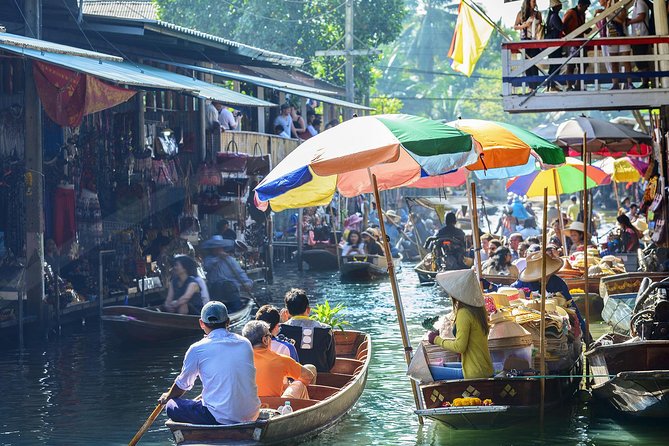
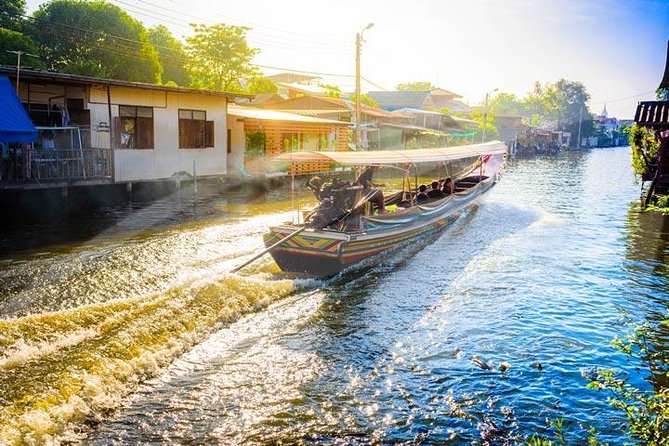
The approach to Damnoen Saduak is one of the strongest parts of the tour. Rather than arriving only by road and walking among souvenir stalls, you board a longtail speedboat and travel through the canal network toward the market.
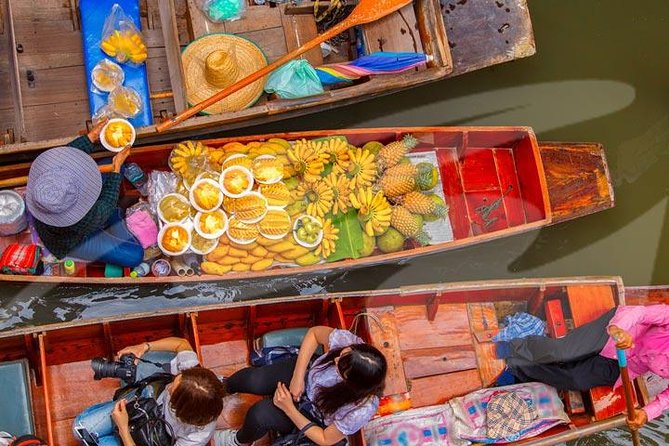
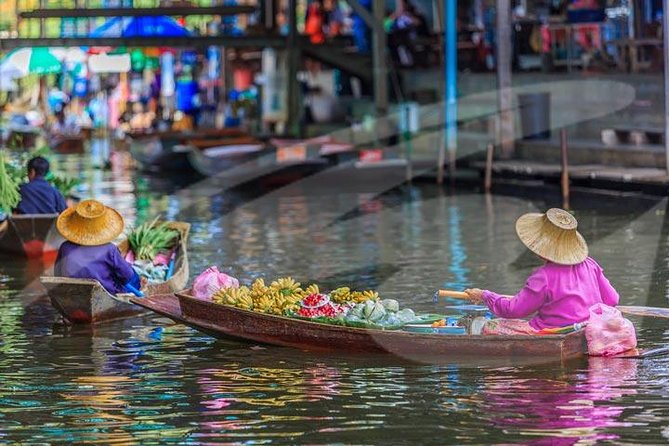
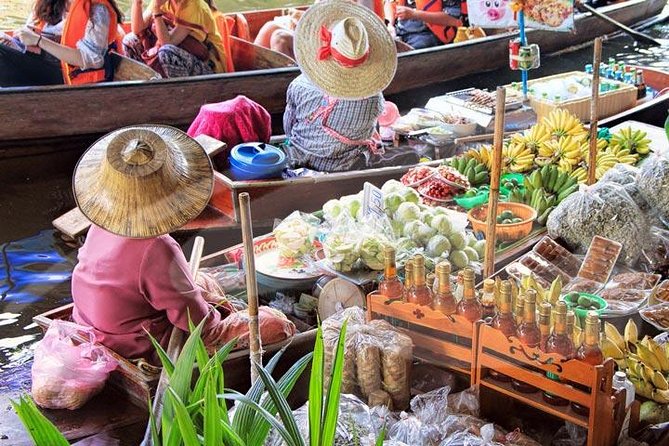
The ride gives you a view of the waterways that helped shape this part of Thailand. Canoes carry fruit, vegetables, sweets, and meat, with sellers handling business from the water. It is an entertaining scene and a good chance for photographs, especially if you enjoy watching how food and goods move through a canal community.
The market itself is not an untouched slice of old Thailand. Much of it now caters to sightseeing, and several people have found it crowded, with motorized boats creating fumes and traffic jams. Some visitors also find the shopping prices high compared with ordinary markets elsewhere in Thailand.
That does not make the stop worthless. It means you should arrive with the right expectations. Think of Damnoen Saduak as a famous, commercial market experience built around canals, not as a quiet local food market where residents do all their daily shopping.
You have about an hour and a half at the floating market stop. This includes the boat approach and time to look around, so the time on foot or in a smaller canoe may feel short. If shopping matters to you, keep an eye on the meeting time. The tour has another long drive ahead.
The optional canoe ride is worth considering
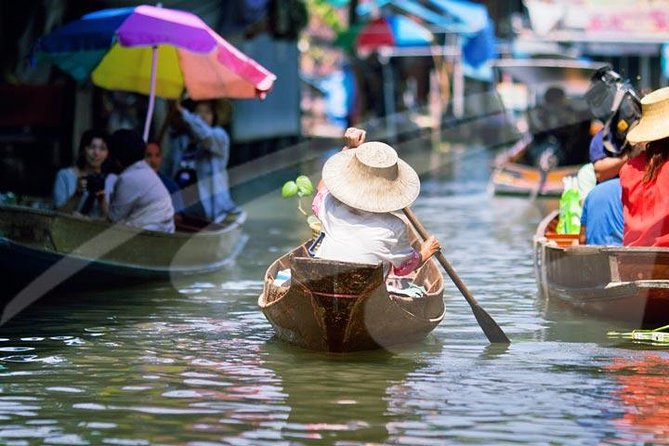
The included boat trip takes you to the market area, but a smaller local canoe ride through the market is an optional extra. The stated price is paid directly, and one useful estimate from the supplied details puts it at about 150 baht, roughly $4.
I would budget for it if you want the closest look at the market. A smaller paddle boat moves at a different pace from the larger motorized craft and lets you see the canal stalls more directly. It also makes the waterway feel less like a traffic route and more like the market experience you probably pictured when booking.
The ride is not essential if you are watching every baht. You still receive the main boat trip and can see the market from the surrounding area. But the optional canoe is one of the clearest ways to improve this part of the day.
Be careful with purchases. Souvenirs and food can cost much more here than at other markets in Thailand. Browse first, compare prices when possible, and do not feel pressured to buy simply because you have limited time.
More Floating Market Tours in Thailand
- Half-Day Railway Market and Floating Market Tour in Thailand
★ 4.5 · 3,924 reviews - Bangkok: Damnoen Saduak, Train Market & Mahanakhon Day Trip
★ 4.7 · 2,162 reviews - From Bangkok: Damnoen Saduak Floating Market Guided Tour
★ 4.4 · 2,020 reviews - Damnoen Saduak Floating Market and Maeklong Railway Market Tour
★ 4.5 · 1,588 reviews
The long transfer to Kanchanaburi
After Damnoen Saduak, you return to the coach for the journey to Kanchanaburi. This is the section that shapes the whole feel of the tour. You have already spent time in transit in the morning, and the trip west adds another roughly two and a half hours.
The air-conditioning is important in Thailand’s heat. A few people have noted that water or cold towels were not supplied, so bring your own water and something to cool off with. A face mask may also be useful around busy boat traffic and exhaust fumes.
The long drive does have a purpose. Kanchanaburi is not just a quick photo stop. The River Khwae Bridge is tied to one of the most painful chapters of the region’s modern history, and reaching it from Bangkok takes time.
Your guide’s commentary can make or break this section. Guides named Nikko, Yelli, and Suki have been praised for giving useful explanations and looking after the group. Other accounts describe limited commentary or speech that was difficult to follow. If history matters to you, read a little about the railway project before departure so the museums and memorials have a clear frame.
JEATH War Museum and the cemetery
Lunch is taken at a local restaurant before the historical visits, with some versions of the route describing a meal at a floating restaurant. The food is included, but standards can vary. Some people have enjoyed the meal, while others found the meat tough or the tofu dry.
Treat lunch as a practical break rather than a food-focused highlight. It gives you time to sit down before the afternoon’s memorial sites, and you can sample Thai flavors without needing to search for a restaurant during a tightly timed day.
The JEATH War Museum visit lasts about 30 minutes. It uses photographs, paintings, and displays to explain the wartime railway and the suffering connected with its construction. The name refers to Japan, England, America, Australia, Thailand, and Holland, the countries connected with the wartime story presented there.
Thirty minutes is enough for an introduction, not a full study. The museum can feel modest, and the tour’s quick pace means you will need to choose what to read. Still, it adds needed context before you see the bridge itself.
The Kanchanaburi War Cemetery is another 30-minute stop. It is the final resting place for many prisoners of war who died during the railway project. The neat rows and quiet setting provide a stronger sense of loss than a quick bridge photograph can offer.
This is the part of the tour where I recommend slowing yourself down, even if the schedule is tight. Read the names, notice the ages when shown, and remember that the railway was built through forced labor under brutal wartime conditions. More than 100,000 conscripted laborers and 12,000 prisoners of war died during the wider project.
Seeing the River Khwae Bridge
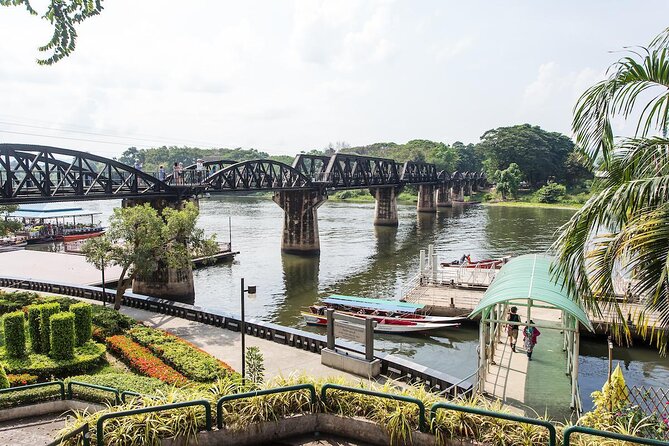
The bridge stop lasts about 30 minutes. The existing structure is a working railway bridge, not a preserved movie set or a grand historic monument. That distinction matters because some people arrive expecting a dramatic relic and leave underwhelmed by the modern rail infrastructure around it.
The bridge was built in 1943 as part of a Japanese wartime plan to link Thai and Burmese railway lines and create a route toward Rangoon, now Yangon. The project supported the Japanese occupation of Burma and caused enormous loss of life.
The most memorable moment may be the timing of a train crossing. One account describes the visit being arranged so the group saw a train on the bridge, an event that makes the site feel active rather than frozen in history. A train ride may be included if you select the appropriate option, so check which version you are booking.
The bridge is best understood alongside the cemetery and museum. On its own, it can seem like a short stop beside a railway line. With the surrounding history explained, it becomes a place to reflect on the people who built and died for the railway.
Transport, group size, and the $85.17 price
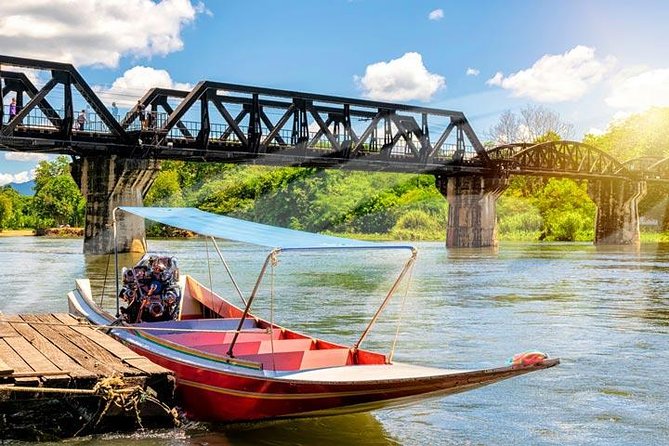
At $85.17 per person, the tour is reasonably priced for a full day that includes air-conditioned transport, selected-hotel pickup and drop-off, a local guide, the main boat trip, lunch, and museum admission. You are paying for convenience as much as for sightseeing.
The price does not include the smaller canoe ride through the market. A train ride is included only if you select that option. These extras are not large expenses, but they can make the final cost higher than the headline price.
The group size is listed as a maximum of six, which would make for a personal day with easier access to the guide. One account described nine people after a minibus transfer, so actual arrangements may vary. The route can also involve an initial hotel minibus, a transfer to a larger coach, and several hotel pickups.
That transfer system is common on shared day trips, but it can add waiting time. The benefit is a lower price than a private vehicle. If you want complete control over stops and a longer visit at the market, a private arrangement may suit you better, though this tour gives you a simpler package.
Who will enjoy this day most?
I would choose this tour if you have only one free day outside Bangkok and want to cover both a famous market and Kanchanaburi’s main wartime sites. It works especially well for first-time visitors who value an organized route, included transport, and a guide who can connect the places.
It also suits people who enjoy history. The bridge is not just a photo stop when paired with the JEATH museum and cemetery. You get a basic but useful introduction to the railway’s human cost.
You may want another plan if your priority is a relaxed market morning. One hour and a half goes quickly, and some of that time is taken by boat transfers, shopping, and group coordination. The market can also be packed with boats, fumes, and souvenir stalls.
Families and older visitors may appreciate the air-conditioned transport and limited walking, but the long day and early pickup still require stamina. Most people can take part, though the schedule leaves little room for delays.
Free cancellation is available up to 24 hours before the start time. The tour also requires a minimum number of participants, so an operation canceled for low enrollment should offer another date or a full refund.
Should you book the Floating Markets and River Khwae Bridge tour?
Book it if you want maximum coverage in one day and accept that the day includes several hours of driving. The strongest combination is the canal approach to Damnoen Saduak, the optional small canoe, and the sequence of museum, cemetery, and bridge in Kanchanaburi.
Before you pay, confirm your hotel pickup, ask whether the smaller canoe is available, and check if the train option is included in your chosen package. Bring water, sun protection, and a face mask for the boat traffic.
I would not book it for a slow, deeply local market visit. I would book it as a practical introduction to two very different parts of Thailand, especially if guides such as Nikko, Yelli, or Suki are available and the group remains small.
FAQ
How long does the tour last?
The experience lasts about 10 hours, including hotel pickup, travel between Bangkok and the two main destinations, sightseeing, lunch, and the return trip.
Is hotel pickup included?
Pickup and drop-off are included from selected Bangkok hotels. You must provide your hotel details when booking, or the reservation may be canceled.
What transportation is used?
The tour uses an air-conditioned vehicle. Some arrangements may begin with a minibus for hotel pickups before transferring to a coach.
Is the floating market boat ride included?
Yes. The main boat trip to Damnoen Saduak Floating Market is included.
Does the smaller boat ride through the market cost extra?
Yes. The local canoe ride through the market is an optional extra paid directly. An amount of about 150 baht is indicated in the supplied details.
Is lunch included?
Yes. Lunch at a local restaurant is included in the tour price.
Are the museum and cemetery included?
The JEATH War Museum admission is included. The tour also visits Kanchanaburi War Cemetery and the River Khwae Bridge.
Is a train ride included?
A train ride is included only if you select the option that includes it.
What is the maximum group size?
The tour information lists a maximum of six people, although actual arrangements may vary depending on transfers and the operating day.
Can I cancel for a full refund?
You can cancel up to 24 hours before the experience begins for a full refund. Changes or cancellations made less than 24 hours before the start time are not accepted for a refund.
More Market Boat Tours in Thailand
- Ayutthaya Sunset Tour: Iconic Temples & Scenic River Boat Ride
★ 4.5 · 119 reviews - Bangkok Floating Markets and Boat Tour
★ 5.0 · 69 reviews - Bangkok Market Tour & Thai Cooking Class with Boat Ride with Aoy
★ 5.0 · 57 reviews - Bangkok: Floating Market & Train Market with Train/Boat ride
★ 5.0 · 42 reviews
More Market Boat Tours in Bangkok
- Ayutthaya Sunset Tour: UNESCO Temples & Peaceful River Cruise
★ 4.5 · 335 reviews - Bangkok: Damnoen Saduak and Train Market with Boat Ride
★ 4.5 · 239 reviews - Private Tour: Floating Markets of Damnoen Saduak Cruise Day Trip from Bangkok
★ 3.5 · 199 reviews - Bangkok Long Boat Canal a Big Buddha & Culture Markets Tour
★ 4.7 · 137 reviews
Just added around Bangkok
- Bangkok Udomsuk Thai Cooking Class with local market tour★ 5.0 · 5 reviews
- Morning Buddhist Almsgiving, Grand Palace and Flower Market Tour in Bangkok★ 3.5 · 9 reviews
- Private 4 days : Bangkok, Floating market and Ayutthaya★ 5.0 · 2 reviews
- Floating & Railway Markets and Erawan Waterfall [Optional Luxury]★ 5.0 · 43 reviews
- Discover Ayutthaya at Sunset: Historic Temples & River Cruise★ 4.5 · 29 reviews
- Floating Market & Railway Market near Bangkok★ 4.0 · 5 reviews
- Silom Thai Cooking School with Fresh Market Tour★ 5.0 · 73 reviews
- Ayutthaya Floating Market Admission Ticket with Transfer★ 5.0 · 2 reviews
Floating Market Tours, compared.
Damnoen Saduak Market and Maeklong Railway Market
Read our review →
The Old Siam: Damnoen Saduak and Maeklong Railway Market
Read our review →
Train Market & Floating Market with Boat Ride
Read our review →
Ayutthaya & Ayothaya Floating Market Day Trip
Read our review →
Half-Day Railway Market and Floating Market Tour in Thailand
Read our review →
Cooking Class Hoi An:Local Market, Basket Boat, Fishing & Cooking
Read our review →