
Review · BUDAPEST
Hungarian Cooking and optional Local Market Tour
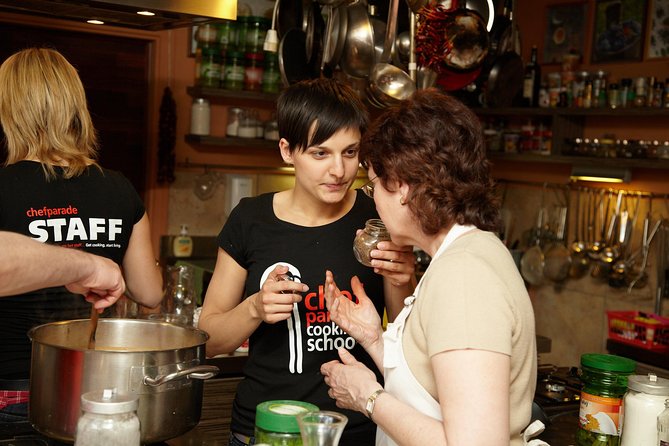
The best part of this Budapest experience is that you do not simply sit down to eat Hungarian food. You make the meal from scratch, then sit down with the people in your class to eat it. Expect goulash soup, chicken paprikash with nokedli, and apple strudel, though the menu can change to mushroom paprikash or another Hungarian dish.
I like the small-group format, which gives the chef time to explain techniques and answer questions. I also like the optional Central Market Hall visit, where you can learn about paprika, meats, cheeses, pastries, and other ingredients before cooking. One practical caution: the market add-on and return transportation have caused confusion for some bookings, so confirm exactly what your package includes.
Key points at a glance
- Cook three Hungarian dishes from scratch: The class may include goulash soup, chicken or mushroom paprikash with homemade nokedli, and apple strudel.
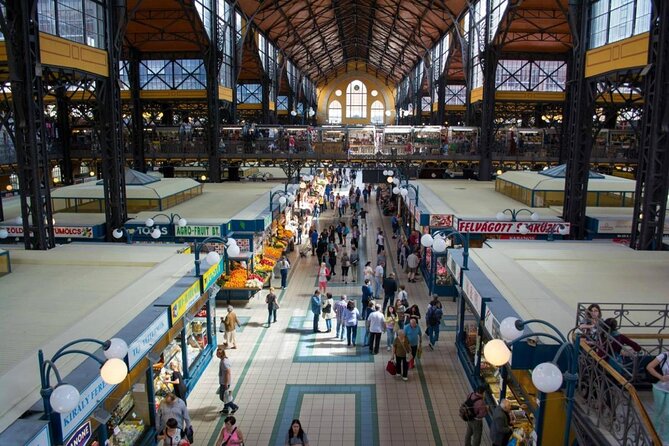
- Meet at Central Market Hall for the optional tour: You will see local food stalls, taste Hungarian flavors, and learn what to buy.
- Expect an English-speaking chef: Instructors have included Vesna, Bernadette, Brigitte, Betty, Adrienne, Sylvia, and others.
- Wine, snacks, and pálinka are part of the food story: Drinks accompany the cooking and the cultural conversation.
- Small groups keep the class personal: The maximum is 15 people, and some sessions have been private or nearly private.
- Check the return plan before you go: The class finishes at the cooking school, not necessarily at the original meeting point.
Why this cooking class works better than a restaurant meal
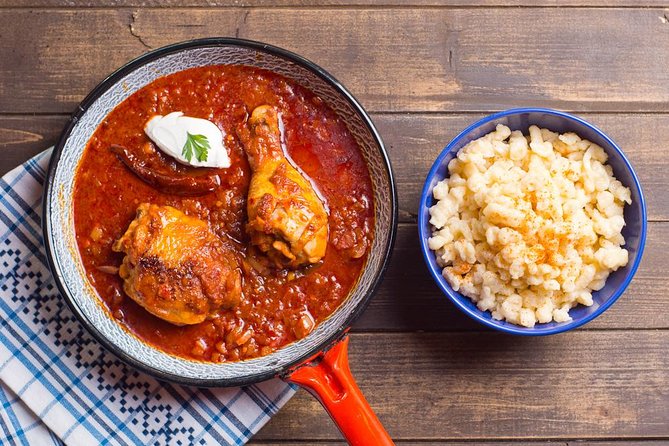
Hungarian food can look simple on a menu. Paprikash is chicken, onions, paprika, and a creamy sauce. Nokedli is a rustic little dumpling. Apple strudel is pastry and fruit. The class shows you why the details matter.
You learn when to add paprika, how to build flavor in the sauce, and how to make fresh nokedli rather than relying on a packaged substitute. You also work with pastry for the strudel. That practical knowledge is the real souvenir, since you receive recipes to take home and can repeat the dishes in your own kitchen.
The cooking is paired with stories about Hungarian life, food customs, and local ingredients. Guides such as Vesna and Bernadette have been praised for clear instruction and patience, while Brigitte, Betty, and Sylvia have also led highly regarded sessions. The exact chef depends on the date, but the teaching style is personal rather than lecture-like.
You should also expect a social meal at the end. The food you prepare is served to the group, along with Hungarian wine, beer, or other local drinks depending on the session. Some classes include a taste of pálinka, the strong fruit spirit, and Unicum has occasionally been offered as an extra digestif. Drink service is part of the experience, but this is still a cooking lesson first.
More produce and farmers markets in Budapest:
- Budapest: Kickstart the City – Local Market Tasting Tour
★ 5.0 · 10 reviews - Budapest: Cooking School – Hungarian Menu & Local Market
★ 5.0 · 7 reviews - Hanoi Cooking Class: Culture, Local Market & Meaning CSR Impact
★ 5.0 · 5,147 reviews
Central Market Hall and the optional shopping walk
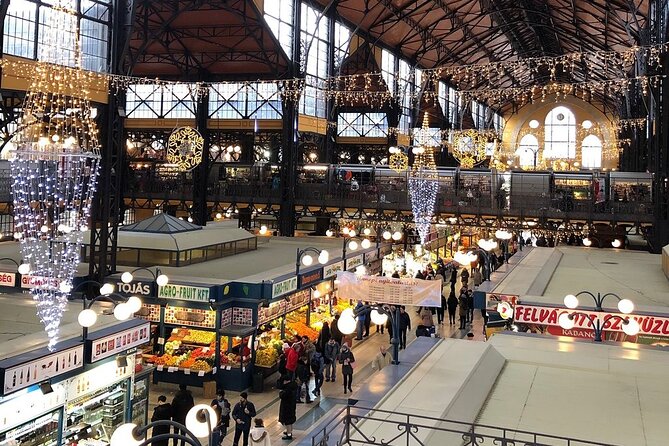
The market option begins at Central Market Hall, Budapest’s large indoor food market near the Danube. This is a useful starting point because it puts the ingredients into context before you handle them in class.
A good guide can show you the differences among paprika varieties, explain which cheeses and meats are worth considering, and point out pastries and other Hungarian foods. You may also get small tastings. The market is not just a place to buy souvenirs. It gives you a feel for how food fits into daily Hungarian life.
The market visit is usually about an hour, though the full experience lasts roughly three to four hours. It is enough time for an introduction and some tasting, but you should not count on a leisurely shopping trip. One important limitation is that the market tour can feel rushed if you want to browse or buy several things.
I recommend carrying a small amount of space in your luggage if you hope to buy paprika, condiments, or packaged ingredients. Still, do not assume you will have unlimited time to shop. The guide may focus on helping you understand which products are worth buying, and some past groups had little time for personal purchases.
There has also been confusion when people booked the market add-on through an outside sales channel. At least one session did not clearly communicate that the market walk was included, while another group found that the visit moved quickly and spent too much time on what not to buy. I would confirm the market meeting time, duration, and inclusions before the day of the class.
Páva Street, the cooking-school setting, and the transfer
The cooking lesson takes place at Chefparade Cooking School. The provided information gives two possible school addresses: Páva Street 13 in Pest or Bécsi Street 27 in Buda. The market meeting point is listed as Central Market Hall, but the class itself ends at the school.
That change of location matters. Some groups have taken taxis from the market to the cooking school, and the ride has taken about 20 minutes in one account. Your booking information should tell you where to meet and which school location you will use. If anything looks unclear, contact the operator before the morning of the class.
The Páva Street reference is especially useful because one stated itinerary stop is Páva Street, while Central Market Hall is the other. You should not assume that walking between them is part of the experience. The market and school are separate parts of the morning, and transportation arrangements can vary.
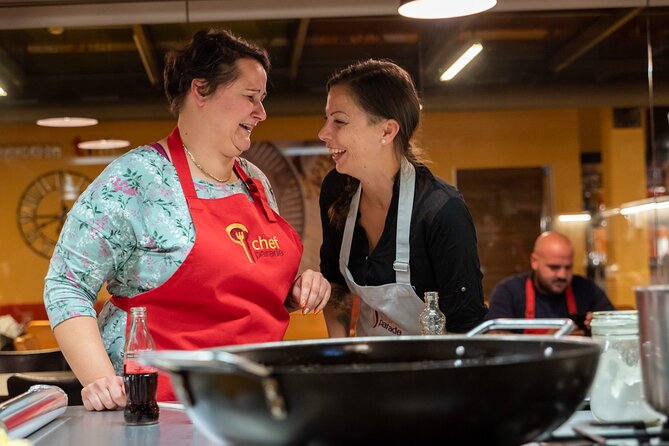
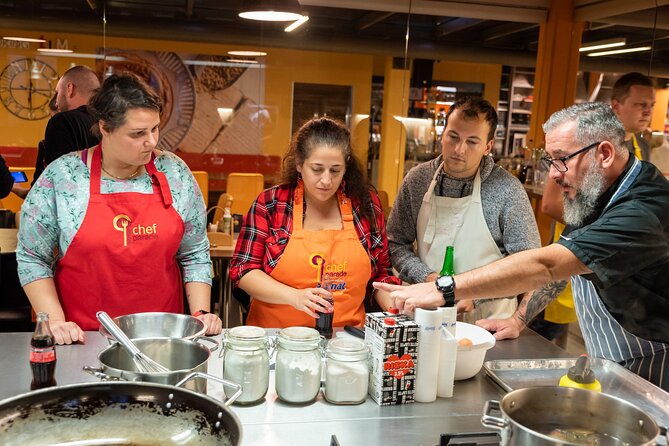
The school itself has been described as well equipped and organized. The cooking stations allow you to chop, stir, shape dough, and prepare food under the chef’s direction. However, the exact amount of hands-on work depends on the group and the pace.
Most people take an active part in the preparation. One class prepared vegetable stock, diced vegetables, cooked chicken paprikash, made fresh nokedli, and assembled strudel. Another account describes each person preparing part of the recipe while the class cooked larger portions together. If you want every participant to make every component alone, ask how the class is organized before booking.
What you cook: three Hungarian classics
More market cooking classes in Budapest:
- Budapest Cooking Class & Market Tour with Local Guide & Wines
★ 5.0 · 553 reviews - Budapest: Small-Group Cooking Class & Market Tour with Local
★ 5.0 · 138 reviews - Easy Cooking Class Budapest – with Market Walk (local wine & pálinka included)
★ 5.0 · 62 reviews - Budapest Great Market Hall Chef‑Led Private Tasting Tour
★ 5.0 · 61 reviews
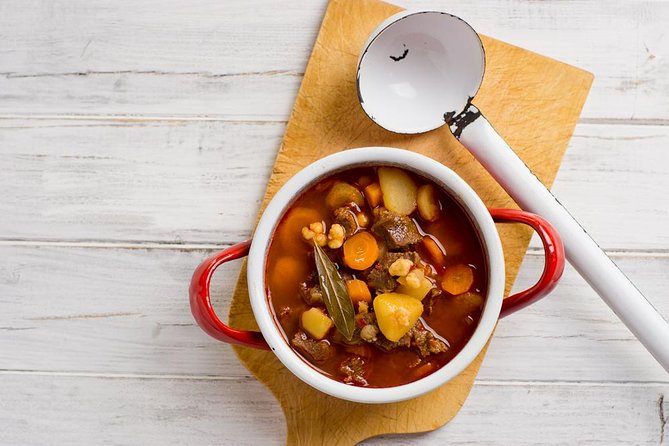
Goulash soup
Goulash soup is listed as the starter: a hearty soup made with beef and plenty of vegetables. It is a good teaching dish because it introduces you to the flavors most people associate with Hungarian cooking, especially paprika and slow-cooked savory ingredients.
The class may use a different soup in some sessions. One menu included creamy potato soup, while another focused on goulash, chicken paprikash, and strudel. That flexibility is normal for a cooking school, but you should treat the published menu as a guide rather than an ironclad promise.
Chicken or mushroom paprikash with nokedli
Chicken paprikash is the star of the class for many people. The sauce is creamy and paprika-based, and the dish is served with fresh nokedli, the Hungarian version of small spaetzle-style dumplings.
This is where the lesson can go beyond a restaurant meal. You learn how the onions, paprika, chicken, and sauce come together, and you make the dumplings yourself. One particularly detailed class spent close to an hour cooking the chicken and stirring the sauce, showing how much care the dish can require when prepared properly.
A vegetarian menu is available by request, and the alternative may be mushroom paprikash with nokedli. Contact the operator when booking rather than waiting until the class begins. Options for allergies and religious dietary restrictions may be limited, so this is not the place to assume every special request can be handled.
Apple strudel
The dessert is apple strudel made with thin pastry, apple, and cinnamon. Preparing it gives the class a baking element and rounds out the meal with something sweet.
Some groups have had enough strudel left over to take extra portions away. That is not guaranteed, but it is a nice possibility if the class prepares a generous batch. The recipes are provided, so you can try the dessert again after returning home.
The teaching style and the people who make the class
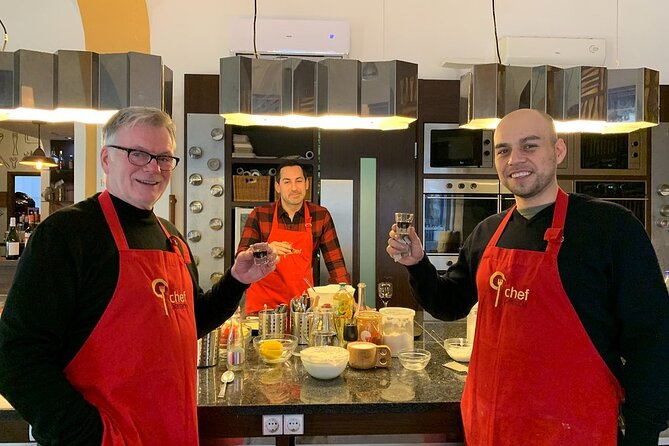
The most consistently praised part of this experience is the instructor. Vesna appears often in the strongest accounts, combining market guidance with a hands-on cooking lesson. Bernadette and Brigitte are also described as friendly, patient, and easy to follow. Betty has been singled out for explaining techniques clearly, while Sylvia has led both the market walk and cooking session.
You may not receive the same chef named in another booking, but the format allows the instructor to shape the pace. The class is not only about following printed recipes. You learn alternatives, reasons behind the methods, and details about Hungarian food traditions.
English is the stated language. The instructors have taught international groups, and the class is designed for people who want to cook rather than simply watch. Several sessions have included first-time cooks, experienced home cooks, and even a retired professional chef who still picked up new techniques.
The maximum group size is 15. That is small enough for individual help, though it is not necessarily a private class. If your group is the only booking that day, you might receive a very personal session. Otherwise, expect to share preparation and dining with other people.
Drinks, conversation, and the meal at the end
The cooking is accompanied by local snacks and drinks. Wine is a recurring part of the class, and beer may also be served. Pálinka tasting is mentioned as part of the Hungarian hospitality theme, while Unicum has been served in some circumstances.
I like this part because the drinks are not presented as random add-ons. They help explain how Hungarians eat and socialize. You cook, talk, taste, and then sit down together with the meal.
Still, anyone avoiding alcohol should clarify the available alternatives. The supplied information confirms snacks and drinks, but it does not promise a particular nonalcoholic selection. The focus remains Hungarian food and hospitality, not a dedicated wine or spirits tasting.
Is $126.98 a fair price?
At $126.98 per person, this is not a cheap meal. You are paying for roughly four hours, a chef-led class, ingredients, a three-course meal, cultural instruction, and drinks. If you add the market visit, you also receive a guided introduction to Budapest’s food shopping scene.
The value is strongest if you want something you can take home beyond photographs. The recipes, the paprika lessons, the nokedli technique, and the explanation of how paprikash is built can justify the price for an enthusiastic cook. It is also a good choice for a final Budapest morning or afternoon because you finish with a full meal.
The price feels less convincing if you mainly want to visit the market and shop. The market time may be limited, and transportation back to the city center is not always clearly included. One past group faced confusion over a premium package that included a cookbook, apron, and taxi, while the basic booking did not include those extras.
That is the main value warning: confirm what you are buying. Ask about the market walk, return transportation, cookbook, apron, and final drop-off. A complimentary taxi should not be assumed unless your confirmation says so.
Timing, meeting details, and useful preparation
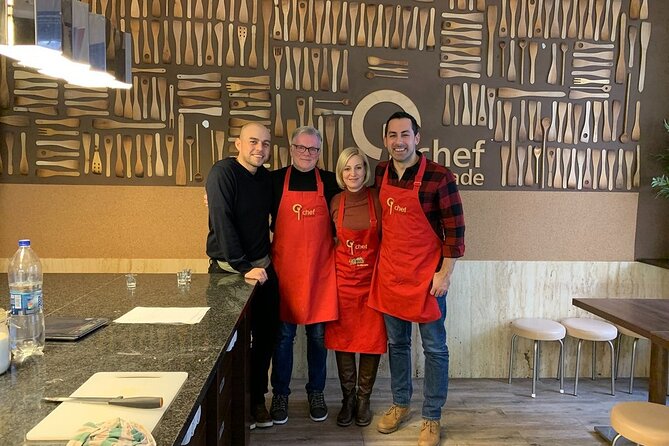
The experience lasts about four hours. The market option begins at Central Market Hall, Budapest 1093, Hungary. The cooking portion ends at the school, either on Páva Street in Pest or Bécsi Street in Buda, according to the assigned location.
The class is near public transportation, but the exact route depends on which school you use. Give yourself time to find the meeting point, especially if you are unfamiliar with Budapest’s market area. If you get lost, contact the school promptly. One instructor even went outside to help a late-arriving participant find the entrance.
Tell the operator about dietary needs when you book. A vegetarian menu is available on request, but allergy and religious-diet options may be limited. The booking confirmation is normally immediate, unless you reserve within one day of departure, when confirmation depends on availability.
Free cancellation is available if you cancel at least 24 hours before the start time. Changes or cancellations inside that window are not accepted for a refund.
Who should book this Budapest food experience?
I would choose this class if you enjoy practical activities, want to meet other people over a meal, or hope to recreate Hungarian dishes at home. It suits curious beginners because the chef guides each stage, but experienced cooks can also learn useful details about paprika, sauces, dough, and dumplings.
It is particularly good for couples, families with adult children, and small groups of friends. The class also works well as a rainy-day plan, since the main cooking takes place indoors.
I would be more cautious if you have strict dietary restrictions, dislike group cooking, or need a guaranteed return to a specific part of Budapest. I would also avoid booking the market option solely for shopping. It is an introduction to the market, not a long, free-form buying trip.
Should you book it?
Yes, if you want to understand Hungarian food by making it yourself. The strongest parts are the patient instruction, the hands-on preparation, the chance to make fresh nokedli and strudel, and the conversation about Hungarian customs. A 4.7 rating from 98 reviews and a 93 percent recommendation rate fit the overall picture of a well-liked experience.
Book the market add-on if you want help understanding what you are seeing at Central Market Hall. Before paying, confirm the start point, cooking-school address, return transportation, and any premium extras. With those details settled, this is one of the more useful food experiences in Budapest because you leave with a meal in your memory and recipes you can actually use.
FAQ
How long does the Hungarian cooking class last?
The experience lasts approximately four hours, including the cooking activity and, if selected, the optional market visit.
Where does the experience begin?
The stated meeting point is Central Market Hall in Budapest at 1093 Hungary.
Where does the activity end?
The activity ends at the cooking school. The listed school locations are Bécsi Street 27 in Buda or Páva Street 13 in Pest.
Is the Central Market Hall tour included?
The market visit is optional. Confirm that it is included in your selected package, since the market tour and other extras have caused confusion with some bookings.
What dishes will I cook?
The sample menu includes goulash soup, chicken paprikash with nokedli, and apple strudel. A mushroom paprikash option and other menus, such as potato soup or palacsinta, may also be used.
Is a vegetarian menu available?
Yes. A vegetarian menu is available upon request, but options for allergies and religious dietary restrictions may be limited.
Is the class taught in English?
Yes. The experience is offered in English.
How many people can join the class?
The maximum group size is 15 people. Some sessions may be smaller or private depending on bookings.
Can I cancel for a refund?
Yes. You can cancel at least 24 hours before the experience start time for a full refund. Cancellations or changes made less than 24 hours before the start time are not accepted for a refund.
More Markets in Budapest
- Budapest Food Tour: Market to Tavern with 14+ Tasters & Wines
★ 5.0 · 434 reviews - Budapest: Food Tour Market to Tavern: 14+ Tasters & Wines
★ 4.9 · 375 reviews - German tour: Central Market Hall of Budapest with tastings
★ 4.9 · 164 reviews - German tour in the Market Hall of Budapest with tastings
★ 4.9 · 84 reviews
More Cooking Classes in Budapest
- Budapest Market Tour & Home Cooking Class with local Chef & Guide
★ 5.0 · 23 reviews - 5 Traditional Dishes Hanoi Cooking Class with Market Trip
★ 5.0 · 4,890 reviews - Cooking Class and Lunch at a Tuscan Farmhouse with Local Market Tour from Florence
★ 5.0 · 4,831 reviews - Chiang Mai: Cooking Class, Market & Thai Herbs Garden Tour
★ 4.9 · 4,824 reviews
Just added around Budapest
- Antiques and Curios – Private Flea Market Treasure Hunt★ 4.5 · 10 reviews
- Budapest’s Central Market Hall And Hosok Tere With A Local Host★ 5.0 · 2 reviews
- Great Market Hall & Local Treats★ 4.5 · 11 reviews
- Budapest Market Tour & Home Cooking Class with local Chef & Guide★ 5.0 · 23 reviews
- Exclusive Market Tour Budapest -Private Food Experience & Tasting★ 5.0 · 16 reviews
- Gourmet Market Walk at the Great Market Hall of Budapest★ 4.5 · 18 reviews
- Private Budapest Christmas Market Tour with Chimney Cake & Mulled Wine★ 5.0 · 6 reviews
- Budapest Grand Market Tasting Tour – Small Group & Local Guide★ 5.0 · 23 reviews
Market Cooking Classes, compared.
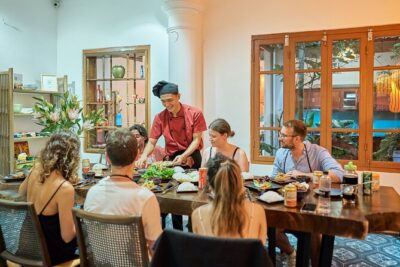
Hanoi Cooking Class: Culture, Local Market & Meaning CSR Impact
Read our review →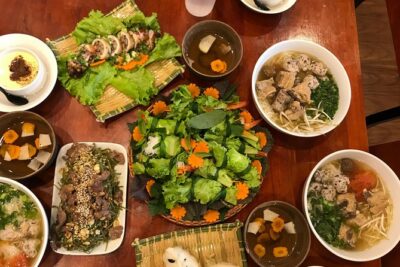
5 Traditional Dishes Hanoi Cooking Class with Market Trip
Read our review →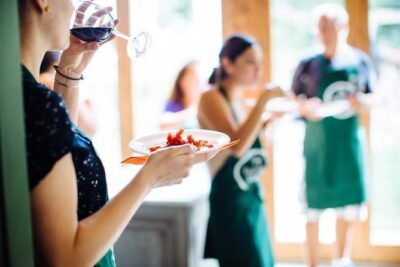
Cooking Class and Lunch at a Tuscan Farmhouse with Local Market Tour from Florence
Read our review →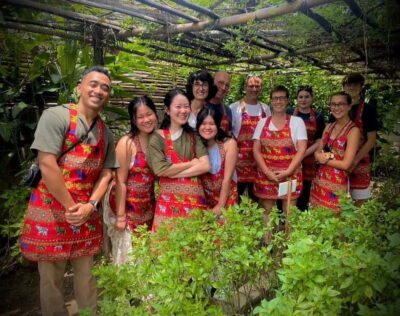
Cooking Class, Market & Thai Herbs Garden Tour
Read our review →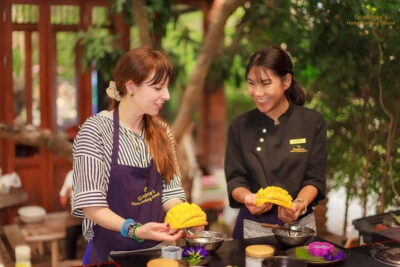
Authentic Cooking Class with Market & Farm Visit
Read our review →
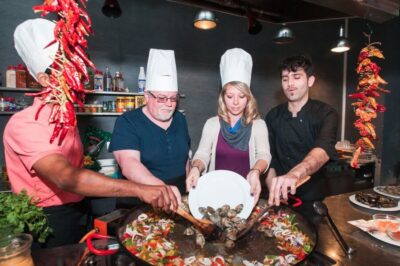
Paella Cooking Experience & Boqueria Market Tour
Read our review →
Cooking Class Hoi An:Local Market, Basket Boat, Fishing & Cooking
Read our review →Browse the lists this tour appears in