
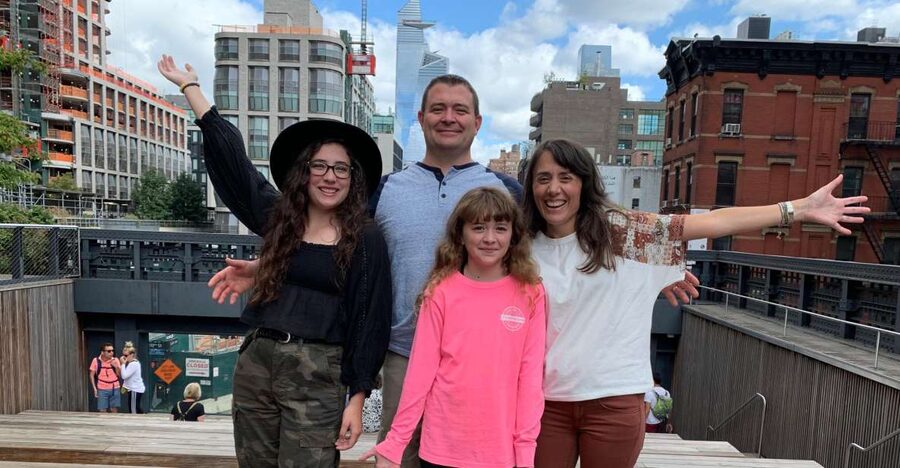
Review · NEW YORK CITY
Meatpacking District: Chelsea Market and The Highline Tour
The best part of this tour is the sharp contrast between old and new New York. You begin among food stalls and shops at Chelsea Market, walk above the streets on the High Line, then finish among luxury stores and bars in the Meatpacking District. It is a compact way to see how one corner of Manhattan changed its entire identity.
I like the small group of no more than 10 people, which gives the guide room to answer questions. I also like the mix of food, architecture, rail history, and city views. The main drawback is that food and drinks cost extra, and Chelsea Market vendors may not all be open when you visit.
Key points
- Chelsea Market sets the tone: Browse snacks, baked goods, shops, and food stalls before the walking portion begins.
- Death Avenue adds a darker edge: You hear about the dangerous railroad route that once ran through this part of Manhattan.
- The High Line offers a fresh view of New York: Walk along a former railroad spur with views toward Chelsea Piers and the Hudson River area.
- Titanic history appears along the route: Your guide points out where the ship was intended to dock in 1912.
- The neighborhood changes before your eyes: Industrial buildings give way to the Standard Hotel, designer flagships, and fashionable bars.
- The format suits a short New York visit: Two hours gives you a useful introduction without taking up half a day.
Starting at Chelsea Market on 15th Street
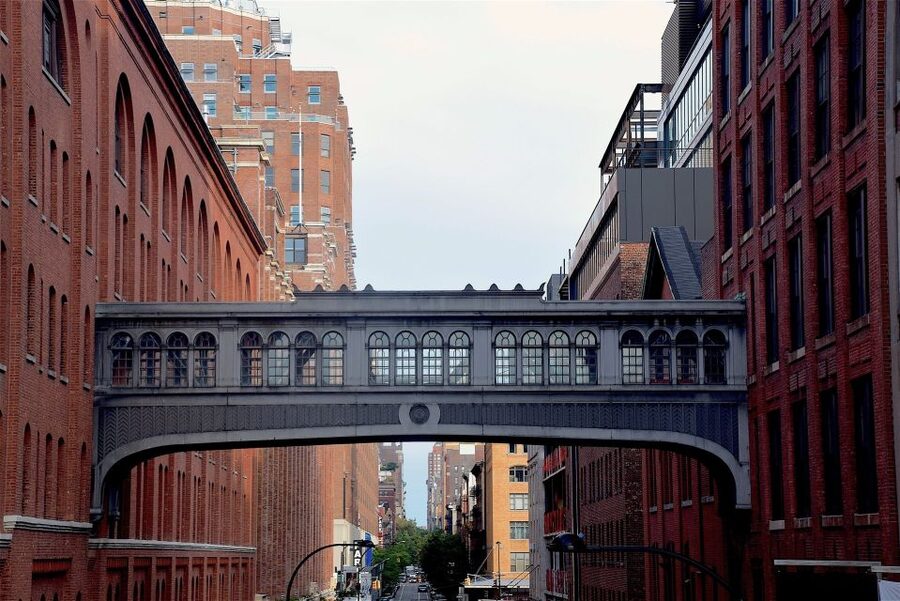
Your tour begins at the corner of 15th Street and 9th Avenue, beside Chelsea Market. This is a practical meeting point because the market gives you something to see immediately, even before the walking starts.
Chelsea Market occupies a former industrial building, and its interior is part food hall, part shopping arcade, and part urban history lesson. You get free time to look around, buy a snack, and browse the small shops before meeting the guide for the main route.
I would not arrive at the last second. Give yourself enough time to find the meeting point and get a quick look inside the market. The tour does not include food or drinks, so this is your chance to buy something if you want a pastry, baked item, or small snack along the way.
The exact choice of food is up to you, and there is no promise that every vendor will be operating. That matters if you are counting on a full meal. Treat the market stop as a chance to explore and sample, not as an included lunch.
A few more market tours around the USA worth a look
- Chef Guided Food Tour of Pike Place Market
★ 5.0 · 3,733 reviews - Pike Place Market Tasting Tour
★ 5.0 · 1,696 reviews - Early-Bird Tasting Tour of Pike Place Market
★ 5.0 · 1,154 reviews
Why Chelsea Market matters
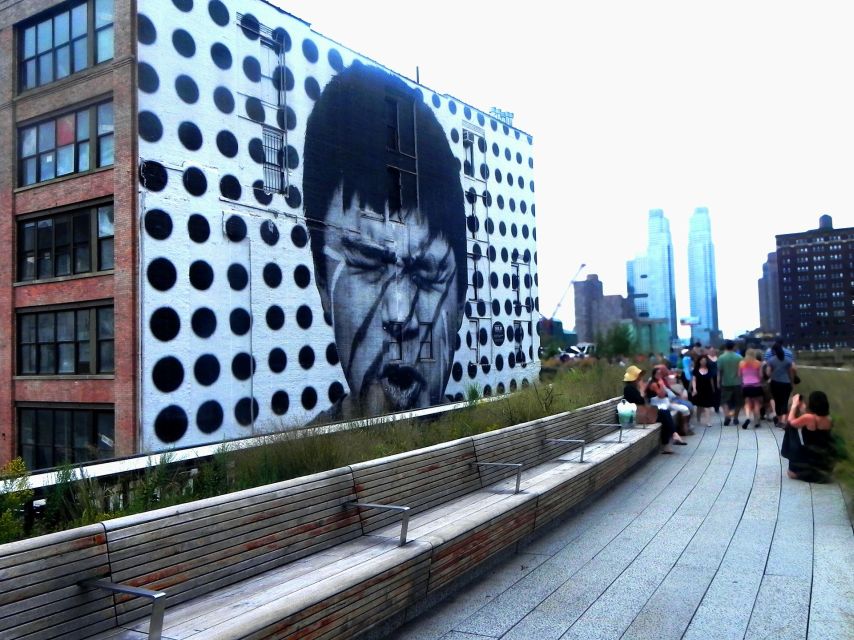
The market is more than a place to grab food. It helps explain the area’s working past before the tour shifts toward parks, hotels, and fashion shops.
The Meatpacking District was once tied to meat processing and freight movement. Chelsea Market’s industrial setting helps you picture a less polished version of this neighborhood, when commerce was noisy, practical, and closely tied to rail lines and the nearby waterfront.
Your guide provides the context that you would miss by walking through the market alone. The tour is especially useful if you enjoy learning how city districts change, rather than simply photographing attractive buildings.
The free time here is also a welcome pause. You are not rushed through every corner with the group. You can look at food counters, browse, and decide if you want to spend money. Just remember that this portion is not a guided tasting tour, so the price does not cover samples.
The story of Death Avenue
Before going up to the High Line, the guide discusses Death Avenue, one of the more memorable pieces of local history. The name refers to the danger created by trains moving through the west side of Manhattan.
This part gives the tour some grit. The Meatpacking District and Chelsea are often presented today as stylish, expensive neighborhoods. Death Avenue reminds you that the area once had real industrial risks, with railroad traffic sharing space with workers, carts, and city streets.
You do not need to know the full story before arriving. The guide’s explanation is what turns an ordinary walk into a lesson about how Manhattan handled freight, meat, railroads, and limited street space.
I like this stop because it keeps the tour from becoming a simple parade of trendy buildings. You get a reason for the High Line’s existence, and you begin to understand why preserving the old railroad structure mattered.
Walking the High Line above Chelsea
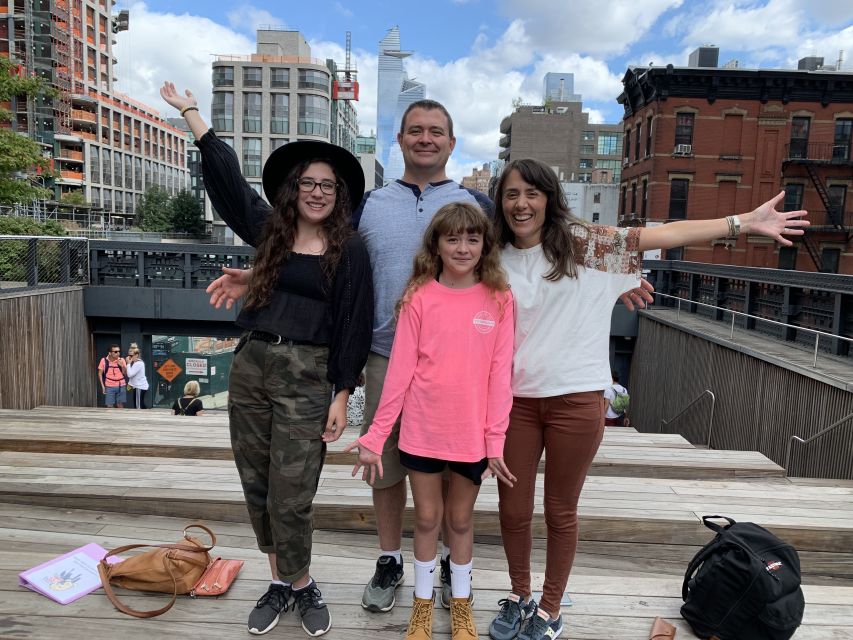
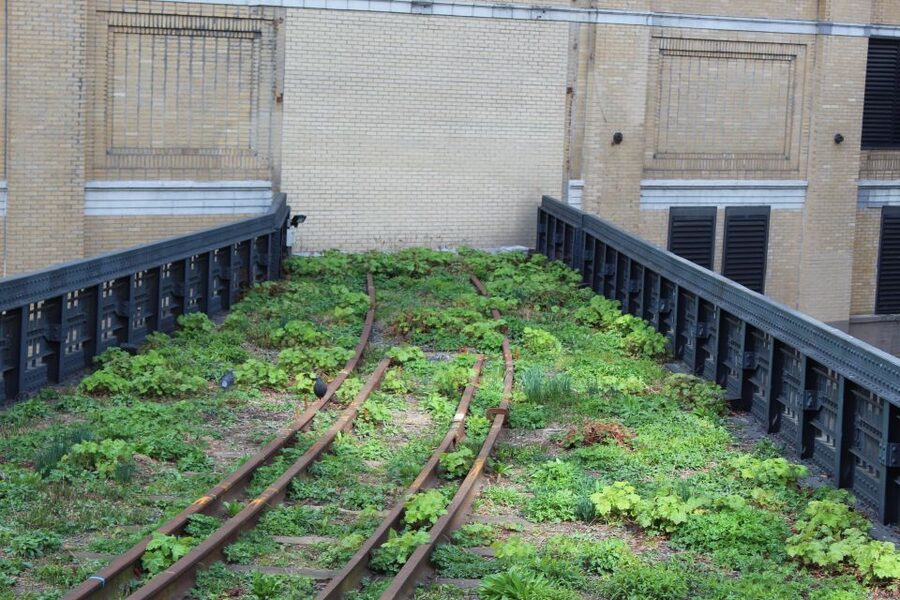
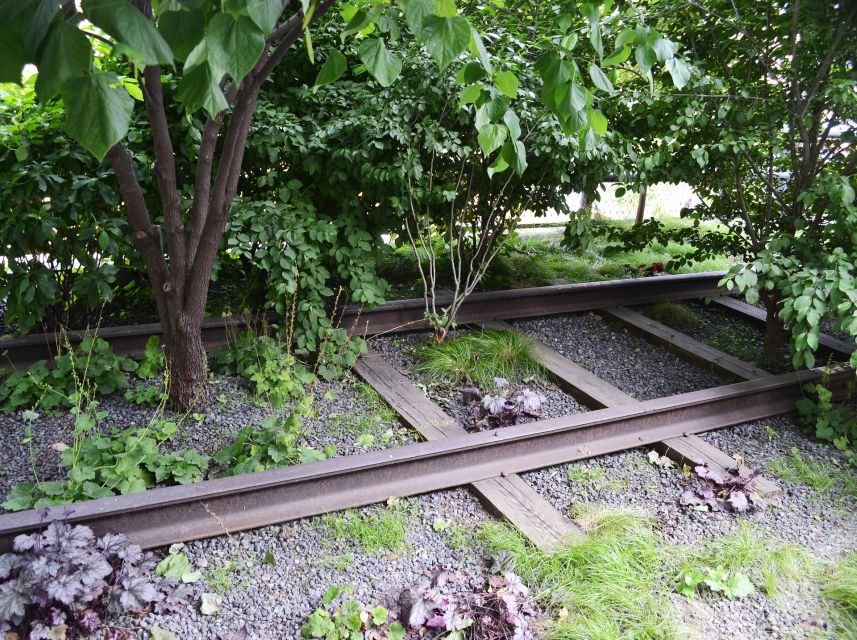
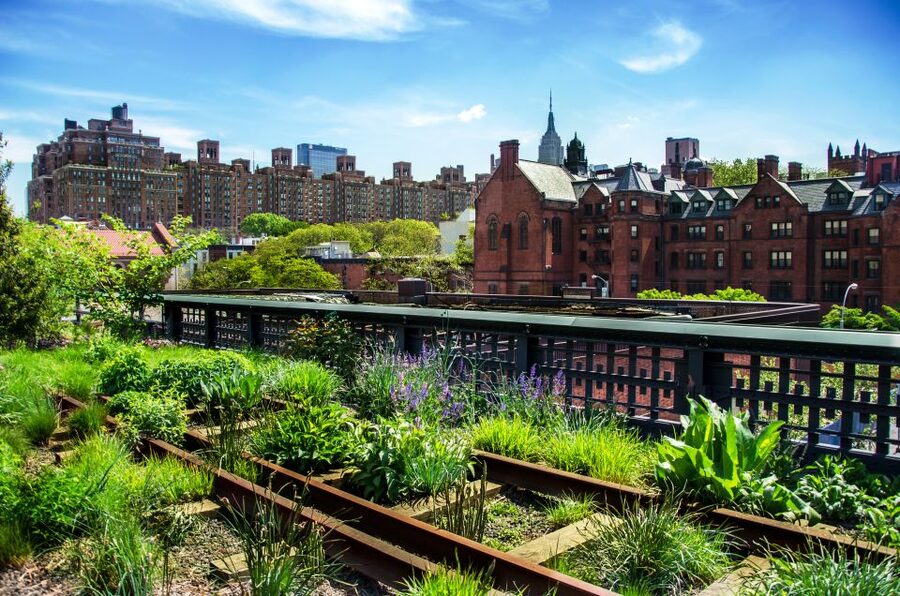
The High Line is a linear public park built on a former section of the New York Central Railroad system. Instead of walking at street level, you follow a raised route through the neighborhood, with city buildings close on both sides.
The setting makes this part different from a standard Manhattan walking tour. You get a clear sense of the old rail corridor while also seeing how new buildings and public spaces have grown around it.
The tour includes views toward Chelsea Piers and the waterfront area. Your guide also points out the place where the Titanic was intended to dock in 1912. That detail connects the local walk to a famous maritime story without requiring a separate museum visit.
The High Line is open-air, so weather matters. The park can close during potentially dangerous conditions, and the tour may be canceled if the weather is poor. If that happens, you can receive a full refund or choose another date.
For normal conditions, dress for the forecast rather than assuming the city will feel comfortable. Bring water during warm weather, and wear shoes that can handle a reasonable amount of walking. The route is wheelchair accessible, but the weather policy still applies to everyone.
More shopping tours in the USA:
- Center City Philadelphia Food Tour with Reading Market
★ 5.0 · 861 reviews - Seattle: Pike Place Market Chef-Guided Food Tour
★ 4.8 · 847 reviews - Chelsea Market and High Line Guided Food Tour
★ 5.0 · 827 reviews - Streetcar Food Tour and Findlay Market with Riverside Food Tours
★ 5.0 · 653 reviews
Architecture from rail yards to luxury hotels
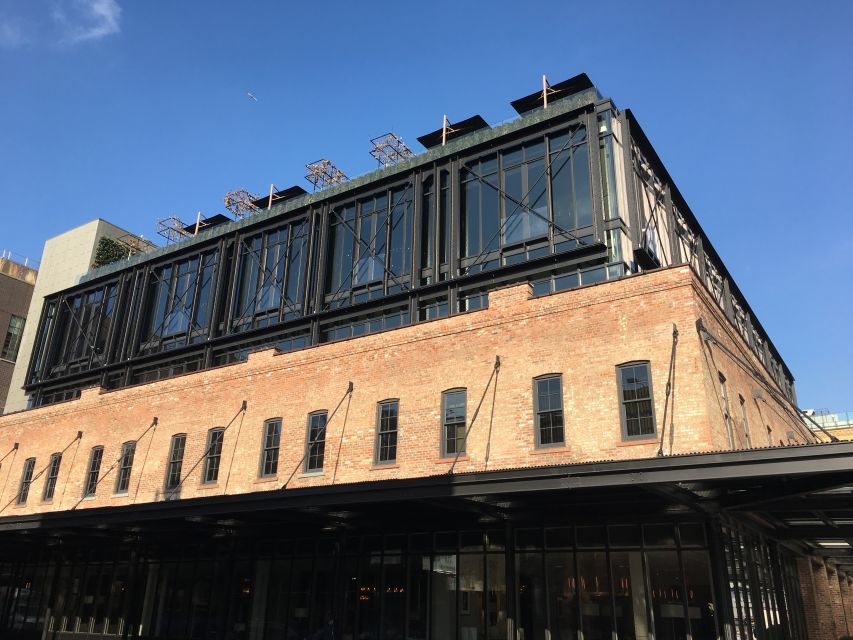
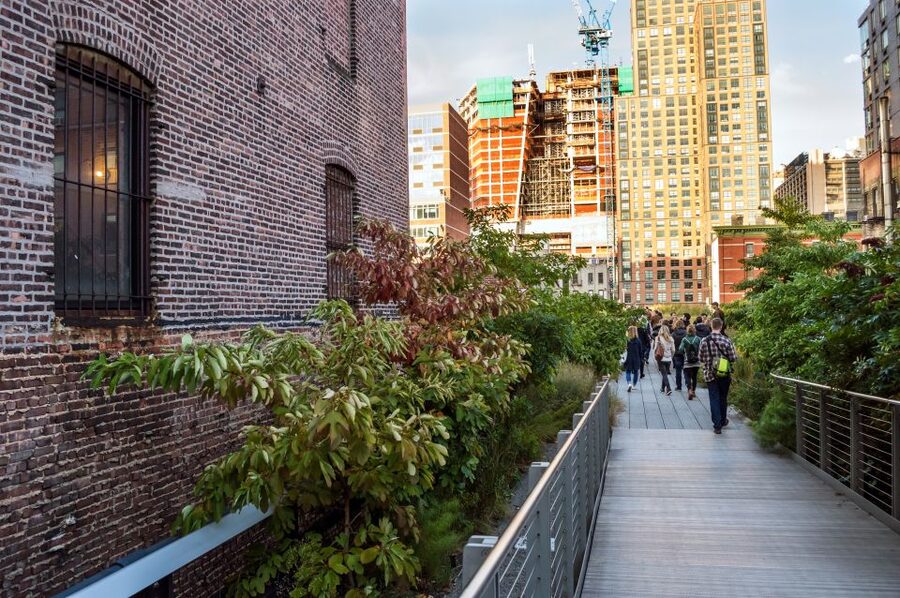
One of the tour’s strongest features is the way it uses buildings as evidence of change. You see the 18-story Standard Hotel, an eye-catching structure above the High Line, along with other local architecture.
Your guide helps you read the buildings rather than simply glance at them. The route shows how former industrial areas can become valuable real estate once rail use declines and public access improves.
The Standard Hotel is part of the neighborhood’s newer image, but it is not the whole story. The older rail line, market building, waterfront connections, and former working district all remain part of the same view.
This is where a guide adds real value. Without explanation, you might see an unusual hotel and a pleasant park. With context, you can connect the hotel, the rail route, the market, and the changing street life into one story.
The pace should suit people who want to stop for photos and listen. It is still a walking tour, not a long architecture lecture, so expect a broad introduction rather than a specialist study of every building.
From the High Line into the Meatpacking District
After the High Line, the route heads into the heart of the Meatpacking District. This is where the contrast becomes most obvious. The old industrial name remains, but the streets now include high-fashion flagship stores, trendy bars, and polished hotels.
You pass the Gansevoort Hotel and continue through an area known for its modern retail and nightlife. The tour gives you a useful orientation if you plan to return later for shopping, drinks, or another meal.
I like finishing here because the neighborhood feels like a natural final chapter. You start with the market’s food and industrial setting, then move through the former rail corridor, and end in the district’s current commercial center.
The drawback is that this final stretch can feel more commercial than historic. If you want only old warehouses and untouched streets, you may find the designer shops and fashionable venues less appealing. If you want to understand how New York keeps changing, the contrast is the point.
What the two-hour format does well
Two hours is enough to cover the main ideas without exhausting you. You visit three connected areas, and each one has a clear role in the story: Chelsea Market for food and industry, the High Line for rail history and views, and the Meatpacking District for modern city life.
The short format also works well in a packed New York schedule. You can fit it between other plans instead of giving up an entire morning or afternoon.
There is a reasonable amount of walking, so this is not a sit-down sightseeing activity. You should be comfortable on your feet and ready to move between indoor and outdoor areas.
The small group makes the time more useful. A group capped at 10 people is easier to gather on the street, and you have a better chance of hearing the guide clearly than you would on a large coach-style walk.
English is the tour language. Guides who have led the experience include Conner, Liz, and Gabi. The strongest feedback has focused on clear explanations, friendly guiding, and the way the tour connects architecture with the area’s past.
Is $47 a fair price?
At $47 per person, the value depends on how much structure you want. You can visit Chelsea Market and the High Line on your own, and there is no separate admission charge listed for those places. If you are happy to read signs, follow a map, and research Death Avenue and Titanic’s planned dock yourself, a self-guided visit will cost less.
The tour earns its price through interpretation and organization. You get a local guide, a planned route, a compact history of the district, and a small group rather than a crowded mass tour.
Food is not included, so add your own snack or drink budget. That is not a problem if you prefer choosing exactly what you want, but it is important to know that the $47 is for the guided walk, not a food tour.
I see this as a good value for a first visit to this part of Manhattan, particularly if you want the area to make sense rather than simply collect photos. Repeat visitors may also appreciate it. One past participant found the tour especially useful after visiting New York several times and ended up receiving what felt like a private experience because of the small attendance.
Who will enjoy this tour most
This tour suits you if you like city history, changing neighborhoods, architecture, and short walks with plenty to look at. It is also a good choice if you want a local introduction before returning to Chelsea Market or the Meatpacking District on your own.
First-time New York visitors can use it to cover several well-known places in one outing. People who have already seen the major Midtown sights may enjoy the more focused look at Manhattan’s west side.
Food lovers should know that the tour includes time to browse and buy, but not a planned tasting menu. Architecture fans will get useful explanations, though the tour is designed for a broad audience rather than for detailed technical study.
It may be less suitable if you dislike walking, want a fully indoor activity, or need a guaranteed meal included in the price. Weather can affect access to the High Line, so keep your schedule flexible.
Practical tips before you go
Wear comfortable shoes. This is the clearest piece of advice for good reason, since the route includes a reasonable amount of walking and outdoor time.
Bring water or another cold drink in warm weather. You may also want a light layer because conditions can feel different inside Chelsea Market, along the open-air High Line, and on city streets.
Tours run in most weather conditions, so dress appropriately rather than assuming cancellation is likely. The High Line closes during potentially dangerous conditions, and poor weather can lead to an alternative date or a full refund.
You do not need to confirm your reservation with the local operator’s office. Arrive at the meeting point at 15th Street and 9th Avenue by Chelsea Market, and allow time to orient yourself before the start.
The tour allows free cancellation up to 24 hours in advance, and you can reserve now while paying later. That is useful if your New York plans are still shifting.
Should you book the Chelsea Market and High Line tour?
Book it if you want a well-paced introduction to one of Manhattan’s most changed neighborhoods, with a guide explaining what you are seeing. The strongest reasons are the small group, the mix of indoor and outdoor stops, and the clear link between Death Avenue, the old rail line, Titanic’s planned dock, and today’s fashionable district.
Skip it if you prefer exploring at your own speed, want a full food tour, or already know the history of Chelsea and the Meatpacking District well. At $47, you are paying mainly for the guide’s context and the efficient route.
For most visitors, especially those with only a short time in this part of New York, the two-hour format makes sense. It gives you enough background to return later with a better eye, and it leaves the rest of your day free.
FAQ
Where does the tour meet?
The meeting point is at the corner of 15th Street and 9th Avenue, by Chelsea Market in New York.
How long does the tour last?
The tour lasts two hours.
What does the price include?
The price includes a local English-speaking guide. Food and drinks are not included.
Is the tour wheelchair accessible?
Yes, the activity is listed as wheelchair accessible.
What happens if the weather is poor?
Tours operate in most weather conditions, but the High Line may close during potentially dangerous conditions. If poor weather causes a cancellation, you can choose an alternative date or receive a full refund.
What should I bring?
Bring comfortable shoes. During warmer seasons, bring water or another cold beverage, and dress appropriately for the weather.
Just added around the USA
- Charleston International Sweet Treats & Historic City Market Tour★ 5.0 · 22 reviews
- Boston City Day Trip to Harvard University, MIT and Quincy Market★ 3.0 · 2 reviews
- Devour Boston: North End Guided Food Tour & Market Visit★ 5.0 · 101 reviews
- 4-hour Atlanta City Tour w/Ponce City Market Lunch Stop★ 4.5 · 8 reviews
- Private Atlanta Sightseeing Tour w/ Shopping and Lunch Stop at Ponce City Market★ 5.0 · 3 reviews
- Insider’s Breakfast and Culture Tour of Pike Place Market★ 5.0 · 6 reviews
- South Philly Tour: Market, Cheesesteaks & Hidden Gems★ 5.0 · 2 reviews
- Historic Tucson Walking Tour★ 4.6 · 17 reviews
Shopping Tours, compared.
Damnoen Saduak Market and Maeklong Railway Market
Read our review →
The Old Siam: Damnoen Saduak and Maeklong Railway Market
Read our review →
Train Market & Floating Market with Boat Ride
Read our review →
Ayutthaya & Ayothaya Floating Market Day Trip
Read our review →
Hanoi Cooking Class: Culture, Local Market & Meaning CSR Impact
Read our review →
5 Traditional Dishes Hanoi Cooking Class with Market Trip
Read our review →
Cooking Class and Lunch at a Tuscan Farmhouse with Local Market Tour from Florence
Read our review →
Cooking Class, Market & Thai Herbs Garden Tour
Read our review →Browse the lists this tour appears in