
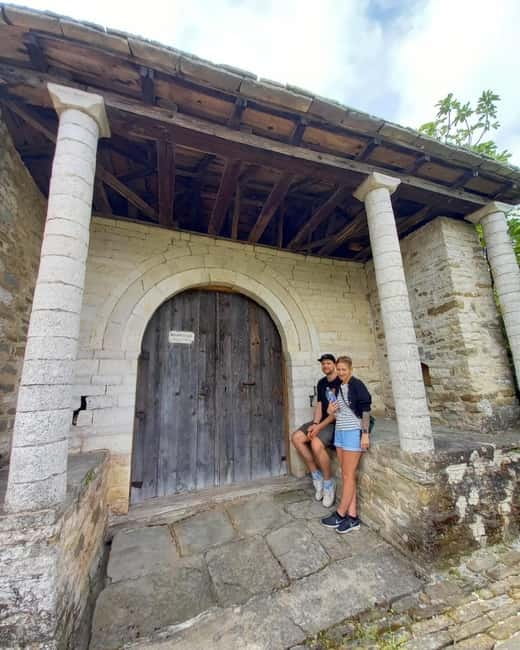
Review · ALBANIA
Old Bazaar-Cfake-Dunavat-Ali Pasha Bridge Walking Tour
Ali Pasha Bridge is the payoff here, but the route is just as important. You leave Cerciz Topulli Square and walk through Gjirokastër’s older neighborhoods, where cobbles, old houses, a rebuilt mosque, a Bektashi tekke, hills, and sheep replace the usual castle route. This is the side of town many visitors skip.
I like the authentic neighborhoods and the clear connection between the town and its old water system. I also like the warm, personal guiding style associated with Besi, who shares local history, family stories, and practical help along the way. The tradeoff is simple: the terrain is uneven, and one report found the pace a little quick, so this is not a polished stroll on smooth pavement.
Key points to know before you book
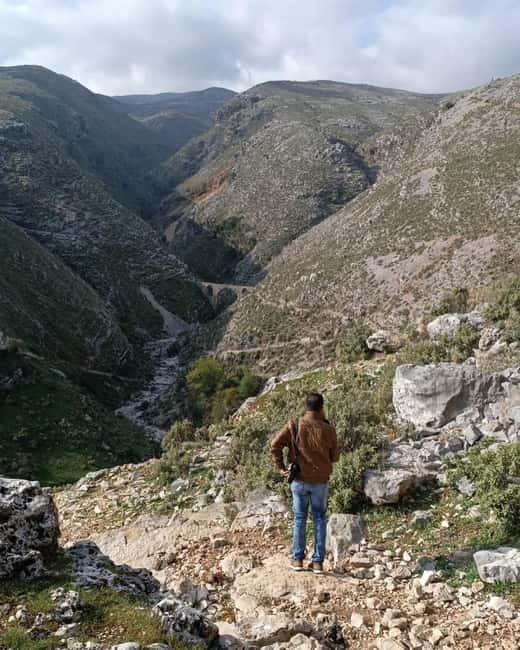
- Ali Pasha Bridge is the main reward: Reach a surviving section of the aqueduct built more than 200 years ago to carry water to Gjirokastër Castle.
- The route leaves the usual center: Walk through the Old Bazaar, Cfaka, and Dunavat, three areas that show a less visited side of town.
- Expect a real walk: The three-hour route includes uncomfortable, uneven ground. Sneakers are essential.
- Local life is part of the view: Old homes, a Bektashi tekke, hills, and sheep give the walk a rural feel close to town.
- English guiding is provided: The tour runs with a live English-speaking guide, including guides such as Besi.
- The price is modest: At $17 per person, the tour offers three hours of guided walking and local context, with free cancellation up to 24 hours before departure.
Why this route shows a different Gjirokastër
Gjirokastër is famous for its hilltop castle, stone-roofed houses, and Old Bazaar. Those are good reasons to visit, but they can leave you with a narrow picture of the town. This walk turns away from the busiest sights and follows older streets and paths toward the Ali Pasha Bridge.
I like that the route is not simply a list of monuments. You see how the town spreads beyond the castle walls. You pass homes that have survived for generations, religious buildings from different traditions, and countryside close enough to feel part of the walk.
The experience also has a clear story. Water once had to be brought uphill to the castle, and the bridge is one of the remaining pieces of that system. By the time you reach it, Ali Pasha’s building project feels less like an isolated fact and more like the reason for the whole route.
More market walks in Albania:
- Gjirokaster: Old Bazaar and Castle Private Walking Tour
★ 5.0 · 6 reviews - Bangkok: City Highlights Temple and Market Walking Tour
★ 4.5 · 3,990 reviews - Tokyo Tsukiji Fish Market Food and Culture Walking Tour
★ 5.0 · 3,184 reviews
Starting behind the statue at Cerciz Topulli Square
The meeting point is the Experience Gjirokastra office at the town’s main square, behind the statue of Cerciz Topulli. This is a practical starting place because it is central and easy to identify.
You begin on foot, with no transport arranged as part of the experience. The first section leads from the square toward the Old Bazaar and then away from the most familiar central sights. Since the walk lasts about three hours, arrive ready to stay on your feet rather than treating it as a short orientation walk.
The guide speaks English, and the tone appears to be personal rather than formal. Besi is described as welcoming, attentive, and generous with history, family memories, and help when needed. That matters on a route where the setting itself can raise questions that a map cannot answer.
The Old Bazaar beneath the castle walls
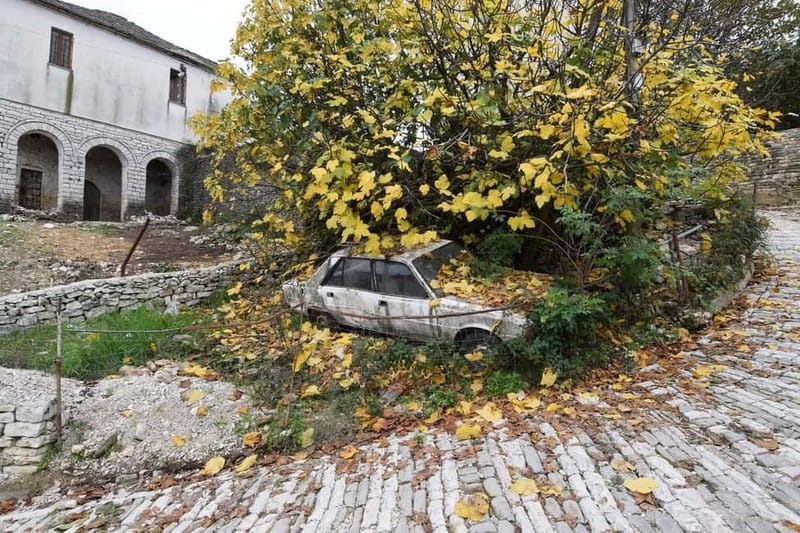
The first neighborhood is the Old Bazaar, described here as the first area outside the castle walls. The name can confuse you because it is no longer a functioning bazaar in the usual sense. Think of it as an old quarter beneath the castle, with cobblestone lanes, historic houses, and the Orthodox church.
This is a good opening section because it gives you the architectural clues that make Gjirokastër distinctive. The stone streets are attractive, but they are also hard underfoot. Watch your footing early, since the surface prepares you for the rougher sections ahead.
The old houses are a key part of the visit. Some are among the oldest in town, and the route helps you see them in their neighborhood setting rather than as isolated façades. I find that more useful than rushing from one famous building to another. You get a better sense of how the castle area connects with the homes below it.
The Orthodox church adds another layer to the quarter. The walk does not present Gjirokastër as a single-style town. Instead, religious buildings and old homes appear within the same historic setting, giving the route more variety than its short distance might suggest.
Crossing the Nanxa stream toward Cfaka
After the Old Bazaar, the route passes the Nanxa stream and reaches Cfaka, another old neighborhood. This transition is one of the tour’s strengths. You are not just looking at central Gjirokastër from a viewpoint. You are moving through the spaces between its better-known landmarks.
Cfaka is described as a quieter, less visited part of town. Here, the interest comes from the old houses, including buildings placed in the first monument category, and from the rebuilt mosque. The combination gives you a useful look at preservation and repair.
The rebuilt mosque is especially important because it shows that the area is not frozen in one period. Some structures are old, some have been restored, and the neighborhood continues to be part of the town rather than an open-air display. Your guide can help connect those details to the wider story of Gjirokastër.
Do not expect a museum-style sequence with signs at every stop. This is a walking experience led by conversation. If you enjoy asking questions about homes, faith, local customs, and the town’s past, you will get more from it than someone who wants a fast photo route.
A few more market tours around Albania worth a look
- From Tirana: Kruja Castle, Old Bazaar & Sari Salltik View
★ 4.8 · 2,171 reviews - From Durres/Golem: Kruja Castle & Old Bazaar Day Tour
★ 4.9 · 1,317 reviews - Durres/Golem: Kruja Castle & Bazaar with Traditional Lunch
★ 5.0 · 632 reviews - Kruja castle, the old Bazaar & Sarisalltik- Departure from Tirana
★ 5.0 · 592 reviews
Dunavat, a Bektashi tekke, and open hills
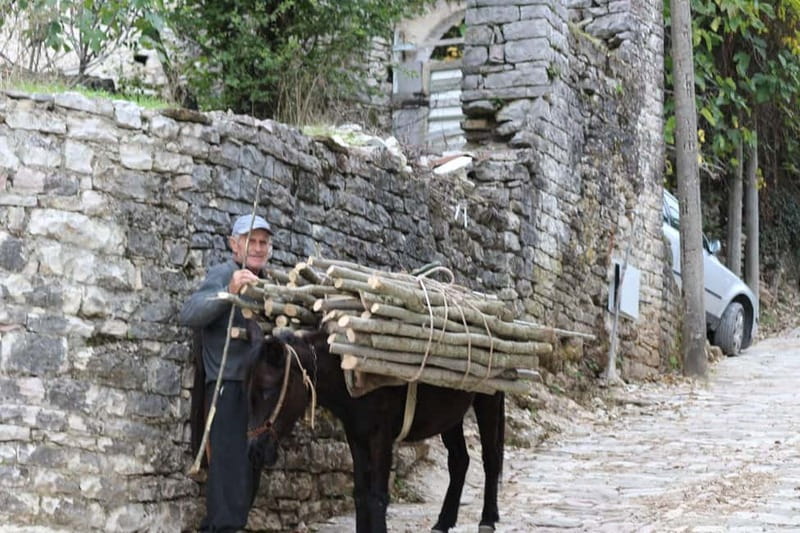
The walk continues into Dunavat, the final neighborhood before the bridge. The route here combines old homes with more open views, including hills where sheep may be grazing. That change gives the outing a different rhythm.
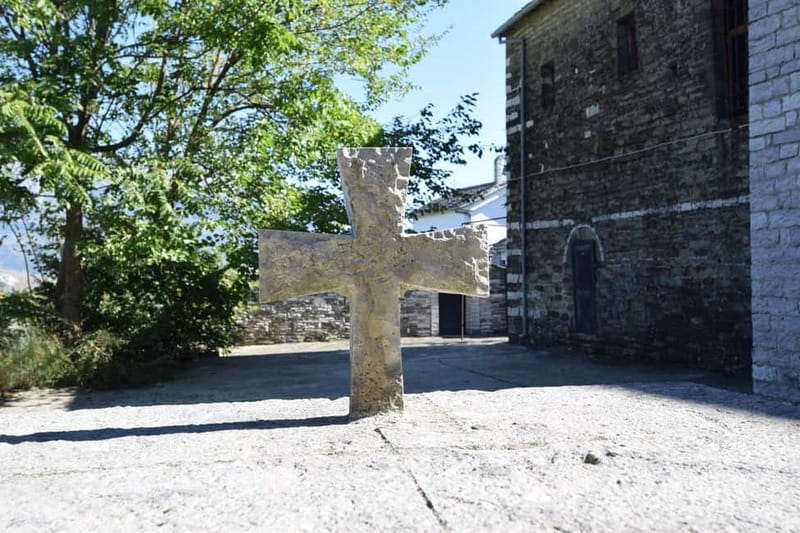
The Bektashi tekke is the main cultural stop in Dunavat. It belongs to the Bektashi Order, an important religious tradition in Albania. The supplied details do not promise an extended interior visit or a formal ceremony, so think of the tekke as a place you see and discuss along the route rather than a scheduled event.
I like this section because it places religious history beside ordinary rural life. An old house, a tekke, hills, and sheep are not dramatic attractions in the usual sense, but together they show the everyday edge of Gjirokastër. You get a sense of why the town is more than its castle and stone streets.
The open areas also make this part feel less urban. That is useful if you want a break from the central quarter, but it means the path may feel less predictable. The walk is not described as fully paved or easy. Keep your pace steady, and use the guide’s help if the surface becomes awkward.
Reaching Ali Pasha Bridge and the old aqueduct
The Ali Pasha Bridge is the destination and the clearest historical reason to choose this tour. It is a surviving part of an aqueduct built by Ali Pasha Tepelena more than 200 years ago to bring water to the castle.
The bridge is not presented as an intact grand structure. It is a remaining section of a much larger water system. That distinction matters. You are coming to see an old piece of engineering in its setting, not a restored monument with a full visitor center.
The approach gives the bridge more meaning. By walking through the neighborhoods and hills first, you can understand the problem the aqueduct solved. The castle stood above the town, and moving water uphill required serious construction. The bridge is therefore both a scenic stop and evidence of how the town functioned.
This is also the tour’s best photo point, based on the emphasis on views and the bridge’s setting. Still, the experience is not built around long photo stops. If you want plenty of time to compose pictures, tell your guide. One account found the pace occasionally quick, so speak up rather than trying to keep up silently.
The walk back and the three-hour pace
The published route starts and finishes with Experience Gjirokastra, and the total activity takes about three hours. The key walking segment to the viewpoint is listed as about 30 minutes, but the full experience includes the neighborhood route, explanations, and the return to town.
The exact pace may depend on the group and the guide. The available feedback points in two directions: the guide can be attentive and helpful, but the pace may sometimes feel fast. That makes communication useful. If you need a slower walk over cobbles or rough ground, say so early.
You should wear sneakers or other sturdy walking shoes. Sandals and smooth-soled fashion shoes are poor choices here. The warning about uncomfortable terrain is not a minor note. It is central to deciding if the tour suits you.
I would also plan for the full three hours without adding another fixed appointment immediately afterward. The route is guided, and walking conditions can affect timing. The experience is more enjoyable when you can look around instead of treating every stop as a race.
What the $17 price gets you
At $17 per person, this is a reasonably priced small sightseeing experience, although the value depends on what you want from Gjirokastër. You are paying for three hours of guided walking in English, not for transport, a meal, or entry to a major paid monument.
The strongest value is the route itself. You reach areas that are easy to miss if you stay near the castle and Old Bazaar. You also get a guide to explain the old houses, Orthodox church, mosque, Bektashi tekke, and aqueduct remains. For a first visit, that local context can make the town easier to understand.
The price is less compelling if you only want the castle and central streets, or if rough paths are a problem. You could walk around parts of the historic center on your own, but the bridge and outer neighborhoods are more useful when someone connects them into a story.
Booking is flexible. You can reserve now and pay later, and cancellation is free up to 24 hours in advance. Check the available start times before booking because the activity lasts three hours and the departure time can affect the rest of your day.
Who will enjoy this walk most
I would choose this tour if you have already seen the main center or want a fuller picture of Gjirokastër than the castle alone provides. It suits people who enjoy old neighborhoods, local religious sites, historic engineering, and views reached on foot.
It is also a good fit if you prefer a guide who talks with the group rather than simply reciting dates. Besi is described as personable, welcoming, and attentive to everyone on the walk. His family stories and memories add the kind of local detail that a printed guide cannot easily provide.
I would be more cautious if you have limited mobility or dislike uneven ground. The route is specifically described as not comfortable in places. The tour information does not provide accessibility details, so you should ask the provider before booking if you need a smooth or step-free route.
Families with older children may find the mix of neighborhoods, hills, animals, and bridge remains more interesting than a long indoor visit. The pace should still be discussed with the guide if anyone in your party walks slowly.
How this compares with a standard Gjirokastër visit
A typical first look at Gjirokastër centers on the castle, the main square, and the historic shopping area. This tour begins near those sights but quickly moves outward. That makes it a useful companion to a castle visit rather than a replacement for one.
The route gives you fewer formal attractions and more passing detail. You may spend as much time noticing a house, a lane, or the changing terrain as you do at a named monument. That is the point, but it also means the tour rewards curiosity more than checklist sightseeing.
The bridge is the memorable finish, yet the neighborhoods carry much of the experience. If you only want the most famous sights, choose a more central tour. If you want to see how Gjirokastër extends beyond its postcard center, this walk offers better value.
Should you book the Old Bazaar to Ali Pasha Bridge walk?
Book it if you want three hours of local history and less visited streets for $17. The Old Bazaar, Cfaka, Dunavat, and Ali Pasha Bridge form a clear route, and the English guide adds meaning to places you might otherwise pass without understanding.
Skip it if uneven terrain will make the walk stressful, or if your time in town is too short for a three-hour outing. For everyone else, bring sturdy shoes, allow a little flexibility in your schedule, and tell the guide if you need a slower pace. This is a practical choice for seeing the real edges of Gjirokastër, not just its famous center.
FAQ
Where does the tour meet?
Meet at the Experience Gjirokastra office in the main square, behind the statue of Cerciz Topulli.
How long does the walking tour last?
The tour lasts approximately three hours.
What language is the tour conducted in?
The live tour guide speaks English.
How much does the tour cost?
The listed price is $17 per person.
What places does the walk visit?
The route includes the Old Bazaar, Cfaka, Dunavat, and Ali Pasha Bridge. It also passes the Nanxa stream, an Orthodox church, historic houses, a rebuilt mosque, and a Bektashi tekke.
What is special about Ali Pasha Bridge?
It is a remaining section of an aqueduct built by Ali Pasha Tepelena more than 200 years ago to bring water to Gjirokastër Castle.
Is the walking surface easy?
The route includes uneven and uncomfortable terrain. Comfortable sneakers are recommended.
Is this a guided tour?
Yes. It includes a live English-speaking guide.
Can I cancel for a full refund?
Yes. You can cancel up to 24 hours in advance for a full refund.
Can I reserve now and pay later?
Yes. The booking option allows you to reserve your place and pay later.
More Walking Tours in Albania
- Gjirokaster Walk Tour: Old Bazaar, Cfake, Dunavat, AliPasha!
★ 4.2 · 9 reviews - Marrakech: Ben Youssef, Secret Garden, & Souks Walking Tour
★ 4.6 · 2,802 reviews - Marrakech: Colorful Medina Souks Guided Walking Tour
★ 4.7 · 2,470 reviews - Air Raid Shelter + St. Nicholas Market Walking Tour
★ 5.0 · 1,950 reviews
More Shopping Tours in Albania
- From Tirana/Golem/Durres: Kruja, Bazaar, Sari Salltik Tour
★ 4.8 · 471 reviews - From Durres/Golem: Kruja Castle, Old Bazaar & Sari Salltik
★ 4.5 · 169 reviews - From Tirana: Krujë Day Trip with Krujë Castle & Old Bazaar
★ 4.8 · 71 reviews - From Tirana: Kruja Castle, Old Bazaar and Sari Salltik Tour
★ 5.0 · 39 reviews
Just added around Albania
- Kruja by Night: Castle & Bazaar Tour from Tirana★ 5.0 · 5 reviews
- Gjirokaster: Old Bazaar and Castle Private Walking Tour★ 5.0 · 6 reviews
- Gjirokaster Walk Tour: Old Bazaar, Cfake, Dunavat, AliPasha!★ 4.2 · 9 reviews
- From Tirana/Durres/Golem: Kruja Castle & Old Bazaar Tour.★ 4.7 · 15 reviews
- From Tirana/Shkoder: Kruja Castle, Old Bazaar, Sari Salltik★ 4.9 · 6 reviews
- From Tirana/Durres: Kruja, Old Bazaar, Sari Salltik Day Tour★ 3.9 · 5 reviews
- From Durrës: Kruja Half-Day Tour, Old Bazaar & Holy Mountain★ 5.0 · 2 reviews
- From Durres & Golem: Kruja Castle, Old Bazaar★ 4.8 · 34 reviews
Market Walking Tours, compared.
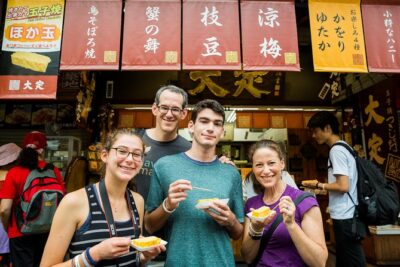
Tokyo Tsukiji Fish Market Food and Culture Walking Tour
Read our review →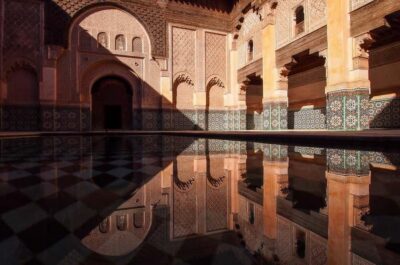
Ben Youssef, Secret Garden, & Souks Walking Tour
Read our review →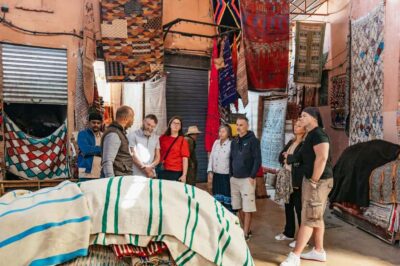
Air Raid Shelter + St. Nicholas Market Walking Tour
Read our review →

Nishiki Market Brunch Walking Tour (7 Tastings + Brunch)
Read our review →Tsukiji Fish Market Food and Culture Walking Tour
Read our review →Browse the lists this tour appears in