
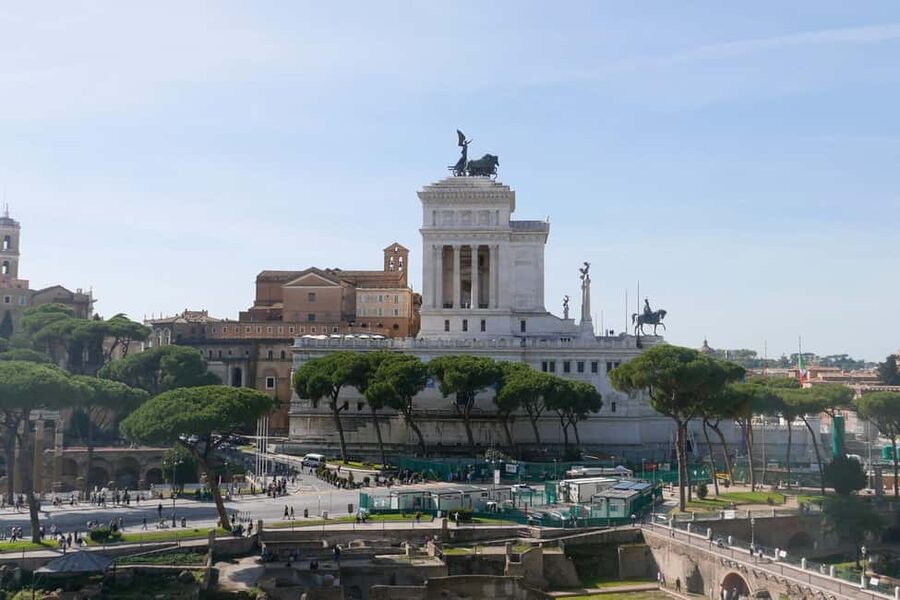
Review · ROME
Rome: Trajan’s Markets & Museum of The Imperial Fora Tour
Trajan’s Markets is one of Rome’s best answers to the question, What did daily life look like in the ancient city? Its multi-level halls, shopfronts, arches, and stairways show Roman commerce in a way a single monument cannot. I especially like the small-group limit of 10 and the views across the Imperial Fora from the upper levels.
I also like that the ticket includes both the archaeological site and its museum, with headsets so you can follow the guide in the echoing spaces. The main caution is physical: uneven surfaces and several stairs make this less suitable for anyone who tires easily, and the 90-minute pace may feel slow if you prefer a quick, fact-packed visit.
Key points at a glance
- Trajan’s Markets: Walk through the ancient multi-level complex often called the world’s first shopping mall.
- A daily-life angle: Learn how commerce, public life, and Roman building methods shaped the Imperial Fora.
- Museum access: See sculptures, inscriptions, and artefacts connected with the monumental forum complexes.
- Small or private groups: Choose a group of up to 10 people or a private visit.
- Clear meeting point: Meet at Trajan’s Column, opposite Santa Maria di Loreto, and look for the yellow Touriks sign.
- Practical limits: Large bags, food, drinks, pets, drones, and sharp objects are not permitted.
Why Trajan’s Markets deserve your time
Rome’s ancient sights often come in grand, isolated pieces: a column, an arch, a temple ruin. Trajan’s Markets gives you something different. Here, you move through a connected building with several levels, work areas, arches, corridors, and former shopfronts.
Calling it a shopping mall is useful, but only up to a point. The phrase helps you picture a large commercial center, yet this was also part of a much bigger imperial project. Trajan’s Markets was built beside Trajan’s Forum, one of the monumental public complexes created by Roman emperors.
The setting helps you read the city in three dimensions. Instead of looking at one wall and wondering what it was for, you can follow the shape of the structure and see how Roman builders handled height, weight, and movement. The surviving brickwork and broad arches make Roman engineering feel practical rather than abstract.
I find this especially useful if you have already seen the Colosseum and Roman Forum but want a closer look at how ordinary business and movement fit into the imperial city. The site does not present Rome only as a place of emperors and battles. It gives daily trade a place in the story.
More museum visits in Rome:
- Private Tour – Museum of the Imperial Forums in the Trajan Markets
★ 5.0 · 37 reviews - Dubai: Old Town, Creek, Museums, Souks, & Street Food Tour
★ 4.8 · 10,816 reviews - Cairo 8 Hour Private Tour of Pyramids, Egyptian Museum and Bazaar
★ 5.0 · 2,931 reviews
Starting beside Trajan’s Column
The tour begins in front of Trajan’s Column, by the iron gates opposite the church of Santa Maria di Loreto on Via dei Fori Imperiali. Look for a staff member holding a yellow Touriks sign.
This is a busy part of central Rome, so allow a little time to find the exact meeting point. The column itself is a useful landmark, but the road and surrounding ruins can make orientation less obvious than it looks on a map.
Starting here gives you an immediate visual introduction to Trajan’s building program. The column is not simply a meeting marker. It belongs to the same imperial setting as the markets and helps explain the scale of the complex you are about to visit.
Bring the passport or identity document used when booking. Each person must show a valid document with the same name supplied during reservation. That small detail matters at archaeological sites with controlled entry.
Walking through Trajan’s Markets
The main visit takes you through the multi-level structures of Trajan’s Markets. Expect grand arches, old shopfronts, stairs, and uneven ground. The site has been preserved well enough that the shape of the complex remains easy to follow, even though its original activity is long gone.
Your guide’s role matters here. Without explanation, you might see brick walls and assume you are looking at a warehouse or a series of ruins. With context, the spaces begin to suggest commercial life: goods moving through corridors, shops opening onto shared areas, and people using the building as part of a much larger public center.
The phrase world’s first shopping mall is a catchy shortcut, not a precise modern comparison. Still, it gives you the right starting image: a large purpose-built commercial structure with numerous spaces arranged within an impressive architectural complex.
Look up as you walk. The vertical design is one of the site’s most striking features. Ancient builders made use of arches and stepped construction to create strong, usable spaces on difficult ground. Two thousand years later, much of that framework still survives.
The stairs are part of the experience, but they also shape the visit. This is not a flat route through polished galleries. You should expect changes in level and surfaces that may be rough underfoot. Wear sensible shoes and take the moderate fitness warning seriously.
What the guide adds to the ruins
A live guide can connect three separate subjects that are easy to miss when visiting alone: architecture, commerce, and imperial power. The building techniques explain how the complex was made. The shop areas suggest how people used it. The wider forum setting shows why the project mattered to Rome’s rulers.
Headsets are included, which is helpful in open courtyards and echoing rooms. You do not need to stand shoulder to shoulder with the guide to catch every sentence, and a group of up to 10 should be easier to manage than a large coach tour.
The experience is available in English, French, German, Italian, Spanish, and Portuguese. A private option is also available if you want the guide’s attention directed only to your party.
One named guide, Francesca Massaccesi, received particularly strong praise for bringing the ancient site to life and explaining Roman history clearly. You can ask about guide availability when booking, but a specific guide cannot be assumed unless the operator confirms it.
The only mixed point to keep in mind is pace. One participant felt the explanation could have been more rapid and found parts of the visit slow. If you enjoy detailed historical interpretation, that may be a benefit. If you want to race from one ruin to the next, 90 minutes may feel long.
A few more market tours around Rome worth a look
- Rome: Colosseum, Roman Forum & Trajan’s Market Exterior Tour
★ 4.3 · 2,038 reviews - Taste of Testaccio: Special 15 Year Anniversary Edition
★ 5.0 · 1,658 reviews - Roman Food Tour with Visit to the Trionfale Food Market
★ 5.0 · 471 reviews - Authentic Roman Cooking Class & Market Experience
★ 5.0 · 363 reviews
Views across the Imperial Fora
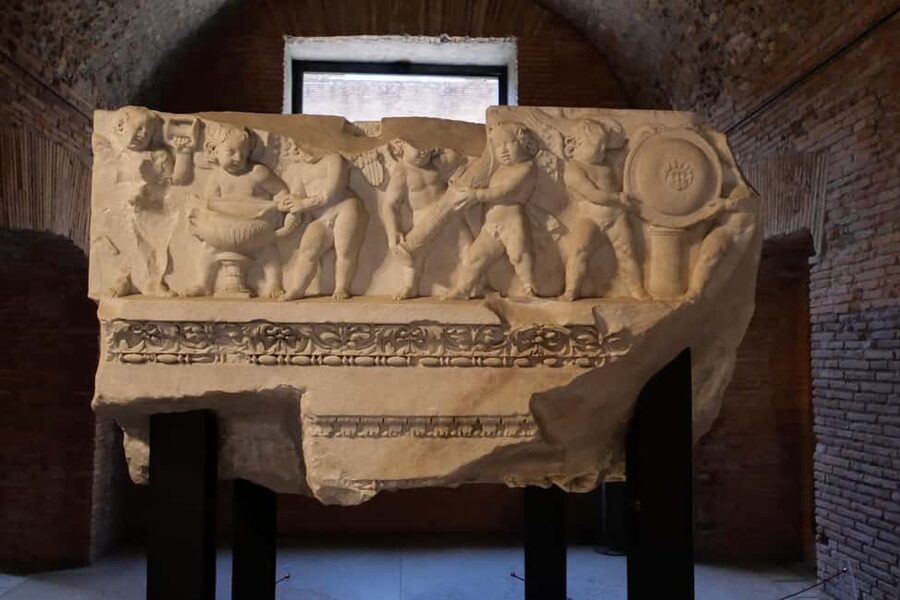
Trajan’s Markets has an excellent position for seeing the Imperial Fora from above and from unusual angles. You get views of surrounding ruins that are harder to understand from street level.
These outlooks help you connect the site to the broader Roman center. The forums were not a single open field. They were a series of monumental complexes associated with emperors and public life. From the markets, you can better appreciate how closely the structures worked together.
This is also one of the more useful places for photographs. The arches and brick walls provide strong foreground shapes, while the forum ruins spread out beyond them. Still, the visit is not a photography tour. Your guide will keep the group moving, and the architectural details deserve more attention than a quick phone snapshot.
Inside the Museum of the Imperial Fora
The museum adds objects to the buildings you have just seen. Its collection includes sculptures, inscriptions, and other artefacts connected with the Imperial Fora and the emperors who created them.
This part of the visit is valuable because ruins alone can leave questions unanswered. A fragment of an inscription can identify a ruler or project. A sculpture can suggest the public image an emperor wanted to present. Architectural pieces can show how grand buildings looked before time, weather, and later construction altered them.
The museum also gives you a quieter way to process the site. After walking through stairs and open archaeological spaces, you can study selected objects at closer range. Your guide can explain what the pieces reveal about the forums and the political world around them.
Accessibility is partial rather than complete. Three floors of the museum are accessible by wheelchair, while the lower two cannot be visited by wheelchair. A museum wheelchair is available for people with reduced mobility. The markets themselves have uneven surfaces and stairs, so contact the provider before booking if full access is important to you.
How much value do you get for $77?
At $77 per person, this is not a bargain-priced sightseeing stop. The price includes admission to Trajan’s Markets and the Museum of the Imperial Fora, a live guide, and headsets. It also buys you a relatively small group, with a maximum of 10 people, or a private format if you choose that option.
I think the value depends on how much help you want with interpretation. If you simply want to walk around the ruins, you may find the cost high. If you want the architecture, museum objects, emperors, and daily commerce tied together by a guide, the price is easier to justify.
The tour is also short. A 1.5-hour visit fits neatly into a day of sightseeing and does not consume half a day. That makes it useful between larger Rome attractions, though you should not expect an exhaustive visit to every Imperial Forum.
Important distinction: entry fees to, and a guided tour of, the Imperial Forums themselves are not included. This experience visits Trajan’s Markets and the Museum of the Imperial Fora. If you want a separate guided visit through the Imperial Forums, plan and budget for that on its own.
Who will enjoy this visit most
I would recommend this tour to you if you have already seen Rome’s famous headline sights and want a different view of the ancient city. It is also a good choice if you like architecture, urban planning, archaeology, or the practical details of how Romans built and used large public complexes.
Families with older children may appreciate the physical layout more than a static museum. The shopfronts, stairs, and high arches give the site a sense of movement. Younger children who need constant action may lose interest during the longer explanations, especially if your guide takes a measured pace.
History fans will get the most from the combination of site and museum. You can see the surviving structures, then examine objects that help explain the emperors and forums connected with them.
This is less suitable for anyone seeking an effortless stroll. Large bags are not allowed, and food and drinks cannot be taken in. Pets, drones, weapons or sharp objects, and alcohol or drugs are also prohibited.
Booking and timing tips
The tour runs at scheduled starting times, so check availability before planning the rest of your day. The meeting point is central, but you are responsible for reaching it. There is no hotel pick-up or drop-off.
Small groups are limited to 10 people. That is a useful middle ground: more personal than a large group, but usually less expensive than a private tour. If you want the guide to adjust the pace around your interests, the private option may suit you better.
You can cancel up to 24 hours ahead for a full refund, and the reserve-now, pay-later option keeps your plans flexible. Even so, check every name carefully at booking and bring matching identification.
Should you book Trajan’s Markets?
Book it if you want more than a quick photograph of ancient Rome. The strongest part of this experience is the way it joins a surviving building, a museum collection, and wide views of the forums in one compact visit.
The main tradeoff is physical effort and pace. Stairs and uneven surfaces are unavoidable, and a detailed guide may spend more time explaining than you expect. For $77, I would choose it when you value context and a small group, not when you only want inexpensive entry.
If Francesca Massaccesi is available, you can ask for her by name, since she has been singled out for clear explanations and an engaging presentation. Otherwise, the format still makes sense for anyone who wants to understand how Rome’s commercial spaces fitted into the larger imperial city.
FAQ
Where does the tour meet?
Meet in front of the iron gates of Trajan’s Column, opposite the church of Santa Maria di Loreto on Via dei Fori Imperiali, 00187 Rome. Look for a staff member holding a yellow Touriks sign.
How long does the tour last?
The tour lasts 1.5 hours.
What places are included?
The visit includes Trajan’s Markets and the Museum of the Imperial Fora.
Are the Imperial Forums included?
Entry fees to, and a guided tour of, the Imperial Forums are not included.
What is included in the price?
The price includes an expert live guide, entrance fees to Trajan’s Markets and the Museum of the Imperial Fora, and headsets to hear the guide clearly.
Is the tour available in English?
Yes. The available languages are English, French, German, Italian, Spanish, and Portuguese.
How large is the group?
You can choose a small group with a maximum of 10 people or a private option.
Is the tour wheelchair accessible?
The museum provides a wheelchair for people with reduced mobility. Three museum floors are wheelchair accessible, but the lower two cannot be visited by wheelchair. Trajan’s Markets has uneven surfaces, steps, and stairs.
What identification do I need?
Each person must present a valid passport or identity document matching the name provided at booking.
Can I cancel the reservation?
Yes. You can cancel up to 24 hours in advance for a full refund. You can also reserve now and pay later.
Just added around Rome
- Testaccio Experience: Street Food, Market and Traditions★ 5.0 · 4 reviews
- Rome: Temples, Squares & Markets Guided Walking Tour★ 4.8 · 26 reviews
- Rome: Testaccio Food & Market Tour with Pasta & Wine★ 5.0 · 38 reviews
- Rome: Taste of Testaccio Food & Market Tour★ 4.9 · 38 reviews
- Rome: The Vatican Market Experience Tasting and Class★ 4.7 · 10 reviews
- Rome: Market and Cooking Class at a Local’s Home★ 4.0 · 3 reviews
- Rome: Prati Food & Wine Market Tour with St. Peter Square★ 5.0 · 7 reviews
- Farmers Market Shopping and Roman Full Course Class – SHARED★ 5.0 · 12 reviews
Museums, compared.
Old Town, Creek, Museums, Souks, & Street Food Tour
Read our review →
Frida Kahlo VIP [Museum Tickets Included] Walk, Markets & Churros
Read our review →
Private Pyramids, Museum & Bazaar Tour with Lunch
Read our review →
The Egyptian Museum, the Citadel, Khan Khalil Bazaar & Old Cairo
Read our review →

Dubai.Discover Old town,Markets,street food,Abra &Museums
Read our review →
Cairo Full-Day Tours to Giza Pyramids ,Egyptian Museum & Bazaar
Read our review →
Cairo Sightseeing Tour (Giza Pyramids + Museum + Khan el Khalili Bazaar)
Read our review →Browse the lists this tour appears in