
Review · USA
San Francisco Technology and History Tour: South of Market
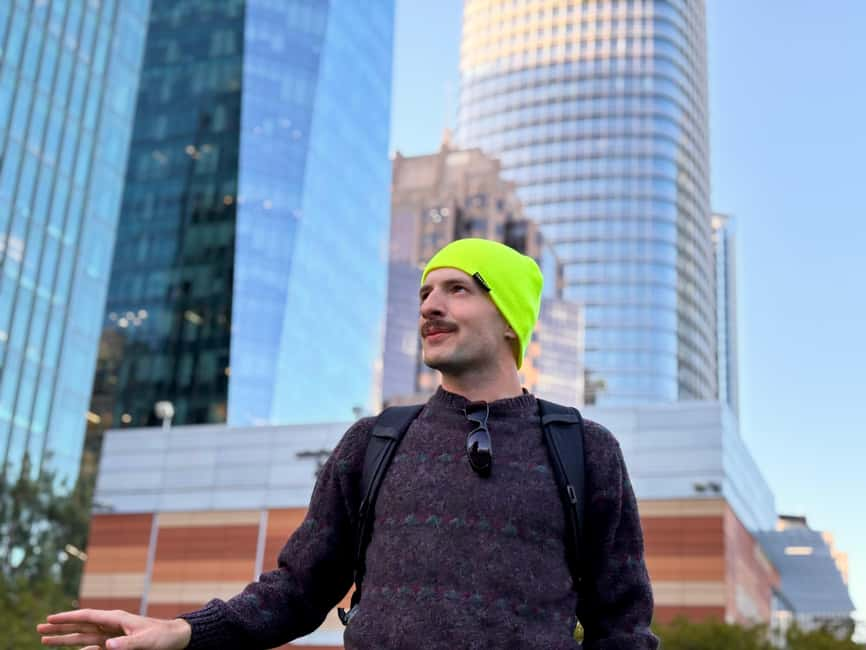
San Francisco’s South of Market neighborhood is where startup money, old shipping routes, refugee camps, industrial yards, and major city redevelopment all meet. This 70-minute walk makes that collision easy to understand, ending high above the streets at Salesforce Park.
I like the clear link between past and present, especially the way South Park’s changing roles explain why San Francisco became a startup center. I also like the route’s practical shape: a mostly flat walk, shade and seating early on, and a rooftop garden at the finish. The drawback is that this is a short urban history tour, not a broad sightseeing circuit, so you will spend much of the time discussing city development rather than visiting famous landmarks.
Key points to know before you book
- South Park traces several eras: gold rush camp, Gilded Age housing, earthquake refugee camp, Japanese community, industrial district, and tech center.
- Wes brings an insider’s view: he lives and works in the area and works with startups, adding personal context to the technology stories.
- Second Street connects tech to shipping: the route follows an old corridor leading toward Pacific Mail Steamship Company docks.
- Yerba Buena Gardens carries a difficult civic story: the park replaced a neighborhood whose residents were forced out during urban renewal.
- Salesforce Park gives the tour a strong finish: you get skyline and Bay views above one of San Francisco’s biggest recent building projects.
- The walk is practical for many visitors: it is wheelchair-accessible, mostly flat, conducted in English, and private groups are available.
South Park: where venture capital meets San Francisco’s older street plan
The tour begins in South Park, generally at 162 S Park St, though the exact meeting point can vary with the booking option. This small oval park feels calm compared with the larger streets nearby, and it gives you a useful place to get your bearings before the walk begins.
South Park was laid out in the 1850s in the style of a British garden square. That design makes it unusual in San Francisco, a city better known for steep streets and tightly packed blocks. Here, you get shade, seating, and a compact open space before moving into the denser parts of SoMa.
Wes spends about 10 to 15 minutes here. His approach ties the park’s physical setting to the many groups that have used it. South Park has been a gold rush encampment, a luxury development during the Gilded Age, a refugee camp after the 1906 earthquake, a center of San Francisco’s Japanese community, an industrial district, and now a hub for technology finance.
That sequence matters. You are not simply looking at an attractive old park. You are seeing a small piece of land repeatedly reshaped by money, migration, disaster, industry, and redevelopment.
The technology chapter is especially direct. In the 2010s, South Park housed the first offices of Instagram and Twitter. Today, the surrounding area is tied to venture capital and startup finance. Wes also works with startups, so he can explain the business side of the neighborhood from inside the technology world rather than treating it as a distant curiosity.
His use of historic photographs adds another useful layer. You can compare an earlier street scene with what is in front of you now, which makes the neighborhood’s changes easier to grasp. Several parts of the tour depend on that comparison, so this is a good experience for anyone who likes seeing how a city changes over time.
A few more market tours around the USA worth a look
- Chef Guided Food Tour of Pike Place Market
★ 5.0 · 3,733 reviews - Pike Place Market Tasting Tour
★ 5.0 · 1,696 reviews - Early-Bird Tasting Tour of Pike Place Market
★ 5.0 · 1,154 reviews
Second Street: from flattened hill to tech corridor
From South Park, you walk north along Second Street. The route is mostly flat, a welcome fact in a city famous for hills. SoMa is San Francisco’s flattest neighborhood, and this makes the tour easier for wheelchair users and for anyone who wants an informative walk without a strenuous climb.
Second Street has an important connection to San Francisco’s port and shipping economy. It linked the downtown area with the Pacific Mail Steamship Company’s docks, making it a working route rather than just another city block.
The street also marks one of the city’s earliest major land reclamation projects. A large hill was flattened to create room for the commercial corridor. That detail helps explain why SoMa feels different from nearby parts of San Francisco. You are walking through ground that was heavily altered to support trade and expansion.
The tour then connects that older commercial purpose with current technology companies. Second Street is home to LinkedIn, DoorDash, and Anthropic. Their offices are not presented as isolated company landmarks. Instead, they become examples of a newer economic chapter built along an older transportation and business route.
I like this part because it avoids a simple old-versus-new story. The street has not changed from commerce to technology in one clean break. It has continued to serve business, but the businesses, buildings, and people have shifted over time.
The walk also includes Folsom Street, which is known for its gay history. The information provided for the tour does not set out a long stop here, so you should expect it to be part of the broader route and discussion rather than a separate extended visit. Still, its inclusion shows that the tour treats SoMa as more than a technology district.
You will want comfortable shoes and clothes. The distance is modest, but you will be on foot for much of the 70 minutes, and the value comes from paying attention to the streets and buildings rather than rushing between stops.
Yerba Buena Gardens: a park built through urban renewal
The next major stop is Yerba Buena Gardens, where Wes discusses one of San Francisco’s largest urban renewal projects. Today, the gardens provide open space in the middle of downtown. The difficult question is what had to happen before that open space could be created.
The tour focuses on the people who lived in the area and the effects of their eviction. This gives Yerba Buena Gardens a political meaning that is easy to miss if you only come here for a break from office towers.
Urban renewal often sounds like a neutral planning term. Here, it becomes a story about decisions over land, housing, business, and whose needs count in a growing city. The changes around Yerba Buena helped shape San Francisco’s political climate, and the tour gives you a way to connect a pleasant public space with the residents who were displaced.
This stop is valuable because it adds balance to the technology story. San Francisco’s success in attracting companies and investment has always had a cost in land and housing pressure. You will not get only the optimistic version of redevelopment, and you will not get only a protest story either. The point is to understand how public projects alter daily life for people already living in an area.
The stop is guided and lasts about 15 minutes. Since the tour is only 70 minutes total, the discussion stays focused. If you want a long visit inside the gardens or nearby cultural attractions, you will need to return after the tour.
Salesforce Park: a rooftop finish above the old Tar Flat
The final stop is Salesforce Park, the rooftop garden above the Salesforce Transit Center. The tour ends at Salesforce Tower, near Market Street, with views toward the San Francisco skyline and the Bay.
This is an effective finish because it lets you look back at the city from above. After hearing about shipping routes, flattened hills, old neighborhoods, and new office development, you can see the scale of the modern downtown project in one view.
Salesforce is the clearest physical mark of the technology industry’s current power in San Francisco. The project is the city’s largest development in recent history, and it was built over the site of a former beachfront natural gas refinery.
The area also once held Tar Flat, identified here as one of the city’s poorest neighborhoods. That contrast is central to the tour. A rooftop garden and major transit project now sit above land connected to industry and poverty. The setting shows how quickly the city can replace one use of land with another, while also raising questions about who benefits from the change.
You also have the opportunity to see Klockar’s Blacksmith, which recalls the area’s early metalworking past. It is a small detail, but it gives the end of the tour a physical link to the industrial neighborhood that came before the office towers.
Salesforce Park is not just a viewpoint added for a nice finish. It brings together the main subjects of the walk: transportation, land reclamation, technology, public space, industrial work, and redevelopment. That makes the final stop feel connected to the earlier streets rather than tacked on.
More shopping tours in the USA:
- Center City Philadelphia Food Tour with Reading Market
★ 5.0 · 861 reviews - Seattle: Pike Place Market Chef-Guided Food Tour
★ 4.8 · 847 reviews - Chelsea Market and High Line Guided Food Tour
★ 5.0 · 827 reviews - Streetcar Food Tour and Findlay Market with Riverside Food Tours
★ 5.0 · 653 reviews
What Wes adds to the experience
Wes is the guide named for this experience, and his strongest quality is his connection to the neighborhood. He lives and works in the area, works with startups, and brings both local history and direct knowledge of the technology ecosystem.
That mix is useful. A guide who knows only startup culture might skip the port, industrial, and housing stories. A guide focused only on the past might not explain why companies choose this part of San Francisco today. Wes ties the two sides together.
His style is also described as kind, entertaining, and full of personality. That matters on a walking tour built around urban development, since planning history can become dry when it is reduced to dates and building names. Here, personal anecdotes and historic photographs help keep the discussion grounded.
The strongest praise centers on his ability to connect historical context, city development, and the startup world. One local participant even found the tour useful despite already knowing San Francisco. That suggests the experience is not aimed only at first-time visitors. You can book it as a visitor trying to understand SoMa, or as a local looking for a sharper explanation of familiar streets.
Price, timing, and who gets the best value
At $30 per person, the tour is reasonably priced for a 70-minute guided walk, especially because it covers several distinct subjects and ends at a major rooftop public space. You are paying less for entry tickets and more for interpretation, route planning, and access to a coherent story about one neighborhood.
The value is strongest if you want context. If you simply want a quick walk through SoMa with a few company names and skyline photos, you could explore the streets independently. But you would miss the links between South Park, the old port route, Yerba Buena Gardens, Tar Flat, and Salesforce Park.
The short duration also helps fit the tour into a busy San Francisco day. It starts in South Park and finishes near Market Street, where you have easy access to BART and MUNI. The Powell Street cable car is about a 15-minute walk away, so you can continue toward Union Square or other central sights after the tour.
The route is wheelchair-accessible, and the mostly flat streets make it one of the easier urban walks in San Francisco. You should still wear comfortable shoes, since the tour includes walking between the main stops and standing during discussions.
The experience is offered in English, and private groups are available. Cancellation is free up to 24 hours in advance, and you can reserve now and pay later, which helps if your San Francisco plans are still shifting.
Who should book this SoMa walk?
I would choose this tour if you are interested in how cities change, especially if technology, housing, transportation, and public space all hold equal interest for you. It suits visitors who have already seen the Golden Gate Bridge and cable cars and want a closer look at the city’s business center.
It also works well for people curious about San Francisco’s startup culture but who do not want a tour that treats technology as the whole story. The older shipping and industrial chapters give the companies a setting, while the urban renewal discussion adds a needed civic edge.
Families with older children may find the route useful because it moves through visible places and links them to clear stories. The walk is also a good choice for locals, business visitors, and private groups that want a short introduction to SoMa.
I would skip it if you are looking for a food tour, a long architectural tour, or a tour of San Francisco’s classic postcard sights. You will not spend this hour at the Golden Gate Bridge, Alcatraz, Chinatown, or the cable cars. This is a focused neighborhood walk about work, land, power, and change.
Should you book the San Francisco Technology and History Tour?
Book it if you want to understand why SoMa became central to San Francisco’s startup economy while remembering what occupied the land before today’s offices and rooftop parks. The combination of South Park, Second Street, Yerba Buena Gardens, and Salesforce Park gives the tour a clear beginning, middle, and end.
The best reason to go is Wes’s ability to connect his startup experience with the area’s older stories. You get a mostly flat, accessible route, useful transit connections at the finish, and a candid look at both the gains and costs of redevelopment.
At $30, it is a sensible buy for curious visitors and locals alike. Just bring comfortable shoes and expect an urban history lesson with views, not a general tour of all San Francisco.
FAQ
How long is the San Francisco Technology and History Tour?
The tour lasts 70 minutes.
Where does the tour begin?
It begins in South Park, with the listed starting location at 162 S Park St. The meeting point may vary depending on the option booked.
Where does the tour finish?
The tour ends at Salesforce Tower, near Salesforce Park and Market Street.
Is the walking route wheelchair-accessible?
Yes. The tour is wheelchair-accessible, and South of Market is described as San Francisco’s flattest neighborhood.
What language is the tour conducted in?
The live guided tour is conducted in English.
What should you bring?
Bring comfortable shoes and comfortable clothes. You will spend 10 to 15 minutes in South Park before walking north along Second Street.
Can I cancel the booking?
Yes. You can cancel up to 24 hours in advance for a full refund. You can also reserve now and pay later.
More Heritage Tours in the USA
- 2 Hour Historic Market Food Tour and Hands-On Biscuit Class
★ 5.0 · 251 reviews - 2-Hour Food, History and Street Art Tour of Ponce City Market
★ 5.0 · 159 reviews - Philadelphia Historic Centre Food Tour with 5 Authentic Tastings
★ 5.0 · 117 reviews - Atlanta: Historic Market Food Tour and Biscuit Cooking Class
★ 4.9 · 25 reviews
Just added around the USA
- Charleston International Sweet Treats & Historic City Market Tour★ 5.0 · 22 reviews
- Boston City Day Trip to Harvard University, MIT and Quincy Market★ 3.0 · 2 reviews
- Devour Boston: North End Guided Food Tour & Market Visit★ 5.0 · 101 reviews
- 4-hour Atlanta City Tour w/Ponce City Market Lunch Stop★ 4.5 · 8 reviews
- Private Atlanta Sightseeing Tour w/ Shopping and Lunch Stop at Ponce City Market★ 5.0 · 3 reviews
- Insider’s Breakfast and Culture Tour of Pike Place Market★ 5.0 · 6 reviews
- South Philly Tour: Market, Cheesesteaks & Hidden Gems★ 5.0 · 2 reviews
- Historic Tucson Walking Tour★ 4.6 · 17 reviews
Shopping Tours, compared.
Damnoen Saduak Market and Maeklong Railway Market
Read our review →
The Old Siam: Damnoen Saduak and Maeklong Railway Market
Read our review →
Train Market & Floating Market with Boat Ride
Read our review →
Ayutthaya & Ayothaya Floating Market Day Trip
Read our review →
Hanoi Cooking Class: Culture, Local Market & Meaning CSR Impact
Read our review →
5 Traditional Dishes Hanoi Cooking Class with Market Trip
Read our review →
Cooking Class and Lunch at a Tuscan Farmhouse with Local Market Tour from Florence
Read our review →
Cooking Class, Market & Thai Herbs Garden Tour
Read our review →Browse the lists this tour appears in