
Review · VALENCIA
Seafood paella cooking class, tapas and visit to Ruzafa market.
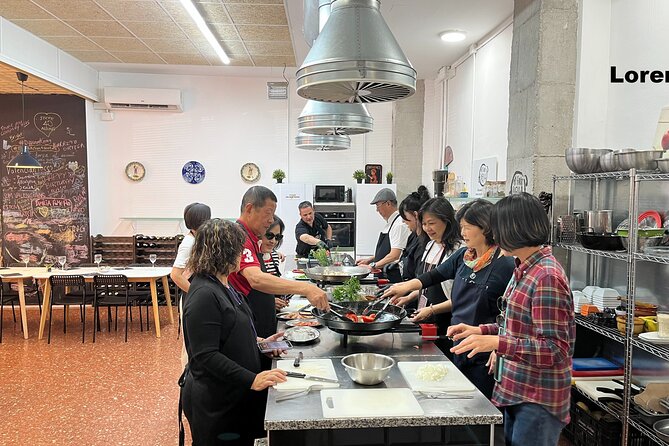
Valencia’s paella is not just a dish to order at a restaurant. It is a social ritual, a market trip, a long pan shared around a table. This 3.5-hour cooking class lets you see that process from the inside, starting with fresh ingredients at Ruzafa Market and ending with a paella you help prepare.
I like two things here. First, you shop for the seafood and produce before cooking, so the meal has a clear connection to the neighborhood. Second, the class is generous with food and drink: tapas, sangria, paella, salad, wine, dessert and coffee are all included. The main drawback is that the meeting point can be confusing, and the walk to the kitchen may be tiring for anyone with limited mobility.
Key points to know before booking
- Ruzafa Market comes first: You learn about paella ingredients, local food customs and Valencian culture while shopping.
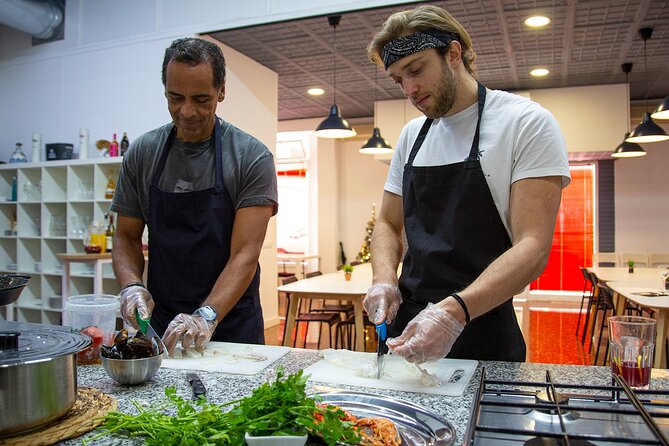
- Seafood paella is hands-on: You take part in preparing and cooking the dish rather than simply watching a chef.
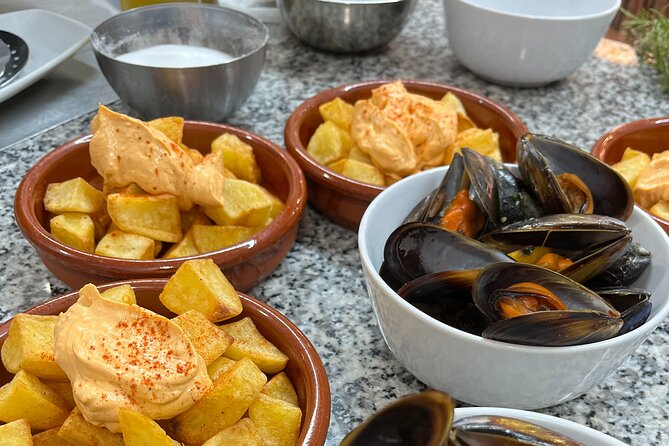
- Sangria and tapas set the tone: Patatas bravas, jamón serrano, Manchego cheese, mussels and olives arrive before the main cooking.
- The meal is unusually complete: Tomato salad, local wines, seasonal fruit, Valencian cake, sweet wine and coffee follow the paella.
- Groups can reach 20 people: Smaller groups feel more personal, but attention may vary when several paellas cook at once.
- Sunday is not a market day: Ruzafa Market is closed then, so the market portion is not available on Sundays.
Starting at San Valero Parish at 11 a.m.
The class begins at the door of San Valero Parish, Carrer del Pare Perera, 6, in Valencia’s L’Eixample district. The meeting time is 11 a.m., and the experience returns to this same general meeting point at the end.
I would arrive early. One person had trouble finding the exact meeting spot because the address did not make the location clear enough. The church steps are described as an easy, public place to meet, but give yourself a few extra minutes to identify the right entrance and find the guide.
The team may include English, Spanish or Russian-speaking guides. Several instructors have led the class over time, including Ana, José, Cristina, Valentin, Guillermo, John and Cris. The exact combination can change, but the teaching style is active and social. You are not expected to sit quietly while someone else cooks.
The stated maximum is 20 people. That is not tiny, though the class can feel much smaller when attendance is around eight to twelve. The cooking may be divided among several paella pans, with two or three instructors helping. That arrangement creates a friendly group atmosphere, but it also means your personal time at the pan can depend on the size of the class.
More Market Cooking Classes in Spain
- Barcelona: Paella Cooking Experience & Boqueria Market Tour
★ 4.8 · 3,661 reviews - Barcelona Paella Cooking Class with Market Visit, Tapas & Sangria
★ 5.0 · 2,531 reviews - Paella Cooking Class, Wine Tasting & Central Market in Valencia
★ 5.0 · 1,150 reviews
Ruzafa Market: buy the meal before you cook it
The first real stop is Mercado de Ruzafa, one of Valencia’s best-known neighborhood markets. You go there with the guide to purchase the fresh products needed for paella.
This part matters because it gives you a practical look at the dish before the recipe begins. You can see the seafood, vegetables and other ingredients in their market setting, then hear how they fit into Valencian cooking. The guide also explains the origins of paella and local customs as you move through the market.
The pace is not designed as a long market tour. It is a focused shopping visit tied to the meal. You might stop to discuss fish, ham, vegetables or other ingredients, and there may be small samples along the way. The useful part is the connection between what you see at the stalls and what later goes into the pan.
I also like the care taken with the market setting. A cooking group can easily block aisles or crowd a vendor’s stall. The guides split larger groups when needed and keep people moving so the market remains a working place for local shoppers, not just a stage for a tour.
That distinction gives the experience a more grounded feel. You are not only hearing about Valencian food. You are seeing where the ingredients are bought and how a local meal begins.
The market is closed on Sundays. This is the one day when the advertised visit to Ruzafa Market does not happen, so check your date before booking if the market is a major reason for choosing this class.
The eight-minute walk to the cooking kitchen
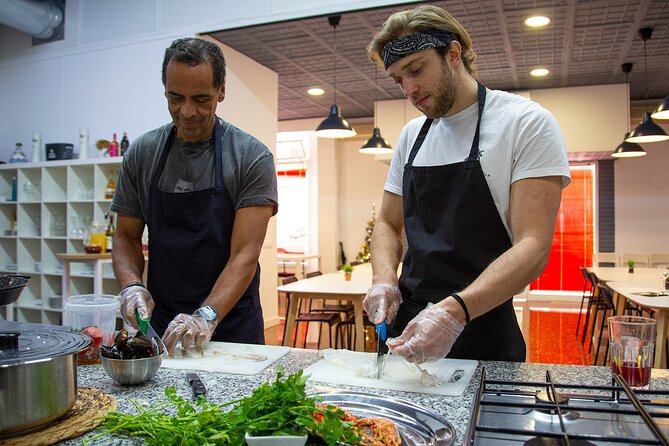
After shopping, the group walks about eight minutes to the kitchen. The distance is short on paper, but it is worth considering if you have mobility concerns. One participant described the walk as a bit of a hike, while another found the meeting point and market route easy.
The supplied information does not describe transport between the market and kitchen, so you should plan on walking. Wear comfortable shoes, especially if you are already spending the morning on foot around Valencia.
The kitchen is where the social side of the class really begins. The chef welcomes you with sangria and tapas, and beer, water, soft drinks and wine are also available. You do not need to wait until the paella is finished to eat. That is a welcome touch, since it turns the cooking period into a relaxed shared meal rather than a formal lesson.
Sangria, tapas and a proper Valencian welcome
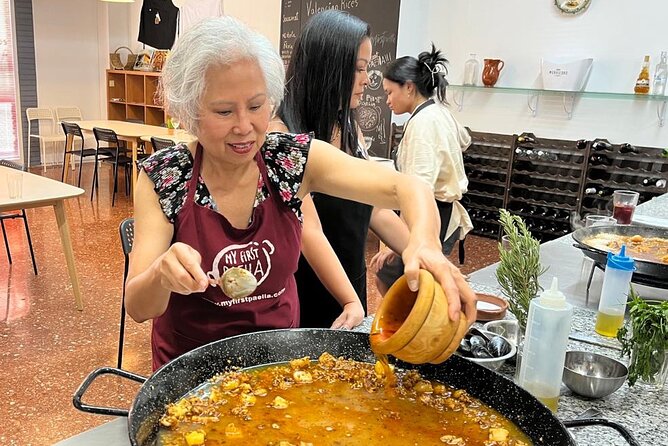
The sangria workshop comes before the paella. Cristina has taught this part in some classes, and the instruction is usually light, practical and hands-on. You learn how the drink is put together, then enjoy it with the opening food.
The tapas menu can include:
- Patatas bravas with sojanesa
- Jamón serrano
- Manchego cheese
- Steamed mussels
- Olives
This is more than a token snack. It gives you a sample of Spanish table food while the main dish is being prepared. The patatas bravas receive particular praise, and the combination of spicy potatoes, cured ham, cheese, mussels and olives makes the opening course feel generous.
Alcohol is a real part of the experience. Sangria, wine and beer are offered, and some classes have a lively drinking atmosphere. Water and soft drinks are also included, so you can pace yourself. If you prefer to keep alcohol modest, say so and choose water or a soft drink. The class does not depend on drinking to be enjoyable, but the mood can become quite festive.
Same stalls, a different way to shop and eat:
- Valencian paella cooking class, tapas and visit to Ruzafa market.
★ 5.0 · 828 reviews - Spanish Cooking Class & Triana Market Tour in Sevilla
★ 5.0 · 760 reviews - Seville: 3.5-Hour Spanish Cooking Class & Triana Market Tour
★ 4.9 · 751 reviews - Valencia: Paella Cooking Class with Central Market Tour
★ 5.0 · 721 reviews
Cooking seafood paella, one step at a time
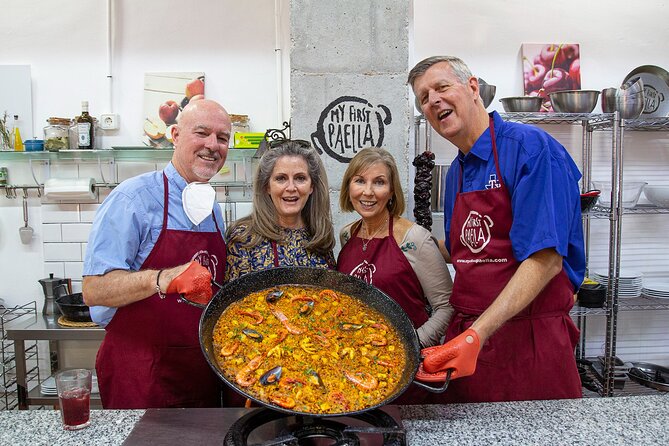
The core of the class is seafood paella. The chef explains the process in stages, from preparing the ingredients through cooking the rice and seafood. Everyone is given a role when possible, and you work alongside the chef rather than being treated as an audience.
That hands-on format is the main reason to choose this experience over a standard paella meal. You learn what each stage is doing and why timing matters. Several people leave with enough confidence to try the dish at home, which is a good test of a cooking class.
The instructors are energetic and often humorous. Ana, José, Cristina and Valentin are among the names associated with the teaching, and the class has a strong sense of teamwork. The chefs explain technique, answer questions and keep the pace easy enough for beginners.
You may also see other versions of paella cooking at the same time. Some sessions prepare seafood paella alongside traditional Valencian paella, often with chicken and rabbit, or a vegetable version. Watching the different pans can help you understand how the dish changes while its basic method remains connected.
There is one practical limitation. If two chefs are supervising three paellas, you may not receive one-on-one attention every minute. In a smaller group, this is less of a concern. In a full group, you will need to stay engaged, listen closely and take your turn when the chef calls for help.
The reward is the final taste. You helped prepare the pan, so the meal has more meaning than a restaurant plate. The class also makes clear that paella is built for sharing. The cooking, conversation and eating all happen around the same dish.
Sitting down to the meal you helped make
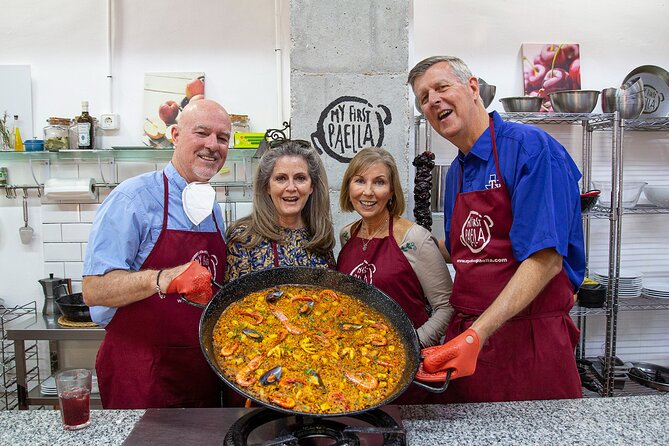
Once the paella is ready, the group sits down to eat. Seafood paella is served with Valencian tomato salad, followed by seasonal fruit, Valencian sponge cake, sweet wine and coffee.
The included menu makes the $78.64 price easier to understand. You are paying for a market visit, instruction, ingredients, equipment, a full meal and a long run of drinks. It is not the cheapest way to eat paella in Valencia, but comparing it with the price of a restaurant lunch misses the point. A restaurant gives you the finished dish. This experience gives you the meal plus the process, local context and cooking lesson.
The amount of food is also worth noting. Tapas come first, and the paella is followed by salad, fruit, cake, sweet wine and coffee. If you have a light appetite, pace yourself early. The meal is designed to last and to feel abundant.
The shared table is another strong feature. You cook with people from different places, then eat together. Several instructors work to make the group feel comfortable, and the atmosphere can become warm and informal by the end. That suits solo visitors, couples and friends who want an activity with conversation built in.
How authentic is the experience?
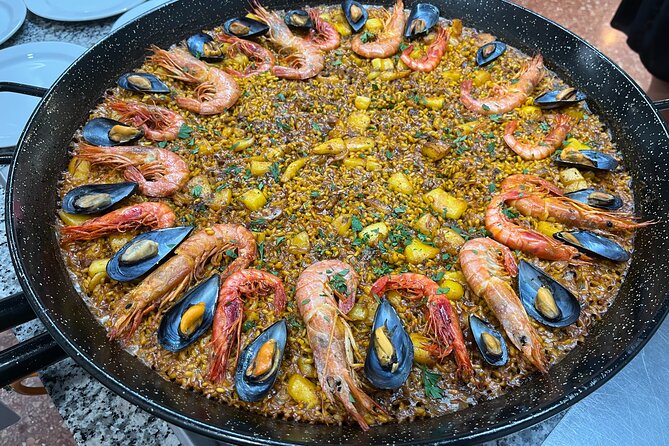
No short cooking class can reproduce a Valencian family gathering. Still, this one gets useful things right. It begins with a local market, treats paella as part of Valencian culture, uses fresh ingredients and explains the social importance of the dish.
The class also avoids presenting paella as a single fixed recipe. You may see seafood, meat and vegetable versions prepared at neighboring stations. That is helpful because paella changes from household to household, even while certain techniques remain important.
The best cultural detail is the explanation of paella as something that brings people together. You are not only memorizing ingredients. You are learning why the pan matters in Valencia and why the meal is meant to be shared.
Who will enjoy this class most?
I would choose this for anyone who wants more than a restaurant meal. It suits first-time cooks because the chefs guide each stage, and it also works for experienced home cooks who want to improve their technique.
It is especially good for:
- Couples looking for a social food activity
- Solo visitors who want an easy way to meet people
- Families with older children, provided children are accompanied by an adult
- Anyone interested in Valencian food and local markets
- Home cooks who want to recreate paella later
It may be less suitable if you want a quiet, private lesson or a very small chef-to-student ratio. It is also not ideal for anyone who finds an eight-minute walk difficult or prefers to avoid alcohol-centered social events.
The maximum group size of 20 keeps the activity lively, but not intimate by default. If you value personal attention, a smaller class will give you the best version of the experience.
Timing, price and cancellation details
The activity lasts about three and a half hours, beginning at 11 a.m. That takes up most of the middle of your day, so do not schedule a major museum visit or another fixed appointment immediately afterward.
At $78.64 per person, I see solid value if you plan to eat and drink normally during the session. The price includes tapas, the cooking lesson, all ingredients and equipment, sangria, wine, beer, soft drinks or water, tomato salad, dessert, coffee and mistela, a sweet wine. You are also getting the Ruzafa Market visit and the instruction.
Free cancellation is available up to 24 hours before the start time for a full refund. Changes or cancellations made less than 24 hours before the start are not accepted for a refund. The operator has canceled on occasion when staffing or low attendance made the class impossible, so keep your plans flexible if this is the only activity you have arranged for that day.
Should you book the seafood paella class?
Yes, if you want a friendly, food-focused introduction to Valencia. The strongest parts are the market shopping, hands-on cooking, generous meal and instructors who keep the lesson lively. You get a useful look at paella as both a recipe and a social tradition.
I would hesitate only if you need a highly private class, have difficulty walking, or want to avoid a group setting with plenty of drinks. For most visitors who enjoy food, conversation and practical cooking, this is a good-value half-day experience. Book it early if your schedule is fixed, since it is often reserved about a month ahead.
FAQ
Where does the paella class meet?
The class begins at the door of San Valero Parish, Carrer del Pare Perera, 6, in L’Eixample, Valencia. The start time is 11 a.m., and the activity ends back at the meeting point.
How long does the experience last?
The experience lasts approximately three hours and 30 minutes.
Is the Ruzafa Market visit included every day?
The market visit is included except on Sundays, when Ruzafa Market is closed.
What food and drinks are included?
The experience includes tapas, seafood paella, Valencian tomato salad, sangria, wine, beer, soft drinks or water, seasonal fruit, Valencian cake, sweet wine, coffee and mistela.
Is the cooking class offered in English?
Yes. The activity is offered in English. It may also be operated by a multilingual guide speaking English, Russian and Spanish.
What is the cancellation policy?
You can cancel up to 24 hours before the start time for a full refund. Cancellations or changes made less than 24 hours before the start are not accepted for a refund.
More Markets in Spain
- San Sebastian Pintxo Food, Wine & Market Foodie Tour(Small Group)
★ 5.0 · 621 reviews - Cap de Formentor: Market, Beach, and Alcudia Tour
★ 4.3 · 620 reviews - Ultimate Barcelona Food Tour with visit to a Local Market
★ 5.0 · 507 reviews - Interactive Paella & Market: Bottomless Wine & Rambla Views
★ 5.0 · 376 reviews
More Cooking Classes in Spain
- Barcelona: Paella Cooking Class with Market Visit and More
★ 4.9 · 711 reviews - Madrid Tapas & Paella Cooking Experience with Local Market Visit
★ 5.0 · 432 reviews - Half-Day Spanish Cooking Class & Boqueria Market Tour
★ 4.9 · 383 reviews - Alicante Paella Cooking Class, Tapas, Drinks and Market
★ 4.9 · 301 reviews
Just added around Spain
- Explore Bilbao’s Flavors Mercado de la Ribera and Old Town★ 4.5 · 3 reviews
- CERTAL Exclusive Tour: LA RIBERA Market + GASTROBARS Bilbao (3h)★ 4.5 · 12 reviews
- Barcelona La Boqueria & Sant Antoni Private Food Experience★ 5.0 · 7 reviews
- Spanish Oysters, Cava and Ibérico Ham at Barcelona’s La Boqueria Market★ 5.0 · 8 reviews
- Taste of Barcelona: Boqueria Market, Tapas & History Tour★ 4.5 · 22 reviews
- Barcelona Tapas Cooking & Cocktail Class with Veronique & Mattias★ 5.0 · 3 reviews
- Cook Paella & Tapas + Market Tour in Barcelona (4-Course Meal)★ 5.0 · 2 reviews
- Private Barcelona Market Tour & Paella Cooking Class with Josh★ 5.0 · 4 reviews
Market Cooking Classes, compared.
Hanoi Cooking Class: Culture, Local Market & Meaning CSR Impact
Read our review →
5 Traditional Dishes Hanoi Cooking Class with Market Trip
Read our review →
Cooking Class and Lunch at a Tuscan Farmhouse with Local Market Tour from Florence
Read our review →
Cooking Class, Market & Thai Herbs Garden Tour
Read our review →
Authentic Cooking Class with Market & Farm Visit
Read our review →
Paella Cooking Experience & Boqueria Market Tour
Read our review →
Cooking Class Hoi An:Local Market, Basket Boat, Fishing & Cooking
Read our review →Browse the lists this tour appears in