
Review · SIEM REAP
Siem Reap Cambodian Buddhist Water Blessing and Local Market
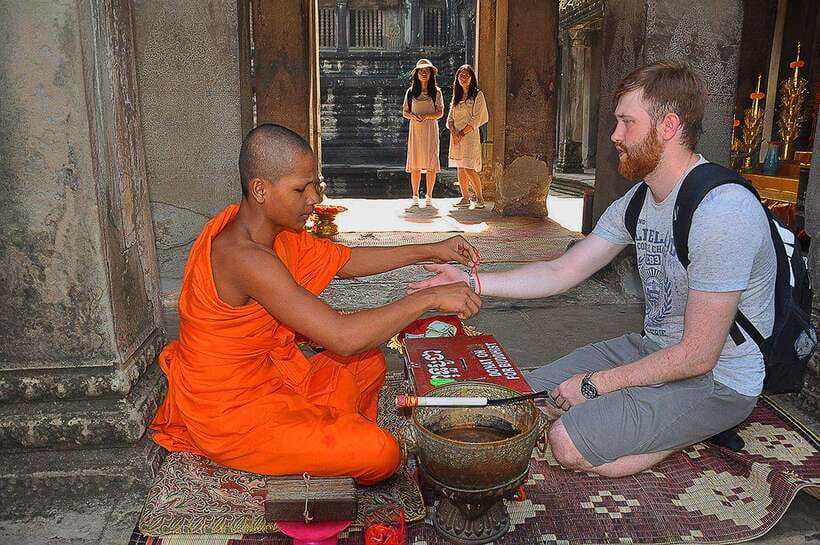
The heart of this two-hour outing is a Cambodian Buddhist water blessing, performed at a countryside pagoda south of Siem Reap. Monks chant for good luck, safe travel, and long life, then tie red cords around your wrist. It is a personal ritual, not a quick temple photo stop.
I like the choice between a light sprinkling and the longer head-pouring ceremony, and I like that the tuk-tuk ride ends at a local market rather than another major monument. The main thing to check is the temple name: the experience description calls the pagoda Wat Arang, while the route details name Wat Athvear Temple.
Key points to know before booking
- A real blessing, not a staged show: Monks perform chants and water rituals connected to Cambodian Buddhist practice.
- Two blessing options: Choose a brief sprinkling or a longer ceremony with blessed water poured over your head.
- Red wrist ties mark the ritual: Your blessing ends with special red cords tied around your wrist.
- Tuk-tuk transport keeps the outing local: Transfers connect central Siem Reap with the pagoda and market.
- A market visit adds everyday Cambodian life: You get about 40 minutes for a guided visit and photos.
- Mia Jorge is one guide name to look for: He was praised for fluent English, clear explanations, and strong cultural knowledge.
Why this short Siem Reap tour feels different
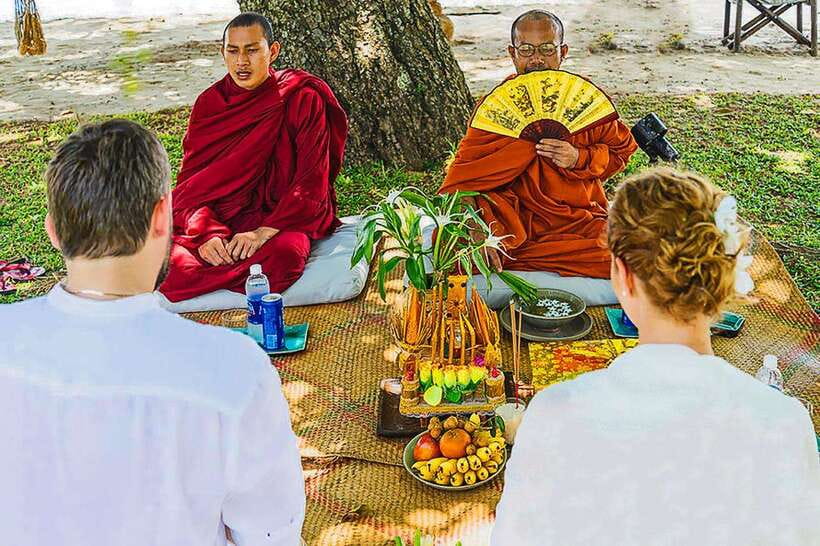
Siem Reap is famous for Angkor, but the temples are only one part of Cambodian culture. This experience shifts your attention from carved stone to living practice. You sit or stand near monks, listen to Buddhist chanting, receive water as a blessing, and leave with red ties on your wrist.
That difference matters. A temple visit can show you what Cambodia built centuries ago. A water blessing shows you a tradition still used today. The ceremony gives your morning or afternoon a human focus, especially if you want more than a standard circuit of famous ruins.
The tour lasts two hours, so it is easy to fit beside a longer Angkor visit. It is not a full religious study or an all-day village tour. Instead, it offers one clear ritual, one countryside temple stop, and a short look at local shopping life.
More Local Market Tours in Cambodia
- Siem Reap: Morning Bike Tours with Local Market & Lunch
★ 5.0 · 52 reviews - Siem Reap Cambodian Buddhist Water Blessing and Local Market
★ 5.0 · 13 reviews - Siem Reap Cambodian Buddhist Water Blessing and Local Market
★ 4.8 · 11 reviews
The tuk-tuk ride south from Siem Reap
Pickup is included from your hotel in Krong Siem Reap. You should wait in the lobby 10 minutes before your scheduled time, since the tuk-tuk transfer begins with roughly 15 minutes on the road.
The tuk-tuk is part of the experience rather than a minor transport detail. You are not sealed inside a large coach, and the short ride helps connect the town with the rural setting of the ceremony. The transfer is also brief enough that you do not lose much of your day.
The supplied route has three tuk-tuk legs: about 15 minutes to the temple, 10 minutes from the temple to the market, and 10 minutes back to Siem Reap. Those times add up to about 35 minutes of transport, leaving the rest of the two-hour schedule for the pagoda and market.
Do not expect a private car or a long scenic excursion. The value here comes from what happens at the stops, not from covering a large area. If you prefer air-conditioned transport or want a broad countryside tour, this may feel too simple. If you want an easy local outing, the tuk-tuk suits the plan.
At the pagoda, the ceremony becomes personal
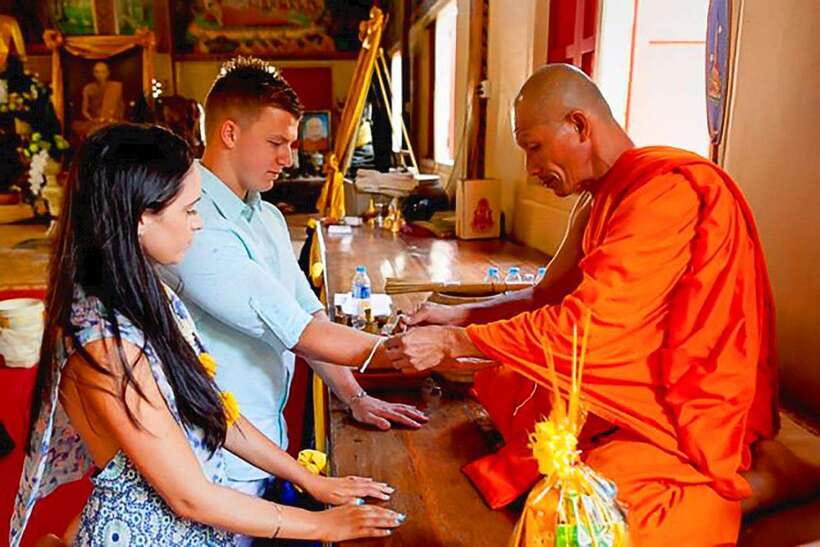
The pagoda visit takes about an hour. The experience description identifies Wat Arang Pagoda, while the route lists Wat Athvear Temple. Since both names appear in the supplied details, confirm the exact meeting destination and temple name when you book.
The important point is that the blessing takes place at an ancient pagoda in the countryside south of Siem Reap. The practice is described as dating back to ancient times, as old in tradition as the temples of Angkor. That gives the ceremony useful context: you are not simply watching a performance created for tourists, but taking part in a custom connected to Cambodian spiritual life.
Your English-speaking guide helps explain the Buddhist beliefs behind the ritual. That support is valuable because chanting, water, and wrist ties can seem mysterious if you do not know what they represent. The guide gives you a way to follow the meaning rather than just observe the action.
Guide Mia Jorge received especially strong praise for fluent English and clear explanations of history, spirituality, culture, and local life. Another assessment described the guide as prepared and good at explaining cultural matters. The guide can make a major difference here, since the ritual itself may be quiet and easy to misunderstand without context.
Choosing between the two water blessings
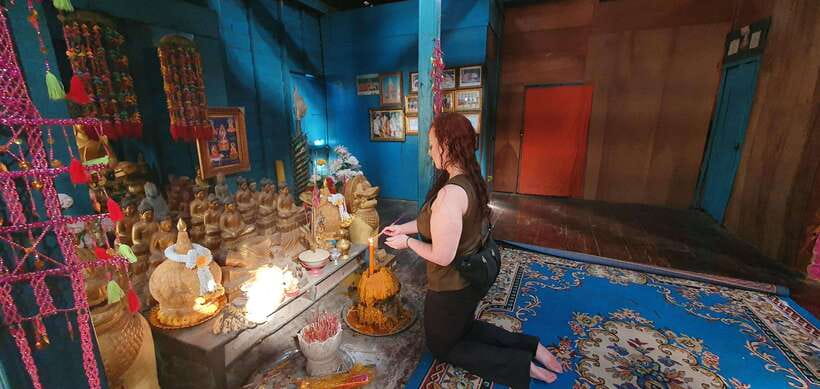
You can choose from two forms of blessing. The shorter option begins with monks chanting in harmony. Their wishes include good luck, safe travel, and a long life. As they chant, water is lightly sprinkled over you.
This first choice suits you if you want the ceremony but prefer to keep your clothing dry. It is also a good fit if your schedule is tight or if you feel more comfortable with a shorter ritual. The water sprinkling is gentle, yet it still gives the visit a clear beginning and ending.
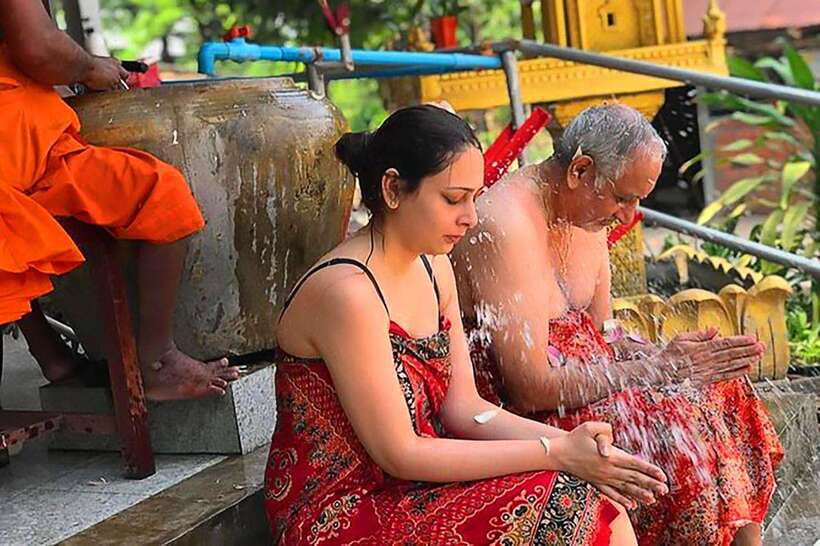
The second option is longer and more physical. Vessels of blessed water are poured over your head while the monks chant. You receive a sarong to change into, which protects your own clothing from the water.
The sarong is an important practical touch. You do not need to arrive with a spare outfit just for the ritual, although personal expenses are not included and the provided information does not specify what other items are supplied. The longer option gives you a stronger sense of participation, but it also requires you to be comfortable getting wet and changing into the sarong.
Neither option is presented as better for everyone. Choose the sprinkling if you want a simple blessing and dry clothes. Choose the longer ceremony if you want the most direct physical part of the experience and do not mind changing.
More produce and farmers markets in Cambodia:
- Phnom Penh Local Market & Morning Food Tour Include Drinks
★ 5.0 · 9 reviews - Siem Reap Khmer Cooking Class and Local Market Tour
★ 4.1 · 4 reviews - Phnom Phnom: Local Market & Culture Walking of City Tour
★ 5.0 · 3 reviews - Hanoi Cooking Class: Culture, Local Market & Meaning CSR Impact
★ 5.0 · 5,147 reviews
What the red wrist ties mean for your visit
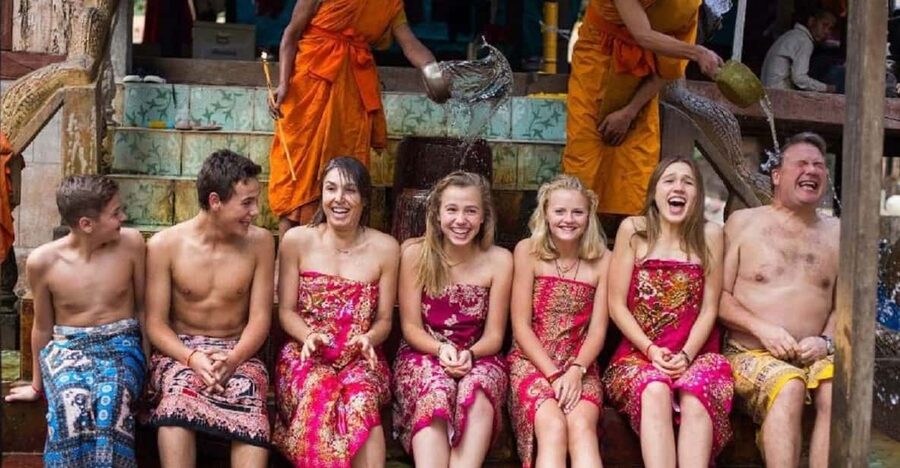
At the end of the blessing, the monks adorn your wrist with special red ties. They mark the blessing you have received and give you a small, lasting reminder of the visit.
The ties are also one reason this experience can feel more personal than a quick stop at a monument. You do not only look at a sacred place and leave. You take away a visible symbol connected to the ritual.
The provided information does not explain a separate meaning for the color red, so your guide is the right person to ask about the cord and the ceremony. That is another reason to listen closely during the pagoda visit. The best questions here are simple ones: what the chant means, when people receive blessings, and how the ritual fits into Buddhist life in Cambodia.
The local market adds an everyday stop
After the pagoda, you take another tuk-tuk ride of about 10 minutes to a local market. The market portion lasts about 40 minutes and includes a photo stop, a visit, and a guided tour.
This is a smart pairing. The pagoda offers a spiritual tradition, while the market gives you a look at ordinary local activity. You can shift from chanting and ritual to stalls, shopping, and daily commerce without committing to another large historical site.
The details of the market are not specified, so you should not book this expecting a particular food stall, craft, or product. Think of it as a guided local-market visit with time for photos, not as a cooking class or a dedicated shopping tour.
Your guide is useful here as well. A market can be confusing if you do not know what you are seeing or how local life connects to the goods on display. The guide can provide context and help you use the 40 minutes well.
The time is enough for an introduction, but it is not a long market exploration. If you enjoy slow browsing, haggling, or stopping at every stall, you may want more time than this tour allows. If you want a compact local stop after the blessing, the 40-minute visit keeps the outing moving.
What the $45 price includes
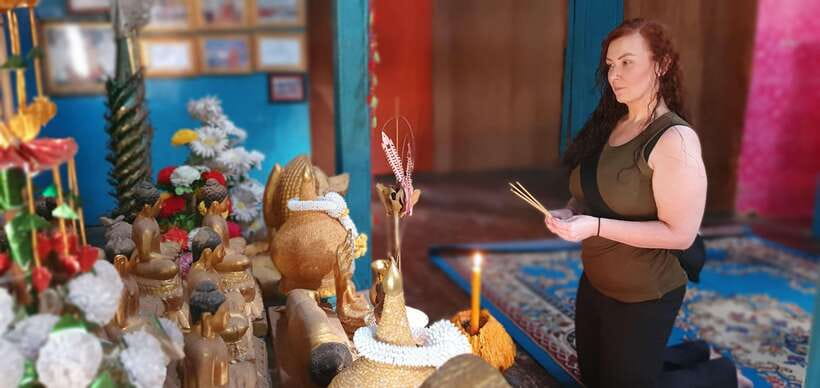
The cost is $45 per person. That covers the English-speaking guide, tuk-tuk transfers, the sarong for the longer water ritual, the donation to the pagoda, and the market visit.
The donation matters when you compare the price with a simple transport-only trip. Part of your payment supports the pagoda rather than treating the blessing as a free attraction. You also receive guide service and transport between three parts of the outing.
I see the strongest value in the combination of access and explanation. You could perhaps reach a temple by other means, but this price includes a guide who explains the ritual, the practical sarong for the longer blessing, and a market stop that would be harder to understand on your own.
Personal expenses are not included. Keep that in mind if you want to buy anything at the market. The available details do not state that food, drinks, or shopping are included, so plan to pay separately for anything you purchase.
At $45, this is not the cheapest way to fill two hours in Siem Reap. It can be good value if you specifically want a Buddhist blessing and cultural explanation. It is less attractive if you only want temple sightseeing or a general tuk-tuk ride.
Who will get the most from this experience
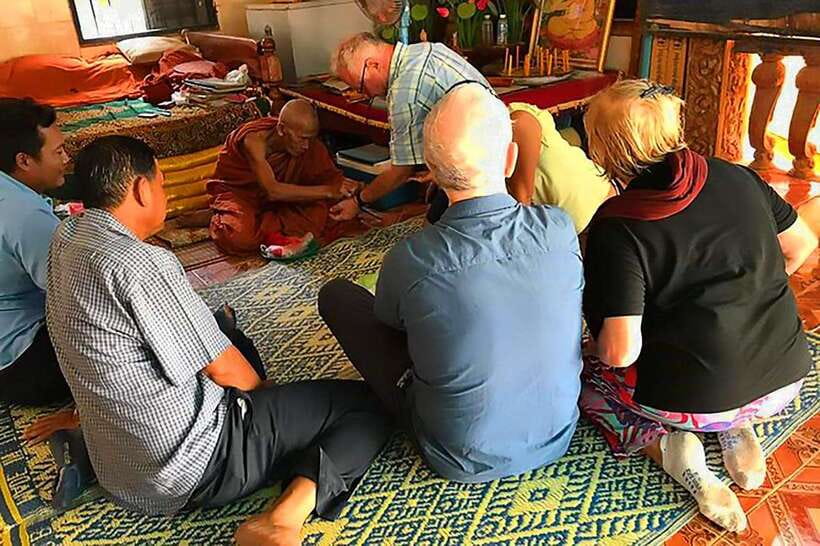
I would recommend this tour to you if you want a calm cultural activity alongside Angkor. It suits first-time visitors who want help understanding Cambodian Buddhist practice, as well as repeat visitors who have already seen the major temple sites.
It is also a good choice if you enjoy taking part rather than only taking photographs. The blessing is the center of the outing, so you need to be comfortable joining a religious ritual respectfully. You can choose the lighter option if you want a smaller commitment.
The tour may suit solo visitors particularly well because the guide supplies context and handles the transfers. Couples and small groups can also fit it easily into a packed Siem Reap schedule.
You may want to skip it if your priority is a long temple tour, a full countryside day, or extensive shopping time. The pagoda and market visits are focused and short. This is a compact cultural encounter, not a broad survey of the province.
Practical details that affect the experience
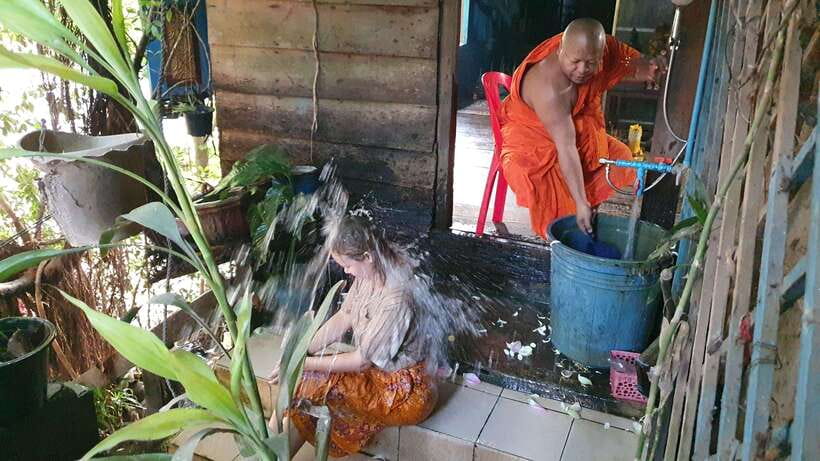
The activity is conducted in English. The guide’s role is especially important because the value comes from understanding what you are seeing and doing. The strongest guide feedback praised Mia Jorge for fluent English, preparation, and the ability to explain cultural and spiritual ideas clearly.
Wear clothing that makes it easy to participate respectfully at a pagoda. The supplied details do not give a formal dress code, so ask the guide if you are unsure. If you choose the longer blessing, you will change into the provided sarong so your clothes remain dry.
Remember that the longer blessing itself involves water being poured over your head. The short ritual only includes light sprinkling. Your choice affects both the feel of the ceremony and how much preparation you need.
The experience includes free cancellation up to 24 hours before the start time, with a full refund. You can also reserve now and pay later, which helps if your Siem Reap plans are still changing. Availability and starting times should be checked before booking.
Should you book the Siem Reap water blessing?
Book it if you want to meet Cambodia through a living ritual rather than only through monuments. The combination of monk-led chanting, a choice of water ceremonies, red wrist ties, and a local market gives you a clear cultural experience in only two hours.
The best reasons to book are the personal blessing, the English explanations, and the included pagoda donation and tuk-tuk transport. The main cautions are the short market visit, the lack of detail about what you will find there, and the Wat Arang and Wat Athvear naming difference that you should confirm in advance.
For $45, I think it is a fair choice for a visitor who values meaning and context. Pick the short sprinkling if you want a gentle introduction. Pick the longer water ritual if you want to participate more fully and do not mind changing into a sarong. If that sounds like your kind of Siem Reap afternoon, this small tour earns its place beside the temples.
FAQ
How long does the water blessing and market experience last?
The experience lasts two hours. The pagoda visit takes about one hour, the local market visit takes about 40 minutes, and the tuk-tuk transfers take about 35 minutes in total according to the stated route times.
What does the $45 price include?
The price includes an English-speaking guide, tuk-tuk transfers, a sarong for the longer blessing, a donation to the pagoda, and the market visit.
Where does pickup take place?
Pickup is included from Krong Siem Reap. You should wait in your hotel lobby 10 minutes before the scheduled pickup time.
What happens during the short blessing?
Monks chant while wishing you good luck, safe travel, and a long life. The chant is accompanied by a light sprinkling of water.
What happens during the longer blessing?
Monks chant while vessels of blessed water are poured over your head. You receive a sarong to change into so your clothing remains dry.
Do I receive anything after the blessing?
Yes. At the end of the ceremony, special red ties are placed around your wrist to signify the blessing.
Is the temple called Wat Arang or Wat Athvear?
The supplied details use both names. The experience description calls it Wat Arang Pagoda, while the route identifies Wat Athvear Temple, so confirm the exact temple name and destination before you go.
More Shopping Tours in Cambodia
- Battambang: Cooking Class and Market Touring
★ 4.8 · 80 reviews - 3 Hour Morning Market and Art Tour
★ 5.0 · 45 reviews - Kampot Pepper & Kep/Crab Market Tours: Salt, Secret lake
★ 4.7 · 33 reviews - Battambang: Cooking Class and Market Touring
★ 5.0 · 29 reviews
More Markets in Cambodia
- Kampot: Tuk Tuk Trip to Pepper Farm, Kep, Crab Market & More
★ 4.9 · 143 reviews - Phnom Penh’s Morning Market and Street Art Tour by Tuk tuk
★ 5.0 · 128 reviews - Phnom Penh Morning Market & Food Tour by Tuktuk – Includes All Food & Drinks!
★ 5.0 · 99 reviews - KAMPOT TRAVEL-Pepper farm. Cave.Secret lake-Crab market & Salt…
★ 5.0 · 87 reviews
Just added around Cambodia
- Siem Reap Khmer Cooking Class and Local Market Tour★ 4.1 · 4 reviews
- Siem Reap Morning Market & Food Tour by Tuk Tuk★ 5.0 · 2 reviews
- Siem Reap: FREE Market & Local Temple Tour★ 4.8 · 3 reviews
- Siem Reap: Morning Cooking Class & Market Tour★ 5.0 · 7 reviews
- Phnom Penh: Morning Foodie, Market Walking & Street Art Tour★ 5.0 · 3 reviews
- Siem Reap: Angkor Wat Sunrise and Market Tour by Jeep★ 5.0 · 5 reviews
- Phnom Phnom: Local Market & Culture Walking of City Tour★ 5.0 · 3 reviews
- Phnom Penh: Morning Market & Guided Breakfast Tour by Tuktuk★ 5.0 · 7 reviews
Local & Farmers Market Tours, compared.
Hanoi Cooking Class: Culture, Local Market & Meaning CSR Impact
Read our review →
Cooking Class and Lunch at a Tuscan Farmhouse with Local Market Tour from Florence
Read our review →
Cooking Class Hoi An:Local Market, Basket Boat, Fishing & Cooking
Read our review →
Hoi An Cooking Class(Local market,Basket Boat,Fishing & Cooking)
Read our review →
Old Dubai tour: Local Market, Tasting, Dubai creek with Abra ride
Read our review →
Half Day Easy Thai Cooking Class & Local Market Tour
Read our review →
Cancun Street Food Tour with Food Stalls, Local Market and Murals
Read our review →
Browse the lists this tour appears in