
Review · DA NANG
5 traditional dishes Da Nang cooking class with market trip
The best part of this Da Nang cooking class happens before the knives come out. You walk through Chợ Bắc Mỹ An, a nearby local market, with your instructor and help choose the produce, herbs, and other ingredients that will become lunch. That simple market stop gives the dishes a real sense of place.
I like the five-dish menu, which moves from spicy noodle soup to crisp bánh xèo, fresh rolls, salad, and avocado ice cream. I also like the friendly, patient teaching style reported from instructors including Blue, Bora, Chi, and Jenny. The main consideration is group size: the class can accept up to 30 people, and some preparation may be shared rather than completed entirely by you.
Key points at a glance
- Market visit at Chợ Bắc Mỹ An: Shop for ingredients and see how local produce is sold before cooking.
- Five Central Vietnamese dishes: Prepare bún bò Huế, bánh xèo, tam hữu fresh rolls, young jackfruit salad, and Da Nang avocado ice cream.
- Vegetarian flexibility: The menu can be adjusted for vegetarian needs.
- Four-hour format: The class includes the market, cooking, eating, conversation, and a recipe book.
- Friendly instruction: Blue, Bora, Chi, and Jenny are among the instructors praised for clear demonstrations and patient help.
- Take-home extras: You receive a cookbook and certificate, with fruit, rice vodka, coffee, and tea included.
Why the market visit matters in Da Nang
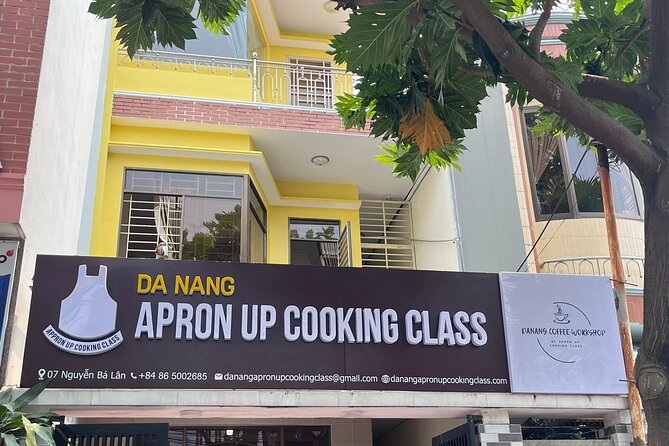
Meet at 07 Nguyễn Bá Lân, in the Bắc Mỹ An area of Ngũ Hành Sơn, about 10 minutes before the start. From there, the group visits Chợ Bắc Mỹ An, a local market close to the cooking school.
This is not just a quick stop to buy a bag of ingredients. Your instructor explains the produce and helps you understand what goes into each dish. For a first visit to Vietnam, the market can be as useful as the cooking itself. You get a look at the raw materials behind familiar foods, rather than meeting them only after they have been chopped, seasoned, and plated.
The market is also a good setting for questions. You can learn which herbs are used in Central Vietnamese food, how vegetables are selected, and why a dish needs a particular balance of fresh, salty, sour, sweet, or spicy flavors. The supplied information does not promise a long market tour, so think of it as a focused ingredient-shopping visit rather than a full food tour.
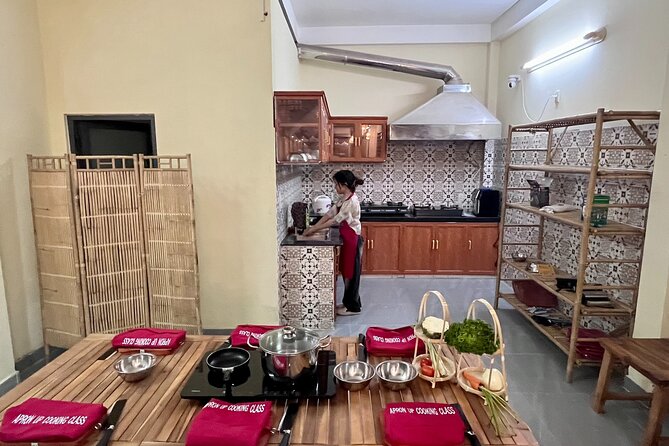
Bring comfortable shoes and keep your hands free. You will be moving through a working food market, then returning to the kitchen for the main part of the class. The tour includes ingredients and tools, so you do not need to arrive with cooking equipment.
More Market Cooking Classes in Da Nang
- 5 Dishes Cooking Class with Market Trip in Da Nang
★ 5.0 · 466 reviews - Da Nang Cooking Class with Coffee Tasting and Market Visit
★ 5.0 · 310 reviews - Market Tour, Basket Boat Ride & Cooking Class by Hangcoconut
★ 4.8 · 95 reviews
Bún bò Huế brings Central Vietnam to the table
The menu begins with bún bò Huế, the beef noodle soup associated with Huế, the former imperial capital north of Da Nang. It is a useful choice for a class because it shows how Central Vietnamese cooking builds flavor through broth, noodles, meat, herbs, and seasoning.
You should expect this dish to involve group preparation. One of the less positive points from the supplied feedback was that the soup was made as a shared recipe, rather than each person preparing a separate pot. That approach makes sense for a soup that needs coordinated work, but it does mean your individual hands-on time may vary.
Still, learning the process is valuable. You see how a dish served in restaurants is assembled and can ask about the parts that matter most at home. The class is aimed at different skill levels, so you do not need experience with Vietnamese cooking to follow along.
Bánh xèo is the hands-on highlight
Bánh xèo is the crisp Vietnamese pancake made with a savory batter and fillings. It is one of the most practical dishes on the menu because the cooking depends on technique as much as ingredients.
You learn how to create a thin, browned pancake and how to handle it without losing its crisp edges. Several comments specifically praised the chance to learn the details behind getting the pancake properly browned. That is the kind of small lesson you can use again in your own kitchen.
This is also the dish that may appeal most to children and first-time cooks. Instructors have been praised for working patiently with children around 10 and 13 years old, explaining each step without making the class feel stiff. Still, hot pans and cooking oil require attention, so younger children will need close supervision.
Fresh rolls and jackfruit salad add contrast
Tam hữu fresh rolls provide a change of pace from the hot pan. The dish is built with fresh ingredients and rice paper, giving you practice with soft wrappers and careful rolling.
Rice paper can be awkward at first. One piece of feedback described a roll that fell apart and lacked much flavor. That is a fair warning, not a reason to skip the dish. The rolling technique takes a little care, and the final result depends on keeping the filling balanced and not overloading the wrapper.
The young jackfruit salad brings another Central Vietnamese ingredient into the class. It is a useful chance to try something you may not order on your own. The menu has a good rhythm here: soup, pancake, fresh roll, and salad each use different textures and cooking methods.
The class menu has also been described as flexible for dietary needs. Vegetarian adjustments are available, though you should raise your requirements when booking or before the class begins so the instructor can plan the substitutions.
More Market Cooking Classes in Vietnam
- Home Cooking Class: Market, Garden and cooking 4 dishes
★ 5.0 · 61 reviews - Da Nang Cooking: Market tour, farming, and cooking class
★ 4.8 · 13 reviews - Hanoi Cooking Class: Culture, Local Market & Meaning CSR Impact
★ 5.0 · 5,147 reviews - 5 Traditional Dishes Hanoi Cooking Class with Market Trip
★ 5.0 · 4,890 reviews
Finish with Da Nang avocado ice cream
Da Nang avocado ice cream is the dessert option. It is a distinctly local finish and gives the menu a sweet, cool course after several savory dishes.
The class also includes fruit, coffee or tea, and rice vodka. The rice vodka is part of the social meal at the end, so anyone who does not drink alcohol can simply skip it. The important point is that you eat the food made during the class, rather than rushing off as soon as the final dish is done.
Some classes give you only a taste of what you prepared. Here, the advertised format includes lunch and dinner, though the practical meal is the banquet created during the session. Expect a generous shared meal rather than five separate restaurant-sized portions prepared entirely by you.
What the four-hour schedule feels like
The experience takes about four hours, which is long enough to include the market without turning the cooking into a rushed demonstration. You meet at the listed address, visit the market, return to the kitchen, prepare the dishes, and sit down to eat.
The pace will depend on the group. A small group can allow more personal attention, while a larger class may require shared tasks and more waiting between steps. The activity has a maximum of 30 people, although some supplied feedback describes a group of six. That means you should not assume every date will feel like a private lesson.
The instructors are a major part of the experience. Blue is described as warm, patient, and easy to connect with. Bora is praised for guiding the recipes and leading the market visit. Chi is described as a strong teacher who demonstrates techniques clearly, while Jenny is thanked for a hands-on class. Since staff assignments can vary, you may not have a particular instructor on your date.
English-language communication is important in a cooking class, and the available feedback points to clear explanations and good language skills. That matters when a recipe depends on timing, heat, texture, or the feel of rice paper.
The food is the value, not just the lesson
At $39 per person, the class offers more than a standard cooking demonstration. The price covers the market visit, ingredients, tools, instruction, the prepared meal, drinks and fruit, a cookbook, and a certificate.
I would judge the value by what you take away. You get a practical introduction to five dishes, a look at local shopping, and recipes you can try at home. The cookbook is described as concise, with the dishes prepared in class plus some additional recipes.
The price is especially reasonable if you planned to eat lunch or dinner out anyway. You are replacing one meal with a four-hour activity that includes food and cultural context. It is less compelling if you want a tightly controlled private lesson where every dish is made individually by each participant.
The strongest value comes from the range of techniques. You are not spending the whole class on one bowl of noodles. You work with broth, batter, frying, fresh wrapping, salad preparation, and dessert. That variety helps you understand Central Vietnamese food as a group of cooking methods, not just a list of famous dishes.
Where the format may frustrate serious home cooks
The class is designed for a shared social setting. You cook with other people, eat together, and chat with the instructor about local life. That makes it a good choice for solo visitors and couples who want an easy way to meet people.
It also creates limits. You may not personally prepare every component from start to finish. The soup can be a group recipe, and other dishes may involve shared plating or division of tasks. One piece of feedback specifically preferred classes where each participant prepared and plated every dish separately.
If you are an experienced cook looking for technical depth, ask yourself what you want from the session. You will likely get useful methods, local ingredients, and practical guidance, but not a private chef lesson tailored to your exact skill level.
For most people, the shared format is part of the fun. It keeps the class relaxed and gives you a chance to compare results, laugh over a troublesome rice-paper roll, and sit down to a meal that the whole group helped create.
Who should book this Da Nang class
I would recommend it to first-time visitors who want a direct introduction to Central Vietnamese food. The market makes the experience more grounded than a class that begins inside a cooking school, and the five dishes give you a broad taste of the region.
Families can also consider it. The instructors have been praised for helping children around 10 and 13, and the menu includes enough variety to keep young cooks interested. Parents should still expect a working kitchen with hot pans and adult-level tasks.
It suits vegetarians because the menu can be adjusted. You should communicate your needs in advance, since the exact substitutions are not specified.
It is also a good match for solo visitors. The meal, market stop, and group cooking create natural chances to meet people without requiring you to plan a separate social activity.
You may want another option if you need private transport, a private group, or a class where everyone independently prepares and plates all five dishes. The meeting point is the cooking school at 07 Nguyễn Bá Lân, and the experience ends back there, so transport to and from the address is not described as part of the activity.
Practical details before you reserve
The mobile ticket is useful for keeping the booking on your phone. Confirmation is received at the time of booking, and the experience is near public transportation.
Arrive 10 minutes early at 07 Nguyễn Bá Lân, Bắc Mỹ An, Ngũ Hành Sơn, Da Nang 550000. The activity begins and ends at this address.
The provider allows service animals. The maximum group size is 30, though the feel of the class may be smaller on some dates. If group size matters to you, ask before booking rather than assuming a small class.
Free cancellation is available if you cancel at least 24 hours before the local start time. Cancellations inside that window are not refunded, and changes are not accepted. The class also requires a minimum number of participants. If the provider cancels for that reason, you are offered another date or experience, or a full refund.
Should you book it?
Book this class if you want to understand Da Nang food through ingredients, technique, and a shared meal. The local market visit, five-dish menu, patient instructors, cookbook, and flexible vegetarian format give it more substance than a quick recipe demonstration.
Go in expecting a friendly group class, not a private kitchen apprenticeship. Some tasks may be shared, and the experience can accept as many as 30 people. For most visitors, the chance to shop at Bắc Mỹ An, cook bánh xèo and bún bò Huế, try a local jackfruit salad, and finish with avocado ice cream makes the $39 price a solid deal.
FAQ
Where does the cooking class begin?
The class begins at 07 Nguyễn Bá Lân, Bắc Mỹ An, Ngũ Hành Sơn, Da Nang 550000, Vietnam.
How long does the experience last?
The cooking class lasts approximately four hours.
Which market does the class visit?
The group visits Chợ Bắc Mỹ An to learn about local produce and buy ingredients for the cooking session.
Which dishes are included?
The menu includes bún bò Huế, bánh xèo, tam hữu fresh rolls, young jackfruit salad, and Da Nang avocado ice cream. A vegetarian version is available for vegetarians.
Is food included?
Yes. The activity includes the meal prepared during the class, as well as fruit, coffee or tea, and rice vodka.
Are cooking tools provided?
Yes. Cooking tools are included.
What do I receive after the class?
You receive a cookbook and a certificate after completing the experience.
Can I cancel for a full refund?
Yes, if you cancel at least 24 hours before the experience start time. Cancellations made less than 24 hours in advance are not refunded.
More Markets in Da Nang
- Guided Tour to Marble Mountains & Hoi An Walking Tour , Night Market, Boat Ride
★ 5.0 · 218 reviews - Hoi An Night Market with Hoi an walking Tour , Colourful Lanterns, Boat Ride
★ 5.0 · 142 reviews - Da Nang By Night: Seafood dinner, night market and cruise trip
★ 5.0 · 38 reviews - Da Nang: Making 5 Vietnamese dishes with Local Market Trip
★ 4.9 · 36 reviews
More Cooking Classes in Da Nang
- Cooking Class and Lunch at a Tuscan Farmhouse with Local Market Tour from Florence
★ 5.0 · 4,831 reviews - Chiang Mai: Cooking Class, Market & Thai Herbs Garden Tour
★ 4.9 · 4,824 reviews - Chiang Mai: Authentic Cooking Class with Market & Farm Visit
★ 4.9 · 4,546 reviews - Barcelona: Paella Cooking Experience & Boqueria Market Tour
★ 4.8 · 3,661 reviews
Just added around Da Nang
- From Da Nang: Hoi An Old Town Tour, Night Market & Boat Ride★ 4.5 · 35 reviews
- Da Nang: Con Market And Seafood Street Experience★ 5.0 · 2 reviews
- Da Nang Cooking: Market tour, farming, and cooking class★ 4.8 · 13 reviews
- Da Nang: Making 5 Vietnamese dishes with Local Market Trip★ 4.9 · 36 reviews
- Home Cooking Class: Market, Garden and cooking 4 dishes★ 5.0 · 61 reviews
- Private luxury Ba Na Hills & Hoi An Walking Tour, Night Market★ 5.0 · 22 reviews
- Guided Tour to Coconut Village,Basket Boat ride,Hoi An Walking Tour,Night Market★ 5.0 · 17 reviews
- Market Tour, Basket Boat Ride & Cooking Class by Hangcoconut★ 4.8 · 95 reviews
Market Cooking Classes, compared.
Hanoi Cooking Class: Culture, Local Market & Meaning CSR Impact
Read our review →
5 Traditional Dishes Hanoi Cooking Class with Market Trip
Read our review →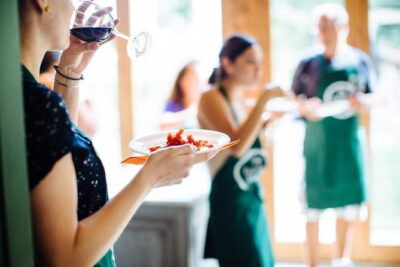
Cooking Class and Lunch at a Tuscan Farmhouse with Local Market Tour from Florence
Read our review →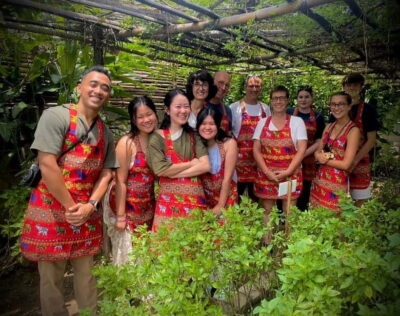
Cooking Class, Market & Thai Herbs Garden Tour
Read our review →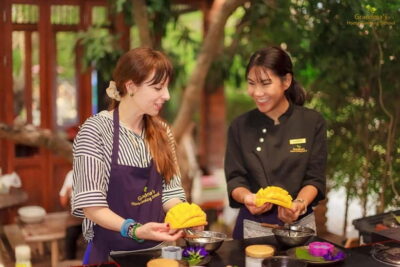
Authentic Cooking Class with Market & Farm Visit
Read our review →
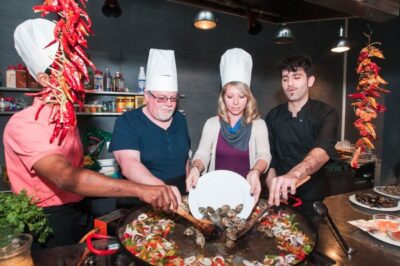
Paella Cooking Experience & Boqueria Market Tour
Read our review →
Cooking Class Hoi An:Local Market, Basket Boat, Fishing & Cooking
Read our review →Browse the lists this tour appears in