
Review · DA NANG
Da Nang Cooking: Market tour, farming, and cooking class
Da Nang Cooking puts you to work from the start. You help with simple farm tasks, visit a local market, then cook four Vietnamese dishes with an English-speaking guide. The food is the reward, but the real value is learning how everyday ingredients move from soil and market stall to your plate.
I like the small class size of 14, which gives you a fair chance to chop, mix, fold, and cook instead of standing behind someone else. I also like the choice between a short cooking class and a four-hour program that adds farming and market visits. The main consideration is price: at $25 per person, it costs more than a basic cooking lesson, though the longer option includes several separate activities.
Key points at a glance
- Start with the farm: Planting and watering give you a simple look at how Vietnamese vegetables are grown.
- Shop before you cook: The market visit introduces ingredients you may not recognize and connects the dishes to daily life in Da Nang.
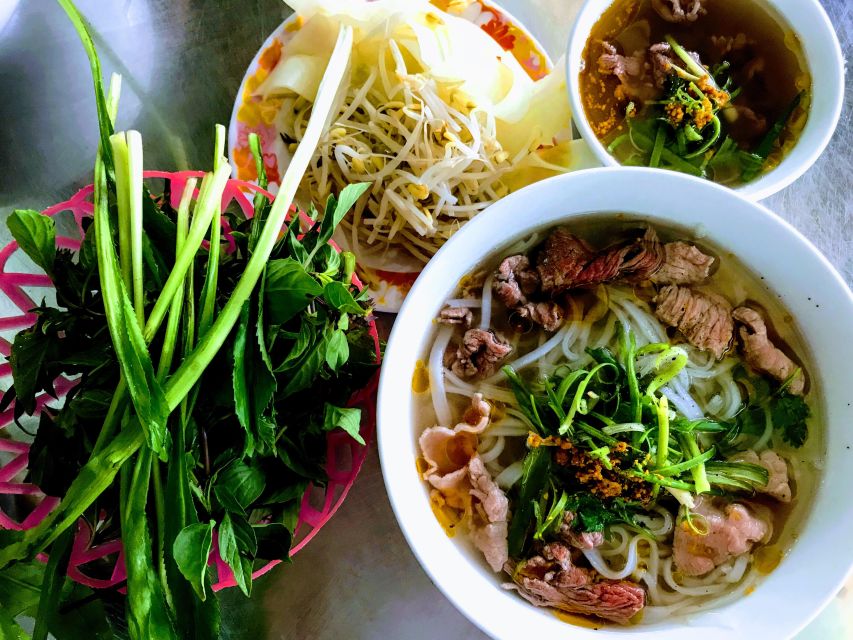
- Cook four dishes: Menus include Pho, Banh Xeo, spring rolls, salads, Quang noodles, and other Vietnamese favorites.
- Choose your pace: The cooking-only option lasts 2.5 hours, while the full farm, market, and cooking program lasts about four hours.
- Menus change by day: Check the schedule before booking if you have your heart set on Pho, Banh Xeo, or Quang noodles.
- Vegetarian food is available: The vegetarian menu includes a noodle dish, eggplant, salad, and fried or fresh spring rolls.
A farm visit before the cooking begins
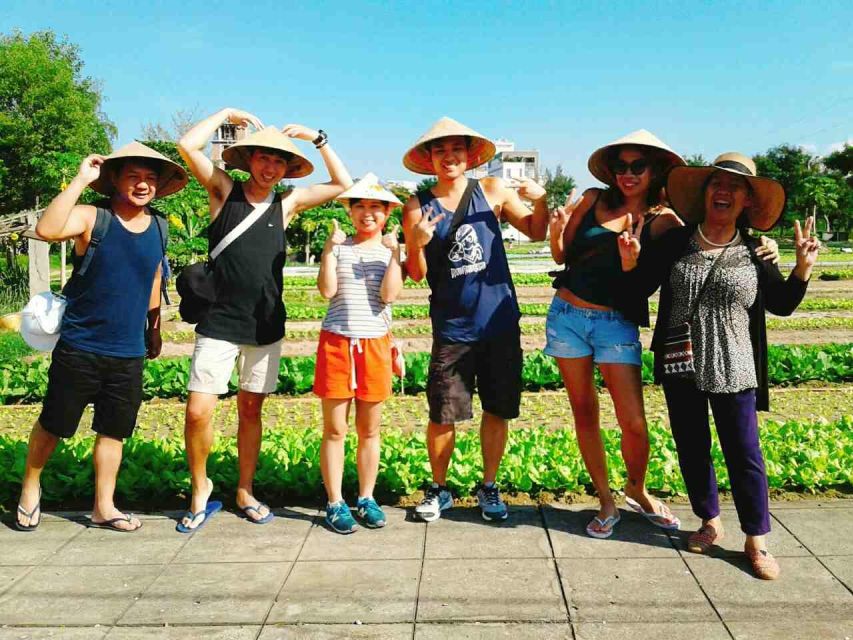
The full program starts at an organic farm rather than with a recipe demonstration. That small change matters. You get to see vegetables as crops before they appear cleaned, chopped, and arranged on a kitchen table.
You will learn about growing at the farm and take part in basic work such as planting and watering. This is not a full farming course, and you should not expect hours of agricultural instruction. It is a short, practical stop that helps you connect Vietnamese cooking with the people and places that produce its ingredients.
I like this opening because it gives the class a sense of place. Many cooking lessons begin with pre-measured food. Here, you first see where some of that food begins. The activity also works well for families because children can take part in a simple task instead of sitting through a long talk.
The farm portion is included only with the full four-hour option. If you choose the shorter cooking-only class, you will miss this step and go directly to the kitchen experience.
More Market Cooking Classes in Da Nang
- 5 Dishes Cooking Class with Market Trip in Da Nang
★ 5.0 · 466 reviews - 5 traditional dishes Da Nang cooking class with market trip
★ 5.0 · 331 reviews - Da Nang Cooking Class with Coffee Tasting and Market Visit
★ 5.0 · 310 reviews
Choosing ingredients at a local market
After the farm visit, you head to a local fresh market to pick up ingredients. The market stop helps you understand the less familiar parts of Vietnamese cooking, including herbs, vegetables, sauces, and other items that may be hard to identify on your own.
You will not simply pass through while the guide does all the shopping. The point is to learn about the ingredients and how they are used. That makes this stop useful if you plan to cook Vietnamese food at home, since a recipe can be difficult to follow when you do not know what the raw materials look like.
Timing can affect the mood of the market visit. If you want to see the market at its busiest, choose a morning start. An afternoon class may feel calmer and less crowded, which can make it easier to listen and look closely. You will need to decide which matters more to you: peak market activity or a quieter visit.
The market is also one reason the full class offers better value than a cooking lesson alone. You are not just paying for four recipes. You are getting a short introduction to shopping for Vietnamese food in the place where local cooking begins.
Four dishes, with menus that change by day
The class teaches four traditional dishes, but the exact menu depends on the day of the week. This is important, since you cannot assume that every booking includes Pho or Banh Xeo.
Menu 1: Monday, Wednesday, and Friday
This menu includes:
- Quang noodles
- Fish sauce chicken wings
- Green papaya salad with shrimp
- Deep-fried spring rolls
Quang noodles are a Da Nang-area specialty, so this menu gives you a direct connection to local food. The dish is different from the soup-style noodles many people first associate with Vietnam. It is a useful choice if you want to cook something tied to Central Vietnam rather than only the most famous national dishes.
The chicken wings bring a stronger fish sauce flavor, while the green papaya salad adds a crisp, fresh contrast. Deep-fried spring rolls finish the set with a familiar cooking task that still teaches technique.
More Market Cooking Classes in Vietnam
- Market Tour, Basket Boat Ride & Cooking Class by Hangcoconut
★ 4.8 · 95 reviews - Home Cooking Class: Market, Garden and cooking 4 dishes
★ 5.0 · 61 reviews - Hanoi Cooking Class: Culture, Local Market & Meaning CSR Impact
★ 5.0 · 5,147 reviews - 5 Traditional Dishes Hanoi Cooking Class with Market Trip
★ 5.0 · 4,890 reviews
Menu 2: Tuesday, Thursday, Saturday, and Sunday
This menu includes:
- Beef noodle soup, or Pho
- Crispy Vietnamese pancakes, or Banh Xeo
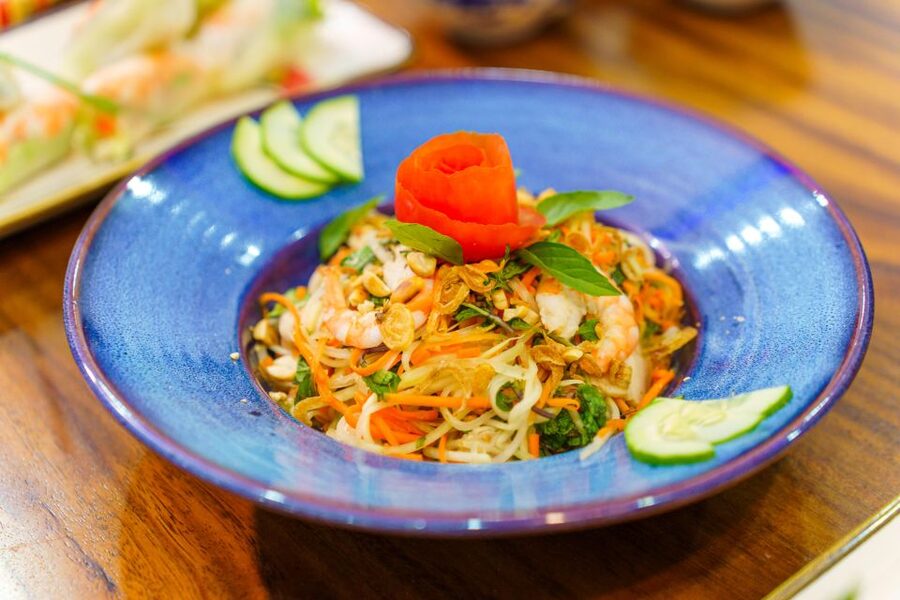
- Green mango salad with shrimp
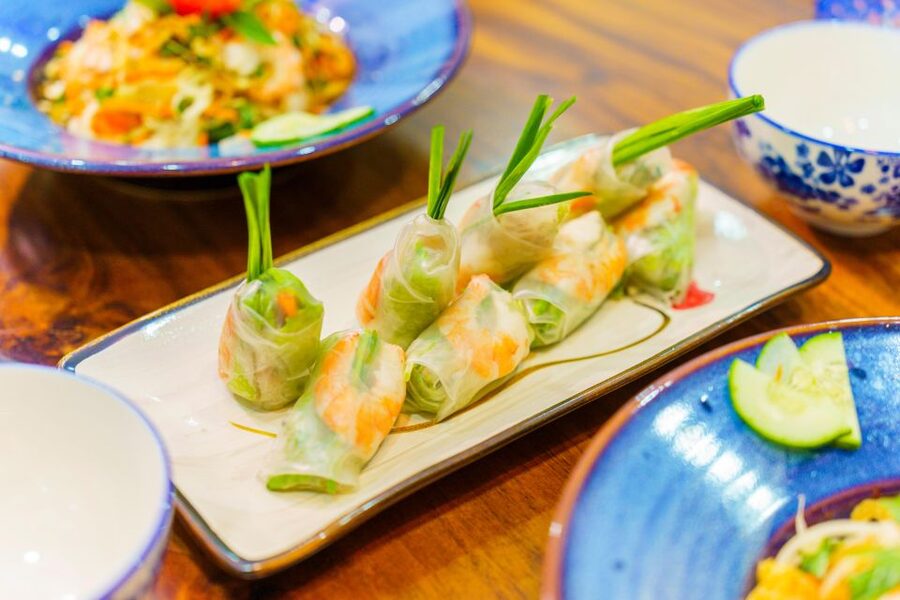
- Fresh spring rolls
This is likely the better pick if you want the most recognizable Vietnamese dishes. Pho gives you a chance to work with a famous noodle soup, while Banh Xeo teaches you how to make a thin, crisp pancake and fill it with savory ingredients.
The fresh spring rolls also contrast nicely with the crispy pancake. You learn two different approaches to wrapping and serving food, one cool and fresh, the other hot and crunchy. The green mango salad adds another sharp, fresh element to the meal.
If Pho or Banh Xeo is your priority, book on Tuesday, Thursday, Saturday, or Sunday. If you want Quang noodles, choose Monday, Wednesday, or Friday. Checking the schedule first will prevent a disappointing menu surprise.
The vegetarian menu has real variety
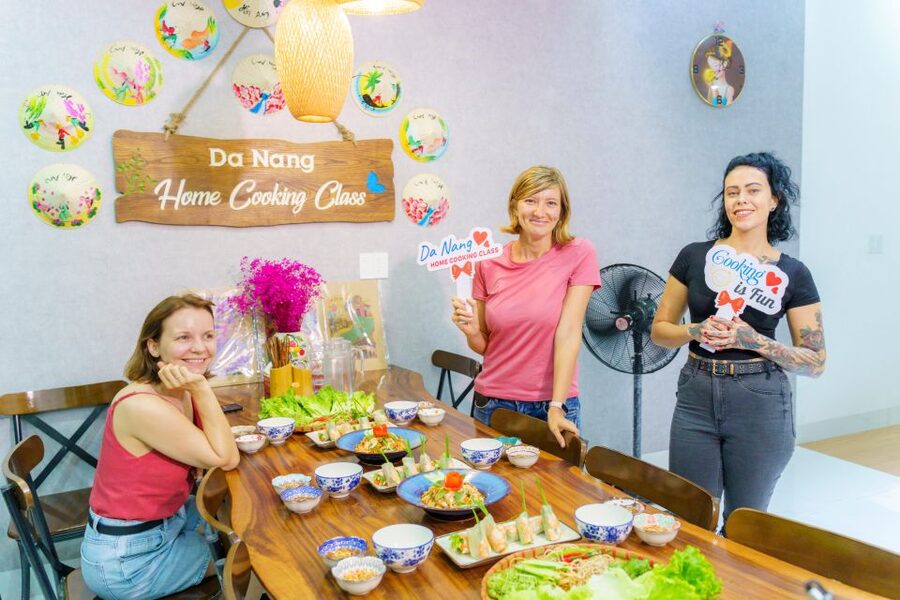
A vegetarian option is available, and it is not limited to a single substitute dish. The menu includes Quang noodles or Pho, eggplant stir-fry, mango salad or papaya salad, and fried or fresh spring rolls.
That gives you a proper four-dish cooking session rather than a reduced version of the standard class. You should still select the vegetarian option when booking or arranging the activity, so the ingredients and menu are prepared correctly.
The choices also follow the structure of the regular class: a noodle dish, a cooked vegetable dish, a salad, and a roll. This makes the vegetarian program useful for someone who wants to take home a practical range of recipes.
What the hands-on cooking class is like
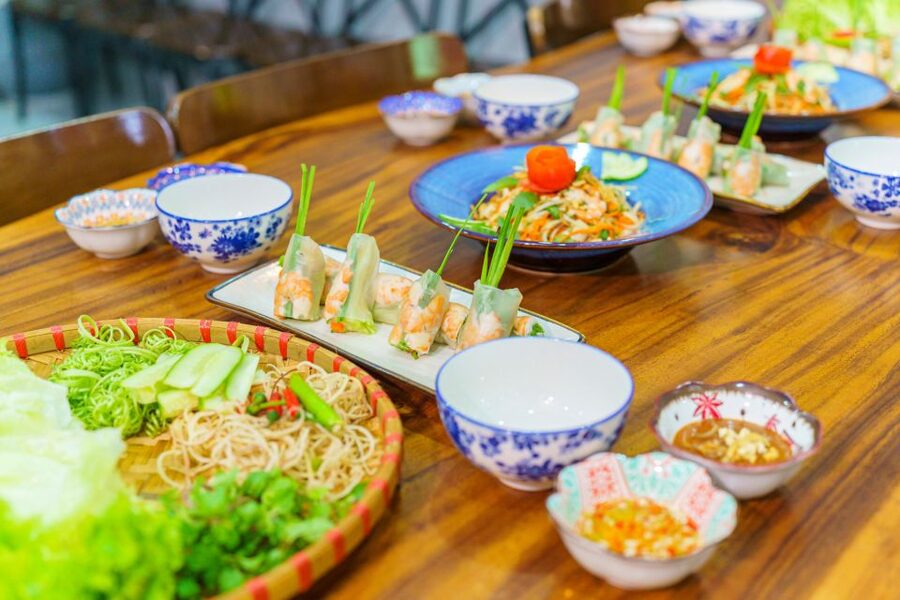
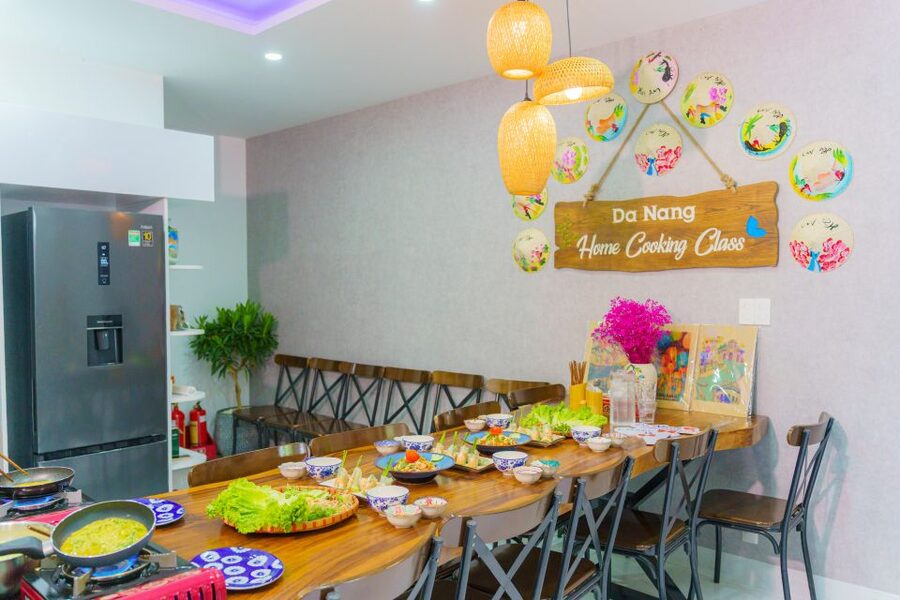
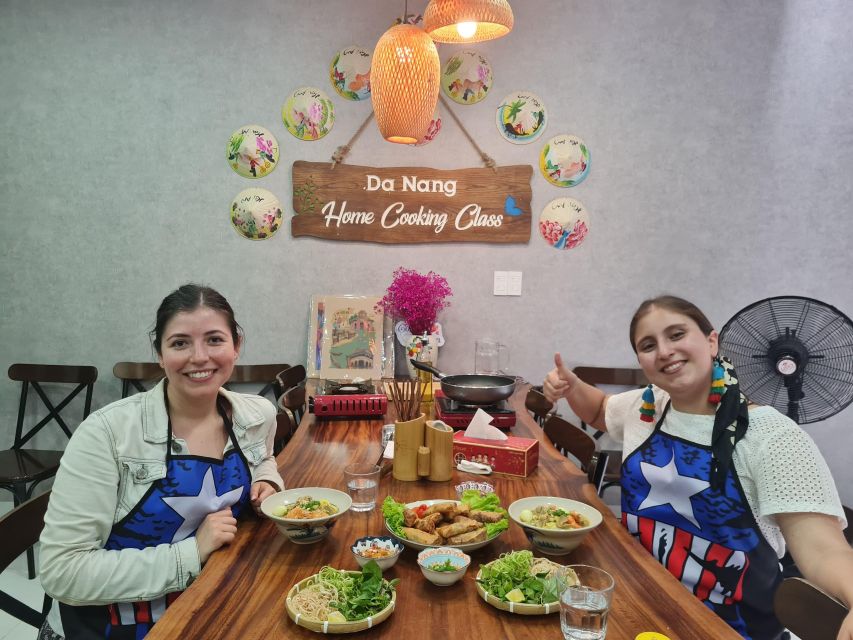
The central part of the activity is hands-on. You are not only watching a guide prepare food while a finished plate appears at the end. You take part in the cooking steps and receive recipe copies in English.
That matters most with dishes that require some practice. Spring rolls call for careful filling and rolling. Banh Xeo requires attention to texture so the pancake stays crisp. Salads depend on balance, and noodle dishes bring together several ingredients in one bowl.
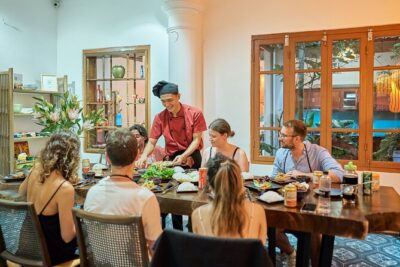
The class size is limited to 14 people. That is not a private lesson, but it is small enough to support a personal feel. You should have a chance to handle the food at each stage rather than watching from the back of a large group.
The English-speaking instructors are another practical advantage. Jane is praised for being friendly, funny, and careful to make sure the class learned the techniques. Nhi has also led sessions that combine the field and kitchen activities. The names of the instructors may vary, but you can expect the teaching to take place in English.
The finished meal includes dessert and herbal tea. Water and herbal tea are included, with the tea made from organic ingredients. It is a pleasant way to end the cooking session without adding another stop to your day.
Why the recipes are useful after you return home
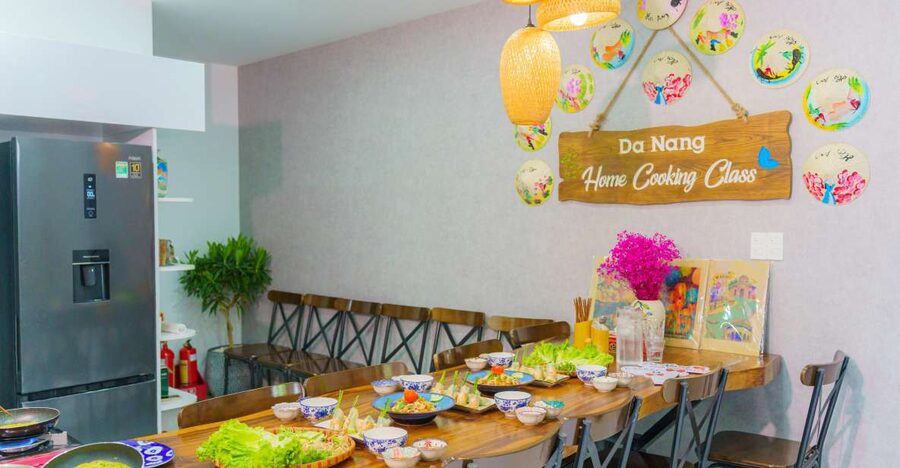
A cooking class is only worth the money if you can repeat at least some of it later. This one helps by providing English recipe copies and by using dishes that are practical for a home kitchen.
You may not find every Vietnamese ingredient easily at home, but the market visit gives you a better chance of recognizing substitutes. You also learn how different ingredients look before preparation, which is often more useful than reading a translated ingredient list.
The four-dish format gives you a broad sample of Vietnamese cooking. You work with noodles, salads, rolls, a pancake or chicken dish, and fresh herbs. That range makes the class more useful than a lesson focused on one soup.
You should not expect to become an expert Vietnamese cook in one morning or afternoon. The value is more modest and more realistic: you learn a set of dishes, pick up a few techniques, and gain enough confidence to try them at home.
Short class or full four-hour program
You have two main ways to book the experience.
The cooking-only option lasts about 2.5 hours. Choose it if your Da Nang schedule is tight or if your main goal is to cook and eat. It skips the farm and market visits, but still gives you the main class, four dishes, recipes, dessert, and herbal tea.
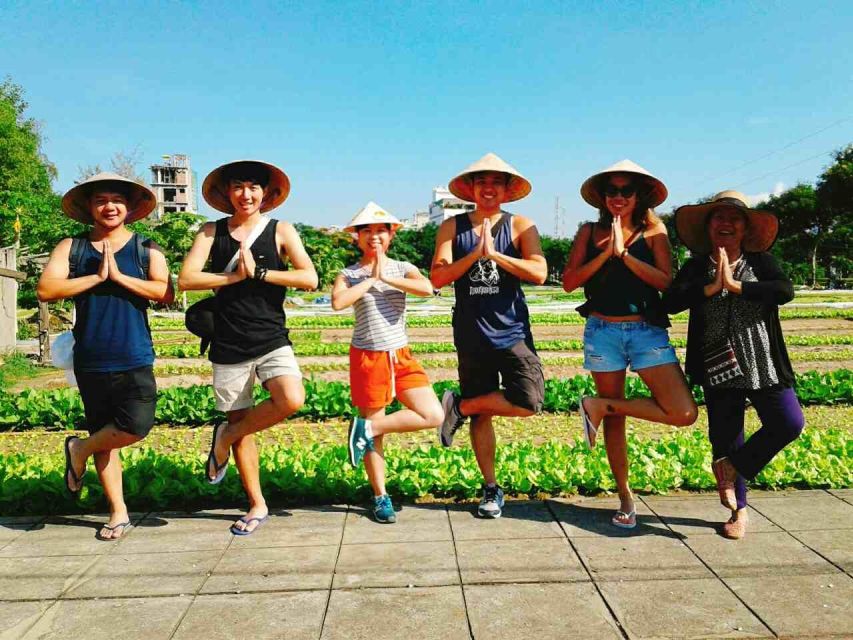
The full option lasts about four hours. It includes the organic farm, planting and watering, the local market, and the cooking class. I would choose this version if you want more local context and have the time. The extra 90 minutes or so adds more than just length because it shows you the ingredients before they reach the kitchen.
There is also an optional coffee-making workshop lasting 1.5 hours. It can be added to your Vietnamese food and culture program, but it is separate from the core cooking activity. If you add it, allow enough time in your schedule for the longer visit.
The stated duration range is 150 to 270 minutes, which matches the short class and the full program. Starting times vary, so check availability before you make other plans.
Is $25 a fair price?
At $25 per person, this is not the cheapest way to eat Vietnamese food in Da Nang. You can buy a meal for far less. But you are paying for instruction, ingredients, a market visit, a farm activity in the full program, an English-speaking guide, recipes, dessert, tea, and a meal you help prepare.
The price looks strongest for the full four-hour version. You get three connected parts: growing, shopping, and cooking. That sequence gives the activity more substance than a kitchen class that begins with ingredients already laid out.
The shorter option is harder to judge without knowing its separate price, but it may suit you better if time matters more than the farm and market. The experience has a 4.8 rating from 13 submitted ratings, and the comments repeatedly praise the friendly teaching, tasty food, and chance to practice both outside and in the kitchen. One person felt it was a little expensive, so price-sensitive visitors should compare it with simpler cooking lessons.
For me, the value depends on your goal. If you want only lunch, skip it. If you want to learn four dishes and understand the ingredients behind them, $25 is reasonable.
Who will enjoy this class most?
This activity fits solo visitors, couples, friends, and families with children. The work is practical, the class is limited to 14 people, and the cooking gives everyone something to do.
It is especially useful for you if:
- You want to cook Vietnamese dishes after returning home.
- You like markets and want help identifying ingredients.
- You prefer active activities to a standard sightseeing stop.
- You want a class taught in English.
- You need a vegetarian menu.
- You have only half a day available.
You may want to choose another activity if you dislike group cooking, have no interest in handling food, or want a highly specialized culinary lesson. This is a friendly introduction, not advanced chef training.
The class is wheelchair accessible, which is useful to know when comparing activities. Hotel pickup and drop-off are not included, so you must arrange your own way to reach the meeting point.
Timing, weather, and practical planning
You can book the class in the morning or afternoon, subject to available start times. Pick a morning session if the market atmosphere is a major reason for booking. Pick an afternoon session if you prefer a quieter market visit and do not mind missing the busiest period.
The full tour involves outdoor time at the farm and market. Da Nang weather can be hot or wet, so light clothing and practical footwear make sense. The activity information says the experience remains available in harsh sun or rainy weather, but it does not promise a particular indoor alternative for every part of the program.
Free cancellation is available up to 24 hours before the start for a full refund. You can also reserve now and pay later, which helps if your Da Nang plans are still changing.
Should you book Da Nang Cooking?
Book it if you want more than a meal and like the idea of following food from farm to market to kitchen. The full four-hour program gives you the best value and the clearest sense of Vietnamese cooking as a daily practice.
Choose the short class if your schedule is crowded. Check the weekday menu before booking, especially if you want Pho, Banh Xeo, or Quang noodles. Families, first-time visitors, and home cooks will get the most from it, while serious food students may find the introduction too basic.
For a friendly, practical half-day in Da Nang, I would choose the full program, aim for a morning start if the market matters to you, and select the vegetarian menu in advance if needed.
FAQ
How long does the Da Nang cooking experience last?
You can choose a cooking-only class lasting 2.5 hours, or a full program lasting about four hours. The listed duration range is 150 to 270 minutes.
What activities are included in the full four-hour option?
The full option includes an organic farm visit, planting and watering activities, a local market tour, and the hands-on cooking class.
How many dishes will I cook?
You will learn to cook four traditional Vietnamese dishes. The menu changes by day, and a vegetarian menu is available.
Which days include Pho and Banh Xeo?
The Pho and Banh Xeo menu runs on Tuesday, Thursday, Saturday, and Sunday. It also includes green mango salad with shrimp and fresh spring rolls.
Which days include Quang noodles?
The Quang noodle menu runs on Monday, Wednesday, and Friday. It also includes fish sauce chicken wings, green papaya salad with shrimp, and deep-fried spring rolls.
Is there a vegetarian option?
Yes. The vegetarian menu includes Quang noodles or Pho, eggplant stir-fry, mango or papaya salad, and fried or fresh spring rolls.
Is hotel pickup included?
No. Hotel pickup and drop-off are not included. The activity is wheelchair accessible, and instruction is provided in English.
More Farm Visits in Da Nang
- Floating & Railway Market and Coconut Farm Tour [Optional Luxury]
★ 5.0 · 835 reviews - Evening Cooking Class in Organic Farm with Local Market Tour
★ 5.0 · 394 reviews - Florence: Cooking Class at a Tuscan Farm & Local Market Tour
★ 4.9 · 354 reviews - Cocolocal Farm Cooking Class with market tour and basket boat
★ 5.0 · 231 reviews
More Cooking Classes in Da Nang
- Cooking Class and Lunch at a Tuscan Farmhouse with Local Market Tour from Florence
★ 5.0 · 4,831 reviews - Chiang Mai: Cooking Class, Market & Thai Herbs Garden Tour
★ 4.9 · 4,824 reviews - Chiang Mai: Authentic Cooking Class with Market & Farm Visit
★ 4.9 · 4,546 reviews - Barcelona: Paella Cooking Experience & Boqueria Market Tour
★ 4.8 · 3,661 reviews
Just added around Da Nang
- From Da Nang: Hoi An Old Town Tour, Night Market & Boat Ride★ 4.5 · 35 reviews
- Da Nang: Con Market And Seafood Street Experience★ 5.0 · 2 reviews
- Da Nang: Making 5 Vietnamese dishes with Local Market Trip★ 4.9 · 36 reviews
- Home Cooking Class: Market, Garden and cooking 4 dishes★ 5.0 · 61 reviews
- Private luxury Ba Na Hills & Hoi An Walking Tour, Night Market★ 5.0 · 22 reviews
- Guided Tour to Coconut Village,Basket Boat ride,Hoi An Walking Tour,Night Market★ 5.0 · 17 reviews
- Market Tour, Basket Boat Ride & Cooking Class by Hangcoconut★ 4.8 · 95 reviews
- Da Nang By Night: Seafood dinner, night market and cruise trip★ 5.0 · 38 reviews
Market Cooking Classes, compared.
Hanoi Cooking Class: Culture, Local Market & Meaning CSR Impact
Read our review →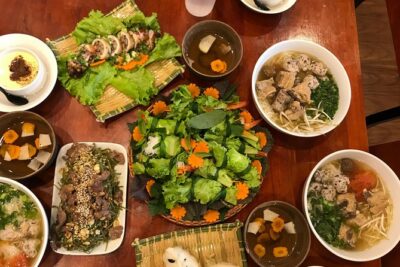
5 Traditional Dishes Hanoi Cooking Class with Market Trip
Read our review →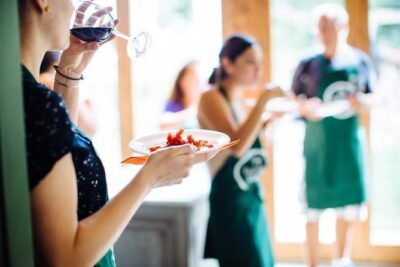
Cooking Class and Lunch at a Tuscan Farmhouse with Local Market Tour from Florence
Read our review →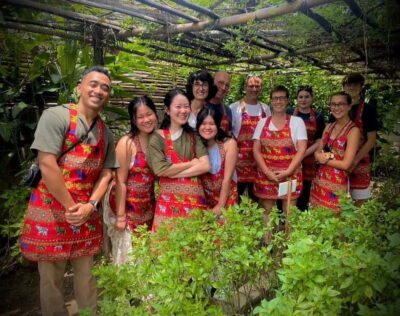
Cooking Class, Market & Thai Herbs Garden Tour
Read our review →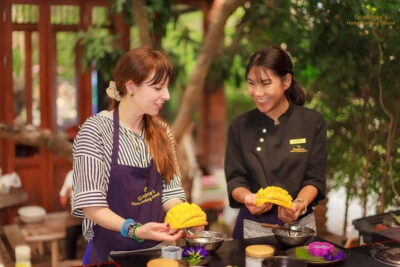
Authentic Cooking Class with Market & Farm Visit
Read our review →
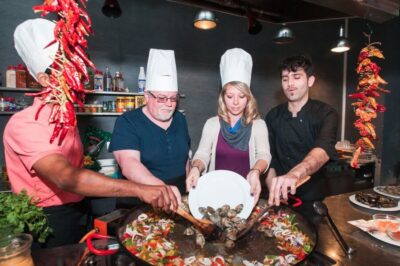
Paella Cooking Experience & Boqueria Market Tour
Read our review →
Cooking Class Hoi An:Local Market, Basket Boat, Fishing & Cooking
Read our review →Browse the lists this tour appears in