
Review · KATHMANDU
Kathmandu Food Crawl & Market Tour
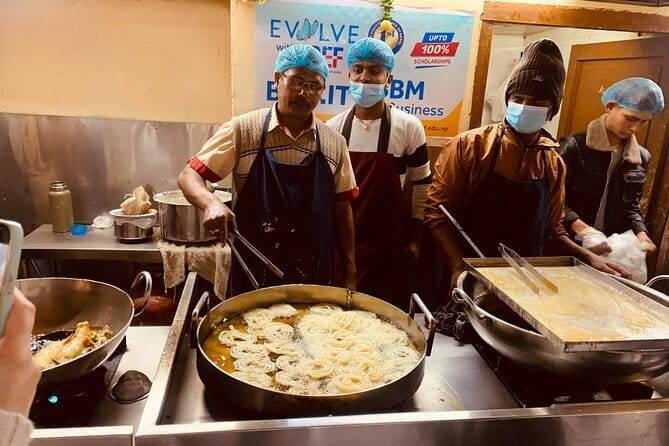
Kathmandu’s best food stories are often found in narrow market lanes, not formal restaurants. This two-hour walk takes you from Chhaya Center toward Ason Bazar, the city’s oldest local market, where food, trade, religion, crafts, and ordinary street life all share the same crowded stage.
I like two things in particular: you get at least five foods and drinks included in the price, and the guide connects each bite to Newar customs and Nepali daily life. The food portions can be much larger than standard samples, so you may leave having eaten close to two full meals.
The main consideration is the short two-hour schedule. You will see and taste a lot, but this is a brisk introduction rather than a slow, sit-down food lesson. Market lanes can also be tight and busy, and some dishes may be unfamiliar or spicy.
Key points at a glance
- Ason Bazar is the heart of the walk: Explore Kathmandu’s oldest local market and the surrounding lanes rather than staying in a restaurant district.
- Five or more tastings are included: Food and drinks are covered, giving the tour strong value at $28 per person.
- Newari food leads the way: Look for dishes such as yomari, samay baji, chatamari, and other local specialties.
- Street food is part of the adventure: Momos and laphing may appear alongside Newari dishes, showing Kathmandu’s mix of Nepali, Tibetan, and Indian influences.
- Santosh Pandey is the named provider: Expect an English-speaking guide who explains ingredients, customs, religion, and local life.
- The tour returns to where it began: Meet at the main gate of Chhaya Devi Complex, walk through the market area, and finish back at Chhaya Center.
Starting at Chhaya Center
Your meeting point is the main gate of Chhaya Devi Complex, also called Chhaya Center. This clear start and finish make the tour easy to fit into a day of sightseeing, especially if you are staying in central Kathmandu.
The experience lasts two hours and uses walking as its main form of transport. No separate vehicle transfer is included, so wear shoes that handle uneven pavement and bring a little patience for market traffic. The route takes you into local shopping and food areas where a guide is useful, since the most interesting stops are not always obvious from the street.
I would schedule this early in your Kathmandu stay. A food walk helps you learn what dishes you like, what ingredients appear often, and how local eating customs work. You can then return to a market stall or restaurant with more confidence later in your trip.
More food and drink tours in the world:
- Dubai: Old Town, Creek, Museums, Souks, & Street Food Tour
★ 4.8 · 10,816 reviews - Dubai: Old Town, Souks, Street Food, Guided Tour & Abra Ride
★ 4.9 · 7,170 reviews - Bangkok by Night: Temples, Markets and Food Tuk-Tuk Tour
★ 5.0 · 3,752 reviews
Entering Ason Bazar, Kathmandu’s old market district
Ason Bazar is the center of the experience. It is described as Kathmandu’s oldest local market, and its importance comes from more than its age. The market is a working place where people shop, sell goods, move between neighborhoods, and follow daily religious and cultural routines.
You will see more than food. The walk includes crafts and traditions linked to the Newar community and other local cultures. That broader view matters because Kathmandu cuisine makes more sense when you see it alongside trade, festivals, household customs, and religious practice.
A guide can point out details that you might otherwise pass without noticing. You may see ingredients, prepared foods, household goods, and craft work sharing the same lanes. The value here is not simply taking a photograph of a famous market. It is watching how the market functions for local people.
The setting may feel intense if you prefer quiet, polished food halls. Ason is a real market, not a staged attraction. Streets can be narrow, people are going about their business, and the pace may not always match your own. That is part of the appeal, but it also means you should stay close to the guide and keep your belongings secure.
Following the food from Newari kitchens to street stalls
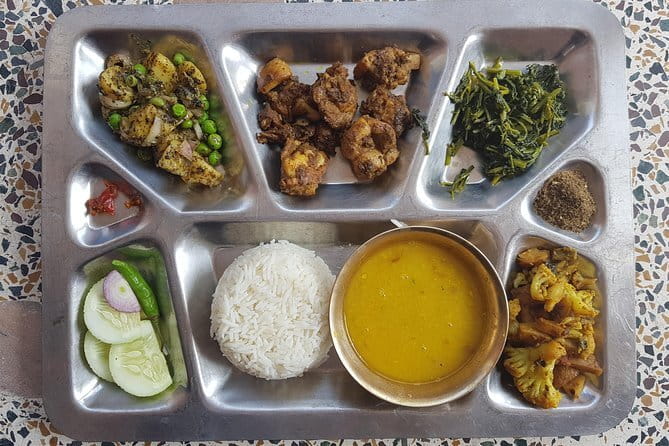
Newari cuisine is the food focus you should expect. The Newars are an indigenous community of the Kathmandu Valley, and their cooking includes ceremonial foods, snacks, sweets, pickles, beaten rice, and spiced meat.
One possible tasting is yomari, a steamed dumpling filled with molasses and sesame seeds. It is sweet rather than savory, and it gives the tour a useful change of pace. If you have mostly eaten momos and curry in Nepal, yomari shows you another side of local food.
Samay baji is another important dish to know. This ceremonial platter commonly includes beaten rice, spiced buffalo meat, and several pickles or side items. A tasting of samay baji can feel like a small plate, but the flavors and textures are varied. You get crunch from beaten rice, heat and sharpness from pickles, and a more substantial bite from the meat.
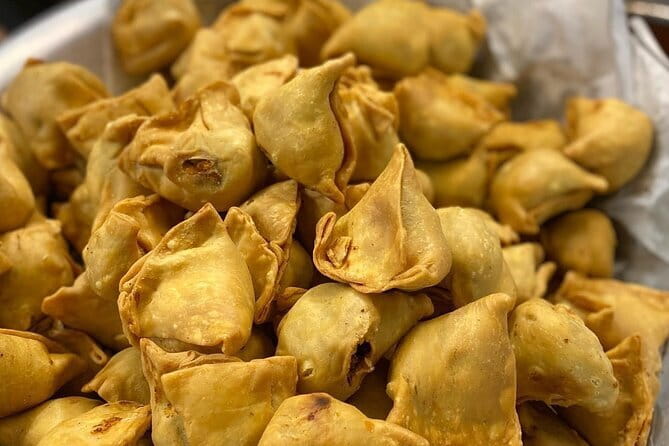
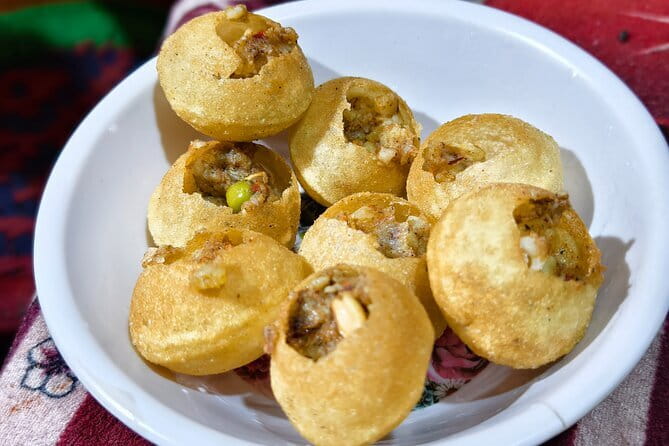
The food is not limited to one tradition. Kathmandu’s street food reflects Nepali, Tibetan, and Indian influences, so the route may include several styles of snack. Momos are the familiar example, but they come in many versions and are worth trying in the place where they are part of everyday food culture.
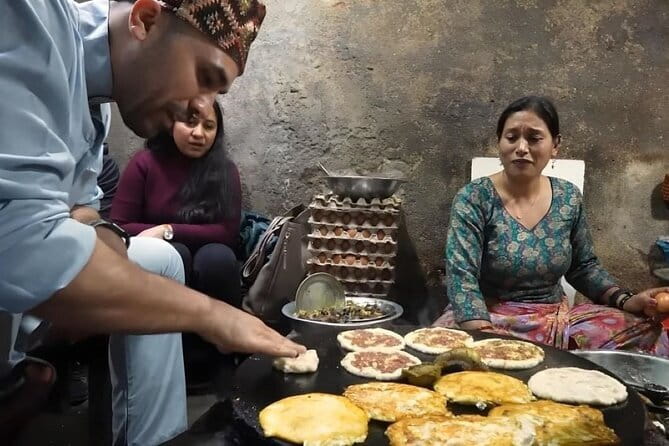
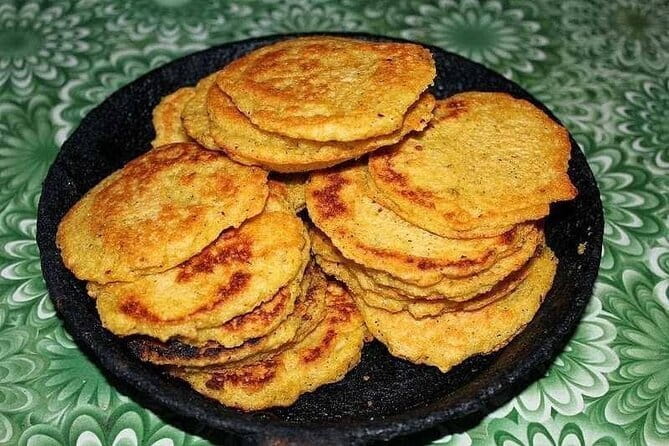
Chatamari is often compared with a Newari pizza, though that description only goes so far. It is a savory rice-flour dish with toppings and a distinct local identity. Laphing, made from mung bean noodles and served cold with a spicy flavor, is another food to watch for. It is especially popular with local eaters and may be a better choice for adventurous palates than for anyone who dislikes heat.
The exact food sequence is not specified, and that is sensible for a market walk. Availability can change from place to place and day to day. You should expect a selection of local dishes rather than a fixed restaurant menu.
Why the tastings offer good value at $28
At $28 per person, the price is reasonable if you want both food and a guided market visit. All food and drinks are included, with a minimum of five items. That is important because the cost is not only paying for a plate of food. It also covers the guide, local interpretation, and the work of finding places you might not locate on your own.
The portions appear generous for a tasting walk. You may receive enough combined food for nearly two meals, rather than a few token bites. If you are planning to eat a full lunch immediately afterward, you may want to wait and see how much is served.
The value is strongest for first-time visitors to Kathmandu. You get a quick introduction to local dishes, a working market, and cultural context in one booking. If you already know Ason Bazar well and prefer to choose every dish yourself, the guided format may feel less necessary.
Personal expenses are not included, so carry money for anything you decide to buy outside the included food and drinks. Government taxes and official expenses are included.
A few more market tours around the world worth a look
- Chef Guided Food Tour of Pike Place Market
★ 5.0 · 3,733 reviews - Tokyo Tsukiji Fish Market Food and Culture Walking Tour
★ 5.0 · 3,184 reviews - Bangkok: Markets, Temples and Food Night Tour by Tuk Tuk
★ 4.9 · 2,371 reviews - London Bridge & Borough Market Food Tour with 7 Authentic Dishes
★ 5.0 · 1,972 reviews
A guide who adds context to every bite
The experience provider is Santosh Pandey, and Santosh is specifically named as the guide in the tour information. He speaks English and is described as friendly, helpful, and easy to talk with.
The guiding is a major part of the experience. You are not simply handed a snack and left to guess what it is. Expect explanations of ingredients, food preferences, religion, history, and everyday life in Nepal. That context turns a quick tasting into something more useful.
A good example is samay baji. Without explanation, it can look like a plate of small portions. With cultural context, you begin to see why the combination of beaten rice, meat, and pickles matters in Newari food traditions.
The same applies to market customs. Crafts and food are not separate subjects here. The guide can help you connect what you see in the stalls with the traditions of the Newar community and other groups living in Kathmandu.
The tone also seems suited to direct conversation. You can ask about ingredients, eating habits, religion, or local life as you walk. If you want a silent food crawl with no discussion, this is not the right format. If you enjoy learning through conversation, the guide adds real value.
Two hours of food, alleys, and local life
The route begins at Chhaya Center, continues into Kathmandu’s food market area, and returns to Chhaya Center. In practical terms, expect a compact loop rather than an all-day city tour.
The first part is likely about getting into the market area and orienting yourself. Once among the lanes, the walk combines food stops with views of local trade, crafts, and daily routines. The food is central, but the market walk prevents the experience from feeling like a series of restaurant visits.
You should allow time for pauses while the guide explains what you are eating. The short duration means the pace may be steady. Two hours is enough to sample several items and see a section of the market, but not enough to explore every lane or stop for a long meal.
The return to Chhaya Center is helpful for planning. You do not need to arrange a separate pickup or figure out where the food walk ends. Afterward, you can continue sightseeing, return to your accommodation, or use what you have learned to choose another meal.
What the experience feels like on the ground
This is a hands-on introduction to Kathmandu. You walk through working market lanes, eat foods that locals know, and speak with a guide about customs and daily life. The atmosphere is informal and more personal than a standard sightseeing circuit.
The most memorable part may not be one single dish. It may be the combination of food and place: eating a local snack near the market where ingredients and household goods are traded, then hearing how the food fits into community traditions.
You should come ready to try unfamiliar flavors. Newari food can include pickles, spice, buffalo meat, sesame, beaten rice, and textures that differ from typical Western meals. The tour information does not provide a full allergy or dietary menu, so if you have restrictions, contact the provider before booking rather than assuming every item can be changed.
The large portions are a benefit for hungry eaters, but they can also be a drawback if you want only light samples. Eat a modest breakfast or earlier meal so you have room to taste properly.
Who should book this food crawl
I would recommend this tour to first-time visitors who want a fast, useful introduction to Kathmandu’s food culture. It suits people who enjoy street food, local markets, conversation, and trying dishes they might not order alone.
It is also a good choice for couples and small groups who want more than a list of restaurants. The guide helps create a shared experience, and the return to the starting point keeps the timing simple.
Food-focused visitors will appreciate the range. You may move from a sweet dumpling to savory beaten rice, spicy noodles, dumplings, and rice-based snacks. That variety gives you a better sense of Kathmandu than ordering one familiar meal.
Families with adventurous older children may also enjoy it, though the market setting and unfamiliar flavors are worth considering. The tour data does not state a minimum age or specific child arrangements, so check before booking if that matters to you.
You may want to skip it if you need a quiet, private dining experience, dislike walking through crowded market lanes, or have strict dietary needs that have not been confirmed in advance. The experience is built around local food and local settings, not a controlled restaurant environment.
Booking details worth knowing
The tour costs $28 per person and lasts two hours. An English-speaking live guide is included, along with government taxes, official expenses, and at least five foods with drinks.
You can cancel up to 24 hours before the start for a full refund. The reserve-now, pay-later option lets you hold a place without paying at the time of booking, which is useful when your Kathmandu schedule is still shifting.
Starting times depend on availability, so check the selected date before you commit to other plans. Meet at the main gate of Chhaya Devi Complex, and plan to finish at Chhaya Center.
Since the food selection is tied to local market stops, do not expect a printed tasting menu with guaranteed dishes. The named examples include yomari, samay baji, momos, chatamari, and laphing, but the actual combination can vary.
My verdict: a strong first taste of Kathmandu
Book this food crawl if you want to eat well, understand what you are eating, and see Ason Bazar with a local guide. The strongest points are the generous tastings, the cultural explanations, and the chance to reach food spots you might miss on your own.
The $28 price works particularly well because food, drinks, and guiding are bundled together. Just keep your expectations practical: this is a lively two-hour introduction, not an exhaustive food tour or a leisurely meal.
For a first visit to Kathmandu, I would put it near the start of my schedule. Let Santosh Pandey guide you through the market, take notes on the dishes you enjoy, and use the rest of your trip to follow those flavors on your own.
FAQ
Where does the Kathmandu Food Crawl begin?
The meeting point is the main gate of Chhaya Devi Complex, also known as Chhaya Center.
Where does the tour finish?
The experience returns to Chhaya Center after the market visit.
How long does the food crawl last?
The tour lasts two hours.
How much does the tour cost?
The price is $28 per person.
How many foods are included?
At least five food items with drinks are included.
Is a guide included?
Yes. An experienced, friendly, English-speaking live guide is included. Santosh Pandey is listed as the experience provider.
Which foods might I try?
The food information names Newari dishes such as yomari and samay baji, along with street foods such as momos, chatamari, and laphing. The exact selection is not fixed in the provided details.
Can I cancel for a full refund?
Yes. You can cancel up to 24 hours in advance for a full refund.
More Shopping Tours in the world
- Hanoi Cooking Class: Culture, Local Market & Meaning CSR Impact
★ 5.0 · 5,147 reviews - 5 Traditional Dishes Hanoi Cooking Class with Market Trip
★ 5.0 · 4,890 reviews - Cooking Class and Lunch at a Tuscan Farmhouse with Local Market Tour from Florence
★ 5.0 · 4,831 reviews - Chiang Mai: Cooking Class, Market & Thai Herbs Garden Tour
★ 4.9 · 4,824 reviews
More Markets in the world
- Bangkok: Damnoen Saduak Market and Maeklong Railway Market
★ 4.5 · 26,723 reviews - The Old Siam: Damnoen Saduak and Maeklong Railway Market
★ 4.5 · 10,992 reviews - Bangkok: Train Market & Floating Market with Boat Ride
★ 4.7 · 9,547 reviews - From Bangkok: Ayutthaya & Ayothaya Floating Market Day Trip
★ 4.7 · 6,084 reviews
Just added around the world
- Cologne Christmas Market and Kölsch Beer Small-Group Tour★ 5.0 · 29 reviews
- Local Market Tour & Cooking Demo with Lunch from Colombo Harbor★ 5.0 · 2 reviews
- Market Tour and Cooking Class from Colombo★ 5.0 · 5 reviews
- West Side Market Food Tour★ 4.0 · 31 reviews
- Discover Colmar’s Christmas Market Magic with a Local★ 3.5 · 4 reviews
- Discover Cologne’s Christmas Market Magic with a Local★ 4.5 · 4 reviews
- Cincinnati’s Original Findlay Market Tour With Tastings★ 5.0 · 32 reviews
- Vegan Cooking Class Colombo with Market Tour★ 5.0 · 9 reviews
Shopping Tours, compared.
Damnoen Saduak Market and Maeklong Railway Market
Read our review →
The Old Siam: Damnoen Saduak and Maeklong Railway Market
Read our review →
Train Market & Floating Market with Boat Ride
Read our review →
Ayutthaya & Ayothaya Floating Market Day Trip
Read our review →
Hanoi Cooking Class: Culture, Local Market & Meaning CSR Impact
Read our review →
5 Traditional Dishes Hanoi Cooking Class with Market Trip
Read our review →
Cooking Class and Lunch at a Tuscan Farmhouse with Local Market Tour from Florence
Read our review →
Cooking Class, Market & Thai Herbs Garden Tour
Read our review →Browse the lists this tour appears in