
Review · CHIANG MAI
Chiang Mai: Elephants, Sticky Waterfalls, Market and Temple
The best part of this Chiang Mai day trip is its variety. You go from a market selling insects and rural foods to Bua Thong Sticky Waterfalls, then on to a peaceful Lanna temple and a close elephant encounter in the countryside. It feels like several day trips packed into one.
I like the small group size, limited to nine, and the way guides such as Blue, Non, James, Tom, and Tu add local context instead of simply pointing at sights. I also like the value: lunch, snacks, water, admission fees, transport, elephant food, and mahout clothing are included.
The main drawback is the long day, around 7.5 to 8.5 hours, with plenty of van time. The waterfall requires climbing on wet rock, and the elephant visit involves hands-on contact, photos, and bathing, so anyone concerned about animal welfare should ask careful questions before booking.
Key points to know before you book
- Three very different stops in one day: a rural market, a climbable waterfall, and a colorful temple.
- Elephant activities are hands-on: you may prepare vitamin balls, feed elephants bananas and sugarcane, walk beside them, take photos, and bathe them.
- The group is small: up to nine people, with some departures ending up much smaller.
- The temple is Wat Ban Den: a colorful Lanna complex with white, green, blue, and pink details, usually far quieter than Chiang Rai’s White Temple.
- Bring swim gear: changing clothes, a towel, sunscreen, insect repellent, and shoes with a good grip will make the day easier.
- Budget about $70 per person: that is strong value for a full day with transport, lunch, entrances, drinks, snacks, and activities included.
Why this day trip works so well
Chiang Mai is easy to enjoy from cafés and old-city temples, but the area beyond town gives you a better feel for northern Thailand. This tour takes you through rice fields, villages, orchards, and country roads while linking four very different experiences.
I see it as a good choice if you have limited time and want more than one headline attraction. You will not get a slow, in-depth visit at every stop. Instead, you get a lively full day with a guide who handles the driving, timing, meals, and activity instructions.
The 4.9 rating from 227 bookings reflects a consistently strong experience, especially for the guides. Blue is often praised for his energy, clear explanations, and willingness to take photos. Non is known for culture and religion, including his personal experience as a Buddhist monk. James, Tom, and Tu also receive repeated praise for their friendly approach and care with small groups.
That guide matters here. The route has several moving parts, and the day would feel like a rushed checklist without someone explaining what you are seeing. The strongest guides turn the van rides into useful lessons about Thai culture, local food, Buddhism, and northern life.
A few more market tours around Chiang Mai worth a look
- Chiang Mai: Cooking Class, Market & Thai Herbs Garden Tour
★ 4.9 · 4,824 reviews - Chiang Mai: Authentic Cooking Class with Market & Farm Visit
★ 4.9 · 4,546 reviews - Chiang Mai: Cooking Class with Market and Pickup
★ 4.9 · 1,365 reviews
A market where rural food takes center stage
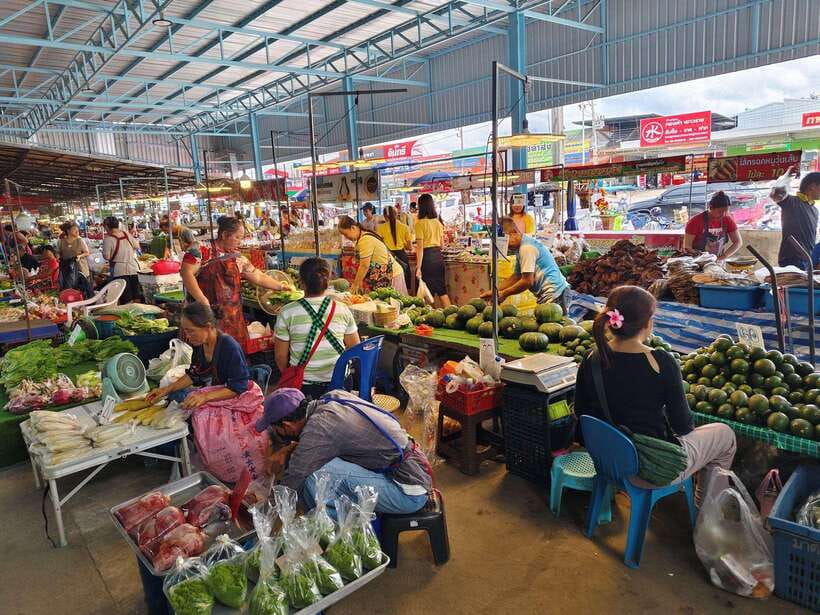
The first main stop is Talat Chedi Mae Krua, a local market visited for about 25 minutes. This is not mainly a souvenir stop. You will see stalls selling food, including insects, worms, and bugs, along with produce and other everyday items.
You do not need to eat anything that makes you uncomfortable. The point is to see how food and shopping work outside the tourist center. Your guide can help explain unfamiliar items and may offer snacks from the market for you to taste.
This short visit works best when you stay curious. Look at what local people buy for home cooking, notice the smells and textures, and ask your guide about foods you do not recognize. It is a brief stop, so do not expect a long market walk or a formal cooking lesson.
For many people, the market is a useful opening to the day because it puts northern Thai life before the more polished attractions. It also gives you a chance to pick up a small snack, though food and drinks in the van are already included.
Climbing Bua Thong Sticky Waterfalls
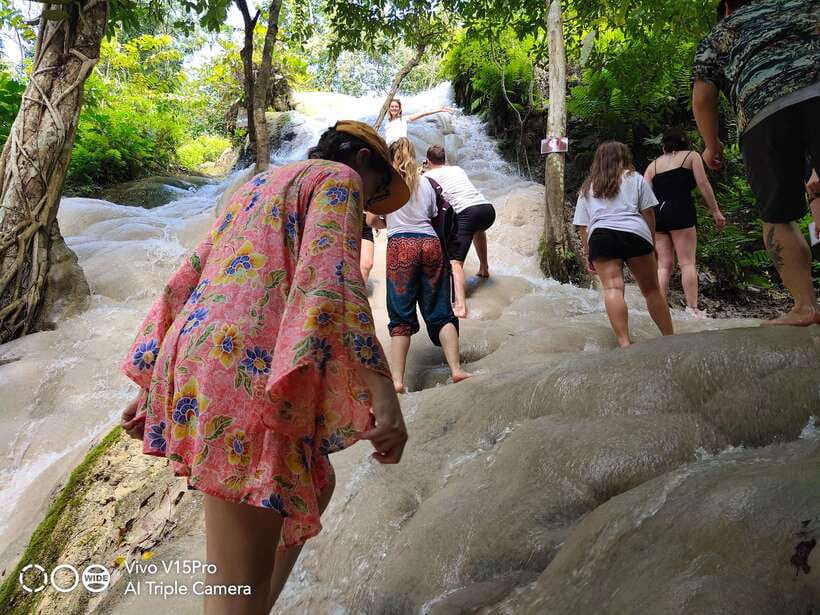
The waterfall is the most active part of the morning. You change clothes after arrival, follow a natural path, and climb up and down the limestone falls. The rock has a grippy surface, allowing you to walk upward in places that would be slippery at an ordinary waterfall.
That unusual footing is the whole appeal. You may feel cautious at first, then find yourself climbing like a low-budget Spiderman. Guides can help you find the easier route and take pictures while you work your way across the falls.
Plan on roughly 100 minutes here, though the exact pace depends on your group. The water and rock make this more physical than a simple viewpoint stop. You should be comfortable walking on uneven ground, stepping through water, and using your hands for balance.
Bring a full change of clothes and a towel. Water shoes are a smart extra, based on the experience of families who found the rocks more demanding than expected. Comfortable shoes with a secure grip are important, and you should protect your phone if you plan to carry it near the water.
The falls can be crowded during high season and holiday periods. That may mean waiting for space on the climb and having fewer quiet moments for pictures. Older family members can still enjoy the stop from the side, but the climb itself is not suitable for everyone.
This is one place where the guide’s attention helps. A careful guide can point out safer footholds and keep the group moving without making you feel pushed. If you prefer not to climb, you can enjoy the forest setting and watch others from a comfortable position.
Wat Ban Den and the colors of Lanna design

After the waterfall, the van takes country roads through paddy fields, villages, and orchards to Wat Ban Den. The ride takes time, but this is part of the experience. You get changing views of northern Thailand rather than spending the whole day on major roads.
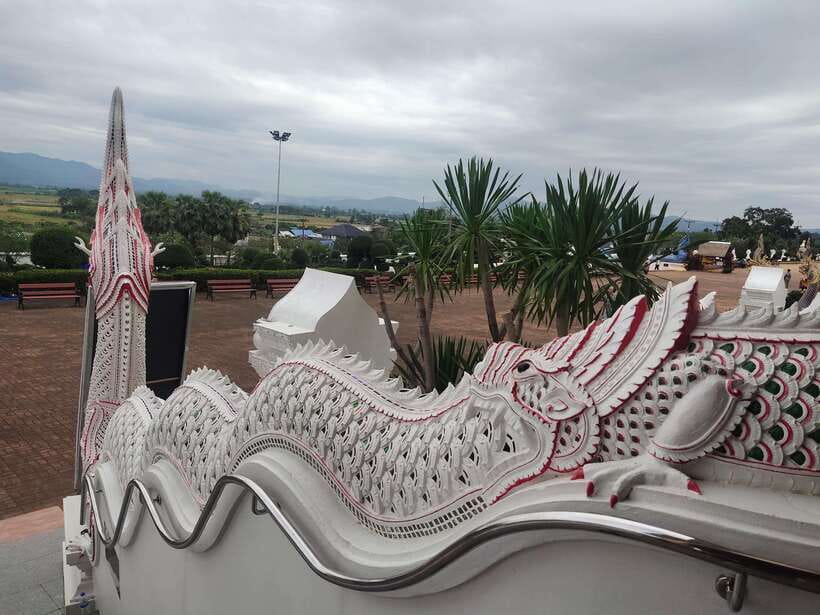
Wat Ban Den is one of the most useful stops for anyone who wants more than a standard Chiang Mai temple visit. The complex uses white, green, blue, and pink, with ornate Lanna-style buildings and broad countryside views.
It is often compared with Wat Rong Khun, the White Temple in Chiang Rai, but the two places feel different. Wat Ban Den is colorful and elaborate without being built around one single white structure. It also has a calmer, more devotional tone, with local people coming to pray and worship.
Allow around 40 minutes. That is enough time to walk around, take pictures, notice the architecture, and sit quietly for a moment. One useful tip from past visitors is to bring socks. You may need to remove your shoes, and temple floors can be very hot in strong sun.
Dress comfortably but respectfully. You will want clothes that work for the waterfall earlier in the day, but keep temple manners in mind. A light cover-up can be useful if your clothing is short or revealing.
Wat Ban Den gives the day a needed pause. After the noisy market and physical waterfall, you get a peaceful place with strong visual detail. The temple is also less predictable than the usual city-center route, which makes it feel like a worthwhile addition rather than a filler stop.
More shopping tours in Chiang Mai:
- Chiang Mai: Evening Cooking Class and Local Market Visit
★ 4.9 · 648 reviews - Chiang Mai: Evening Local Street Food Market Tour
★ 4.8 · 604 reviews - Chiang Mai: Kalare Night Bazaar Boxing Stadium Muay Thai
★ 4.7 · 507 reviews - Evening Cooking Class in Organic Farm with Local Market Tour
★ 5.0 · 394 reviews
A local lunch before the elephant visit
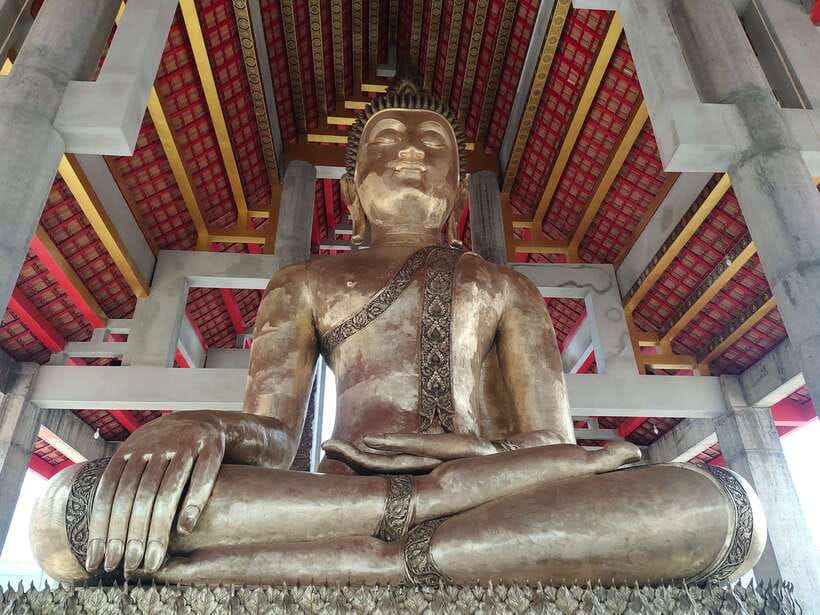
Lunch is served at a local restaurant in the area. The exact menu can vary, but the meal is included, and several people have found the food generous and satisfying. Pad Thai and other local dishes may be served, along with the drinks and snacks listed in the package.
This is not a fine-dining stop, and that is part of the point. You are eating in a local setting rather than losing more time returning to the city for a familiar restaurant. Tell your guide about dietary concerns early, since the available choices are not specified in advance.
The lunch break also separates the sightseeing from the elephant activities. You can dry off, eat properly, and reset before the most anticipated part of the afternoon.
Meeting the elephants in the countryside
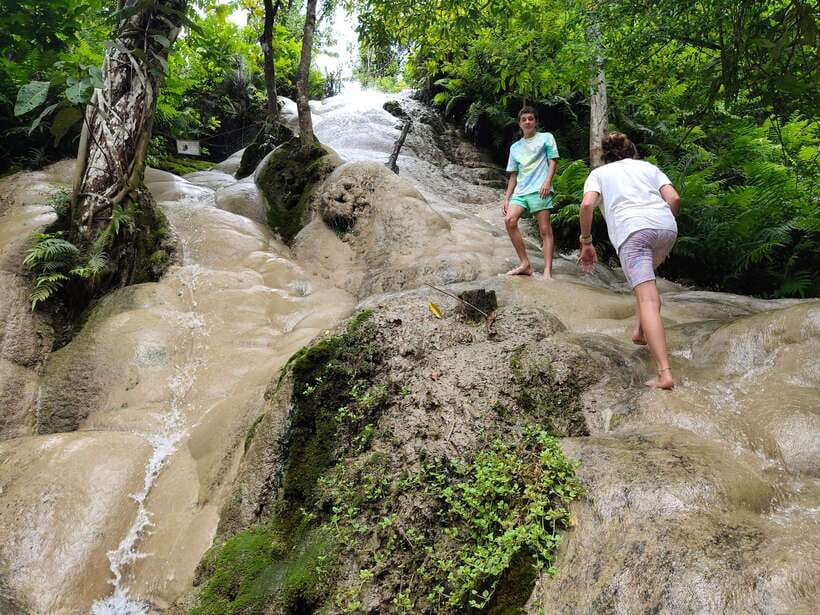
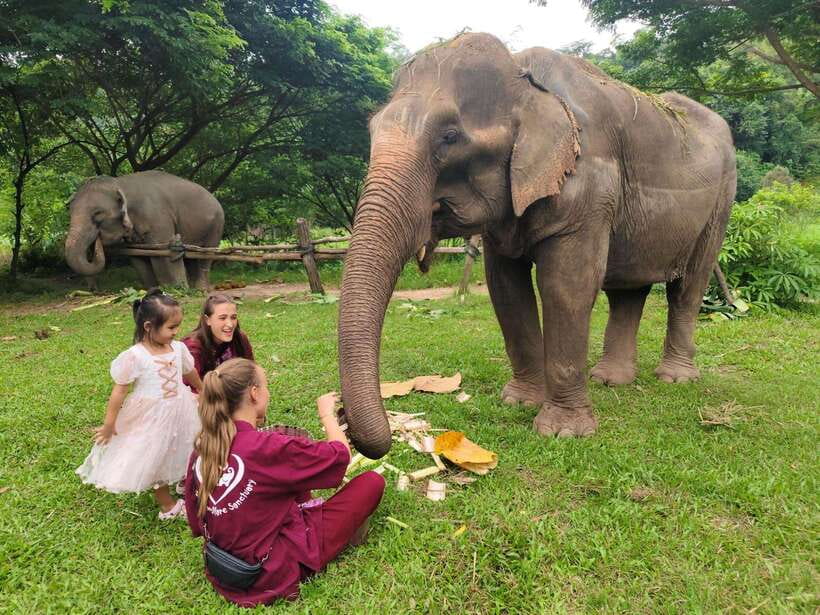
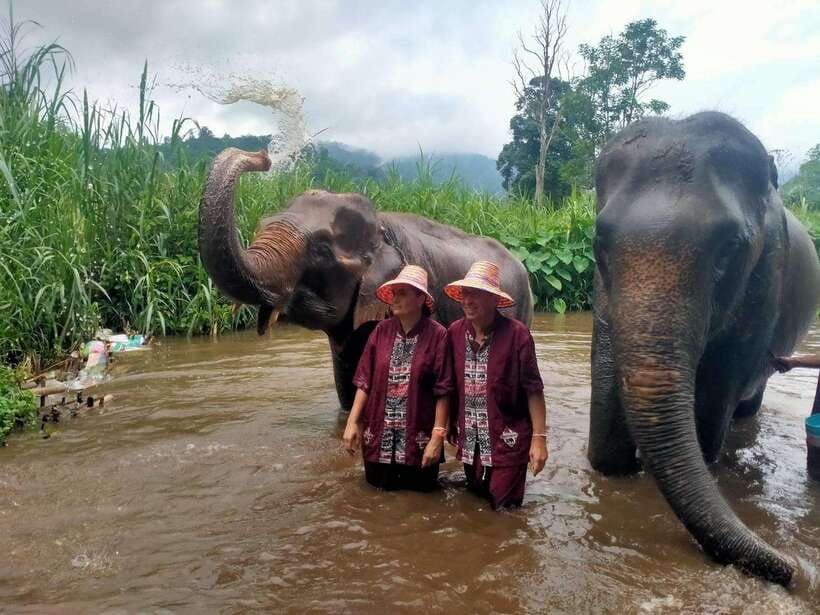
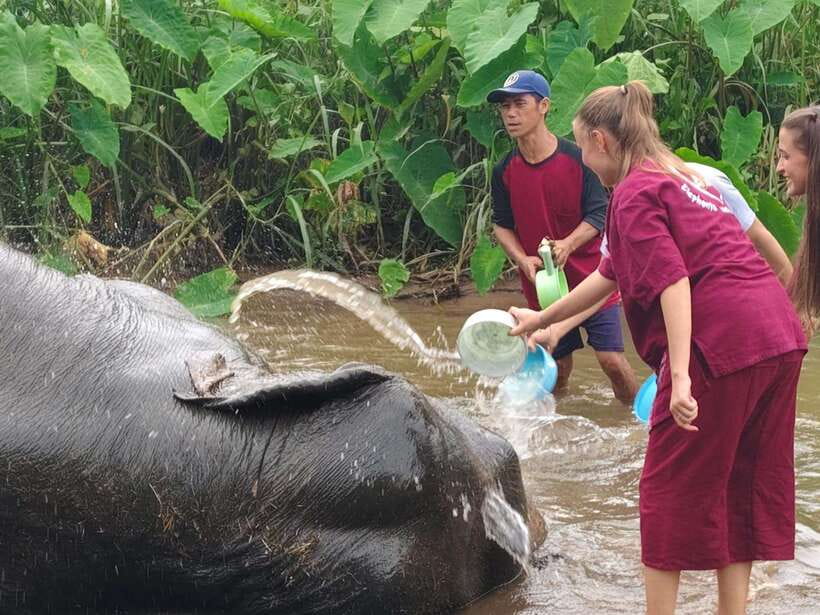
The elephant visit is the emotional center of the day. You change into a mahout-style uniform, prepare herbal vitamin and medicine balls, and learn why added food may help elephants with digestion. You then feed them bananas and sugarcane, walk with them, observe them, take photos, and bathe them.
Some visits include crossing a river on a small bamboo raft. You may get wetter than expected, so keep your change of clothes handy rather than buried at the bottom of your bag.
The setting is described as a small, family-run place rather than a large fenced attraction. Some groups have found themselves with only a few people at the elephant site, which allows more time for instructions and observation. One visitor described the elephants as having a great deal of freedom around the property.
That sounds appealing, but you should still think carefully about what kind of elephant encounter you want. This tour includes touching, feeding, bathing, posing for photos, and close contact. One past participant felt the animals appeared trained for tourist tricks and did not consider the setup fully ethical.
Animal welfare standards can be hard to judge during a short visit. I would ask how the elephants arrived at the sanctuary, what happens when they are not hosting people, whether they can refuse contact, and how bathing and photo sessions are managed. Watch the elephants’ body language and listen to the staff’s instructions.
If the answers satisfy you, the visit can be meaningful. You are shown food preparation and basic care rather than simply being driven up for a quick photo. The chance to make vitamin balls and learn about digestion gives the encounter more substance than feeding alone.
Still, do not book this expecting a no-contact observation program. The advertised experience is deliberately hands-on. That is exactly what many people want, but it is also the feature you should examine most closely.
Transport, timing, and group size
Pickup begins at about 10:45 a.m. from a hotel lobby or one of the listed meeting points, including Wat Loi Kroh, Wat Lok Moli, Wat Santitham, Wat Dok Kham, Wat Khuan Khama, Chiang Mai Boxing Stadium, and Mueang Chiang Mai Police Station.
The first van ride is about an hour, and the return drive is listed at roughly 75 minutes. With rural roads and several stops, the full day runs from 450 to 510 minutes. You should keep the evening light rather than scheduling a fixed dinner or another tour immediately afterward.
Transport is in a van, with hotel, guesthouse, or Airbnb pickup included when you provide the location after booking. A group can have up to nine people, but some departures have been much smaller. Two people have occasionally found themselves with a private-feeling day, while other departures fill the vehicle.
A small group makes a major difference at the waterfall and elephant site. You spend less time waiting, and the guide can adjust the pace more easily. The tradeoff is that the exact timing can shift as the group moves between water, temple, lunch, and the sanctuary.
The English-speaking guide is licensed by Thailand’s tourism authority, and guides commonly help with photos. That has been a real benefit for solo visitors and couples who want pictures without handing a phone to strangers. Confirm how photos will be shared, though, since photo service may not always be handled the same way.
What the $70 price really includes
At $70 per person, this is priced as a full-day package rather than a single attraction ticket. Included are transport, all admission fees, lunch, snacks, drinking water, elephant food, vitamin balls, mahout uniforms, and local accident insurance.
That is good value if you plan to visit all four parts anyway. Paying separately for transport, entrance tickets, lunch, and an elephant experience would take more planning and could easily cost more. You are also paying for the guide’s coordination and the convenience of not arranging rural transport yourself.
Personal purchases, soft drinks, and alcohol are not included. Bring some cash for market items or anything extra, though the core day is covered.
Free cancellation is available up to 24 hours before departure, and you can reserve without paying immediately. Those terms are helpful if your Chiang Mai plans are still changing.
Who should book this Chiang Mai tour?
I would choose this for active couples, families with older children, and first-time visitors who want a full taste of the area beyond the old city. Children aged 11 to 14 have enjoyed the mix of water, animals, food, and temple culture, but very young children are excluded.
It is not suitable for children under three, babies, pregnant women, wheelchair users, people over 75, or people over 95. The listed age restrictions overlap, so check the booking details if your group includes young children or older adults.
You should also be comfortable with wet clothes, uneven surfaces, long van rides, and a busy schedule. The day is not designed for slow travel or extended meditation at one site.
What to pack for a smoother day
Bring comfortable clothes, sturdy footwear, a sun hat, sunscreen, insect repellent, a camera, a towel, and a complete change of clothes. Water shoes are worth considering for the waterfall.
Cash is useful for personal purchases. Do not bring food into the vehicle, and smoking is not allowed indoors. Keep your camera and phone protected during the waterfall and elephant activities.
Should you book it?
Book this tour if you want a packed, active day that combines culture, nature, temple architecture, and elephants without arranging the pieces yourself. The strongest reasons are the small groups, the attentive guides, and the amount included for $70.
Think twice if you want a quiet waterfall visit, a strictly observation-only elephant program, or a slow temple tour. The elephant contact deserves your personal welfare check, and the full schedule can be tiring.
For most visitors with limited time in Chiang Mai, this is a strong-value countryside outing. Bring water-friendly clothes, ask direct questions at the elephant site, and let the day unfold at its own pace.
FAQ
How long does the Chiang Mai elephant and waterfall tour last?
The tour lasts about 450 to 510 minutes, or roughly 7.5 to 8.5 hours. Pickup begins at approximately 10:45 a.m.
What is included in the $70 price?
The price includes round-trip transport, admission fees, lunch, snacks, drinking water, elephant food, vitamin balls, mahout uniforms, an English-speaking guide, and local accident insurance.
Do I need to bring a towel and spare clothes?
Yes. You should bring both because the Sticky Waterfalls and elephant bathing activities can leave you wet.
Is the waterfall difficult to climb?
The waterfall involves walking and climbing on wet rock. Some people find it more physically demanding than expected. Comfortable shoes with good grip, or water shoes, are recommended.
How many people are in the group?
The group is limited to nine participants. Some departures may be smaller, including groups of only two to five people.
Is hotel pickup included?
Yes. Pickup is included from hotels, Airbnb accommodations, guesthouses, or selected meeting points. You need to provide your accommodation name or pickup place after booking.
Just added around Chiang Mai
- Chiang Mai: Half Day Morning Cooking Class with Market Tour★ 4.9 · 10 reviews
- Chiang Mai: Half Day Cooking Class at Organic Farm★ 4.8 · 96 reviews
- Full Day Thai Cooking Class in Organic Farm and Market★ 5.0 · 3 reviews
- Chiang Mai Light: Tuk Tuk Night Tour with Temples & Markets★ 5.0 · 7 reviews
- Chiang Mai: Traditional Thai-Akha Cooking Class& Market Tour★ 5.0 · 25 reviews
- Chiang Mai: Morning Cooking Class with Market Visit★ 4.9 · 81 reviews
- Chiang Mai: Half Day Evening Cooking Class with Market Tour★ 4.9 · 19 reviews
- Chiang Mai: Sticky Waterfall by Local Truck with Market Stop★ 4.8 · 26 reviews
Shopping Tours, compared.
Damnoen Saduak Market and Maeklong Railway Market
Read our review →
The Old Siam: Damnoen Saduak and Maeklong Railway Market
Read our review →
Train Market & Floating Market with Boat Ride
Read our review →
Ayutthaya & Ayothaya Floating Market Day Trip
Read our review →
Hanoi Cooking Class: Culture, Local Market & Meaning CSR Impact
Read our review →
5 Traditional Dishes Hanoi Cooking Class with Market Trip
Read our review →
Cooking Class and Lunch at a Tuscan Farmhouse with Local Market Tour from Florence
Read our review →
Cooking Class, Market & Thai Herbs Garden Tour
Read our review →Browse the lists this tour appears in