Review · PHNOM PENH
Phnom Penh Local Market & Morning Food Tour Include Drinks
Phnom Penh’s best breakfast is not waiting inside your hotel. It is grilling pork, steaming noodles, frying chive cakes, and serving beef on a hot stone while the city gets moving. This three-hour food tour takes you to local eating spots, then into a market for sweets and desserts.
I like two things here. First, the food is tied to Cambodian customs and history, so you learn why each dish belongs on the morning table. Second, the tuk-tuk rides keep the route lively and practical, linking several parts of town without turning the tour into a long walk.
The early start is the main consideration. You meet at 7:30 am, and the food comes in several rounds, so this is not ideal if you prefer a late, light breakfast or have a very small appetite.
Key points at a glance
- Five distinct food experiences: Try rice with pork, fresh noodles, fried chive cake, hot-stone beef, and local sweets.
- A real morning schedule: The tour begins at 7:30 am, when breakfast foods are at the center of daily life.
- Tuk-tuk transport between stops: You ride between eating places instead of covering the whole route on foot.
- Local market contact: Your guide introduces you to market traders and helps you look at colorful food displays.
- Small-group format: The maximum group size is 10, which suits questions and conversation.
- Useful cultural context: Guides such as Yi and Phat explain how dishes are made and why they matter.
Why this breakfast tour feels different
Many city food tours are built around lunch or dinner. This one makes a better case for breakfast, a meal that tells you how a place starts its day. You are not simply sampling Cambodian dishes in a row. You are seeing the foods people choose before work, school, shopping, and the heat of the afternoon.
The route covers several styles of Cambodian eating. Some dishes are hearty and familiar, such as grilled pork with rice. Others show outside influences, including fresh noodles with a connection to Vietnamese food and fried chive cake linked to Chinese cooking traditions. The result is a useful introduction to Cambodian cuisine without asking you to commit to a full-day food program.
I also like the way the tour connects food with place. The stops use Wat Botum Park, Wat Phnom, Central Market, and Phnom Penh as route markers. The names do not mean you will receive a full sightseeing tour of each landmark, but they help place the meal stops within the city rather than isolating them inside a restaurant district.
More Local Market Tours in Cambodia
- Siem Reap: Morning Bike Tours with Local Market & Lunch
★ 5.0 · 52 reviews - Siem Reap Cambodian Buddhist Water Blessing and Local Market
★ 5.0 · 13 reviews - Siem Reap Cambodian Buddhist Water Blessing and Local Market
★ 4.8 · 11 reviews
The 7:30 am start at Wat Botum Park
The first stop focuses on bai sach chrouk, or rice with pork. It is presented as a traditional Cambodian breakfast, and the guide explains why this combination is such a common morning choice. Expect grilled pork served with rice, with the conversation centered on local eating habits and the background of the dish.
This is a strong opening because it gives you a familiar base before the more unusual tastings arrive. Rice and pork make a filling breakfast, and the guide can explain the dish in a way that you would likely miss if you simply ordered it from a menu.
The timing matters. At 7:30 am, you are eating breakfast when breakfast is actually being served, not recreating it at an odd hour for sightseeing purposes. If you want to photograph the food, this is also a good point to have your phone ready, since the tour is built around seeing dishes as they are prepared and served.
The first food stop lasts about an hour. That is a generous portion of the three-hour schedule, so do not expect a quick bite and immediate departure. You sit down, eat, and hear the story behind the dish. If you have already eaten at your hotel, pace yourself from the beginning.
Fresh noodles near Wat Phnom
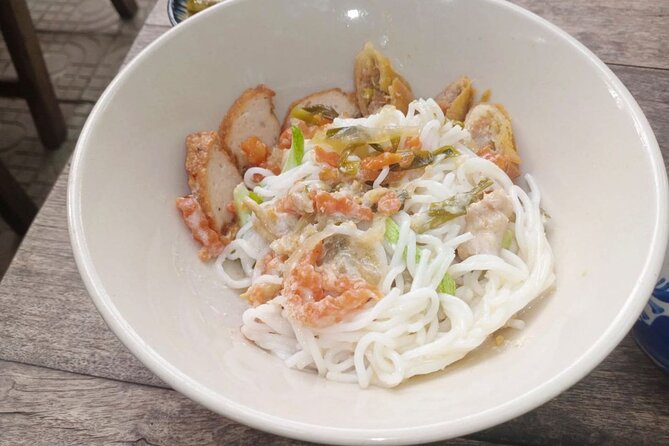
The second section moves to a local market near Wat Phnom for banh sung, described as authentic fresh noodles. This stop lasts about 30 minutes and focuses on how the noodles are made, along with the dish’s connection to Vietnamese food.
This is where the tour becomes more than a list of Cambodian snacks. Southeast Asian food traditions cross borders, and a good guide can help you understand those links without pretending every dish belongs to one country alone. The explanation of noodle-making adds another layer, since you are learning about process as well as flavor.
A market setting also changes the pace. You are not sitting at a table for the whole morning. You are moving through a working food area, looking at ingredients and prepared dishes while the guide points out details. The tour promises introductions to market traders, which can make the visit feel more personal than simply walking through with a map.
Keep your expectations practical. The supplied details do not specify the exact market name, noodle toppings, or drink choices. You should expect a fresh noodle tasting and an explanation of its background, but not assume a fixed recipe beyond what is stated.
Fried chive cake and its Chinese influence
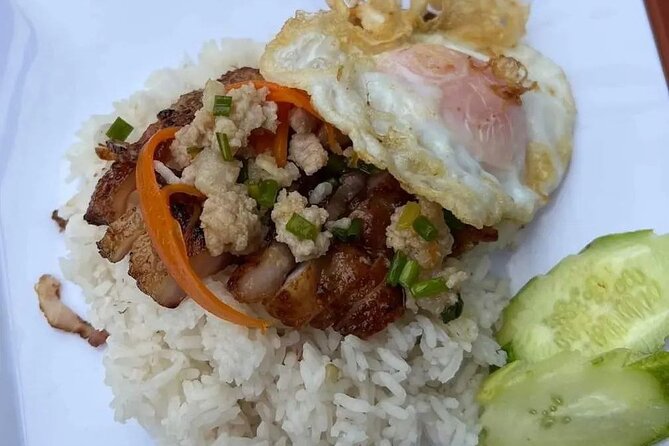
Fried chive cake is another stop, lasting about 30 minutes. It is described as a Chinese influence that has become popular with local people. The important feature is the texture: a thick, golden crust around a chive-filled cake.
This small dish gives the tour a welcome change from rice and noodles. Fried foods can be rich, so it is worth treating the cake as a tasting rather than a second full breakfast. Its appeal is easy to understand: crisp outside, savory filling, and a simple format that works well as street food.
The tour information places this part under Phnom Penh rather than assigning it a clearly named landmark. That suggests a city food stop rather than a major attraction visit. You are here for the food and the explanation, not for a long monument stop.
I appreciate that the guide includes the Chinese connection. Phnom Penh’s food culture was shaped by different communities and cooking traditions, and this cake provides a clear, edible example. It also gives you a dish to look for later if you continue exploring local markets on your own.
More Street Food Market Tours in Cambodia
- Phnom Penh Morning Market & Food Tour by Tuktuk – Includes All Food & Drinks!
★ 5.0 · 99 reviews - Siem Reap Morning Market & Food Tour by Tuk Tuk
★ 5.0 · 5 reviews - Phnom Penh: Morning Foodie, Market Walking & Street Art Tour
★ 5.0 · 3 reviews - Phnom Penh Morning Foodie & Market Tour by Tuk Tuk
★ 5.0 · 3 reviews
Hot-stone beef at Central Market
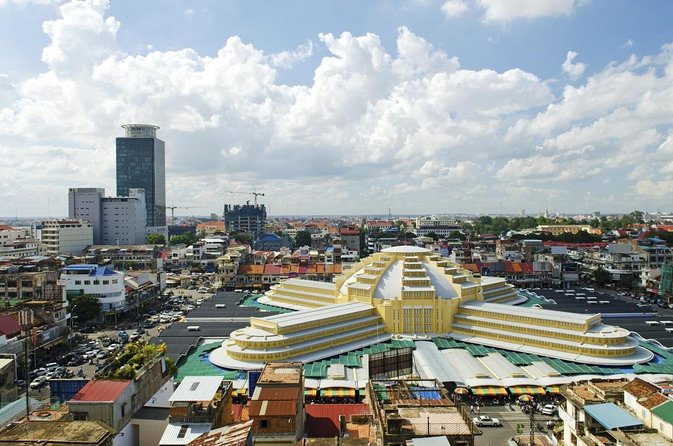
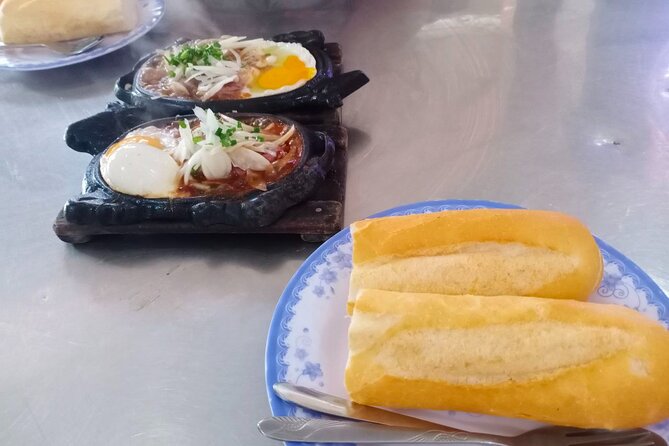
The final major tasting is beef served on a hot stone, with rice or bread. The beef is marinated in Khmer spices, and the guide explains the story behind the preparation. This stop is scheduled for about an hour at Central Market.
The hot stone is the tour’s most theatrical food moment. Instead of receiving a plain plate of cooked beef, you get a serving built around heat, aroma, and visible preparation. The choice of rice or bread lets you decide how substantial you want the final savory course to be.
Because this is the last main tasting, it functions almost like lunch. If you have a delicate appetite, the rice and bread choice gives you some control, but the tour still contains a lot of food for one morning. I would arrive hungry and keep the first few tastings moderate.
Central Market also gives the food a strong Phnom Penh setting. The schedule does not promise a full architectural tour or shopping session inside the market, so do not book this expecting a long general visit. Instead, think of it as a food-focused stop with time to see market life and learn about the beef dish.
Sweets, desserts, and the market walk
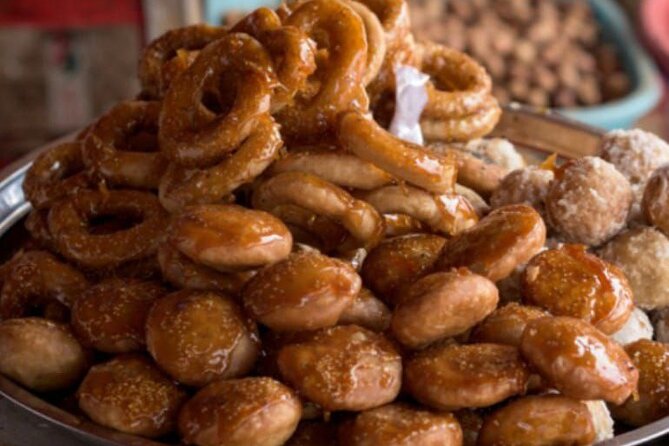
After the savory foods, the tour finishes with a walking section through a local market to choose sweets and desserts. This is a smart ending. Sweet foods are often the most approachable way to close a meal, especially after grilled pork, noodles, fried cake, and spiced beef.
The market walk is also your best chance to slow down and browse. Your guide can introduce you to traders, point out colorful displays, and help you choose something that catches your eye. The available information does not name the exact desserts, so you should expect a selection rather than one guaranteed sweet.
Photography is encouraged around the food displays. Still, use normal market manners: ask before taking close portraits, and follow your guide’s lead when photographing vendors or stalls. The colorful presentation is part of the appeal, but the people selling the food are not props.
This final section gives the morning a sense of place. You leave with more than a full stomach. You have seen how food is sold, talked with people connected to the market, and learned how breakfast dishes fit into everyday life.
What the tuk-tuk rides add
Local tuk-tuk transport is included between destinations. That matters in Phnom Penh, where a short ride can be more comfortable than walking beside busy roads, especially as the morning warms up.
The tuk-tuk is not just a practical transfer. It gives you small glimpses of the city between meals, and it keeps the tour from feeling like a restaurant crawl in one neighborhood. The exact pickup area is not detailed, but pickup is offered, and the meeting time is 7:30 am. Confirm the pickup point when booking.
There is a tradeoff. Tuk-tuks are open to the street, so you should expect traffic noise and ordinary city conditions rather than a quiet, air-conditioned ride. That is part of the setting, but anyone sensitive to heat, dust, or road noise should plan accordingly.
Guide-led context is the main value
The food alone is not the full reason to book this experience. You can find rice with pork, noodles, fried snacks, and market sweets without a guide if you spend enough time searching. The added value comes from knowing what you are eating and why it belongs in Cambodian food culture.
Khnow Yi is associated with the tour operation, while guides named Yi and Phat are connected with the food walks. The descriptions of the experience place strong weight on storytelling, dish origins, preparation, and local customs. You should use the tour as a chance to ask questions, especially if you are curious about ingredients, Chinese and Vietnamese influences, or the difference between a tourist dish and a common local breakfast.
The group limit of 10 helps here. It is small enough for a guide to hear your questions, though the actual feel will depend on the number booked that morning. A private tour is not promised, so you may share the tuk-tuks and food stops with other participants.
Is $49 a fair price?
At $49 per person, this is not the cheapest way to eat breakfast in Phnom Penh. Local food on its own can cost far less. The price makes more sense when you count the guide, several tastings, drinks, tuk-tuk transport between stops, market introductions, and the cultural explanation.
I see it as a good-value orientation tour rather than a budget meal. You are paying to reduce guesswork. The guide selects the stops, explains the dishes, handles the movement between locations, and helps you approach food that might otherwise be hard to identify.
The value is strongest during your first days in Phnom Penh. After this tour, you will recognize several breakfast styles and may feel more comfortable ordering or browsing on your own. If you already know the city well and mainly want inexpensive food, the price may feel high.
Who should book this morning tour?
I would recommend it to first-time visitors who want a direct introduction to Cambodian food. It also suits anyone who likes learning the background of a dish instead of simply taking a bite and moving on.
The tour works well for curious eaters who are open to market food, fried snacks, grilled meat, noodles, and sweets. It may also suit a small group of friends, since the reviews describe it as a successful gift and group outing, with the guides adding stories and conversation along the way.
I would think twice if you dislike early starts, need strict control over ingredients, or want a single relaxed café breakfast. The schedule contains several food types, and the exact market sweets are not fixed in the information provided. This is a broad tasting morning, not a specialized dietary tour.
Booking includes free cancellation up to 24 hours before the start time for a full refund. Changes made less than 24 hours before the 7:30 am start are not accepted, and the tour requires a minimum number of participants. If that minimum is not reached, you are offered another date or experience, or a full refund.
Should you book it?
Book this tour if you want to start Phnom Penh with local breakfast rather than a hotel buffet. The strongest reasons are the early timing, the mix of Cambodian, Chinese-influenced, and Vietnamese-connected foods, the tuk-tuk route, and the market walk with sweets at the end.
Skip it if your priority is the lowest possible food cost or a late morning. For most first-time visitors, though, the $49 fee buys a useful introduction to dishes you might not confidently find on your own, plus enough context to keep eating well after the tour ends.
FAQ
What time does the tour start?
The tour starts at 7:30 am.
How long does the experience last?
It lasts approximately three hours.
Is pickup available?
Yes. Pickup is offered, but the provided details do not specify the exact pickup area.
How many people can join the tour?
The maximum group size is 10 participants.
What foods are included?
The tour includes rice with pork, fresh noodles called banh sung, fried chive cake, beef served on a hot stone with rice or bread, and local sweets or desserts from a market.
Is transportation included?
Yes. Local tuk-tuk transport is provided between destinations.
Are drinks included?
Yes. Drinks are included as part of the experience.
Does the tour include a market visit?
Yes. You finish with a walking tour of a local market, where you can look at food displays, meet market traders through the guide, and choose sweets or desserts.
Can I cancel for a full refund?
Yes. You can cancel at least 24 hours before the experience start time for a full refund. Cancellations or changes made less than 24 hours before the start are not accepted for a refund.
More Food in Cambodia
- Chef Guided Food Tour of Pike Place Market
★ 5.0 · 3,733 reviews - Tokyo Tsukiji Fish Market Food and Culture Walking Tour
★ 5.0 · 3,184 reviews - Bangkok: Markets, Temples and Food Night Tour by Tuk Tuk
★ 4.9 · 2,371 reviews - London Bridge & Borough Market Food Tour with 7 Authentic Dishes
★ 5.0 · 1,972 reviews
More Food and Drink Tours in Cambodia
- Siem Reap Morning Market & Food Tour by Tuk Tuk
★ 5.0 · 2 reviews - Dubai: Old Town, Creek, Museums, Souks, & Street Food Tour
★ 4.8 · 10,816 reviews - Dubai: Old Town, Souks, Street Food, Guided Tour & Abra Ride
★ 4.9 · 7,170 reviews - Bangkok by Night: Temples, Markets and Food Tuk-Tuk Tour
★ 5.0 · 3,752 reviews
Just added around Cambodia
- Siem Reap Khmer Cooking Class and Local Market Tour★ 4.1 · 4 reviews
- Siem Reap Morning Market & Food Tour by Tuk Tuk★ 5.0 · 2 reviews
- Siem Reap: FREE Market & Local Temple Tour★ 4.8 · 3 reviews
- Siem Reap: Morning Cooking Class & Market Tour★ 5.0 · 7 reviews
- Phnom Penh: Morning Foodie, Market Walking & Street Art Tour★ 5.0 · 3 reviews
- Siem Reap: Angkor Wat Sunrise and Market Tour by Jeep★ 5.0 · 5 reviews
- Siem Reap Cambodian Buddhist Water Blessing and Local Market★ 4.8 · 3 reviews
- Phnom Phnom: Local Market & Culture Walking of City Tour★ 5.0 · 3 reviews
Street Food Market Tours, compared.

Old Town, Creek, Museums, Souks, & Street Food Tour
Read our review →
Old Town, Souks, Street Food, Guided Tour & Abra Ride
Read our review →
London Bridge & Borough Market Food Tour with 7 Authentic Dishes
Read our review →
Old Town, Souks, Street Food, Guided Tour & Abra Ride
Read our review →
Small Group Cooking Class & Market Food Tour in Florence
Read our review →