
Review · VALENCIA
Real Paella Cooking Class – Market Visit & Sangría Workshop
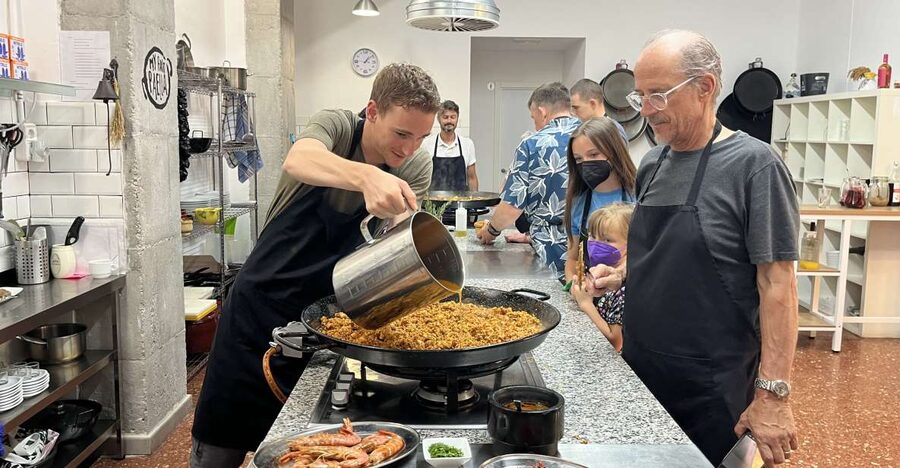
Valencia’s best paella lesson starts before you reach the kitchen. You’ll shop at Ruzafa Market, a neighborhood food hall where locals buy ingredients, then cook in small teams with chefs who teach the dish as a Valencian family tradition. The real prize is learning socarrat, the crisp rice layer at the bottom of the pan.
I like the market stop because it gives the class a local frame instead of treating paella as a stand-alone recipe. I also like the generous meal built around the lesson: tapas, sangria, wine, paella, salad, fruit, cake, coffee, and mistela. The main consideration is group size. Some sessions are intimate, while others are larger, so you may share your cooking station with several people.
Key points
- Shop at Ruzafa Market: See where Valencians buy fresh food and select ingredients with your chef.
- Learn the crisp socarrat: Your instructor explains how to form the golden rice crust without burning the dish.
- Choose your paella style: Prepare a traditional meat and vegetable paella or a seafood version with salmorreta sofrito.
- Cook instead of watching: You take part in the preparation, with the chefs correcting and guiding you as you work.
- Eat a full Valencian meal: Tapas, sangria, wine, salad, seasonal fruit, coca de llanda, coffee, and mistela are included.
- Expect a social class: The lively format suits couples, families, solo visitors, and anyone happy to share a table with new people.
Why this paella class feels different
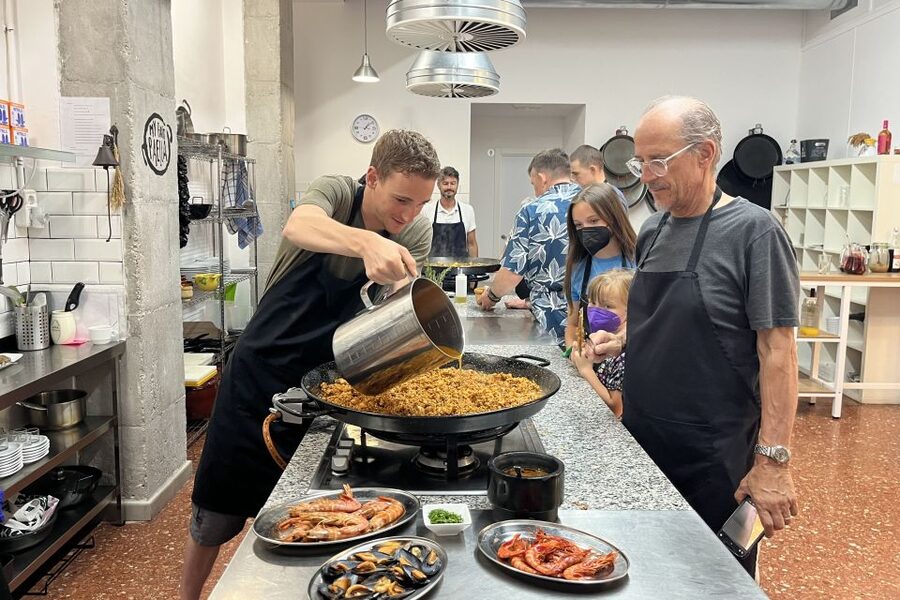
Many cooking classes give you a recipe card and a front-row seat. This one asks you to take part. You work with the rice, help prepare the pan, and listen as the chef explains why each stage matters.
That difference is important with paella. It is not simply rice mixed with seafood or meat. The size of the pan, the amount of liquid, the timing of the rice, and the final heat all affect the result. The chefs explain these points while you cook, so the lesson has a practical edge rather than feeling like a food show.
The staff also set a warm tone. Anna, José, Guillermo, Christina, and other members of the cooking team are repeatedly praised for their humor, patience, and ability to draw people into the group. The style is friendly and animated, not formal. You should expect plenty of conversation, raised glasses, and encouragement to take part.
That atmosphere works especially well if you are traveling alone or with family. Children have been included in the cooking, and solo participants have found it easy to meet people. At the same time, a larger class can feel less personal than a private lesson. If you want constant one-to-one instruction, this may not be your ideal format.
More Market Cooking Classes in Spain
- Barcelona: Paella Cooking Experience & Boqueria Market Tour
★ 4.8 · 3,661 reviews - Barcelona Paella Cooking Class with Market Visit, Tapas & Sangria
★ 5.0 · 2,531 reviews - Paella Cooking Class, Wine Tasting & Central Market in Valencia
★ 5.0 · 1,150 reviews
Starting at Ruzafa Market near San Valero Church
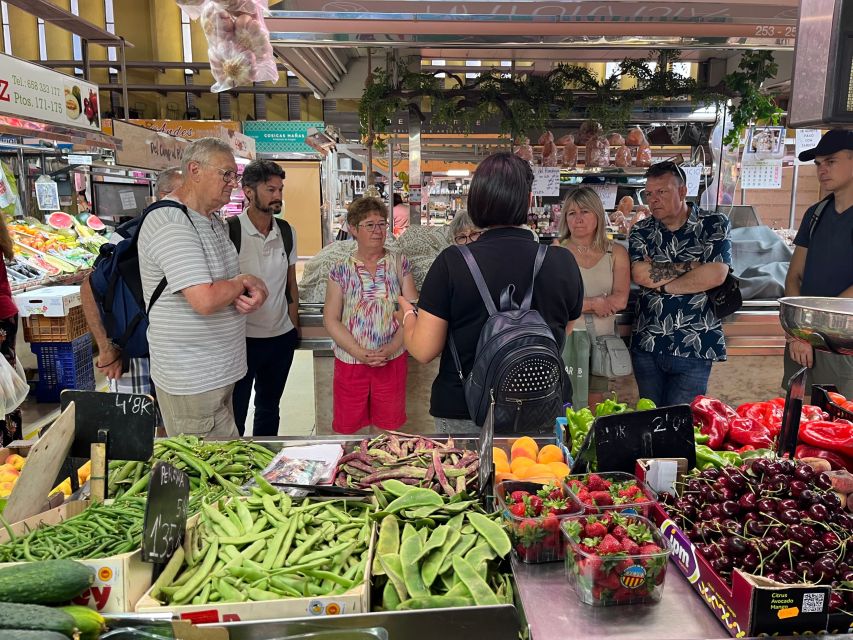
The meeting point is at the door of the Church of San Valero. From there, your guide leads you to Ruzafa Market, a useful choice because it is tied to ordinary neighborhood shopping rather than the city’s most photographed food market.
The visit is not just a walk past stalls. You see the ingredients that will shape the meal and learn what to look for before returning to the kitchen. The market gives you a better sense of paella as a local dish made from available produce, rice, meat, or seafood, rather than a fixed restaurant formula.
I like this opening because it helps you understand the food before you cook it. It also gives the class a bit of Valencia beyond the kitchen walls. You may have time to make extra purchases at the market, but those purchases are not included in the price, so budget separately if something catches your eye.
The market visit is relatively short compared with the cooking session. That is a plus if you want the paella lesson to remain the main event. It may disappoint you if you are looking for a long food tour with extensive tastings at individual stalls.
Tapas, sangria, and the move to the kitchen
Back at the cooking space, the welcome begins with a spread of Spanish tapas. The menu includes Manchego cheese, jamón, steamed mussels, patatas bravas, and olives. This is more than a small snack before lunch. It gives you time to meet the other people in your group and settle into the class.
The sangria workshop runs alongside this opening. You learn how to prepare the drink and can enjoy bottomless sangria during the cooking portion. Beer, wine, soft drinks, and other non-alcoholic choices are also included, which makes the class workable for people who do not drink alcohol.
The drinks are a major part of the social feel. Several sessions have been praised for keeping cups topped up, but this also means you should pace yourself. The class lasts three and a half hours, and the meal continues after the cooking is done. If you want to stay focused on the instruction, treat the sangria as part of the activity, not the main event.
You also get DO Valencia wine, a useful regional touch. The wine is served during the meal, while coffee and mistela come at the end. Mistela is a sweet local drink that provides the traditional final toast.
Choosing between meat and seafood paella
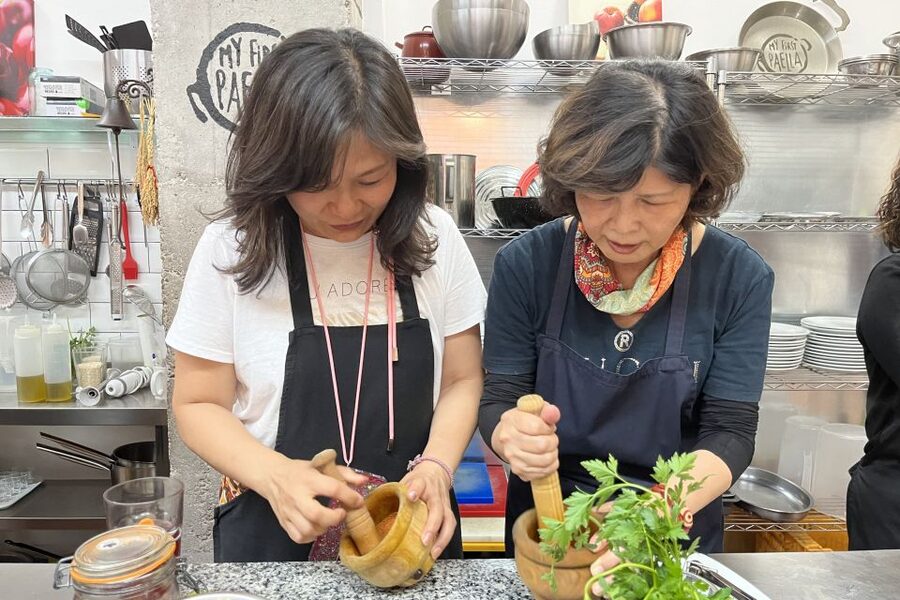
The main cooking lesson focuses on authentic Valencian paella. You prepare either a meat and vegetable paella or a seafood paella. The seafood version uses salmorreta, a traditional sofrito that adds a strong base of flavor before the rice goes in.
One useful point is the local distinction between meat and seafood. The class does not present every possible combination as equally traditional. One session specifically explained the choice as either meat or seafood, not both together. That gives you a clearer idea of Valencian cooking customs and helps avoid the common habit of adding every appealing ingredient to one pan.
The chefs discuss J. Sendra rice and the role of saffron. You learn that rice selection matters because the grain must absorb the cooking liquid while keeping its shape. You also learn that more saffron is not automatically better. These are the small decisions that make the recipe usable when you try it at home.
The cooking is arranged in groups, with some sessions divided into three teams. That setup lets several people work at once, though your exact hands-on role may depend on the size of your group. The class is participatory, but it is still a shared effort rather than each person making an individual paella.
Same stalls, a different way to shop and eat:
- Valencian paella cooking class, tapas and visit to Ruzafa market.
★ 5.0 · 828 reviews - Spanish Cooking Class & Triana Market Tour in Sevilla
★ 5.0 · 760 reviews - Seville: 3.5-Hour Spanish Cooking Class & Triana Market Tour
★ 4.9 · 751 reviews - Valencia: Paella Cooking Class with Central Market Tour
★ 5.0 · 721 reviews
The socarrat lesson is the practical payoff
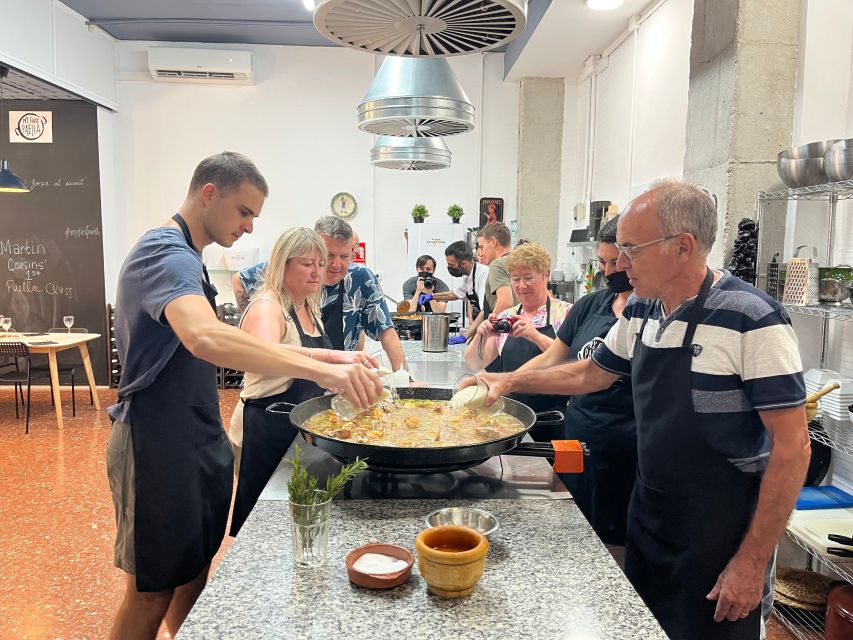
For many people, the most useful part of the class is the socarrat. This is the thin, crisp layer of rice that forms at the bottom of the pan. Valencians often consider it the best part, and the class treats it as a skill worth learning, not a lucky accident.
The chefs show you how the final heat affects the rice and how to aim for a browned crust without scorching the whole dish. You can watch the texture change and hear the explanations while the paella cooks. That is much easier to remember than reading a recipe instruction that simply says cook until done.
I would pay close attention during this stage. The ingredients are easy to find again, but recreating the right bottom crust at home is harder. The recipe you take away is useful, but the visual cues and timing advice may be the most valuable souvenirs.
Your result will depend partly on the group and the cooking station. Do not expect the precision of a private chef lesson. The benefit is that you learn alongside other people, compare results, and share the responsibility for the finished pan.
Sitting down to eat what you made
When the paella is ready, everyone sits down together. The meal includes your paella, Valencian tomato salad, seasonal fruit, coca de llanda, coffee, and mistela. Coca de llanda is a traditional Valencian sponge cake, and it gives the dessert course a clear local connection.
This final meal changes the pace of the afternoon. You are no longer standing around a stove or listening to instructions. You can discuss the cooking, compare the meat and seafood versions, and enjoy the result with the people who helped make it.
The food is substantial for a class priced at $77 per person. You are paying for a guided market visit, instruction, ingredients, tapas, drinks, and a full meal over three and a half hours. Compared with a standard restaurant lunch, the value comes from the teaching and the social experience. Compared with a private cooking lesson, the lower price reflects the shared format.
The meal also explains why the activity often takes most of an afternoon. This is not a quick demonstration followed by a small tasting. Build your Valencia plans with enough space afterward rather than trying to rush to another timed attraction.
How the group size affects the experience
The group size appears to vary. Some sessions have had only six people, creating plenty of direct interaction with the guide. Other sessions have been larger, but the group format can add energy and make the shared meal feel more like a long table gathering.
I would choose this experience if you enjoy meeting people from different countries and do not mind taking turns. The cooking team works hard to include everyone, and the class has been praised for its friendly, family-style atmosphere.
If you are booking for a family, the format is a good fit because children can take part in suitable preparation tasks. If you are looking for a quiet, highly technical lesson, the noise and social activity may distract you. The chefs are there to teach, but they are also there to keep the room lively.
The English-language guiding is a clear advantage for English-speaking visitors. The explanations cover both technique and tradition, and guides such as Anna and José have been singled out for being entertaining as well as clear.
What is included for $77
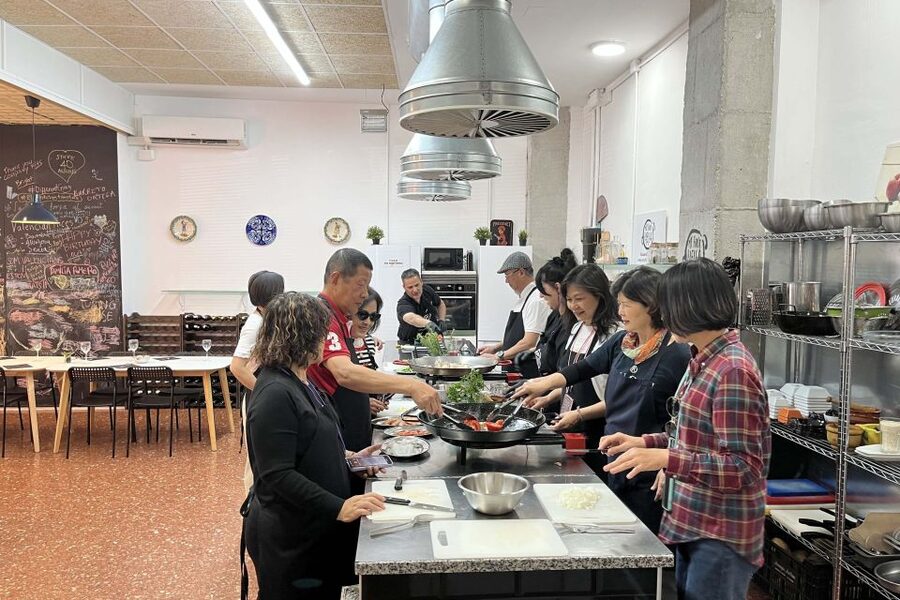
At $77, the package includes more than the cooking lesson itself:
- Guided visit to Ruzafa Market
- Chef-led paella workshop
- All workshop ingredients
- Tapas such as jamón, Manchego, mussels, patatas bravas, and olives
- Sangria
- Beer, wine, and soft drinks
- Paella meal
- Salad, seasonal fruit, and coca de llanda
- Coffee and mistela
Extra purchases at Ruzafa Market are not included. That is the only clear add-on listed, so you can keep the cost predictable if you skip shopping.
The drink package adds value, but it should not be the reason you book. The strongest part is the combination of market context, cooking practice, and a meal you help prepare. If you do not drink, the included food and non-alcoholic options still make the class worthwhile.
Free cancellation is available up to 24 hours before the activity, and you can reserve now and pay later. Check the available start time when booking, since the exact schedule is not fixed in the information provided.
Who should book this experience
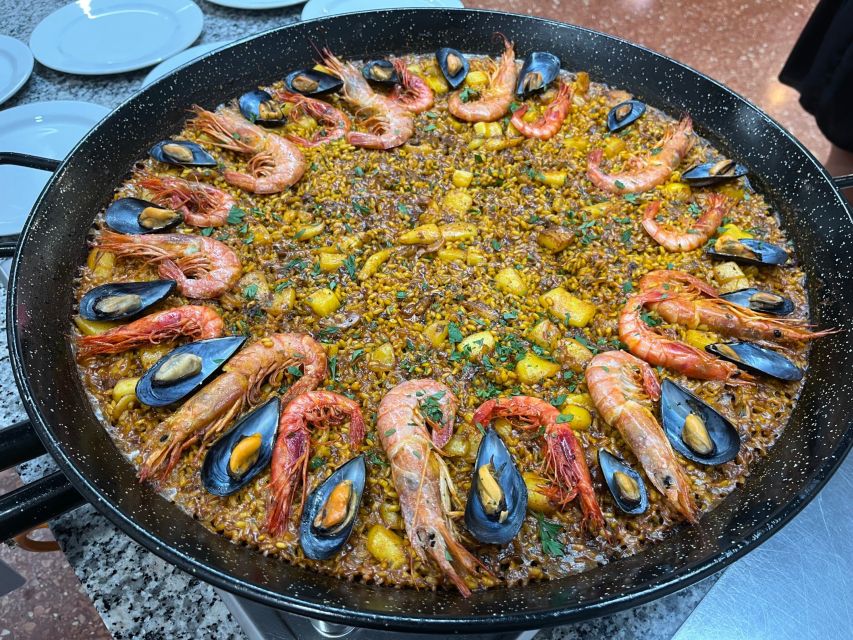
I would recommend it most strongly to first-time visitors who want one activity that combines food, local shopping, and conversation. It also suits anyone who has eaten paella in Valencia and wants to understand how the dish is made rather than simply ordering another plate.
Families should find plenty to enjoy, especially because children can be included. Couples get a shared activity with a meal at the end. Solo visitors can use the group format to meet people, though you should be comfortable joining a table where you know nobody at the start.
Experienced home cooks may find some of the basic steps familiar. Even so, the rice, saffron, sofrito, and socarrat details give the class a clear purpose. You are not just following a recipe. You are learning the local logic behind it.
I would hesitate only if you dislike group activities, avoid alcohol entirely and do not want to be around a drink-centered meal, or need a private lesson with uninterrupted access to a chef. For everyone else, the balance of instruction and fun is strong.
Should you book the My First Paella class?
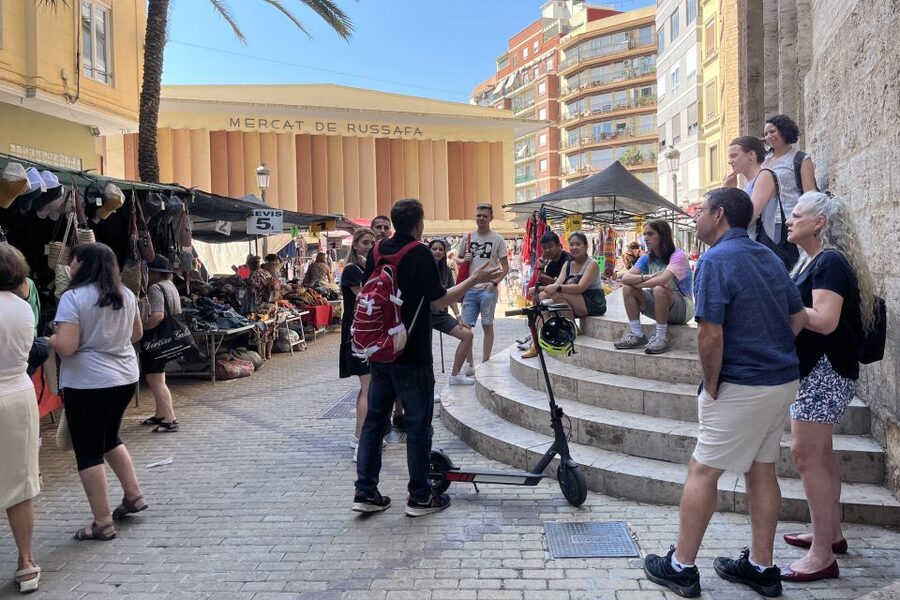
Book it if you want to do more than eat paella in Valencia. The Ruzafa Market visit gives the afternoon a local start, the chefs make the cooking accessible, and the socarrat lesson gives you a real technique to practice at home.
The activity is especially good value for a three-and-a-half-hour experience with food and drinks included. Just set your expectations correctly: this is a lively shared class, not a quiet private tutorial. If you enjoy cooking with other people, learning from chefs such as Anna, José, Guillermo, and Christina, and ending with a long Valencian meal, this is an easy choice.
FAQ
Where does the paella class meet?
You meet your guide at the door of the Church of San Valero.
How long does the experience last?
The activity lasts three and a half hours.
What language is the tour conducted in?
The live tour guide conducts the experience in English.
Does the experience include a market visit?
Yes. The class includes a guided visit to Ruzafa Market, where you see and select ingredients with the chef.
What types of paella can I prepare?
You can prepare an authentic Valencian meat and vegetable paella or a seafood paella with traditional salmorreta sofrito.
Is the class hands-on?
Yes. You take part in preparing the paella, with the chefs guiding and correcting you during the cooking.
Are food and drinks included?
Yes. The package includes tapas, sangria, beer, wine, soft drinks, dessert, coffee, and mistela, along with the paella meal.
Can I buy anything at Ruzafa Market?
You can make extra purchases at the market, but those purchases are not included in the activity price.
Can I cancel for a full refund?
Yes. You can cancel up to 24 hours in advance for a full refund.
More Markets in Spain
- San Sebastian Pintxo Food, Wine & Market Foodie Tour(Small Group)
★ 5.0 · 621 reviews - Cap de Formentor: Market, Beach, and Alcudia Tour
★ 4.3 · 620 reviews - Ultimate Barcelona Food Tour with visit to a Local Market
★ 5.0 · 507 reviews - Interactive Paella & Market: Bottomless Wine & Rambla Views
★ 5.0 · 376 reviews
More Cooking Classes in Spain
- Barcelona: Paella Cooking Class with Market Visit and More
★ 4.9 · 711 reviews - Madrid Tapas & Paella Cooking Experience with Local Market Visit
★ 5.0 · 432 reviews - Half-Day Spanish Cooking Class & Boqueria Market Tour
★ 4.9 · 383 reviews - Seafood paella cooking class, tapas and visit to Ruzafa market.
★ 5.0 · 328 reviews
Just added around Spain
- Explore Bilbao’s Flavors Mercado de la Ribera and Old Town★ 4.5 · 3 reviews
- CERTAL Exclusive Tour: LA RIBERA Market + GASTROBARS Bilbao (3h)★ 4.5 · 12 reviews
- Barcelona La Boqueria & Sant Antoni Private Food Experience★ 5.0 · 7 reviews
- Spanish Oysters, Cava and Ibérico Ham at Barcelona’s La Boqueria Market★ 5.0 · 8 reviews
- Taste of Barcelona: Boqueria Market, Tapas & History Tour★ 4.5 · 22 reviews
- Barcelona Tapas Cooking & Cocktail Class with Veronique & Mattias★ 5.0 · 3 reviews
- Cook Paella & Tapas + Market Tour in Barcelona (4-Course Meal)★ 5.0 · 2 reviews
- Private Barcelona Market Tour & Paella Cooking Class with Josh★ 5.0 · 4 reviews
Market Cooking Classes, compared.
Hanoi Cooking Class: Culture, Local Market & Meaning CSR Impact
Read our review →
5 Traditional Dishes Hanoi Cooking Class with Market Trip
Read our review →
Cooking Class and Lunch at a Tuscan Farmhouse with Local Market Tour from Florence
Read our review →
Cooking Class, Market & Thai Herbs Garden Tour
Read our review →
Authentic Cooking Class with Market & Farm Visit
Read our review →
Paella Cooking Experience & Boqueria Market Tour
Read our review →
Cooking Class Hoi An:Local Market, Basket Boat, Fishing & Cooking
Read our review →Browse the lists this tour appears in