
Review · CHIANG MAI
Half-Day Cooking Class with Market Tour
The best part of this Chiang Mai cooking class happens before the first pan hits the heat: you visit a local market, learn what the vegetables and seasonings are used for, then take those ingredients to a family home kitchen. It gives Thai food a useful context that a restaurant meal cannot.
I like the freedom to choose your own dishes, and I like the friendly, home-based setting. Instructors including Oun, Orn, Mind, and Mindy explain the food in English, keep the mood light, and adjust dishes for vegetarian, gluten-free, pescatarian, and allergy needs when told in advance. The main consideration is simple: you will eat a lot, so skip breakfast or lunch.
Key points to know
- Market first: See Thai vegetables, herbs, spices, and daily shopping before cooking.
- Choose your menu: Pick from stir-fries, soups, appetizers, curry pastes, and curries.
- Home kitchen setting: The class takes place in a private home rather than a large culinary studio.
- Five-hour format: Morning sessions run roughly 9:00 am to 1:30 pm, while afternoon sessions run about 3:30 pm to 8:30 pm.
- Small group size: The class is limited to 10 people, with individual cooking stations.
- Good value at $36: Hotel pickup, market visit, ingredients, drinks, recipes, cooking, and the meal are included.
A Chiang Mai food lesson that begins at the market
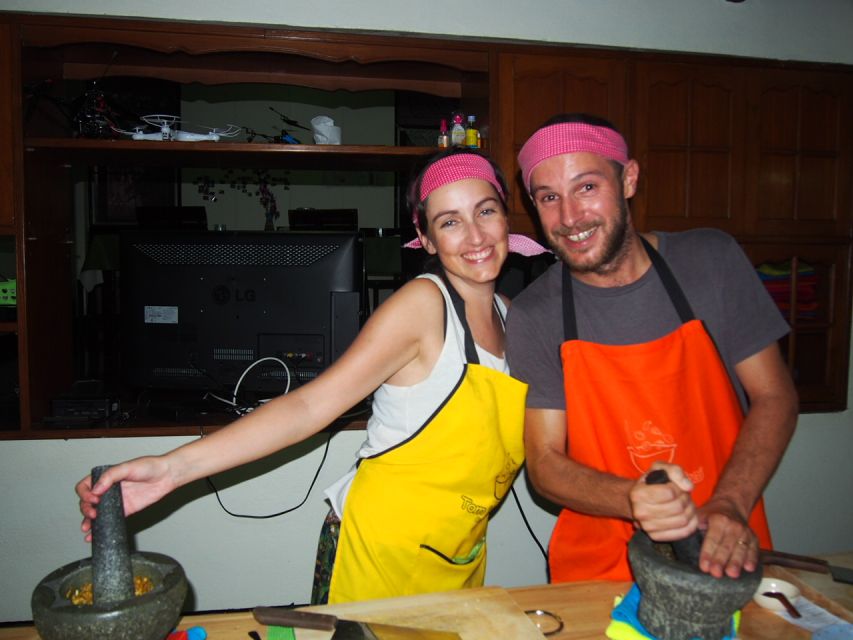
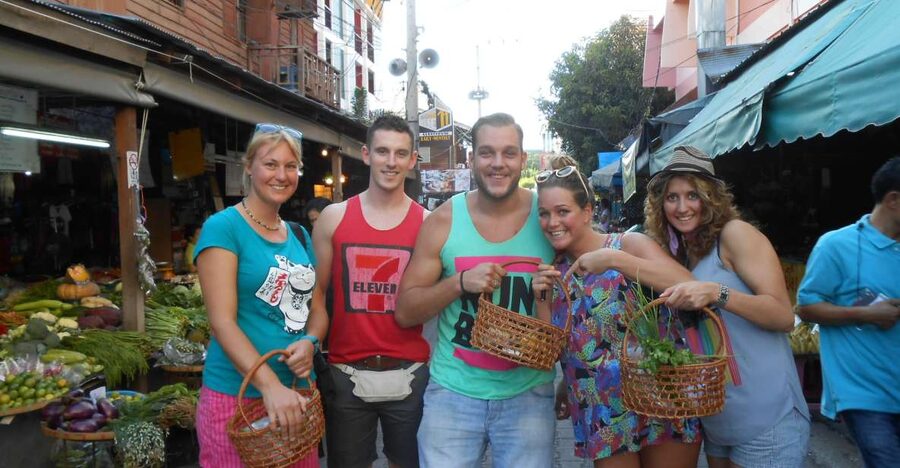
This is not just a demonstration where you watch someone else chop and stir. You visit a local market, look at the ingredients used in Thai cooking, and learn how local people shop for food. That first stop helps you recognize the items that can otherwise blur together on a market shelf: leafy vegetables, curry ingredients, herbs, noodles, and seasonings.
The market visit is also the most useful part for anyone staying in Thailand for more than a few days. Once you know what galangal, coconut milk, curry paste, Thai vegetables, and fresh herbs look like, menus and food stalls become easier to understand. You may still need help with Thai names, but you will have a better idea of what you are ordering and eating.
The market is a working local stop, not a sightseeing market built around souvenirs. That means it may be less polished and more practical. You are there to examine ingredients and daily life, so keep your expectations focused on food rather than on a formal tour of market landmarks.
More Market Cooking Classes in Chiang Mai
- Chiang Mai: Cooking Class, Market & Thai Herbs Garden Tour
★ 4.9 · 4,824 reviews - Chiang Mai: Authentic Cooking Class with Market & Farm Visit
★ 4.9 · 4,546 reviews - Chiang Mai: Cooking Class with Market and Pickup
★ 4.9 · 1,365 reviews
From market produce to a home kitchen
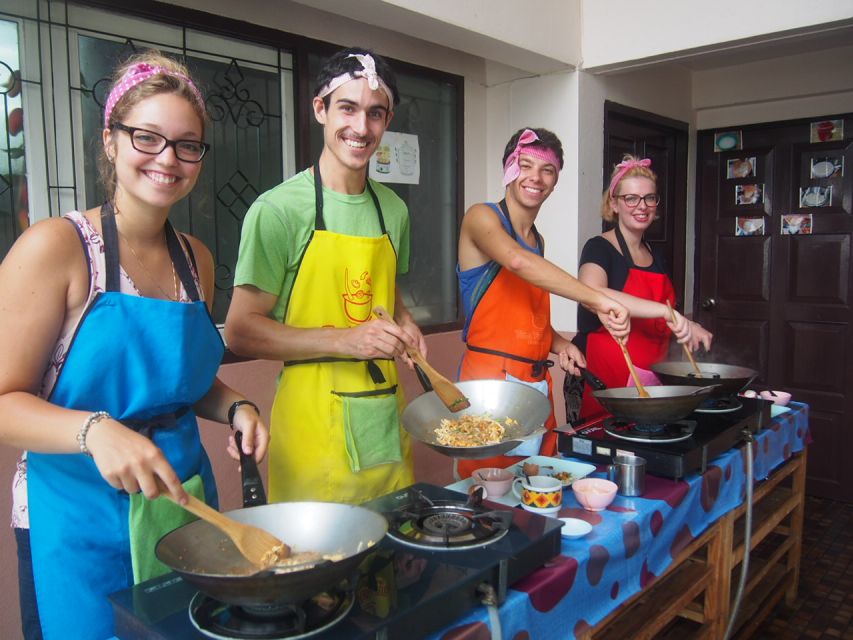
After the market, you travel to the cooking school, which is located in the instructors’ home. That change of setting is central to the experience. You are not simply being shown a standard recipe in a commercial classroom. You are welcomed into a Thai home and taught dishes in a relaxed space.
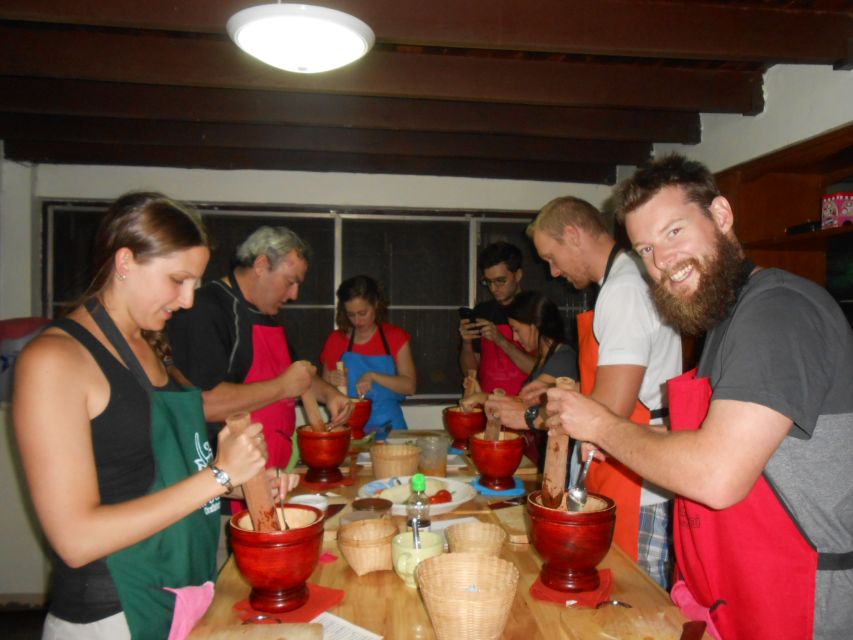
The cooking area is divided into separate rooms for preparation, cooking, and eating. One room is air-conditioned for the meal, while the cooking stations include individual skillets. Each participant has space to work, and the class size is capped at 10 people.
I like this arrangement because it gives you something to do at every stage. You prepare ingredients, cook your own dish, and then eat it while the next course gets underway. Past participants have found the kitchen clean and well equipped, with good knives and prepared ingredients that still require your hands-on work.
The setup also suits beginners. You do not need to arrive with knife skills or previous Thai cooking experience. The instructors show you what to do, help when needed, and keep the pace moving without turning the class into a race.
Choosing Pad Thai, curry, soup, or northern noodles
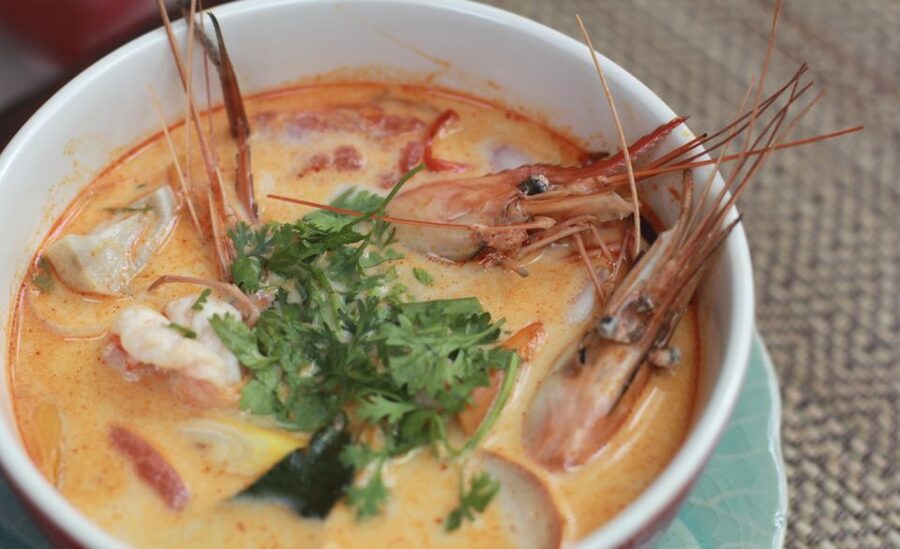
The menu is broad enough to please different tastes. For stir-fried dishes, you can choose Pad Thai, cashew nut with chicken, or Pad See Ew. Soup choices include hot and sour prawn soup, chicken in coconut milk soup, and Thai noodle soup.
The appetizer list includes spring rolls, papaya salad, and cucumber salad. For curry, you can work with green curry, Panang curry, or Khao Soi curry. The class also covers the curry paste itself, with green curry paste, Panang curry paste, and Khao Soi curry paste available as choices.
The exact structure is designed so each person chooses dishes from the available categories, while everyone makes mango sticky rice. The supplied details describe five dishes plus one special dish, and the practical result is a substantial meal with several different flavors and techniques.
That choice matters. If you are cooking with a partner, you can select different dishes and share them afterward. This lets you taste more of the menu without each person making the same plate. A family can also spread out its choices so children and adults have something suitable.
The recipes are not limited to the mildest tourist versions. You control the level of heat more easily when you cook your own food, and the instructors can make adjustments for dietary needs. Tell the school about allergies or special requests before the class, not only once you arrive.
The instructors make the class easy to follow
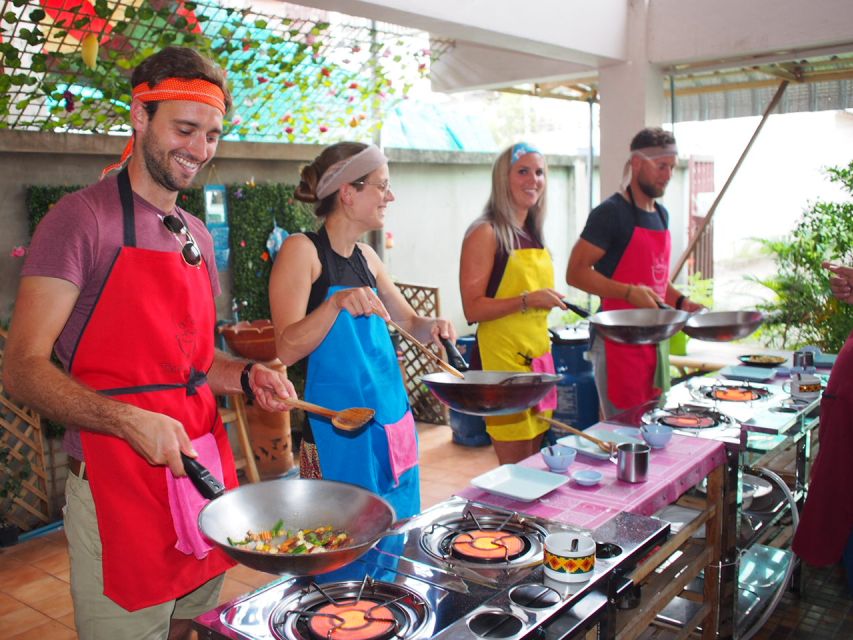
The teaching style is a major part of the experience. Oun and Orn are described as friendly, funny instructors who explain ingredients and cooking steps clearly. Mind and Mindy are also part of the teaching team associated with the class, and English is the working language.
You can expect more than a list of measurements. The instructors explain Thai spices, ingredients, and some food customs, then demonstrate the process before you cook. They also help at individual stations, which is important when several dishes are being prepared at once.
The tone is informal and social. That suits people who want a relaxed afternoon rather than a serious professional cooking course. The humor is part of the atmosphere, and the home setting helps the class feel personal.
The English level is strong enough for cooking instructions, though groups can sometimes include people with different levels of English. The class has handled that situation with demonstrations and hands-on help, but communication may not be equally effortless for every person in a mixed group.
More Market Cooking Classes in Thailand
- Chiang Mai: Evening Cooking Class and Local Market Visit
★ 4.9 · 648 reviews - Evening Cooking Class in Organic Farm with Local Market Tour
★ 5.0 · 394 reviews - Cooking Morning Class Chiang Mai Visit Organic Garden and Market
★ 5.0 · 211 reviews - Cooking Evening Class Chiang Mai Visit Organic Garden and Market
★ 5.0 · 187 reviews
A five-hour schedule with two useful options
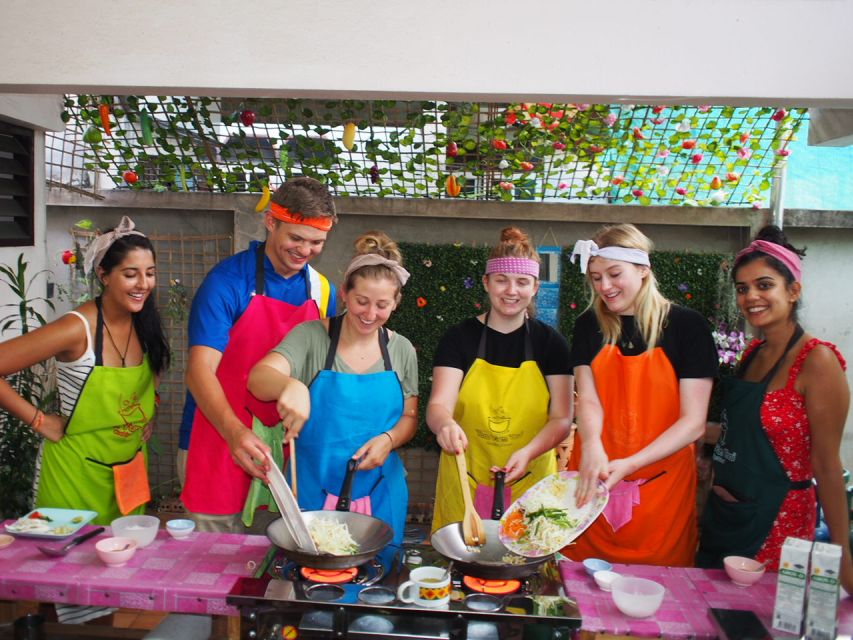
The morning class runs from about 9:00 am to 1:30 pm. Pickup is scheduled around 8:45 to 9:15 am. The afternoon and evening class runs from approximately 3:30 pm to 8:30 pm, with pickup around 3:00 to 3:30 pm.
The morning option works well if you want the rest of the day free for temples, museums, or a walk around the old city. The evening option gives you a slower start and makes the cooking class your main dinner activity.
Pickup and drop-off are included for hotels within 3 kilometers of Chiang Mai’s old city. You should wait in the hotel lobby or agreed pickup place about 10 minutes early. Since pickup windows are approximate, do not schedule another activity too tightly against the end of the class.
The five-hour length is worth noting. This is not a quick lesson followed by a single meal. You spend time at the market, receive instruction, prepare several dishes, cook them, and eat as you go. That makes the class good value, but it also means you should treat it as a half-day commitment.
Expect a very large meal
The class serves what you cook, so the meal builds course by course. A stir-fry is followed by soup, an appetizer, and a curry, with mango sticky rice made by everyone. You will also be offered seasonal fruit and snacks, along with drinking water, tea, and coffee.
This is where the repeated advice to arrive hungry becomes practical. Several people found themselves full well before the class ended, yet still wanted to taste everything. If you eat a full meal beforehand, you may spend the second half simply trying to keep up.
The food is also the class’s best test. You are not only learning a recipe on paper. You see how the ingredients combine, adjust the cooking, and eat the result while it is fresh. That gives you a clearer sense of the balance between sweet, salty, sour, creamy, and spicy flavors.
Mango sticky rice is a fitting finish because it is familiar, approachable, and easy to recreate at home. The included recipe book means the class does not end when you leave Chiang Mai. You can use the recipes to repeat the dishes later, assuming you can find the needed ingredients.
Dietary needs and menu choices
The class can accommodate vegetarian, gluten-free, pescatarian, and other eating preferences. Food allergies and special requests should be shared in advance. That gives the instructors time to adjust ingredients and plan suitable alternatives.
This is especially helpful in a cooking class because the dishes are prepared in front of you. You can ask questions and see what goes into each recipe, rather than relying on a general restaurant menu description.
Still, do not assume every substitution is automatic. Tell the provider clearly about allergies, restrictions, or foods you avoid before the scheduled date. If your needs are complex, confirm that they can be handled before paying.
The freedom to choose dishes also helps with spice. Thai food can be hot, and some menu items, such as Tom Yum, green curry, and papaya salad, may be prepared with a noticeable kick. You can ask for a milder version, but it is wise to state your preference early.
What the $36 price really covers
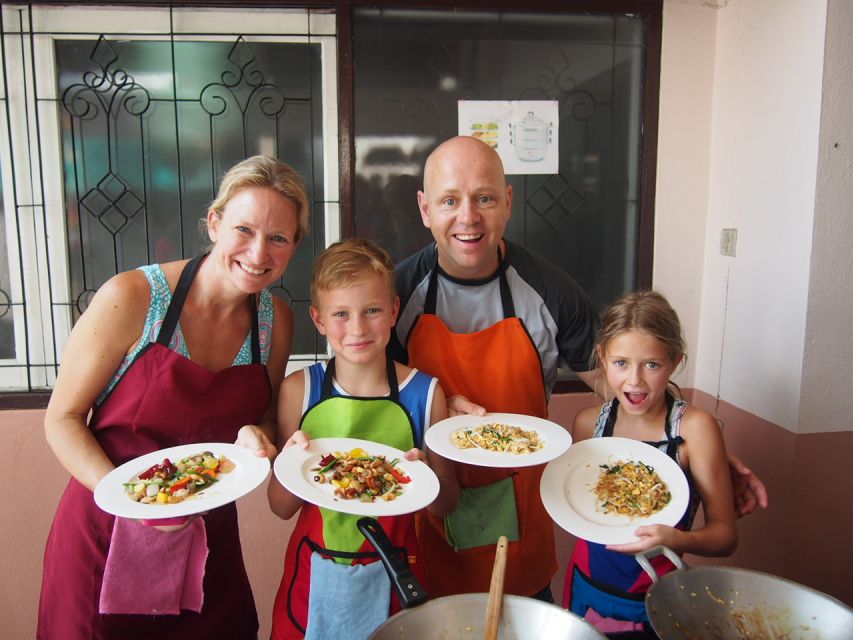
At $36 per person, the price is strong for a five-hour activity. You are paying for transport within the stated pickup zone, a market visit, an English-speaking guide, ingredients, cooking instruction, drinks, the food you prepare, and a recipe book.
A cheaper class might offer a short demonstration or one main dish. Here, the value comes from the number of dishes and the time spent working with the ingredients yourself. You also avoid paying separately for lunch or dinner that day.
The home setting adds value for people who care about personal contact and local cooking traditions. It may not suit someone looking for a polished culinary school with formal presentation, professional certificates, or advanced chef training. This is a practical introduction to Thai home cooking, not a qualification course.
Transport also improves the value. Chiang Mai traffic and heat can make getting across town inconvenient, and the pickup service removes that problem if your hotel is within 3 kilometers of the old city. Hotels farther away are outside the stated included area, so check your location before booking.
Who will enjoy this cooking class most
I would recommend this to first-time visitors who want a better understanding of Thai food during their stay. The market visit gives you useful clues for later meals, and the recipes help you continue the experience at home.
It is also a good fit for couples, families, and small groups who enjoy eating together. Each person can choose different dishes, and the individual stations keep the activity hands-on rather than turning it into a group demonstration.
Vegetarians and people with certain dietary preferences have a good reason to consider it, provided they explain their needs in advance. Beginners should feel comfortable too, since the instructors guide the process and provide help at the stations.
You may want to skip it if you dislike long meals, group activities, or spicy food. The class is social, the menu is generous, and the five-hour format leaves little room for rushing. It is also not the best choice if you want advanced culinary technique rather than accessible recipes.
Booking advice for the morning or evening class
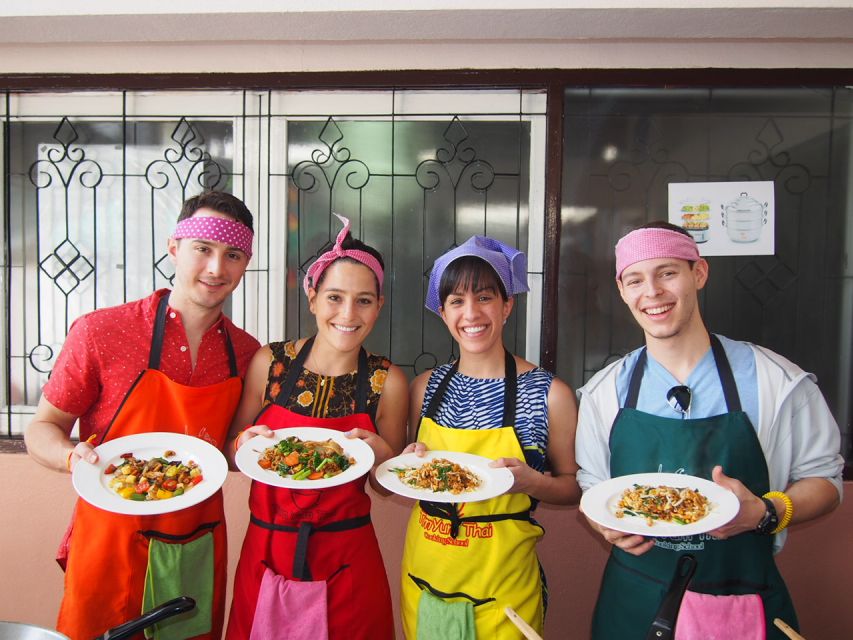
Choose the morning session if you want a full afternoon free and prefer cooking before the heat of the day builds. Choose the afternoon session if you would rather sleep late, spend the morning exploring Chiang Mai, and finish with a cooked dinner.
The cancellation terms are flexible: you can cancel up to 24 hours before the activity for a full refund, and you can reserve now and pay later. Availability and exact start times should still be checked for your chosen date.
With a 5 out of 5 rating from 163 reviews and a 96 percent perfect score for transport, the experience has a strong record. Those numbers do not remove the need to check pickup distance, dietary arrangements, and the class time that fits your plans.
Should you book the Tom Yum Thai Cooking School class?
Yes, if you want a friendly, hands-on introduction to Thai food with a market visit and a real meal at the end. The strongest reasons to book are the home setting, the freedom to choose dishes, the personal instruction, and the recipe book you can use afterward.
The main warning is the amount of food and the time involved. Arrive hungry, tell the school about allergies early, and leave your schedule open for the full five hours. If those points work for you, $36 buys more than a cooking lesson: it gives you a practical way to understand Chiang Mai through its ingredients and everyday food.
FAQ
Where does the cooking class take place?
The class takes place in a home-based cooking school in Chiang Mai Province.
Is hotel pickup included?
Yes. Hotel pickup and drop-off are included for accommodations within 3 kilometers of Chiang Mai’s old city.
How long does the experience last?
The activity lasts five hours. The morning session runs from about 9:00 am to 1:30 pm, and the afternoon session runs from about 3:30 pm to 8:30 pm.
What time is pickup?
Morning pickup is scheduled around 8:45 to 9:15 am. Afternoon pickup is around 3:00 to 3:30 pm. You should wait in the lobby or pickup place 10 minutes early.
What dishes can I cook?
Options include Pad Thai, Pad See Ew, cashew nut with chicken, Tom Yum, chicken in coconut milk soup, Thai noodle soup, spring rolls, papaya salad, cucumber salad, green curry, Panang curry, and Khao Soi curry. The available choices are arranged by the school.
Is mango sticky rice included?
Yes. Everyone makes sticky rice with mango as the dessert.
Can the class handle food allergies or special diets?
Yes, dietary requests and allergies can be accommodated when the school is told in advance. Vegetarian, gluten-free, and pescatarian options are available.
What is included besides the cooking lesson?
The price includes the local market visit, drinking water, tea, coffee, a recipe book, hotel transport within the included pickup zone, the ingredients, and the food you cook.
Can I cancel or pay later?
You can cancel up to 24 hours before the activity for a full refund. Reserve now and pay later is also available.
More Markets in Chiang Mai
- Chiang Mai: Evening Local Street Food Market Tour
★ 4.8 · 604 reviews - Chiang Mai: Kalare Night Bazaar Boxing Stadium Muay Thai
★ 4.7 · 507 reviews - Chiang Mai: Elephants, Sticky Waterfalls, Market and Temple
★ 4.9 · 227 reviews - Chiang Mai Temples and Market Tuk-Tuk Evening Night Tour
★ 4.5 · 201 reviews
More Cooking Classes in Chiang Mai
- Morning Cooking Class in Organic Farm with Local Market Tour
★ 5.0 · 157 reviews - Chiang Mai: Traditional Thai Cooking Class with Market Tour
★ 4.8 · 137 reviews - Chiang Mai: Half Day Cooking Class at Organic Farm
★ 4.8 · 96 reviews - Chiang Mai: Morning Cooking Class with Market Visit
★ 4.9 · 81 reviews
Just added around Chiang Mai
- Chiang Mai: Half Day Morning Cooking Class with Market Tour★ 4.9 · 10 reviews
- Chiang Mai: Half Day Cooking Class at Organic Farm★ 4.8 · 96 reviews
- Full Day Thai Cooking Class in Organic Farm and Market★ 5.0 · 3 reviews
- Chiang Mai Light: Tuk Tuk Night Tour with Temples & Markets★ 5.0 · 7 reviews
- Chiang Mai: Traditional Thai-Akha Cooking Class& Market Tour★ 5.0 · 25 reviews
- Chiang Mai: Morning Cooking Class with Market Visit★ 4.9 · 81 reviews
- Chiang Mai: Half Day Evening Cooking Class with Market Tour★ 4.9 · 19 reviews
- Chiang Mai: Sticky Waterfall by Local Truck with Market Stop★ 4.8 · 26 reviews
Market Cooking Classes, compared.
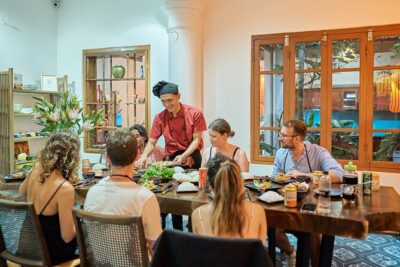
Hanoi Cooking Class: Culture, Local Market & Meaning CSR Impact
Read our review →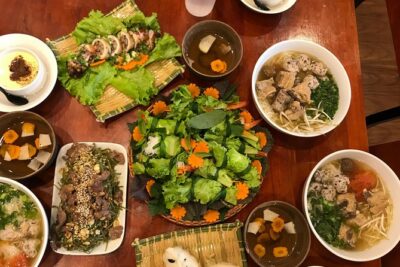
5 Traditional Dishes Hanoi Cooking Class with Market Trip
Read our review →
Cooking Class and Lunch at a Tuscan Farmhouse with Local Market Tour from Florence
Read our review →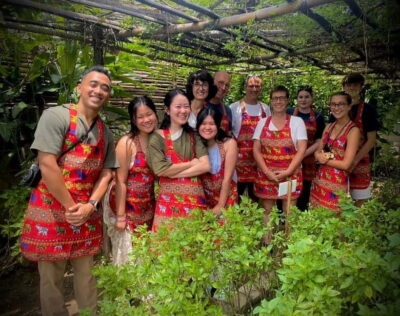
Cooking Class, Market & Thai Herbs Garden Tour
Read our review →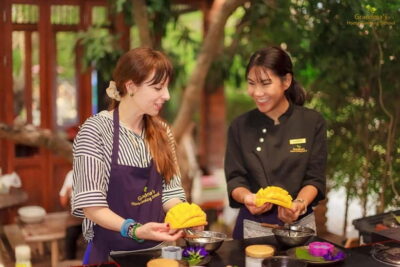
Authentic Cooking Class with Market & Farm Visit
Read our review →
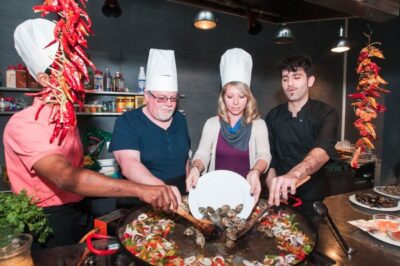
Paella Cooking Experience & Boqueria Market Tour
Read our review →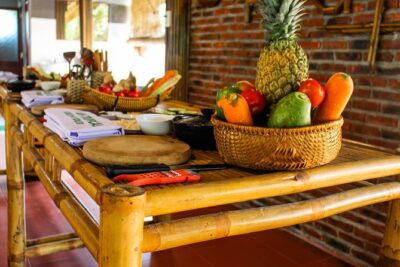
Cooking Class Hoi An:Local Market, Basket Boat, Fishing & Cooking
Read our review →Browse the lists this tour appears in