
Review · UK
Bristol: Air Raid Shelter & St. Nicholas Market Walking Tour
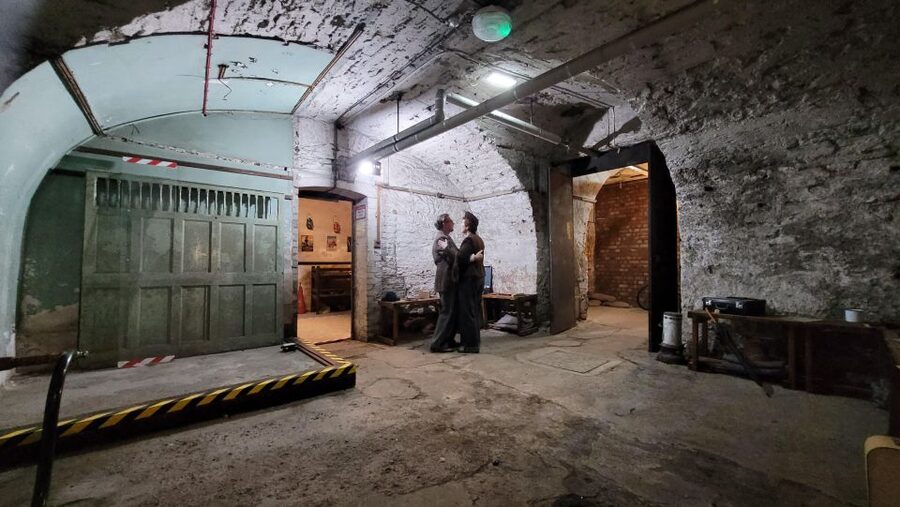
Bristol keeps a remarkable secret beneath the Corn Exchange: a WWII public air raid shelter left largely untouched. This tour links that underground time capsule with old city streets, Blitz damage, Bristol’s trading past, and rooms once used by bands including the Rolling Stones.
I like the strong sense of place and the guides’ theatrical approach, especially when Owen, Duncan, or Theresa use wartime stories to make the shelter feel human rather than merely historical. I also like that the tour ends at St. Nicholas Market, where you can turn the lesson into lunch.
The main drawback is the shelter itself. It is not a polished museum, and the underground rooms can feel tight, dim, and unfinished. That raw quality is part of the appeal, but you should choose another activity if you dislike confined spaces or need step-free access.
Key points at a glance
- A rare underground Bristol experience: Enter the city’s large public WWII air raid shelter beneath the Corn Exchange.
- A walking tour with character: Guides may lead in wartime costume and use vivid storytelling, humor, and local detail.
- More than a war tour: Learn about roughly 1,000 years of Bristol’s trading life, old streets, Blitz damage, and the city’s music past.
- Historic rooms with a rock connection: See Corn Exchange areas linked with major 1960s bands, including the Rolling Stones.
- A useful market finish: End at St. Nicholas Market, with food, sweets, savory snacks, and souvenirs available to buy.
- Good value at $16: The fee includes the guide, shelter entry, and access to Corn Exchange areas, but not food or drink.
Why the shelter makes this Bristol tour different
Many city walks keep you above ground, pointing out façades and telling stories from the pavement. This one changes level. You begin with Bristol’s streets and then go beneath them into a place built for ordinary people trying to survive wartime bombing.
The shelter is the heart of the experience. It remains a physical reminder of the fear and inconvenience of the Blitz, not a recreated attraction designed to look old. You may see wartime objects and a growing collection of displays, but the setting does much of the work. Bare rooms, underground passages, and the knowledge that Bristol residents once gathered there give the visit its force.
I would not book this expecting a large, finished museum. Several parts are still being developed, and the available display space is limited. That can leave you wanting more time with the objects and written material. Still, the unfinished quality helps you understand that this is a preservation project as much as a sightseeing stop.
The shelter also gives the tour a clear purpose. You are not simply collecting facts about the Second World War. You are standing in a place where those facts affected daily life. The guide’s job is to connect the rooms with the people who used them, and the strongest guides do this with feeling and a bit of wartime character.
More Market Walking Tours in the UK
- Air Raid Shelter + St. Nicholas Market Walking Tour
★ 5.0 · 1,950 reviews - London Food Walking Tour: Taste Your Way Through Soho & Chinatown
★ 5.0 · 187 reviews - Food & drink walking tour in South East London. Bermondsey – Borough Market.
★ 5.0 · 79 reviews
Starting at the Corn Exchange
Meet at the main entrance of the Corn Exchange. This is a useful central starting point, but arrive with enough time to identify the entrance and gather before the group sets off.
The Corn Exchange adds more than a convenient meeting spot. The building contains exclusive areas that are not normally open to the public, including rooms connected with Bristol’s music past. The tour may take you into spaces associated with major bands of the 1960s, including the Rolling Stones.
That detail gives the opening a pleasant surprise. You begin with architecture and trading history, then find yourself hearing about a later chapter in the building’s life. Bristol’s past is not presented as one sealed-off period. Commerce, wartime use, entertainment, and present-day city life all overlap here.
The guide may wear WWII costume, which could sound a little theatrical on paper. In practice, it helps set the tone and gives younger visitors a clear way into the subject. The best part is not the clothing itself but the delivery. Owen, Duncan, and Theresa have each been praised for clear explanations, humor, energy, and a strong personal commitment to the project.
Walking through Bristol’s old streets
From the Corn Exchange, you walk through the Old City. This section places the shelter in context and traces Bristol’s trading story across about 1,000 years.
Expect information about the city’s old commercial life, street layout, architecture, and the damage caused by German air raids. The route includes areas around the Corn Exchange, Temple Church, Wine Street, and Corn Street. These places help you see how war altered the city rather than treating the bombing as a distant event.
The street section is important because it gives you a before-and-after picture. Bristol was shaped by trade, markets, and movement long before the Second World War. Then the Blitz brought destruction and forced people to adapt. As you walk, the guide links surviving buildings and damaged areas with the shelter waiting below.
This is also where guide quality matters most. A good walking tour can turn a familiar street into a sequence of questions: What stood here before? What was damaged? How did people move through the city during raids? How does the present-day street hide what happened beneath it?
Local residents may get just as much from this section as first-time visitors. Several people who grew up in Bristol discovered facts they had never heard before. That is a useful sign for anyone tempted to dismiss the tour as something only for tourists.
Going below ground into the WWII shelter
The transition underground is the most memorable part of the route. You leave the open streets and enter Bristol’s biggest public air raid shelter, located below the Corn Exchange area.
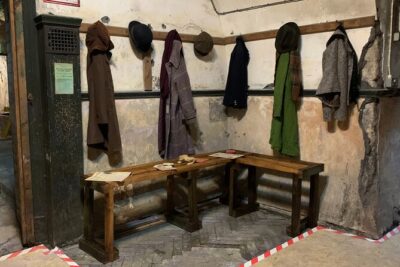
The shelter is described as a complete time capsule, but keep your expectations sensible. You are not entering a fully restored national museum with large galleries and extensive interpretation. Instead, you see a preserved place with wartime objects, developing displays, and a strong sense of age.
That distinction matters. If you want polished exhibitions, audio guides, and rows of labelled cases, this may feel spare. If you value original spaces and a guide who can explain what you are seeing, the shelter has much more impact than a modern reconstruction.
Owen and Duncan have been singled out for bringing the wartime conditions to life. Their approach appears to be story-led rather than a simple list of dates. You hear about Bristol during the raids and the physical conditions people had to endure, then connect those details with the rooms around you.
You may also hear about Margaret, the shelter’s friendly ghost. Treat this as a light touch rather than the main purpose of the tour. It adds a little local character, especially if the group enjoys the playful side of old buildings, but the serious focus remains the shelter and Bristol’s wartime past.
The underground setting is not suitable for everyone. The tour specifically excludes people with mobility impairments and claustrophobia, and it is not suitable for people over 300 pounds, or 136 kilograms, or people over 95. Those limits are practical safety and comfort guidance, not minor footnotes. Wear comfortable shoes and expect an environment that may be uneven, confined, or physically demanding.
More market walks in the UK:
- Christmas Lights and Markets Guided Walking Tour with Mulled Wine
★ 5.0 · 72 reviews - London Private Walking Tour: Notting Hill, Highlights & Markets
★ 4.5 · 22 reviews - London: Authentic London Sunday Markets Walking Tour
★ 5.0 · 15 reviews - London: Markets, Street Art, and Camden Town Walking Tour
★ 5.0 · 5 reviews
Finishing among the stalls at St. Nicholas Market
The walking portion leads toward St. Nicholas Market, one of Bristol’s best-known covered markets. It is a sensible place to finish because the market gives you time to shift from wartime stories to present-day Bristol.
Food and drink are not included, but you can buy sweet and savory treats at the stalls. You can also browse for small souvenirs. I like this ending because it avoids the usual abrupt finish outside a landmark. You leave the shelter and immediately have somewhere to continue your Bristol afternoon.
The market is not simply a meal stop. It connects with the tour’s opening theme of trade. Bristol’s commercial identity has changed over the centuries, but the basic idea remains: people gather, sell goods, exchange stories, and move through the city.
Timing can vary. The activity is advertised as lasting from 75 minutes to two hours, while the walking sections are listed with longer suggested durations. Some people finish in about an hour and 15 minutes, while others spend close to two hours on the full experience. If you have a lunch reservation, a train, or another timed visit, leave room for variation.
You may finish at St. Nicholas Market or return toward the Corn Exchange, depending on the arrangement for your departure point. The market is the more useful ending if you want food, but the Corn Exchange may suit you better if you are continuing elsewhere in the Old City.
How the guides shape the experience
The tour depends heavily on the person leading it. That is normal for a story-based walking tour, but it is especially true here because the shelter has limited displays.
Owen is known for a clear, enthusiastic delivery and strong command of Bristol’s wartime story. Duncan brings a similar sense of purpose and has been closely involved in developing the attraction. Theresa has also been praised for making the stories accessible and engaging.
The guides do more than recite information. They use character, humor, and personal enthusiasm to connect Bristol’s long trading past with its WWII experience and current city life. The tone can shift from serious accounts of bombing to lighter stories about the Corn Exchange and Margaret the ghost.
That mix suits families and mixed-age groups. It also helps if you are not a specialist in military history. You can follow the story without needing prior knowledge, while local history fans should still find plenty of fresh detail.
The trade-off is that the group’s questions may compete with the schedule. Some visitors have wanted more time for questions and more time to examine the objects at the end. If you have something you particularly want to ask, keep it in mind and use the available time wisely.
Is $16 good value?
At $16 per person, the tour is well priced for a guided city walk that includes entry to a normally unavailable shelter and special Corn Exchange areas. You are paying for access as much as for the commentary.
A standard Bristol walking tour might show you old streets and buildings. This one adds a genuine underground site and a second setting, St. Nicholas Market, where you can continue independently. That combination makes the price especially fair if you want one compact activity that mixes architecture, wartime history, music, and food.
The value is less clear if you only want a large museum collection. The shelter is still being developed, and the display area cannot match a major national institution. You are paying for the guide’s storytelling and for the chance to enter an unusual original site.
Food and drink cost extra. That is easy to manage because you can choose how much to spend at the market. The tour fee itself stays modest, and the market lets you set your own lunch budget.
Free cancellation up to 24 hours before the start and a reserve-now, pay-later option give you some flexibility. Check the available start time when booking, since the overall duration can vary.
Who should book this tour?
I would recommend it to anyone interested in WWII, urban history, local stories, old buildings, or unusual access. It is also a good choice for Bristol residents who think they already know the city. The underground shelter and the Corn Exchange rooms offer material you will not get from a normal walk around the center.
Families can enjoy the costume, ghost story, and market finish, while adults will likely appreciate the discussion of bombing, trade, and preservation. The experience works especially well for people who prefer a guide with personality rather than a silent audio tour.
You should think twice if you dislike confined underground spaces, have mobility limitations, or want a large, polished museum. The shelter is being cared for and developed, but it remains rough around the edges. That is not a flaw to hide. It is the honest character of the place.
Final booking advice
Book this tour if you want to see a less familiar side of Bristol and value original places over polished attractions. The combination of Old City streets, Blitz damage, Corn Exchange music history, and the shelter below creates a compact story about how the city has changed.
The strongest reason to go is the shelter. The strongest practical bonus is ending at St. Nicholas Market, where you can eat and browse without planning another stop. Allow up to two hours, wear comfortable shoes, and keep your expectations focused on atmosphere and storytelling rather than a finished museum.
At $16, it is an easy recommendation for history-minded visitors and curious locals. Just make sure the underground setting suits you before booking.
FAQ
Where does the Bristol air raid shelter tour start?
Meet at the main entrance of the Corn Exchange in Bristol.
How long does the tour last?
The activity lasts between 75 minutes and two hours. Check the available start times when booking because the exact length can vary.
What does the tour include?
The price includes a live guided tour, entry to the WWII air raid shelter, and access to exclusive areas of the Corn Exchange.
Is food included?
No. Food and drink are available to buy at St. Nicholas Market after or during the market portion of the experience.
What language is the tour in?
The tour is conducted in English with a live English-speaking guide.
Who should not take this tour?
The experience is not suitable for people with mobility impairments, claustrophobia, people over 300 pounds or 136 kilograms, or people over 95 years old. Comfortable shoes are recommended.
More Shopping Tours in the UK
- PRIVATE London Food Tours – Borough Market, Soho, East End
★ 5.0 · 286 reviews - Camden Market Food Tour of 7 Tastings, Gin, Street Food & More
★ 5.0 · 215 reviews - Brixton Market Tour with African and Caribbean Cuisine
★ 5.0 · 183 reviews - Delicious Doughnuts & Tea: Small-Group Borough Market Experience
★ 5.0 · 169 reviews
More Markets in the UK
- London Bridge & Borough Market Food Tour with 7 Authentic Dishes
★ 5.0 · 1,972 reviews - London: Borough Market Food Tour with 6+ Authentic Tastings
★ 4.8 · 533 reviews - London Borough Market & London Bridge Food Tour
★ 5.0 · 519 reviews - London E-Bike tour & Borough market
★ 4.5 · 316 reviews
Just added around the UK
- Self-Guided Craft Beer Tour (Explore Old Market)★ 4.5 · 19 reviews
- Discover Belfast with St. George’s Market Minivan Tour★ 5.0 · 4 reviews
- Secrets of London Bike Tour: Thames, Tower Bridge & Market★ 4.8 · 42 reviews
- London: Indian Cooking Masterclass with Market Tour★ 5.0 · 3 reviews
- London Ultimate East End Food & Market Tour with a Local★ 5.0 · 3 reviews
- London: Markets, Street Art, and Camden Town Walking Tour★ 5.0 · 5 reviews
- London: Borough Market Food Tour with Local Guide★ 4.6 · 19 reviews
- London: Camden Market Food Tour with 7 Street Food Tastings★ 4.8 · 29 reviews
Market Walking Tours, compared.
Tokyo Tsukiji Fish Market Food and Culture Walking Tour
Read our review →
Ben Youssef, Secret Garden, & Souks Walking Tour
Read our review →
Air Raid Shelter + St. Nicholas Market Walking Tour
Read our review →


Nishiki Market Brunch Walking Tour (7 Tastings + Brunch)
Read our review →Tsukiji Fish Market Food and Culture Walking Tour
Read our review →Browse the lists this tour appears in