
Review · BUSAN
Busan: Food Market Tour, Smash Seafoods and Street Foods
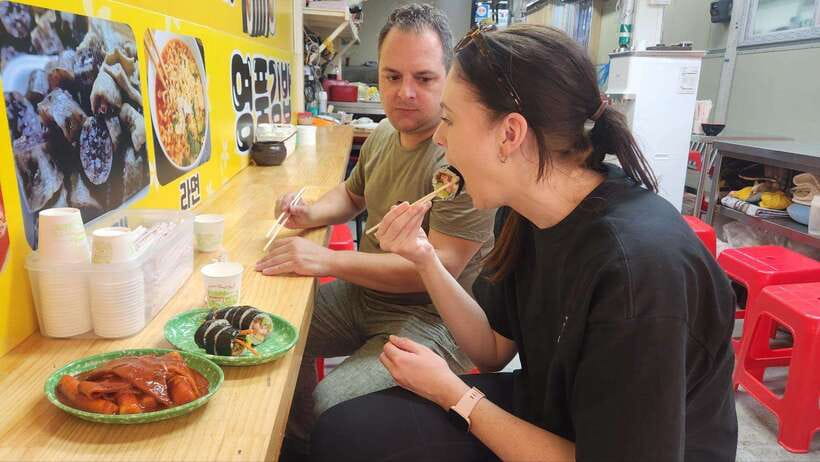
Busan’s best food lesson starts with a table of seafood you might not know how to order. This three-hour evening walk takes you from Jagalchi Station through the city’s market district for raw and cooked seafood, fishcake, savory pancakes, hotteok, and Korean drinks. The seafood meal is the main event, not a quick sample between sightseeing stops.
I like the small groups, capped at 10, because your guide can explain each dish and help you speak with vendors. I also like the social side: soju, beer, or makgeolli are part of the meal, and guides such as Hug You, Junwoo, and HoGyu are described as warm, funny, and easy to talk with. The main caution is simple: this is not a good fit for vegans or strict special diets, and raw seafood may be served.
Key points to know before you book
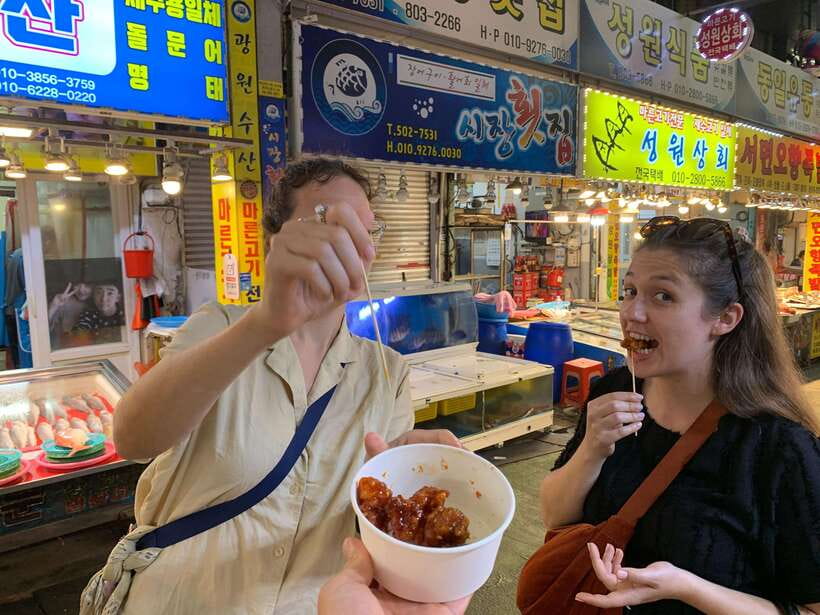
- A full dinner, not a few token bites: The food usually includes seafood plus fishcake, Korean savory pancakes, hotteok, or other street snacks.
- Jagalchi is the anchor: You get help navigating Busan’s famous seafood market and ordering foods that may feel intimidating alone.
- Three market areas may be part of the walk: The route includes Jagalchi Market, BIFF Square, and Kkangtong Market, with local food stops along the way.
- Drinks are part of the culture lesson: Soju, beer, or makgeolli are included, with nonalcoholic options available according to the tour information.
- The guide shapes the evening: Food preferences can be accommodated, and the strongest praise centers on guides who explain, translate, and join the meal.
- Come hungry and wear comfortable shoes: You will walk, browse, taste, and eat over about three hours.
Starting at Jagalchi Station and entering Busan’s market district
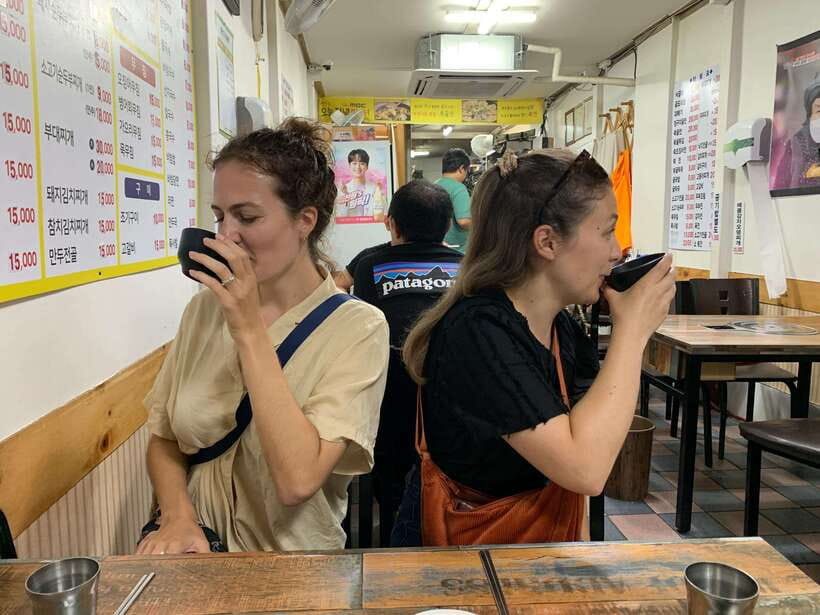
The meeting point is outside Exit 10 at Jagalchi Station. That is useful because the station is easy to identify, and you are not asked to find a particular restaurant in the maze of market streets. Your guide will meet the group there and lead the walk.
Jagalchi is more than a seafood stop. It is one of the places where Busan’s identity as a port city becomes easy to understand. Fish, shellfish, prepared foods, sauces, and market cooking all come together in a working district rather than a polished food hall.
Your guide provides the context that signs and stalls cannot. You can learn how traditional markets support local communities, how ingredients are sold, and why food remains such a social part of daily life in Korea. The tour is conducted in English or Korean, and the group size gives you a fair chance to ask questions.
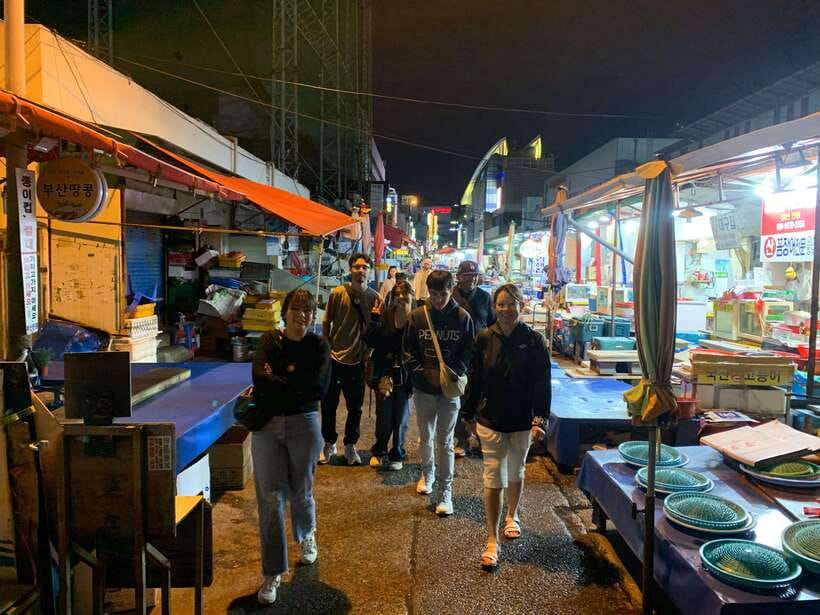
The walk may feel crowded and noisy, especially around busy stalls. That is part of the setting, but it may not suit you if you prefer a quiet, carefully paced meal. Expect a real market, with unfamiliar ingredients and plenty of visual clutter.
More food and drink tours in Busan:
- Busan history and market food tour with local chef
★ 5.0 · 58 reviews - Busan Local Food Cooking Class with Market Tour
★ 5.0 · 53 reviews - Busan: Gukje and Jagalchi Market Food Tour with Tastings
★ 4.6 · 27 reviews
Jagalchi seafood: the part you may not try alone
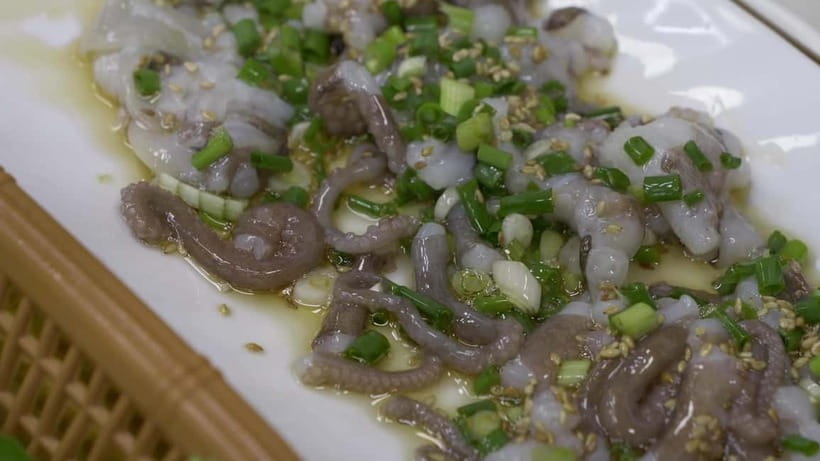
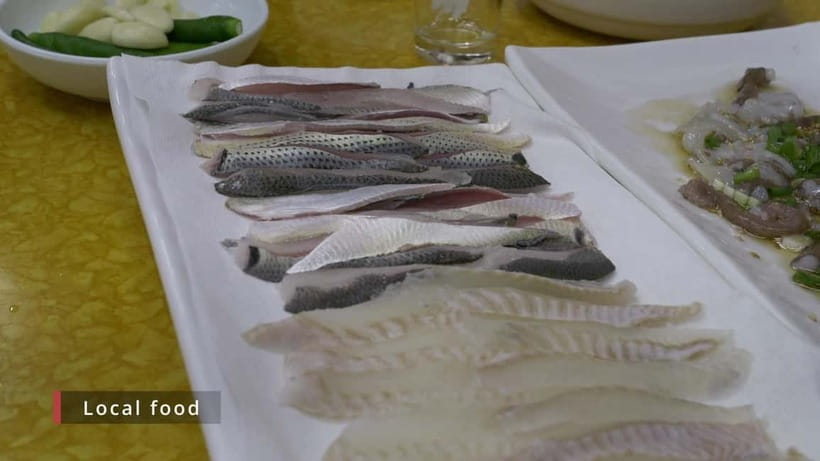
The seafood portion is the strongest reason to book this experience. The meal includes a seafood combination, and the guides help you understand what is in front of you, how it is eaten, and which side dishes pair with it.
Raw fish is specifically part of the possible experience, so you should be comfortable with that before booking. The tour can be a useful bridge for anyone curious about Korean seafood but unsure how to order or eat it without help.
This is where a guide adds real value. You do not need to guess at a menu, point at a tank, or wonder if you have ordered enough food. Your guide handles communication with vendors and explains the ingredients in plain terms. Some guides also adjust the choices to suit the group’s tastes.
The meal is not presented as a formal cooking class. You are there to eat, ask questions, and understand the market through its food. If you want technical lessons on fishing, recipes, or culinary history, this may feel light. If you want to try local dishes without the stress of ordering alone, it makes much more sense.
Be honest with your guide about seafood preferences at the beginning. The information does not promise that every item can be replaced, but several guides have adjusted the food selection for personal tastes. Even people who are not big seafood fans may find the evening easier when the guide explains each choice and keeps the mood relaxed.
BIFF Square and Kkangtong Market: from seafood to street snacks
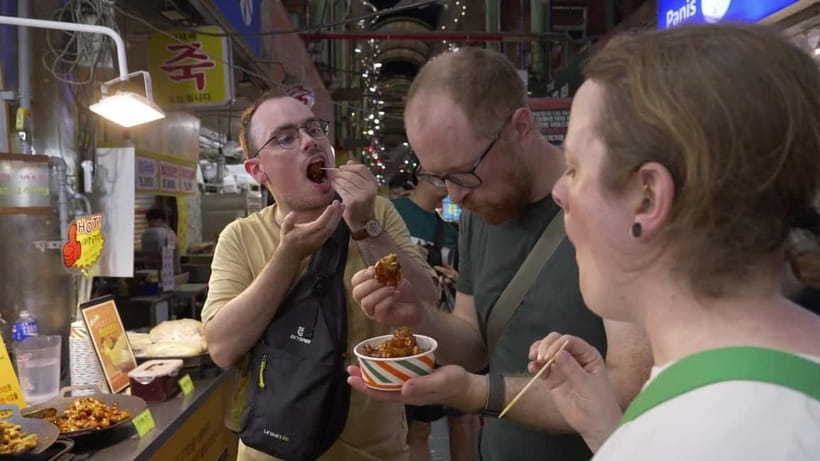
The route continues through the wider market district, including BIFF Square and Kkangtong Market. These areas shift the focus from a sit-down seafood spread to the quick foods that make Korean street eating so appealing.
You can expect several types of snacks, with fishcake, Korean savory pancakes, and hotteok among the named examples. Other local bites may appear depending on the route, vendor availability, and the group’s preferences. The point is variety: salty, sweet, fried, chewy, and seafood-based foods can all appear in the same evening.
BIFF Square gives the walk a different rhythm. You browse food stalls, watch vendors work, and sample items as you move. Kkangtong Market adds another layer of market life, with ingredients and prepared foods close together. Your guide can point out dishes you might pass by without recognizing.
That guidance matters more than it may seem. A stall may have no English explanation, and a food’s appearance will not always tell you how it tastes. The guide can identify ingredients, explain combinations, and show you how to approach the vendor.
You will also have a chance to use simple Korean phrases when ordering or making purchases. Do not expect a long language lesson. It is a small, practical way to make the market feel less closed off, even if your Korean consists of only a few words.
Korean drinks and the social side of the meal
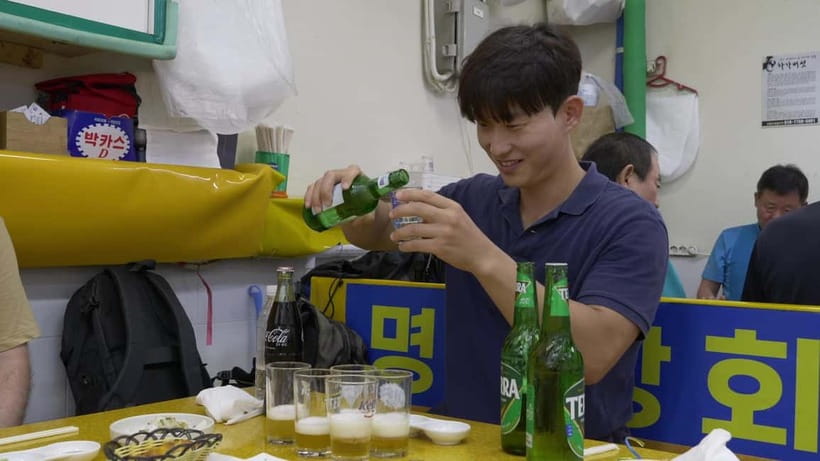
Soju, beer, or makgeolli are included. The drinks are not just an add-on. They help explain Korean drinking customs and the way food, conversation, and hospitality often fit together.
The experience is social by design. Your guide eats and drinks with the group, helping the evening feel more like a shared meal than a lecture followed by samples. That can be especially pleasant in a small group, where you have time to speak with other participants and ask personal questions about Busan and Korea.
Nonalcoholic options have been available on the tour, but you should tell your guide if you do not drink. The published information specifically warns that the tour may not suit vegans or people on special diets. It does not promise a full range of dietary substitutions.
If you are sensitive to alcohol, remember that the meal includes several drinking choices and that soju can be stronger than some visitors expect. You can still enjoy the cultural explanation without treating the drinking as a challenge.
A few more market tours around Busan worth a look
- Busan Tailored Korean cooking class (Vegan OK)with market tour
★ 5.0 · 66 reviews - Busan: Food Crawl with Fish Market, Soju Tents & Local Snacks
★ 5.0 · 8 reviews - Busan Food Market Tour Seafoods and Street Foods
★ 5.0 · 8 reviews - Dubai: Old Town, Creek, Museums, Souks, & Street Food Tour
★ 4.8 · 10,816 reviews
What the guide changes about the experience
The guide is the most important variable here. The food route has a clear shape, but the tone depends on who leads your group and how well the guide responds to your interests.
Hug You, Junwoo, HoGyu, Doyour, DuYeol, and other guides are named in the supplied material. The repeated strengths are friendliness, clear explanations, humor, and a willingness to make sure everyone is included. Junwoo is noted for sharing Busan recommendations, while HoGyu is described as adapting food choices and explaining seafood pairings.
That adaptability is valuable in a group tour. One person may want to try raw fish, another may prefer cooked food, and someone else may be eager for sweets. The guide cannot promise every dish for every person, but a small group makes these conversations easier.
English ability can vary by guide. The overall offering is in English and Korean, and the experience is designed for English-speaking visitors, but one rating specifically described the guide’s English as decent rather than excellent. If precise, detailed English explanations are essential for you, keep that in mind.
The warm atmosphere is not a minor detail. Several accounts describe the evening as relaxed and friendly, with guides helping late arrivals, answering questions, and joining conversations. You are buying access to local ordering and context, not just a fixed plate of food.
Is $52 good value for three hours?
At $52 per person, the tour costs more than wandering into a market and buying one snack at a time. The fair comparison is not a single street-food purchase. It is the combined value of a seafood dinner, several additional foods, drinks, translation help, and three hours of guided market access.
You are paying for at least three types of food, with the named options ranging from seafood to fishcake, savory pancakes, and hotteok. The amount is substantial enough that many people describe it as a full dinner. That makes the price easier to justify if you arrive hungry and use the tour as your evening meal.
The real savings are in confidence and choice. Without a guide, you may spend time guessing at menus, miss foods that are not obvious to outsiders, or avoid seafood because ordering feels awkward. The guide also helps you understand what you are eating instead of treating the market as a series of random samples.
Value depends on your eating habits. If you are vegetarian, drink little, dislike seafood, or prefer choosing every dish yourself, $52 may feel high. If you want a friendly introduction to Busan’s food markets and would otherwise eat cautiously, the package is more convincing.
Free cancellation up to 24 hours before the start and the option to reserve now and pay later make booking less risky. Starting times vary, so check availability for your date.
Who should book this Busan food tour?
I would point this tour toward first-time visitors who want a quick introduction to Busan’s food culture. It is also a good first-evening choice because you get orientation to several market areas, local dishes to remember, and food suggestions for the rest of your stay.
It suits adventurous eaters who want help with unfamiliar seafood. You might try foods you would skip on your own, while still having a guide explain the ingredients and eating customs.
Couples, solo visitors, and small groups can all fit comfortably into the format. The maximum group size is 10, though the actual group may be smaller. That makes it easier to speak with the guide and meet other people without the stiffness of a large coach tour.
Families and older visitors may also find it manageable because the walk lasts three hours and the experience is wheelchair accessible. Still, market streets can be crowded, and the food is not designed around children’s familiar tastes. Parents should consider the seafood, alcohol, and walking pace.
I would not choose it for a vegan, someone with serious food restrictions, or anyone who wants a quiet restaurant meal. I would also skip it if you dislike shared dining, market crowds, or the possibility of raw fish.
Practical tips for getting the most from the evening
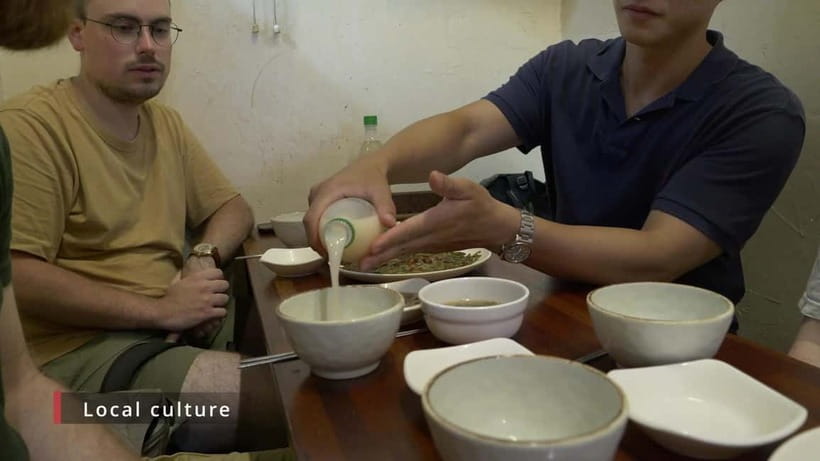
Eat lightly beforehand, but do not arrive dehydrated or already full. The food is intended to cover dinner, and the combination of seafood, snacks, and drinks can add up quickly.
Wear shoes suited to walking and bring a flexible attitude about timing. The experience includes guided walking, market visits, tastings, and a meal, so it is not a simple sit-down reservation.
Tell the guide about allergies, dislikes, alcohol preferences, and dietary needs at the start. The tour information warns that strict diets may not be suitable, but guides have adjusted choices for personal preferences when possible.
Bring a few Korean phrases or use the ones your guide teaches you. Ordering a small purchase yourself, with help nearby, is one of the more memorable parts of the experience.
Finally, do not judge the tour by one food item. The appeal is the sequence: seafood market, local meal, street snacks, drinks, vendor interaction, and city context. You get more from it if you treat the evening as a guided introduction rather than a checklist of dishes.
Should you book it?
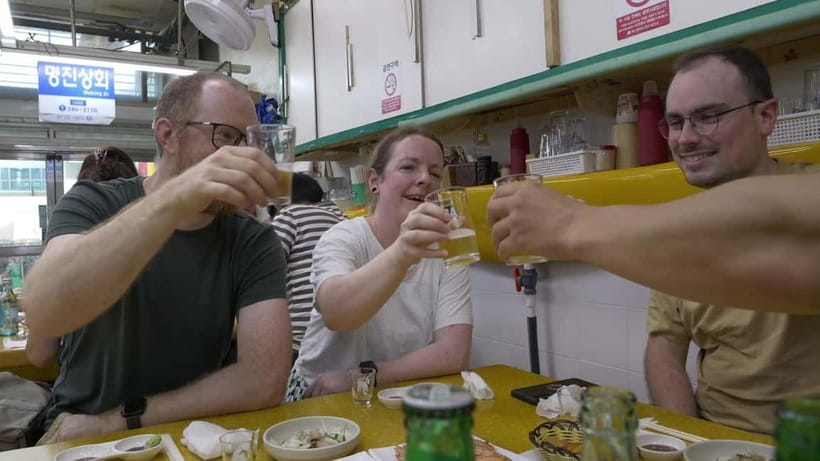
Book it if you want a generous dinner, local market access, and a guide who can make unfamiliar seafood feel approachable. The combination of Jagalchi, BIFF Square, and Kkangtong Market gives you a useful look at Busan’s food scene in only three hours.
Skip it if you need strict dietary control, avoid seafood, or prefer exploring independently. For everyone else, $52 is a reasonable price for the food, drinks, translation help, and cultural explanation, especially at the start of a Busan stay.
FAQ
Where does the Busan food tour start?
The meeting point is outside Exit 10 at Jagalchi Station.
Where does the tour finish?
The tour returns to Jagalchi Station after about three hours.
How long does the experience last?
The tour lasts three hours and includes walking, food tastings, a market visit, and dinner.
What food is included?
The included food is three or more types, with examples including a seafood combination, fishcake, Korean savory pancakes, and hotteok.
Are drinks included?
Yes. Soju, beer, or makgeolli are included. Nonalcoholic options have also been available.
Is raw seafood part of the tour?
Raw fish may be included as part of the seafood experience. Tell your guide about your preferences before ordering.
What languages are offered?
The tour is offered in English and Korean with a live guide.
Is the tour suitable for vegans or people with special diets?
The tour may not be suitable for vegans or people on strict special diets. Contact the provider if you have concerns before booking.
More Shopping Tours in Busan
- Visit Busan night market and enjoy the night view of Busan harbor
★ 5.0 · 6 reviews - Colors of Busan: Sky Capsule, Jagalchi Market & Night Views
★ 4.5 · 6 reviews - Jagalchi Sunset Cruise and Night Market Tour in Busan
★ 3.5 · 2 reviews - Busan Night Tour: Market, Skywalk & Optional SnapShot
★ 5.0 · 2 reviews
More Markets in Busan
- Busan Seafood Tour : Jagalchi market Seafood Tour & Dinner
★ 5.0 · 74 reviews - Gamcheon Culture Village, Jagalchi fish market story telling Tour
★ 4.5 · 63 reviews - Busan: Night Tour with Jagalchi Market and Skywalk
★ 4.7 · 17 reviews - Busan: Jagalchi Market & Gamcheon village Walking Tour
★ 5.0 · 7 reviews
Just added around Busan
- Busan history and market food tour with local chef★ 5.0 · 58 reviews
- Visit Busan night market and enjoy the night view of Busan harbor★ 5.0 · 6 reviews
- Busan Local Food Cooking Class with Market Tour★ 5.0 · 53 reviews
- Gamcheon Cultural Village & Skywalk & Markets★ 4.5 · 2 reviews
- Jagalchi Sunset Cruise and Night Market Tour in Busan★ 3.5 · 2 reviews
- Busan: Food Crawl with Fish Market, Soju Tents & Local Snacks★ 5.0 · 8 reviews
- Colors of Busan: Sky Capsule, Jagalchi Market & Night Views★ 4.5 · 6 reviews
- Busan Food Market Tour Seafoods and Street Foods★ 5.0 · 8 reviews
Shopping Tours, compared.
Damnoen Saduak Market and Maeklong Railway Market
Read our review →
The Old Siam: Damnoen Saduak and Maeklong Railway Market
Read our review →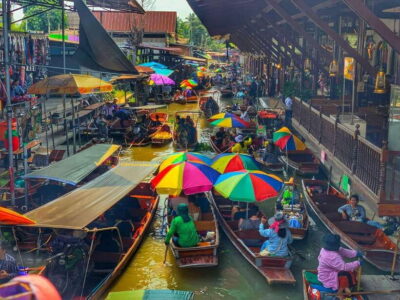
Train Market & Floating Market with Boat Ride
Read our review →
Ayutthaya & Ayothaya Floating Market Day Trip
Read our review →
Hanoi Cooking Class: Culture, Local Market & Meaning CSR Impact
Read our review →
5 Traditional Dishes Hanoi Cooking Class with Market Trip
Read our review →
Cooking Class and Lunch at a Tuscan Farmhouse with Local Market Tour from Florence
Read our review →
Cooking Class, Market & Thai Herbs Garden Tour
Read our review →Browse the lists this tour appears in