
Review · BUSAN
Busan Tailored Korean cooking class (Vegan OK)with market tour
Busan’s best food lesson may begin before you touch a frying pan. With local host Suyang, you walk through Bujeon Market, learn what unfamiliar vegetables and seafood are used for, then carry your chosen ingredients to a kitchen and cook a Korean meal from scratch. The market visit gives the class a real local setting, not just a tidy cooking studio.
I especially like the menu flexibility and the chance to learn dishes beyond the usual bibimbap and Korean barbecue. You can choose two banchan, or side dishes, plus one stew or soup, and vegan menus are available. The host also sends recipes afterward, which gives you a fair shot at making the food at home.
The main thing to watch is the menu-selection rule. If several groups join, the first booking gets first choice, so you may not receive every dish you hoped for. Also, the experience is non-refundable, making careful planning important.
Key points at a glance
- Bujeon Market comes first: Shop for fresh ingredients with Suyang and get an introduction to everyday Korean food.
- Three dishes are included: Choose two side dishes and one stew or soup from a broad menu.
- Vegan cooking is possible: The menu can be adapted for vegetarian and vegan diners.
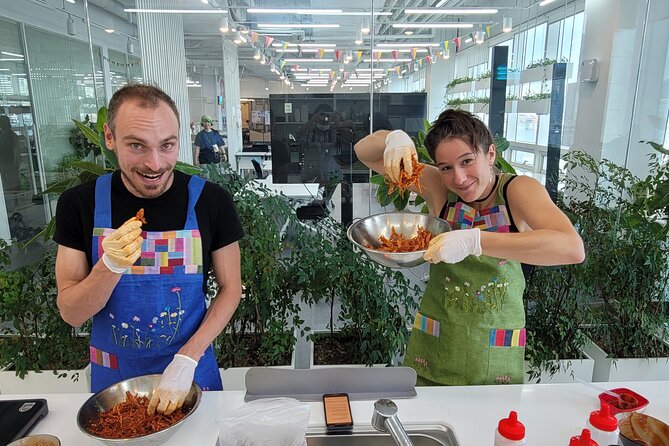
- The class is genuinely hands-on: You prepare food rather than simply assembling pre-cooked ingredients.
- Recipes help after the trip: You receive instructions designed to be practical outside Korea.
- Five hours gives the experience room to breathe: You have time for the market, cooking, eating, and conversation.
Start at Bujeon Market, Busan’s working food stop
The experience begins near KB Kookmin Bank on Saessak-ro, close to Seomyeon. From there, Suyang leads you into Bujeon Market, where the food shopping is part of the lesson rather than a quick prelude.
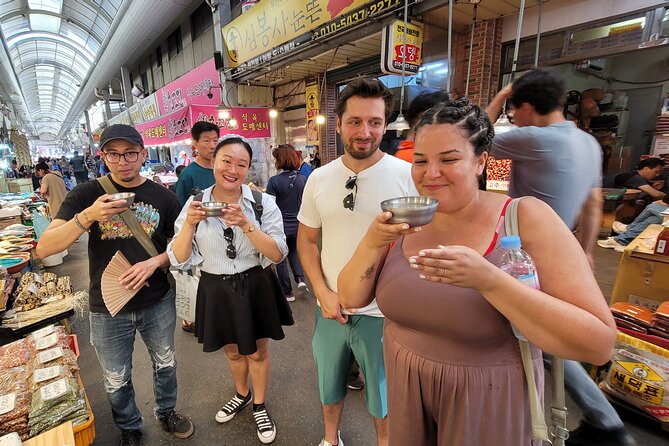
That matters. Korean markets can be hard to read on your own. A pile of greens may look like one anonymous vegetable, while dried fish, pollack, seaweed, mushrooms, and fermented ingredients can have several uses. With a local host beside you, the market becomes a place to ask practical questions: what is this, how is it cooked, and what would a Korean family do with it?
You may see ingredients for familiar food, along with less expected choices such as dried pollack, bracken, perilla leaves, anchovies, black beans, and seafood. The class is built around everyday Korean cooking, not just famous restaurant dishes. That gives you a better sense of how side dishes and soups fit into a home meal.
The market portion also has a social side. Suyang has used the walk to explain Korean food and culture, recommend restaurants, and point out local snacks. Some class plans have included a quick bite of tteokbokki or fried fish cake, and other groups have stopped for bibimbap and dumplings. Those extras appear to depend on the day and arrangement, so do not treat them as guaranteed inclusions. The listed lunch is the food you make yourself.
More Market Cooking Classes in South Korea
- Busan history and market food tour with local chef
★ 5.0 · 58 reviews - Busan Local Food Cooking Class with Market Tour
★ 5.0 · 53 reviews - Local Home Korean Cooking Class & Market Adventure in Seoul
★ 5.0 · 1,024 reviews
Choosing two banchan and one main pot
After shopping, you move to the host’s kitchen and choose three dishes: two banchan and one stew or soup. This is the heart of the experience, and the choices are far more interesting than the standard short list found in many Korean cooking classes.
Side-dish choices include stir-fried anchovies, seasoned dried pollack, black beans in soy sauce, kimchi pancake, seafood pancake, beef pancake, bracken salad, bean sprout salad, braised radish, spicy braised tofu, cucumber kimchi, seasoned eggplant, and pan-fried shrimp with seaweed. Pickled radish and perilla leaves are also available.
For the stew or soup, you might choose kimchi stew with pork, soybean paste stew, seaweed soup with clam or dried pollack, Alaska pollack soup, spicy stir-fried chicken, soy sauce chicken, braised pollack, or braised flatfish. The full menu is provided after booking, so you can think about your choices before the class.
This menu is useful for two reasons. First, it lets you avoid dishes that do not suit your taste. Second, it shows you how Korean meals are built. A soft soup, a salty preserved side dish, a vegetable namul, and a pan-fried dish each bring a different texture and flavor to the table.
Suyang has also taught dishes such as japchae, mini kimbap, seasoned spinach, fried seaweed with shrimp, and marinated abalone. These examples show how much the class can vary. You might leave with a meal based on common home dishes, or with a more unusual recipe you would not have found easily on your own.
If several groups take part at the same time, the first reservation gets the first menu choice. This is worth taking seriously if you have your heart set on abalone, a particular soup, or a specific meat-free combination. Ask about the menu soon after booking.
A real cooking lesson, not a demonstration
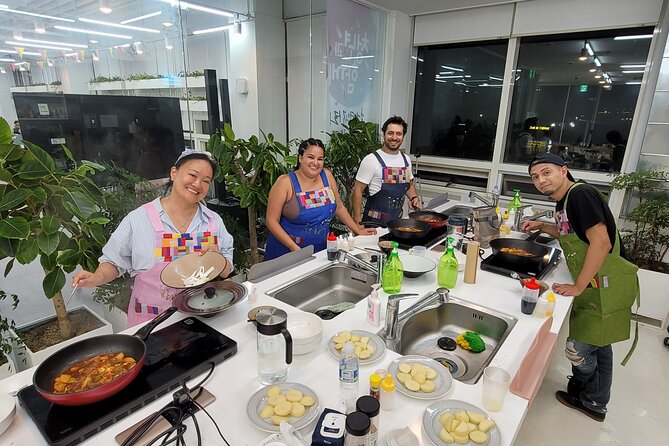
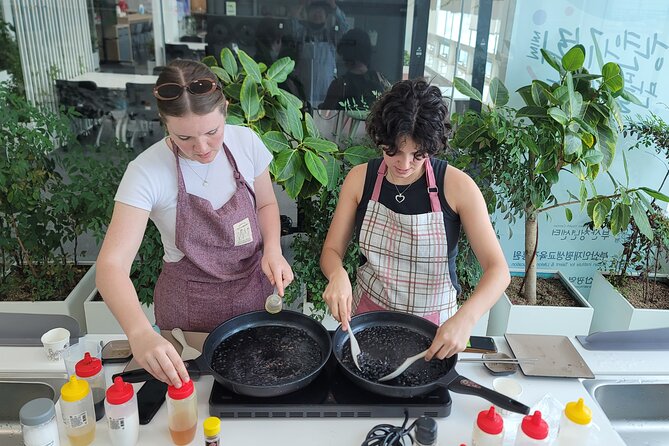
The strongest part of this class is the hands-on format. You are not simply watching a chef chop ingredients and then eating a finished plate. You take part in the preparation and cooking, with Suyang showing you the steps and explaining how the recipes work.
That makes the class useful after your holiday. One dish might teach you how to season dried fish, while another shows how soy sauce, garlic, chili, or fermented soybean paste changes a vegetable or tofu dish. The recipes are intended to be manageable at home, and the class focuses on techniques you can repeat rather than a complicated restaurant performance.
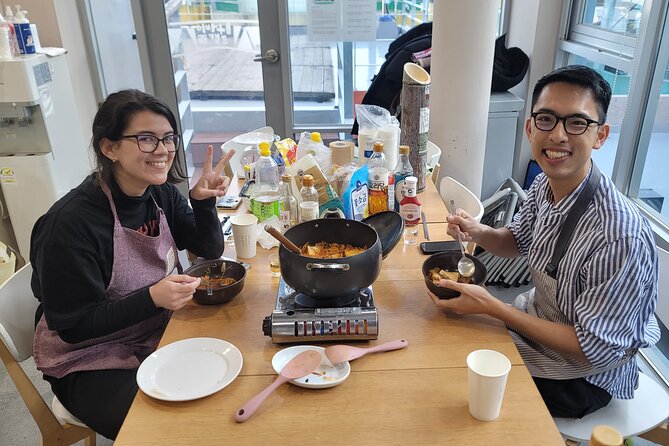
Portions have also been generous. One pair found they had enough food for six people, even though only two people attended. That can be a bonus if you enjoy a large meal, though it also means you may want to arrive hungry and avoid planning another major meal immediately afterward.
The host’s teaching style is personal and relaxed. Suyang has made an effort to explain Korean language and culture as well as food, and the class allows time for conversation. If you like asking questions, comparing food traditions, or getting suggestions for the rest of your stay in Busan, this format gives you room to do that.
The class is capped at 15 people. That is not a tiny private lesson in every case, but it is still small enough for a more personal setting than a large commercial workshop. The exact feel may depend on how many groups are booked that day.
Vegan and vegetarian cooking in Busan
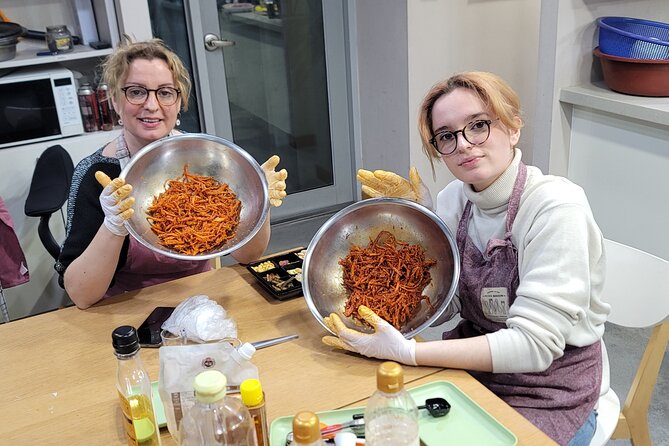
The vegan option is one of the most useful features here. You can request vegetarian menus, and the host has adapted dishes for vegan diners and special needs. Past menu combinations have included braised tofu with spicy sauce, braised black beans, and spinach soybean paste soup made with gluten-free soybean paste.
You should make your dietary needs clear when booking and confirm the final menu. Korean cooking often uses fish sauce, dried seafood, anchovy stock, clams, or meat in places you may not expect. The experience can provide vegan dishes, but your request needs to guide the menu from the start.
This is also a good way to see that Korean food is not limited to grilled meat and seafood. Tofu, vegetables, beans, seaweed, mushrooms, fermented pastes, pickled vegetables, and namul offer plenty of variety. A meat-free menu can still include several textures and strong flavors.
For strict vegans, I would confirm every ingredient and stock used in the selected recipes. The available information supports vegan adaptations, but it does not promise that every standard menu item is vegan by default.
More market cooking classes in Busan:
- Hanoi Cooking Class: Culture, Local Market & Meaning CSR Impact
★ 5.0 · 5,147 reviews - 5 Traditional Dishes Hanoi Cooking Class with Market Trip
★ 5.0 · 4,890 reviews - Cooking Class and Lunch at a Tuscan Farmhouse with Local Market Tour from Florence
★ 5.0 · 4,831 reviews - Chiang Mai: Cooking Class, Market & Thai Herbs Garden Tour
★ 4.9 · 4,824 reviews
What the five-hour schedule gives you
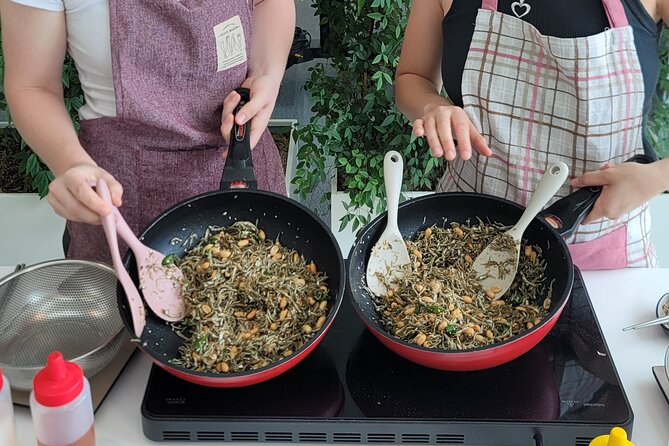
Five hours is a substantial block of time. It covers meeting near Seomyeon, the market visit, ingredient shopping, the move to the kitchen, cooking, and lunch. The length is a strength because the experience does not have to race through each step.
You can look at ingredients before cooking them, ask questions, and follow the process at a sensible pace. That is especially helpful if you are new to Korean food or want to remember the methods for later.
The tradeoff is that this is not a quick activity to fit between several major Busan sights. Keep the afternoon or evening fairly open. The activity ends back at the meeting point, and it is close to public transportation, but you should still allow time for the full five-hour commitment.
The meeting point is in the Seomyeon area, beginning at the specified KB Kookmin Bank on Saessak-ro. Read the exact confirmation carefully, since the class includes movement from the market to the kitchen and then returns to the meeting point.
Is $95 a fair price?
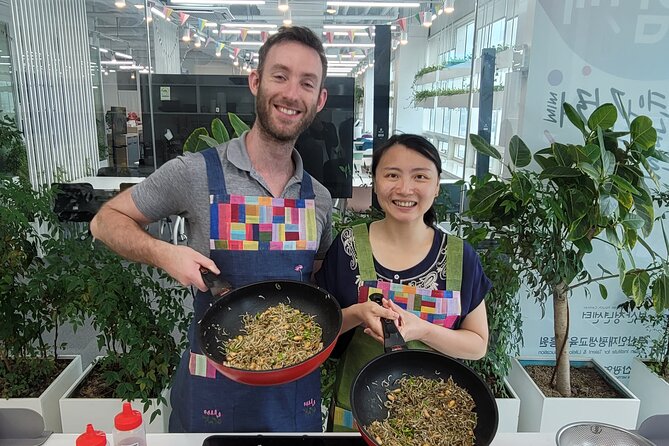
At $95 per person, this is not the cheapest Korean meal or market walk in Busan. It is better judged as a five-hour food lesson with shopping, instruction, lunch, drinks, and recipe support.
The value is strongest if you want to learn. You get the host’s time, ingredient explanations, several dishes, a market introduction, and a meal made by your own hands. A restaurant meal may cost much less, but it will not teach you how to recreate the food or explain why each ingredient is used.
The price also makes more sense for couples, families, and small groups who will take advantage of the personal menu choices. Group discounts are available, though the amount is not specified. For a larger family, the generous portions can add value, especially if everyone takes part.
You should compare it with your own interests. If you simply want to eat Korean food, spend $95 elsewhere and visit several restaurants. If you want practical recipes, a local market, and direct contact with a Busan host, the price is easier to justify.
Coffee, barley tea, corn tea, and bottled water are included. Alcohol is not included, and personal expenses and travel insurance are your responsibility.
The best reasons to book
I would recommend this class to anyone who wants to understand Korean food at home-meal level. It is especially suitable for people who have already eaten the famous dishes and now want to try seasoned pollack, bracken salad, braised black beans, tofu, seaweed, or other less familiar foods.
It also works well for families. One group of eight used the class as a shared activity, and the host made an effort to keep people of different ages involved. The generous portions and relaxed pace help make it a social meal as well as a lesson.
Cruise passengers may find the format useful too, since one past arrangement began at the cruise terminal and used transport to the market. That is not the standard meeting point stated for every booking, so you would need to arrange and confirm that option directly.
This may not suit you if you dislike cooking, have a tight schedule, or need a fully private class with a guaranteed menu. The menu can be tailored, but first-booking priority applies when several groups attend. The non-refundable policy also means you should not book until your Busan plans are firm.
The experience has a 4.9 rating from 66 ratings and a 100 percent recommendation figure. Those numbers fit the strongest features: the market access, Suyang’s friendly teaching, the amount of food, and the ability to learn recipes that go beyond the usual Korean cooking-class menu.
Should you book this Busan cooking class?
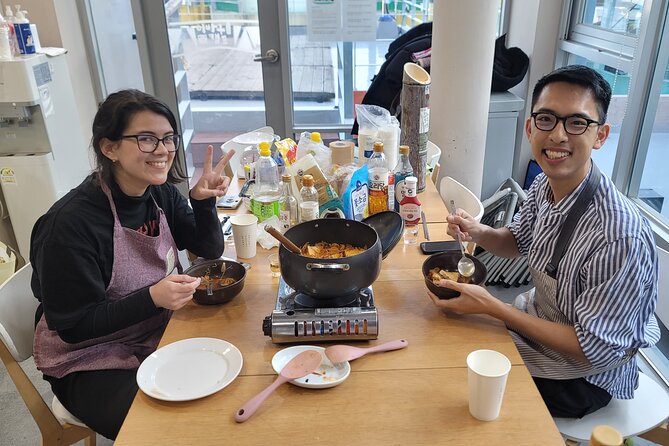
Book it if you want more than a meal. The Bujeon Market visit gives you local food context, while the kitchen session turns that context into usable skills. Suyang’s broad menu, vegan flexibility, generous portions, and recipe follow-up make this a particularly good choice for curious eaters and home cooks.
Skip it if you want a short food tour or a guaranteed private menu with no chance of changes. For everyone else, this is a practical, sociable way to spend five hours in Busan, with food you can remember and perhaps cook again after you return home.
FAQ
Where does the cooking class begin?
It begins at KB Kookmin Bank on Seomyeon Joongang2 Saessak-ro in Busanjin District, Busan.
How long does the experience last?
The experience lasts approximately five hours.
What happens at Bujeon Market?
You explore the local market with the host, learn about Korean food, and buy ingredients for the cooking class.
How many dishes can I choose?
You can choose three dishes: two banchan, or side dishes, and one stew or soup.
Can I request vegan food?
Yes. Vegetarian and vegan menus can be provided, and the menu can be tailored to your preferences.
Is lunch included?
Yes. Lunch consists of the food you prepare during the class.
Are drinks included?
Bottled water, coffee, barley tea, and corn tea are included. Alcoholic drinks are not included.
What happens if several groups join the class?
The first group to reserve has the right to choose the menu first.
More Vegan & Vegetarian in Busan
- Jaipur Market Tour & Vegetarian Rajasthani Home Cooking Class
★ 5.0 · 113 reviews - Seville Vegan Tapas Food and Market Walking Tour
★ 5.0 · 40 reviews - Seoul: Gwangjang Market Vegan & Vegetarian Food Tour
★ 5.0 · 16 reviews - Hoi An : Vegan Cooking Class – Market & Coconut Basket Boat
★ 5.0 · 4 reviews
More Cooking Classes in Busan
- Chiang Mai: Authentic Cooking Class with Market & Farm Visit
★ 4.9 · 4,546 reviews - Barcelona: Paella Cooking Experience & Boqueria Market Tour
★ 4.8 · 3,661 reviews - Cooking Class Hoi An:Local Market, Basket Boat, Fishing & Cooking
★ 5.0 · 3,660 reviews - Hoi An Cooking Class(Market,BasketBoat Crabfishing&Cooking Class)
★ 5.0 · 3,386 reviews
Just added around Busan
- Visit Busan night market and enjoy the night view of Busan harbor★ 5.0 · 6 reviews
- Busan history and market food tour with local chef★ 5.0 · 58 reviews
- Busan Local Food Cooking Class with Market Tour★ 5.0 · 53 reviews
- Gamcheon Cultural Village & Skywalk & Markets★ 4.5 · 2 reviews
- Jagalchi Sunset Cruise and Night Market Tour in Busan★ 3.5 · 2 reviews
- Busan: Food Crawl with Fish Market, Soju Tents & Local Snacks★ 5.0 · 8 reviews
- Colors of Busan: Sky Capsule, Jagalchi Market & Night Views★ 4.5 · 6 reviews
- Busan Food Market Tour Seafoods and Street Foods★ 5.0 · 8 reviews
Market Cooking Classes, compared.
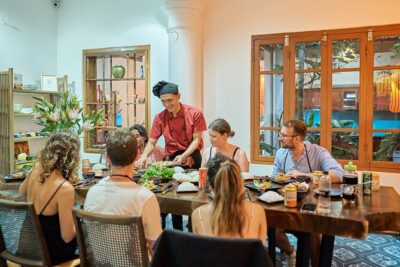
Hanoi Cooking Class: Culture, Local Market & Meaning CSR Impact
Read our review →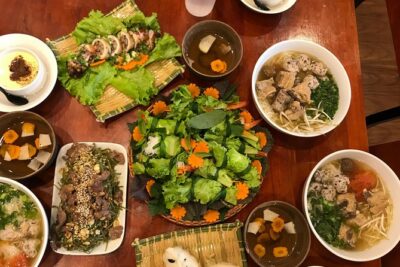
5 Traditional Dishes Hanoi Cooking Class with Market Trip
Read our review →
Cooking Class and Lunch at a Tuscan Farmhouse with Local Market Tour from Florence
Read our review →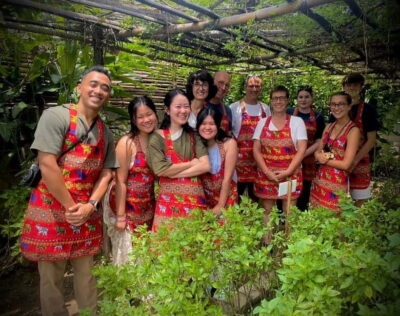
Cooking Class, Market & Thai Herbs Garden Tour
Read our review →
Authentic Cooking Class with Market & Farm Visit
Read our review →
Paella Cooking Experience & Boqueria Market Tour
Read our review →
Cooking Class Hoi An:Local Market, Basket Boat, Fishing & Cooking
Read our review →Browse the lists this tour appears in