
Review · SPAIN
Madrid: Paella & Tapas Cooking Class and Market Visit
The best part of this Madrid food class is that you do not simply sit down to eat Spanish dishes. You visit a traditional market, choose ingredients, then prepare paella, croquetas, patatas bravas, and tapas with a local chef. I especially like the market-to-kitchen flow and the chance to learn why true paella Valenciana is different from the tourist versions. The class also includes vermouth, wine or beer, and lunch.
I like the small groups, limited to 12 people, and the warm teaching style shown by guides such as Daniel, Danny, Arantxa, and Benny. The main drawback is the menu: this is not a good match for vegans, people with lactose intolerance, or anyone with gluten intolerance, and the cooking setup is not suitable for wheelchairs or strollers.
Key Points
- Market first: Begin near one of Madrid’s historic markets and see the Spanish ingredients used in the class.
- Four-part cooking lesson: Prepare paella Valenciana, homemade croquetas, patatas bravas with two sauces, and a traditional tapa.
- Vermouth with local flavor: Learn how sweet Spanish vermouth is served as an aperitif.
- Restaurant kitchen access: Cook behind the scenes in a private space connected to a restaurant in the Huertas neighborhood.
- Small-group format: Work in groups of 12 or fewer, with private classes available for some booking options.
- A useful takeaway: You leave with recipes, practical cooking tips, and a full meal rather than a quick demonstration.
Starting at a Historic Madrid Market
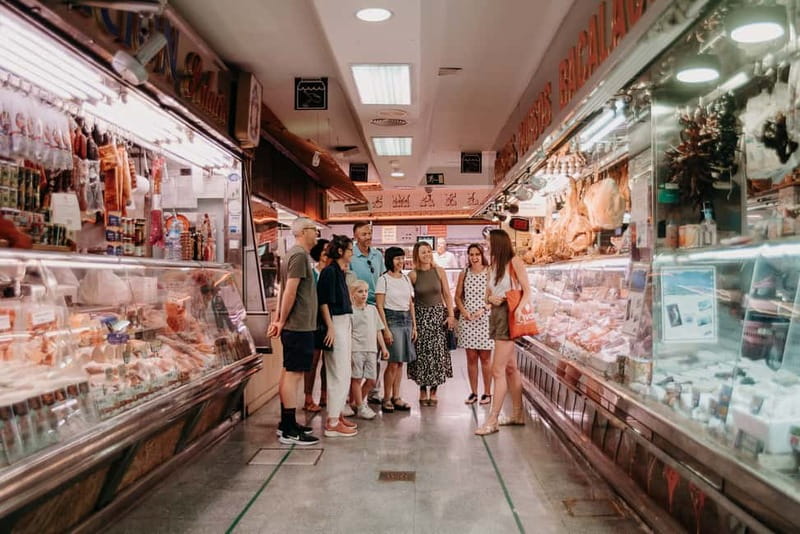
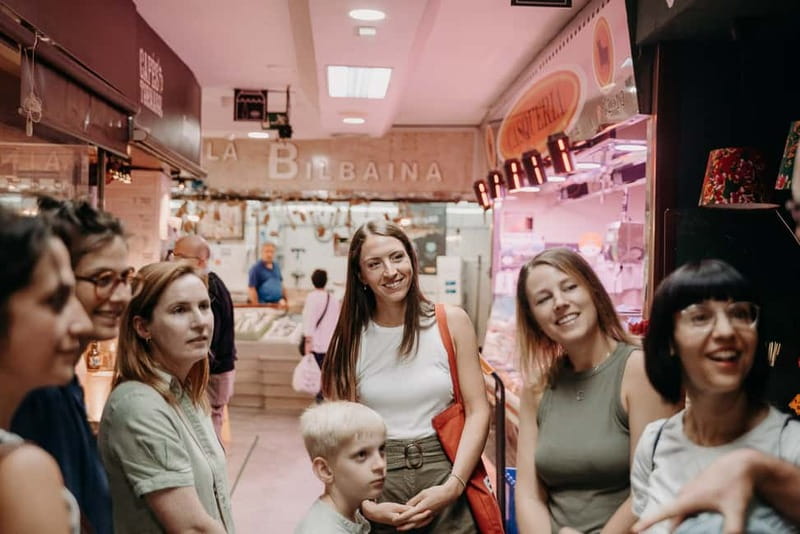
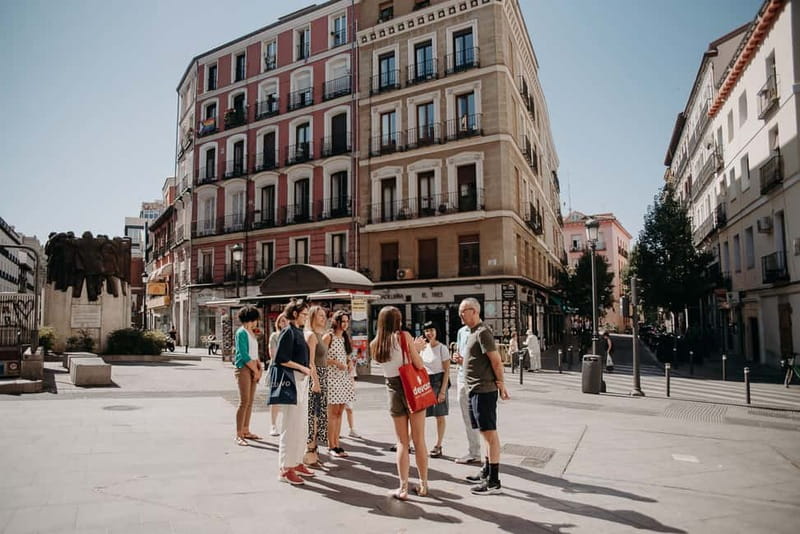
The class begins near one of Madrid’s traditional markets, a place where local residents have shopped for generations. The exact meeting point can vary by booking option, so check your confirmation carefully. You will meet your English-speaking guide there before heading inside.
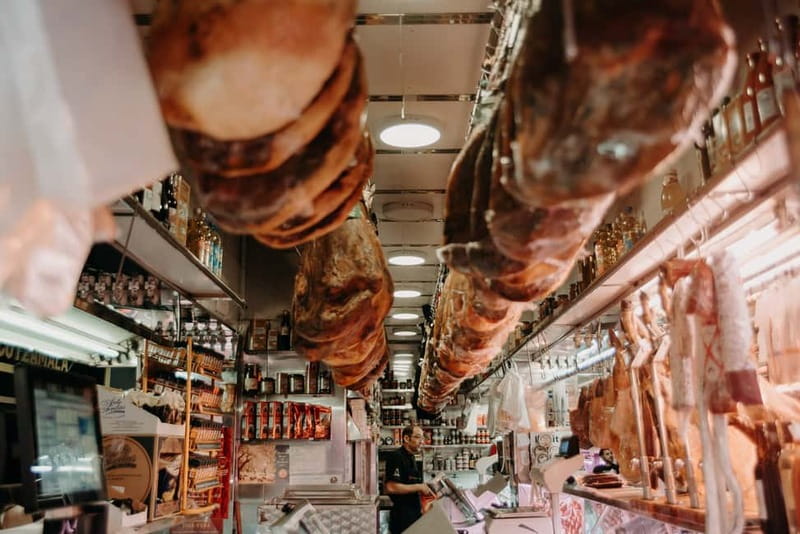
This opening is more than a quick shopping stop. It gives you a working introduction to Spanish food. You can see the produce, cheeses, and other products that form the base of everyday cooking, then connect those ingredients to the dishes you will prepare later.
I like this order. A cooking class can feel detached from the city if all the ingredients are already measured and waiting. Here, you first see the food in its normal setting. Your guide explains what to look for and helps gather fresh ingredients for the kitchen.
The market visit also helps you understand how Spanish meals are built. A cheese plate, a simple tapa, a sauce for potatoes, and a rice dish may look unrelated on a menu. At the market, they become part of the same food culture: good ingredients, simple preparation, and time spent eating together.
Do not expect a long market history tour. The supplied details describe a guided visit and conversations about Spanish products, but not a fixed number of stalls or a detailed lecture on the building. Think of it as a useful food orientation before the cooking begins.
More Market Cooking Classes in Spain
- Barcelona: Paella Cooking Experience & Boqueria Market Tour
★ 4.8 · 3,661 reviews - Barcelona Paella Cooking Class with Market Visit, Tapas & Sangria
★ 5.0 · 2,531 reviews - Paella Cooking Class, Wine Tasting & Central Market in Valencia
★ 5.0 · 1,150 reviews
Entering the Private Cooking Space in Huertas
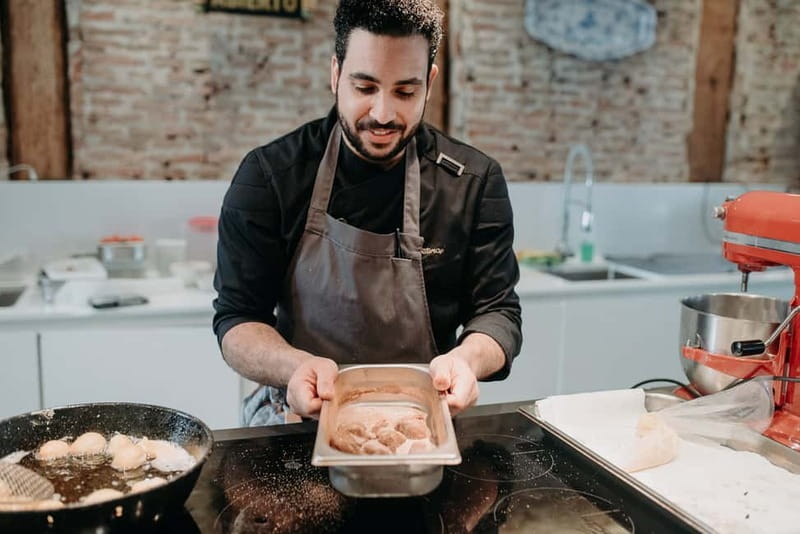
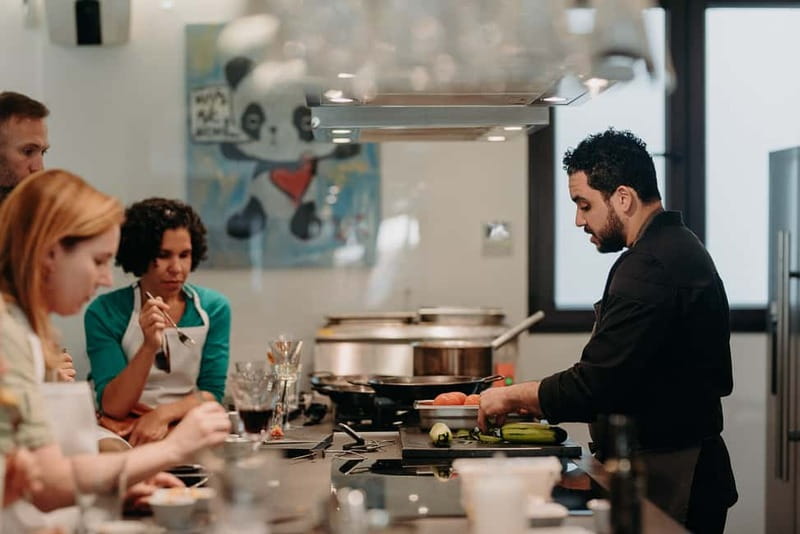
After the market, you head to a private kitchen behind one of the restaurants in Madrid’s Huertas neighborhood. This behind-the-scenes setting gives the class a more personal feel than a standard restaurant meal. You are not just watching a chef at work from the other side of a dining room.
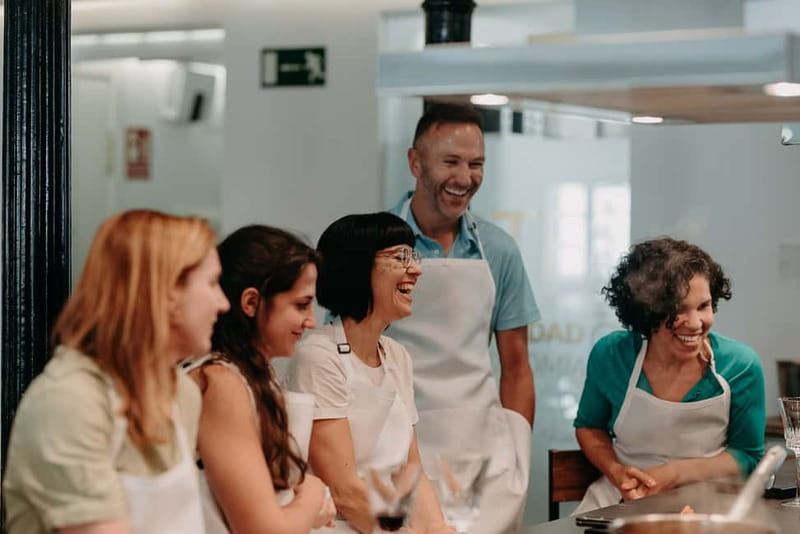
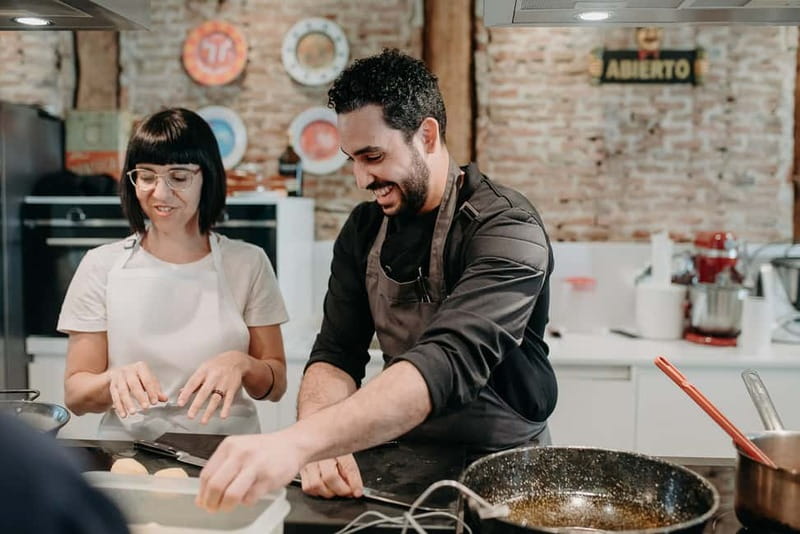
The group works together in a kitchen reserved for the class. With 12 people or fewer, you should have a chance to take part rather than stand at the back and watch. A private class is also available if you want the room and instruction arranged just for your party.
The guides named in the feedback include Daniel, Danny, Arantxa, Benny, and Dan. The instructor may vary, but the pattern is clear: the guide is also involved in teaching, cooking, and explaining Spanish customs. Daniel receives particular praise for combining cultural information with cooking instruction. Arantxa is described as warm and attentive, while Benny is praised for watching the group’s needs throughout the meal.
That personal contact matters. Cooking classes can become chaotic when the instructor rushes between stations. Here, the small format should make it easier to ask how finely to cut an ingredient, when to turn a croqueta, or how thick a sauce should be. Still, you are working in a real kitchen with sharp knives, hot stoves, and high surfaces, so you need to stay alert.
Wear comfortable shoes. You will be standing and moving around during the class, and the activity is not designed for people with mobility impairments or wheelchair users.
Starting with Vermouth and a Basque Tapa
Before the main cooking begins, you are served a traditional aperitif: sweet Spanish vermouth with a snack. The guide explains how locals drink it, which makes this more useful than simply adding another alcoholic drink to the price.
Vermouth is part of Madrid’s relaxed pre-meal rhythm. Learning when and how it is served gives you a small piece of local food etiquette that you can use during the rest of your time in the city. You also assemble a cheese plate and prepare a traditional tapa from the Basque region.
This early course sets the pace for the class. You are not waiting hungry while the main dish cooks. You begin eating, talking, and handling food at once. It also gives the guide a natural way to explain regional differences within Spain. A Basque tapa, Valencian paella, Madrid vermouth, and Spanish croquetas all belong to the same national food story, but they do not come from one single tradition.
The activity includes drinks, and the meal typically includes your choice of beer or wine. Non-alcoholic options are available if arranged in advance. If you want to sample vermouth but prefer not to drink alcohol, contact the provider before the class so the kitchen can prepare the right option.
Preparing Croquetas and Patatas Bravas
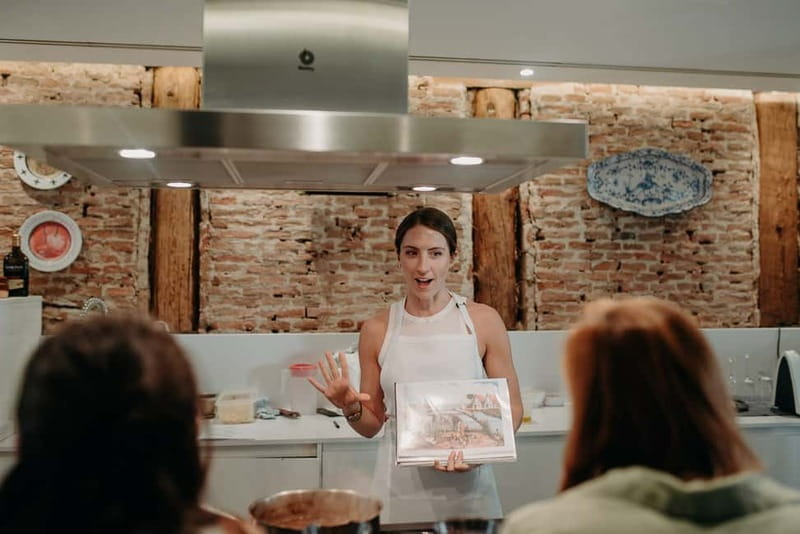
The cooking becomes more hands-on with two familiar Spanish dishes: homemade croquetas and patatas bravas. These are common tapas, but making them from scratch gives you a better sense of the work behind their simple appearance.
Croquetas require care. Their creamy filling must be prepared, shaped, coated, and cooked without falling apart. The class lets you see the process rather than treating croquetas as a mysterious bar snack. You can also ask about texture and timing, two details that matter when you try to repeat the recipe at home.
Patatas bravas are more direct, but the sauces make the dish. You prepare the potatoes and two homemade sauces, learning how a basic plate becomes a proper tapa through seasoning and contrast. The dish is a good reminder that Spanish cooking often depends on a few strong ingredients used with confidence.
The class is designed for participation, not a chef’s show. You work elbow to elbow with the rest of the group. That can be social and fun, especially if you enjoy meeting people over food. It also means the experience may feel less private in a full group than it would in a private booking.
If you have allergies or dietary needs, contact the activity provider in advance. The class can adapt for vegetarians, pescatarians, people avoiding gluten if they are not celiac, pregnant participants, and those choosing non-alcoholic drinks. It cannot accommodate vegans, people with gluten intolerance, or people with lactose intolerance according to the stated restrictions.
Same stalls, a different way to shop and eat:
- Valencian paella cooking class, tapas and visit to Ruzafa market.
★ 5.0 · 828 reviews - Spanish Cooking Class & Triana Market Tour in Sevilla
★ 5.0 · 760 reviews - Seville: 3.5-Hour Spanish Cooking Class & Triana Market Tour
★ 4.9 · 751 reviews - Valencia: Paella Cooking Class with Central Market Tour
★ 5.0 · 721 reviews
The Main Event: Paella Valenciana
Paella is the centerpiece, and the class gives you more than a recipe. Your guide explains the history behind the dish and how to recognize true paella Valenciana. That distinction is useful because the word paella is often applied loosely to many rice dishes.
The class focuses on the ingredients, cooking method, and clues that separate a traditional Valencian preparation from a generic restaurant version. You smell, taste, and handle the ingredients as the dish develops. That sensory work is important with rice, where small changes in liquid, heat, and timing can affect the final result.
You should not expect to become a paella expert in one afternoon. Rice dishes take practice, and the exact ingredients may change with the season. But you will leave with a clearer idea of what you are trying to achieve and why the steps matter.
The reviews include repeated praise for the paella, with specific approval for the seasoning and flavor. One class also included gazpacho and sangria, while another featured crema Catalana, so the exact supporting dishes may vary. The core description promises paella, three tapas, and dessert, but seasonal ingredients and the chef’s approach can shape the final menu.
This is one of the class’s strongest features: you learn a dish that feels tied to Spain rather than a generic international cooking lesson. Paella also rewards group work. One person can prepare ingredients, another can watch the pan, and the chef can explain the stages as the rice cooks.
Sitting Down to Eat What You Made
Once the cooking is finished, you sit down to eat the meal as a group. The food includes the dishes prepared during the class, seasonal fruit from the market for dessert, and your choice of beer or wine. The full meal helps justify the 3.5-hour duration. This is not a short demonstration followed by one small tasting.
The menu offers plenty of variety. You start with an aperitif and cheese, move through tapas, then reach the paella before dessert. That is a substantial amount of food, so arrive ready for lunch rather than planning another large meal immediately afterward.
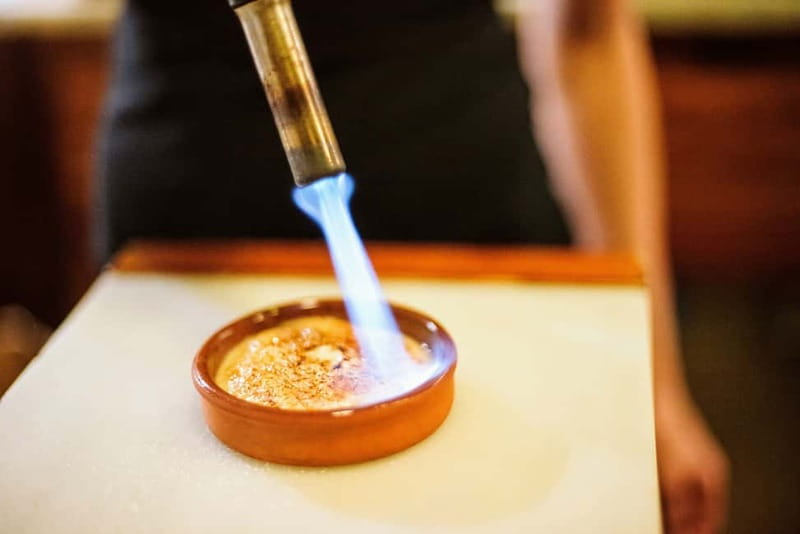
Several class experiences also included dessert beyond fruit, such as crema Catalana. Since the stated menu specifies seasonal fruit, you should treat any additional dessert as dependent on the class or chef rather than a guarantee.
The shared table is part of the value. You have cooked beside the people now eating with you, and the meal gives the group time to compare results, ask final questions, and talk about Spanish food. If you prefer a quiet, formal lunch, this may feel lively. If you like food classes for the social side, it works well.
The class also appears generous with refreshments. One participant described plenty of white wine and vermouth, while another appreciated the chef’s attention to nearly empty glasses. Drink responsibly, especially since you are also working around hot equipment.
How the $112 Price Works Out
At $112 per person, this is not the cheapest meal in Madrid. You can eat excellent tapas for much less, and a market visit on its own costs nothing beyond what you buy. The value here comes from combining several services into one half-day: a guided market visit, fresh ingredients, instruction, an aperitif, drinks, and a multi-course lunch.
You are also paying for access to a private cooking space and a chef’s time. The class lasts 3.5 hours, which gives the price a stronger case than a one-hour demonstration. You do not merely receive a plate of paella. You take part in making several dishes and gain recipes you can use at home.
The class is particularly good value if you would otherwise book both a market tour and a cooking class. It is less compelling if your main goal is simply to eat paella, since Madrid has many restaurants and tapas bars for that purpose.
A cookbook in PDF form has also been provided with at least some class experiences. That makes the lesson more useful after your trip, especially for croquetas, patatas bravas, and the paella method. Confirm what is included with your selected option if the recipe file matters to you.
Free cancellation is available up to 24 hours before the activity for a full refund, and you can reserve now and pay later. Hotel pickup and drop-off are not included, so plan your own way to the meeting point.
Who Will Enjoy This Class Most
I would choose this for adults and older teens who want to understand Spanish food by making it. Children under 12 are not permitted because of the knives, hot stoves, and high work surfaces.
It suits you best if you:
- Like hands-on activities more than passive sightseeing
- Want a full meal during a half-day Madrid outing
- Enjoy learning regional food traditions
- Are comfortable sharing a kitchen and table with a small group
- Want recipes you can repeat at home
- Eat dairy, gluten, and other ingredients used in the menu
It is a poor fit if you are vegan, lactose intolerant, or unable to eat gluten. It is also not suitable for wheelchair users, people with mobility impairments, or families with strollers.
The tour is conducted in English. You do not need professional cooking skills, but you should be ready to follow instructions, stand for much of the class, and participate in a working kitchen.
Should You Book It?
Book this class if you want your Madrid food experience to include context, conversation, and actual cooking. The market visit gives you a better sense of Spanish ingredients, while the kitchen session turns that introduction into a meal of paella, tapas, and dessert.
I would especially recommend it early in your Madrid stay. The market lesson and food advice can help you make better choices at other restaurants, and the recipes give you a way to carry the experience home. Choose a private option if you want more control over the pace or are traveling with a group of friends.
Skip it if you only want a quick paella lunch, need strict vegan or allergy accommodations, or have trouble standing and working around kitchen equipment. For everyone else, $112 buys a substantial, social food lesson rather than just another restaurant reservation.
FAQ
How long does the Madrid paella and tapas class last?
The activity lasts 3.5 hours.
What dishes will I prepare?
You prepare authentic paella, homemade croquetas, patatas bravas with two homemade sauces, a traditional Basque tapa, and dessert. The exact seasonal dishes may vary.
Is a market visit included?
Yes. You visit a traditional Madrid market with your guide and select fresh ingredients for the cooking session.
Is vermouth included?
Yes. The class includes a traditional vermouth aperitif and a snack. You also learn how locals drink it.
Are drinks included with lunch?
Yes. Lunch includes drinks, with a choice of beer or wine. Non-alcoholic options can be arranged.
Is the class conducted in English?
Yes. The live guide and class language are English.
How many people are in the group?
Small groups have 12 people or fewer. Private cooking classes are available with some booking options.
Can vegetarians join?
Yes. The activity can be adapted for vegetarians and pescatarians, but you should contact the provider before the class.
Can vegans, people with lactose intolerance, or people with gluten intolerance join?
No. The stated restrictions say the class is not suitable for vegans, people with lactose intolerance, or people with gluten intolerance. Gluten-free arrangements are possible for participants who are not celiac.
Is the class suitable for children or wheelchair users?
No. Children under 12 are not permitted, and the activity is not suitable for wheelchair users, people with mobility impairments, or strollers.
More Markets in Spain
- San Sebastian Pintxo Food, Wine & Market Foodie Tour(Small Group)
★ 5.0 · 621 reviews - Cap de Formentor: Market, Beach, and Alcudia Tour
★ 4.3 · 620 reviews - Ultimate Barcelona Food Tour with visit to a Local Market
★ 5.0 · 507 reviews - Interactive Paella & Market: Bottomless Wine & Rambla Views
★ 5.0 · 376 reviews
More Cooking Classes in Spain
- Barcelona: Paella Cooking Class with Market Visit and More
★ 4.9 · 711 reviews - Madrid Tapas & Paella Cooking Experience with Local Market Visit
★ 5.0 · 432 reviews - Half-Day Spanish Cooking Class & Boqueria Market Tour
★ 4.9 · 383 reviews - Seafood paella cooking class, tapas and visit to Ruzafa market.
★ 5.0 · 328 reviews
Just added around Spain
- Explore Bilbao’s Flavors Mercado de la Ribera and Old Town★ 4.5 · 3 reviews
- CERTAL Exclusive Tour: LA RIBERA Market + GASTROBARS Bilbao (3h)★ 4.5 · 12 reviews
- Barcelona La Boqueria & Sant Antoni Private Food Experience★ 5.0 · 7 reviews
- Spanish Oysters, Cava and Ibérico Ham at Barcelona’s La Boqueria Market★ 5.0 · 8 reviews
- Taste of Barcelona: Boqueria Market, Tapas & History Tour★ 4.5 · 22 reviews
- Barcelona Tapas Cooking & Cocktail Class with Veronique & Mattias★ 5.0 · 3 reviews
- Cook Paella & Tapas + Market Tour in Barcelona (4-Course Meal)★ 5.0 · 2 reviews
- Private Barcelona Market Tour & Paella Cooking Class with Josh★ 5.0 · 4 reviews
Market Cooking Classes, compared.
Hanoi Cooking Class: Culture, Local Market & Meaning CSR Impact
Read our review →
5 Traditional Dishes Hanoi Cooking Class with Market Trip
Read our review →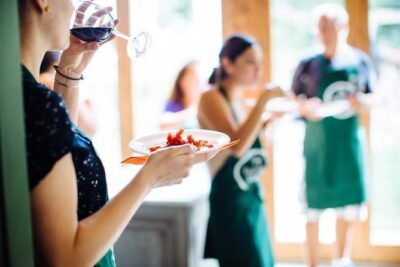
Cooking Class and Lunch at a Tuscan Farmhouse with Local Market Tour from Florence
Read our review →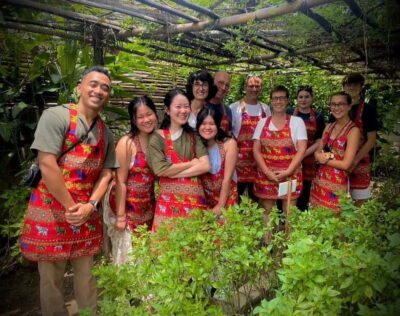
Cooking Class, Market & Thai Herbs Garden Tour
Read our review →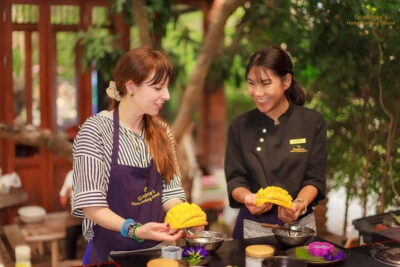
Authentic Cooking Class with Market & Farm Visit
Read our review →
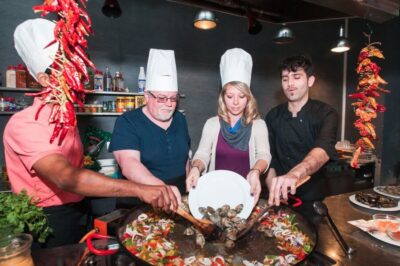
Paella Cooking Experience & Boqueria Market Tour
Read our review →
Cooking Class Hoi An:Local Market, Basket Boat, Fishing & Cooking
Read our review →Browse the lists this tour appears in