
Review · PORTUGAL
Porto: Coastal Villages Market & Seafood Cooking Tour
Porto’s Atlantic coast comes alive in the morning fish market, where you’ll learn to judge sardines, clams, octopus, seabass, and other catch by freshness. I like the direct connection between buying the ingredients and cooking them later, and I like that the day includes working fishing villages rather than only postcard viewpoints.
The other strong point is the small scale. With no more than six people, Marco can explain how tides, seasons, and changing fishing methods affect local food. His family’s organic farm also supplies part of the meal. The main consideration is the early start and the several van transfers, so this is not a slow, one-location cooking class.
Key points at a glance
- Fish market first: Shop beside local fishermen and choose the seafood for your meal.
- Five coastal communities: See São Pedro da Afurada, Miramar, Aguda, Granja, and Espinho at an unhurried pace.
- Marco as your guide: Hear about fishing, food traditions, and the changes facing the local industry.
- Hands-on Portuguese cooking: Prepare dishes such as seafood rice, shrimp bread stew, or grilled fish, depending on the season.
- A long shared lunch: Eat your cooking with local wine, bread, olives, vegetables, and conversation.
- Small-group format: Pickups and drop-offs are available in Porto, Vila Nova de Gaia, or Espinho.
Why this coastal food tour feels different
Many food tours in Porto stay inside the city, moving between cafés, bakeries, and wine bars. This one takes you west toward the Atlantic, where food is tied to boats, tides, market prices, farms, and family kitchens.
That connection gives the day its purpose. You are not simply shown a plate of seafood and told its name. You help choose the fish, visit places connected to its production, and then use those ingredients in a meal. I find that approach far more useful than a cooking class built around ingredients already measured and waiting on the counter.
The day is also personal without requiring you to spend a full day with a large bus group. The maximum group size is six, and private outings are available. That matters when you are asking questions, helping in the kitchen, or trying to hear a story while the cooking is under way.
The tour lasts about four to five hours in normal conditions, though the published duration is four to six hours. The timing depends on the starting point, market visit, village stops, shopping, cooking, and lunch. Plan on giving it most of a morning and early afternoon.
More Market Cooking Classes in Portugal
- Porto Local Market Visit & Cooking Class / Showcooking
★ 5.0 · 206 reviews - Lisbon Market and Food Tour with Cooking Class and Lunch
★ 5.0 · 117 reviews - Chef Led Porto Market Tour and Portuguese Tapas Class with Wine
★ 5.0 · 92 reviews
Starting in São Pedro da Afurada
Pickup is available in Porto, Vila Nova de Gaia, or Espinho. The first van ride is listed at about five minutes before reaching São Pedro da Afurada, a fishing community at the mouth of the Douro.
A traditional fish market is the first real stop, and it sets the tone for the rest of the day. Instead of merely looking around, you learn how to select the seafood that will become lunch. The catch may include sardines, octopus, clams, seabass, or something less expected from the morning boats.
This is a practical lesson. You’ll hear why season and tides matter, and you can see how the day’s catch shapes Portuguese cooking. Seafood is not treated as a fixed menu item here. The available fish changes, and the meal changes with it.
Allow about 45 minutes for the market. That is enough time to see the displays and ask questions without turning the stop into a rushed photo break. Bring a camera if you like, but pay attention to the buying process. It is the most distinctive part of the tour.
Marco also discusses how the fishing trade is changing. That adds needed context. Afurada is not a museum set up for visitors. It is a working place, and the fishing economy faces real changes. You get a better sense of that when the guide connects what you see at the stalls with the wider coastal community.
Five villages and the Atlantic way of life
After the market, a 20-minute van ride leads to the sightseeing portion. The route includes Afurada, Miramar, Aguda, Granja, and Espinho, with about 45 minutes set aside for seeing the coast and hearing its stories.
Each village has a different feel. In Afurada, you may see clothes drying in the sea air and fishermen repairing nets. In Aguda and Miramar, wooden boats rest on the sand, a reminder that the shoreline is still part of daily work rather than only a place for summer walks.
The tour explains how the ocean shaped local festivals, food, and customs. That is useful because the villages are small and easy to pass through without understanding what you are seeing. A guide gives those boats, nets, and homes a human scale.
The sightseeing section is not a long hike. The published plan calls it a short walk through several communities, supported by van transfers. Wear comfortable shoes anyway. You will move between stops, and coastal ground may not be as easy as a city pavement.
If your main goal is a long scenic walk beside the ocean, this may feel too brief. The focus is not a sustained hike or a detailed architectural tour. It is a series of short glimpses, with the guide linking the coast to food and local life.
Shopping for produce and farm ingredients
A further 15-minute van ride brings you to the shopping stop, which lasts about 30 minutes. Here you select vegetables, herbs, fruit, olives, cheese, and bread from nearby producers and markets.
This part helps balance the seafood focus. Portuguese coastal cooking is not only fish on a plate. Olive oil, garlic, potatoes, peppers, bread, herbs, and seasonal produce give the meal its shape. You get to handle the ingredients and see what will accompany the catch.
The experience also connects with Marco’s family organic farm. The farm supplies part of the meal, giving the day a link between fishing and agriculture. That is one of the more appealing details for anyone who wants to understand local food beyond restaurant service.
Thirty minutes is not enough for a large market expedition, but it should be enough to choose the items needed for lunch. The pace is purposeful. You are shopping for a meal you will soon prepare, not collecting souvenirs or wandering through stalls without a plan.
Same stalls, a different way to shop and eat:
- Private Lisbon Market Tour & Portuguese Cooking Class with Paula
★ 5.0 · 89 reviews - Arrábida Jeep Tour – Incredible Market & Hidden Gems
★ 5.0 · 61 reviews - Lisbon: Local Market, Food, and Culture Walking Tour
★ 4.7 · 40 reviews - Authentic Market & Food Tour in Portimão, Algarve
★ 5.0 · 38 reviews
Cooking seafood in a coastal home
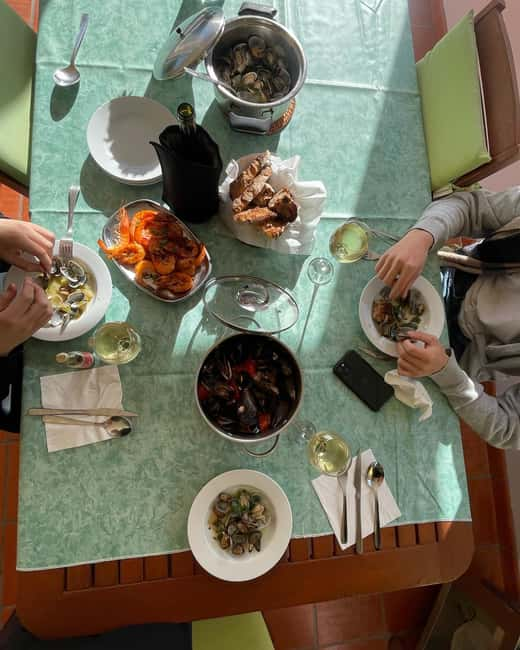
A 10-minute transfer takes you to Espinho for lunch and cooking. This is the longest part of the outing, with about two and a half hours allocated to the meal.
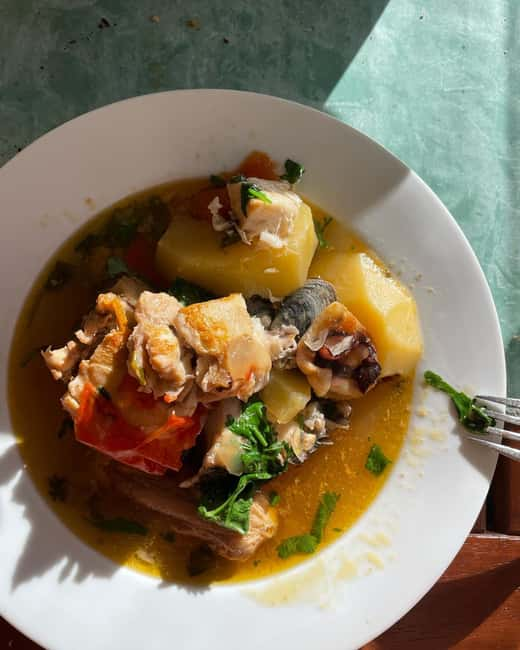
The kitchen becomes the center of the day. You work with the ingredients selected earlier and learn traditional methods from Marco and his family. Depending on the season, the menu may include arroz de marisco, a Portuguese seafood rice; açorda de camarão, a garlic and shrimp bread stew; or freshly grilled fish with olive oil, garlic, and herbs.
The seasonal approach is important. You should not expect one fixed menu every day. Seafood availability affects what goes into the pot, which is exactly how a coastal home kitchen works. If you have dietary restrictions, ask before booking because the available information does not promise substitutions.
The cooking is not presented as a formal restaurant class with a printed syllabus. It is a shared home-style meal, with techniques, family stories, music, and wine folded into the work. You’ll learn how to balance sea flavors and how simple ingredients can carry a dish when the seafood is fresh.
A prior outing with Marco included clams, squid, and sardines, served with bread, olive oil, olives, potatoes, and roasted peppers. That gives you a useful idea of the generous, relaxed style of the meal, though the exact food can change with the season.
The setting also matters. Lunch takes place at a coastal home, and the experience may involve a family property connected to Marco’s in-laws. Since the published details refer to the lunch location as a coastal home rather than a standard restaurant, you should expect a personal setting and a less formal meal.
Two and a half hours for food, wine, and conversation
The meal is not a quick tasting. Two and a half hours gives you time to cook, sit down, eat, and talk without rushing through the dishes.
Local wines are included. Depending on the meal, you may have Vinho Verde, Alvarinho, or wine from the Douro region, including white or red options. Bread, olives, and produce accompany the seafood, making this feel closer to a Portuguese family lunch than a set of small samples.
I especially like that the meal follows the market visit. You remember the fish as an ingredient you helped choose, not as an anonymous dish delivered by a waiter. That simple change makes the food more memorable and gives you a better understanding of how Portuguese cooks work with what is available.
The social side may be as important as the recipes. Music plays in the background, wine is poured during the cooking, and the meal is designed for conversation. If you enjoy meeting a guide and a small group around a table, this format should suit you well.
If you want a polished restaurant meal, careful pacing, or a quiet tasting menu, choose something else. This is more relaxed and domestic. The charm comes from participation and hospitality, not formal presentation.
What the $106 price includes
At $106 per person, the price covers market visits, ingredients, cooking materials, transport, and local wines. Pickup and drop-off are also included between Porto, Vila Nova de Gaia, and Espinho.
That makes the price reasonable for a half-day private or small-group outing, particularly because the day involves several transfers and a substantial lunch. You are paying for more than a class. The cost also covers the fish and produce, the guide’s time, transportation between scattered coastal communities, and the meal itself.
The one point to clarify is the statement that the restaurant bill is not included. The experience is described as a hosted lunch at a coastal home, not a standard restaurant meal, so this wording may relate to any separate restaurant expense rather than the planned lunch. Ask the provider what, if anything, you would pay at the meal stop before booking.
Because the group is capped at six, the price may be easier to justify for couples, families, or friends who value personal attention. Solo visitors should weigh the cost against the social setting and the amount of included food and transport.
Timing, language, and practical details
The day starts early because the fish market is best in the morning. Starting times vary, so check availability for your date. A morning appointment also means you should avoid planning another fixed activity too soon after the advertised finish.
English, Portuguese, and Spanish are available. The English is spoken with a Portuguese accent, so tell Marco if you need a point repeated. The small group makes that easier than it would be on a large coach tour.
Wear comfortable shoes and bring sunscreen. A camera is useful, but the coast can be bright and breezy, and you will move between indoor and outdoor stops. The tour is not suitable for babies under one year or for people over 95.
Free cancellation is available up to 24 hours before the start, and you can reserve now and pay later. Those terms help if your Porto schedule is still shifting, though you should still check the exact starting time and pickup instructions.
Who will get the most from this experience
I would choose this tour if you want to connect Porto with its nearby coast and prefer food experiences that involve real places and people. It suits curious eaters, couples, small groups of friends, and visitors who find a shared meal more memorable than a list of monuments.
It is also a good option if you have already seen central Porto and want a different side of the Norte Region. The route shows fishing communities, farm produce, wooden boats, and coastal routines that you will not get from a city-center food walk.
Families with older children may enjoy choosing ingredients and helping with the cooking. Very young children are excluded, and the morning schedule, van transfers, and multi-course meal may not suit everyone.
You should think twice if you dislike seafood, want a fixed menu, or prefer to explore independently. The route is structured around the market, village stops, shopping, and shared lunch. You will have less free time than on a self-guided coastal day.
Should you book the Porto coastal cooking tour?
Book it if you want food with a sense of place. The best parts are the fish market, Marco’s explanations of the fishing trade, the visits to Afurada and nearby villages, and the meal prepared from ingredients chosen that morning.
The $106 price is fair when you value transport, wine, ingredients, and a long hosted lunch rather than only a cooking lesson. Confirm the lunch-bill wording, mention any dietary needs, and wear shoes made for walking.
Skip it if you want a formal culinary course or a full day of uninterrupted sightseeing. For everyone else, this is a warm, practical way to meet northern Portugal through its seafood, villages, and kitchen table.
FAQ
How long does the tour last?
The experience takes about four to five hours, with the published duration listed as four to six hours. The exact length depends on the starting time and the pace of the market, sightseeing, shopping, cooking, and lunch.
Where can I be picked up?
Pickup is available in Porto, Vila Nova de Gaia, or Espinho. Drop-off is available in the same three locations.
What languages are offered?
The tour is available in English, Portuguese, and Spanish. The English is spoken with a Portuguese accent.
How many people are in the group?
The maximum group size is six people. Private and small-group options are available.
What food might I cook?
The seasonal menu may include arroz de marisco, açorda de camarão, or freshly grilled fish with olive oil, garlic, and herbs. The exact dishes depend on the available seafood and produce.
Are ingredients and wine included?
Yes. The price includes the market ingredients, cooking materials, and local wines. The included food may feature seafood, bread, olives, potatoes, roasted peppers, and other seasonal produce.
What should I bring?
Bring comfortable shoes, sunscreen, and a camera. You will spend part of the day visiting outdoor coastal communities and walking between stops.
Can I cancel the booking?
You can cancel up to 24 hours in advance for a full refund. A reserve-now-and-pay-later option is also available.
More Markets in Portugal
- Arrábida Jeep Tour – Incredible Market & Hidden Gems
★ 5.0 · 61 reviews - Lisbon: Local Market, Food, and Culture Walking Tour
★ 4.7 · 40 reviews - Authentic Market & Food Tour in Portimão, Algarve
★ 5.0 · 38 reviews - Setúbal: Winery & Fish Market Tasting Tour from Lisbon
★ 5.0 · 35 reviews
More Cooking Classes in Portugal
- Porto: Cooking Class with Local Market Visit
★ 5.0 · 15 reviews - Lagos: Market Tour and Cataplana Cooking Class
★ 5.0 · 9 reviews - Lisbon: Market Experience & Cooking Class
★ 5.0 · 9 reviews - Lisbon: Setúbal Market and Wine tour with Cooking class
★ 5.0 · 4 reviews
Just added around Portugal
- From Market to Table with Paula (Loulé) – Private Cookery Class★ 5.0 · 21 reviews
- West Algarve Tour Visit Tavira Olhão Market and Ayamonte in Spain★ 5.0 · 2 reviews
- Quarteira Town & Gypsy Market Tour with Beach Bliss★ 3.5 · 14 reviews
- Loule Traditional Market Tour★ 4.5 · 17 reviews
- Quarteira Market & Town Bus Trip from Albufeira★ 4.0 · 13 reviews
- Loulé Market and Town Half-Day Bus Round Trip from Albufeira★ 4.5 · 14 reviews
- Authentic Algarve: Loulé Town Tour and Markets★ 4.0 · 19 reviews
- Algarve Wines Tasting Shared Experience at Mercado Municipal de Silves★ 5.0 · 11 reviews
Market Cooking Classes, compared.
Hanoi Cooking Class: Culture, Local Market & Meaning CSR Impact
Read our review →
5 Traditional Dishes Hanoi Cooking Class with Market Trip
Read our review →
Cooking Class and Lunch at a Tuscan Farmhouse with Local Market Tour from Florence
Read our review →
Cooking Class, Market & Thai Herbs Garden Tour
Read our review →
Authentic Cooking Class with Market & Farm Visit
Read our review →
Paella Cooking Experience & Boqueria Market Tour
Read our review →
Cooking Class Hoi An:Local Market, Basket Boat, Fishing & Cooking
Read our review →Browse the lists this tour appears in