
Review · DUBAI
Walking Tour in Dubai. Souks, museums, Local Food Testing
Dubai’s old quarters tell a better story than its skyscrapers, and this three-hour walk gives you that story at street level. You move from Al Seef and Al Fahidi’s wind towers to the textile, spice, and gold markets, with an abra ride across Dubai Creek tying the route together.
I like the mix of walking and water taxi travel, plus the small food tastings that make the tour more than a sightseeing circuit. I also like the guides’ personal touch: Abdullah and Ikram are named in the tour’s feedback, with Ikram especially praised for answering questions and explaining Dubai’s past. The main drawback is the pace. With many stops in only three hours, you will see rather than linger, and the route is not suitable for wheelchair users or people with mobility impairments.
Key points to know before booking
- Old Dubai in three hours: The route links Al Seef, Al Fahidi, Al Fahidi Fort, the textile market, Spice Souk, and Gold Souk.
- A real abra crossing: You cross Dubai Creek by traditional water taxi, a short ride that adds useful local character.
- Small tastings included: Camel milk tea, camel milk chocolate, street food, and bottled water are covered.
- English-speaking local guides: Guides associated with the experience include Abdullah and Ikram.
- End point near Al Ras Metro Station: The walk starts at Sharaf DG Metro Station Exit 4 and finishes at Al Ras.
- Come ready to walk: Comfortable shoes and sunglasses matter. Large bags and luggage are not allowed.
Why this Old Dubai walk is worth your time
Dubai is easy to read as a city of glass towers, indoor malls, and grand engineering. This tour gives you a different Dubai, one shaped by creek traffic, trade, courtyards, mosques, coffee, spices, and small shops.
The route is useful for a first visit because it joins several historic areas that can feel scattered when explored alone. You begin on the Bur Dubai side of the creek, walk through Al Seef and Al Fahidi, then cross the water to Deira for the Spice Souk and Gold Souk. The result is a clear west-to-east story of old Dubai.
At $24 per person, the value is strong if you want orientation, transport, and tastings in one short outing. An abra ride costs little on its own, and the markets are free to enter, but a guide can explain what you are seeing and help you understand the difference between a historic quarter, a market street, and a modern recreation of old-style architecture.
The price makes this especially useful during a short stop in Dubai. You get three hours of sightseeing without committing to a full-day excursion. The tradeoff is that this is an introduction, not a slow cultural study. If you want long shopping time, detailed museum visits, or a relaxed meal, you will need to continue exploring after the tour.
More Market Walking Tours in Dubai
- Historic Old Dubai & Souk Small Group Walking Tour
★ 5.0 · 156 reviews - Dubai Souks, Food & Culture Walking Tour
★ 5.0 · 132 reviews - Private Old Dubai Walking Tour: Forts, Souks, and Boats
★ 5.0 · 116 reviews
Starting at Sharaf DG and reaching Al Seef
The meeting point is Sharaf DG Metro Station Exit 4. From there, the walk takes about five minutes to Al Seef, a creekside area designed around traditional Arabian forms.
Al Seef is a practical opening stop because it eases you into Old Dubai. You can expect a guided visit and time for photographs, with about 30 minutes here. The setting connects the water, older architectural styles, and the commercial life of the creek.
Pay attention to the contrast between appearance and age. Parts of Dubai’s heritage-style setting are presented in a polished visitor environment, while the later stops take you into working market areas with active shops. A good guide helps separate the two, so you understand that old-looking and old are not always the same thing.
This opening section also gives you a chance to get comfortable with the pace. You are walking, stopping for explanations, and taking photographs rather than following a strict museum route.
Al Fahidi’s courtyards, wind towers, and cultural spaces
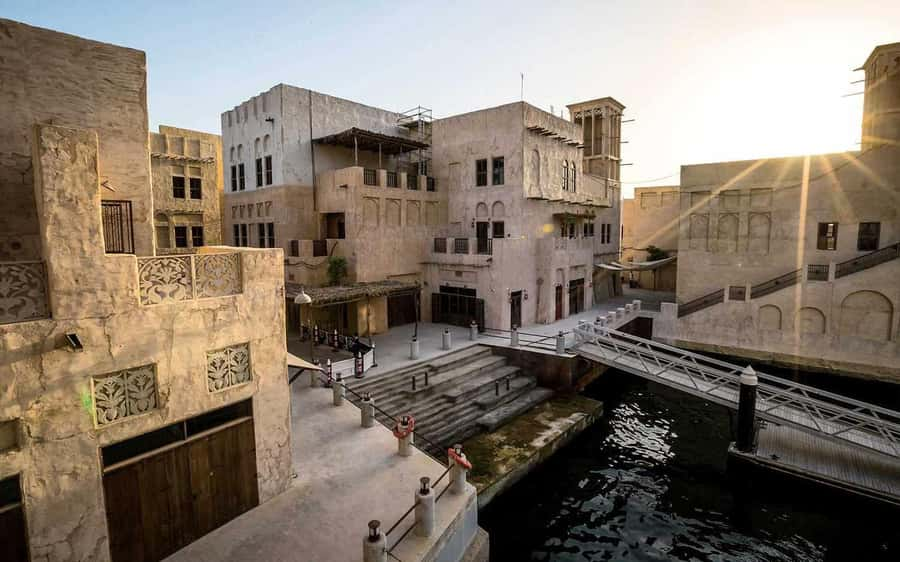
From Al Seef, the tour continues into Al Fahidi District for about 50 minutes. This is the strongest part of the walk for architecture.
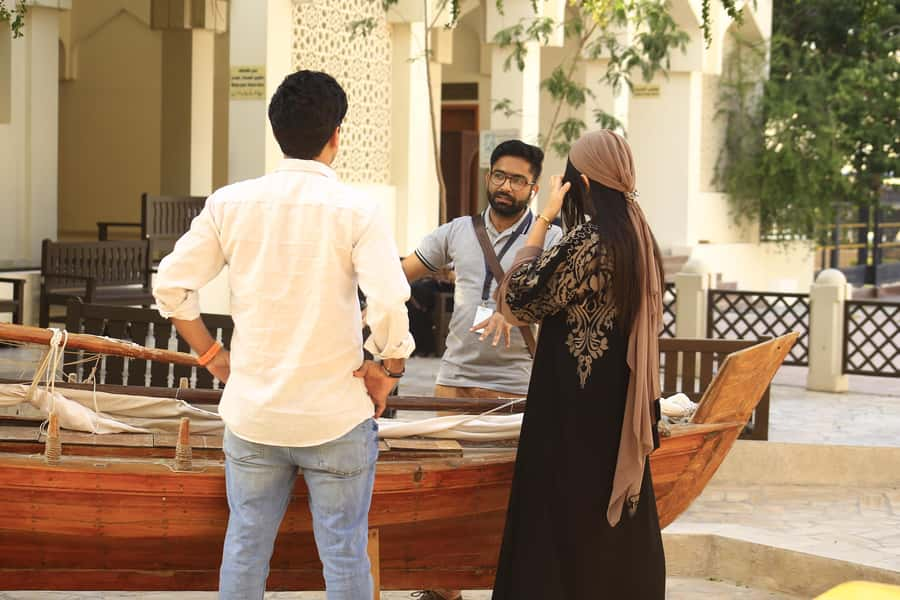
Al Fahidi is known for its narrow lanes, shaded courtyards, and traditional wind-tower forms. The buildings now serve as cultural venues, art galleries, event spaces, museums, and coffee-related attractions. That mix makes the district more interesting than a collection of preserved walls. You are seeing old architectural ideas used in new ways.
The wind towers are worth a closer look. Before modern air-conditioning, these structures helped draw air through buildings. You do not need a long technical lecture to appreciate the basic idea: Dubai’s older homes were designed around shade, airflow, and inward-facing courtyards.
The walking route also passes the Old Mosque. The stop is mainly about the building’s appearance and setting, so keep your camera ready, but dress respectfully around religious sites. The narrow lanes can feel calmer than the shopping streets later in the tour, giving you a better sense of how Old Dubai is arranged.
One useful advantage of having a guide here is context. Without explanation, Al Fahidi can look like a pleasant collection of beige buildings. With the history of the district, its building methods, and its changing role, the area becomes easier to read.
Al Fahidi Fort and the old city wall
The schedule allows about 15 minutes for photographs at Al Fahidi Fort. This is a short stop, so you should not expect an extended museum visit.
The fort is tied to Dubai’s early defensive history and sits close to the Dubai Museum area. The tour also points out the remains of Dubai’s old enclosure wall, built around 1800 AD. That detail gives the walk a helpful sense of scale. Modern Dubai is huge, but its early urban core was compact enough to protect with a wall.
The Dubai Museum is included in the historical portion of the route, with relics and artifacts connected to Emirati civilization. Since the full experience lasts only three hours and the listed stop at the fort is primarily a photo stop, check how much indoor museum time is available on your departure. Do not book this expecting a long, self-guided museum session.
I like this section because it supplies a bridge between architecture and history. You are not only looking at old houses. You are also seeing the remains of a settlement that grew from a small fortified community into a global city.
More Market Walking Tours in United Arab Emirates
- walking tour in old dubai, souks, abra boat, old town
★ 5.0 · 89 reviews - Private Historic Old Dubai and Souks Walking Tour featuring Hidden Gems
★ 5.0 · 27 reviews - Dubai Old Town, Creek, Abra boat, Souks Guided walking Tour
★ 4.7 · 3 reviews - Dubai: Guided City Walking Tour to Spice and Gold Souk
★ 5.0 · 3 reviews
Al Souq Al Kabeer and the Old Textile Market
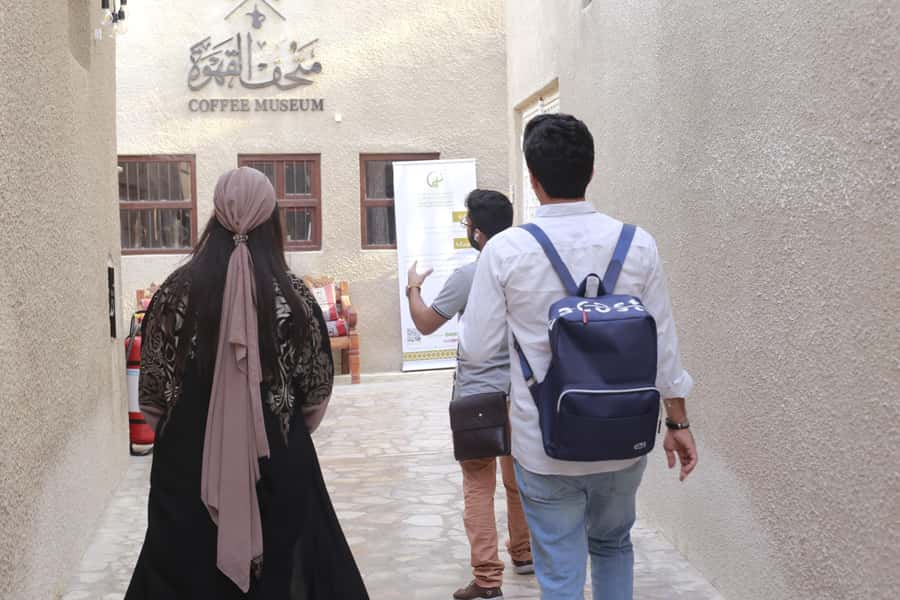
After another short walk, the route reaches Al Souq Al Kabeer for about 10 minutes, followed by roughly 10 minutes at the Old Textile Market.
These stops are brief, but they bring you closer to the practical side of Old Dubai. The textile market offers fabrics in many colors and patterns, and it is a better place to notice the role of cloth in regional dress and trade than a modern shopping mall would be.
This is also where the tour may become more commercial. Shopkeepers are selling, and you may be approached. A guided visit can help you look without feeling that every stop must become a purchase. If you do want to buy fabric, ask about quality, origin, and care before agreeing to a price.
The short timing matters. You will have enough time to see the market and understand its character, but not enough to compare every shop. I would treat this as an introduction and return later if textiles become a serious shopping goal.
Crossing Dubai Creek by abra
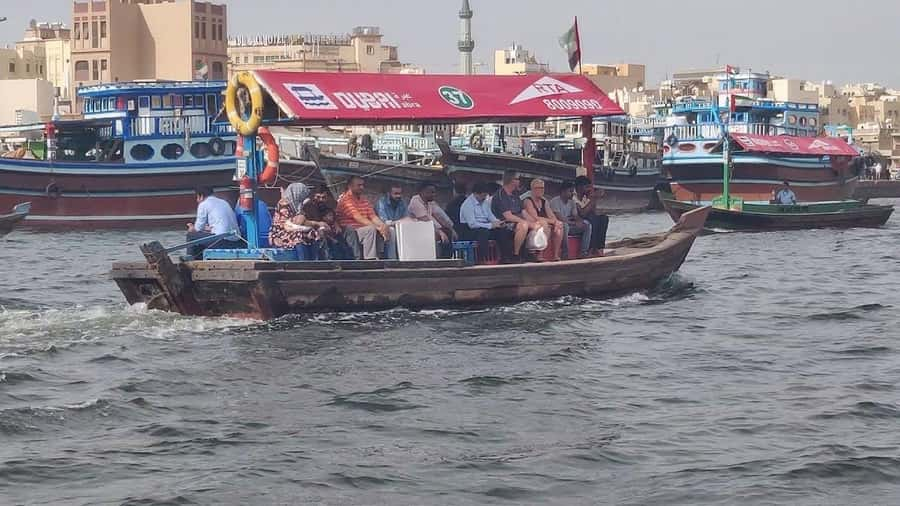
The five-minute abra crossing is one of the tour’s most memorable pieces. The abra is a traditional water taxi, and the ride takes you from the Bur Dubai side toward Deira.
This is not a scenic cruise with commentary or a long time on the water. It is short, useful transport that locals and visitors use to cross the creek. That is exactly why it works so well here. The water taxi does not interrupt the walking route with a coach transfer. It keeps you connected to the older shape of Dubai.
From the creek, you get views back toward traditional buildings, wind towers, and the changing waterfront. The contrast between the historic quarters and Dubai’s modern skyline is part of the appeal. Have your phone or camera ready, but keep bags secure and stay aware of the movement around the boat.
The abra also marks a change in mood. The first half focuses more on buildings and history. After the crossing, the Spice Souk and Gold Souk are more sensory and commercial.
The Spice Souk, with smells and small tastings
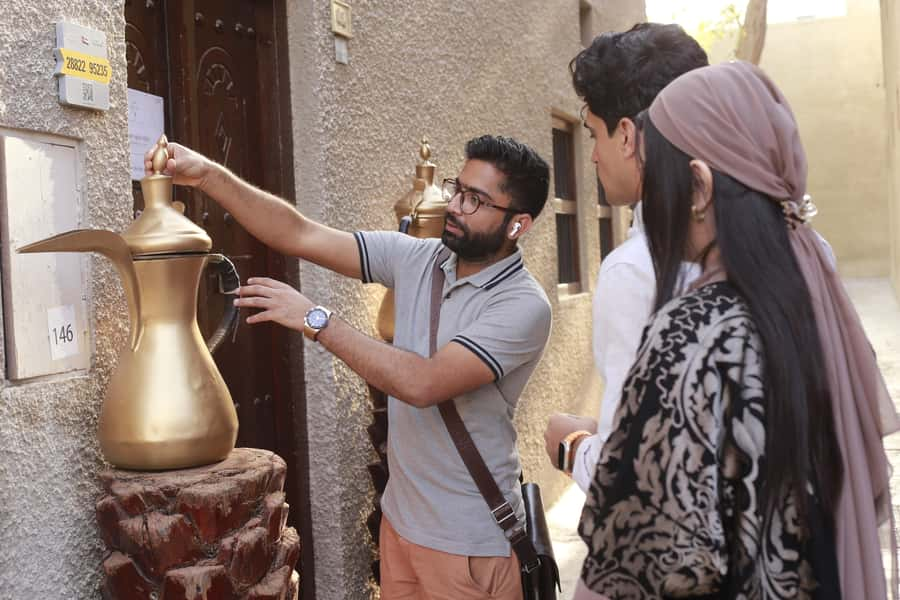
The tour allows about 30 minutes at the Dubai Spice Souk. This is where the experience becomes most immediate. You will notice the smell of spices and coffee before you have inspected every display.
The market sells spices and ingredients from around the region. The guide can help you understand what you are seeing and may point out uses, flavors, and recipes. The included food element adds another layer: you receive camel milk tea, camel milk chocolate, and a street food taste, along with bottled water.
These are modest samples, not a full meal. If you arrive hungry, eat beforehand or plan food after the tour. The tasting works best as a way to try something unfamiliar without ordering a large portion.
I would also keep personal shopping separate from the included samples. You may find good buys in spices, chocolate, or other goods, but compare prices and quantities before purchasing. One useful practical point from the experience is that the spice market can be a strong place to pick up small food gifts, provided you have room to carry them.
The market can be busy and aromatic, so it may not suit anyone who dislikes crowds or strong smells. For most people, though, this is the stop that makes the tour feel connected to everyday trade rather than only historic displays.
The Gold Souk and the final walk to Al Ras
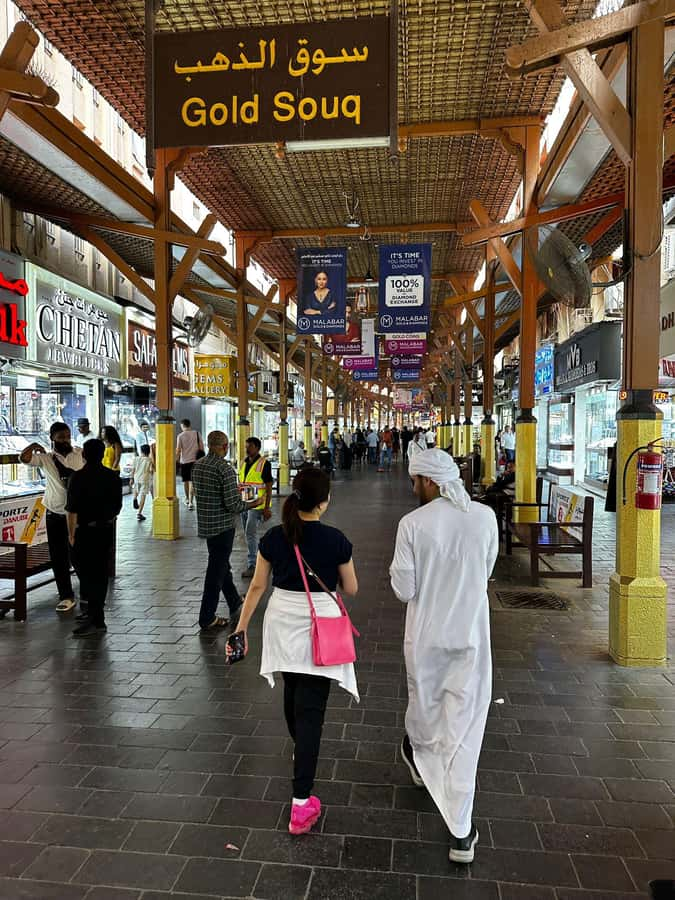
The final major stop is Dubai Gold Souk, with about 30 minutes for a guided visit. The market is known for its large number of gold retailers, with more than 350 shops described along the route. It is one of the world’s major gold markets and a signature sight in Old Dubai.
You do not need to buy anything to enjoy the visit. The displays are the attraction, especially the scale of the market and the amount of gold presented in shop windows. If you are considering a purchase, remember that the final cost depends on the gold price, the weight, and the workmanship. Ask for those details clearly before making a decision.
This is a market visit, not a financial recommendation. The guide can help you understand the setting, but personal purchases remain your responsibility. The tour price covers the walk and the listed tastings, not souvenirs or other expenses.
The experience finishes at Al Ras Metro Station, which is convenient for continuing through Deira or returning to another part of Dubai by public transport. Because the tour ends in a different district from where it begins, you should think of it as a one-way walking route rather than a loop.
Food, guiding, and the human side of the tour

The food samples are small, but they help break up the history and shopping. Camel milk tea and chocolate offer a taste of local food culture, while the street food sample gives you something more substantial than a sweet bite.
The guide is central to the experience. English is the stated language, and the guides named in the tour’s feedback include Abdullah and Ikram. Ikram is described as especially polite and attentive, with the ability to answer questions about Dubai and its past. Abdullah is also praised for making the experience enjoyable and, in one case, giving small gifts to take home.
Those personal details matter because the route itself is easy to follow on a map. The value comes from the explanations, answers, and small touches that help you connect the places. Guide quality can vary by departure, so treat the guide as a major part of the booking rather than a minor extra.
The tour has a perfect rating from 11 reviews, which is a positive signal, but I would still judge it by the format. It is a compact introductory walk, not a private custom tour. The published details do not state the group size, so you should not assume a small group.
Who should book this walk?
I would choose this tour if you are visiting Dubai for the first time, have a short stop, or want help seeing the historic districts without arranging each piece yourself.
It suits you if you:
- Like walking through older neighborhoods rather than only visiting modern attractions
- Want a local guide to explain architecture, trade, and Dubai’s past
- Enjoy markets but prefer some structure and orientation
- Want an abra ride included
- Are happy with short tastings instead of a full food tour
- Can manage several hours on foot in warm conditions
I would choose another activity if you need wheelchair access, cannot walk comfortably, or want a slow shopping day. The tour does not allow luggage or large bags, so it is also a poor fit if you are going directly from the airport with full cases.
Wear comfortable shoes and bring sunglasses. Keep your belongings light. You will move through narrow market areas, cross the creek, and finish away from the starting station.
Should you book the Old Dubai walk?
Book it if you want a clear, affordable introduction to Dubai’s older side. For $24, the combination of a guide, abra ride, market visits, tastings, and three hours of sightseeing is good value.
The best reason to choose it is the route. Al Fahidi, the textile market, Spice Souk, and Gold Souk each show a different part of the city’s past and present. The main caution is pace: you will get a taste of each place, not a long visit at any one of them.
If that sounds right, this is a practical way to trade a few hours of mall time for creek crossings, coffee and spice smells, wind towers, old walls, and market streets. If you prefer independence, take the same areas at your own speed and save the $24 for purchases. For everyone else, the guide adds enough context to make the walking worthwhile.
FAQ
Where does the walking tour start?
It starts at Sharaf DG Metro Station, Exit 4.
Where does the tour finish?
The tour finishes at Al Ras Metro Station.
How long does the experience last?
The walking tour lasts three hours.
What language is the tour conducted in?
The live tour guide speaks English.
Is the abra water taxi ride included?
Yes. The five-minute abra crossing is included in the experience.
What food and drinks are included?
The tour includes camel milk tea, camel milk chocolate, a street food taste, and bottled water.
What should I bring?
Bring comfortable shoes and sunglasses.
Can I bring luggage or use a wheelchair?
Large bags and luggage are not allowed. The tour is not suitable for wheelchair users or people with mobility impairments.
More Food in Dubai
- Dubai Top Highlights: Frame Entry, Souks, Abra & Street Food
★ 4.8 · 344 reviews - Dubai: Premium Old Town, Street Food, Souks & Boat Ride Tour
★ 4.9 · 262 reviews - Dubai.Discover Old town,Markets,street food,Abra &Museums
★ 4.9 · 181 reviews - Dubai Old Town, Culture, History, Street food and Souks Tour
★ 5.0 · 170 reviews
More Food and Drink Tours in Dubai
- Dubai: Old Town, Creek, Museums, Souks, & Street Food Tour
★ 4.8 · 10,816 reviews - Dubai: Old Town, Souks, Street Food, Guided Tour & Abra Ride
★ 4.9 · 7,170 reviews - Dubai: Old Town, Souks, Street Food, Guided Tour & Abra Ride
★ 5.0 · 1,664 reviews - Dubai: Old Town, Street Food, Creek, Souks, & Emirati House
★ 4.9 · 1,496 reviews
Just added around Dubai
- Old Dubai Heritage Tour: Souks, Mosques & more hidden gems!★ 4.3 · 72 reviews
- Old Dubai Guided Tour With Photographer: Souks & Street Food★ 4.9 · 74 reviews
- Dubai:Private Frame Entry, Mosque, Souks, Tastings& transfer★ 4.8 · 9 reviews
- Dubai: Discover Dubai Old Town, Souks, Museum & Street Food★ 4.9 · 25 reviews
- Dubai Old Town, Creek, Abra boat, Souks Guided walking Tour★ 4.7 · 3 reviews
- Dubai Food Tour: 4 Cuisines, Souks & Street Bites★ 3.0 · 3 reviews
- Dubai: Guided City Walking Tour to Spice and Gold Souk★ 5.0 · 3 reviews
- Dubai: Al Ain Oasis, Camel Market, Old Museum & Jebel Hafeet★ 4.4 · 8 reviews
Market Walking Tours, compared.
Tokyo Tsukiji Fish Market Food and Culture Walking Tour
Read our review →
Ben Youssef, Secret Garden, & Souks Walking Tour
Read our review →
Air Raid Shelter + St. Nicholas Market Walking Tour
Read our review →

Nishiki Market Brunch Walking Tour (7 Tastings + Brunch)
Read our review →