
Review · THAILAND
3 hours Khao Lak Cooking Class and Market Visit
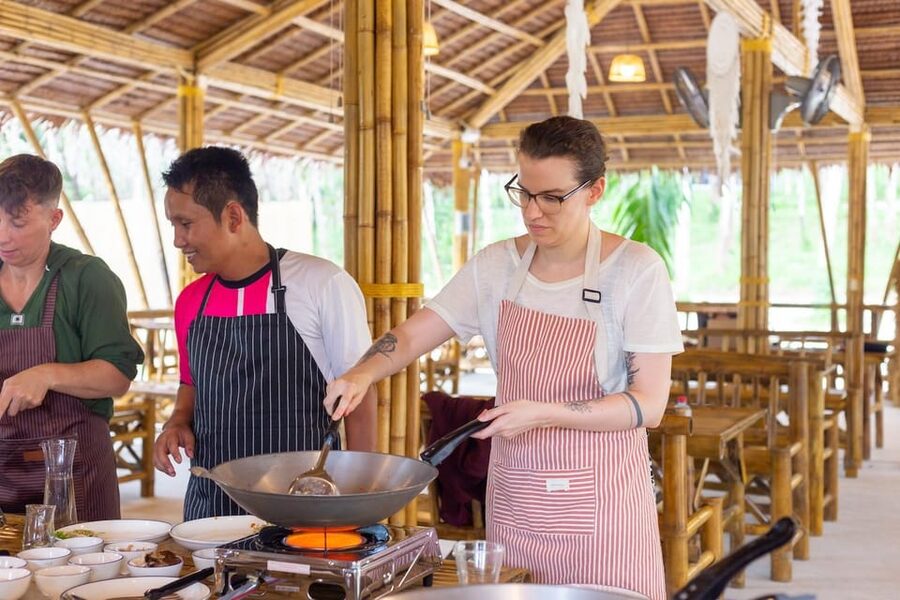
The best part of this three-hour class happens before you reach the cooking station. You visit a local market, see unfamiliar produce up close, sample snacks such as sesame balls, and help choose the ingredients that will become your meal. Then a local chef guides you through four Thai dishes in a hands-on class.
I like the market-to-table format, which gives each dish a little more meaning than a standard cooking demonstration. I also like the small-group potential: one booking had only one participant, creating unusually direct instruction. The food is generous, so arrive hungry.
One thing to check is the recipe material. Recipe guides are included, but one participant found that written cooking instructions were not provided in the way expected. Much of the class is hands-on and guided in person, so take notes or ask questions if you want to recreate everything at home.
Key points at a glance
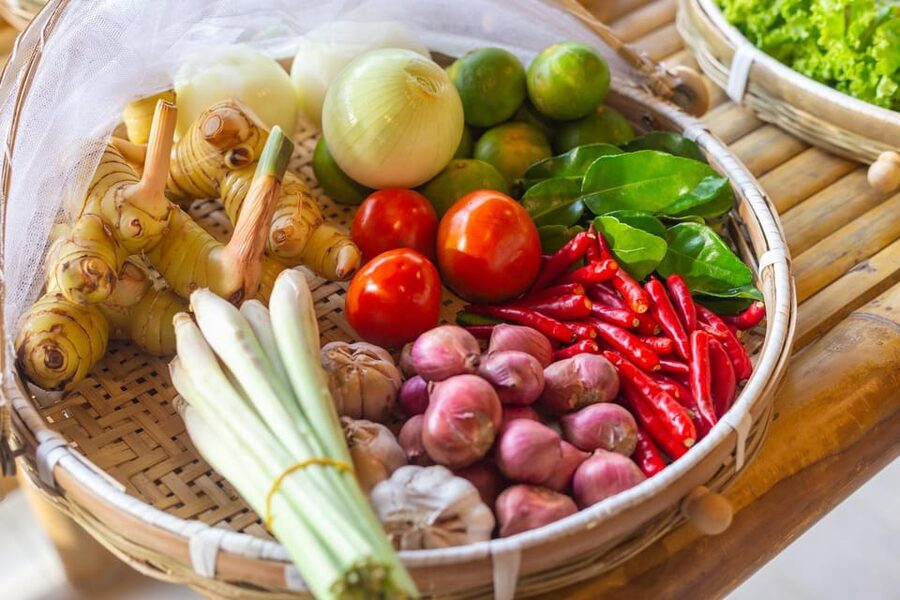
- A real market visit comes first: Choose ingredients, learn about Thai produce, and try local snacks before cooking.
- Four Thai dishes fill the main meal: The menu features Pad Thai, Tom Yum Goong, Som Tum, and mango sticky rice.
- Small groups can mean personal instruction: One class had a single participant, while the exact group size may vary.
- English guidance keeps the class accessible: Local chefs explain ingredients, methods, and Thai flavor balance in English.
- Extra food skills add variety: Fruit carving or coconut milk preparation may be included alongside the main dishes.
- Hotel pickup and drop-off are included: You do not need to arrange separate transport for this class.
Starting at the Thai market
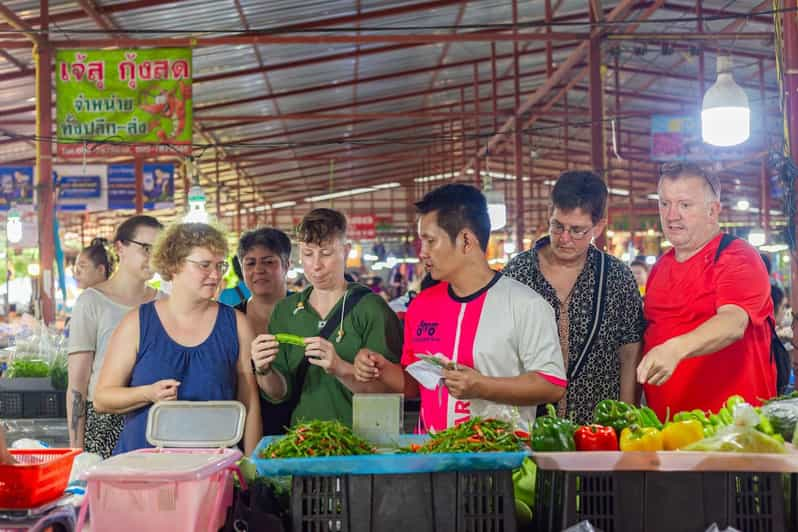
This class begins with shopping, not chopping. That simple choice makes a difference. Instead of receiving a measured basket of ingredients, you see the raw materials first and learn how Thai cooks use them.
The market visit gives you a chance to look at produce, herbs, spices, seafood, and other ingredients used in everyday Thai food. Your guide helps identify the products needed for the meal and explains what they contribute. You may also sample snacks along the way. Sesame balls were a particular favorite in one class, and they make a pleasant first bite before the cooking begins.
I like this part because it helps you understand that Thai cooking depends on fresh ingredients and careful balance, not just a packet of curry paste. You begin to see the difference between sweet, sour, salty, and spicy elements before they reach the wok.
The market also gives you a better sense of local food habits than a restaurant meal alone. You can ask about unfamiliar items and hear how they fit into Thai cooking. If you enjoy food markets, this portion may be as interesting as the cooking itself.
Keep in mind that markets can be warm and busy. Wear a hat, bring comfortable clothing, and choose shoes you can stand in for a while. A change of clothes is recommended, which is useful if you expect heat, cooking splashes, or a long day in Thailand.
More Market Cooking Classes in Thailand
- Chiang Mai: Cooking Class, Market & Thai Herbs Garden Tour
★ 4.9 · 4,824 reviews - Chiang Mai: Authentic Cooking Class with Market & Farm Visit
★ 4.9 · 4,546 reviews - Phuket Thai Cooking Class with Market Tour Option
★ 5.0 · 2,665 reviews
From chosen ingredients to four Thai dishes
After the market, you move into the cooking class. The chef explains the ingredients and shows you how to prepare the dishes. The class is designed for all skill levels, so you do not need advanced knife skills or previous Thai cooking experience.
The main meal includes four well-known Thai favorites:
- Pad Thai: A familiar noodle dish and an easy way to learn how Thai flavors are balanced in one pan.
- Tom Yum Goong: A hot and sour shrimp soup with aromatic flavors.
- Som Tum: Green papaya salad with a fresh, sharp combination of sweet, sour, salty, and spicy notes.
- Mango sticky rice: A classic dessert pairing ripe mango with sweet sticky rice.
The exact order and teaching style may vary, but the class centers on making and eating the dishes yourself. One participant described four courses prepared in a wok, along with market snacks before the meal. That makes this more than a short demonstration. You should expect plenty of food and a meal that can replace lunch.
Pad Thai is likely to be the easiest dish to recognize, but Som Tum and Tom Yum Goong offer more insight into the Thai approach to flavor. The point is not simply to add heat. You learn how sour lime, salty seasoning, sweetness, herbs, and chili work together.
For many people, the dessert is a welcome finish. Mango sticky rice is simple in appearance, but its appeal comes from the contrast between soft rice, coconut flavor, and ripe fruit. If you have only tried Thai food in restaurants outside Thailand, this menu gives you a useful introduction to several different textures and flavor patterns.
What the chef teaches beyond the recipes
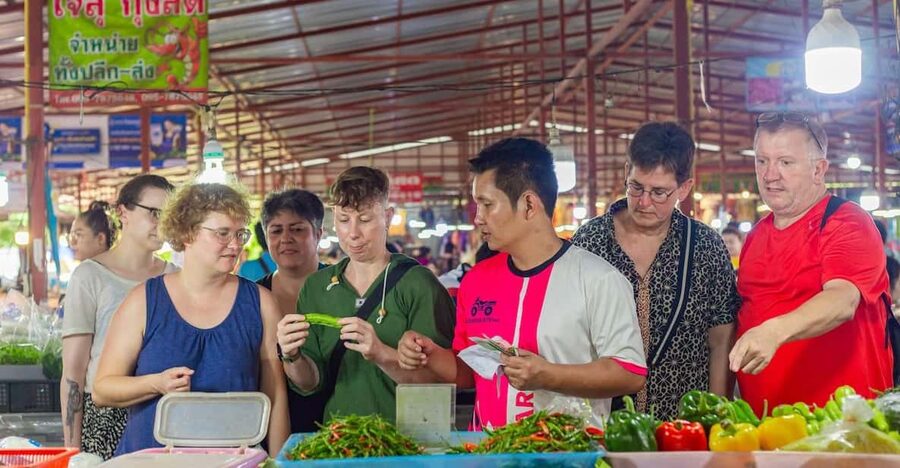
The strongest classes do not simply tell you what to put in a pan. They explain why each step matters. Here, the chef introduces the ingredients, shows preparation methods, and helps you understand how Thai food is built.
Tony, named by one participant, is described as humorous, approachable, and detailed in his explanations. A relaxed teacher matters in a cooking class. You are more likely to ask questions, handle the ingredients, and try the techniques yourself when the atmosphere feels easy.
The class also connects food with Thai customs and daily life. You learn about the ingredients at the market, then see how they become familiar dishes. That link gives the meal a cultural side without turning the session into a lecture.
You may also take part in fruit carving or coconut milk preparation. These activities are useful extras because they show another side of Thai food presentation and dessert making. They may appeal especially to families, couples, and anyone who wants more than the standard noodle-and-soup lesson.
The supplied equipment and ingredients are included, so you can focus on preparation rather than shopping for cooking tools. Free tea or coffee is also provided. A certificate of achievement is included at the end, which is a small souvenir of the class.
How much food should you expect?
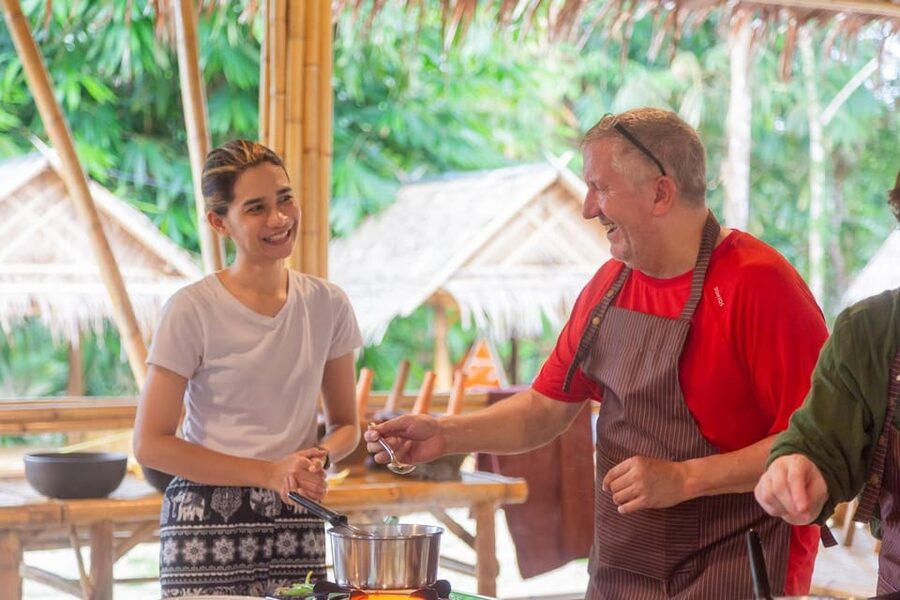
Plan to arrive with an empty stomach. The market may offer snacks, including sesame balls, before you start cooking. Then you prepare four dishes and eat them afterward.
That amount of food is a major part of the $87 price. You are not paying only for a cooking lesson. The cost also covers market access as part of the activity, ingredients, equipment, drinks, hotel transfers, recipe guides, and the meal you prepare.
For someone who would otherwise pay for transport, a market visit, and a restaurant meal, the package can represent fair value. It is especially useful if you want a structured food activity rather than simply eating at a local restaurant.
The value is less clear if you dislike cooking, prefer a quick tasting tour, or want a class focused on detailed printed recipes. Most of the appeal comes from participation, instruction, and the chance to eat what you make.
Because the class has received a perfect rating from 15 reviews, it has a strong record so far. Still, that is a small sample, and the written recipe support may not satisfy every home cook. Ask the chef to repeat measurements and methods, and use your phone to record notes if permitted.
Same stalls, a different way to shop and eat:
- Bangkok: Damnoen Saduak Market and Maeklong Railway Market
★ 4.5 · 26,723 reviews - The Old Siam: Damnoen Saduak and Maeklong Railway Market
★ 4.5 · 10,992 reviews - Bangkok: Train Market & Floating Market with Boat Ride
★ 4.7 · 9,547 reviews - From Bangkok: Ayutthaya & Ayothaya Floating Market Day Trip
★ 4.7 · 6,084 reviews
Group size and the feel of the lesson
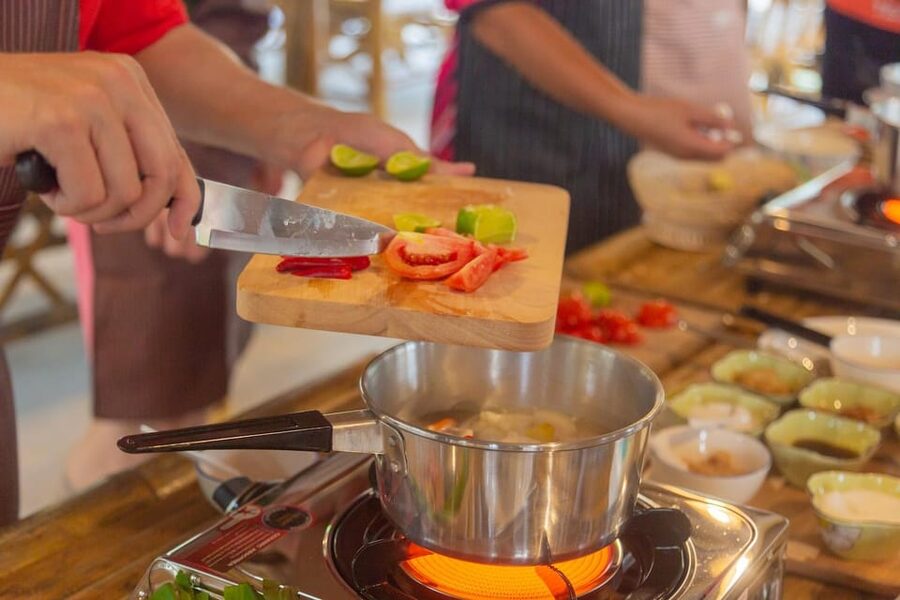
The group size is not stated as fixed, but one class had only one participant. That created a private, hands-on lesson with plenty of direct attention.
A small group is a real advantage for cooking. You can ask about substitutions, repeat a technique, and get help before a dish goes too far. It also gives the session a more personal feel than a large demonstration where you mostly watch.
At the same time, you should not assume every departure will be private. The experience is described as suitable for all skill levels and may include other participants. If personal instruction is important to you, confirm the expected group size when booking.
The tone appears informal and friendly. Humor from the guide can make the class more enjoyable, but the lesson still covers the cooking process and the role of each ingredient. That balance suits beginners who want clear help without a stiff classroom setting.
Transport, timing, and what to bring
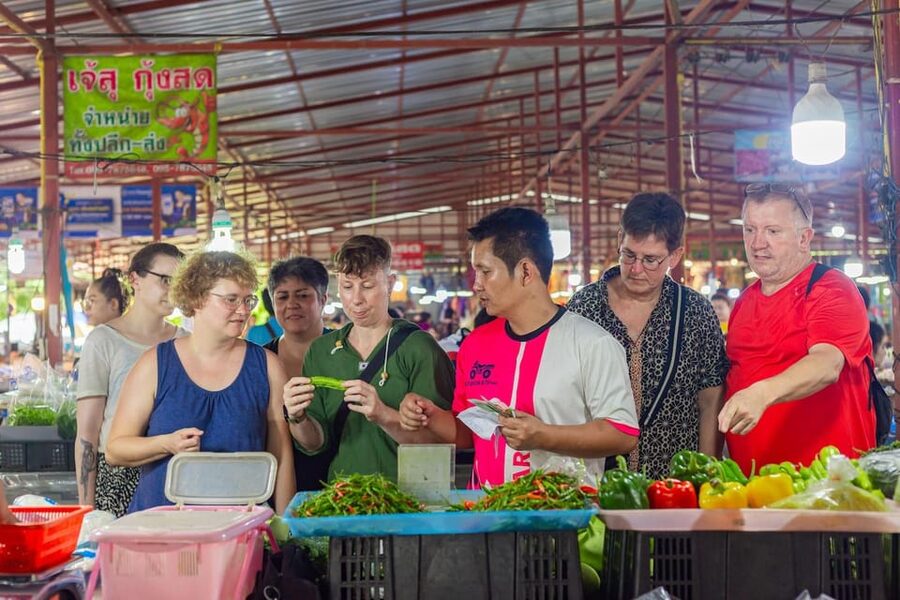
The activity lasts three hours. Hotel pickup and drop-off are included, which makes the class easier to fit into a Khao Lak holiday. You do not need to arrange separate transport to the market or cooking venue.
The exact pickup time is not provided, so check your booking details carefully. Give yourself enough time before pickup, and tell the operator where you are staying when required.
Bring a hat and a change of clothes. The hat is useful during the market portion, while spare clothing may help after time spent near hot cooking equipment. You should also avoid bringing alcohol or drugs, both of which are not allowed.
The class is offered in English. That makes it suitable for English-speaking visitors who want explanations of the food and techniques rather than a silent cooking demonstration.
What may disappoint you
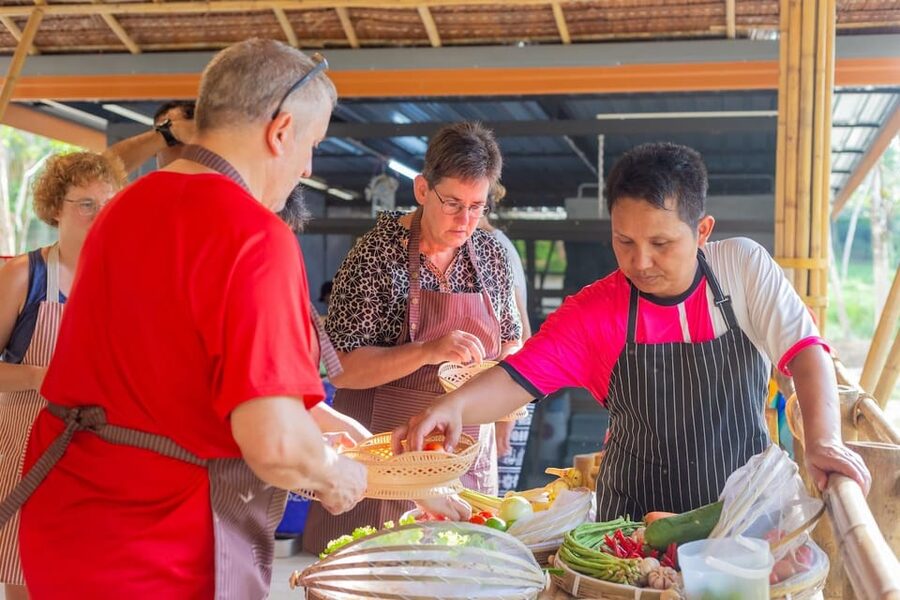
The main possible weakness is the recipe documentation. Recipe guides are included, but one person found that complete written cooking instructions were not available as expected.
That does not ruin the class, but it matters if your main goal is to reproduce every dish at home. Thai cooking often involves flexible quantities and taste adjustments, and a chef may explain these by feel rather than through exact measurements.
To get the most from the session, write down ingredient names, cooking times, and the point at which the chef adjusts salt, sourness, sweetness, or chili. Ask which ingredients can be substituted outside Thailand. These small notes may be more useful than a basic printed sheet.
Another consideration is the meal size. Four dishes plus market snacks is a lot of food. This is a benefit for hungry diners, but less appealing if you have already eaten breakfast or prefer tasting portions.
Finally, the experience takes place through a sanctuary provider, and the supplied information includes a note about elephant activities. The cooking class description itself focuses on the market and food preparation. If your booking also includes an elephant-related activity, understand that participation depends on the animals choosing to engage. No refund is provided if an activity cannot happen because of their natural behavior.
Who should book this class?
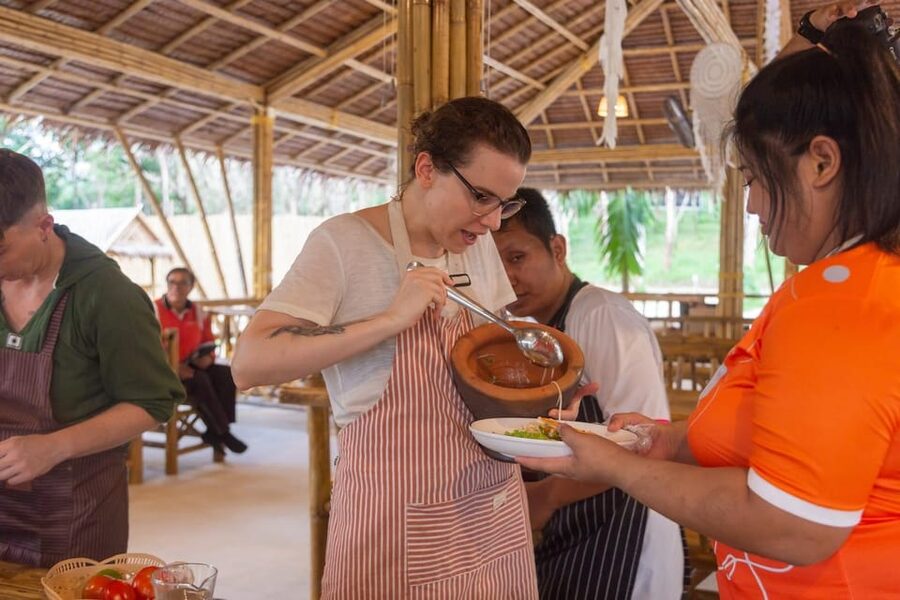
I would recommend it to you if food is one of the main reasons you enjoy traveling. The market visit, ingredient selection, cooking, and shared meal form a complete three-hour activity rather than a single lesson.
It is also a good fit for first-time Thai cooks. You learn familiar dishes such as Pad Thai alongside food that may be less common at home, including Som Tum and Tom Yum Goong. The chef-led format means you can take part without arriving with cooking experience.
Couples and families may like the mix of shopping, cooking, and eating. The fruit carving option can add a playful element, while the certificate gives children a small memento. The class also works well for solo visitors, especially if the group is small.
I would be more cautious if you want a strictly private lesson, exact written recipes, or a short food tour with little preparation. Confirm the group arrangement and recipe materials before paying if those details will decide your choice.
Should you book the Khao Lak cooking class?
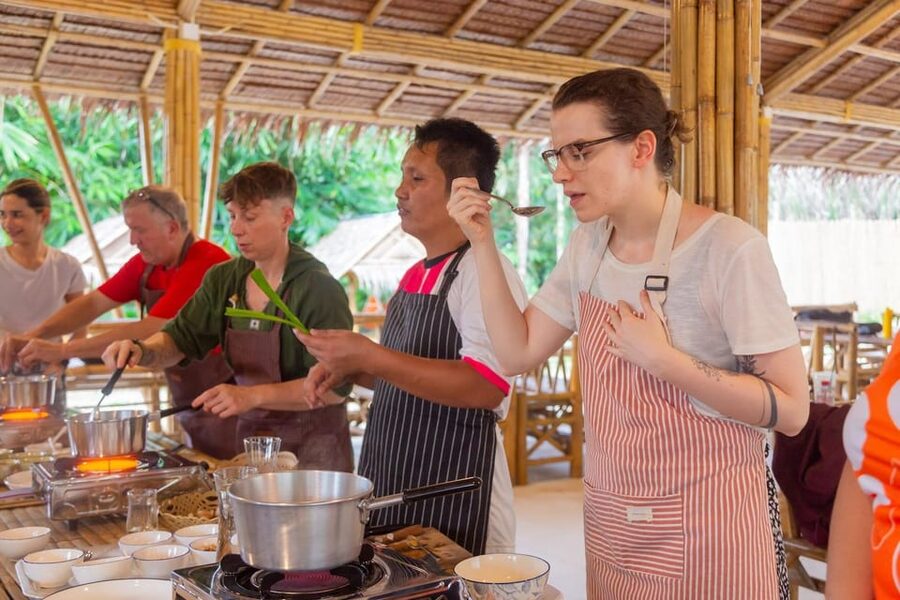
Book it if you want to understand Thai food by handling the ingredients, not just ordering the finished dishes. The market visit is the key feature, and the four-course meal gives you a satisfying amount of practice and food for the three-hour schedule.
At $87 per person, the price is reasonable when you count hotel transfers, ingredients, equipment, drinks, market time, instruction, and lunch or dinner. The value is strongest for food-focused visitors who will make use of the hands-on format.
Bring a hat, wear practical clothing, arrive hungry, and keep your own notes during the class. With those expectations in place, this is a useful and enjoyable way to spend part of your Khao Lak holiday.
FAQ
How long does the Khao Lak cooking class last?
The cooking class and market visit last three hours.
What dishes will I prepare?
The featured dishes are Pad Thai, Tom Yum Goong, Som Tum, and mango sticky rice.
Is a market visit included?
Yes. The class includes a market tour where you help select ingredients and may sample local snacks.
Is hotel transportation included?
Yes. Hotel pickup and drop-off are included.
Is the class taught in English?
Yes. English is the listed language for the activity.
Do I need cooking experience?
No. The class is designed for all skill levels and includes guidance from local chefs.
What should I bring?
Bring a hat and a change of clothes.
Can I cancel for a full refund?
Yes. You can cancel up to 24 hours in advance for a full refund.
More Markets in Thailand
- Bangkok: Damnoen Saduak Market and Maeklong Railway Market
★ 4.5 · 26,723 reviews - The Old Siam: Damnoen Saduak and Maeklong Railway Market
★ 4.5 · 10,992 reviews - Bangkok: Train Market & Floating Market with Boat Ride
★ 4.7 · 9,547 reviews - From Bangkok: Ayutthaya & Ayothaya Floating Market Day Trip
★ 4.7 · 6,084 reviews
More Cooking Classes in Thailand
- Thai Cooking Class in Khao Lak by Amazon Prime Series Chef
★ 5.0 · 661 reviews - Hands on Thai Cooking Class and Market Tour
★ 5.0 · 660 reviews - Chiang Mai: Evening Cooking Class and Local Market Visit
★ 4.9 · 648 reviews - Tingly Thai Cooking Class with Morning Market Tour
★ 5.0 · 589 reviews
Just added around Thailand
- Bangkok Udomsuk Thai Cooking Class with local market tour★ 5.0 · 5 reviews
- Morning Buddhist Almsgiving, Grand Palace and Flower Market Tour in Bangkok★ 3.5 · 9 reviews
- Private 4 days : Bangkok, Floating market and Ayutthaya★ 5.0 · 2 reviews
- Floating & Railway Markets and Erawan Waterfall [Optional Luxury]★ 5.0 · 43 reviews
- Discover Ayutthaya at Sunset: Historic Temples & River Cruise★ 4.5 · 29 reviews
- Floating Market & Railway Market near Bangkok★ 4.0 · 5 reviews
- Silom Thai Cooking School with Fresh Market Tour★ 5.0 · 73 reviews
- Ayutthaya Floating Market Admission Ticket with Transfer★ 5.0 · 2 reviews
Market Cooking Classes, compared.
Hanoi Cooking Class: Culture, Local Market & Meaning CSR Impact
Read our review →
5 Traditional Dishes Hanoi Cooking Class with Market Trip
Read our review →
Cooking Class and Lunch at a Tuscan Farmhouse with Local Market Tour from Florence
Read our review →
Cooking Class, Market & Thai Herbs Garden Tour
Read our review →
Authentic Cooking Class with Market & Farm Visit
Read our review →
Paella Cooking Experience & Boqueria Market Tour
Read our review →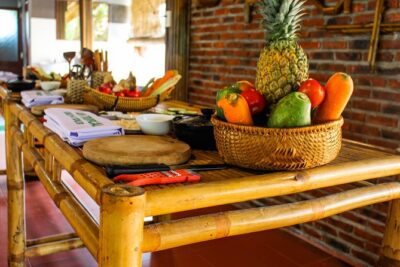
Cooking Class Hoi An:Local Market, Basket Boat, Fishing & Cooking
Read our review →Browse the lists this tour appears in