
Review · HANOI
Hanoi Maya Kitchen: Traditional Cooking Class & Market Tour
The best part of this Hanoi cooking class happens before you reach the stove: you visit a local market, choose fresh ingredients, and see the everyday food culture behind the dishes. Then you make five Vietnamese specialties, including spring rolls and egg coffee, and sit down to eat what you prepared.
I like the market stop and the practical, step-by-step teaching. Guides named Iris, Ruby, and Aurora have led sessions, and the class can be lively, with singing and local restaurant tips depending on your instructor. The main drawback is that the food is plentiful, so you should not plan a large breakfast beforehand.
Key points to know before booking
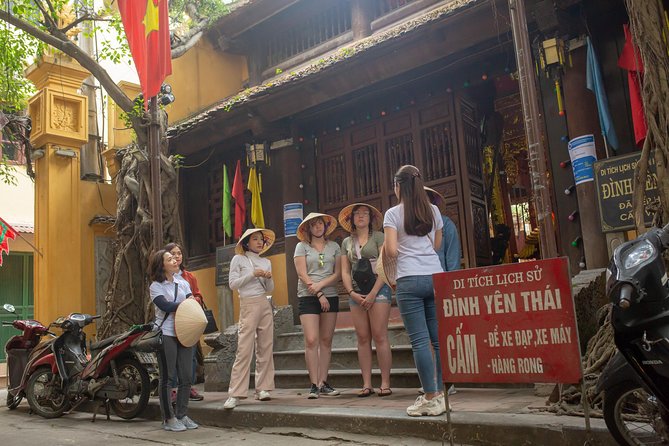
- Market first, cooking second: You visit Yen Thai Market, also described as Hang Da Market, before heading to the kitchen.
- Five items on the menu: Make fried spring rolls, papaya salad, pho rolls, mixed pho, and Vietnamese egg coffee.
- A full meal is included: Eat the dishes you prepare, with seasonal fruit, one drink, and a local wine tasting.
- Small enough for hands-on help: The group has a maximum of 15 people, with an English-speaking instructor.
- Good value at $30: The price covers the market visit, ingredients, class, meal, recipe, and drinks.
- Check the meeting address: The information gives both 38 Bat Su Street and the Crossing Vietnam Tour office at 47 Hang Bong Street, so confirm the exact location before setting out.
A market visit that gives the cooking class context
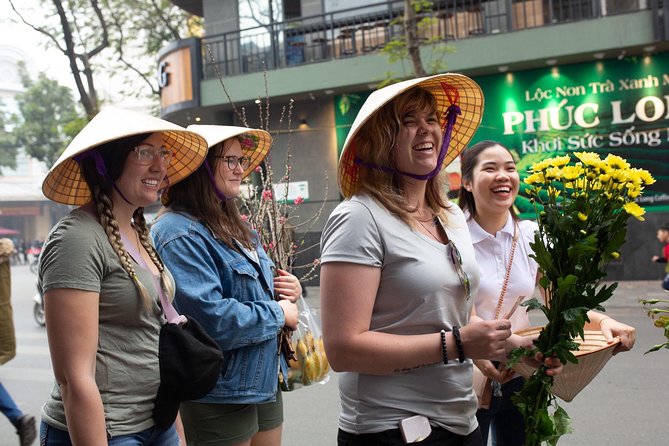
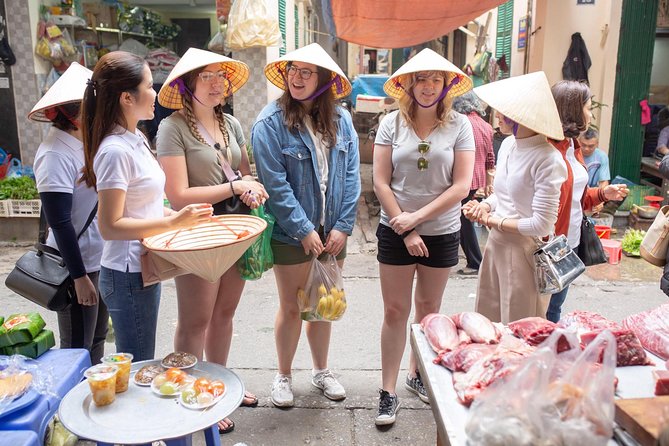
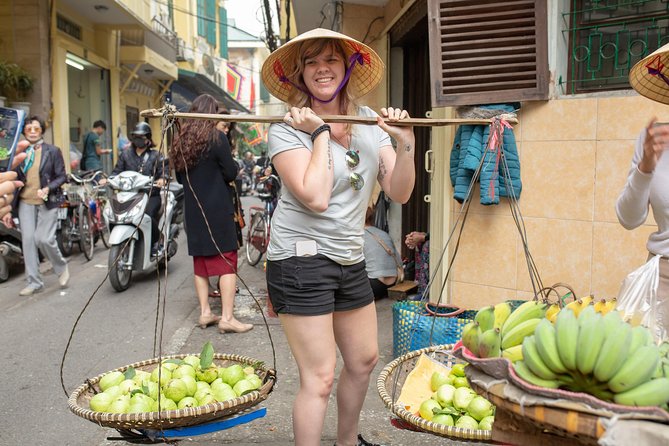
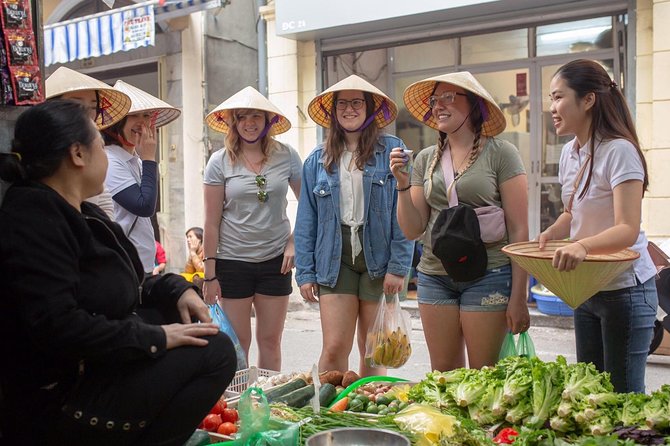
This four-hour experience begins in Hanoi’s Old Quarter with a short walk or transfer to a local market. The supplied information names Yen Thai Market in the detailed plan and Hang Da Market in the stop list, so you should confirm which market your group will use on the day.
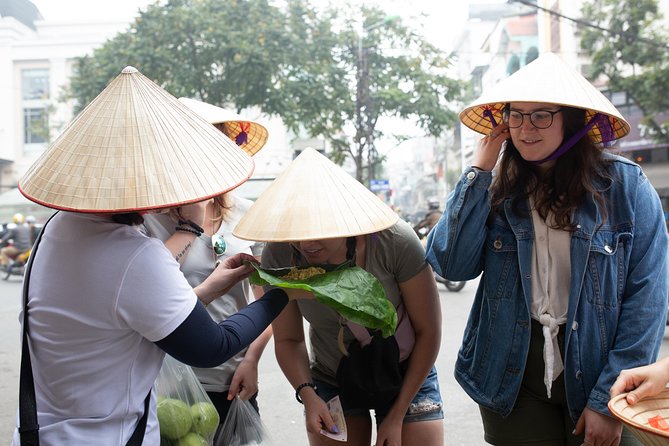
That small detail aside, the market visit is a useful start. Instead of meeting in a kitchen and handling prepared ingredients with no explanation, you get to see where the food begins. You can look at fresh produce, learn about common Vietnamese ingredients, and ask about substitutes that may be easier to find at home.
This matters most if you want to repeat the recipes after your trip. A cooking class can show you how to fold a spring roll, but the market visit helps explain the raw materials and flavors behind it. You get a clearer sense of how Vietnamese cooking balances sour, sweet, fresh, and savory elements.
The market is also the least controlled part of the experience. It is a working local market, not a polished food hall designed for sightseeing. You may find it crowded, noisy, or quick-moving, and the exact amount of time spent there is not stated. That is part of its value, but it may not suit you if you prefer a quiet, highly scripted tour.
More Market Cooking Classes in Hanoi
- Hanoi Cooking Class: Culture, Local Market & Meaning CSR Impact
★ 5.0 · 5,147 reviews - 5 Traditional Dishes Hanoi Cooking Class with Market Trip
★ 5.0 · 4,890 reviews - Vietnamese Food Cooking Class in Hanoi with Market Experience
★ 5.0 · 778 reviews
Folding spring rolls at the kitchen
Back at the kitchen, the instructor begins with nem ran, or fried spring rolls. This is a smart dish for a hands-on lesson because the technique is simple to understand but takes practice to do neatly.
You fill and roll the wrappers, learning how to keep the shape even and secure. The description points out that the process takes flexible hands, which is a polite way of saying your first few rolls may look less tidy than the instructor’s. That is not a problem. The point is to learn the method, not win a spring-roll beauty contest.
Fried spring rolls are also a useful dish to learn because they are tied to Vietnamese holidays and family gatherings. You get more than a recipe. You see how a familiar national food fits into home cooking and celebrations.
The instructor guides you step by step, and the group size of up to 15 should allow for a shared demonstration with some individual help. Still, 15 is not an especially tiny class. If you want constant one-to-one instruction, you may find the pace less personal than a private lesson.
One practical tip: do not eat heavily before class. The spring rolls are only the first of several dishes, and you will later eat the complete meal.
Papaya salad and the sweet-sour balance
Next comes nom du du, or Vietnamese green papaya salad. The key flavor balance here is sour and sweet, and the class gives you a chance to see how those flavors are brought together rather than simply tasting the finished dish at a restaurant.
This course is useful for cooks who want to understand seasoning. You can pay attention to how the ingredients are combined and how the dressing changes the raw vegetables. It is also a lighter contrast to the fried spring rolls.
The menu lists papaya salad twice in the supplied details, but it is one dish, not two separate courses. Along with the salad, you make pho cuon, or pho rolls, and pho tron, or mixed pho. These dishes give the meal more variety than a class focused only on one famous Vietnamese staple.
The exact recipe quantities are not provided, but you receive a cooking recipe after the class. That is important if you want to recreate the meal at home. You will still need to source some ingredients yourself, and substitutes discussed during the market visit may be helpful.
Pho rolls and mixed pho without the soup bowl
Pho is often associated with a hot noodle soup, but this class presents two different forms. Pho cuon uses pho sheets as rolls, while pho tron is a mixed pho dish. Both broaden your idea of what pho can be.
Pho rolls are especially suited to a group class because the assembly is visible and tactile. You can work with the ingredients directly, roll them yourself, and adjust the shape as you go. Mixed pho offers a different lesson, since the noodles and toppings are combined rather than served in a broth.
This part of the menu gives the class a good rhythm. You begin with a fried dish, shift to a fresh salad, and then work with noodle-based foods. You are not repeating the same technique four times.
The class is not described as a professional chef course, and you should not book it expecting advanced knife training or a detailed study of regional Vietnamese cuisine. Its strength is the clear introduction to several familiar dishes that you can make and eat in one sitting.
More Market Cooking Classes in Vietnam
- Hanoi: 5 Local Dishes Cooking Class with Meal & Market Visit
★ 5.0 · 420 reviews - Hanoi Cooking Class and Market Tour in Ancient House
★ 5.0 · 379 reviews - Rose Kitchen Hanoi: Market, Cooking & Culture Tour + Free PickUp
★ 5.0 · 342 reviews - Hanoi: Cooking Class in a Local Villa with Market Tour
★ 4.9 · 320 reviews
Egg coffee is the memorable extra
The final specialty is ca phe trung, or Vietnamese egg coffee. This is likely to be the most unusual item for many people in the group, since it is not simply coffee with milk. The class lets you make the drink yourself and understand how it fits into Hanoi’s food culture.
Egg coffee also adds a welcome pause from the savory dishes. After rolling, mixing, and assembling food, you finish with something sweet and distinctly local. Seasonal fruit is served as dessert, so the ending is simple rather than elaborate.
The quality of this part will depend on how much time the instructor gives it and on your own taste. Egg coffee is not for everyone, especially if you prefer unsweetened coffee. Still, learning to prepare a local specialty is one of the reasons to choose this class instead of a standard meal-focused cooking lesson.
The instructors named in the supplied feedback include Iris, Ruby, and Aurora. Ruby was specifically praised for the cooking lesson and local food suggestions, while Aurora’s session included stories about Vietnam and singing. Those touches will vary by instructor, but they suggest that the class can be social as well as practical.
Eating the meal you made
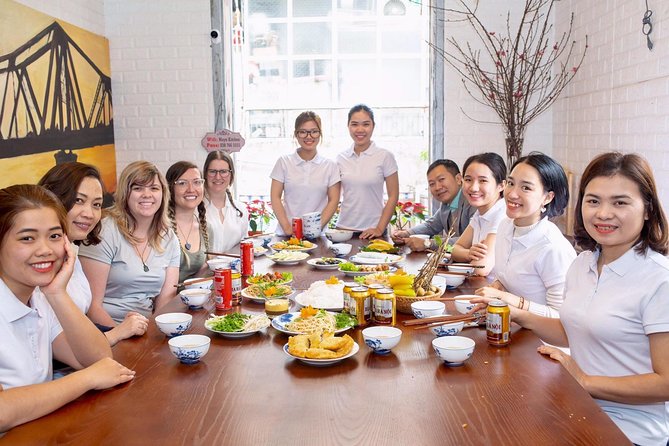
Once the cooking is finished, you eat the dishes together. Your meal includes fried spring rolls, papaya salad, pho rolls, mixed pho, egg coffee, seasonal fruit, and one drink such as water, tea, or coffee. A local wine tasting is also included.
The quantity appears generous. One family of four had more than enough food, and another group was able to take leftovers away in special containers. The provided details do not promise takeaway containers for every session, so treat that as a possible extra rather than a guarantee.
I like this setup because the meal gives each recipe a purpose. You are not making a small sample, taking one bite, and moving on. You prepare a full spread and then have time to enjoy it. It also makes the $30 price easier to judge: you are paying for an activity and a substantial meal, not only an instruction period.
The tradeoff is time. Eating five prepared items after a four-hour class may feel heavy, especially if you arrive after breakfast or plan another large meal soon afterward. Schedule this as your main meal for the morning or midday rather than as a quick snack between sightseeing stops.
What the $30 price includes
At $30 per person, this is a good-value introduction to Vietnamese food if you want several dishes rather than one narrow lesson. The fee includes:
- The local market visit and ingredient buying
- An English-speaking instructor
- All food listed on the menu
- The cooking lesson
- A full meal after cooking
- Seasonal fruit
- One drink
- Local wine tasting
- A cooking recipe
Transport to and from the activity is not included. You need to reach the meeting point yourself, and the activity ends back there. Since the class is based in Hanoi’s Old Quarter, this will be easiest if you are already staying nearby.
The price does not make this a luxury cooking school experience. You are paying for an accessible cultural activity, a group lesson, and a meal. For many people, that is exactly the right level. If you want a private chef, market-to-table explanation focused on fine detail, or hotel pickup, this is not the right product.
Timing, meeting point, and group size
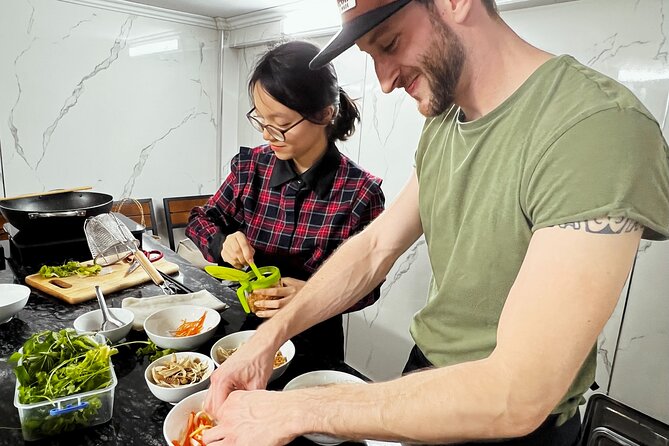
The advertised duration is about four hours. That is long enough for a market visit, five menu items, and a meal, but the schedule may feel full. You should arrive ready to start on time, especially since the first stop is outside the kitchen.
The listed starting point is 38 P. Bat Su, Hang Bo, Hoan Kiem, Hanoi. Elsewhere, the meeting information refers to the Crossing Vietnam Tour office at 47 Hang Bong Street. Because those addresses differ, confirm the exact meeting location after booking rather than assuming they are interchangeable.
There is no pickup or drop-off service. The activity ends at the meeting point, and the tour has mobile ticketing. Confirmation is provided at booking, which makes it easy to keep the details on your phone.
The maximum group size is 15 people. That should preserve a reasonable amount of contact with the instructor, though your experience will depend on the final number in your session. The activity is near public transportation, and service animals are allowed.
Who will enjoy this class most
This class suits you if you want a practical introduction to Vietnamese cooking without giving up half a day to a formal culinary school. It is especially good for first-time visitors who want a local market experience, a cooked meal, and several recipes in one package.
Families can also find good value here. The menu includes familiar formats such as rolls and noodles, and the hands-on work gives children and adults something to do together. Keep in mind that the class includes raw ingredients, frying, and a working market, so younger children will need close supervision.
Food-minded couples and solo visitors should also find it easy to join. The instructor-led format creates natural conversation, and the experience can include stories, singing, and suggestions for other places to eat in Hanoi.
You may want to skip it if you are seeking a strictly vegetarian, vegan, or allergy-specific menu. The supplied information does not state that dietary changes are available. It also does not provide a complete ingredient list, so contact the operator before booking if you have a serious food allergy or a firm dietary requirement.
My booking advice
Book this cooking class if you want a relaxed, social way to learn several Vietnamese dishes and you value the market visit as much as the meal. The strongest features are the broad menu, the generous food portions, the English instruction, and the chance to prepare egg coffee instead of merely ordering it.
Before paying, confirm the meeting address and ask about dietary needs if they apply to you. Leave breakfast light, allow the full four hours, and do not schedule another major meal immediately afterward.
At $30, this is an appealing choice for a first taste of Hanoi’s food culture. It is less suitable for someone seeking a private, advanced, or highly specialized cooking course. For most visitors who want to cook, eat, and learn a little about local ingredients in one outing, I would book it.
FAQ
How long does the Hanoi Maya Kitchen cooking class last?
The experience lasts approximately four hours, including the market visit, cooking class, and meal.
What dishes will I make?
You will make fried spring rolls, papaya salad, pho rolls, mixed pho, and Vietnamese egg coffee.
Is a meal included after the cooking class?
Yes. You can eat the dishes you prepare. Seasonal fruit is included for dessert.
Is a drink included?
Yes. One drink is included, such as water, tea, or coffee. A local wine tasting is also listed as included.
Is transportation provided?
No. Pickup and drop-off are not included. You must reach the meeting point yourself, and the activity ends there.
Where does the experience start?
The supplied meeting information lists 38 P. Bat Su, Hang Bo, Hoan Kiem, Hanoi. It also refers to the Crossing Vietnam Tour office at 47 Hang Bong Street, so confirm the exact address before the class.
How large can the group be?
The activity has a maximum of 15 travelers.
Can I cancel for a full refund?
Yes, if you cancel at least 24 hours before the experience start time. Cancellations or changes made within 24 hours are not refunded or accepted.
More Markets in Hanoi
- Weekend Hanoi Night Market & Street Food Tour
★ 4.5 · 47 reviews - Hanoi’s Culinary: Authentic Cooking Class and Local Market
★ 4.8 · 5 reviews - Hanoi: Vietnamese Cooking Class- Market Tour with Local Chef
★ 5.0 · 2 reviews - 2 Day Sapa-Bac Ha Market: Night Train& Homestay-Bus Ha Giang
★ 5.0 · 2 reviews
More Cooking Classes in Hanoi
- Hanoi: Maya Traditional Cooking Class & Market Tour
★ 4.9 · 243 reviews - Hanoi: Old Quarter Market Tour and Cooking Class with Meal
★ 4.8 · 192 reviews - Hanoi Cooking Class: Market Tour, Free Recipe & Beverages
★ 5.0 · 10 reviews - Hanoi Food Adventure: Vietnamese Market Tour & Cooking Class
★ 4.8 · 5 reviews
Just added around Hanoi
- Weekend Hanoi Night Market & Street Food Tour★ 4.5 · 47 reviews
- Hanoi: Vietnamese Cooking Class- Market Tour with Local Chef★ 5.0 · 2 reviews
- Hanoi Cooking Class: Market Tour, Free Recipe & Beverages★ 5.0 · 10 reviews
- Hanoi Food Adventure: Vietnamese Market Tour & Cooking Class★ 4.8 · 5 reviews
- Hanoi’s Culinary: Authentic Cooking Class and Local Market★ 4.8 · 5 reviews
- 2 Day Sapa-Bac Ha Market: Night Train& Homestay-Bus Ha Giang★ 5.0 · 2 reviews
- Mini Hanoi Coffee Workshop: Pick Any Signature Coffee You Like★ 5.0 · 160 reviews
- Hanoi: Old Quarter Market Tour and Cooking Class with Meal★ 4.8 · 192 reviews
Market Cooking Classes, compared.
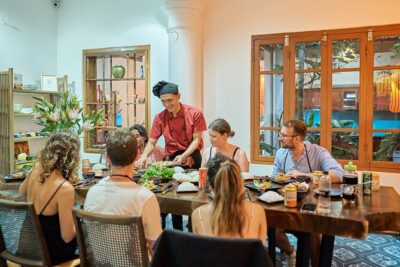
Hanoi Cooking Class: Culture, Local Market & Meaning CSR Impact
Read our review →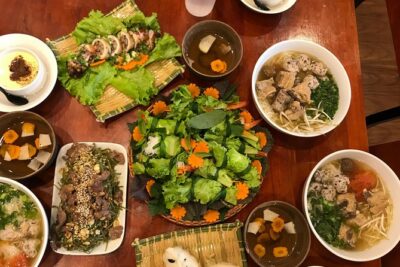
5 Traditional Dishes Hanoi Cooking Class with Market Trip
Read our review →
Cooking Class and Lunch at a Tuscan Farmhouse with Local Market Tour from Florence
Read our review →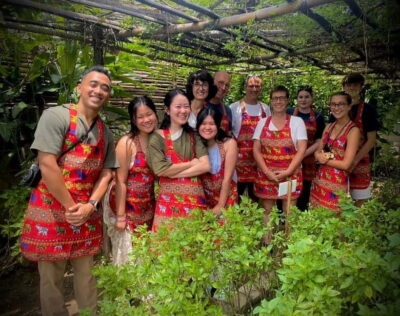
Cooking Class, Market & Thai Herbs Garden Tour
Read our review →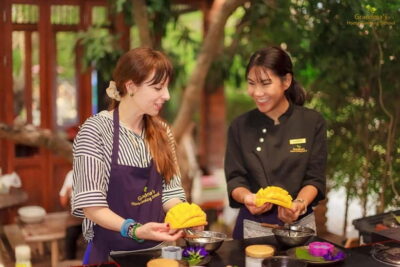
Authentic Cooking Class with Market & Farm Visit
Read our review →
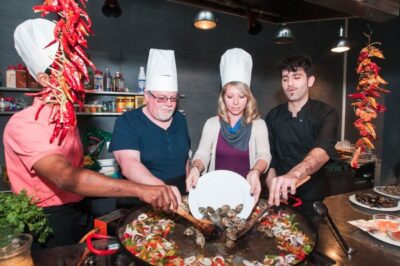
Paella Cooking Experience & Boqueria Market Tour
Read our review →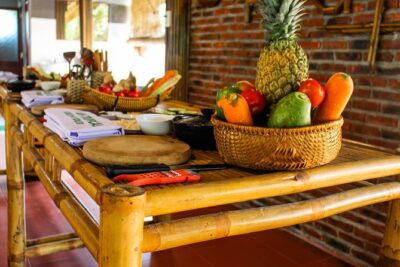
Cooking Class Hoi An:Local Market, Basket Boat, Fishing & Cooking
Read our review →Browse the lists this tour appears in