
Review · HANOI
Hanoi: Maya Traditional Cooking Class & Market Tour
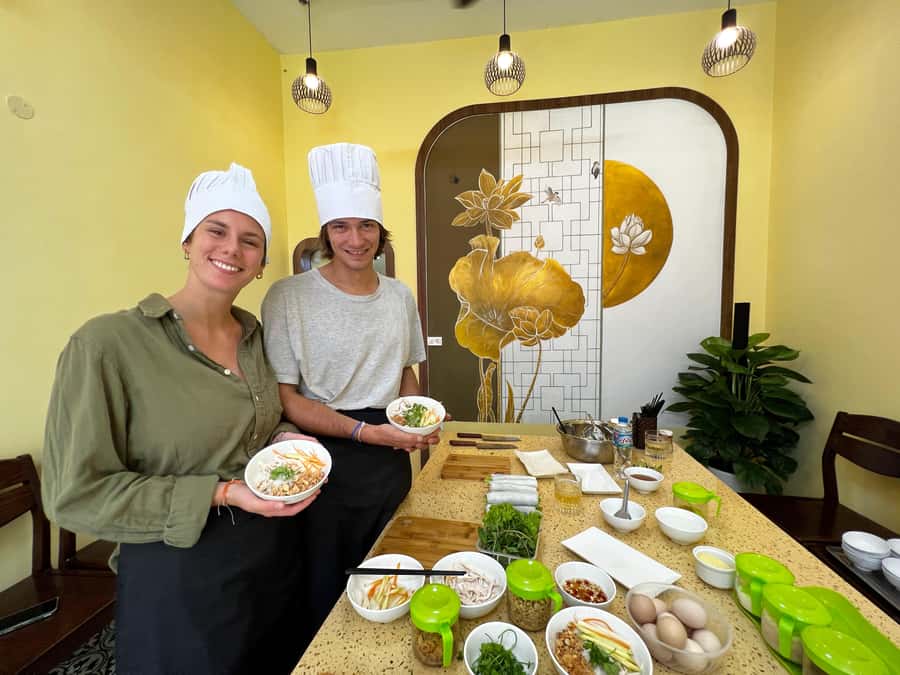
Hanoi’s Maya cooking class begins with a walk through Yen Thai market, then moves into a hands-on kitchen session where you make four Vietnamese dishes and Hanoi’s famous egg coffee. The market visit gives the food real context: you see the ingredients before learning how they reach the plate.
I like the small groups of up to 10 and the fact that you cook nearly everything yourself, rather than watching a chef perform. I also like the recipe handout, fresh market produce, and generous portions, which sometimes leave enough food to take away. The main catch is timing: afternoon markets may not be open, and you eat at the end, not between dishes.
Quick reasons to consider Maya’s cooking class
- Yen Thai market comes first, giving you a look at local produce, fruit, herbs, and everyday shopping.
- Four dishes plus egg coffee make this a full meal, not a short demonstration.
- Pho rolls and mixed pho offer something different from the usual Hanoi food tour menu.
- English and Vietnamese instruction is available, with guides including Iris, Ruby, Stephanie, Devin, Evelyn, and Lena.
- Small groups keep the class hands-on, so you should get time to roll, mix, fry, and assemble the food.
- The $22 price includes food, drinks, recipes, fruit, and a local wine tasting, making it a strong value for a half-day activity.
What the Maya experience is really like
At $22 per person and three to four hours, this is one of the more useful food activities you can add to a Hanoi stay. You are not simply served a plate and told what it is. You visit a local market, handle the ingredients, cook a complete menu, and sit down to eat what you prepared.
The class meets at Crossing Vietnam Tour’s office, with no hotel pickup or drop-off included. You will need to make your own way there and back. The precise starting time depends on availability, so check the session before booking.
The experience is described as a small group, limited to 10 people. That size matters. Cooking classes can become awkward when one instructor is trying to guide a large crowd, but this setup gives you a better chance to shape spring rolls, ask questions, and follow each recipe closely. Some sessions may be even smaller. Couples have occasionally found themselves in a nearly private class.
The instructors vary by day. Names that appear with this experience include Iris, Ruby, Stephanie, Devin, Evelyn, Lena, Ashley, Yuu, Anne, and Aurora. The strongest pattern is not one particular chef, but the teaching approach: clear steps, friendly conversation, and plenty of explanation about Vietnamese ingredients and food customs.
More Market Cooking Classes in Hanoi
- Hanoi Cooking Class: Culture, Local Market & Meaning CSR Impact
★ 5.0 · 5,147 reviews - 5 Traditional Dishes Hanoi Cooking Class with Market Trip
★ 5.0 · 4,890 reviews - Vietnamese Food Cooking Class in Hanoi with Market Experience
★ 5.0 · 778 reviews
Yen Thai market before the chopping begins
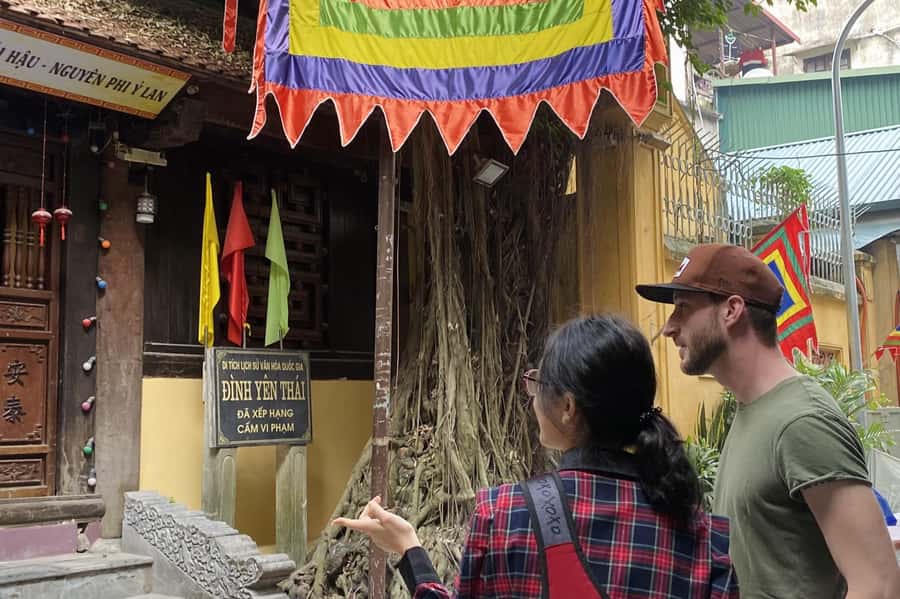
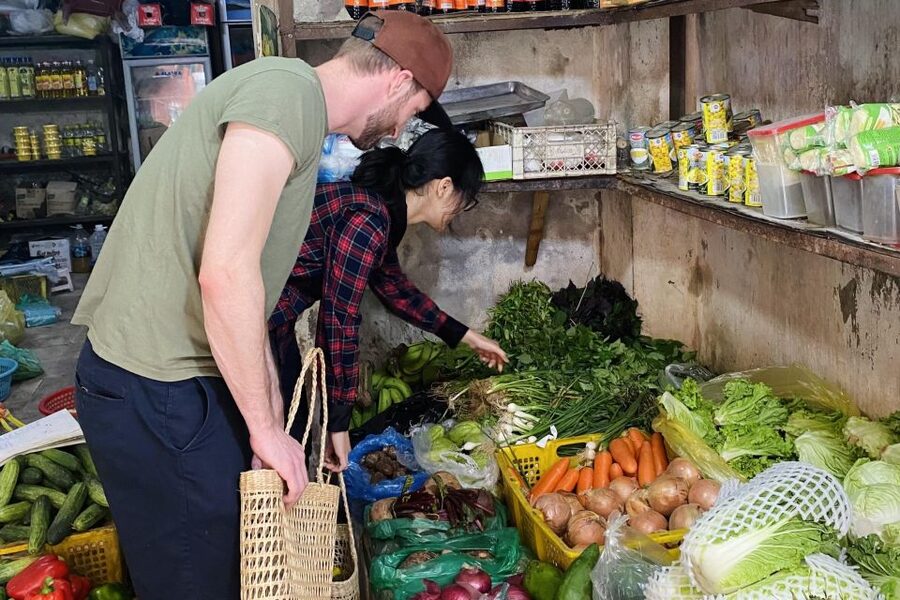
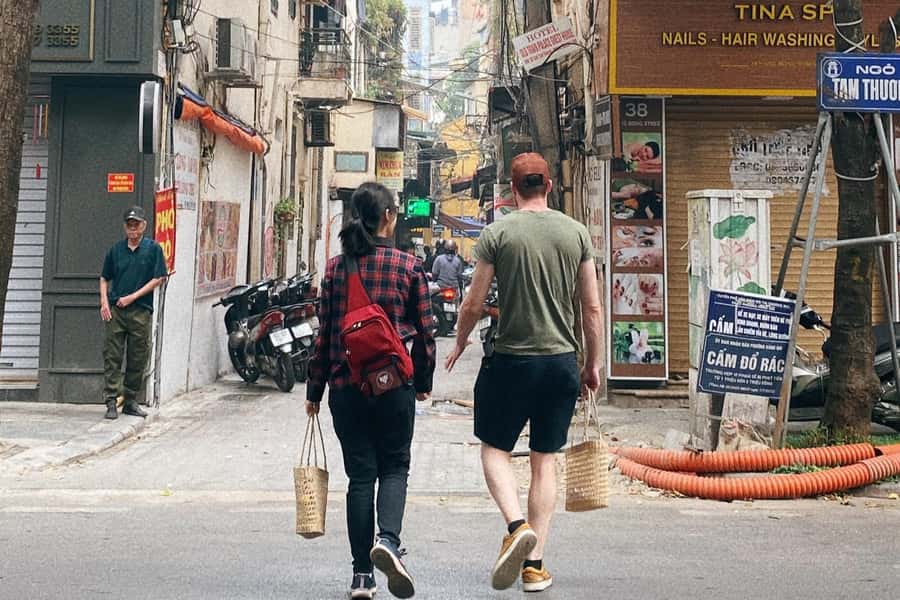
The market visit is a short but useful opening to the class. You walk to nearby Yen Thai market with your guide and look at the foods needed for the cooking session. This can include fresh fruit, vegetables, herbs, and other Vietnamese ingredients.
I like this part because it changes the way you see the recipes. Instead of meeting papaya, herbs, or noodles as anonymous items on a kitchen table, you see them in the setting where local people shop. Your guide can explain what the ingredients are, how they are used, and what substitutes work if you try the dishes at home.
The fruit is a pleasant extra. Several sessions include choosing fruit at the market and sampling unfamiliar varieties. Seasonal availability will shape what you find, so the exact fruit is not fixed. The class includes seasonal fruit for dessert, and you may also get to select some at the market.
Keep your expectations sensible. This is not a long market walk or a full morning food safari. The market visit mainly supports the cooking lesson. One useful criticism is that the class spends more time in the kitchen than at the market. If your priority is street photography or extended market shopping, choose a dedicated market tour instead.
There is also an important timing point. The market normally operates in the morning, so an afternoon session may have a limited market visit or no useful market activity. A morning booking is the safer choice if this part matters to you.
Four dishes that keep your hands busy
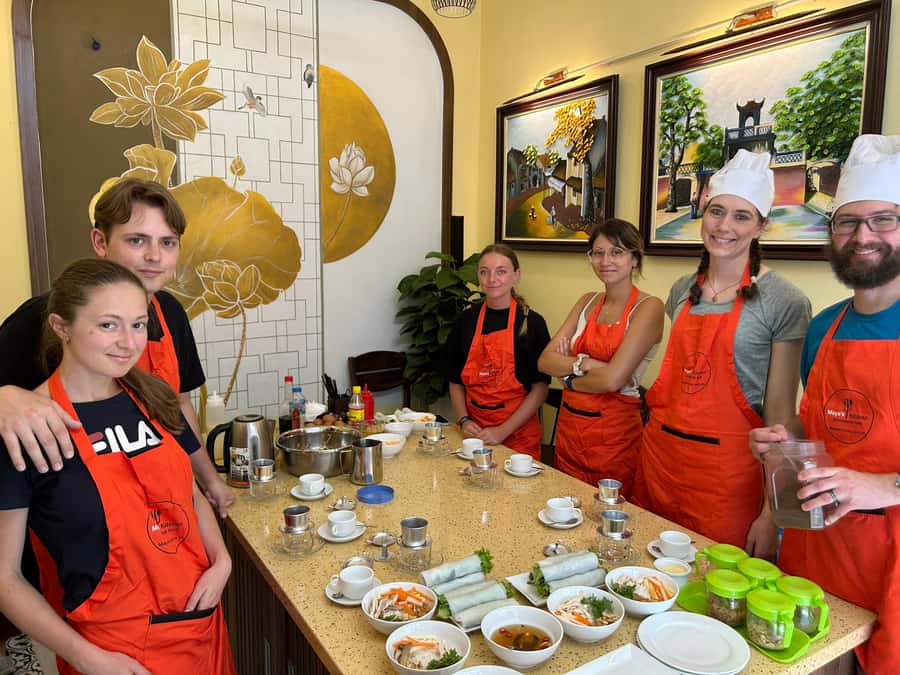
After the market, you go to the cooking kitchen. The instructor works through the menu step by step, with participants preparing the food rather than simply watching.
The menu includes:
- Pho tron, or mixed pho
- Pho cuon, or fresh pho rolls
- Nem ran, or fried spring rolls
- Nom du du, or green papaya salad
- Ca phe trung, or Vietnamese egg coffee
- Seasonal fruit for dessert
This is a well-chosen menu for first-time cooks because it shows several sides of Vietnamese food. You get noodles, fresh herbs and vegetables, fried food, a sweet and sour salad, and a drink that is closely linked with Hanoi café culture.
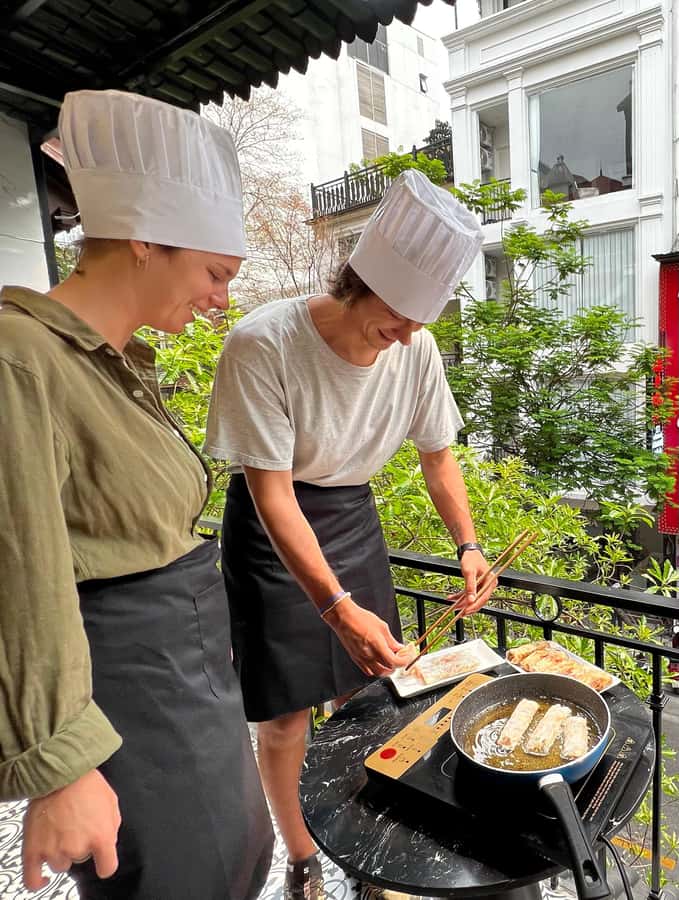
Fried spring rolls
The class begins with fried spring rolls. Your instructor explains the filling and then shows you how to wrap each roll. The wrapping is less automatic than it looks. You need to keep the shape even, avoid overfilling, and roll firmly without tearing the wrapper.
This is the most tactile part of the class, and it works well for couples, families, and friends because everyone can make their own rolls. The instructor may correct your technique as you go. Once shaped, the rolls are fried and saved for the meal.
The dish is presented as a traditional choice for holidays and family gatherings. That context helps explain why spring rolls are more than a restaurant appetizer. They are food for sharing and for making together.
More Market Cooking Classes in Vietnam
- Hanoi: 5 Local Dishes Cooking Class with Meal & Market Visit
★ 5.0 · 420 reviews - Hanoi Cooking Class and Market Tour in Ancient House
★ 5.0 · 379 reviews - Rose Kitchen Hanoi: Market, Cooking & Culture Tour + Free PickUp
★ 5.0 · 342 reviews - Hanoi: Cooking Class in a Local Villa with Market Tour
★ 4.9 · 320 reviews
Papaya salad
Next comes the green papaya salad, built around sour and sweet flavors. You learn how the dressing balances the crisp papaya and other ingredients. This is a good lesson in Vietnamese cooking because the dish depends less on a long cooking time and more on getting the seasoning right.
You can expect the instructor to guide the preparation closely, especially if you have not worked with green papaya before. The salad also provides a fresh counterpoint to the fried spring rolls.
Pho rolls
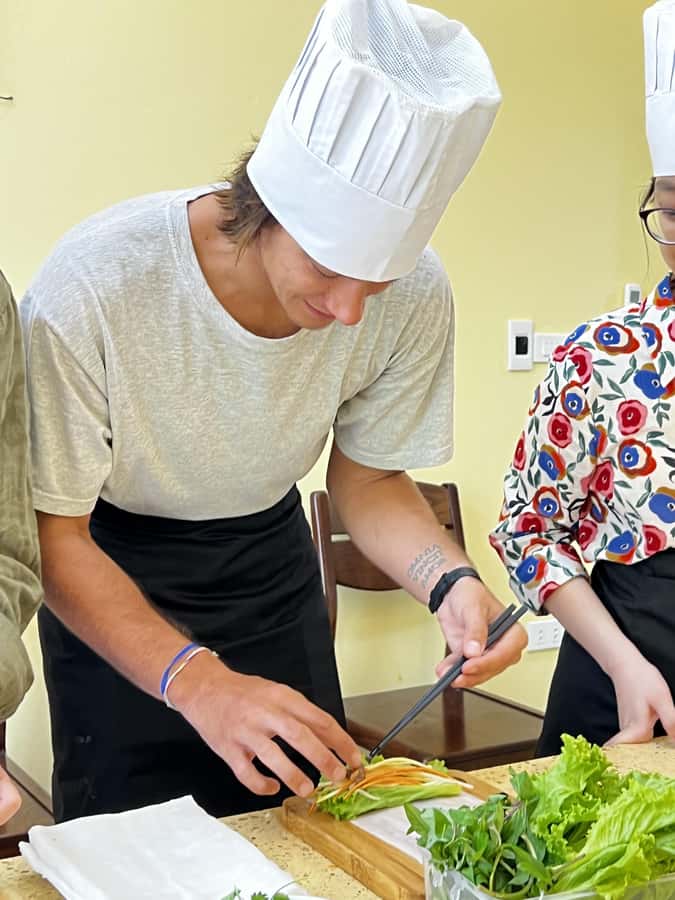
Pho cuon uses the familiar flavors of pho in a fresh roll rather than a bowl of soup. The rice noodle sheets are filled and rolled, then served as a lighter dish. It is a clever way to understand how Vietnamese cooks reuse familiar ingredients in different forms.
The rolling takes some care, but you do not need advanced cooking skills. The value here is learning the construction of the dish: how much filling to use, how to keep the roll together, and how to balance noodles, herbs, and other ingredients.
Mixed pho
Pho tron is the class’s less expected noodle dish. Rather than serving pho in broth, you mix the ingredients and season them together. If you already know Hanoi’s classic noodle soups, this gives you a different way to think about pho.
It is also practical for home cooking. A mixed noodle dish can be easier to recreate than a long-simmered broth, and the class supplies a recipe so you can try it later. As with the other dishes, the instructor handles the method in stages, allowing you to see how the ingredients work together.
Egg coffee and the meal at the end
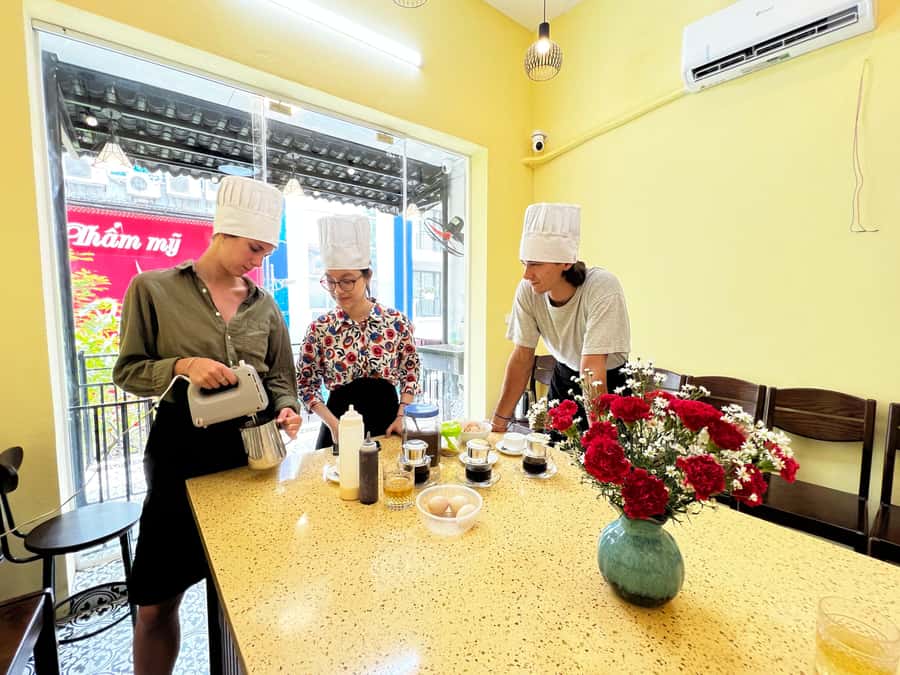
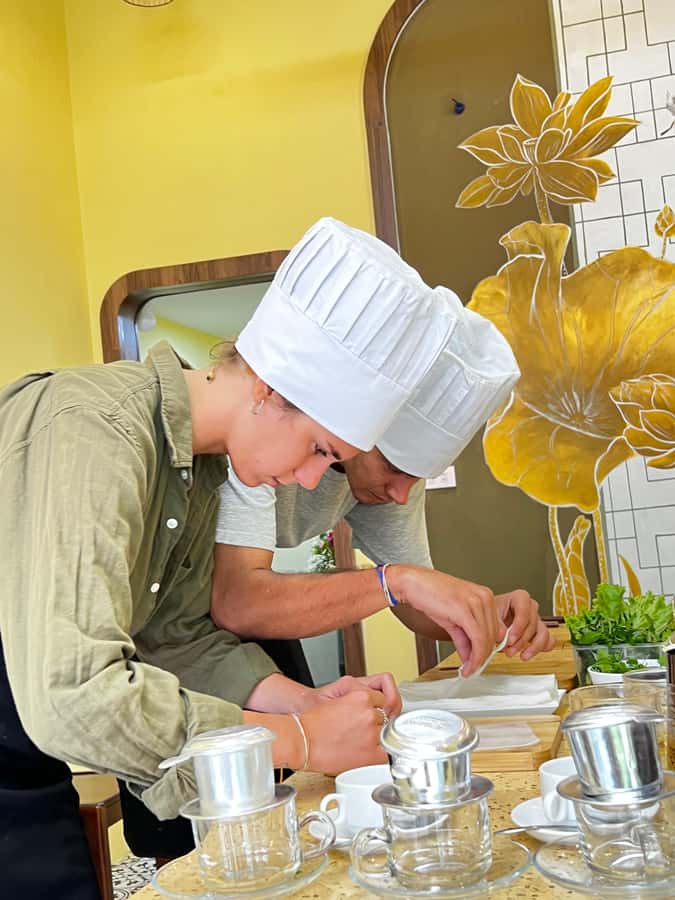
The final specialty is ca phe trung, Vietnamese egg coffee. This is a Hanoi classic made with a sweet, creamy egg mixture over coffee. The class teaches you how to prepare it rather than merely ordering one at a café.
The drink is worth including because it connects the kitchen lesson to Hanoi’s café culture. It is also a useful recipe to take home, though you should expect a rich, dessert-like coffee rather than a plain morning brew.
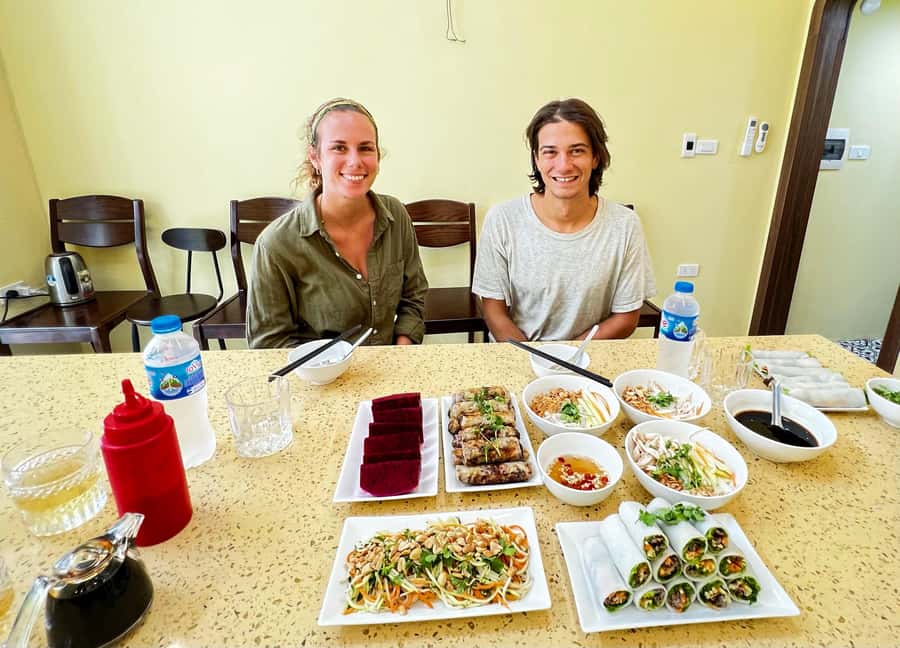
Once the dishes are ready, you sit down and eat. This is the first full meal of the session, so plan your day around it. One practical point is easy to miss: you generally do not eat a complete dish while cooking. If you arrive hungry, bring that expectation with you.
The portions are usually substantial without becoming absurdly heavy. The menu has enough variety to make you feel you have eaten a full Vietnamese meal, while the fresh salad, fruit, and coffee keep it from being one long sequence of fried food. In some sessions, the guide packs leftovers for you to take away.
Drinking water is included, and the package also lists all food and drinks, seasonal fruit, a local wine tasting, and the cooking recipes. The wine tasting may be brief, and the exact flow can depend on the group and instructor, but it adds a local touch to the meal.
The teaching makes the difference
The class works best when the instructor treats it as a shared meal rather than a strict demonstration. Guides such as Iris, Ruby, Stephanie, Evelyn, and Devin are repeatedly praised for patience, clear English, and their willingness to answer questions about food and local life.
You will not get the exact same personality every day, and that is worth noting. Some guides may be lively and chatty, while others may focus more tightly on the recipes. The common format is step-by-step instruction in English or Vietnamese.
You should expect help with basic technique, not a professional culinary qualification. The focus is on making food you can repeat at home. Recipes are provided, and several participants have received them electronically after the class as well.
The kitchen setting has also received practical praise for being air-conditioned. That can make a real difference in Hanoi’s heat and humidity, particularly during the frying and preparation stages. A rainy day can even add atmosphere, with the city continuing below while you work, but the indoor kitchen keeps the cooking itself comfortable.
Dietary needs deserve a question before you book. One participant with a nut allergy received suitable care, and another session adjusted food to personal needs. Still, the supplied information does not promise a fixed allergy policy, so contact the operator in advance rather than relying on an adjustment at the last minute.
Value at $22 per person
The price is easy to justify if you want both a meal and an activity. For $22, you get a market visit, market purchases, an instructor, a cooking session, several dishes, egg coffee, fruit, water, a recipe, and a local wine tasting.
The best value comes from the range of food. A cheaper cooking demonstration might show you one dish and serve a small snack. Here, you make spring rolls, papaya salad, pho rolls, mixed pho, and egg coffee. You also leave with skills that can be used at home.
There are two limits. First, transport is not included. Since there is no hotel pickup or drop-off, add the cost and time of getting to Crossing Vietnam Tour’s office. Second, the market portion is not the main event. If you want a long food-shopping tour, part of the $22 is paying for an activity you may find brief.
For most people staying in Hanoi, those are minor drawbacks. The class costs less than many half-day food experiences and gives you a proper meal at the end. It is especially good value for anyone who likes to participate rather than sit and watch.
Who should book this class
I would choose Maya’s class if you want an introduction to Vietnamese food that is social, practical, and easy to follow. It suits first-time cooks, couples, small families, and older children or teenagers who enjoy hands-on activities. The session with two teenagers worked well because the recipes were simple enough to follow and the group setting kept everyone involved.
It also suits people who already love pho but want to see more of the cuisine. The menu moves beyond soup into fresh rolls, fried food, salad, fruit, and egg coffee.
You may want another activity if your main goal is an extended market tour, a restaurant-focused food crawl, or advanced chef training. The market stop is brief, and the teaching aims at confident home cooks rather than professionals.
Book a morning session if you care about seeing Yen Thai market at its best. For an afternoon booking, confirm what market access is expected, since local markets may not operate later in the day.
Cancellation is free up to 24 hours before the activity, and you can reserve now and pay later. Those terms help if your Hanoi plans are still shifting, but the more important booking choice is the time of day.
Should you book Maya’s Hanoi cooking class?
Yes, if you want a good-value, hands-on food experience rather than a long market expedition. The combination of Yen Thai market, four dishes, egg coffee, fruit, recipes, and a small group gives you a useful taste of everyday Vietnamese cooking for a modest price.
Choose it with realistic expectations. The market visit is an introduction, not the whole tour, and the meal comes at the end. Arrive ready to cook, ask about allergies ahead of time, and pick a morning slot if the market matters to you. For most visitors who want to understand Hanoi through its food, Maya’s class is an easy recommendation.
FAQ
How long does the Maya cooking class last?
The experience lasts approximately three to four hours, including the market visit, cooking lesson, and meal.
What dishes will I make?
You will prepare mixed pho, pho rolls, fried spring rolls, papaya salad, and Vietnamese egg coffee. Seasonal fruit is served for dessert.
Is the market visit included?
Yes. The experience includes a visit to Yen Thai market and purchases of ingredients used for the class.
Where does the activity meet?
You meet at the Crossing Vietnam Tour travel agency office. Hotel pickup and drop-off are not included.
What languages are available?
The instructors speak English and Vietnamese.
How many people are in the group?
The class is limited to 10 participants.
Are afternoon market visits available?
Afternoon sessions are offered, but local markets usually operate in the morning. The market may not be available on some afternoon sessions.
More Markets in Hanoi
- Weekend Hanoi Night Market & Street Food Tour
★ 4.5 · 47 reviews - Hanoi Food Adventure: Vietnamese Market Tour & Cooking Class
★ 4.8 · 5 reviews - Hanoi: Vietnamese Cooking Class- Market Tour with Local Chef
★ 5.0 · 2 reviews - 2 Day Sapa-Bac Ha Market: Night Train& Homestay-Bus Ha Giang
★ 5.0 · 2 reviews
More Cooking Classes in Hanoi
- Hanoi Maya Kitchen: Traditional Cooking Class & Market Tour
★ 5.0 · 287 reviews - Hanoi: Old Quarter Market Tour and Cooking Class with Meal
★ 4.8 · 192 reviews - Hanoi Cooking Class: Market Tour, Free Recipe & Beverages
★ 5.0 · 10 reviews - Hanoi’s Culinary: Authentic Cooking Class and Local Market
★ 4.8 · 5 reviews
Just added around Hanoi
- Weekend Hanoi Night Market & Street Food Tour★ 4.5 · 47 reviews
- Hanoi: Vietnamese Cooking Class- Market Tour with Local Chef★ 5.0 · 2 reviews
- Hanoi’s Culinary: Authentic Cooking Class and Local Market★ 4.8 · 5 reviews
- Hanoi Cooking Class: Market Tour, Free Recipe & Beverages★ 5.0 · 10 reviews
- Hanoi Food Adventure: Vietnamese Market Tour & Cooking Class★ 4.8 · 5 reviews
- 2 Day Sapa-Bac Ha Market: Night Train& Homestay-Bus Ha Giang★ 5.0 · 2 reviews
- Mini Hanoi Coffee Workshop: Pick Any Signature Coffee You Like★ 5.0 · 160 reviews
- Hanoi: Old Quarter Market Tour and Cooking Class with Meal★ 4.8 · 192 reviews
Market Cooking Classes, compared.
Hanoi Cooking Class: Culture, Local Market & Meaning CSR Impact
Read our review →
5 Traditional Dishes Hanoi Cooking Class with Market Trip
Read our review →
Cooking Class and Lunch at a Tuscan Farmhouse with Local Market Tour from Florence
Read our review →
Cooking Class, Market & Thai Herbs Garden Tour
Read our review →
Authentic Cooking Class with Market & Farm Visit
Read our review →
Paella Cooking Experience & Boqueria Market Tour
Read our review →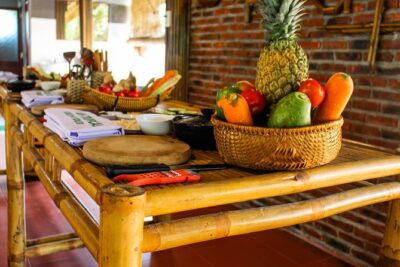
Cooking Class Hoi An:Local Market, Basket Boat, Fishing & Cooking
Read our review →Browse the lists this tour appears in