
Review · INDIA
Heritage Walk, Local Markets & Food Tasting – Non Touristy
Udaipur’s old city is best understood at street level, with a samosa in hand and a local guide leading you past spice stalls, temples, pottery workshops, and lanes most visitors miss. This 2.5-hour walk combines vegetarian food tasting with everyday city life, not just grand palace views.
I like the practical food focus: you visit more than seven food shops and taste samosa, kachori, poha, gulab jamun, lassi, and masala chai. I also like the access to working communities, including potters, bamboo artists, glass inlay workers, and makers of biodegradable plates.
The main drawback is the pace. Three kilometers, several food stops, market crowds, and long conversations can easily push the walk toward three hours. One guest had to miss a couple of stops, so allow extra time and wear shoes that can handle uneven streets.
Key points to know before you book
- Seven or more food stops: Taste familiar Indian snacks, local sweets, chai, lassi, juices, and other vegetarian treats.
- Old Udaipur beyond the main sights: Visit markets, temples, craft areas, a step well, and traditional neighborhoods around Jagdish Chowk.
- A guide-led cultural walk: Ask about cows, marriage customs, festivals, spices, local politics, architecture, and modern Udaipur.
- Small group or private format: The experience can be arranged for a private party or a small group.
- A useful first-day activity: The guide can help with restaurant, shopping, and sightseeing suggestions for the rest of your stay.
- Good value at $24: Food, bottled water, tea, sweets, and the guide are included, with no extra tasting fees.
Starting beside Jagdish Temple
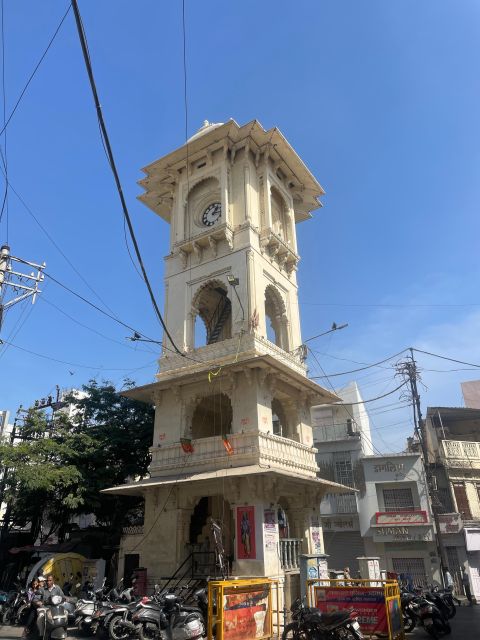
The walk begins at Ganesh Art Emporium, diagonally opposite Jagdish Temple in Jagdish Chowk, toward the clock tower. This is a central old-city meeting point, but the guide can change it if your group needs a different arrangement.
The default start time is 10:00 am, though the time and date are flexible. That matters in Udaipur, where heat, personal schedules, and the needs of a private group can affect how comfortable a walking tour feels.
From the start, expect a working city rather than a quiet museum district. Shops, shrines, food counters, homes, and small workshops sit close together. The appeal is the ordinary setting. You are not simply looking at old buildings. You are seeing how the old center functions now.
The route covers about three kilometers. It finishes back at Ganesh Art Emporium, after passing through the old city and reaching the Ghanta Ghar area. This makes the walk easy to fit into a day of sightseeing, though you should not schedule a tight appointment immediately afterward.
More Street Food Market Tours in India
- Mumbai: Street Food and Night Markets Tour
★ 4.9 · 719 reviews - Mumbai Street Food & Night Markets
★ 5.0 · 225 reviews - Mumbai Street Food and Evening Bazaar Tour
★ 5.0 · 172 reviews
Rao Ji ka Hata Road and the first food stops
Rao Ji ka Hata Road brings you into the local food and market side of Udaipur. Here, the guide explains what you are eating, how the ingredients are used, and how familiar snacks are prepared.
The food is vegetarian, and the tastings are described as tried, tested, safe, and hygienic. That is useful if you want to sample Indian street food but do not know which stalls to choose on your own. You still need to tell the guide about allergies or dietary limits before eating, since the included menu is fixed around local vegetarian snacks.
The tastings can include:
- Samosa with mint and coriander chutney
- Kachori with mango and tamarind chutney
- Poha
- Gulab jamun and other local sweets
- Masala chai
- Lassi or fresh juice
This is not a full restaurant meal. Think of it as a series of small portions spread through the walk. That makes it easier to try several foods, but you may want a proper lunch later.
One useful feature is the chance to watch traditional snack preparation. The guide can explain basic methods and ingredients rather than simply handing you food. If you enjoy cooking, this turns a quick tasting into a practical lesson in Indian flavors and spice combinations.
The masala chai stop adds another local touch. You taste the tea and learn about its preparation, and the guide may also discuss local spices. That is a good moment to ask questions, since the experience is designed around conversation rather than a fixed speech.
Markets where Udaipur does its daily work
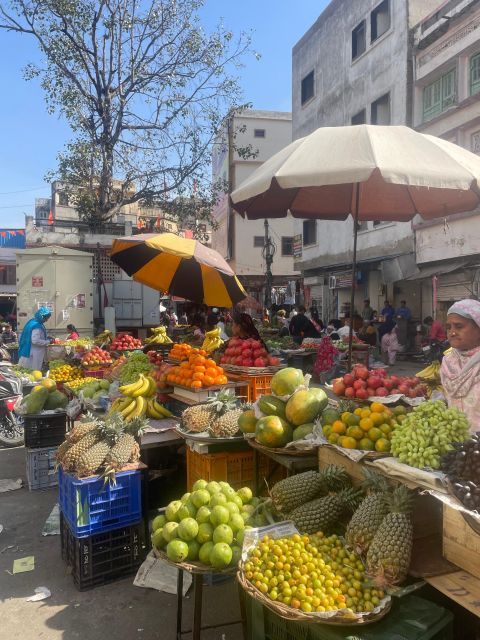
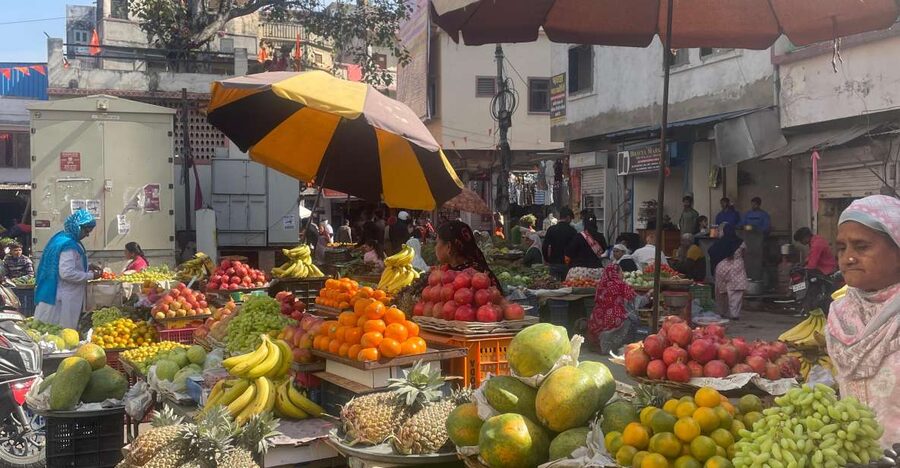
The market section is one of the strongest reasons to choose this walk. You pass through fruit and vegetable stalls, spice and grain shops, and areas connected with local crafts.
A market can tell you more about a place than a polished display in a museum. You see what people buy, how goods are stacked, how sellers work in tight spaces, and how food moves through the neighborhood. The guide helps explain what you are seeing, which is important when labels and local customs are unfamiliar.
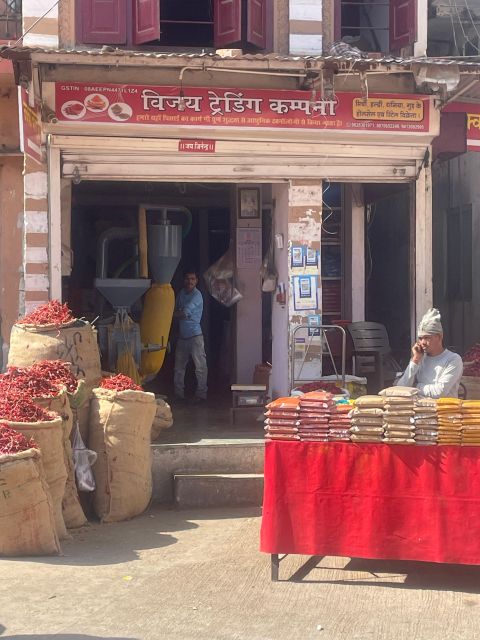
The spice and grain market is especially useful for anyone curious about Indian cooking. You can ask about the purpose of different spices, how they are combined, and which ingredients are common in Rajasthan. Do not expect a formal cooking class. This is a short, street-level introduction.
The fruit and vegetable market gives the walk a different rhythm. It is less about famous sights and more about the daily business of the old city. Bring patience and keep your belongings secure in crowded areas. The route is made for looking around, not for moving quickly.
You also visit craft communities, including bamboo artists, potters, and makers of biodegradable bowls and plates. At the pottery stop, you may have the chance to try the wheel under the maker’s guidance. That kind of contact is brief, but it gives you a better sense of the skill behind an object you might otherwise pass without noticing.
Temples, step wells, and old-city architecture
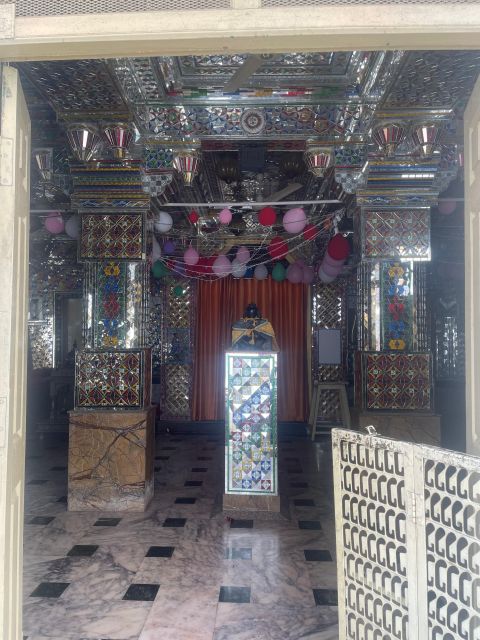
The walk includes Jagdish Chowk, a historic Jain temple, and a step well. These stops help balance the food and market portions with Udaipur’s religious and architectural side.
The Jain temple visit comes with an explanation of its place in local life. You can ask questions about worship, symbols, and the differences between religious spaces you see around the city. As with any temple visit, dress with care and follow the guide’s instructions about shoes and respectful behavior.
The step well is another useful stop because it shows how older buildings served practical needs, not just ceremonial ones. Details about its design and use can make the structure easier to understand than a quick photo stop would.
Architecture is a recurring subject throughout the walk. The guide discusses haveli design, old facades, glass inlay work, and the way homes and commercial spaces fit together. Glass inlay is one of the more distinctive details in this experience. It adds an art and craft element that you may not encounter on a standard food tour.
You also pass Tinker Street and the clock tower, known locally as Ghanta Ghar. The clock tower provides a clear point of orientation in the old city and a lively setting for another food tasting stop. The route returns to Ganesh Art Emporium, so you will not be left trying to find your way back through unfamiliar lanes.
Same stalls, a different way to shop and eat:
- Private Heritage Walking Tour in Jaisalmer Fort and Old Bazaar
★ 5.0 · 306 reviews - Old Delhi Food-Spice Market-Temples Tour Soon Featured on NETFLIX
★ 5.0 · 304 reviews - Old Delhi Odyssey: A Tour of Religion, Spice Market, & Best Food
★ 5.0 · 284 reviews - Jaipur Bazaar & Food Walking Tour
★ 5.0 · 281 reviews
Stories about cows, festivals, and life in Udaipur
The guide’s storytelling is a central part of the experience. You can ask about why cows are considered holy, why they appear on city streets, how arranged marriages and the caste system work, and how education and politics affect present-day India.
Some subjects, such as sati, child marriage, and caste, are serious and complex. A good guide can give you local context without turning the conversation into a simplistic explanation. You should bring questions and expect an open discussion rather than a polished academic lecture.
Festivals, karma, Ganesha, food customs, and modern Udaipur are also part of the conversation. The guide can explain why Ganesha is linked with good luck and how local beliefs appear in everyday life. These talks are most useful when you ask about something you have just seen in the street.
Several guides connected with the experience have been praised for their warmth and ability to answer questions. Names associated with recent walks include Happy, Vishal, Harsh, and Harsh Mundra, the listed provider. The exact guide can vary, so confirm who will lead your walk if that matters to you.
A practical benefit is the local advice you receive after the walk. The guide can suggest restaurants, shopping areas, and other places to visit in Udaipur. That makes this a smart choice early in your stay, when you are still deciding where to eat and how to spend the next few days.
What the $24 price really covers
At $24 per person, this is strong value if you plan to eat most of the included items and want a private or small-group introduction to the city. The price includes bottled water, five or more food dishes, sweets, tea, and the in-person guide.
You are paying for more than snacks. The cost also covers the guide’s local knowledge, route planning, introductions to market areas, and explanations of crafts and architecture. If you tried all the food on your own, you might spend less or more depending on where you ate, but you would lose the context and the safety of having someone choose established stops.
The value is lower if you dislike street food, prefer a formal historical tour, or want a slow architectural walk with long visits inside monuments. The route moves between many short stops, so it suits curious eaters more than travelers seeking one major sight.
Alcohol is not included, and transportation to the meeting point is not included. You should also budget for anything you choose to buy in the markets. The walk itself has no additional tasting fees listed.
Pace, comfort, and group size
Wear comfortable shoes and light cotton clothing. The three-kilometer route includes markets, lanes, and working areas, so practical clothes matter more than dressing for a palace visit.
The walk is listed at 2.5 hours, but it can take closer to three hours depending on the group’s curiosity. Food tastings, questions, photos, and craft demonstrations all add time. If you have a knee problem or limited walking ability, tell the guide before starting. One guide arranged a tuk-tuk when a participant’s knee became painful, but that should not be treated as a guaranteed part of the tour.
Private and small-group formats are available. A private walk gives you more control over food choices, questions, pace, and photo stops. A small group may feel livelier, but you may have less control if everyone wants different amounts of time at each stop.
The route is not presented as a specialist accessible tour. The supplied information confirms a three-kilometer walk, but it does not provide a full breakdown of surfaces, stairs, or step-free access. Ask before booking if those details are important for you.
Who will get the most from this walk
I would choose this experience early in a Udaipur stay. It helps you understand the old city, gives you a set of foods to look for later, and provides restaurant and shopping advice before you spend your time and money elsewhere.
It is a good match for:
- First-time visitors to India who want help choosing street food
- Curious eaters who prefer several small tastings to one long meal
- Visitors interested in local markets and working craft communities
- Photographers looking for everyday scenes and old-city details
- Couples or families who prefer private or small-group touring
- Anyone who wants to ask direct questions about Indian culture
It may not suit you if you need a very quiet route, dislike crowded markets, avoid spicy or fried foods, or want a tour built around Udaipur’s major royal monuments. The focus is local life, food, and conversation.
Should you book it?
Book this walk if you want to see Udaipur through its food stalls, markets, workshops, shrines, and side streets rather than only through its headline sights. The combination of samosa, kachori, poha, sweets, chai, temples, pottery, and local stories gives you a useful first look at the city.
The strongest reason to book is the guide access. Happy, Vishal, and Harsh are described as warm, interactive, and generous with local advice, and the guide can help you find places you would be unlikely to locate alone.
Allow the full three hours, eat lightly beforehand, and wear good shoes. At $24, the experience is easy to recommend for food-focused visitors who want a personal introduction to old Udaipur, as long as you accept that the route is active, informal, and built around small discoveries rather than major monuments.
FAQ
Where does the walk start?
The meeting point is Ganesh Art Emporium, diagonally opposite Jagdish Temple at Jagdish Chowk, toward the clock tower. The meeting point can change if needed for the group.
How long does the experience last?
The stated duration is 2.5 hours, but the walk can take two to three hours depending on the group’s questions and interest in the stops.
How far do I walk?
The route covers about three kilometers through old Udaipur.
What food is included?
Included tastings can include samosa with mint and coriander chutney, kachori with mango and tamarind chutney, poha, gulab jamun, masala chai, lassi, and juices. The experience includes five or more dishes, sweets, and tea.
Is the food vegetarian?
Yes. The food tastings are vegetarian.
What languages does the guide speak?
The live guide speaks English and Hindi.
Are transportation and alcoholic drinks included?
Transportation to the start point and alcoholic drinks are not included. Bottled water, food tastings, sweets, tea, and the in-person guide are included.
More Food in India
- Bangalore : Evening Food Street Walk and Market Visit
★ 5.0 · 34 reviews - Bangalore Evening Food Street Walk and Market Visit
★ 5.0 · 32 reviews - Delhi: Old Delhi’s Street Food, Temples & Spice Market Tour
★ 5.0 · 30 reviews - Agra: Sadar Bazar Food Market Night Walking Tour by Tuk-Tuk
★ 4.9 · 25 reviews
More Food and Drink Tours in India
- Experience Bangalore – City Tour, Authentic Food & market (Food/Culture/History)
★ 5.0 · 156 reviews - Agra: Street Food Walking Tour, Spice Market, & Tuk-tuk Ride
★ 4.9 · 102 reviews - Mumbai Street Food Tour with Evening Bazaar Walk
★ 4.9 · 79 reviews - Food Trail Through Sowcarpet Market: A Taste of Chennai
★ 5.0 · 38 reviews
Just added around India
- Shopping and Bazaar Trail in Bangalore★ 4.5 · 5 reviews
- KR Market Photo Walk★ 5.0 · 12 reviews
- Experience Bangalore Evening City Walk Tour and Market Visit★ 5.0 · 9 reviews
- Bangalore: Walk in Historic Ulsoor – Landmarks, Bazaar & Culture★ 5.0 · 9 reviews
- Lalbagh+Bull Temple+Tipu Palace+Market+Lunch=Bangalore City Tour★ 5.0 · 9 reviews
- Bangalore Walking Tours – Flower Market, PETE and more★ 5.0 · 5 reviews
- Bangalore Evening Food Street Walk and Market Visit★ 5.0 · 32 reviews
- Old Bangalore Historical Walk thro Palace, Temples, Fort & Market★ 5.0 · 60 reviews
Street Food Market Tours, compared.

Old Town, Creek, Museums, Souks, & Street Food Tour
Read our review →
Old Town, Souks, Street Food, Guided Tour & Abra Ride
Read our review →
London Bridge & Borough Market Food Tour with 7 Authentic Dishes
Read our review →
Old Town, Souks, Street Food, Guided Tour & Abra Ride
Read our review →
Small Group Cooking Class & Market Food Tour in Florence
Read our review →
Old Town, Street Food, Creek, Souks, & Emirati House
Read our review →Browse the lists this tour appears in