
Review · MARRAKECH
Marrakech: Traditional Moroccan Cooking Class & Market Visit
The best part of this Marrakech cooking class happens before you reach the kitchen. You walk through a local souk with the cooking team, choose fresh ingredients, then carry them back to Khmisa’s workshop in the Medina. It turns a meal into a small lesson in how Moroccan food begins.
I like the market visit because you see the raw materials before they become tagine, salads, or dessert. I also like the warm, hands-on format led by Moroccan women, including Kawtar and Khmisa, where everyone gets a job rather than sitting back to watch.
The main consideration is that this is a shared group class, usually with up to 12 people, and the menu can vary from 3 to 6 dishes. It is not suitable for wheelchair users, and you’ll need to arrange your own way there since hotel pickup and drop-off are not included.
Key points to know before booking
- Shop before you cook: Take a short walk through a less tourist-focused part of the souk to select fresh vegetables, chicken, spices, and other ingredients.
- Learn the real tea ritual: Mint tea is prepared and poured in a traditional way, not simply made by adding mint to hot water.
- Cook a full Moroccan meal: Classes can include several starters, chicken and vegetarian tagines, dessert, and tea.
- Eat what you prepare: Lunch or dinner is included, and the portions are described as generous and filling.
- Leave with usable recipes: Electronic recipes are sent afterward, making dishes such as lemon chicken tagine easier to repeat at home.
- Expect a friendly group setting: The class can be booked individually or with others, with English, French, and Arabic support.
Starting in Marrakech’s souk
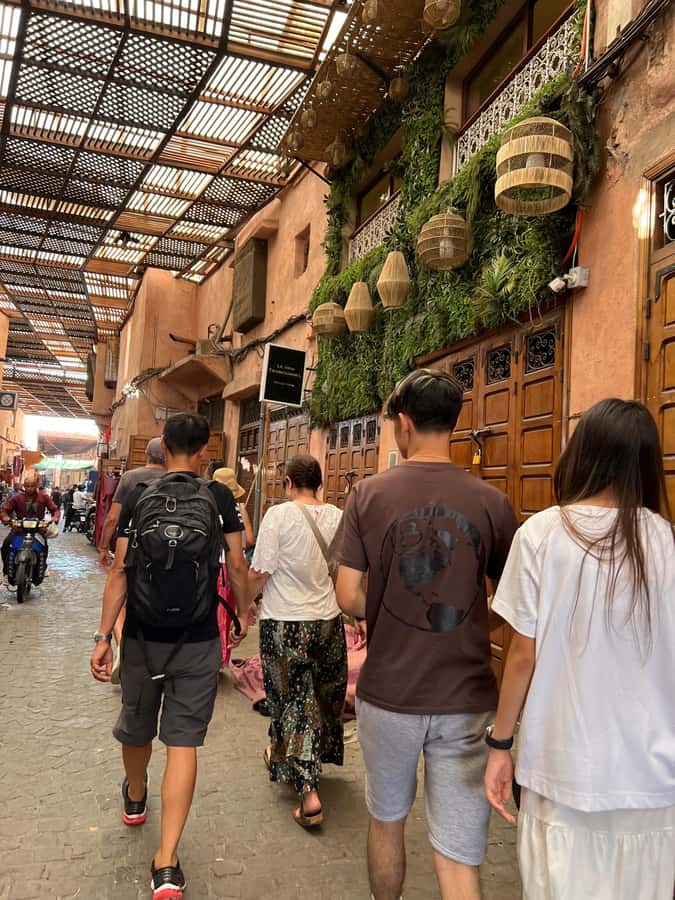
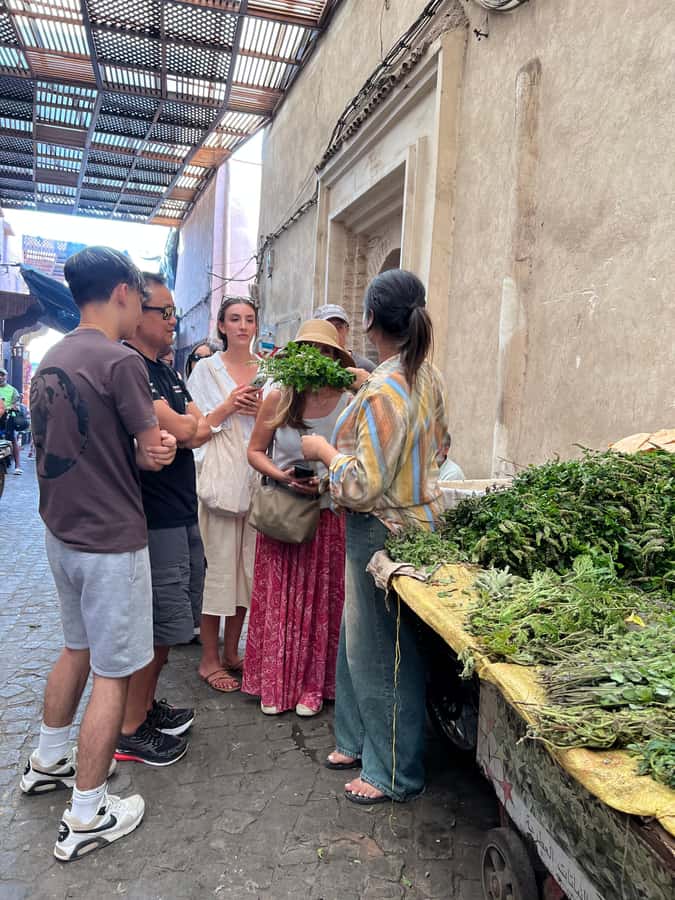
The experience begins with a short market walk. After discussing food allergies and dietary restrictions, you join the cooking team to shop for the ingredients used later in the class.
This is a useful touch. A cooking lesson can feel detached from local life when every item is already measured and waiting on a table. Here, you see the vegetables, herbs, spices, and other fresh products in their everyday setting. You also get a better sense of the shopping decisions behind Moroccan cooking.
The market visit is not a long sightseeing tour. Think of it as a practical introduction to the produce stalls and food traditions of Marrakech. The focus is on choosing ingredients, not on checking off monuments.
I recommend comfortable shoes. The walk takes place in the Medina, and the class information specifically asks you to bring them. A hair tie is also useful for the cooking session.
The meeting instructions deserve a little care. One practical issue raised in the feedback was that a large mosque is easy to identify but may not give you a precise enough meeting point. Ask in advance for the exact entrance or landmark, especially if you are not used to finding addresses in the Medina.
More Market Cooking Classes in Marrakech
- Marrakech: Moroccan Cooking Class with Market Visit and Meal
★ 4.9 · 347 reviews - Edgy 8 Dish Private, Fusion Cooking Class, Menu Plan, Market
★ 4.9 · 31 reviews - Marrakesh: Private Cooking Class & Local Market Shopping
★ 4.7 · 15 reviews
Entering Khmisa’s intimate Medina workshop
After the market, you continue to Khmisa’s workshop, described as an intimate riad in the heart of Marrakech’s Medina. The setting is part of the appeal. You are not in a formal cooking school designed for large demonstrations, but in a Moroccan home-style space connected to the family and local cooking traditions.
The class is run by local Moroccan women and chefs with years of experience in cooking, catering, restaurants, and hotel establishments. Kawtar often helps guide the session, while Khmisa and her aunt contribute the home-style warmth that gives the class its character. Ilham has also helped with translation during some sessions.
That mix matters. You get instruction from people who know the food well, but the tone remains relaxed. The cooking team works to bring everyone into the process, including children and people with little kitchen experience.
The venue has air conditioning, which is a welcome detail during warm Marrakech weather. It also makes a difference when several people are chopping, mixing, and working around the same table.
Group size can reach 12 people, though some sessions are much smaller. One class had six participants, which allowed plenty of direct involvement. A bigger group may feel livelier, but you may need to take turns when choosing ingredients, chopping, or adding spices.
The mint tea ritual comes first
Before cooking begins, you are welcomed with Moroccan mint tea. This is not treated as a quick drink before the main event. The team explains the steps of the traditional tea ritual and shows you how it is prepared and served.
This part is valuable because Moroccan tea carries social meaning. It is a gesture of welcome, and preparing it properly involves more than steeping mint in boiled water and adding sugar. The class gives you a clear, practical look at that process.
You also get a calm introduction to the rhythm of the workshop. After the market’s movement and noise, sitting down for tea helps everyone meet the group and settle into the meal ahead.
If you enjoy food culture more than formal sightseeing, this may be one of the strongest parts of the experience. You learn something you can repeat at home, and you gain a small piece of Moroccan hospitality that does not require specialist equipment.
Cooking several Moroccan dishes as a team
The menu is not fixed to one dish. It generally includes between three and six Moroccan dishes, with starters, a main course, and a dessert. The exact selection can change, but the examples include several Moroccan salads, vegetarian dishes, chicken tagine, vegetarian tagine, and Pastilla of Milk.
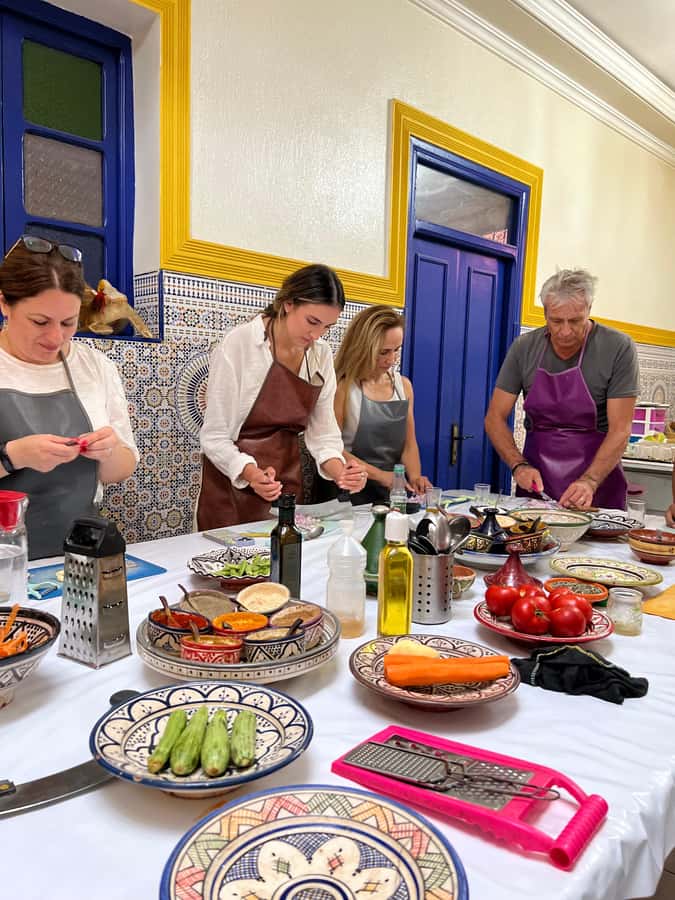
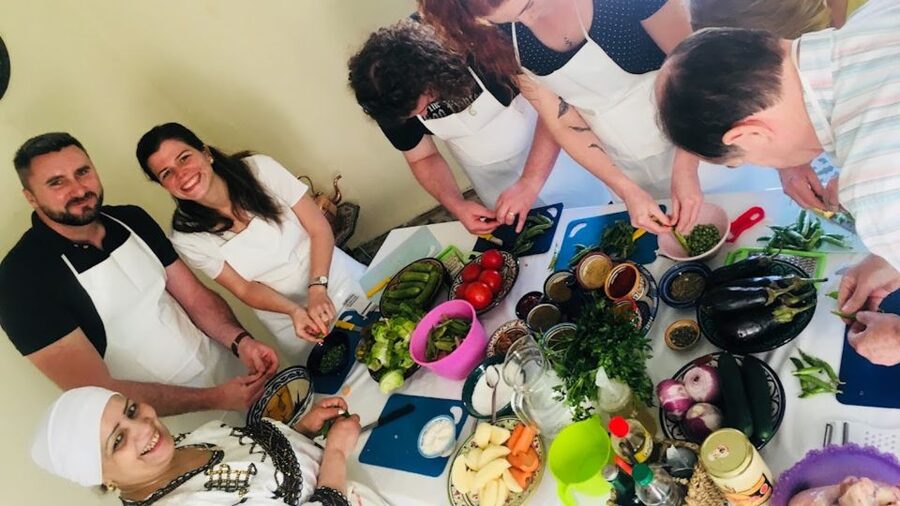
The format is hands-on. You help wash, chop, season, mix, and prepare the dishes rather than simply watching a chef work. The cooking team explains the use of Moroccan spices and guides you through each stage.
The group prepares the food together, so this is best viewed as a shared kitchen session. You may not personally complete every single step of every dish, but everyone is encouraged to take part. The hosts take turns assigning jobs, which keeps the class active.
The chicken tagine receives particular attention in the feedback. Lemon chicken tagine is one of the dishes people most want to repeat at home, and the class helps explain how the ingredients and spices work together. The vegetarian tagine also gives non-meat eaters a proper main course rather than a token side dish.
The range is a strong point for vegetarians. Sessions have included four vegetable starters alongside both vegetarian and chicken tagines. If you have allergies or strict dietary needs, raise them before the market walk so the team can discuss what is possible.
The class is also suitable for families. An eight-year-old took part successfully, and a family with teenagers found that everyone could get involved. Still, the group kitchen format means younger children should be ready to follow instructions and share tasks.
More Market Cooking Classes in Morocco
- Marrakech: Cooking Class and Market Visit
★ 4.4 · 5 reviews - Moroccan Cooking Class & Marrakech Market Visit with Chef Khmisa
★ 5.0 · 1,504 reviews - Moroccan Cooking Class with Market Visit and Meal
★ 5.0 · 196 reviews - Fez: Souk Tour and Traditional Home Cooking Class
★ 4.9 · 186 reviews
Eating the meal you helped prepare
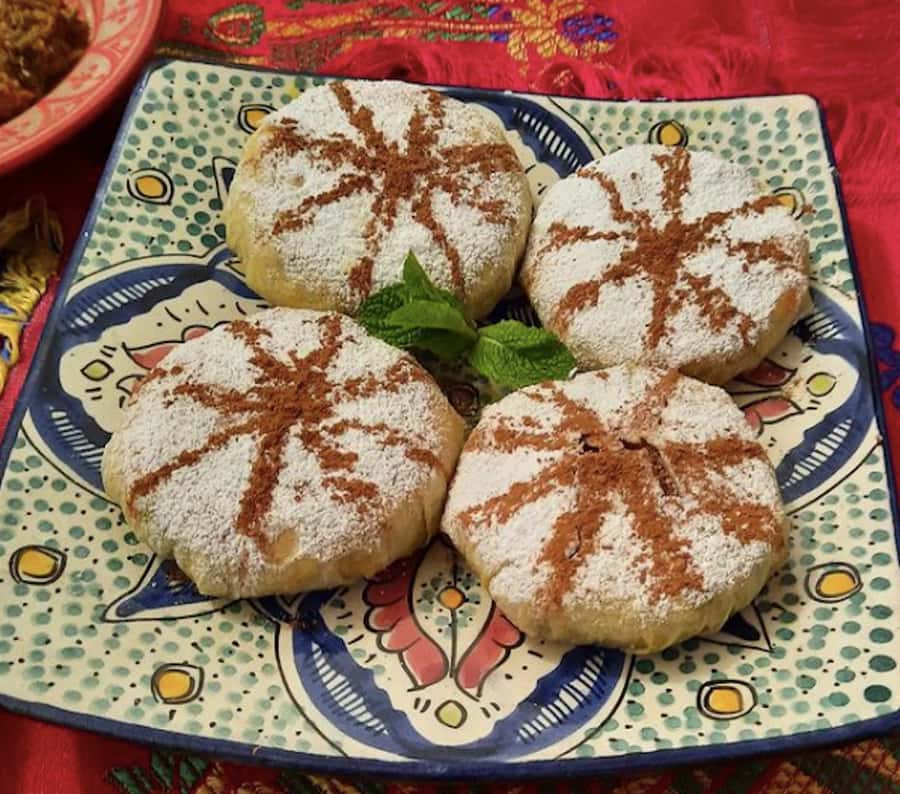
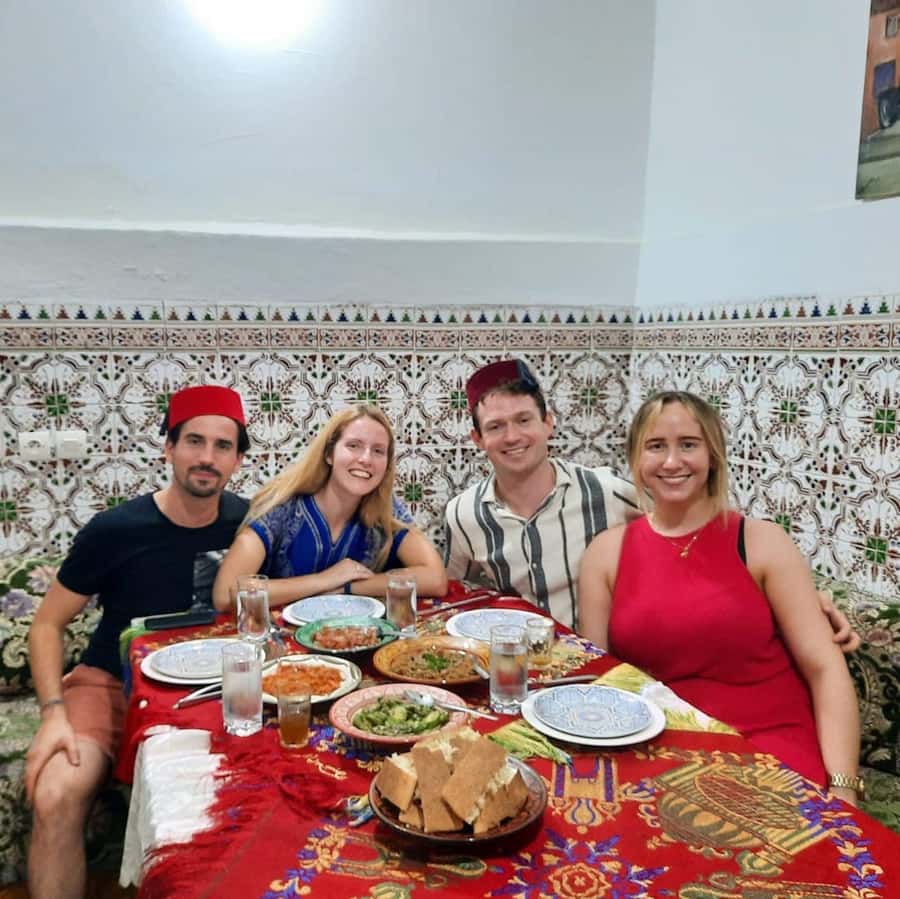
Once the cooking is finished, you sit down with the group and eat the meal. Lunch or dinner is included in the $40 price, and the food is intended to be the main reward for all that chopping and stirring.
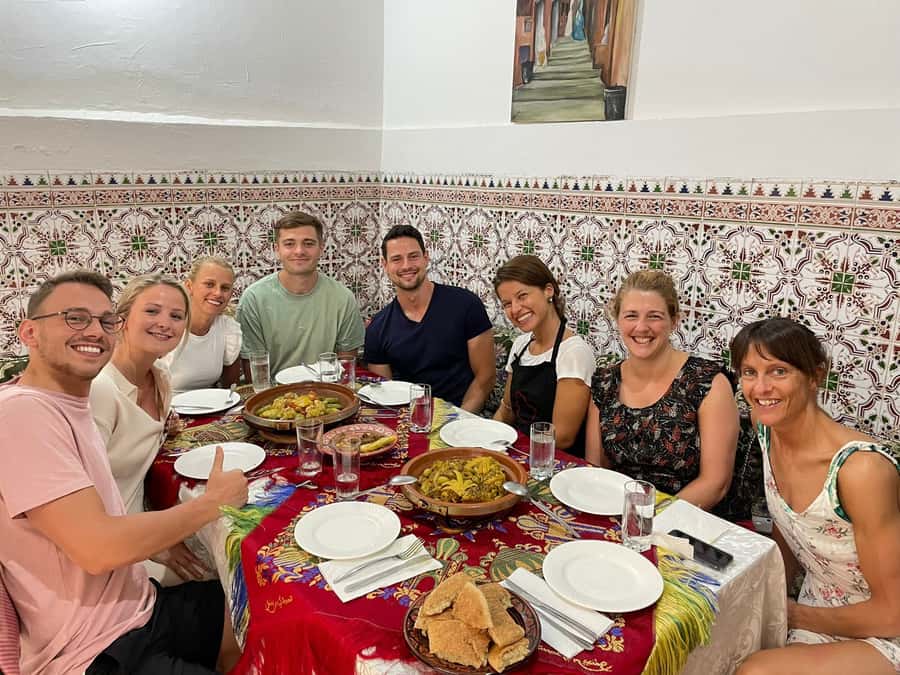
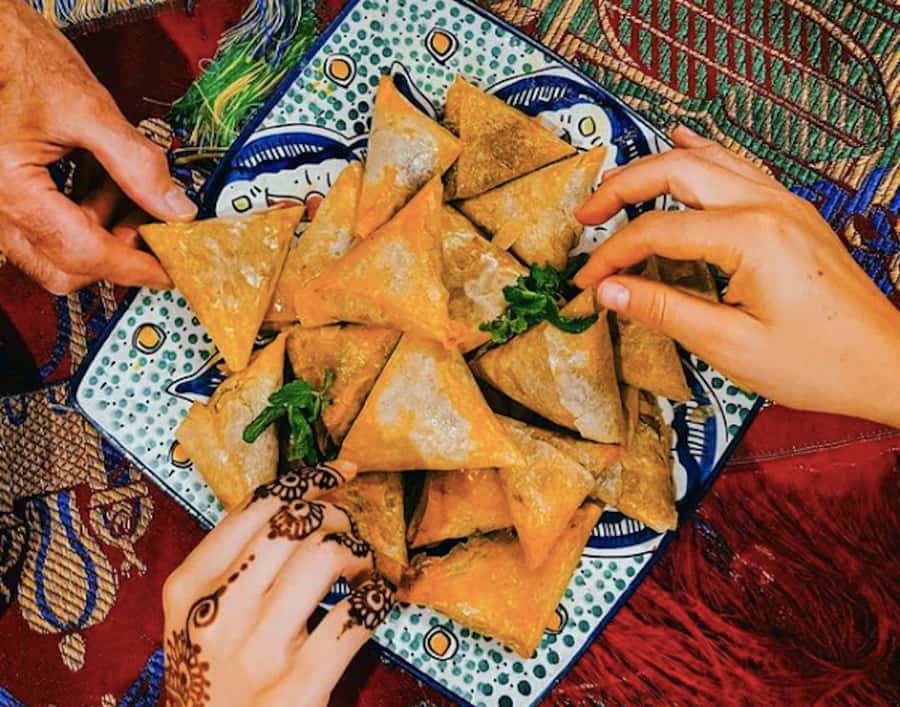
The meal can be substantial. Several sessions included multiple starters, two main dishes, dessert, and tea. If you have already eaten recently, pace yourself. The portions are described as generous, and the class is built around a full meal rather than small samples.
Eating together also gives the workshop a social side. You share a table with people from different countries, compare impressions of the food, and enjoy the dishes while they are fresh. This is a better fit for you if you like meeting people as part of an activity.
The food is not just a demonstration of technique. You get to taste the effect of the spice blends, slow cooking, preserved flavors, and fresh ingredients while the instructions are still clear in your mind.
The dessert may include Pastilla of Milk, a traditional sweet finish. Other sessions included a small dessert prepared near the end. Since the menu changes, you should treat this as an example rather than a promise of one exact lineup.
What the $40 price includes
At $40 per person, this is good value if you want more than a short cooking demonstration. The price includes the market walk, ingredients, a local guide, a Moroccan chef, tea, and a complete lunch or dinner.
You are also paying for the instruction and the setting. A restaurant meal alone would give you the food, but not the shopping lesson, spice explanations, preparation work, and recipes afterward.
The electronic recipes add lasting value. You receive the dishes by email after the class, so you can try them again at home. This is especially helpful for recipes such as tagine that can be adapted to an ordinary home kitchen.
Fresh homemade spices may also be available to buy before you leave. The class information says these are prepared by Khmisa, allowing you to take home some of the flavors used during the session.
The price does not include hotel pickup or drop-off. You need to get to the meeting point yourself, and the exact location should be confirmed carefully. You also need to account for the fact that the class is shared, not automatically private.
Private sessions are available on demand, but the standard experience is a group activity. If you want a quiet lesson with one chef focused only on your party, ask about the private option before booking.
Timing, language, and practical comfort
The class is offered with English, French, and Arabic support. English speakers should find the activity workable, though translation may sometimes be part of the teaching process. Ilham has translated for the chef during one session, helping keep the instructions clear and the mood lively.
Allow around two and a half hours as a practical guide, based on one reported session. Timing can vary because the market stop, group size, preparation, and meal all affect the pace.
Some start times may change. One morning class moved from 10 a.m. to 11 a.m., with notice given the night before. Keep some flexibility in your schedule rather than placing a tight appointment immediately afterward.
Wear comfortable shoes and bring a hair tie. Pets, smoking, alcohol, and drugs are not allowed. The experience is not suitable for wheelchair users, so mobility needs should be considered before reserving.
You can reserve and pay later, which is useful if your Marrakech plans are still shifting. Cancellation is allowed up to 24 hours in advance for a full refund, according to the booking conditions.
Who will enjoy this cooking class most
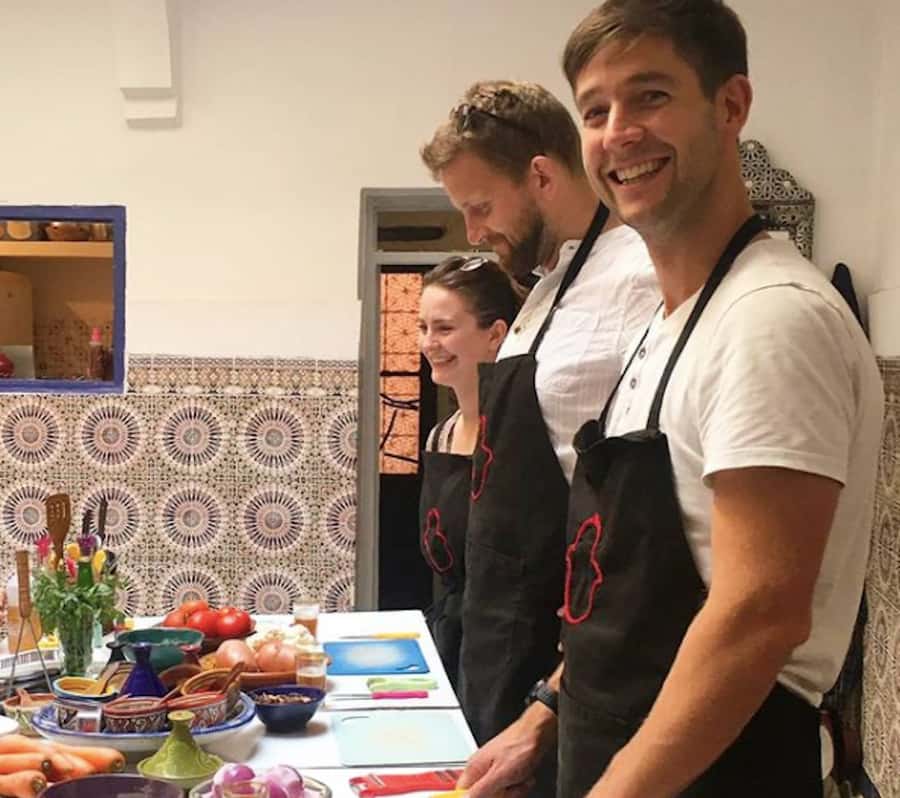
I would choose this for you if food is one of the main ways you want to understand Morocco. The market stop gives context, the cooking keeps you busy, and the shared meal makes the experience feel social without requiring a full-day tour.
It suits first-time cooks because the hosts guide each stage. It also works for confident home cooks who want to understand Moroccan spices, tea preparation, and tagine technique from local instructors.
Families can enjoy it, including older children and teenagers who are happy to chop, mix, and taste. Vegetarians have a good reason to consider it, since the menu can include several vegetable starters and a vegetarian tagine.
You may prefer something else if you want a private lesson, a tightly fixed menu, or a polished culinary school atmosphere. The class is friendly and informal, and the menu depends on the session and available ingredients.
Should you book the Khmisa cooking class?
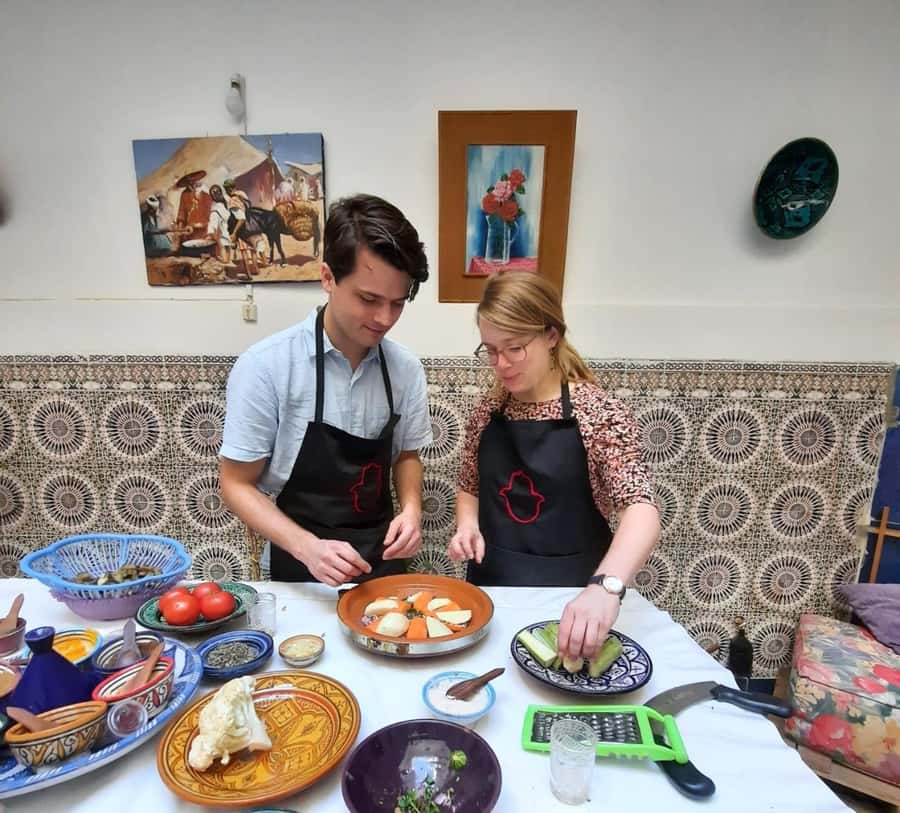
I would book this activity if you want an affordable, food-focused way to spend part of a day or evening in Marrakech. The combination of souk shopping, mint tea, hands-on preparation, and a generous shared meal gives you far more than a restaurant visit.
The strongest reasons to choose it are the local women leading the class, the chance to select ingredients yourself, and the recipes sent afterward. Confirm the meeting point, tell the team about allergies before the market visit, wear comfortable shoes, and allow extra time around the stated start.
Skip it only if you need wheelchair access, dislike group cooking, or want a private and highly structured lesson. For most food lovers, the $40 price buys a useful cultural experience as well as dinner.
FAQ
Where does the cooking class take place?
The class takes place at Khmisa’s workshop, an intimate riad in the heart of the Medina of Marrakech. The experience begins with a short walk through a local food market.
How much does the experience cost?
The listed price is $40 per person.
Is a meal included?
Yes. Lunch or dinner is included, along with Moroccan mint tea and all cooking ingredients.
What food will I cook?
The menu can include three to six dishes, with starters, a main course, and dessert. Examples include Moroccan salads, chicken tagine, vegetarian tagine, and Pastilla of Milk.
Will I visit a market?
Yes. You take a short walk through a local souk and help select the fresh ingredients used during the class.
Do I receive the recipes afterward?
Yes. Electronic recipes are sent by email after the experience.
Which languages are available?
The activity is offered in English, French, and Arabic.
Is hotel transportation included?
No. Hotel pickup and drop-off are not included.
Can I join if I have food allergies or dietary restrictions?
You should discuss allergies and dietary restrictions before going to the market. The class can include vegetarian dishes, but the available menu may vary.
Is the activity wheelchair accessible?
No. The experience is not suitable for wheelchair users.
More Cooking Classes in Marrakesh
- Chiang Mai: Authentic Cooking Class with Market & Farm Visit
★ 4.9 · 4,546 reviews - Barcelona: Paella Cooking Experience & Boqueria Market Tour
★ 4.8 · 3,661 reviews - Cooking Class Hoi An:Local Market, Basket Boat, Fishing & Cooking
★ 5.0 · 3,660 reviews - Hoi An Cooking Class(Market,BasketBoat Crabfishing&Cooking Class)
★ 5.0 · 3,386 reviews
More Market Cooking Classes in Marrakesh
- Hanoi Cooking Class: Culture, Local Market & Meaning CSR Impact
★ 5.0 · 5,147 reviews - 5 Traditional Dishes Hanoi Cooking Class with Market Trip
★ 5.0 · 4,890 reviews - Cooking Class and Lunch at a Tuscan Farmhouse with Local Market Tour from Florence
★ 5.0 · 4,831 reviews - Chiang Mai: Cooking Class, Market & Thai Herbs Garden Tour
★ 4.9 · 4,824 reviews
Just added around Marrakesh
- Souks tour of Marrakech ( 3 hours )★ 5.0 · 5 reviews
- Marrakech: Hidden Souks Shopping Tour with Private Guide★ 4.1 · 53 reviews
- Edgy 8 Dish Private, Fusion Cooking Class, Menu Plan, Market★ 4.9 · 31 reviews
- Marrakech: Half-Day Medina Markets Tour★ 4.5 · 11 reviews
- Marrakech: Vibrant Souks, Local Artisans & Medina Experience★ 4.5 · 66 reviews
- Marrakesh: Private Cooking Class & Local Market Shopping★ 4.7 · 15 reviews
- Marrakech: Bahia Palace, Madrassa & Souks Guided Tour★ 4.8 · 47 reviews
- Marrakech: private Guided tour Of Vibrant Souks★ 3.8 · 24 reviews
Market Cooking Classes, compared.
Hanoi Cooking Class: Culture, Local Market & Meaning CSR Impact
Read our review →
5 Traditional Dishes Hanoi Cooking Class with Market Trip
Read our review →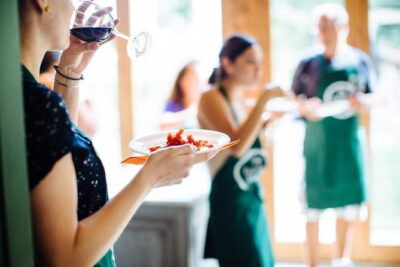
Cooking Class and Lunch at a Tuscan Farmhouse with Local Market Tour from Florence
Read our review →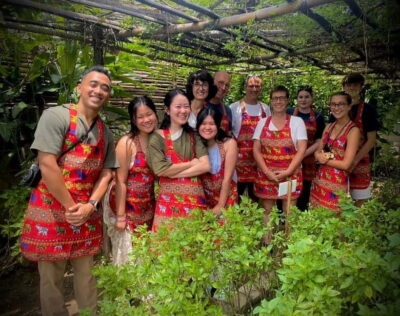
Cooking Class, Market & Thai Herbs Garden Tour
Read our review →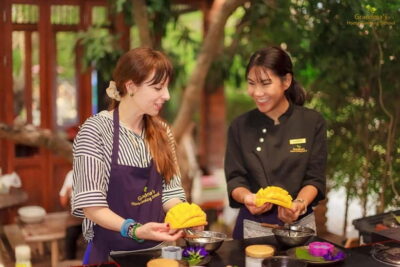
Authentic Cooking Class with Market & Farm Visit
Read our review →
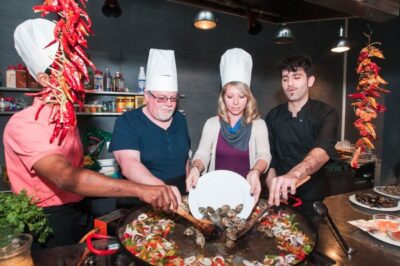
Paella Cooking Experience & Boqueria Market Tour
Read our review →
Cooking Class Hoi An:Local Market, Basket Boat, Fishing & Cooking
Read our review →Browse the lists this tour appears in