Review · MARRAKECH
Edgy 8 Dish Private, Fusion Cooking Class, Menu Plan, Market
The clever part of this six-hour class is that you do not simply follow a fixed recipe. With Edwina, you shape an eight-dish menu, write the shopping list in Arabic, then buy the ingredients yourself in Marrakech’s souk. I like that the class treats cooking as a full chain, from choosing a small aubergine to understanding how sugar aerates mint tea. I also like the private format, which lets Edwina adjust the food to your tastes.
The main drawback is time. Eight dishes, a market visit, tea-making, lunch, and a spice stop make for a full day, and one participant found that cooking for two people took longer than expected. Wine is not included, and you need closed shoes plus a hair tie.
Key points to know before booking
- You choose the menu: Build an eight-dish Moroccan fusion lunch around your tastes, from traditional dishes to more adventurous combinations.
- The market is part of the lesson: Use an Arabic shopping list to select mint, fish, chicken, vegetables, nuts, herbs, oranges, and spices.
- Tea gets serious attention: Learn the three-wash method, the role of sugar, and why mint varieties matter.
- You do the work: Chop, grate, slice, stir, shake, and mix at the prep table rather than watching a demonstration from the sidelines.
- The class ends with useful takeaways: Recipes and a certificate are emailed after the session, while tomato salt and chosen spices go home with you.
- It is truly private: The class is conducted in English for a private group, with Edwina shaping the pace and menu around your interests.
A cooking class built around your own menu
At 08:50, you meet at House of Fusion Marrakech on Derb Jdid 81. The day begins over coffee, not with a rigid menu printed in advance. You discuss what you want to cook, what you already know, and how far you want to push Moroccan flavors.
That freedom is the heart of the experience. You might choose a more traditional Moroccan meal, or ask Edwina to combine familiar local ingredients with less expected techniques. Jamie from the United Kingdom chose the more adventurous route, working with a wider range of Moroccan ingredients and several cooking methods. Edwina helped explain how to use each ingredient rather than simply telling him what to do.
This suits a keen home cook far better than a standard demonstration. If you want to sit back, take photographs, and eat a preselected lunch, this is not the right format. You are expected to participate from the first conversation to the final plate.
The menu contains eight dishes, which gives you a broad lesson in flavor, texture, and timing. It also explains the six-hour length. You are not learning one tagine and calling it a day. You are planning a small feast, then preparing it with guidance.
More Market Cooking Classes in Marrakech
- Marrakech: Traditional Moroccan Cooking Class & Market Visit
★ 4.8 · 1,861 reviews - Marrakech: Moroccan Cooking Class with Market Visit and Meal
★ 4.9 · 347 reviews - Marrakesh: Private Cooking Class & Local Market Shopping
★ 4.7 · 15 reviews
Writing the shopping list in Arabic
Once you agree on the menu, you write the shopping list in Arabic. This is a small but memorable part of the class. It gives you a practical reason to use a few words instead of treating Arabic as something seen only on signs.
The list comes with you into the market. That matters because you are not simply led from stall to stall while someone else makes every choice. You have a task in hand and a reason to ask about ingredients.
Edwina’s approach also gives the market visit a clear purpose. You are not buying random produce for a cooking show. You are looking for the right aubergine to blister, oranges with good zest, onions for the mandolin, fresh chickens, herbs, nuts, vegetables, and perhaps fish, depending on your menu.
The level of choice is useful for cooks. You learn to look for produce that suits a dish, not just produce that looks attractive. A small, unblemished aubergine has a different job from a large one. The right orange is chosen for its zest, not only its juice.
From the herb tea man to the souk stalls
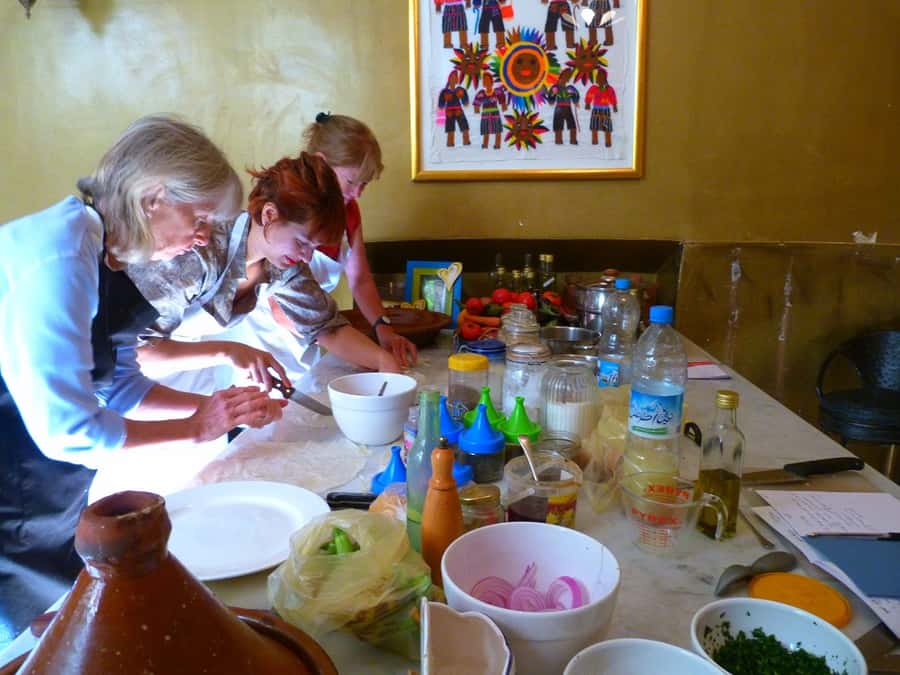
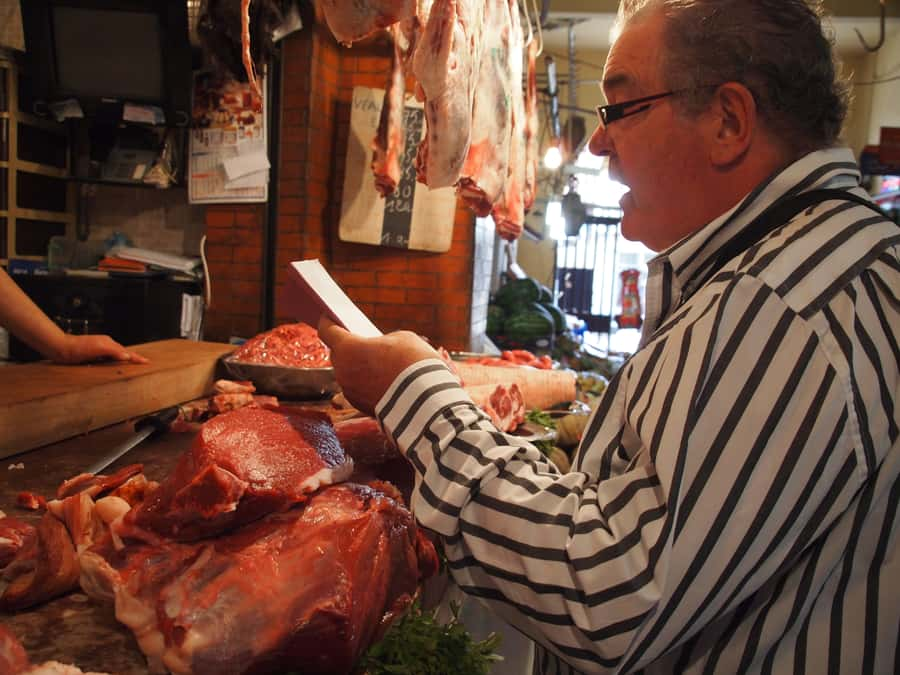
The market visit begins with the herb tea man near the entrance. Here, you handle bunches of mint and slap them against your arm to release their scent. It sounds playful, but it has a practical point: you compare the aroma before choosing the varieties you want.
This is the kind of detail that makes the class feel rooted in daily food practice. Mint is not treated as a decorative sprig added at the end. Its freshness and scent shape the drink, and you are encouraged to notice the difference.
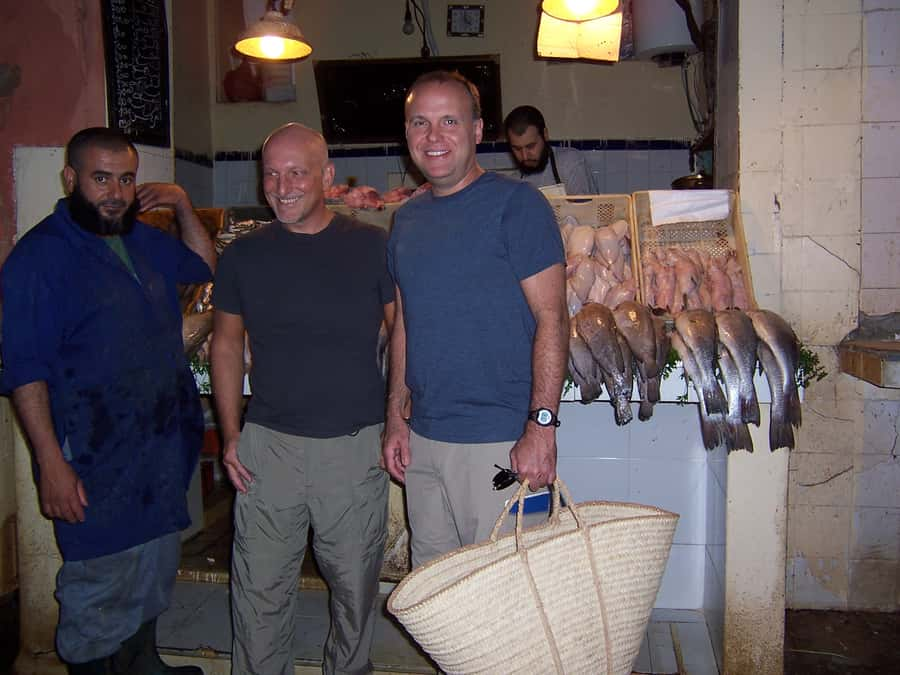
You then continue into the souk to select the rest of the ingredients. The shopping is a working lesson in produce, spices, and local buying habits. The Arabic list gives the outing a little structure, while the private format lets you spend more time on the ingredients that interest you.
Keep in mind that a market is not a quiet classroom. You will be moving between barrow men outside and traders inside the souk. The point is to make choices in that setting, not to receive a polished supermarket-style display. If you enjoy real food shopping, this will likely be one of the strongest parts of the day. If you prefer every ingredient to be measured and waiting on a counter, it may feel less tidy.
Moroccan tea, washed three times
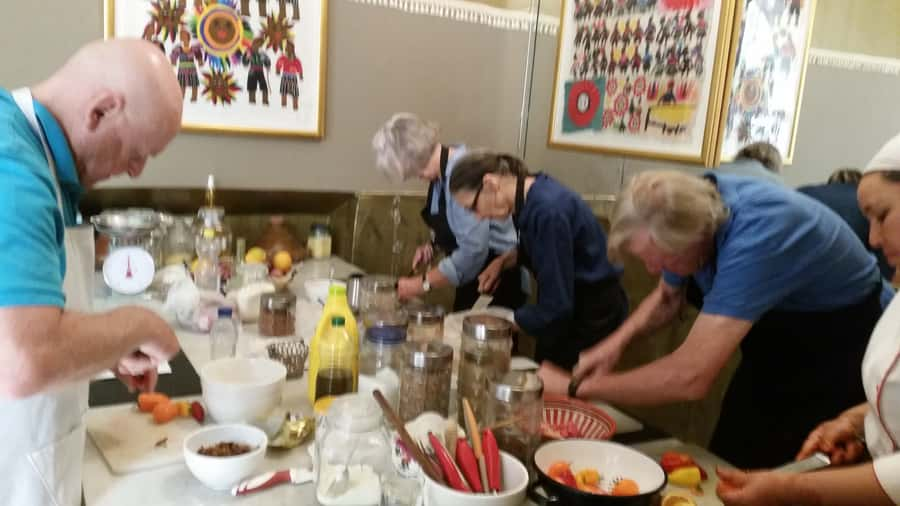
Back at the House of Fusion, you put on aprons and begin preparing the feast. Tea-making comes early in the work, giving you a break from chopping while introducing one of Morocco’s most recognizable rituals.
The lesson goes beyond pouring hot water over mint. You learn about three times washing the tea, the use of sugar, and the difference between sugar used to aerate and infuse the drink and sugar used simply to hide poor tea.
That distinction is worth remembering. The class presents tea as a matter of balance and technique, not just sweetness. You work with the process until the drink reaches the character Edwina is looking for.
This is also a useful pause in a busy cooking schedule. With eight dishes underway, a structured tea lesson helps you understand how food and hospitality connect in Morocco. You are making something to drink, but you are also learning the ceremony around it.
The description promises a very high standard of tea, but the more important benefit is that you leave knowing what to watch for. You can judge the aroma, sweetness, washing, and infusion rather than treating every glass of mint tea as the same.
More Market Cooking Classes in Morocco
- Marrakech: Cooking Class and Market Visit
★ 4.4 · 5 reviews - Moroccan Cooking Class & Marrakech Market Visit with Chef Khmisa
★ 5.0 · 1,504 reviews - Moroccan Cooking Class with Market Visit and Meal
★ 5.0 · 196 reviews - Fez: Souk Tour and Traditional Home Cooking Class
★ 4.9 · 186 reviews
Aprons on, tasting spoons ready
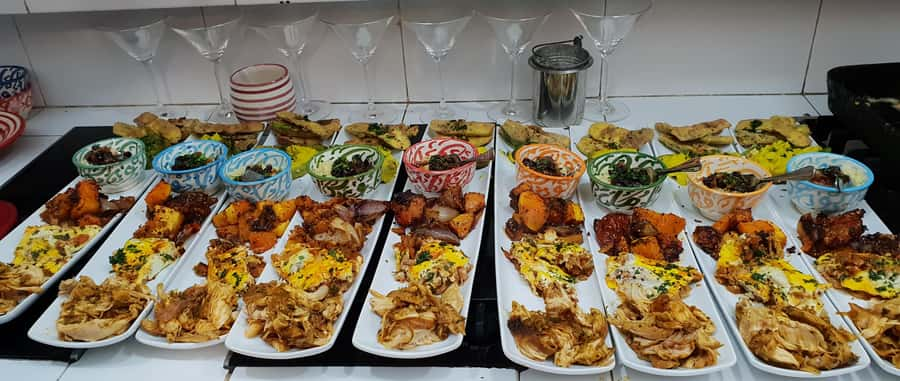
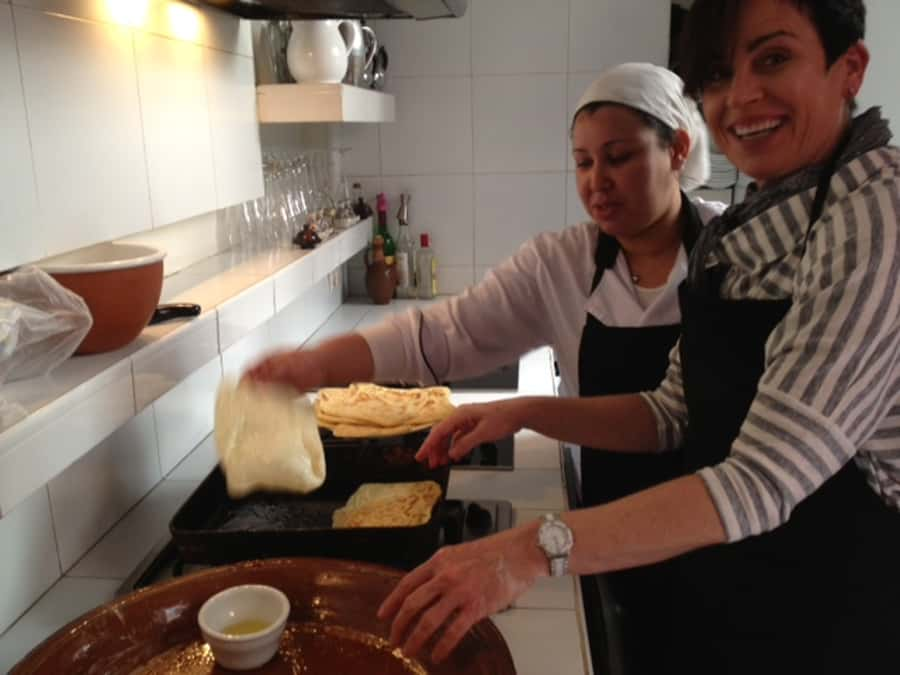
The practical work takes place at the prep table. You chop herbs, slice, grate, shake, stir, and mix, with a tasting spoon close at hand. This is a do it yourself class, with Edwina explaining the reasons behind each stage.
The cooking uses traditional Moroccan norms while pushing into fusion territory. That balance is important. You are not asked to abandon Moroccan methods in favor of fashionable tricks. Instead, the class shows how familiar ingredients can work in combinations that feel new.
Edwina’s role is part teacher, part menu adviser. Stefanie had the class alone and found that Edwina adjusted the day closely to her wishes. She also received all the recipes online the next day, which makes the class more useful after you return home.
Chef Hesna provides essential support in the kitchen, while Rosie assists during the day. Their presence matters because an eight-dish menu requires several jobs to happen at once. You still remain actively involved, but you are not left to manage a complicated lunch without help.
Expect to learn about spice applications as well as knife work and preparation. The class focuses on how spices function in a dish, rather than asking you to scatter them in by habit. That kind of guidance can change how you cook Moroccan food later.
Lunch is the reward, but not the whole point
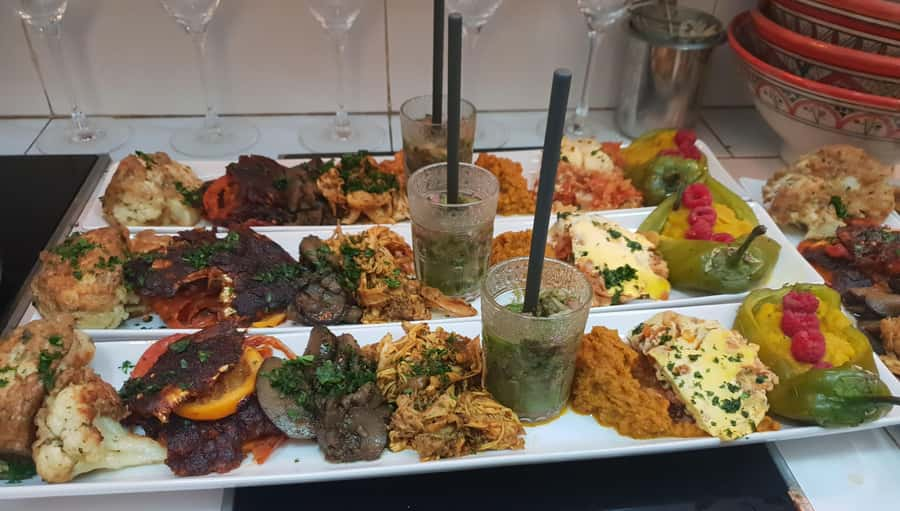
After all that preparation, you sit down to eat the eight-dish feast. The meal is the payoff, but it is not the only measure of value. By this point, you have planned the dishes, bought the ingredients, handled the preparation, and learned how each part fits together.
The food is designed to test what you have learned. Traditional Moroccan flavors remain important, but the menu can move into more creative territory. You can ask for familiar dishes or choose combinations that use Moroccan produce and spices in less usual ways.
I would pay attention to pacing here. Eight dishes is a generous amount of food, and it takes time to prepare. One solo participant enjoyed the private class but noted that getting eight dishes ready for only two people took a while. That is not a fault, exactly, but it is a useful warning if you have evening plans.
The long meal also means you should not book this as a quick activity between sightseeing stops. Give the full six hours its due. The class is better understood as the main event for the day.
The spice trader and tomato salt
The class does not end when lunch is served. After eating, you visit a spice trader and choose spices to take home. This is a smart final step because the earlier cooking has given you a reason to care about the spices.
You will have already tasted how different seasonings work in the dishes. At the trader, you can make more informed choices instead of buying a colorful pile of powders with no plan for using them.
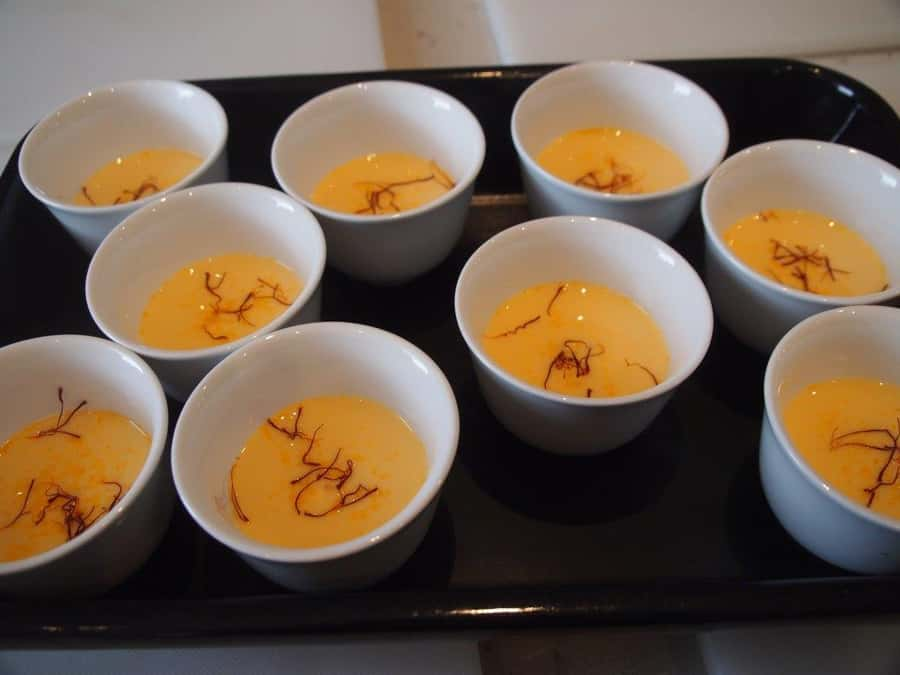
You also take home tomato salt made from tomato peelings and salt from salt pans visited on separate excursions. The tomato salt gives the class a practical zero-waste touch. It turns a byproduct into a seasoning and gives you something connected to the work you did that day.
The experience also includes bottled water and coffee. Wine is not included, so plan accordingly if you want a drink with lunch. The recipes and certificate are emailed after the class, giving you a written record of the day instead of relying on memory.
How much value do you get for $112?
At $112 per person, this is not a bargain cooking demonstration. It is a private, six-hour experience with ingredients, tuition, coffee, bottled water, an eight-dish meal, a market visit, recipe follow-up, certificate, and spice shopping.
The value depends on how much you want from the day. For a cook who wants practical skills and personal menu guidance, the price is easier to justify. You are paying for time with an instructor, not only for lunch. The private format is especially useful if you have allergies, strong dislikes, or a particular interest in Moroccan techniques, although the supplied details do not specify allergy arrangements, so ask before booking if that applies to you.
The day also replaces several separate activities. You get a market visit, language practice, tea instruction, a cooking lesson, lunch, and a spice stop. You do not need to arrange each part independently.
For a couple or small private group, the price can make sense as a special Marrakech day. For someone mainly seeking a cheap introduction to Moroccan food, a shorter group class may be better value, though this experience is specifically designed for a more personal and flexible approach.
The reserve-now-and-pay-later option helps if your plans are still shifting. You can cancel up to 24 hours in advance for a full refund, and the booking must be made at least 24 hours before the class.
Who should book this House of Fusion day?
I would choose this class if you enjoy cooking at home and want to understand how Moroccan ingredients are selected and used. It is also a good fit if you want a private activity with a menu shaped around your preferences.
You should be comfortable working for much of the day. The class is fully participatory, and the eight dishes demand attention. It is not designed for someone who wants a short, polished show followed by a tasting.
The class also suits anyone curious about Moroccan food beyond the standard restaurant menu. You learn about tea, mint, spices, tomato peelings, market produce, and cooking methods in one connected session.
English is the teaching language. Edwina’s menu advice and personal attention are central to the experience, while Chef Hesna and Rosie help keep the kitchen moving.
Wear closed shoes, since open-toed shoes are not allowed, and bring a hair tie. Those details sound minor, but you will be working at a prep table for hours.
Should you book it?
Book this class if you want an active food day with real decision-making. The strongest features are the freedom to plan your own eight-dish menu, the Arabic shopping list, the hands-on market visit, and the chance to choose spices after you understand how they work.
Think twice if you need a short activity, a fixed finish time, or a low-cost cooking introduction. Eight dishes take time, and wine costs extra.
For serious home cooks, food-focused couples, and curious eaters who prefer a personal lesson to a set menu, House of Fusion Marrakech offers unusually good depth. You leave with recipes, a certificate, tomato salt, spices, and a much clearer sense of how Moroccan cooking begins before the pot reaches the stove.
FAQ
Where does the cooking class take place?
The class takes place at House of Fusion Marrakech, at Derb Jdid 81 in Marrakech.
How long does the experience last?
The experience lasts six hours.
What time does the class begin?
The stated start time is 08:50. Check availability when booking because starting times should be confirmed for your chosen date.
How many dishes will I prepare?
You will plan and prepare an eight-dish Moroccan fusion lunch.
Is the cooking class private?
Yes. The class is offered for a private group.
What language is the instruction in?
The instruction is in English.
Can I choose the menu?
Yes. You discuss and choose the menu with Edwina, allowing the dishes to reflect your preferences and interest in traditional or more adventurous Moroccan cooking.
What is included in the price?
The price includes all ingredients, tuition, recipes, a certificate, bottled water, and coffee. Wine is not included.
What should I bring and wear?
Bring a hair tie and wear closed shoes. Open-toed shoes are not allowed.
More Private Market Tours in Morocco
- Marrakech Private Souks Shopping Tour
★ 4.4 · 4 reviews - Shopping in the Souks of Marrakech Private Tour
★ 5.0 · 620 reviews - Marrakech Shopping Tours : Private Souks Tour
★ 5.0 · 345 reviews - Marrakech: Exclusive Private Shopping Adventure in The souks
★ 5.0 · 200 reviews
More Private Market Tours in Marrakech
- Marrakech: Exclusive Private Shopping Adventure in The souks
★ 4.9 · 77 reviews - Marrakech: Hidden Souks Shopping Tour with Private Guide
★ 4.1 · 53 reviews - Marrakech: Private Souks Tour with Tea and Traditional Snack
★ 4.6 · 33 reviews - Marrakech: private Guided tour Of Vibrant Souks
★ 3.8 · 24 reviews
Just added around Marrakesh
- Souks tour of Marrakech ( 3 hours )★ 5.0 · 5 reviews
- Marrakech: Hidden Souks Shopping Tour with Private Guide★ 4.1 · 53 reviews
- Marrakech: Half-Day Medina Markets Tour★ 4.5 · 11 reviews
- Marrakech: Vibrant Souks, Local Artisans & Medina Experience★ 4.5 · 66 reviews
- Marrakesh: Private Cooking Class & Local Market Shopping★ 4.7 · 15 reviews
- Marrakech: Bahia Palace, Madrassa & Souks Guided Tour★ 4.8 · 47 reviews
- Marrakech: private Guided tour Of Vibrant Souks★ 3.8 · 24 reviews
- Marrakech: Private Souks Tour with Tea and Traditional Snack★ 4.6 · 33 reviews
Market Cooking Classes, compared.
Hanoi Cooking Class: Culture, Local Market & Meaning CSR Impact
Read our review →
5 Traditional Dishes Hanoi Cooking Class with Market Trip
Read our review →
Cooking Class and Lunch at a Tuscan Farmhouse with Local Market Tour from Florence
Read our review →
Cooking Class, Market & Thai Herbs Garden Tour
Read our review →
Authentic Cooking Class with Market & Farm Visit
Read our review →
Paella Cooking Experience & Boqueria Market Tour
Read our review →