
Review · ATHENS
Private Athens Walk: Ruins, Markets & Local Stories
Athens reveals itself best where daily life meets ancient stone. This private morning walk moves from Kotzia Square and the central market through Monastiraki, the Ancient Agora, Plaka, and the Acropolis perimeter, giving you both a working city and its famous ruins in about three hours.
I like two things especially. First, your guide can explain the food stalls, side streets, buildings, and customs as you walk, rather than treating Athens like a string of photo stops. Second, a private guide can adjust the pace and answer your questions, a real help if this is your first visit or you have only a short stay.
The main caution is the price: at $166.64 per person, this is not a bargain for a three-hour walk. You also do not enter the Acropolis, and market purchases, extra food, and drinks are your responsibility. The value depends on how much you want personal orientation and local context.
Key points at a glance
- Kotzia Square at 9:30 a.m.: Begin beside Athens City Hall and head toward the city’s working heart.
- Central market life: See stalls selling produce, meat, cheese, nuts, herbs, and other Greek staples. Purchases are optional and separate.
- Monastiraki’s layered past: Take in Pantanassa Monastery, Hadrian’s Library, Tzistarakis Mosque, and the flea market in one compact area.
- Private local guidance: Guides including Babis and George have led this route with strong English, warmth, and detailed knowledge of architecture and Greek culture.
- Coffee with an Acropolis view: Pause in Plaka or nearby Thission for coffee or a soft drink and a local sweet.
- Acropolis finish: End at the entrance after walking around its perimeter. Admission inside is not included.
Why this walk works as an Athens introduction
Athens can feel scattered at first. The ancient monuments sit beside apartment blocks, shops, traffic, food stalls, and ordinary neighborhood streets. That mix is the point, but without context it can be hard to understand.
This route gives you a useful mental map. You begin in the commercial center, move through the market district, reach the old quarters around Monastiraki, follow the line of the Ancient Agora, and finish below the Acropolis. Afterward, you should know where several major sights sit in relation to one another.
The private format matters here. Instead of listening to a fixed script meant for a large group, you can ask why a mosque became a ceramics museum, how the market fits modern Greek life, or which street is best for souvenirs. Guides Babis and George are specifically praised for their English, friendliness, and ability to explain architecture, archaeology, and local customs in an approachable way.
I would book this early in an Athens stay. The route covers enough ground to orient you, while the guide’s advice about bars, restaurants, neighborhoods, and later sightseeing can shape the rest of your visit. It also makes sense during a short city break or a cruise stop, when you need a useful overview rather than a full-day archaeological lecture.
More private market tours in Athens:
- Cairo 8 Hour Private Tour of Pyramids, Egyptian Museum and Bazaar
★ 5.0 · 2,931 reviews - Private Excursion to Maeklong Railway and Floating Markets
★ 5.0 · 850 reviews - Floating and Railway Market (Optional Waterfall): Private Tour
★ 5.0 · 827 reviews
Kotzia Square and Athens City Hall
Meet your guide at Kotzia Square, at Sofokleous 18, at 9:30 a.m. The square is near public transportation and puts you close to the center of modern Athens.
The first look is not a grand temple. You see the neo-classical Mayor of Athens building and the city beginning its workday. Along Athinas Street, shops and market businesses prepare for business, and your guide connects this modern commerce with Athens’ long tradition of trade.
That is a smart opening. Ancient Athens is often presented as a world sealed in marble, but the city has always depended on buying, selling, eating, and meeting. Here you begin with people going about their routines, then learn how those routines fit into the older city.
The route is urban, not polished. Expect traffic, storefronts, pedestrians, and the rough edges of a working capital. I consider that a strength, but anyone seeking quiet ruins from the first minute may need to adjust expectations.
The central market and Greek food culture
About 30 minutes are set aside for the central market. This is one of the most useful portions of the walk because food gives you a direct way into Greek life.
You may see Mediterranean fruits and vegetables, meat, cheese, nuts, herbs, and other staples. Your guide can point out local favorites and explain what you are looking at. You can buy something, but admission and purchases are not included, and additional food or drinks are your own expense.
Do not treat this as a formal tasting tour. The focus is on seeing the market and understanding how it works. If you like food, ask your guide what is worth trying and what is best saved for a later meal. The market can also be helpful if you want to recognize ingredients on restaurant menus.
This stop is particularly good for families and curious first-time visitors because it gives the tour texture. You are not only hearing about Greek culture in the abstract. You are seeing what people buy and how a city’s food traditions remain part of daily business.
Monastiraki Square and three layers of history
From the market, the route continues toward Monastiraki. The square is known for its warm colors, shops, smells, and busy public life. Its name comes from the Greek word for monastery, and the Pantanassa Monastery sits at its center.
Monastiraki rewards close attention. Look up and around rather than focusing only on the shops. The area brings together religious buildings, ancient remains, Ottoman-era architecture, old commercial lanes, and modern souvenir stores.
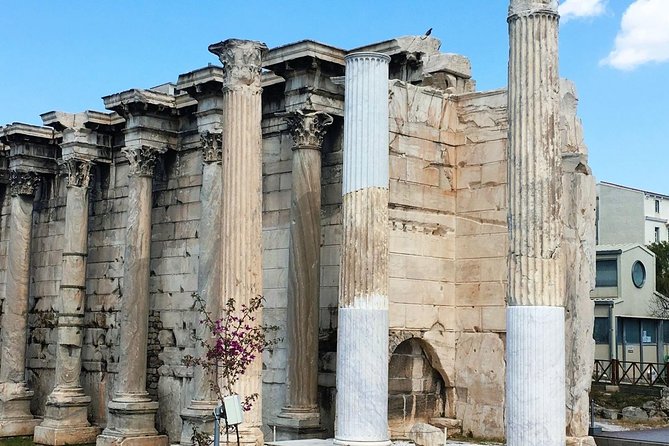
Hadrian’s Library is next. Built in the first century, it once formed part of Athens’ intellectual and civic world. The walk does not include entry, but your guide can point out the site and explain its place in the district.
The nearby Tzistarakis Mosque dates from the eighteenth century and now houses a ceramics museum. Even if you do not go inside, it is an important reminder that Athens’ past is not only classical Greek. Roman, Byzantine, Ottoman, and modern chapters sit close together here.
This is where a good guide earns the fee. Without explanation, you might see a handful of old walls and a mosque beside a crowded square. With context, the area becomes a lesson in how Athens changed over time.
More walking tours in Athens:
- Athens: Greek Food Tasting and Market Walking Tour
★ 4.1 · 7 reviews - Athens: Local Markets with Artisanal Crafts Walking Tour
★ 5.0 · 3 reviews - Bangkok: City Highlights Temple and Market Walking Tour
★ 4.5 · 3,990 reviews - Tokyo Tsukiji Fish Market Food and Culture Walking Tour
★ 5.0 · 3,184 reviews
Avysinias Square and the Monastiraki flea market
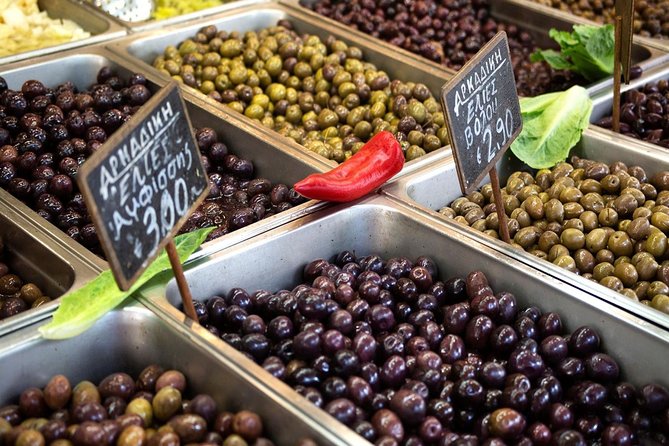
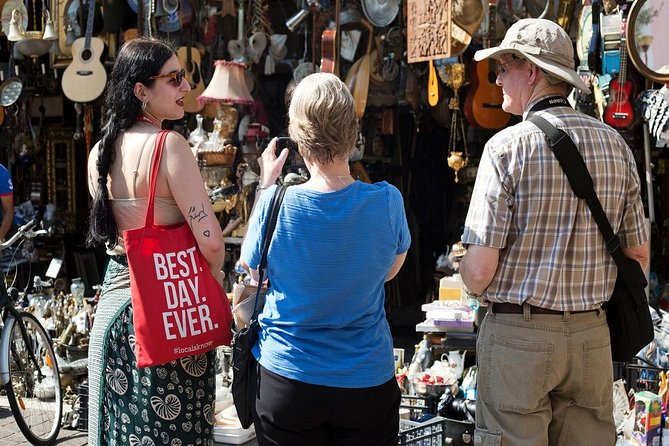
The walk then enters the flea-market area around Avysinias Square. You mingle with merchants and browse streets lined with specialty shops. Ifaistou or Pandrossos may be used for the shopping portion, with the exact path depending on the day.
You might find leather sandals, handmade icons, Greek musical instruments, antiques, and other small goods. This is a good place to ask about quality, local design, and sensible souvenirs before spending money.
Keep your expectations practical. A flea market is not a museum, and the merchandise changes. Some items are useful keepsakes, while others are simply fun to browse. The benefit of having a private guide is that you can spend more time on the kinds of shops that interest you and less time on those that do not.
The market section also breaks up the ruins. You move from archaeology to ordinary commerce, then back to ancient Athens. That contrast is one of the route’s best features.
The Ancient Agora and views from Thission
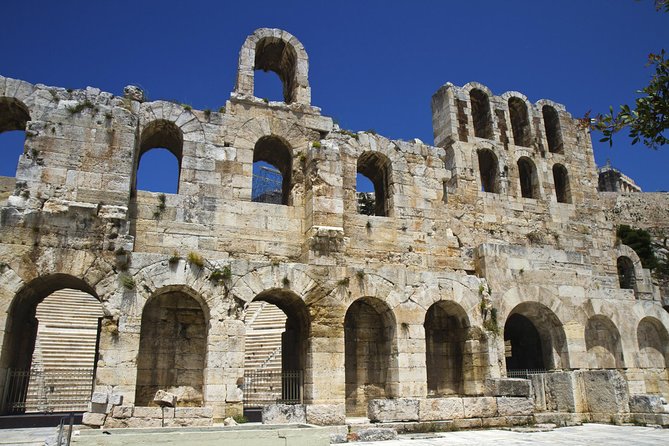
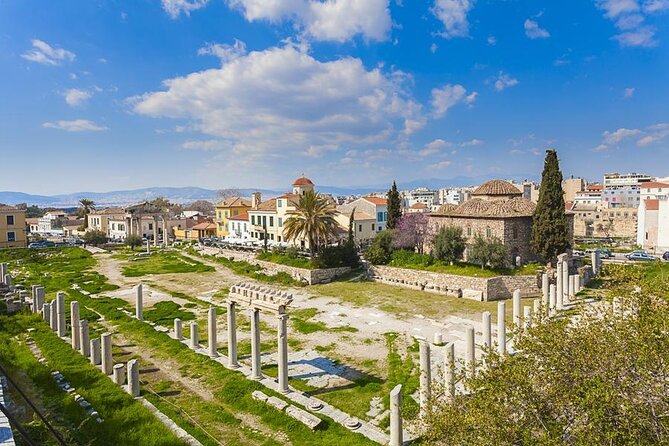
The route passes the Ancient Agora, once the civic and commercial center of Athens during Greek and Roman times. Entry is not included, so this is an exterior visit rather than a full archaeological-site tour.
That distinction matters. If you want detailed time inside the Agora, you will need a separate ticket and another visit. This walk gives you the setting and the broad meaning of the site, then continues toward Thission.
From Thission, you get views toward the Acropolis. The setting helps you understand how the monuments relate to the neighborhoods below. It also gives you a chance to stop and take photographs without turning the whole morning into a series of isolated snapshots.
The pace is varied, moving between streets, markets, monuments, and viewpoints. Still, you are on foot for roughly three hours, so wear comfortable shoes. One past participant specifically advised bringing your best walking shoes, and that is sensible advice.
Plaka, coffee, and a local pause
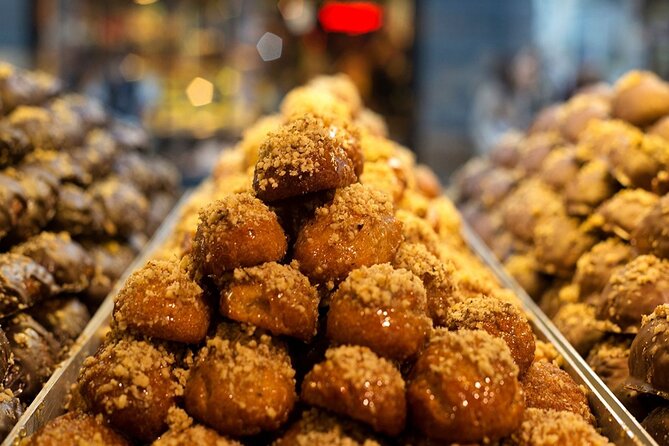
The itinerary allows about an hour around Plaka, including time for coffee or a soft drink and a local sweet. Plaka is one of Athens’ oldest areas, with narrow streets and older houses, including buildings from the seventeenth and eighteenth centuries.
This is less about checking off another monument and more about conversation. You can ask your guide what you have seen, discuss ancient Greece, and get suggestions for places to eat or drink later. The included coffee or soft drink adds a welcome pause after the market and city walking.
Some versions of this route have included a rooftop café with an Acropolis view. Because the exact café can vary, treat the stop as a local break rather than a guaranteed rooftop visit. The important point is that you get time to sit and talk, instead of walking continuously from one sight to the next.
Plaka can be busy and commercial in places. Your guide’s use of side streets is valuable because it helps you see more than the main souvenir lanes. The neighborhood is still popular, but it retains enough older architecture and local atmosphere to make the stop worthwhile.
Walking the Acropolis perimeter
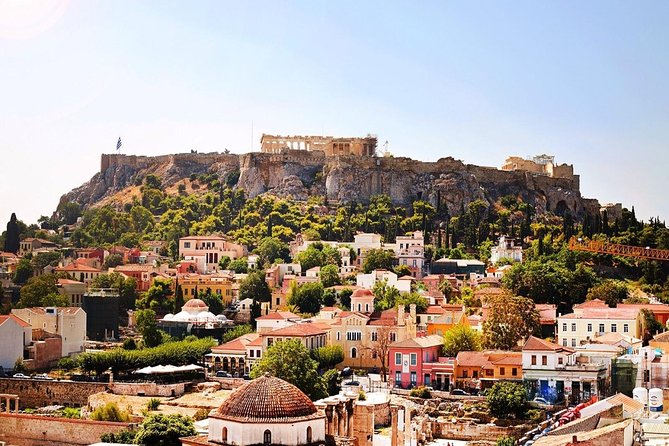
The tour ends at the entrance to the Acropolis after a walk around its perimeter. Your guide explains the major monuments and gives you advice for continuing independently.
This is a strong finish because the Acropolis dominates Athens, yet its scale and position make more sense once you have walked up from the market districts. You have seen the city’s food trade, streets, squares, ruins, and older neighborhoods before arriving at its most famous landmark.
Be clear about what is not included. You do not enter the Acropolis on this tour, and admission is your own expense. If you want to visit inside, plan that as a separate activity and ask your guide for practical advice before parting.
The final location is useful for your next move. You can continue on your own, visit the Acropolis independently, or ask how to return to your hotel. The guide can also suggest more places to see during your stay.
What the $166.64 price gets you
At $166.64 per person, this is a premium walking tour. You are paying for a private activity, an English-speaking local guide, a tailored pace, and the chance to ask questions throughout the route.
The price makes the most sense for couples, families, or small groups who value personal attention. It can also work well for a first morning in Athens, when a guide’s orientation may prevent you from wasting time later.
It is harder to justify if you mainly want entrance tickets to archaeological sites. The cost does not include the Acropolis, the Ancient Agora, market purchases, or extra food and drinks. If your priority is spending several hours inside ruins, buy site admission separately and consider a more focused archaeology tour.
The route covers a lot, but it is an introduction rather than a complete study of Athens. You get a broad look at the city’s history, architecture, food culture, and neighborhoods. That breadth is useful, but each stop receives limited time.
Who will enjoy this private walk
I would recommend it to first-time visitors who want a quick sense of how Athens fits together. It is also a good match for people interested in architecture, archaeology, markets, and modern Greek life in equal measure.
Families can benefit from the private format, since the guide can respond to children’s questions and adjust the walk. Children must be accompanied by an adult. Service animals are allowed, and most participants can take part, though the route remains a city walking tour with several hours on foot.
This is a practical choice for a short Athens stay or a cruise stop. The morning start gives you the rest of the day for the Acropolis, a museum, lunch, or another neighborhood.
I would hesitate to recommend it to anyone who dislikes shopping areas, uneven city walking, or a mixed modern and ancient setting. I would also not choose it as your only archaeological tour if you want extended time inside the Acropolis and Ancient Agora.
Practical details before you book
The tour begins at Kotzia Square at 9:30 a.m. and finishes at the Acropolis of Athens. You receive a mobile ticket, and confirmation is provided when you book.
The activity is private, so only your own group participates. That is the biggest practical advantage over a standard group walk. Guide assignments can vary, but Babis and George are among the guides associated with this experience. Both are described as friendly, fluent in English, and strong on Athens’ architecture, archaeology, and culture.
The tour includes the city walk, local guidance, coffee or a soft drink, and a local sweet. It does not include the Acropolis, the Ancient Agora, market purchases, or additional food and drinks.
You can cancel for a full refund up to 24 hours before the 9:30 a.m. start time. Changes or cancellations inside that window are not accepted for a refund. The cutoff follows local Athens time.
Should you book it?
Book this walk if you want personal orientation before exploring alone. The route gives you markets, monuments, side streets, Plaka, and Acropolis views in one morning, while guides such as Babis and George add the local explanations that make the city easier to read.
Skip it if your main goal is entering archaeological sites or keeping costs low. You will need separate admission for the Acropolis, and the per-person price is high for three hours.
For most first visits, I see it as a useful opening chapter rather than a substitute for the Acropolis or Ancient Agora. It helps you understand where you are, what you are looking at, and where to go next.
FAQ
Where does the Athens walking tour begin?
It begins at Kotzia Square, at Sofokleous 18, Athens 105 51, Greece.
What time does the tour start?
The tour starts at 9:30 a.m.
Where does the tour end?
It ends at the entrance to the Acropolis of Athens, Athens 105 58, Greece.
Does the tour enter the Acropolis?
No. The tour walks around the Acropolis perimeter and explains the monuments, but Acropolis admission is not included.
Is the tour private?
Yes. Only your own group participates in this private activity.
Are food and drinks included?
Coffee or a soft drink and a local sweet are included. Additional food, drinks, and purchases at the market are not included.
Can I cancel for a refund?
Yes. You can cancel at least 24 hours before the experience starts for a full refund. Cancellations or changes made less than 24 hours before the start time are not accepted for a refund.
Just added around Athens
- Cooking Class in Athens with Shopping in Central Market & Lunch★ 5.0 · 55 reviews
- Classic Athens Food Tour with Local Drink & Market Visit★ 5.0 · 34 reviews
- Athens Markets Exploration Tour: From Ancient to Modern Times★ 5.0 · 2 reviews
- Athens Street Food Markets and Hidden Gems Experience★ 5.0 · 18 reviews
- Traditional breakfast in markets with olive oil and honey tasting★ 5.0 · 6 reviews
- Athens Central Market Tour and Greek Cooking Class with Penelope★ 5.0 · 4 reviews
- Street food tasting in the locals favorite hidden places★ 5.0 · 15 reviews
- Athens: Greek Food Tasting and Market Walking Tour★ 4.1 · 7 reviews
Private Market Tours, compared.

Private Excursion to Maeklong Railway and Floating Markets
Read our review →
Floating and Railway Market (Optional Waterfall): Private Tour
Read our review →
Private Pyramids, Museum & Bazaar Tour with Lunch
Read our review →
Shopping in the Souks of Marrakech Private Tour
Read our review →
Local Markets & Khan el Khalili Private Shopping Tour
Read our review →
Private Excursion to Floating Market and Ayutthaya World Heritage
Read our review →
Private Heritage Walking Tour in Jaisalmer Fort and Old Bazaar
Read our review →Browse the lists this tour appears in