Review · MARRAKECH
Shopping in the Souks of Marrakech Private Tour
Marrakech’s souks are best understood on foot, one twisting lane at a time. This private tour takes you from Jemaa el-Fnaa into the Medina’s craft quarters, where you may see a shoemaker, plaster worker, women weaver, carpet maker, leather supplier, and the old furnace ovens used by a public bakery. A local guide helps you keep your bearings while explaining what you are seeing.
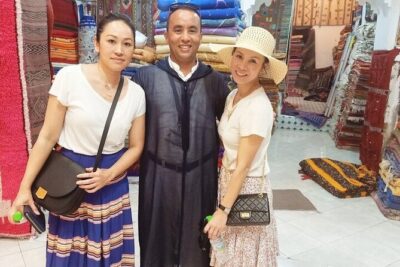
I like the way you can shape the outing around your shopping list, and I like the access to working craft areas rather than just the main souvenir lanes. Guides such as Mohamed, Ismail, and Ya Ya have been praised for patience, bargaining help, and finding less crowded shops. The main caution is that some people find the tour too sales-focused or short on history, so say clearly what you want before setting off.
Key points to know before you book
- The route starts at Jemaa el-Fnaa: Meet at Café de France, then walk into the Medina and souks.
- Your interests guide the route: Ask for rugs, shoes, leather, spices, plasterwork, or another specific craft.
- You see working trades: The tour can include a shoemaker, plaster artisan, women weaver, bakery furnace, and carpet demonstration.
- Shopping help is part of the value: Guides can explain quality, point out suppliers, and negotiate with merchants.
- Rooftop tea breaks up the walking: A cup of tea is included at a rooftop in the heart of the souks.
- Allow two to three hours: The route is active, with no lunch included and no children under six allowed.
Starting at Jemaa el-Fnaa and Café de France
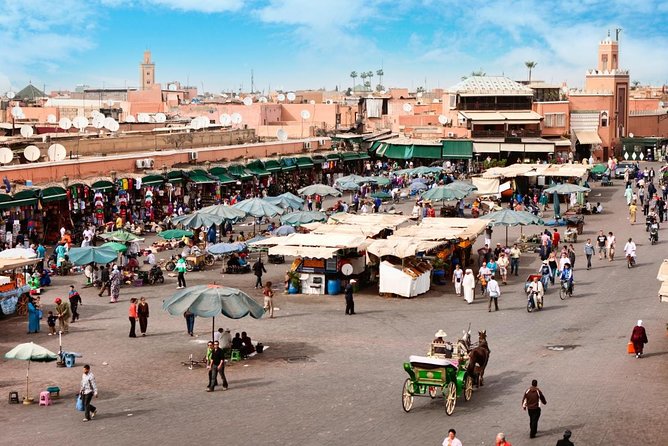
The meeting point is Café de France on Jemaa el-Fnaa, the large square that serves as Marrakech’s main reference point. This is a sensible place to begin because the souks spread out from the square in a maze of covered lanes, workshops, small squares, and side passages.
The listed meeting point is at Café de France, and the walk finishes back there. Pickup is offered, but you should confirm the exact arrangement when booking rather than assume your riad door is the pickup point.
Your guide should first ask what you want from the outing. That conversation matters. If you have already seen the main tourist shops, say so. If you want a rug, leather slippers, spices, shoes, or a particular handmade item, say it before the route is set. The strongest part of this experience is its flexibility, and you get more from it when you give the guide a clear target.
The square itself receives only a short scheduled visit, but it sets the scene. From there, the tour moves into the Medina, where lanes can change quickly from souvenir stalls to working craft areas. The walking is not difficult in a technical sense, but the streets are crowded and uneven enough that you should wear practical shoes and expect to be on your feet.
More Market Shopping Tours in Marrakech
- Souks Shopping Tours
★ 5.0 · 395 reviews - Marrakech Shopping Tours : Private Souks Tour
★ 5.0 · 345 reviews - Marrakech: Exclusive Private Shopping Adventure in The souks
★ 5.0 · 200 reviews
Finding your way through the Medina
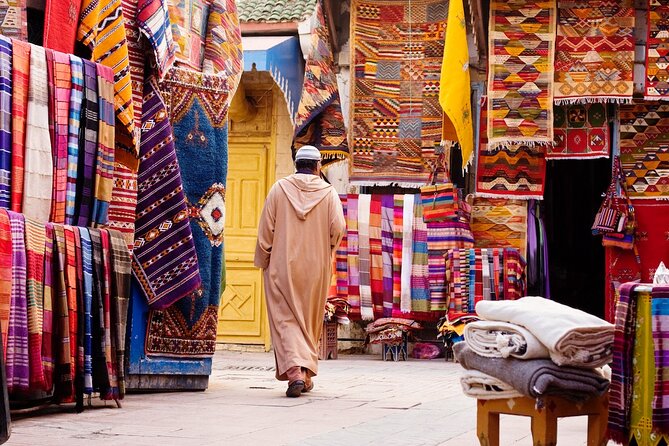
The Medina stop is the heart of the tour and lasts about an hour in the listed plan. In practice, the route can be adjusted depending on your interests, shopping pace, and the time spent with individual artisans.
This is where a guide earns the fee. The souks are not laid out as a simple shopping street. You move through lanes associated with particular trades, then into smaller passages where a workshop may be easy to miss without local help. A guide can also lead you back toward the square after the tour, which is useful if this is your first visit.
The most useful guides are not simply escorts. Mohamed has been praised for explaining the difference between Marrakech tradespeople and resellers, then taking people to stores connected with the actual craft. Other strong guide experiences center on Ismail, Ya Ya, and Mohamed Reda. Names can vary by booking, so you cannot assume you will receive one particular person unless the operator confirms it.
You should also set expectations about the tour’s educational side. The experience includes craft explanations and local context, but it is primarily a shopping and walking tour, not a formal lecture on Moroccan history. One dissatisfied customer expected more historical detail, street food, and time in the Medina, and felt the route included too much sales talk. That criticism points to a useful booking tip: tell the guide at the start if you want history, food, or craft production to take priority over shopping.
Meeting shoemakers, plaster workers, and weavers
The tour’s most interesting moments come away from the standard shopfronts. You may see a shoemaker at work, learn about plaster craftsmanship, or visit a women’s weaving area. These stops give you a better sense of how ordinary objects move from raw material to finished product.
A carpet demonstration can be especially useful if you are considering a rug. You can ask how it was made, what materials were used, and whether you are looking at a handmade piece or a resale item. The guide can help explain quality, but you should still take your time before buying. A guide’s help with bargaining is useful, yet it does not guarantee the lowest possible price.
Leather is another common interest in the souks. The route may show where hides are dyed, or take you toward suppliers selling leather goods. This is a chance to compare workmanship, not simply chase the first attractive bag or pair of slippers you see.
The point is not to rush through a checklist of crafts. You are better off choosing two or three areas that matter to you and asking the guide to spend time there. A private tour should give you more control than a fixed group walk, though the maximum group size is listed as 15 people. If you are booking as a small private party, confirm how the operator defines private and how many people will actually be in your group.
Shopping for rugs, shoes, and traditional crafts
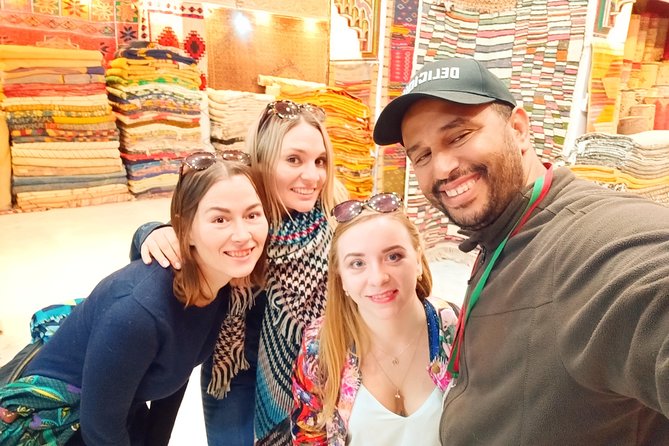
Shopping is the main reason to choose this experience. The route can include rugs, shoes, leather goods, traditional handicrafts, and other souvenirs. You are not left to handle every negotiation alone, and the guide can help you compare shops and suppliers.
The best approach is to decide your priorities before you arrive. Are you looking for a useful item, a decorative piece, or simply a small souvenir? Do you care more about workmanship, price, or seeing the production process? A guide can tailor the route much more effectively when you answer these questions.
Several customers appreciated guides who negotiated prices and helped identify genuine Moroccan products. One person specifically valued the explanation of the difference between tradesmen and resellers. Another enjoyed finding less crowded stores and buying a rug without feeling pushed into it.
Still, you should keep your judgment switched on. A personable guide may have good relationships with shopkeepers, but that does not prove that every price is the best available. One mixed experience raised concern that the selected shops were not the cheapest, even though the goods appeared to be good quality. Ask about quality, materials, and alternatives before agreeing to buy.
A clear sentence at the start can prevent confusion: you want to look first and decide later. If you are happy to shop, say which categories interest you. If you do not want a sales presentation, say that plainly. The tour works best when the guide understands that your aim is informed shopping, not an obligation to purchase.
More Market Shopping Tours in Morocco
- Marrakech: Exclusive Private Shopping Adventure in The souks
★ 4.9 · 77 reviews - Marrakech & Souk Shopping Tour.
★ 4.8 · 62 reviews - Marrakech: Hidden Souks Shopping Tour with Private Guide
★ 4.1 · 53 reviews - Marrakech: Medina Souks, Hidden Markets and Shopping Tour
★ 4.8 · 33 reviews
The public bakery and old caravan quarters
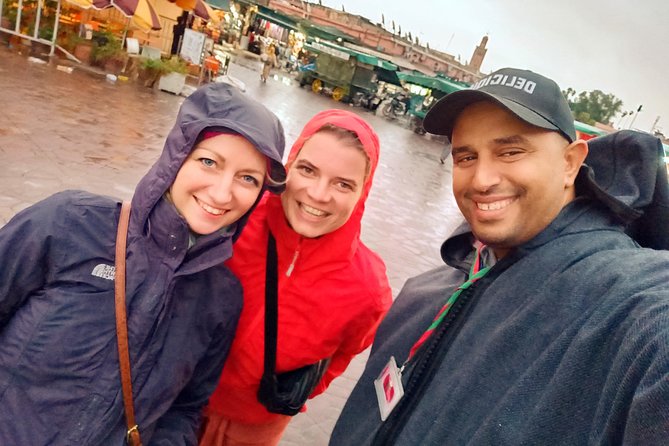
The itinerary includes a visit to a local public bakery and furnace oven. This is a small but valuable detail because it takes you beyond retail. Instead of only seeing finished goods, you get a glimpse of a shared neighborhood service and the practical systems that support life in the Medina.
The route may also include foundouks, the old caravan inns used by traders and pack animals in the past. These courtyards help explain why the souks developed as a network of workshops, storage spaces, and trading lanes rather than as one open-air market.
The descriptions of these stops are broad, so do not expect a long museum-style visit or a guaranteed demonstration at every location. Conditions can vary, and the time spent may depend on the day and your chosen route. If these cultural details matter to you, name them when you meet the guide.
This is also where the tour can be more than a shopping errand. The Medina’s craft economy is easier to understand when you see the bakery, old commercial courtyards, and workshops in the same walk. You get context without giving up the freedom to stop and browse.
Rooftop tea above the souks
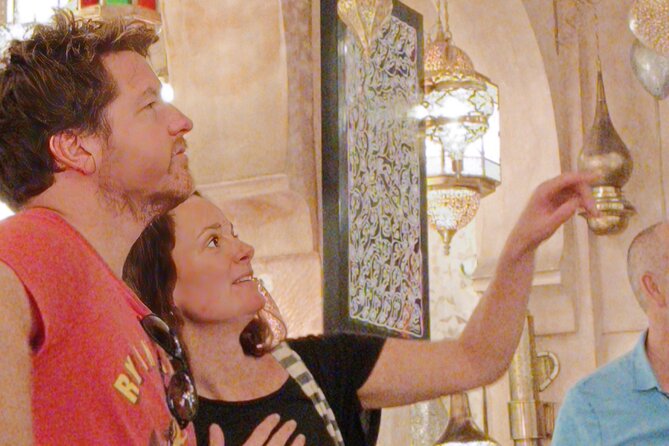
A cup of coffee or tea is included, usually described as a rooftop stop in the center of the souks. After walking through narrow lanes, the change of pace is welcome. From above, you can get a clearer sense of the Medina’s layout and pause before continuing or returning to the meeting point.
The rooftop stop is not a meal. Lunch is not included, and the tour lasts only two to three hours, so plan a separate lunch if you want a full midday break. Street food may be available along the way, but it is not a guaranteed part of the package. One customer enjoyed food arranged by the guide, while another expected more street-food content, so ask directly if eating is important to you.
The tea break also gives you a natural moment to review anything you are considering buying. Use it to compare prices, check your list, and decide if you want to return to a shop. That pause can help keep an exciting market visit from turning into a rushed purchase.
How the $23 price measures up
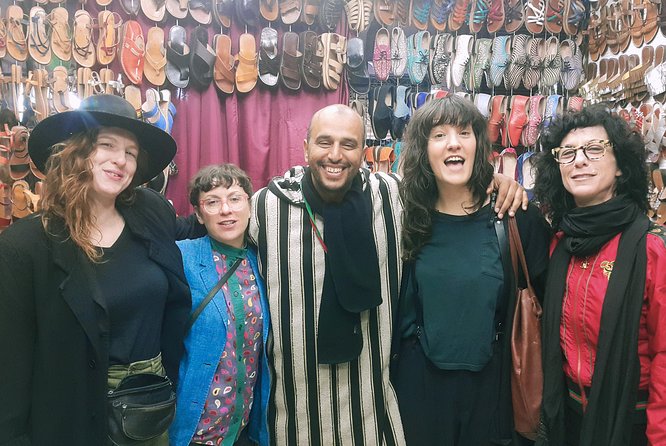
At $23 per person, this is inexpensive for a private walking experience in Marrakech, especially if you use the guide for navigation, translation, craft advice, and bargaining support. The value is strongest for a first visit, when the souks can feel confusing and you want to understand the layout before shopping on your own.
The price is less compelling if you only want a short walk through the main lanes or already know exactly where you want to shop. You could explore the square and some souks independently, but you would lose the local introductions, workshop access, and help comparing goods.
The tour is also a better buy for people who plan to purchase something substantial. If you are considering a rug or several handmade items, advice on quality and negotiation may justify the cost. If you dislike shopping or do not plan to buy anything, ask for a route focused more on craft and daily life so the tour does not feel like a series of store visits.
The advertised duration is approximately two to three hours, though the supplied itinerary gives short time blocks at Jemaa el-Fnaa, the Medina, and Rahba Kedima Square. Treat those times as a framework rather than a minute-by-minute promise, since the private format allows the route to change.
Morning or afternoon, and who should book
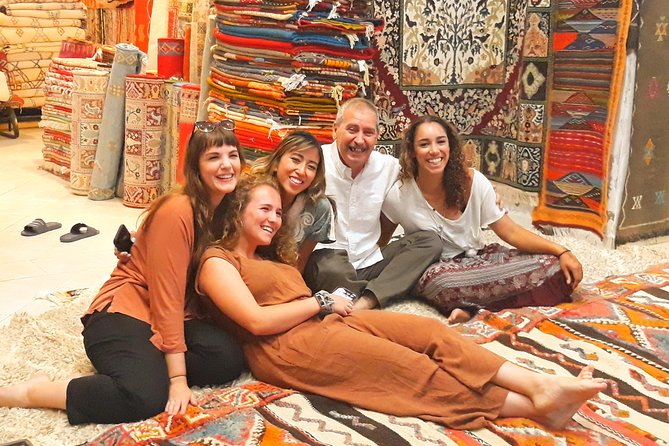
You can choose a morning or afternoon departure. Morning may suit you if you want to shop before a busy day of sightseeing, while an afternoon start can work well if you prefer a slower beginning. The data does not promise different routes or conditions at either time, so choose based on your wider Marrakech plans.
I would recommend this tour to:
- First-time visitors who do not want to navigate the souks alone
- Shoppers looking for rugs, leather, shoes, or handmade Moroccan goods
- People who want craft workshops and local context, not only storefronts
- Small groups that value a route adjusted to their interests
- Visitors who want help finding a riad, restaurant, ATM, or route back, since guides have assisted with these practical needs
I would be more cautious if you want a formal historical tour, a dedicated food walk, or a strict no-shopping experience. The tour can include history, food-related stops, and craft explanations, but shopping remains its central purpose.
Children under six are not permitted, and you should have a moderate level of fitness. The tour is near public transportation, includes walking, and ends at the meeting point. Free cancellation is available up to 24 hours before the start time. Inside that window, the payment is not refunded.
Should you book the Marrakech souk tour?
Book it if the souks are new to you and you want a local guide to make the first few hours less confusing. The strongest reasons are the flexible route, practical shopping help, introductions to working craftspeople, and the chance to see parts of the Medina you might skip alone.
Set your expectations before you start. Ask for a guide who can focus on artisans, explain quality, and limit sales stops if that is your priority. If possible, request Mohamed, Ismail, or Ya Ya, whose guiding style has been praised for patience, clear English, humor, and good local contacts, but confirm availability first.
At $23, the tour is a sensible orientation and shopping aid. It is not the right choice if you want a full historical walk or a dedicated food tour. For a first visit, though, it can give you the confidence to return to the souks on your own, this time with a better sense of where to look and what you are buying.
FAQ
Where does the tour start?
The listed meeting point is Hôtel Restaurant Café de France on Jemaa el-Fnaa, at Rue des Banques in Marrakech.
Where does the tour finish?
The activity ends back at the meeting point.
How long does the tour last?
The approximate duration is two to three hours.
Is hotel pickup available?
Pickup is offered, but the stated start point is Café de France. Confirm the pickup details when booking.
Is the tour private?
It is sold as a private tour, with a listed maximum of 15 travelers.
What can I shop for?
The tour can include traditional handicrafts, rugs, shoes, leather goods, and other souvenirs. You can tailor the route toward your interests.
Is tea included?
Yes. Coffee and/or tea is included, with the itinerary describing tea at a rooftop in the souks.
Is lunch included?
No. Lunch is not included.
Can children join the tour?
Children under six are not permitted.
More Private Market Tours in Morocco
- Marrakesh: Private Cooking Class & Local Market Shopping
★ 4.7 · 15 reviews - Marrakech Private Souks Shopping Tour
★ 4.4 · 4 reviews - 3h Private Walking Tour in Tangier Kasbah Medina & Colorful Souks
★ 5.0 · 148 reviews - Tangier Private Tour :Medina ,souks, kasbah, caves & camel ride
★ 5.0 · 141 reviews
More Private Market Tours in Marrakech
- Marrakech Highlights : Majorelle , Bahía Palace , Mellah & Souks :Private Tour
★ 5.0 · 81 reviews - Marrakech: Private Souks Tour with Tea and Traditional Snack
★ 4.6 · 33 reviews - Edgy 8 Dish Private, Fusion Cooking Class, Menu Plan, Market
★ 4.9 · 31 reviews - Marrakech: private Guided tour Of Vibrant Souks
★ 3.8 · 24 reviews
Just added around Marrakech
- Souks tour of Marrakech ( 3 hours )★ 5.0 · 5 reviews
- Marrakech: Hidden Souks Shopping Tour with Private Guide★ 4.1 · 53 reviews
- Edgy 8 Dish Private, Fusion Cooking Class, Menu Plan, Market★ 4.9 · 31 reviews
- Marrakech: Half-Day Medina Markets Tour★ 4.5 · 11 reviews
- Marrakech: Vibrant Souks, Local Artisans & Medina Experience★ 4.5 · 66 reviews
- Marrakesh: Private Cooking Class & Local Market Shopping★ 4.7 · 15 reviews
- Marrakech: Bahia Palace, Madrassa & Souks Guided Tour★ 4.8 · 47 reviews
- Marrakech: private Guided tour Of Vibrant Souks★ 3.8 · 24 reviews
Market Shopping Tours, compared.
Handcrafted Wood Carving Workshop with Local Artisan
Read our review →
Local Markets & Khan el Khalili Private Shopping Tour
Read our review →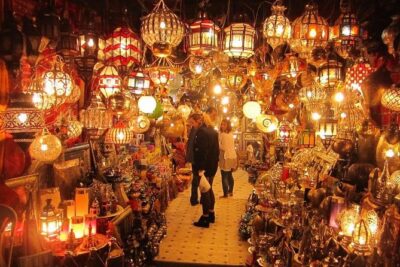
Pierogi Cooking Class with Market Shopping and Local Snacks
Read our review →
Exclusive Private Shopping Adventure in The souks
Read our review →