
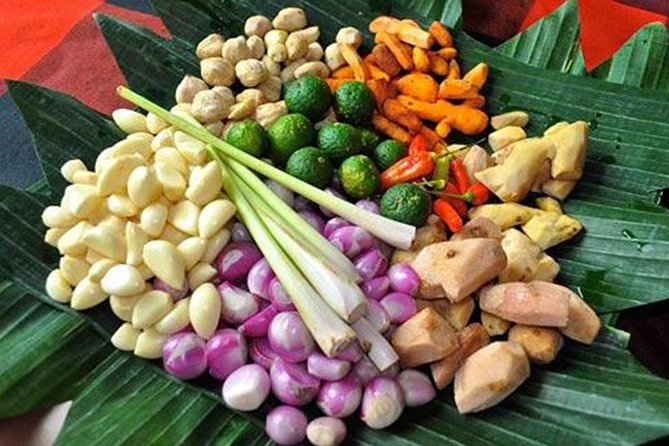
Review · UBUD
Balinese Cooking class with traditional morning market visit
The best part of this Ubud experience happens before you reach the cooking table. You visit a local morning market, taste unfamiliar fruits, learn about Balinese herbs and spices, and help select ingredients for the meal. Then you head to Laplapan village, where local hosts lead you through cooking and the making of a traditional canang offering.
I like the small-group format, capped at eight people, because it gives you room to ask questions and take part instead of watching a chef do all the work. I also like the cultural balance: this is not only a food class, but also a look at daily market life and Hindu Balinese offering traditions.
The main consideration is the early start and the six-hour length. You are committing much of a morning and early afternoon, and the market visit is described as brief. Still, with hotel pickup, air-conditioned transport, cooking equipment, taxes, and the meal included, the $35 price is strong value.
Key points to know before booking
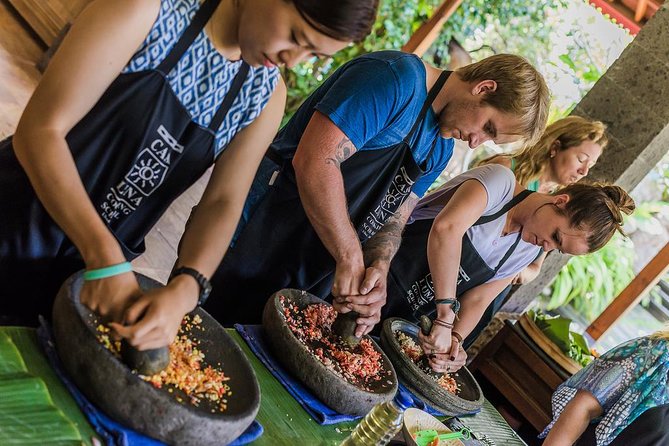
- Morning market first: You choose or examine vegetables, herbs, meat, fruit, and spices before cooking with them.
- Laplapan village setting: The class takes place in a traditional village near Ubud, with a welcoming local atmosphere and jungle surroundings.
- More than cooking: You learn how to make a canang, a small Balinese offering basket, before preparing the meal.
- Several dishes in one class: The menu includes starters, main courses, and an authentic dessert, with some classes preparing as many as nine dishes.
- Local instructors: Wayan, Dewa, Putu, and other members of the teaching team are praised for warmth, humor, and clear guidance.
- Easy transport: Hotel pickup and air-conditioned transportation are included, but personal expenses are not.
A market morning that gives the class its meaning
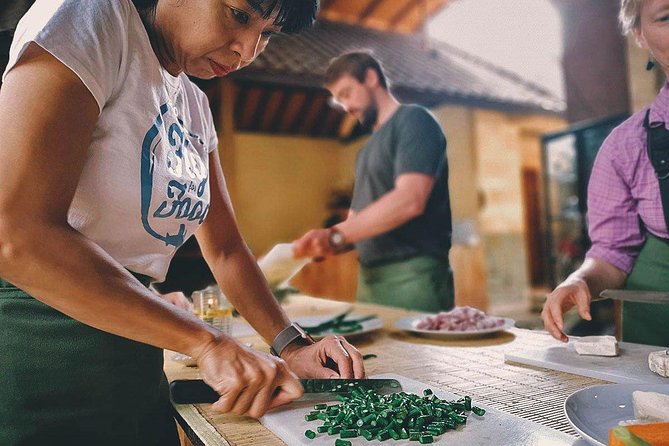
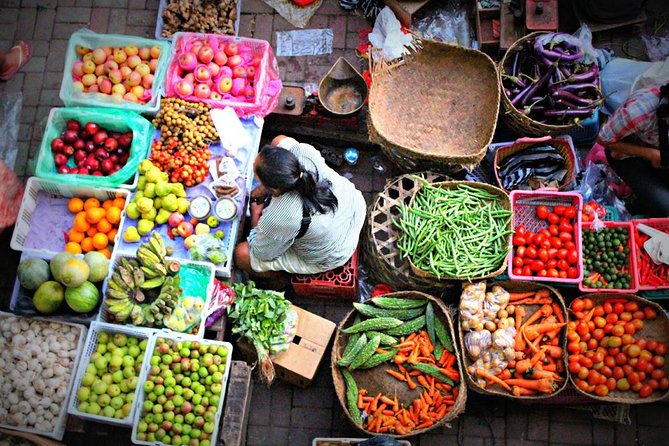
A cooking class can become a tidy demonstration in a polished kitchen. This one begins with the ingredients in their everyday setting. After pickup from your hotel, you visit a local fresh-food market and look at the produce, spices, herbs, meat, and sweets used in Balinese cooking.
This matters because ingredients can look very different when you see them in a market rather than in a recipe list. Your guide can explain what is local, what may come from elsewhere, how items are used, and which unfamiliar foods are worth tasting. Some participants have been offered small samples of fruit and local sweets, which makes the visit more than a shopping stop.
The market portion is not meant to be a long walking tour. Think of it as an introduction to the food you will soon prepare. If you want time to browse every stall, take photographs, or shop for your own ingredients, you may find the stop too short. Its value comes from having a local guide explain what you are seeing.
The morning timing is important. Fresh markets are part of the daily rhythm, not a display arranged for sightseeing. You get a glimpse of people buying ingredients for home cooking, and you begin to understand why Balinese meals rely so heavily on fresh aromatics, herbs, vegetables, and spice pastes.
More Market Cooking Classes in Indonesia
- Ubud: Cooking Class with Transfers and Optional Market Visit
★ 4.9 · 824 reviews - Balinese Ubud cooking school (9 Dish Cooking and Market Tour)
★ 5.0 · 540 reviews - Ubud: Balinese Cooking Class and Market Tour
★ 4.8 · 531 reviews
Laplapan village and the offering lesson
From the market, air-conditioned transport takes you to the traditional village of Laplapan. You receive a local welcome before moving into the cooking portion of the day.
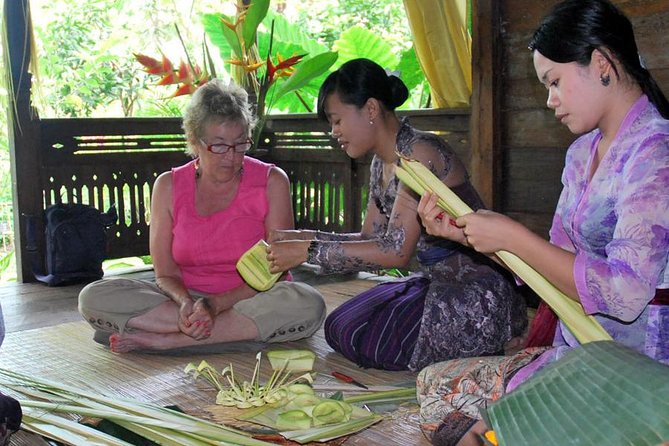
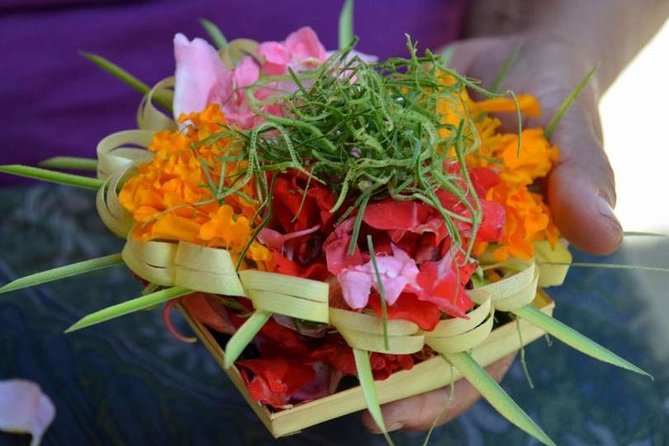
One especially worthwhile part is the lesson in making a canang, the small offering basket used in Balinese Hindu practice. You learn how the basket and related materials are assembled, and you gain context for the flower and food offerings you see outside homes, shops, temples, and roadside shrines across Bali.
This is a modest craft activity, but it adds cultural depth to the meal. You are not simply learning how to grind spices or chop vegetables. You are learning that food, flowers, presentation, and ritual are closely connected in Balinese daily life.
The activity also gives the class a gentle change of pace. Cooking several dishes can become busy, so beginning with the offering helps set the tone. You can ask about its meaning and construction before moving on to the kitchen.
The exact sequence may vary. The supplied description says the offering activity takes place before the cooking class begins, while the broader timing is approximately six hours. Plan for a full half-day rather than a tightly timed appointment.
Cooking with Wayan, Dewa, Putu, and the local team
The teaching team is one of the strongest reasons to book. Wayan is repeatedly praised for patience, humor, and clear instruction, while Dewa is associated with the Cobek Bali cooking class and warm hospitality. Putu is also named as a market guide and instructor, and one account refers to Puthu, likely a spelling variation.
The important point is not which individual name appears on your booking confirmation. It is that you should expect a local chef or cooking instructor to guide the class, with staff helping at the market and kitchen. The teaching style is hands-on rather than purely demonstrational.
You prepare a range of dishes, including starters, main courses, and dessert. Some classes have included nine dishes, while another description refers to a five-course set. That difference suggests the menu can change by day, group, or available ingredients. Ask about the menu if you have a particular dish in mind.
The staff may pre-prepare certain items to keep the class moving. That is sensible. Traditional spice pastes and other ingredients can take time to pound and prepare, and doing every step from scratch could make the six-hour schedule much longer. You still get practical work at the table, but the class is arranged so the meal reaches the plate without feeling rushed.
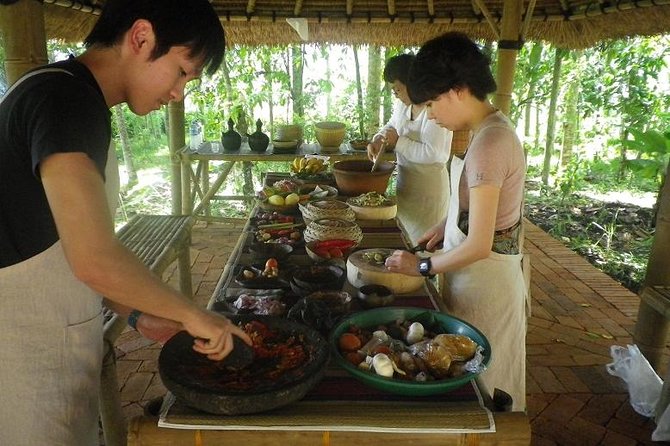
You can expect instruction in preparation, seasoning, and traditional cooking methods. The class is designed for participation, so you should have opportunities to chop, mix, pound, shape, and cook rather than only watch.
What you eat and how the class works
The food is the payoff, but the shared meal is also part of the lesson. Once the cooking is finished, you sit down and eat the dishes prepared by the group.
This arrangement is useful if you are new to Balinese cooking. You can taste the finished meal immediately and connect the flavor to the ingredients and techniques you just used. It also gives you a chance to compare results with the rest of the group and ask final questions.
The menu is described as authentic Balinese food, with a combination of starters, main courses, and dessert. Reviews of the experience highlight generous portions and several dishes prepared during a single session. The meal is likely to be more substantial than a small tasting, so do not plan it as a quick snack between other morning activities.
Vegetarian options have been provided in at least some classes, and dietary needs have been accommodated. Still, food restrictions are not listed as a formal inclusion or guarantee. Tell the operator when booking and repeat the request at pickup. Do not assume that every substitution will be possible on the day.
A recipe book was provided in at least one experience, but it is not listed among the guaranteed inclusions. If taking the recipes home is important to you, ask before booking or bring a phone for notes and photographs.
More Market Cooking Classes in Ubud
- PRIVATE Ubud Market Tour & Balinese Cooking Class with Putu
★ 5.0 · 125 reviews - Jambangan bali cooking class with morning market tour
★ 5.0 · 35 reviews - Balinese cooking class/Go shopping at the market, cook, eat
★ 5.0 · 12 reviews
Why the small group matters
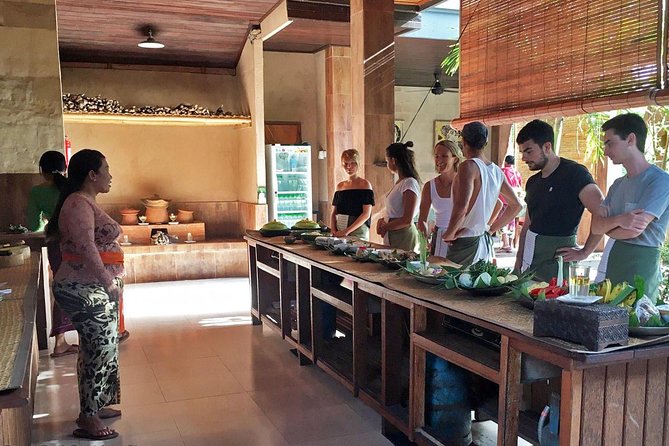
The maximum group size is eight people. That is a useful limit for a practical class, particularly when several people need space to work with knives, mortars, pans, and ingredients.
A small group also makes it easier for the chef to adjust the pace. You can ask about a spice, request help with a technique, or get a closer look at a preparation step. Solo participants can also find the format social, since the meal and cooking tasks naturally encourage conversation.
The experience has worked well for families too. Children around ages six, eight, and nine have taken part, and the instructor was praised for working with them. That does not mean every child will enjoy a six-hour morning, but the format can suit families who want an activity with clear tasks and a meal at the end.
There is one practical point to watch. The advertised maximum is eight, but a cooking class always feels different depending on the actual mix of couples, solo participants, and families. If you need a private lesson, this experience does not promise one. A solo participant may end up with unusually personal attention if the group is small, but that cannot be guaranteed.
Pickup from Ubud and beyond
Hotel pickup is included, and the transport is air-conditioned. That is more valuable than it sounds in Bali, especially when you are heading to a morning market and then spending hours cooking in a warm climate.
The pickup area is not fully specified in the supplied details. One account describes pickup from Sanur, about an hour away, so the service may cover hotels outside central Ubud. Confirm your hotel address and pickup time before the day of the class.
The driver is part of the experience, not only a person behind the wheel. Awan, named in one account, was praised for explaining sights along the route and helping with the day. Still, transportation time depends on your hotel and traffic, so do not schedule a fixed midday activity immediately afterward.
You should also remember that personal expenses are not included. The class covers equipment, transport, class fees, and taxes, but anything you buy for yourself at the market or elsewhere costs extra.
Is $35 a good price?
At $35 per person, this is a good-value half-day experience. The price covers more than a standard cooking lesson: hotel pickup, air-conditioned transport, a market visit, a village visit, cooking equipment, the class itself, taxes, and the meal you prepare.
You are also getting several kinds of travel experience in one booking. The morning combines food shopping, cultural explanation, craft work, cooking instruction, and a sit-down meal. If you arranged those pieces separately, transport alone could take a noticeable share of the budget.
The value is strongest for people who want active participation. If you only want to eat Balinese food, a restaurant offers a simpler and cheaper option. If you want to learn techniques you can repeat at home, the class offers more lasting value.
The price does not include personal purchases, and the exact dish list may vary. Those are minor concerns, but they are worth keeping in mind when comparing this with a shorter or more specialized cooking lesson.
Who should book this Ubud cooking class?
I would recommend it to food-focused visitors who want context, not just recipes. The market gives you a useful introduction to local produce, while the offering lesson connects cooking to Balinese spiritual life.
It also suits first-time visitors who want an organized way to meet local people and see a village setting. The included pickup removes the need to find the market and workshop yourself, and the group size keeps the class personal.
Families can consider it if their children enjoy practical activities. Couples and solo participants should also find plenty to do, with shared cooking tasks and a communal meal providing an easy social setting.
This is less suitable if you dislike early mornings, have a very tight schedule, or want a private chef-led lesson with a fixed menu. It may also disappoint anyone expecting a long market tour. The market visit is a focused introduction before the main class.
Practical details before you reserve
Confirmation is provided at booking, and the activity lasts approximately six hours. Pickup is offered, but you should confirm the exact pickup point and time with the operator.
The experience is capped at eight participants according to the stated tour details. Cooking equipment, an air-conditioned vehicle, class fees, and taxes are included. Personal expenses are not.
Free cancellation is available if you cancel at least 24 hours before the local start time. Cancellations or changes made within 24 hours are not accepted for a refund, so check your schedule carefully before committing.
Should you book it?
Book this class if you want your Bali food experience to begin at the market and continue into local customs, hands-on cooking, and a shared meal. The combination of Wayan, Dewa, Putu, or another local instructor, the Laplapan setting, the canang lesson, and the included transport gives the morning more substance than a simple recipe demonstration.
Skip it if you want a short, highly polished cooking show or a private class with a guaranteed menu. For most food lovers, families, and first-time visitors to Ubud, the $35 price and six-hour format make this a practical way to spend a morning and leave with skills you can use at home.
FAQ
Where does the cooking class take place?
The experience takes place in and around Ubud, with the cooking portion in the traditional village of Laplapan.
Is hotel pickup included?
Yes. Hotel pickup is offered, and transportation to the market and workshop is provided in an air-conditioned vehicle.
How long does the experience last?
The activity lasts approximately six hours.
How many people can join the class?
The stated maximum is eight participants.
Does the price include cooking equipment?
Yes. Cooking equipment, cooking class fees, taxes, and the air-conditioned vehicle are included.
Is food included?
Yes. You prepare the dishes during the class and then sit down to eat the meal you made.
Will I visit a local market?
Yes. The experience begins with a visit to a local fresh-food market, where you learn about and select ingredients such as vegetables, herbs, fruit, meat, and spices.
Will I learn about Balinese offerings?
Yes. Before the cooking class, you learn about the process of making a canang and other offering materials.
Are vegetarian options available?
Vegetarian options have been offered during the experience. Tell the provider about dietary needs before the class, since substitutions are not listed as a guaranteed inclusion.
Can I cancel for a full refund?
Yes, if you cancel at least 24 hours before the experience start time. Cancellations or changes made less than 24 hours in advance are not eligible for a refund.
More Markets in Ubud
- Ubud Traditional Night Market Food Tour-All Inclusive
★ 4.4 · 95 reviews - Bali Food Tour: Savor Street Food and Night Market Adventures
★ 5.0 · 46 reviews - Ubud Day Tour : Waterfall, Temple and Local Night Market Tour
★ 5.0 · 17 reviews - Bali Night Market Experience and Ubud Highlights tour
★ 5.0 · 16 reviews
More Cooking Classes in Ubud
- Hanoi Cooking Class: Culture, Local Market & Meaning CSR Impact
★ 5.0 · 5,147 reviews - 5 Traditional Dishes Hanoi Cooking Class with Market Trip
★ 5.0 · 4,890 reviews - Cooking Class and Lunch at a Tuscan Farmhouse with Local Market Tour from Florence
★ 5.0 · 4,831 reviews - Chiang Mai: Cooking Class, Market & Thai Herbs Garden Tour
★ 4.9 · 4,824 reviews
Just added around Ubud
- Jambangan bali cooking class with morning market tour★ 5.0 · 35 reviews
- Balinese cooking class/Go shopping at the market, cook, eat★ 5.0 · 12 reviews
- Bali: Safari Zoo and Ubud Palace and Market Day Tour★ 4.7 · 6 reviews
- Bali: Ubud Monkey Forest, Coffee Plantation, and Market Tour★ 5.0 · 5 reviews
- Bali – Ubud Night Market Food Tour★ 3.8 · 14 reviews
- Bali Night Market Experience and Ubud Highlights tour★ 5.0 · 16 reviews
- Ubud Day Tour : Waterfall, Temple and Local Night Market Tour★ 5.0 · 17 reviews
- Bali Food Tour: Savor Street Food and Night Market Adventures★ 5.0 · 46 reviews
Market Cooking Classes, compared.
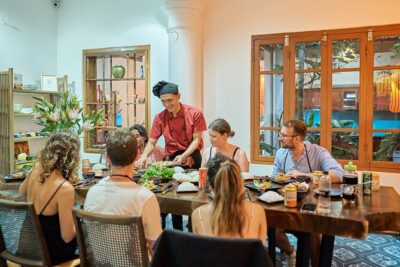
Hanoi Cooking Class: Culture, Local Market & Meaning CSR Impact
Read our review →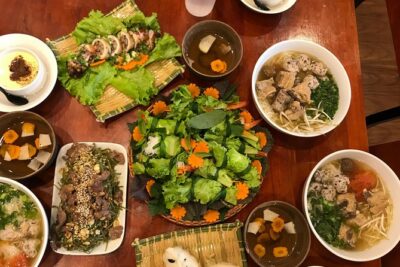
5 Traditional Dishes Hanoi Cooking Class with Market Trip
Read our review →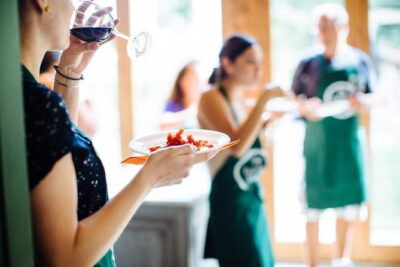
Cooking Class and Lunch at a Tuscan Farmhouse with Local Market Tour from Florence
Read our review →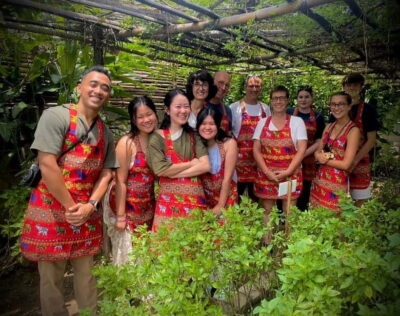
Cooking Class, Market & Thai Herbs Garden Tour
Read our review →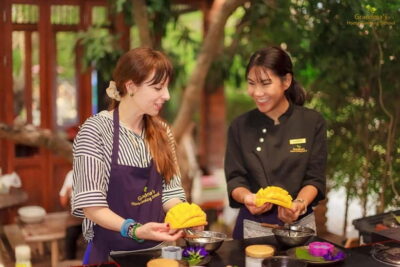
Authentic Cooking Class with Market & Farm Visit
Read our review →
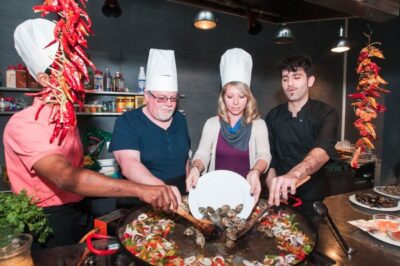
Paella Cooking Experience & Boqueria Market Tour
Read our review →
Cooking Class Hoi An:Local Market, Basket Boat, Fishing & Cooking
Read our review →Browse the lists this tour appears in