
Review · UBUD
Ubud: Cooking Class with Transfers and Optional Market Visit
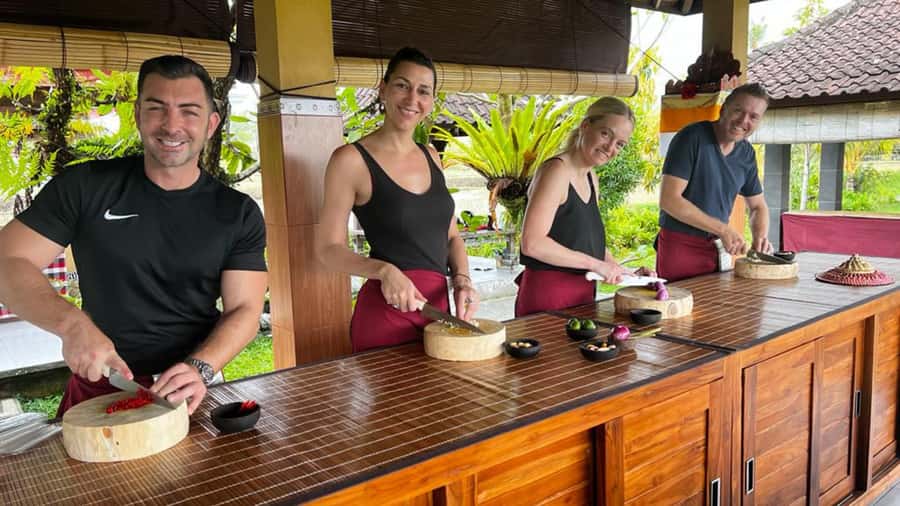
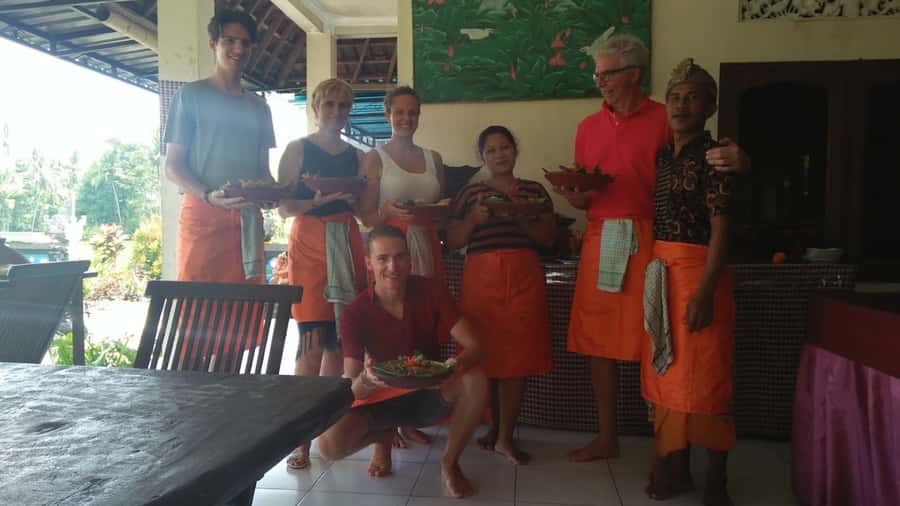
The best part of this Ubud cooking class is that it connects food with daily Balinese life. You may visit a local market in the morning, learn about spices and offerings, then cook in a family setting with a small group of no more than 10 people. Expect a practical class, not a cooking demonstration where you sit and watch.
I like the hands-on teamwork, since everyone gets a task, from grinding spices to chopping vegetables and cooking satays. I also like the cultural layer: guides such as Eri, Made, Madi, and Mate explain Balinese family life, architecture, religion, rice, and Hindu offerings as they teach the recipes.
The main consideration is timing. The market visit is available only with the morning option, so an afternoon or evening class focuses on the cooking and meal. Pickup is included around Ubud Center, but Sebali and Keliki pickups cost an additional 50,000 Indonesian rupiah per person.
Key points to know before booking
- Morning market visit: Walk through a local market with your chef and learn how herbs, spices, fruit, vegetables, and other ingredients are used.
- Small groups: Classes are limited to 10 people, with several sessions described as groups of five to seven.
- Several dishes in one class: You may help prepare curries, satays, soup, sambal, tempeh, pancakes, desserts, and other Balinese dishes.
- Culture beyond the kitchen: Guides explain Hindu offerings, family compounds, architecture, rice growing, and local traditions.
- Good value at $21: The price includes the class, meal, guide, and selected transfers, with a certificate of completion.
- Dietary needs can be handled: Vegetarian alternatives and substitutions for fish, allergies, and some intolerances have been provided.
Why this cooking class feels different from a standard lesson
Many cooking classes teach you a few recipes and send you home. This one aims to show how food fits into Balinese culture. The cooking school may be in a family compound or an outdoor kitchen surrounded by tropical greenery, rather than in a polished city classroom.
That setting matters. You are not just learning how to mix spices. You may hear about the role of family compounds, the meaning of Hindu offerings, the way rice is grown, or how food is prepared for daily life and ceremonies. One session included making a canang, the small offering arrangement used in Balinese Hindu practice.
The class is also social. You work in a team, share cutting boards and cooking tasks, and sit down together once the food is ready. If you are traveling alone, this gives you an easy way to meet people without the forced feeling of a formal group outing.
The format suits beginners. The instructors explain each step clearly and keep the class moving, while still giving people a chance to ask questions. You do not need cooking experience, though you should be comfortable standing, chopping, mixing, and helping with a shared meal.
More Market Cooking Classes in Indonesia
- Balinese Ubud cooking school (9 Dish Cooking and Market Tour)
★ 5.0 · 540 reviews - Ubud: Balinese Cooking Class and Market Tour
★ 4.8 · 531 reviews - Balinese Cooking class with traditional morning market visit
★ 5.0 · 161 reviews
Morning market visit: the best choice for food curious visitors
Choose the morning session if you want the fullest version of the experience. After pickup from your Ubud Center hotel, you go to a local market with your guide and chef. This is more useful than simply being told the names of ingredients in a classroom because you see them arranged for sale and learn how local cooks choose and use them.
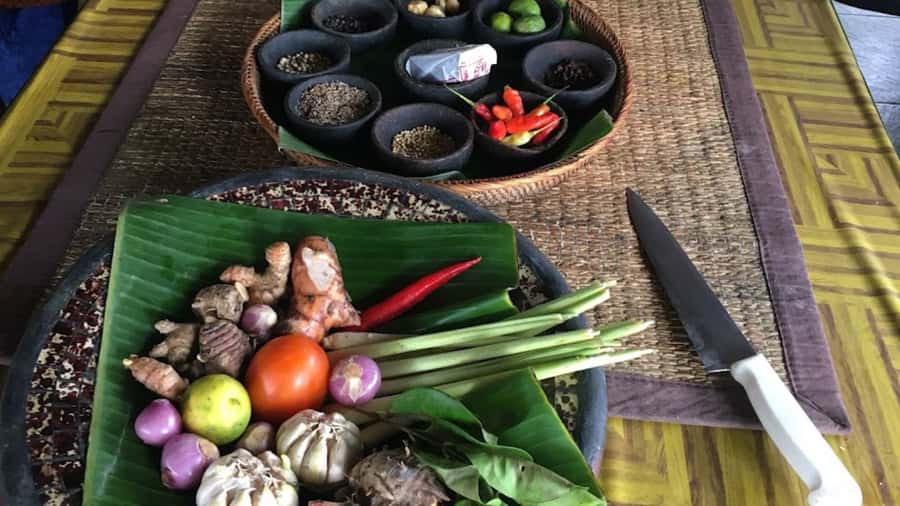
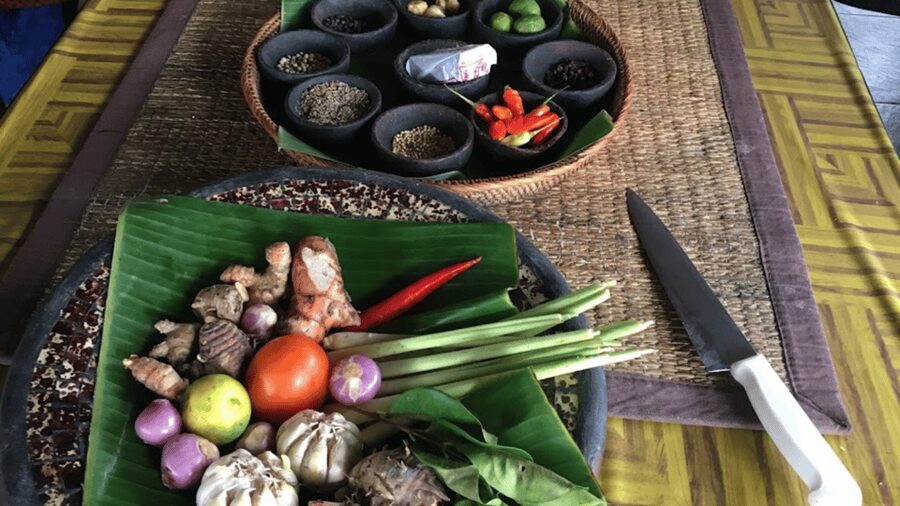
Expect stalls filled with fruit, vegetables, herbs, and spices. The guide explains ingredients that may be unfamiliar to you and helps connect them with the dishes you will later prepare. This is a good moment to ask about chilies, spice pastes, tempeh, rice flour, coconut, and the fresh produce used in Balinese kitchens.
The market also gives you a better sense of food as part of local life. It is not just a sightseeing stop with colorful photo opportunities. You learn what goes into a meal before you reach the kitchen, and the explanations can include links to religion and tradition.
The market is still a working place, so do not expect a quiet, carefully staged tour. It can be crowded and sensory, and the pace depends on the group and the market itself. That is part of its value, but visitors who prefer a calm start may find the cooking school more comfortable.
The morning option also tends to be the better pick if you want to see how ingredients move from market stall to cooking pot. Several sessions have also included visits near rice fields, where the guide explained how rice is grown. That detail is not guaranteed on every departure, but it shows the broader cultural focus of the activity.
The cooking school and family setting
After the market, you head to the cooking location. The drive from central Ubud is short in some cases, with one evening group describing the kitchen as about 10 minutes from the Ubud markets. If you arrange your own transport, scooter access and parking have been available at the site.
The location is part of the appeal. Past classes have taken place in a well-equipped outdoor kitchen with views toward rice fields or greenery. Another important feature is the chance to enter a local compound and see how a Balinese family lives, rather than spending the whole activity inside a tourist restaurant.
Your hosts usually begin with a welcome drink and local fruit before explaining the class. The introduction may cover Balinese religion, family structure, architecture, and food traditions. This makes the cooking feel grounded in place.
Do keep expectations sensible. The class is designed for visitors, so it is not a private cooking lesson in a completely ordinary household. Still, the family-run setting and personal explanations give it a warmer feel than a standard commercial kitchen.
Friendly dogs may be around the property, according to one session. If you enjoy an informal home setting, that adds to the charm. If you prefer a highly formal culinary school, the relaxed atmosphere may feel less polished.
What you actually cook
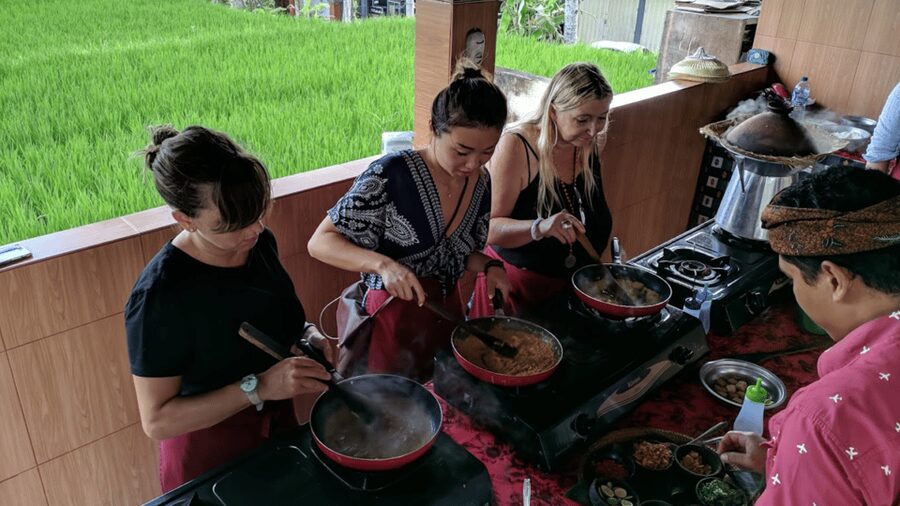
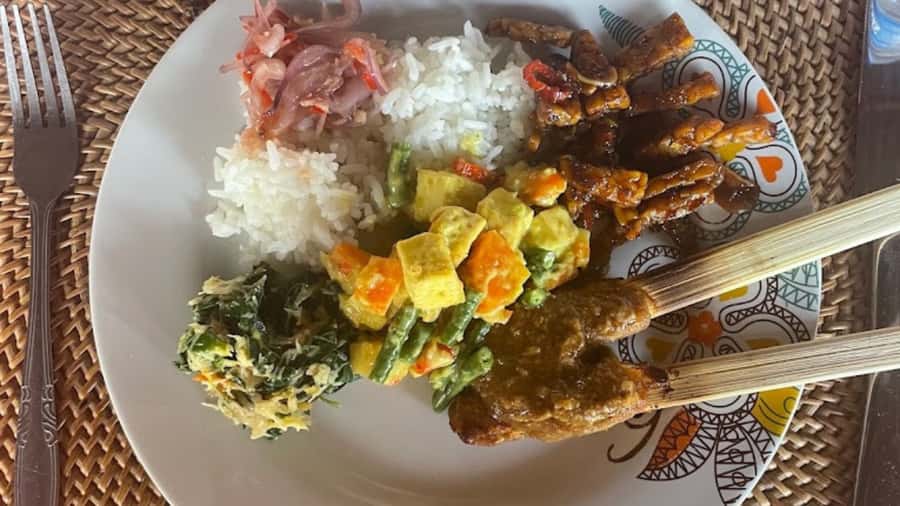
The exact menu can vary, but the class centers on familiar Balinese flavors and a generous number of dishes. You may help prepare fragrant curries, satays, soup, sambal, tempeh, vegetables, rice dishes, pancakes, and sweet treats.
The range is one of the strongest reasons to book. Instead of spending two hours on one complex recipe, you get a broad look at how Balinese meals are built. You learn how spice pastes create the base of a dish, how vegetables are prepared, and how different textures work together.
Some groups have prepared around 10 dishes. That does not mean every person cooks every dish from start to finish. The work is shared, with the instructor assigning jobs so the whole table can follow the process. One person may chop while another mixes spices, prepares a sauce, or tends a pan.
That teamwork works well for beginners because you see the full meal come together without having to manage every pot at once. It also means you should pay attention even when someone else has the knife or spatula. The guide explains what the rest of the group is doing, so you can still learn each recipe.
You will work with a substantial amount of seasoning. Several participants were struck by the number of spices and ingredients used. This is useful if you want to recreate the food at home, though your local substitutes may not produce exactly the same result.
The cooking itself is practical. You learn chopping, grinding, blending, mixing, and cooking methods that have been passed down through local families. The class does not simply hand you a printed recipe and leave you to guess.
More Market Cooking Classes in Ubud
- PRIVATE Ubud Market Tour & Balinese Cooking Class with Putu
★ 5.0 · 125 reviews - Jambangan bali cooking class with morning market tour
★ 5.0 · 35 reviews - Balinese cooking class/Go shopping at the market, cook, eat
★ 5.0 · 12 reviews
Cultural lessons that add real value
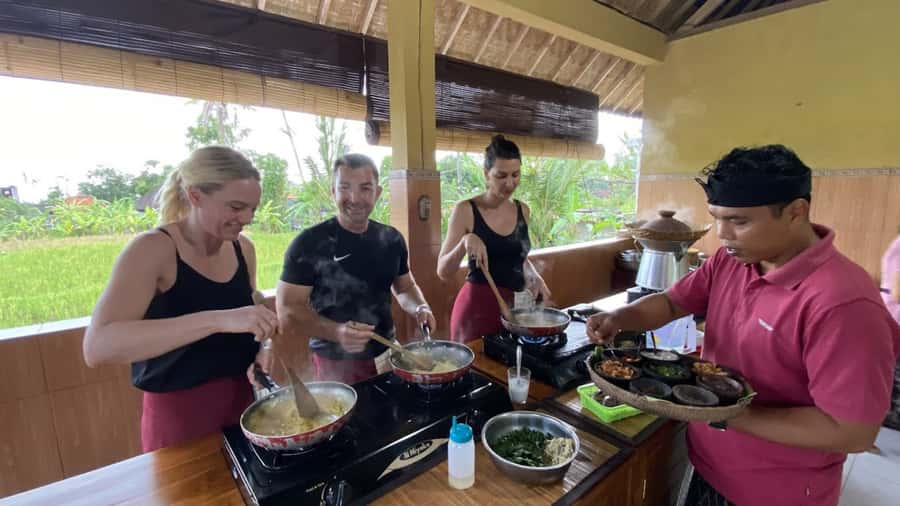
Food is the center of the activity, but the cultural explanations make it more than a meal preparation course. Your guide may explain why offerings are made, how family compounds are arranged, or how food connects with religious events.
The offering activity is particularly memorable. Making a small Hindu offering gives you a simple, hands-on way to understand a practice you will see throughout Bali. You may be able to take it back to your accommodation, depending on the class and the occasion.
The guides also explain ingredients in context. A market visit can show you what local cooks buy, while the kitchen shows you how those ingredients are handled. This helps you understand Balinese food as a daily tradition rather than a set of restaurant dishes.
The teaching style seems to be one of calm instruction rather than fast-paced culinary training. Eri is praised for combining cooking guidance with history and cultural explanation. Made, Madi, and Mate are also named as engaging instructors in different sessions. The names matter because the quality of a class depends heavily on who is leading it.
You should still remember that guides and menus change. The experience is consistently built around cooking and culture, but the exact stories, dishes, and added activities may differ from one day to the next.
Eating the meal you prepared
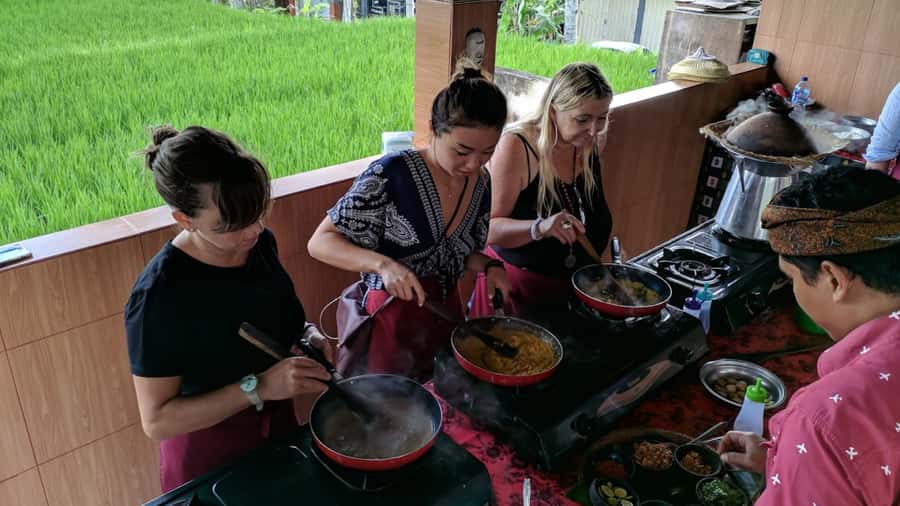
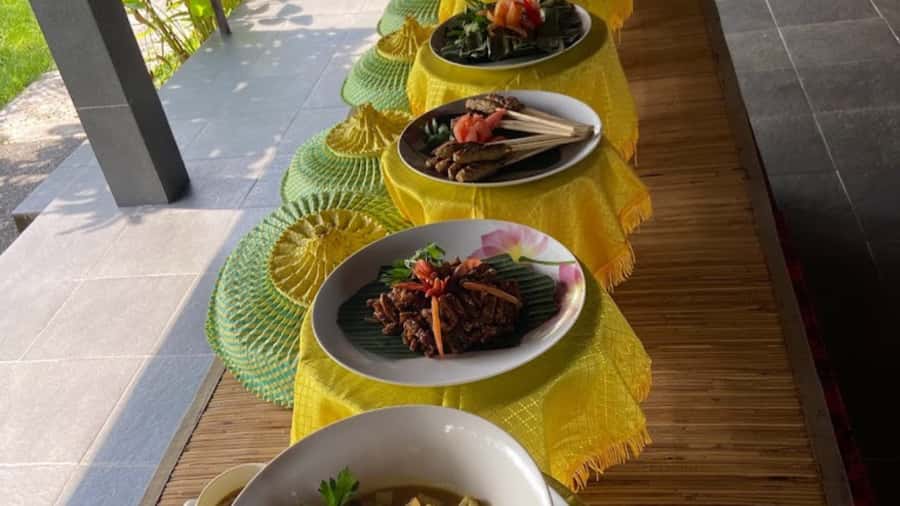
Once the food is finished, you sit down with the group and eat what you have made. In some sessions, the meal is served buffet style, which lets you try the full range of dishes rather than one plate.
This is where the class pays off. You taste the balance of spice, salt, sweetness, herbs, coconut, and smoke after learning what went into each dish. The meal also gives the group time to talk, compare cooking attempts, and share travel stories.
Come hungry. The combination of several dishes and dessert can be substantial, especially when the class prepares close to 10 items. Participants have particularly enjoyed tempeh, soup, satay, sambal, pancakes, and the sweet dishes.
The food is not tailored to restaurant presentation alone. The goal is to show you the flavors and methods of Balinese home cooking. That can mean bold seasoning and unfamiliar ingredients, which is good news if you like trying new food but worth noting if you prefer mild meals.
Dietary requests should be raised when booking or before the class begins. Vegetarian choices have been provided, along with alternatives for people who do not eat fish. Substitutions such as rice flour for pancakes have also been used for allergies and intolerances. The information provided does not promise that every dietary restriction can be handled, so ask ahead rather than relying on a last-minute change.
Group size, timing, and transport
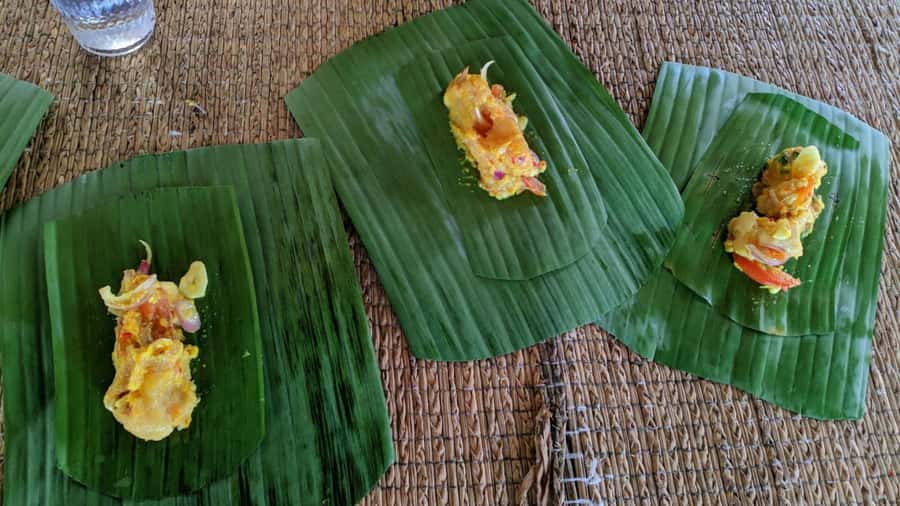
The class lasts about two to three hours. That is enough time to shop or tour the market in the morning, prepare several dishes, eat, and receive a closing certificate without taking over your whole day.
The small-group limit is 10 people. In practice, groups of five to seven have also taken part, which gives the instructor room to involve everyone. Smaller groups are especially helpful if you want to ask about ingredients, cooking temperatures, or substitutions.
Hotel pickup and drop-off are included for selected morning and afternoon options in Ubud Center. You should wait in your hotel lobby if you have arranged pickup. Sebali and Keliki are outside the included area and carry an extra 50,000 rupiah per person.
For evening arrangements, the meeting point is listed as a parking field because traffic can be difficult at night. Confirm the exact meeting instructions carefully before setting out. If you use your own transport, some groups have reached the kitchen by scooter, with parking available.
The activity includes an English-speaking live guide and an English audio guide. In practical terms, the live guide does the important work, since cooking is easier to follow when someone shows you how to chop, mix, and season.
Is $21 good value?
At $21 per person, this is strong value if you want both a meal and a cultural activity. The price covers the cooking class, guide, meal, and selected transfers. The morning option adds the market visit without turning the experience into an expensive full-day excursion.
You are also getting more than food. The class can include a local market, cultural explanations, a family setting, a large shared meal, and a certificate. Some sessions have also included a small recipe book, which is useful if you want to repeat the dishes at home.
The value is less clear if you want a private lesson or serious chef training. You will share tasks with other people, and the class is built for mixed groups with different skill levels. For most visitors, that shared format is part of the fun. For an experienced cook seeking technical precision, it may feel basic.
Free cancellation up to 24 hours before the activity and a reserve-now, pay-later option make it easier to fit into a changing Bali schedule. Those policies are useful, but the main value comes from the combination of food, instruction, and access to local life.
Who should book this Ubud cooking class?
I would recommend it to first-time visitors who want a cultural activity with a clear payoff. You learn something, eat well, and leave with recipes or a certificate in some sessions.
It is especially suitable for couples, families with teenagers, solo visitors, and small groups of friends. Teenagers have taken part successfully, and the division of tasks keeps the class active without demanding advanced skills.
Book the morning option if the market matters to you. Choose the afternoon or evening session if you mainly want to cook and eat, or if your Ubud schedule is already full in the morning.
I would hesitate only if you dislike group activities, cannot stand for a cooking session, or need strict control over ingredients. In those cases, ask about the menu and dietary arrangements first.
Should you book it?
Yes, if you want a warm, practical introduction to Balinese food rather than a quick demonstration. The strongest parts are the small group, the amount of food you prepare, the family setting, and the cultural teaching from guides such as Eri, Made, Madi, and Mate.
For the best value, choose the morning class with the market visit. You will see the ingredients before cooking them and get a fuller sense of how Balinese meals connect with markets, religion, family, and farming. At $21, it is an easy recommendation for most visitors staying in or near Ubud.
FAQ
How long does the Ubud cooking class last?
The activity lasts about two to three hours, depending on the selected session and schedule.
Is the market visit included with every class?
No. The market visit is included with the morning option only. Afternoon and evening classes focus on the cooking experience.
Is hotel pickup included?
Hotel pickup and drop-off are included for selected morning or afternoon options from Ubud Center. Pickup is optional, and you should wait in your hotel lobby.
Is there an extra charge for pickup outside Ubud Center?
Yes. Pickup from the Sebali or Keliki areas costs an additional 50,000 Indonesian rupiah per person.
How large is the cooking group?
The group is limited to 10 participants. Some sessions have had smaller groups of five to seven people.
What language is the class conducted in?
The live guide and activity language are English. An English audio guide is also included.
What kinds of food will I prepare?
The menu can include Balinese curries, satays, soup, sambal, tempeh, vegetables, rice dishes, pancakes, desserts, and other traditional dishes. Menus may vary.
Can vegetarians take part?
Yes. Vegetarian alternatives have been provided in the class. You should state your dietary needs when booking or before the activity begins.
Can the class handle allergies or food intolerances?
Some substitutions have been provided, including rice flour for pancakes and alternatives for people who do not eat fish. Ask about your specific needs in advance.
Do I receive anything at the end of the class?
A certificate of completion is included. Some sessions have also provided a small recipe book with the dishes prepared during the class.
More Markets in Ubud
- Ubud Traditional Night Market Food Tour-All Inclusive
★ 4.4 · 95 reviews - Bali Food Tour: Savor Street Food and Night Market Adventures
★ 5.0 · 46 reviews - Ubud Day Tour : Waterfall, Temple and Local Night Market Tour
★ 5.0 · 17 reviews - Bali Night Market Experience and Ubud Highlights tour
★ 5.0 · 16 reviews
More Cooking Classes in Ubud
- Hanoi Cooking Class: Culture, Local Market & Meaning CSR Impact
★ 5.0 · 5,147 reviews - 5 Traditional Dishes Hanoi Cooking Class with Market Trip
★ 5.0 · 4,890 reviews - Cooking Class and Lunch at a Tuscan Farmhouse with Local Market Tour from Florence
★ 5.0 · 4,831 reviews - Chiang Mai: Cooking Class, Market & Thai Herbs Garden Tour
★ 4.9 · 4,824 reviews
Just added around Ubud
- Jambangan bali cooking class with morning market tour★ 5.0 · 35 reviews
- Balinese cooking class/Go shopping at the market, cook, eat★ 5.0 · 12 reviews
- Bali: Safari Zoo and Ubud Palace and Market Day Tour★ 4.7 · 6 reviews
- Bali: Ubud Monkey Forest, Coffee Plantation, and Market Tour★ 5.0 · 5 reviews
- Bali – Ubud Night Market Food Tour★ 3.8 · 14 reviews
- Bali Food Tour: Savor Street Food and Night Market Adventures★ 5.0 · 46 reviews
- Ubud Traditional Night Market Food Tour-All Inclusive★ 4.4 · 95 reviews
- Bali Night Market Experience and Ubud Highlights tour★ 5.0 · 16 reviews
Market Cooking Classes, compared.
Hanoi Cooking Class: Culture, Local Market & Meaning CSR Impact
Read our review →
5 Traditional Dishes Hanoi Cooking Class with Market Trip
Read our review →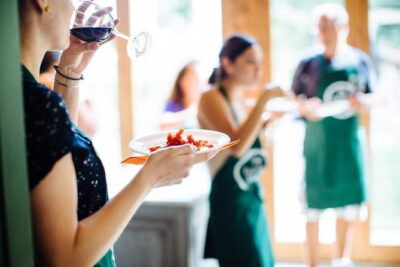
Cooking Class and Lunch at a Tuscan Farmhouse with Local Market Tour from Florence
Read our review →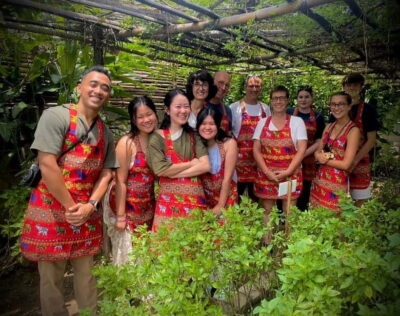
Cooking Class, Market & Thai Herbs Garden Tour
Read our review →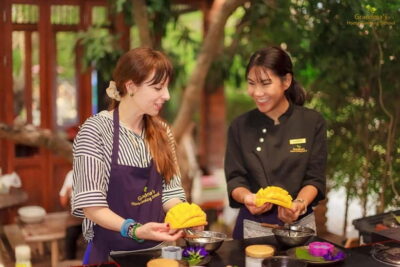
Authentic Cooking Class with Market & Farm Visit
Read our review →
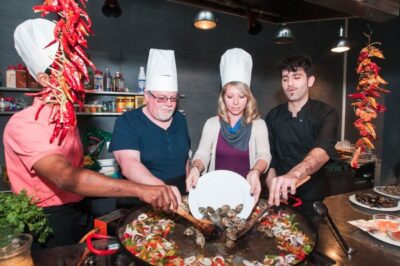
Paella Cooking Experience & Boqueria Market Tour
Read our review →
Cooking Class Hoi An:Local Market, Basket Boat, Fishing & Cooking
Read our review →Browse the lists this tour appears in