
Review · THAILAND
Chiang Mai: Thai Cooking and Market Tour with Lanna Smile
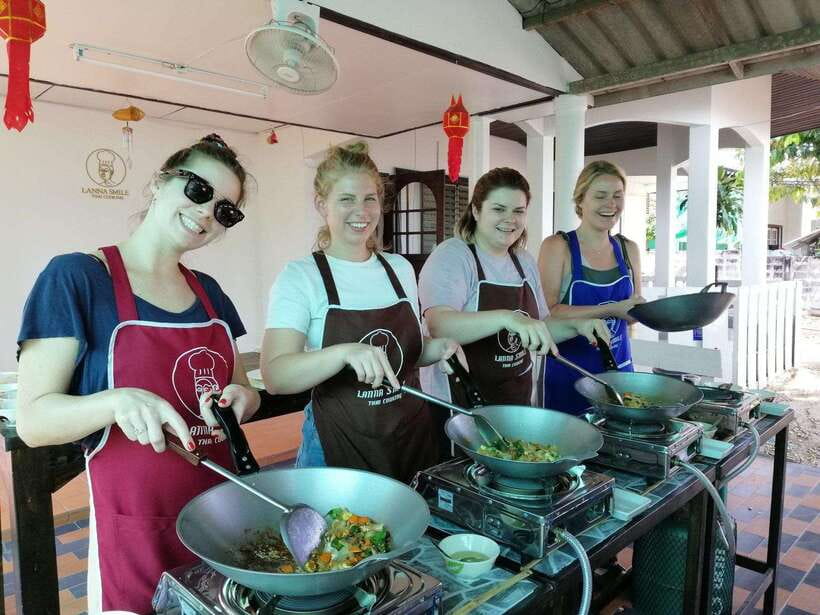
Thai cooking makes the most sense when you handle the ingredients yourself. At Lanna Smile, you visit a local market, learn about Thai vegetables, then cook six dishes at your own station in a cozy Lanna-style kitchen. Pim and Nim keep the mood warm, practical, and relaxed.
I like the fresh daily ingredients and the freedom to adjust the chili to your taste. I also like the small group limit of eight, which gives you room to ask questions and work closely with the instructor. The main thing to consider is the five-hour length: this is a full cooking session, not a quick demonstration.
Key points at a glance
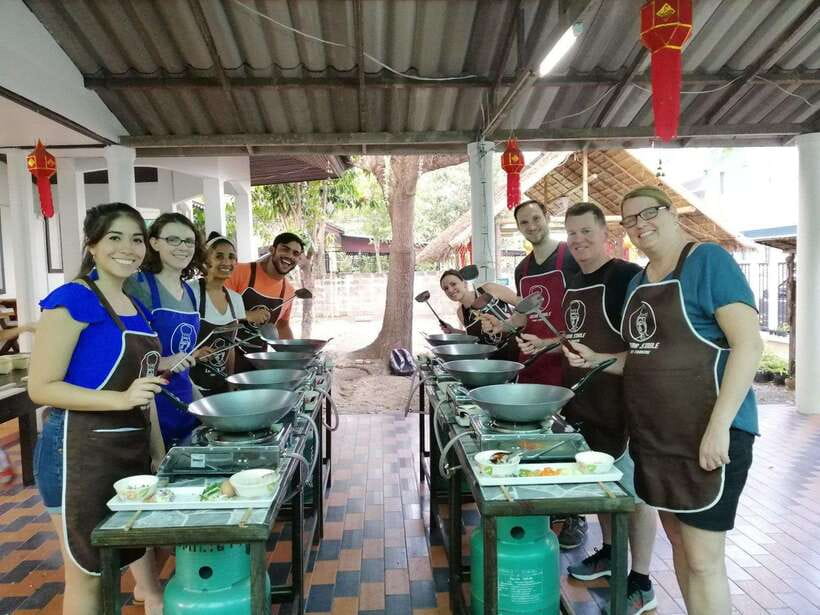
- Six dishes at your own station: Choose from curry pastes, curries, noodles, soups, desserts, and appetizers.
- Market visit included: Learn about Thai ingredients before cooking with them.
- Pim and Nim lead the class: Their friendly approach adds conversation about food, language, and local customs.
- Fresh, careful cooking: Ingredients are bought daily, rice bran oil is not reused, and no MSG is used.
- Easy for beginners: You cook step by step in English, with spice levels adjusted to suit you.
- Good city-center value: The $31 price includes transport within 3 kilometers of Chiang Mai Old Town, ingredients, food, drinks, recipes, and a small souvenir.
A market morning or evening in Chiang Mai
Lanna Smile begins with pickup from hotels within 3 kilometers of Chiang Mai Old Town. Morning pickup runs from 8:30 to 9:00, while evening pickup runs from 4:00 to 4:30. You should be ready 15 minutes early, and traffic can cause delays.
Look for the Lanna Smile Thai Cooking apron sign. If you stay outside the covered pickup area, you need to meet at a designated point in town. That small detail matters, so check your location before booking.
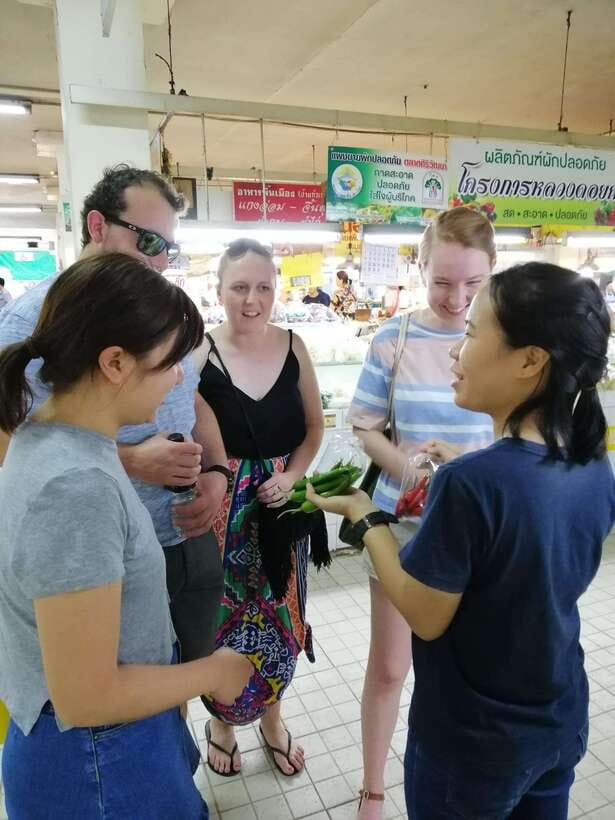
The first stop is a fresh market. This is not just a supply run. Pim and Nim use the visit to explain the ingredients that give Thai food its character, including the vegetables, herbs, and other items used in the dishes you later prepare.
I like this order. You see the raw ingredients before they are chopped, fried, or stirred into a sauce. Thai cooking can seem mysterious when you only see the finished plate. At the market, you begin to understand how a few fresh ingredients can shape an entire dish.
The market portion also gives the class a local feel without taking up a full sightseeing morning. You are not simply sitting in a kitchen waiting for a teacher to demonstrate. You are learning what to look for before the cooking begins.
The exact market route and timing can vary, and the pickup drive may take longer in Chiang Mai traffic. Still, the visit is a useful part of the class rather than filler between hotel pickup and lunch or dinner.
More Market Cooking Classes in Thailand
- Chiang Mai: Cooking Class, Market & Thai Herbs Garden Tour
★ 4.9 · 4,824 reviews - Chiang Mai: Authentic Cooking Class with Market & Farm Visit
★ 4.9 · 4,546 reviews - Phuket Thai Cooking Class with Market Tour Option
★ 5.0 · 2,665 reviews
Six choices across the Thai menu
You choose one dish from each category. The menu covers a wide range of Thai cooking, so you can build a class around familiar favorites or try dishes you have not yet tasted.
Curry pastes and curries
For curry paste, you can choose green curry paste, panaeng curry paste, or Massaman curry paste. You then select the matching curry from green curry, panaeng curry, or Massaman curry.
This pairing is useful because you learn both the base paste and the finished curry. You get a better sense of how the spice mixture becomes a sauce rather than simply opening a prepared packet. Green curry offers a sharper, more herbal profile, while panaeng and Massaman tend toward warmer, rounder flavors.
The curry section is especially good for anyone who wants to cook Thai food at home. Curry paste is often the part that seems hardest to recreate, so preparing it yourself gives you a practical skill to take home.
Noodles
The noodle choices are pad Thai, drunken noodles, and pad see ew. These are familiar dishes, but each uses a different balance of noodles, sauce, vegetables, and seasoning.
Pad Thai is the obvious pick if you want a classic dish that is easy to recognize. Drunken noodles offer a stronger, spicier direction, while pad see ew gives you a milder option built around thick noodles and soy sauce.
You do not need to arrive with cooking experience. The class is hands-on, but the instructor guides you through the steps at your station. That makes it suitable for someone who wants to do the cooking rather than watch a chef work from across the room.
Same stalls, a different way to shop and eat:
- Bangkok: Damnoen Saduak Market and Maeklong Railway Market
★ 4.5 · 26,723 reviews - The Old Siam: Damnoen Saduak and Maeklong Railway Market
★ 4.5 · 10,992 reviews - Bangkok: Train Market & Floating Market with Boat Ride
★ 4.7 · 9,547 reviews - From Bangkok: Ayutthaya & Ayothaya Floating Market Day Trip
★ 4.7 · 6,084 reviews
Soups
The soup choices are tom yum kung, tom kha kai, and tom sab kai. You can choose hot and sour prawn soup, coconut milk soup with chicken, or hot and sour chicken soup.
This is a good chance to compare the sharp, fragrant style of Thai hot-and-sour cooking with the softer taste of coconut milk. If you are cautious with chili, tell the instructor what suits you. The spice level can be adjusted.
That flexibility is important. Thai food is often associated with heat, but a cooking class should teach you balance, not force you to eat a level of chili you cannot enjoy.
Dessert
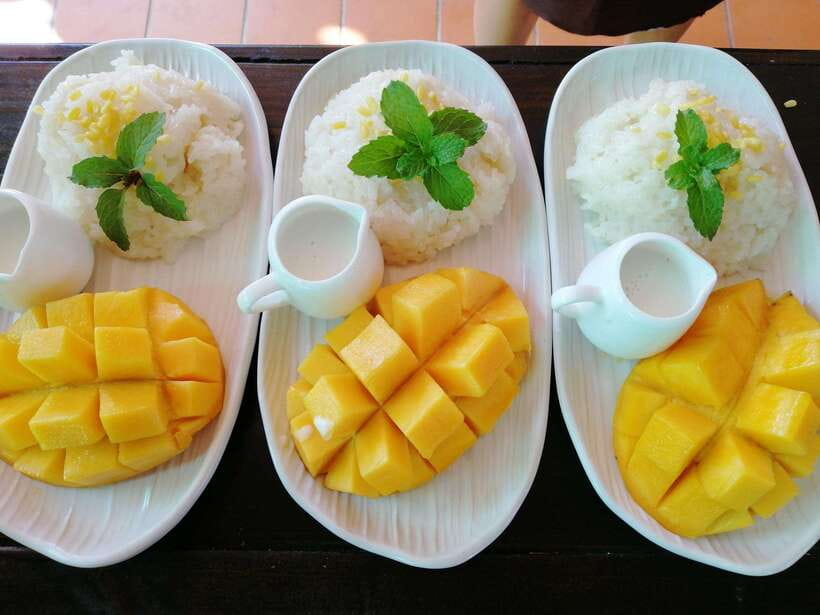
For dessert, choose mango sticky rice, banana in coconut milk, or sago balls in coconut milk. These dishes show the gentler side of Thai cooking, with coconut, fruit, rice, and sweet sauces taking over from chili and herbs.
Mango sticky rice is the best-known choice, but the banana and sago options may appeal if you want something different. Including dessert also means you finish the meal with a proper Thai course instead of stopping after the savory dishes.
Appetizers
The appetizer category includes fried spring rolls and papaya salad. These are very different experiences. Spring rolls involve shaping and frying, while papaya salad focuses on pounding and combining sharp, salty, sweet, and spicy flavors.
You can use this category to round out your menu. If your other choices are rich, papaya salad adds freshness. If you prefer something familiar and crisp, spring rolls are the simpler choice.
The supplied menu describes six categories, and the class is designed around one dish from each. Some participants have described the meal as five courses, so it is wise to confirm the exact number of prepared dishes and how the menu is organized when you book. The important point is that you cook several complete dishes, not just one recipe.
Cooking in a traditional Lanna setting
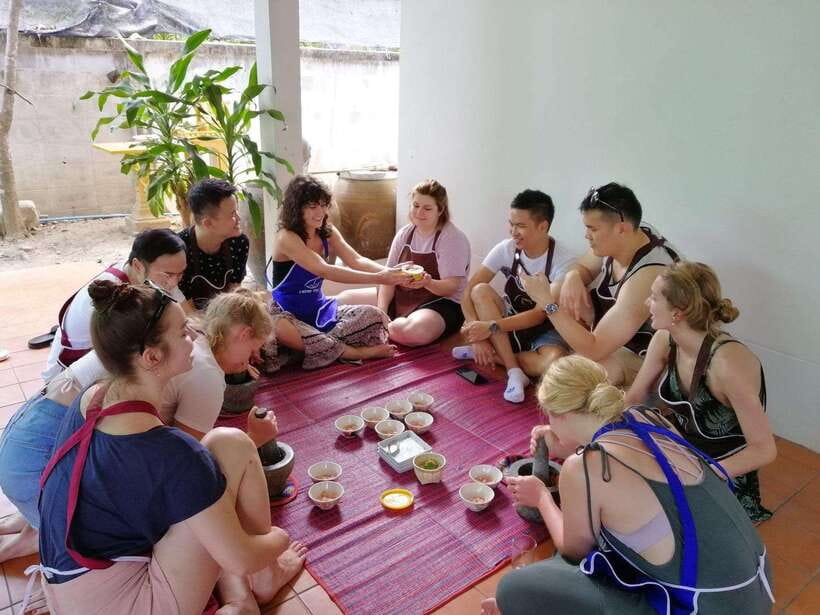
AC Cooking Studio uses a Lanna-style kitchen, giving the class a local visual character instead of the feel of a generic classroom. The setting is described as warm and home-like, and the small group format keeps the session personal.
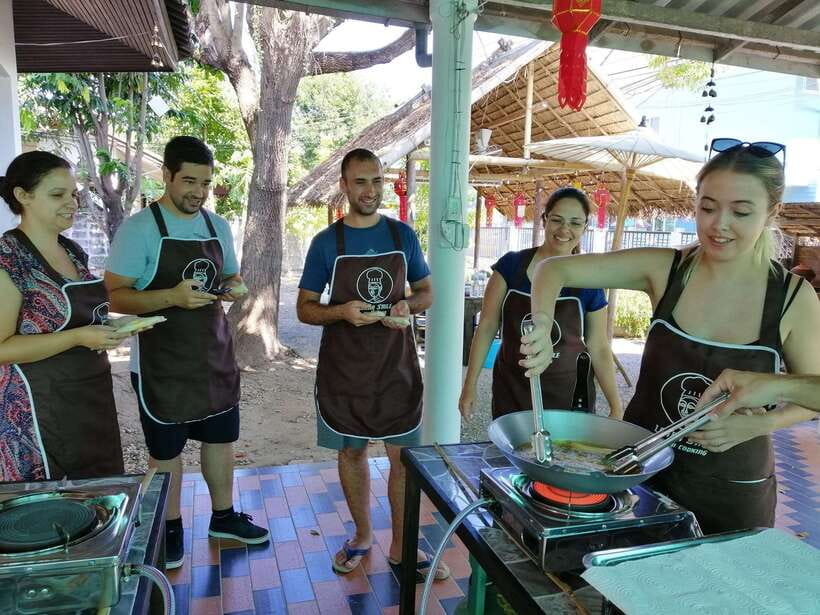
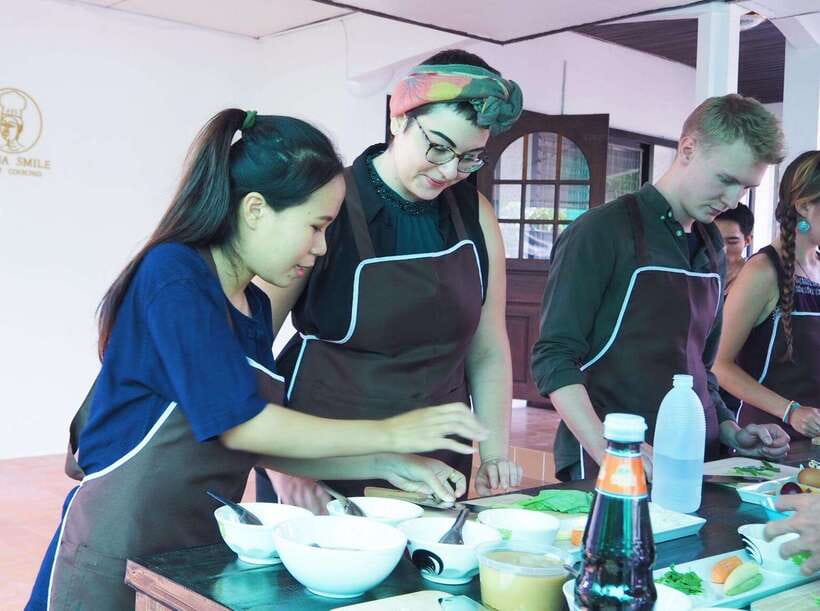
Each person has an individual station. That is one of the strongest features of the experience. You are not taking turns with one shared cutting board or standing behind someone taller than you. You prepare your own food, follow the instructions directly, and can see how your choices affect the final plate.
Pim and Nim lead the session in English. Their role is not limited to reading out instructions. The class also creates room for conversation about Thai food, language, culture, and daily life. For many people, this personal exchange becomes as memorable as the recipes.
The class remains friendly and informal, but it is still structured. You move through the dishes with guidance, and the instructor explains the steps as you cook. That balance suits beginners who want support without feeling as if every movement is being taken out of their hands.
You should wear comfortable clothes. You will be preparing food for several hours, so this is not the place for a stiff outfit or anything you need to keep spotless.
Fresh ingredients and sensible food standards
Lanna Smile says its ingredients are bought fresh from the market each day. It uses fresh rice bran oil, does not reuse the oil, and does not add MSG. The school also places emphasis on clean equipment.
These details matter most when you are cooking several fried or strongly seasoned dishes. You can see and handle the ingredients yourself, which gives you a clearer idea of what goes into the meal.
Vegetarians are welcome, but you should notify the school in advance. The class can adapt dishes into vegetarian or vegan forms, including options such as vegetarian curry, noodles, soups, and appetizers.
This is more than simply removing meat from a plate. The cooking method and seasoning may need to change, so advance notice gives the instructor time to prepare the right ingredients. If you follow a vegetarian or vegan diet, state it clearly when booking.
The same applies to spice. Tell Pim or Nim if you prefer mild food. Thai recipes can be adjusted, and you should not feel obliged to copy the strongest chili level used by local diners.
What the five hours really include
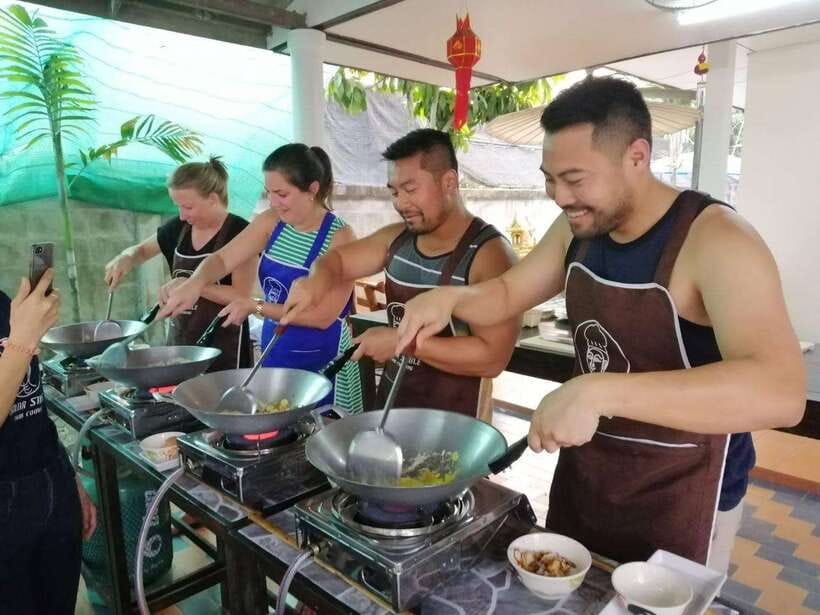
The five-hour duration covers transport within the city, the market visit, the cooking session, and the meal you prepare. It is a substantial part of your day, which is good if you want a full food activity but less suitable if you are trying to fit several other tours into the same morning or afternoon.
The morning version leads into lunch, and the evening version leads into dinner. You eat the food you have prepared, so the class also functions as a meal. A welcome drink, coffee, tea, or herbal drink is included.
You also receive a recipe booklet. This adds real value because cooking classes can be enjoyable in the moment but difficult to repeat once you return home. The booklet gives you a way to recreate the dishes, though you may still need to find Thai ingredients in a local Asian market.
Lanna Smile also provides free Wi-Fi, a limited souvenir, and access to a photo gallery on its Facebook page. These extras are not the main reason to book, but they round out the experience and give you something to remember the day.
Is $31 a fair price?
At $31 per person, this is strong value for a five-hour activity. The price includes the instructor, ingredients, equipment, market tour, hotel transfer within the stated city area, welcome drink, a multi-dish meal, recipes, and a small souvenir.
Many cooking classes charge mainly for the teaching and food. Here, the market visit and city pickup add useful extras. The individual station is also important because you are actively cooking rather than only watching.
The price is less attractive if you will not eat the dishes or if you want a short, polished demonstration. It is also worth checking the visitor charge: a person who comes but does not cook pays 400 baht. That fee makes sense for a companion who wants to attend, but it is an extra cost beyond the advertised participant price.
A private class is possible when the group is very small. One couple had the class run with only two participants, which gave them near-private attention and direct pickup from their accommodation. You should not assume every booking will be private, but the limit of eight keeps the standard group relatively small.
Who will enjoy this class most?
I would recommend Lanna Smile to first-time cooks, food-focused visitors, couples, solo participants, and friends who want a social activity with a practical result. The English instruction and personal stations make it approachable if you have little kitchen experience.
It is particularly useful for anyone who wants to understand Thai ingredients rather than only photograph a plate. The market stop, paste preparation, adjustable spice, and recipe booklet give you several ways to connect the class with meals you can make later.
Vegetarians and people who prefer mild food can also fit comfortably, provided they notify the school ahead of time. Families should check the booking conditions directly, since the supplied information does not specify children’s ages or special arrangements.
This is not the right pick for someone who dislikes group activities, cannot spend five hours on food, or wants a fine-dining lesson with elaborate restaurant plating. The appeal is hands-on home cooking, conversation, and a cheerful Lanna setting.
Practical booking advice
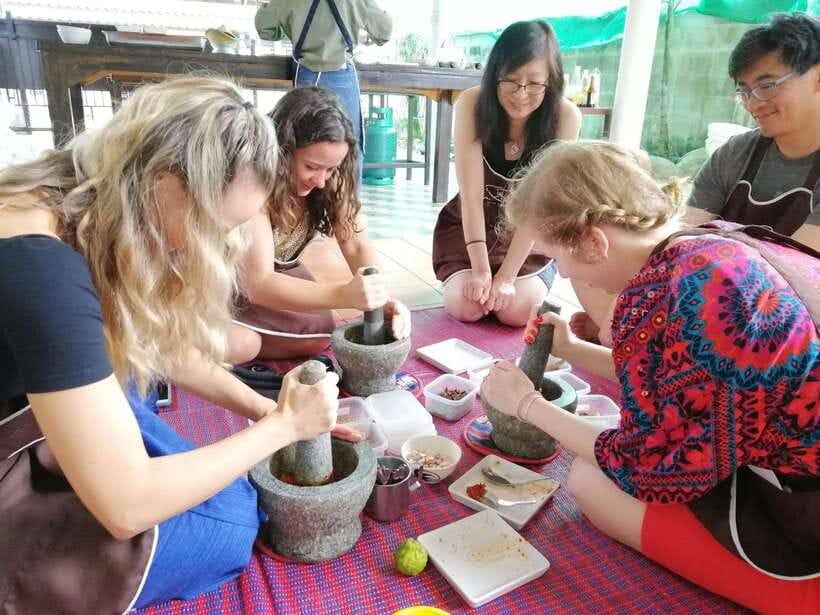
Reserve with enough time to state dietary needs and preferred dishes. You choose one item from each category, so think about the kind of meal you want before the class begins.
For the smoothest pickup, stay in the city center or plan to reach the meeting point in town. The free transfer covers locations within 3 kilometers of Chiang Mai Old Town. Be in the lobby early, then look for the apron sign.
The class is conducted in English. Alcohol, drugs, intoxication, pets, alcoholic drinks in the vehicle, and party groups are not allowed. These rules fit the food-focused nature of the activity and help keep the cooking space calm.
Free cancellation is available up to 24 hours before the start time, and you can reserve now and pay later. Check the available morning or evening start time before you commit your day.
Should you book Lanna Smile?
Book this class if you want to cook several Thai dishes, learn the ingredients at a local market, and spend time with friendly instructors rather than watch a quick food demonstration. The combination of Pim and Nim’s personal teaching, an individual station, flexible spice levels, and a recipe booklet gives the $31 price genuine value.
Skip it if your schedule is tight or if a five-hour food activity feels too long. For most food lovers in Chiang Mai, though, Lanna Smile offers a useful souvenir that does not sit on a shelf: the ability to make Thai dishes at home.
FAQ
How long does the Lanna Smile Thai cooking class last?
The activity lasts five hours, including the market visit, cooking session, meal, and included city pickup and drop-off.
How much does the cooking class cost?
The listed price is $31 per person.
What dishes can I choose to cook?
You can choose one dish from each menu category. Options include curry pastes, curries, pad Thai, drunken noodles, pad see ew, tom yum kung, tom kha kai, tom sab kai, mango sticky rice, banana in coconut milk, sago balls, spring rolls, and papaya salad.
Is the class suitable for vegetarians?
Yes. Vegetarian options are available, and vegetarian or vegan versions can be prepared. Notify the school in advance.
Can I choose the spice level?
Yes. The spice level can be adjusted to suit your preference.
Is hotel pickup included?
Yes. Free pickup and drop-off are offered within 3 kilometers of Chiang Mai Old Town.
What if I stay outside the pickup area?
If you stay outside the town pickup area, you need to meet at the designated meeting point in town.
What language is the class taught in?
The class is conducted in English.
How many people are in each group?
The group is limited to eight participants.
What is included besides the cooking lesson?
The price includes ingredients, equipment, a recipe booklet, the meal you prepare, the market tour, a welcome drink, coffee, tea or herbal drink, Wi-Fi, a limited souvenir, photo gallery access, and city pickup and drop-off within the stated area.
More Markets in Thailand
- Bangkok: Floating Market and Train Market Experience
★ 4.8 · 3,998 reviews - Bangkok: City Highlights Temple and Market Walking Tour
★ 4.5 · 3,990 reviews - Half-Day Railway Market and Floating Market Tour in Thailand
★ 4.5 · 3,924 reviews - Phuket: Full Day City Tour with Night Market
★ 4.5 · 2,888 reviews
More Cooking Classes in Thailand
- Bangkok: Hands-on Thai Cooking Class and Market Tour
★ 4.9 · 1,614 reviews - Chiang Mai: Cooking Class with Market and Pickup
★ 4.9 · 1,365 reviews - Bangkok: Maliwan Thai Cooking Class with Market Tour
★ 4.9 · 1,133 reviews - Phuket: Half Day Easy Thai Cooking Class & Local Market Tour
★ 4.9 · 725 reviews
Just added around Thailand
- Bangkok Udomsuk Thai Cooking Class with local market tour★ 5.0 · 5 reviews
- Morning Buddhist Almsgiving, Grand Palace and Flower Market Tour in Bangkok★ 3.5 · 9 reviews
- Private 4 days : Bangkok, Floating market and Ayutthaya★ 5.0 · 2 reviews
- Floating & Railway Markets and Erawan Waterfall [Optional Luxury]★ 5.0 · 43 reviews
- Floating Market & Railway Market near Bangkok★ 4.0 · 5 reviews
- Discover Ayutthaya at Sunset: Historic Temples & River Cruise★ 4.5 · 29 reviews
- Silom Thai Cooking School with Fresh Market Tour★ 5.0 · 73 reviews
- Ayutthaya Floating Market Admission Ticket with Transfer★ 5.0 · 2 reviews
Market Cooking Classes, compared.
Hanoi Cooking Class: Culture, Local Market & Meaning CSR Impact
Read our review →
5 Traditional Dishes Hanoi Cooking Class with Market Trip
Read our review →
Cooking Class and Lunch at a Tuscan Farmhouse with Local Market Tour from Florence
Read our review →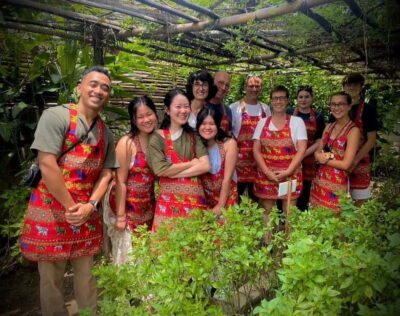
Cooking Class, Market & Thai Herbs Garden Tour
Read our review →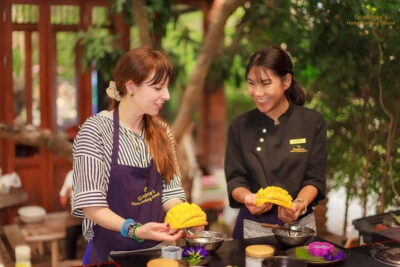
Authentic Cooking Class with Market & Farm Visit
Read our review →
Paella Cooking Experience & Boqueria Market Tour
Read our review →
Cooking Class Hoi An:Local Market, Basket Boat, Fishing & Cooking
Read our review →Browse the lists this tour appears in