
Review · KYOTO
Kyoto: Nishiki Market Tour with a Local Foodie & Tastings
Kyoto’s famous Nishiki Market makes the most sense with someone who can explain what is on the counter in front of you. This 90-minute walk begins at a shrine devoted to learning, passes through the Teramachi shopping arcade, and ends with guided tastings along Nishiki’s 400-meter food street.
I like the small-group or private format, which gives you room to ask about unfamiliar foods. I also like the mix of places: the shrine and shopping arcade add local context before you start eating. The main catch is important: food restrictions cannot be accommodated, including allergies and religious restrictions.
Key points to know before booking
- Start with a shrine visit: Spend about 20 minutes at Nishiki Tenmangu, a Shinto shrine linked to learning and scholarship.
- Walk through Teramachi: Browse local goods and shops in a covered shopping district beside Nishiki Market.
- Taste across Kyoto’s food culture: The final 50 minutes focus on street food, regional ingredients, sweets, seafood, and other market specialties.
- Expect an adaptable guide: Guides including Kaito, Akino, Kiki, Hiro, and Teppei have been praised for explaining ingredients, customs, language, and food etiquette.
- Budget around $67 per person: The guide and tastings are included, while beverages cost extra.
- Plan for a busy food setting: The market is narrow and active, so keep your pace flexible and arrive ready to sample unfamiliar dishes.
Starting at Nishiki Tenmangu Shrine
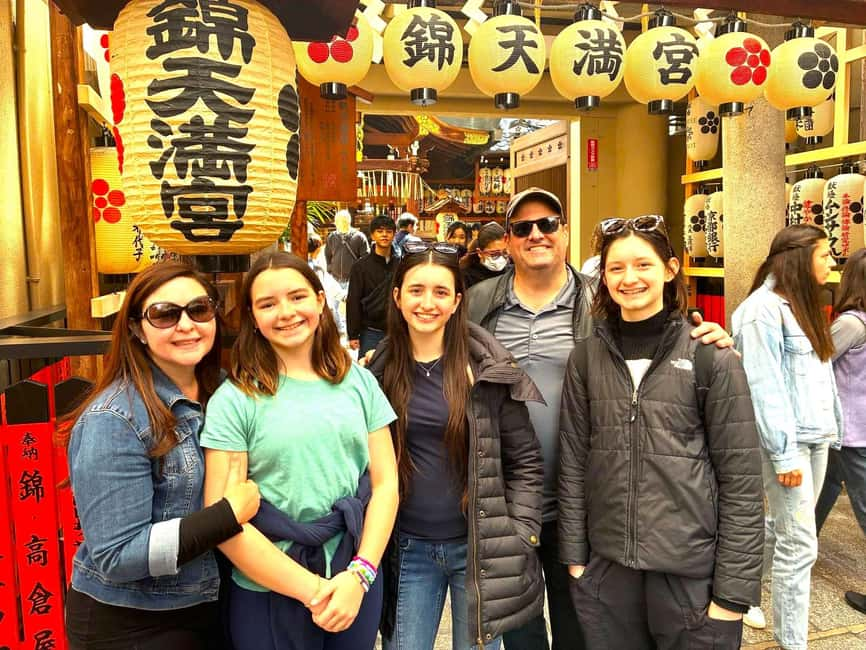
Meet your guide in front of the torii gate at Nishiki Tenmangu Shrine. Look for the yellow sign with the DeepExperience logo. This clear meeting point helps, especially in central Kyoto, where nearby shopping streets can feel confusing at first.
The shrine is dedicated to the deity of learning and scholarship. The visit lasts about 20 minutes, giving you a useful opening lesson in Kyoto’s religious traditions before the food begins.
I like this start because it keeps the tour from becoming a simple march between food stalls. You get a sense of the neighborhood’s spiritual side first. Your guide can also connect the shrine to nearby streets and local customs, making the market feel like part of a larger Kyoto district rather than a stand-alone attraction.
The shrine stop is still fairly short. If you want a long, quiet visit with time for detailed photography or private prayer, you will need to return on your own. Here, the purpose is orientation and context.
More Street Food Market Tours in Japan
- Kyoto: Local Food Tasting Tour at the Nishiki Market
★ 4.7 · 135 reviews - Kyoto: Nishiki Market and Depachika Food Tour with a Local
★ 4.7 · 76 reviews - Nishiki Market Food Tour with Cooking Class
★ 4.9 · 42 reviews
Teramachi Street adds shops and everyday Kyoto
From Nishiki Tenmangu, the tour moves into Teramachi Street Shopping District. This lively arcade sits next to the food market and offers a different view of the area. Instead of focusing only on edible goods, you can browse local products, small shops, and everyday merchandise.
The planned stop takes about 20 minutes and includes both a guided walk and time to shop. That balance matters. You can ask your guide what is worth looking at, then pause if something catches your eye.
Teramachi also helps you understand how Kyoto’s food market fits into ordinary city life. Nishiki is famous for its ingredients and snacks, but the neighboring arcade serves a broader shopping role. I find this pairing useful because you see both the specialized market and the surrounding commercial street in one compact walk.
Do not expect a long shopping session. Twenty minutes goes quickly, and the tour’s main focus remains food. If you plan to buy gifts, knives, sake, or other items, tell your guide early. Akino helped one visitor find good knives, while another guide offered advice on high-quality sake. Those details suggest the value of asking directly rather than simply following the group.
Nishiki Market is the main event
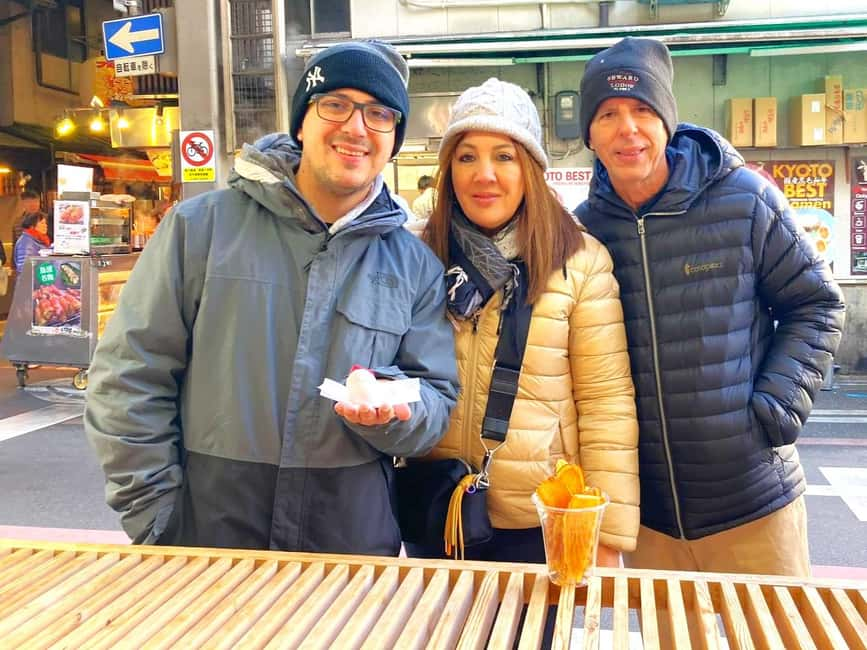
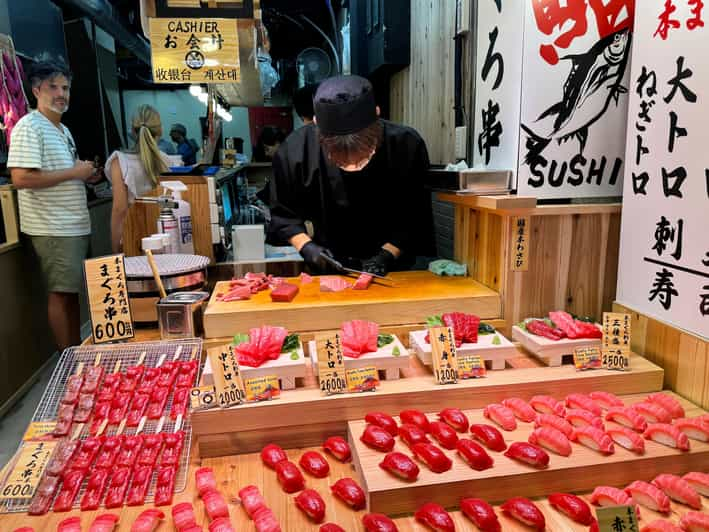
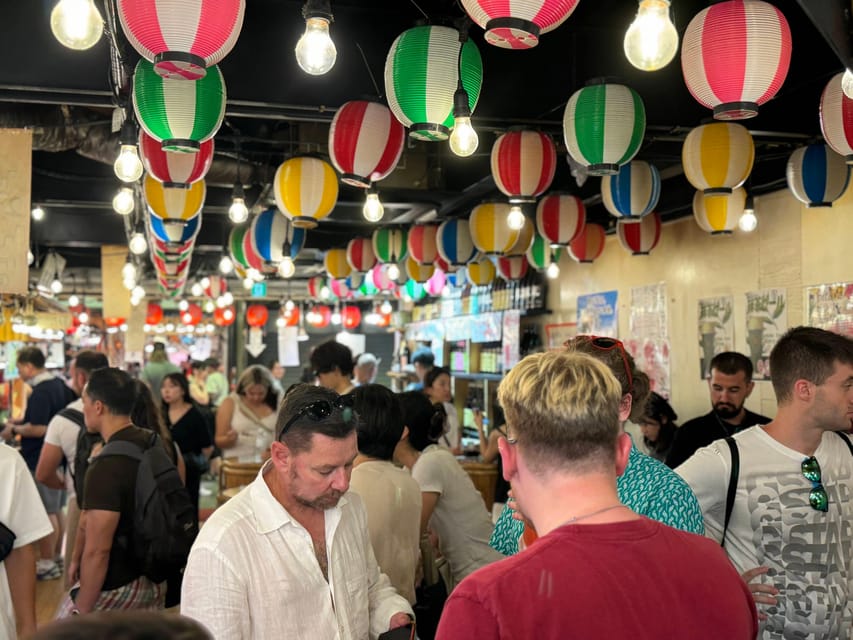
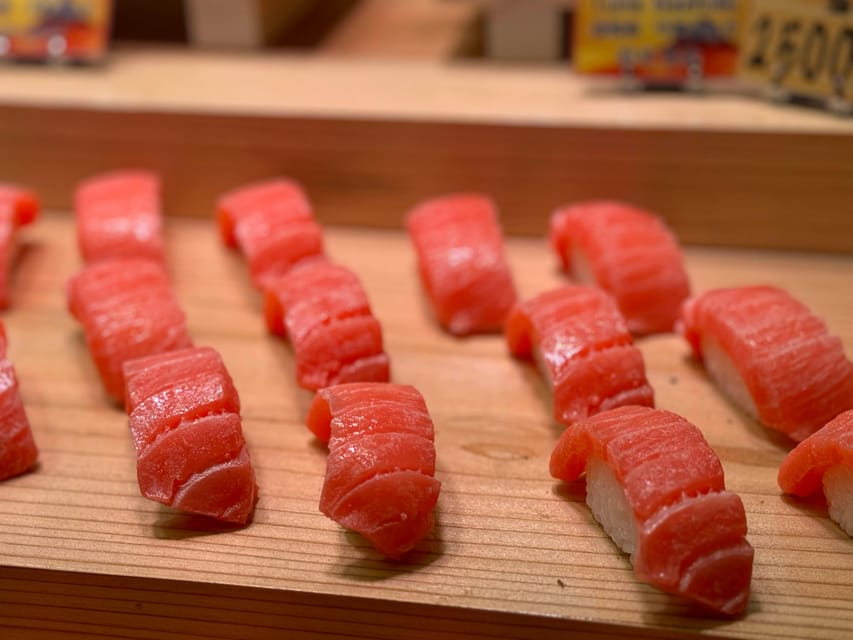
The final 50 minutes take place at Nishiki Market, a food street stretching for more than 400 meters. Counters and shops offer fresh seafood, produce, traditional snacks, sweets, pickles, tofu, and other regional foods.
This is the part where a local foodie earns the fee. A market counter can tell you what something costs, but not always how it is prepared, how it fits Kyoto cooking, or how to eat it politely. Your guide helps you make sense of unfamiliar ingredients and points out foods you might skip when exploring alone.
The exact tasting lineup can vary. The tour promises tastings, but it does not publish a fixed menu. That is normal for a working market, where availability changes. You might encounter seafood, sweets, savory snacks, or specialty items sold by individual shops.
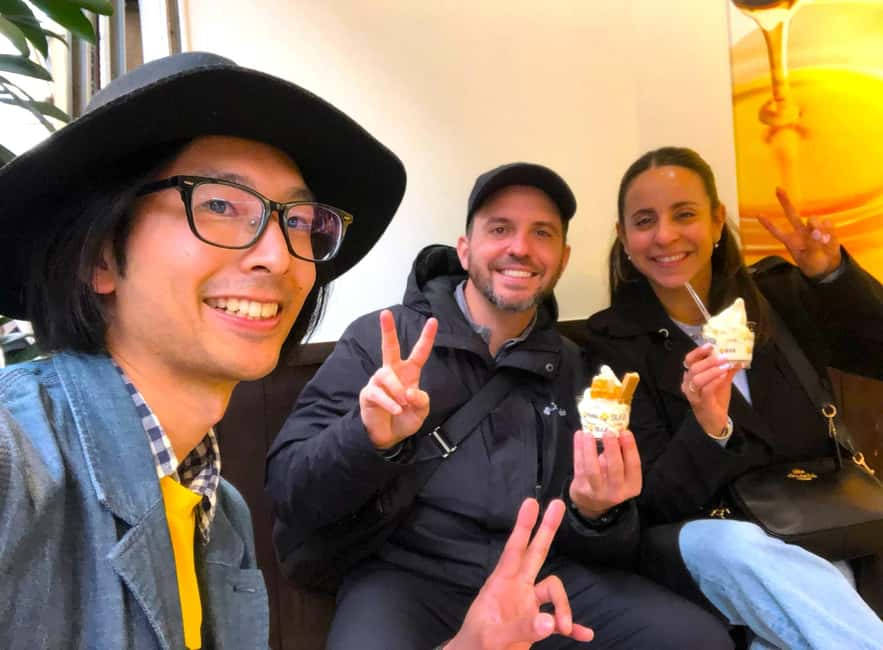
Past tastings described by participants included fish pancakes with bean paste, sesame croquettes filled with cheese and curry, smoky tea, plum wine, and sake. Other food stops included pickles, tofu, sweets, and fresh fish. These examples show the range, but you should not treat them as a guaranteed menu.
One particularly unusual stop involved the kitchen behind a fresh fish counter. That kind of look at preparation can be more revealing than simply eating a finished sample. A market guide may also explain ingredients, shop traditions, and the services offered along the street.
You may finish feeling quite full. The tastings can add up, even though each sample may look small. If you have a later lunch reservation, plan with care. One participant described stopping at a local restaurant just outside the market, but that is not listed as a standard part of the tour, so you should not book this expecting a full restaurant meal.
What the guides add to the food
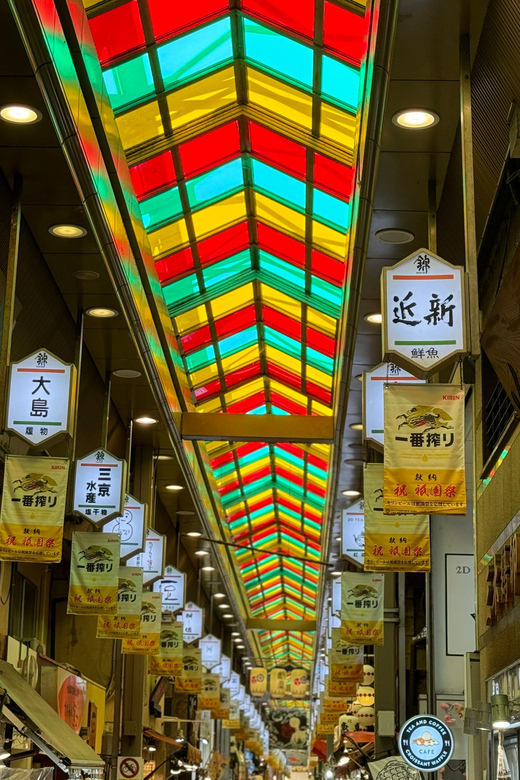
The strongest part of this experience is the guide’s ability to turn eating into a conversation about Japan. Kaito, Akino, Kiki, Hiro, Juliette, Teppei, and others have been singled out for clear explanations, friendly conversation, and practical suggestions.
Kaito appears often in the feedback, and for good reason. He has explained Japanese culture and language, recommended food in Osaka, introduced unfamiliar dishes, and helped English-speaking visitors ask questions. One participant even mentioned his harmonica playing, which gives you an idea of the personal and informal tone he can bring to a small-group walk.
Akino’s strength is gentle guidance through the market’s busy rows. She has helped explain food, pointed out worthwhile bites, and assisted with purchases such as knives. Kiki has focused on the market’s past, local traditions, and ingredients. Hiro has combined cultural information with a warm sense of humor and even taught basic Japanese thanks.
The guide names are not guaranteed. Your booking may place you with another English- or Japanese-speaking guide. Still, the pattern is clear: this is designed as a conversational food walk, not a formal lecture.
You should ask questions. If you want help choosing a souvenir, understanding sake, learning a phrase, or finding food that fits your interests, say so early. A private or small-group setting gives you a better chance to shape the conversation than a large tour would.
More street food market tours in Kyoto:
- Kyoto: Nishiki Market Food Tour
★ 4.9 · 21 reviews - Taste of Nishiki Market Walking Food Tour with Local guide
★ 5.0 · 17 reviews - Kyoto: Nishiki Market Food Tour with Local Guide
★ 4.6 · 5 reviews - Dubai: Old Town, Creek, Museums, Souks, & Street Food Tour
★ 4.8 · 10,816 reviews
Why the cultural context matters
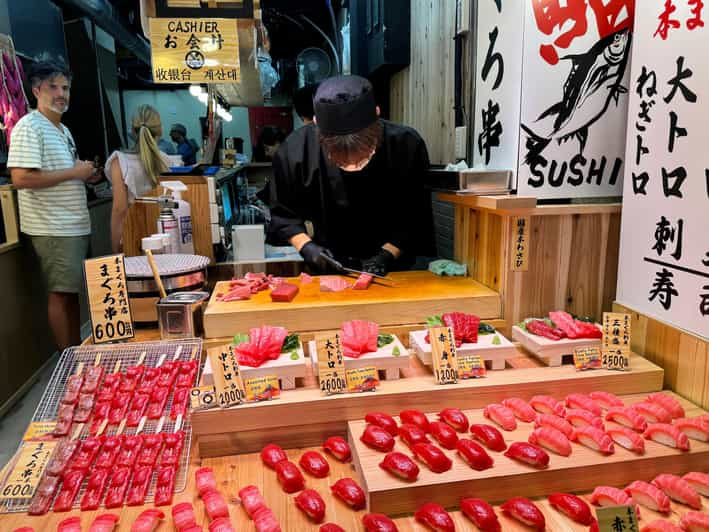
Food is one of the easiest ways to enter Kyoto’s traditions, but only if someone gives you the keys. A snack can be sweet or savory, but the story may include seasonal ingredients, preparation methods, regional habits, or the way a shop has served the neighborhood.
The first shrine visit creates that context. The shopping arcade then shows you the area’s wider commercial life. Finally, Nishiki Market brings the lesson down to the level of ingredients and eating.
I appreciate that progression. You are not only sampling food. You are moving from faith and scholarship to shopping, then to cooking and local taste. The route is short, but it covers several sides of central Kyoto.
The cultural explanations can also help you behave comfortably in the market. Your guide may show you how to approach a counter, how to ask about an ingredient, or how to thank someone in Japanese. Those small lessons can make the rest of your Kyoto eating easier, even after the tour ends.
Price, length, and what you receive
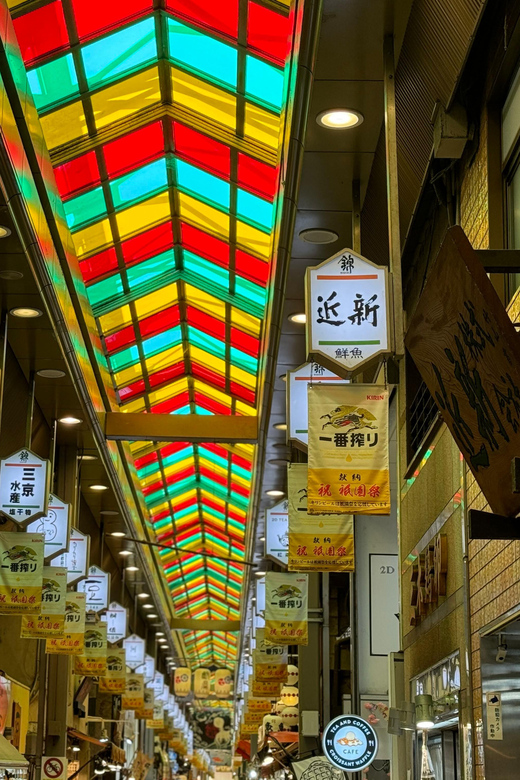
At $67 per person, the tour sits in the moderate range for a guided food activity. The price includes the guide and tastings. Beverages are not included, so budget extra if you want tea, sake, plum wine, or another drink.
The value depends on how much help you want. If you are comfortable identifying Japanese foods and ordering on your own, you could spend less by walking through Nishiki independently. You would also have more time to browse.
I think the price makes more sense for a first visit to Kyoto, an English-speaking visitor who wants cultural explanations, or anyone nervous about trying unfamiliar food. The guide’s recommendations can also prevent wasted purchases. You are paying for interpretation, access to a range of samples, and a focused route through an area that can feel crowded and confusing.
Ninety minutes is short enough to fit before another central Kyoto activity. It is also long enough to cover the shrine, arcade, and market without turning into an exhausting half-day outing. The tradeoff is pace. You will not have time to linger at every stall or explore all 400 meters of Nishiki Market.
Who will enjoy this Nishiki Market walk
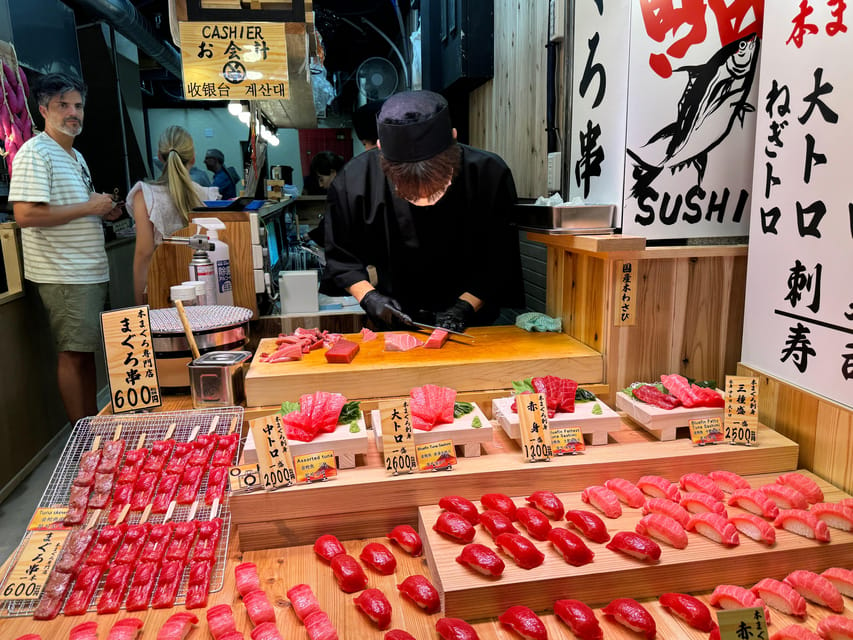
I would choose this tour for:
- First-time visitors who want an easy introduction to Kyoto food
- English-speaking visitors who want help with ingredients and ordering
- Couples or families who prefer a private or small-group setting
- Curious eaters willing to try unfamiliar foods
- Visitors who want cultural background along with tastings
- People planning a later independent return to Nishiki Market
It may be a poor fit if you need strict control over every ingredient. The operator states that food restrictions cannot be accommodated due to allergies, religion, or other needs. Do not rely on the guide to provide substitutions.
It is also less suitable if you want a full meal, a long shopping session, or a fixed tasting menu. This is a compact introduction, not a restaurant crawl.
The tour is wheelchair accessible, which is useful information for many visitors. Nishiki remains a market street with active shops and other people moving through it, so you should still discuss any specific mobility needs before booking if you require more detail than the published accessibility note provides.
Timing and practical planning
The meeting point is the torii gate at Nishiki Tenmangu Shrine, not the west entrance of Nishiki Market. The walk ends at Nishiki Market’s west entrance. That route is convenient if you want to continue exploring after the tour.
Wear comfortable shoes. The tour lasts only 90 minutes, but you will spend the time walking and stopping at counters. Keep personal belongings easy to manage in the shopping arcade and market.
Arrive ready to eat small portions rather than expecting one large dish. If you are sensitive to strong flavors or unusual textures, tell the guide what you prefer, but remember that guaranteed allergy accommodations are not available.
The tour operates in English and Japanese. Private and small-group options are available. You can also reserve now and pay later, and cancellation is free up to 24 hours in advance for a full refund. Starting times vary, so check availability for your date.
Is the Nishiki Market tour worth booking?
Book it if you want a guided introduction to Kyoto’s food culture, especially if you value explanations as much as the tasting itself. The combination of Nishiki Tenmangu, Teramachi Street, and Nishiki Market gives you more range than a food-only walk, while the small-group format leaves room for questions.
I would be especially happy to book with the hope of getting a guide such as Kaito or Akino, though no individual guide is promised. Their strengths, along with the attention described from Hiro, Kiki, Juliette, and Teppei, point to a personal style rather than a scripted march.
Skip it if you have serious dietary restrictions, want a guaranteed menu, or prefer to browse Nishiki at your own speed. For everyone else, $67 is a fair price for a concise route, several tastings, and the confidence to return to the market on your own.
FAQ
Where does the tour meet?
Meet your guide in front of the torii gate at Nishiki Tenmangu Shrine. The guide will hold a yellow sign with the DeepExperience logo.
Where does the tour finish?
The tour ends at the west entrance of Nishiki Market.
How long does the experience last?
The tour lasts 90 minutes. The shrine visit takes about 20 minutes, the Teramachi Street stop about 20 minutes, and the Nishiki Market portion about 50 minutes.
What is included in the price?
The guide and food tastings are included.
Are beverages included?
No. Beverages are not included in the tour price.
What languages are available?
The tour is offered in English and Japanese.
Can the tour accommodate food allergies or religious dietary restrictions?
No. The operator states that food restrictions cannot be accommodated, including allergies and religious restrictions.
Is the tour wheelchair accessible?
Yes. The activity is listed as wheelchair accessible. Private and small-group options are also available.
More Markets in Kyoto
- Nishiki Market Brunch Walking Tour (7 Tastings + Brunch)
★ 5.0 · 1,355 reviews - Kyoto: Nishiki Market Tea Ceremony with Koto Performance
★ 4.8 · 294 reviews - Golden Pavilion, Nijo Castle, & Nishiki Market Half day tour
★ 5.0 · 29 reviews - Kyoto: Enjoy Sushi & Market Tour! Best for Family & Couple!
★ 4.8 · 20 reviews
More Food in Kyoto
- Kyoto Nishiki Market Food and Culture Walking Tour
★ 5.0 · 412 reviews - Dubai: Old Town, Souks, Street Food, Guided Tour & Abra Ride
★ 4.9 · 7,170 reviews - Bangkok by Night: Temples, Markets and Food Tuk-Tuk Tour
★ 5.0 · 3,752 reviews - Chef Guided Food Tour of Pike Place Market
★ 5.0 · 3,733 reviews
Just added around Kyoto
- Taste of Nishiki Market Walking Food Tour with Local guide★ 5.0 · 17 reviews
- Nishiki Market Food Tour with Cooking Class★ 4.9 · 42 reviews
- Kyoto: Wholesale Fish Market Walking Tour★ 5.0 · 2 reviews
- Golden Pavilion, Nijo Castle, & Nishiki Market Half day tour★ 5.0 · 29 reviews
- Kyoto: Arashiyama Unveiled Bamboo, Temple, Matcha, & Monkeys★ 5.0 · 6 reviews
- Kyoto: Nishiki Market Food Tour★ 4.9 · 21 reviews
- Kyoto: Enjoy Sushi & Market Tour! Best for Family & Couple!★ 4.8 · 20 reviews
- Kyoto: Nishiki Market and Depachika Food Tour with a Local★ 4.7 · 76 reviews
Street Food Market Tours, compared.

Old Town, Creek, Museums, Souks, & Street Food Tour
Read our review →
Old Town, Souks, Street Food, Guided Tour & Abra Ride
Read our review →
London Bridge & Borough Market Food Tour with 7 Authentic Dishes
Read our review →
Old Town, Souks, Street Food, Guided Tour & Abra Ride
Read our review →
Small Group Cooking Class & Market Food Tour in Florence
Read our review →
Old Town, Street Food, Creek, Souks, & Emirati House
Read our review →Browse the lists this tour appears in