
Review · KYOTO
Kyoto: Nishiki Market and Depachika Food Tour with a Local
Kyoto’s food culture makes the most sense when someone helps you read the stalls. This tour pairs Daimaru’s basement food hall with Nishiki Market, so you see both polished department-store food culture and the narrow market lanes locals use for Kyoto specialties. I like the small group size and the chance to taste foods such as yuba sashimi, soy milk doughnuts, Nishiki gyoza, and hamo tempura without guessing what to order.
I also like the quiet stop at Nishiki Tenmangu Shrine, which gives your feet and senses a short break from the food stalls. The main caution is timing: the experience is sold as two hours, but the listed stop lengths add up to three hours, so confirm the schedule before booking. Food portions and the exact pace can also vary by guide.
Key points at a glance
- Daimaru’s Depachika first: See a refined underground food hall with Japanese sweets, prepared foods, produce, and international specialties.
- Four included tastings: Try yuba sashimi, a soy milk doughnut, Nishiki gyoza, and tempura made with hamo fish.
- Nishiki Market with context: A guide helps explain Kyoto ingredients, eating customs, market stalls, cookware, and local specialties.
- A small group of up to nine: This is a better setup for questions and personal recommendations than a large walking tour.
- A shrine between food stops: Nishiki Tenmangu offers a calm pause and a look at Shinto customs.
- Good for a short Kyoto window: Multiple start times and same-day booking make it useful when your schedule is tight.
Starting at Apple Kyoto with a small group
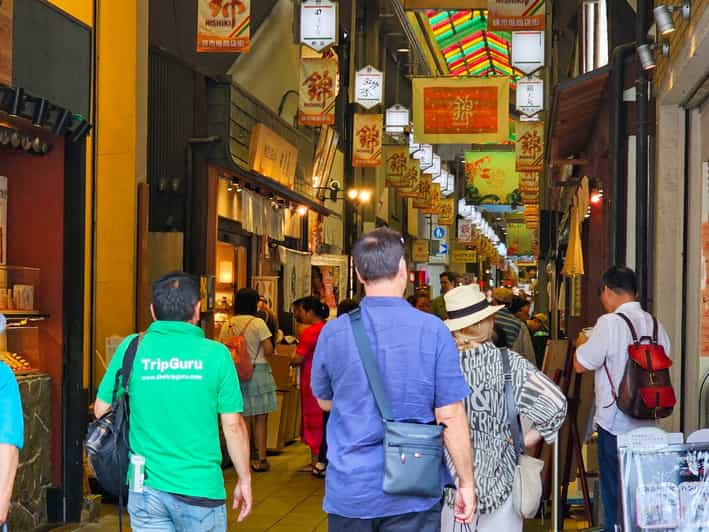
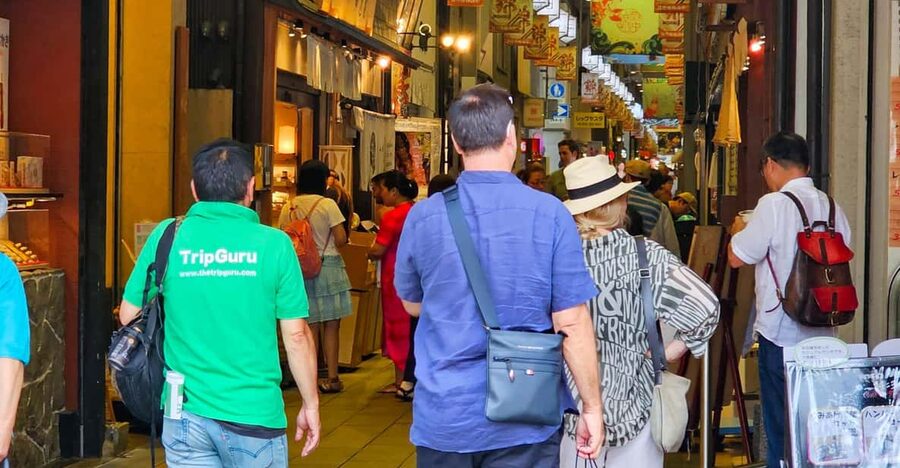
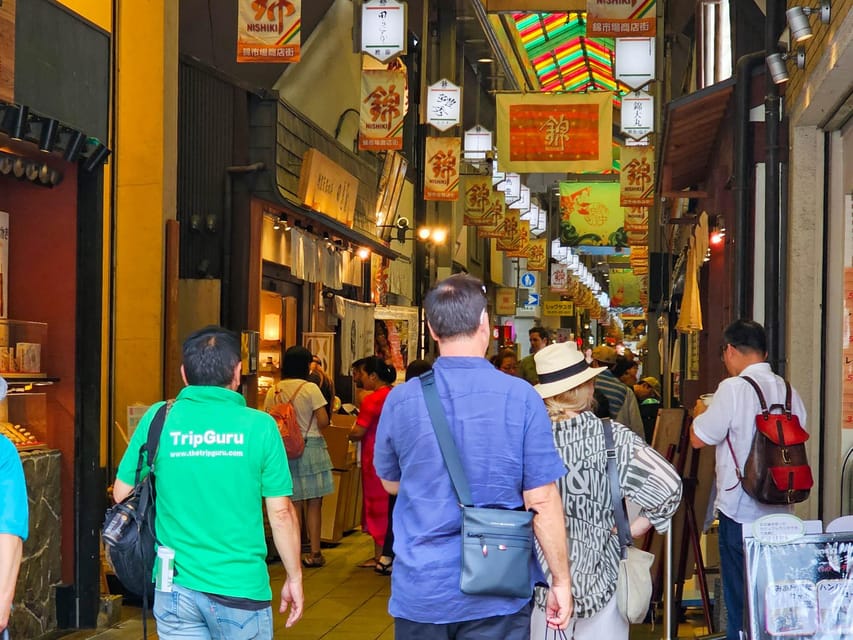
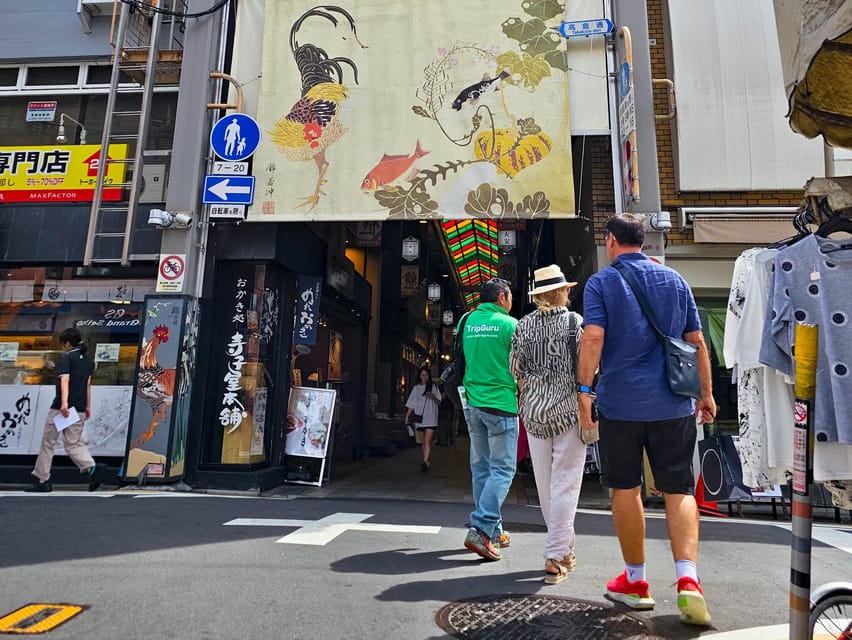
You meet your guide at Apple Kyoto. Look for a TripGuru shirt or sign, and arrive at least 10 minutes early. The guide waits only 10 minutes, and Kyoto traffic can slow down more than a navigation app suggests, especially in the morning.
The group is limited to nine people. That matters here. Nishiki Market can feel tight, and a large group would make it harder to hear explanations or gather around a stall. A small party also gives you a better chance to ask about ingredients, food customs, sake, or what to eat later in your Kyoto visit.
The guide changes from departure to departure. Guides named in past outings include Mao, Ai, Boris, Kats, Richard, Jasmine, Vincent, Yoku, and Miya. English ability and guiding style will naturally vary, but the strongest experiences have come from guides who explain the food while giving you room to browse. Kats, who was born in Kyoto, was especially well placed to answer questions about the city. Boris was praised for explaining the cultural background of dishes, while Ai was good at pointing out what to buy and what to skip.
More Street Food Market Tours in Japan
- Kyoto: Local Food Tasting Tour at the Nishiki Market
★ 4.7 · 135 reviews - Kyoto: Nishiki Market Tour with a Local Foodie & Tastings
★ 4.5 · 67 reviews - Nishiki Market Food Tour with Cooking Class
★ 4.9 · 42 reviews
Daimaru’s Depachika: Kyoto food below street level
The first major stop is Daimaru Kyoto, where you spend about an hour and a half in the department store’s basement food hall. In Japan, a Depachika is not a simple supermarket. It is a carefully arranged food department with boxed meals, sweets, produce, seafood, gifts, and prepared dishes, often displayed with remarkable precision.
This is a smart first stop because it gives you a broad view of Japanese food before you enter Nishiki Market. You may see traditional sweets beside international products, beautifully arranged fruit, ready-to-eat foods, and ingredients that are difficult to identify on your own. The setting is clean and orderly, but it is still a working food market, not just a display for tourists.
Your guide can help you understand the difference between everyday food, gift food, and special-occasion products. One guide even warned a guest about spending too much on a premium cantaloupe. That kind of advice is useful because Japanese department-store food can look tempting while carrying a high price.
The included tastings listed for this experience begin here or continue into the market:
- Yuba sashimi: Soft tofu skin with a delicate texture and mild flavor. It is a Kyoto specialty and a good introduction to soy-based cuisine.
- Soy milk doughnut: A sweeter, more familiar bite that provides a change from savory foods.
- Nishiki gyoza: A local take on a well-known Japanese favorite.
- Hamo tempura: Tempura made with hamo, a seasonal conger pike associated with Kyoto cuisine.
The exact order and serving size can vary. One person found the food portion less clear because the guide waited for questions instead of explaining the tasting plan at the start. I would ask early: What are we tasting, and when? That simple question can make the experience feel more organized.
Daimaru is also useful for shopping after the tour. You can compare sweets, bento boxes, drinks, and gifts once you know what you are looking at. Since extra food and drinks are not included, bring cash if you expect to buy more. Personal spending is separate from the tour price.
Nishiki Market, Kyoto’s Kitchen
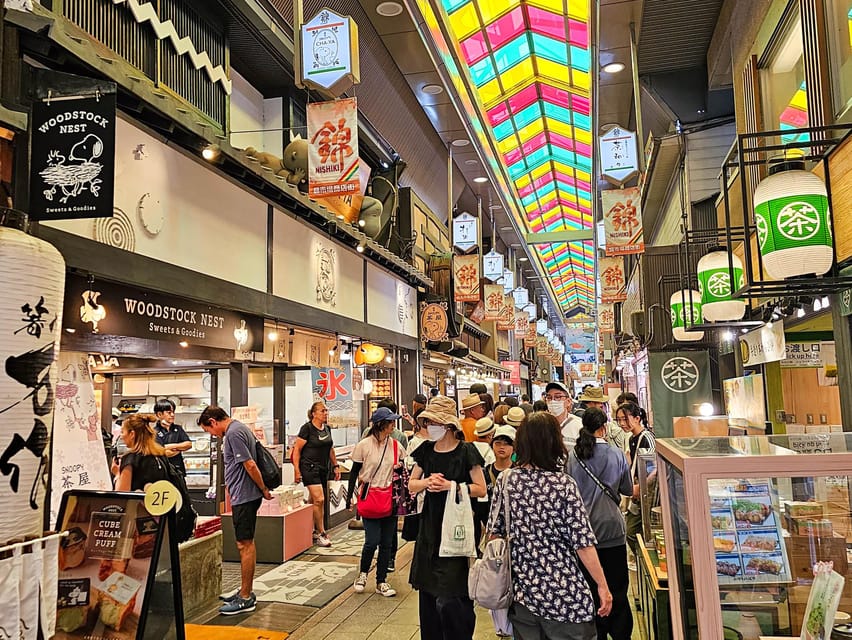
From Daimaru, the experience moves to Nishiki Market. This covered market runs through a narrow arcade lined with food stalls and small shops. It is often called Kyoto’s Kitchen because it brings together ingredients and food traditions used across the city.
The market sells far more than quick snacks. You may find seasonal foods, pickles, seafood, sweets, produce, knives, cookware, and other kitchen goods. Some shops have been run by the same families for generations, which helps explain why the market feels more like a working food street than a single attraction.
The guide’s role is important here. Nishiki Market can be exciting but confusing when you do not know what you are seeing. A good guide can point out Kyoto ingredients, explain how a dish is eaten, and steer you toward stalls suited to your tastes. Guides have also helped guests who were cautious about unfamiliar food while still encouraging more adventurous choices.
The four included tastings give the walk a clear food focus, but do not expect a full meal. Yuba sashimi is gentle and refined, while hamo tempura offers a more distinctly Japanese texture and flavor. Gyoza is easier to recognize, and the soy milk doughnut adds a sweet finish or reset.
You are not pressured to buy food at the market. That is a real benefit. Nishiki is full of things that look worth trying, and it is easy to spend more than planned. A guide can help you decide which purchases are special to Kyoto and which items you can find elsewhere in Japan.
There is a practical etiquette point here. Follow your guide’s instructions about where to eat and how to handle samples. Market lanes can be crowded, and eating while walking may not be appropriate at every stall. Comfortable shoes are essential, especially if you plan to stay afterward and shop.
Nishiki Tenmangu Shrine adds a quiet half-hour
The final stop is Nishiki Tenmangu Shrine, close to the market. It is dedicated to the deity of learning and provides a peaceful change of pace after the narrow food lanes.
Your guide explains the basic Shinto customs, including the water fountain used to cleanse your hands. You can pause to look at the shrine architecture, observe the ritual space, and consider how religious sites fit into ordinary city life. This is not a long temple visit, but it gives the tour more shape than a simple sequence of tastings.
I like this stop because food markets can blur together after a while. The shrine offers a quiet pause without taking you far from the central Kyoto streets. It also gives you a chance to ask about Japanese customs while the guide is still with you.
The tour finishes at Kyoto-Kawaramachi Station. That is useful for continuing your day, though hotel transport is not included. You can move on to shopping, sightseeing, or another meal nearby without needing to return to your starting point.
More street food market tours in Kyoto:
- Kyoto: Nishiki Market Food Tour
★ 4.9 · 21 reviews - Taste of Nishiki Market Walking Food Tour with Local guide
★ 5.0 · 17 reviews - Kyoto: Nishiki Market Food Tour with Local Guide
★ 4.6 · 5 reviews - Dubai: Old Town, Creek, Museums, Souks, & Street Food Tour
★ 4.8 · 10,816 reviews
What the guide adds to the food
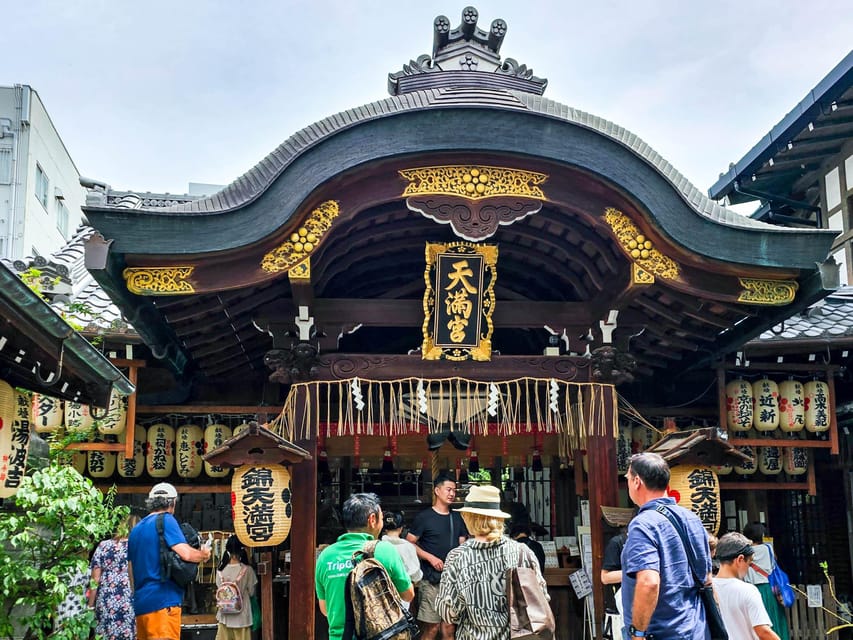
The best reason to book this tour is not simply the four samples. You could spend two hours at Nishiki Market on your own and eat more food. The guide adds value by explaining what you are eating and helping you make sense of an unfamiliar food culture.
Several guides have been praised for answering questions about ingredients, customs, and the background of dishes. Richard, for example, gave recommendations for food and drinks beyond the tour. Jasmine explained both the food and the market’s past, while Mao helped guests understand Kyoto’s regional specialties and the meaning of parts of the shrine.
A guide can also adjust the experience. One family received help with a child who had a narrower range of preferred foods. Another group spent longer at Daimaru because they wanted to look around. That flexibility is useful, though it means your exact number of tastings and the pace may depend on the guide and the group.
You should not expect a formal cooking lesson or a detailed food lecture at every stall. This is a walking introduction with samples and conversation. If you want a long sit-down meal, a restaurant-based food tour would suit you better.
Price, timing, and practical value
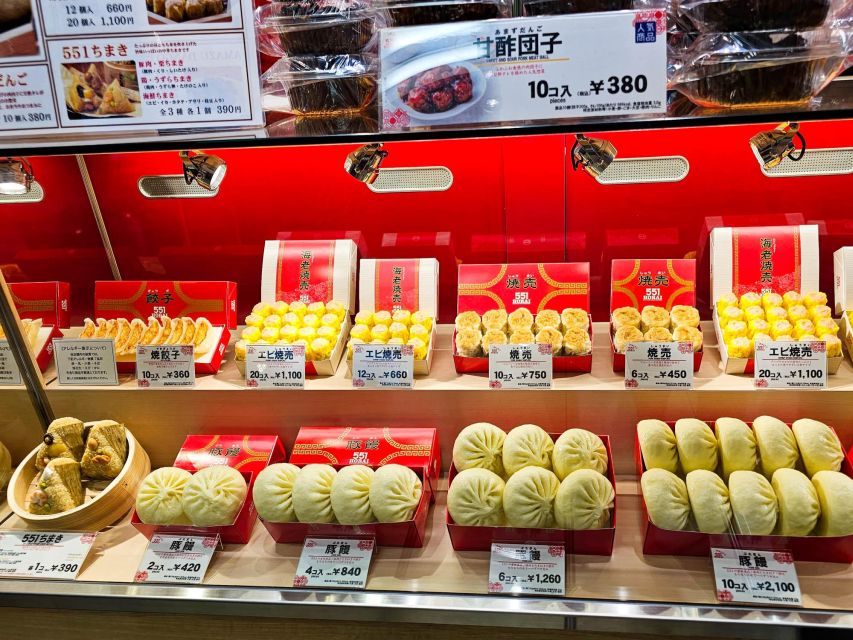
At $42 per person, the tour is reasonably priced if you want guidance, four tastings, and a quick introduction to two different food settings. The price is less attractive if you mainly want to eat a large meal, since additional food and drinks cost extra.
The small group helps justify the cost. You are paying for a guide who can interpret labels, explain local foods, suggest purchases, and answer questions. If you are new to Japan, that can save you from buying something you do not want or missing a specialty you would never recognize.
The duration needs careful attention. The activity is advertised as two hours, while the stated stop breakdown gives about 90 minutes at Daimaru, 60 minutes at Nishiki Market, and 30 minutes at the shrine. That totals three hours before allowing for walking. I would confirm the exact start and finish time with TripGuru Japan before arranging a train, restaurant booking, or another fixed appointment.
Multiple start times make the experience easy to fit into a short Kyoto itinerary. Same-day booking is also possible when space remains, and free cancellation is available up to 24 hours before the start time. You can reserve now and pay later, which helps if your plans are still shifting.
Wear comfortable shoes and carry cash. Bring a camera if you want to record the market displays, but keep it away while eating or when a stall asks you not to photograph. The tour is not suitable for pregnant women or people with mobility, heart, or respiratory issues.
Who will enjoy this food walk most
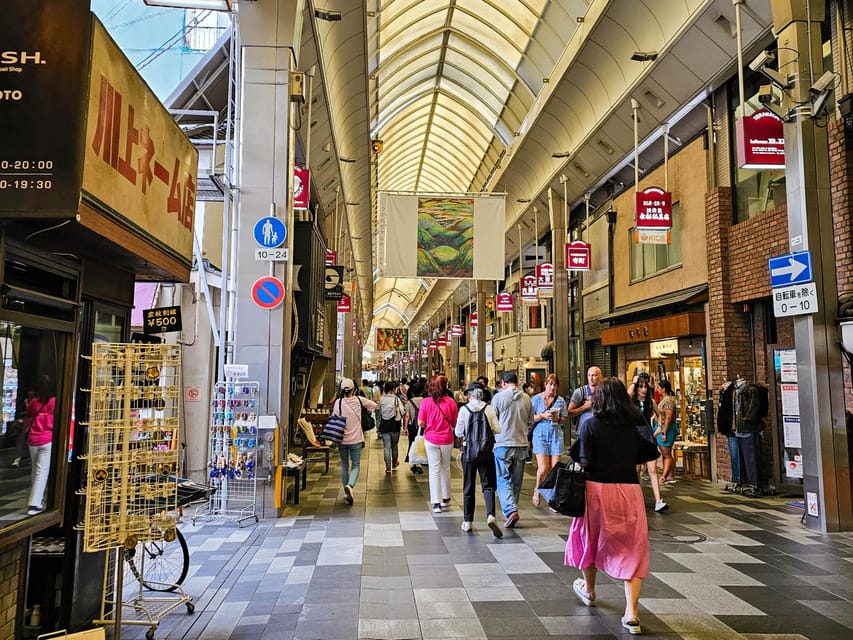
I would recommend this tour to a first-time Kyoto visitor who wants help ordering and tasting local food without committing to a long evening meal. It also works well for couples, families with older children, and solo visitors who prefer a small group to wandering alone.
It is particularly useful if you have only a short opening in your schedule. The market and Depachika are easy to add to a day centered on central Kyoto, and the finish at Kawaramachi Station gives you a convenient next stop.
Food lovers who enjoy browsing will get the most from it. The experience gives you ideas for a second visit to Daimaru or Nishiki Market, and several people returned to buy or eat something they first tried with their guide. That is a good sign that the tour can serve as a useful introduction rather than a one-time checklist.
I would be more cautious if you have food allergies, strict dietary limits, or need guaranteed portion sizes. The listed tastings are specific, but no detailed allergy or dietary information is provided. Ask before booking if you need substitutions or careful ingredient checks.
Should you book it?
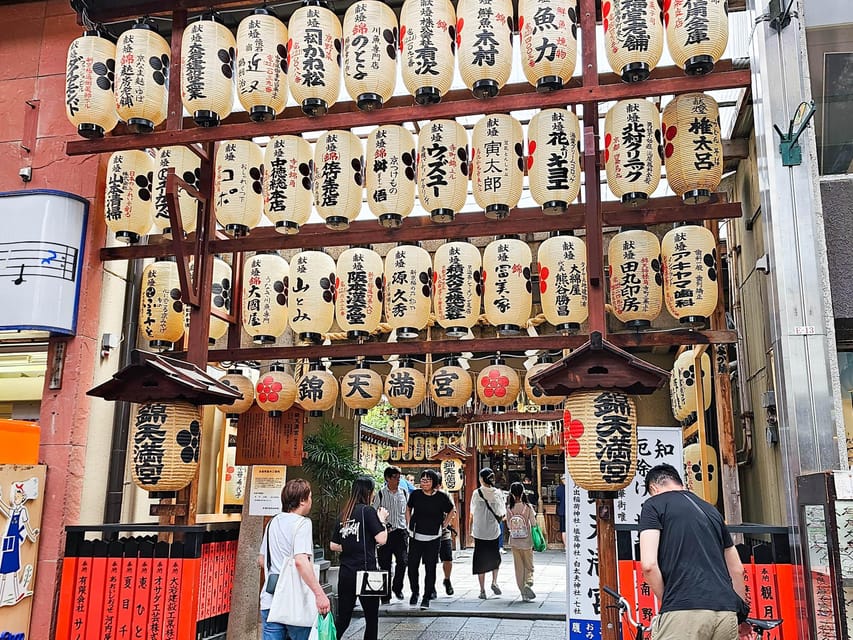
Book this tour if you want a friendly, compact introduction to Kyoto food and prefer explanations with your samples. The strongest parts are the small group, the mix of Daimaru and Nishiki Market, and the guides who can connect food with local customs.
Skip it if you want a self-directed shopping trip, a large meal, or a perfectly fixed two-hour schedule. If you do book, arrive early, ask for the tasting plan at the start, bring cash, and verify the actual finish time. For $42, it is good value when the guide is active and the group takes advantage of the chance to ask questions.
FAQ
Where does the tour meet?
The meeting point is Apple Kyoto. Your guide will wear a TripGuru shirt or hold a TripGuru sign.
Where does the tour finish?
The tour finishes at Kyoto-Kawaramachi Station. Hotel pickup and drop-off are not included.
What food is included?
The listed tastings are yuba sashimi, a soy milk doughnut, Nishiki gyoza, and hamo fish tempura. Additional food and drinks are not included.
How large is the group?
The tour is limited to nine participants, making it a small-group experience.
What language is the tour offered in?
The live tour guide speaks English.
Can I cancel or pay later?
You can cancel up to 24 hours before the tour for a full refund. The booking option also allows you to reserve now and pay later.
More Food in Kyoto
- Tokyo Tsukiji Fish Market Food and Culture Walking Tour
★ 5.0 · 3,184 reviews - Bangkok: Markets, Temples and Food Night Tour by Tuk Tuk
★ 4.9 · 2,371 reviews - London Bridge & Borough Market Food Tour with 7 Authentic Dishes
★ 5.0 · 1,972 reviews - Tokyo: Tsukiji Fish Market Food and Walking tour
★ 5.0 · 1,724 reviews
More Food and Drink Tours in Kyoto
- Kyoto Nishiki Market Food and Culture Walking Tour
★ 5.0 · 412 reviews - Dubai: Old Town, Souks, Street Food, Guided Tour & Abra Ride
★ 4.9 · 7,170 reviews - Bangkok by Night: Temples, Markets and Food Tuk-Tuk Tour
★ 5.0 · 3,752 reviews - Chef Guided Food Tour of Pike Place Market
★ 5.0 · 3,733 reviews
Just added around Kyoto
- Taste of Nishiki Market Walking Food Tour with Local guide★ 5.0 · 17 reviews
- Nishiki Market Food Tour with Cooking Class★ 4.9 · 42 reviews
- Kyoto: Wholesale Fish Market Walking Tour★ 5.0 · 2 reviews
- Kyoto: Nishiki Market Tour with a Local Foodie & Tastings★ 4.5 · 67 reviews
- Golden Pavilion, Nijo Castle, & Nishiki Market Half day tour★ 5.0 · 29 reviews
- Kyoto: Arashiyama Unveiled Bamboo, Temple, Matcha, & Monkeys★ 5.0 · 6 reviews
- Kyoto: Nishiki Market Food Tour★ 4.9 · 21 reviews
- Kyoto: Enjoy Sushi & Market Tour! Best for Family & Couple!★ 4.8 · 20 reviews
Street Food Market Tours, compared.

Old Town, Creek, Museums, Souks, & Street Food Tour
Read our review →
Old Town, Souks, Street Food, Guided Tour & Abra Ride
Read our review →
London Bridge & Borough Market Food Tour with 7 Authentic Dishes
Read our review →
Old Town, Souks, Street Food, Guided Tour & Abra Ride
Read our review →
Small Group Cooking Class & Market Food Tour in Florence
Read our review →
Old Town, Street Food, Creek, Souks, & Emirati House
Read our review →Browse the lists this tour appears in