
Review · MARRAKECH
Marrakech: Bahia Palace, Saadian Tombs, Souk and Medina Tour
Marrakech’s best introduction may be a walk that links its major sights instead of treating them as separate stops. This four-hour route moves from the Koutoubia Mosque and royal Kasbah to the Saadian Tombs, Mellah, Bahia Palace, and the twisting medina. Guides such as Yassine, Mo, Ayoub, and Mouhssine have been praised for clear explanations, humor, and practical help.
I like two things here: the route gives you your bearings early, and it puts the most important monuments into one morning or afternoon. I also like the chance to ask questions while walking through working neighborhoods, rather than simply moving from one photo stop to another.
The main catch is cost and crowd control. The advertised $20 covers the guide and walking tour, but Bahia Palace and the Saadian Tombs cost an extra 100 MAD each per adult, payable in cash. Lines can still form inside, and one scheduled stop may become a herbal or argan-oil shop visit.
Key points at a glance
- Four hours on foot: Cover the Koutoubia area, Kasbah, Mellah, two major monuments, souks, and the medina.
- The tickets cost extra: Budget 200 MAD per adult for Bahia Palace and the Saadian Tombs, paid in cash.
- A strong first-day tour: The route helps you understand the city center before exploring alone.
- Guides make the difference: Yassine, Mo, Ayoub, Mouhssine, and Mustapha are among the guides praised for warmth, humor, and useful local advice.
- Expect busy streets and steps: Comfortable shoes, water, sun protection, and patience matter.
- The finish is practical: The walk ends near Café de France in Jemaa el-Fna, a useful place to continue sightseeing or find lunch.
Why this four-hour route works in Marrakech
Marrakech can feel confusing at first. The medina is a maze of narrow lanes, small squares, workshops, food stalls, and sudden openings onto busy roads. A map shows the streets, but it does not explain why one gate matters, how the old quarters fit together, or which way to turn when a lane seems to disappear.
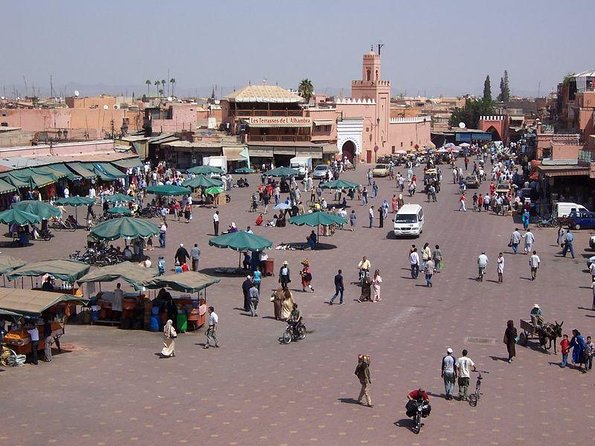
This tour gives you that framework. You start near Jemaa el-Fna, walk through the southern part of the old city, visit major monuments, and finish back near the square. Afterward, you should have a better sense of where the Kasbah, Mellah, palace, souks, and central square sit in relation to one another.
I think the timing is especially useful on your first full day. You can learn the basic layout in four hours, then return later to the places that caught your interest. The guide can also point out lunch options, routes to avoid during construction, and small details you might miss on your own.
The tour is offered as a private or shared group experience. A private tour gives you more control over pace and questions. In a group, you may get a lively mix of people and a lower price, but hearing the guide in crowded streets can be harder. One person specifically suggested that Bluetooth audio equipment would help in noisy areas, so stay near the guide when the medina gets loud.
A few more market tours around Marrakesh worth a look
- Marrakech: Ben Youssef, Secret Garden, & Souks Walking Tour
★ 4.6 · 2,802 reviews - Marrakech: Colorful Medina Souks Guided Walking Tour
★ 4.7 · 2,470 reviews - Marrakech: Traditional Moroccan Cooking Class & Market Visit
★ 4.8 · 1,861 reviews
Koutoubia Mosque and the first look at Marrakech
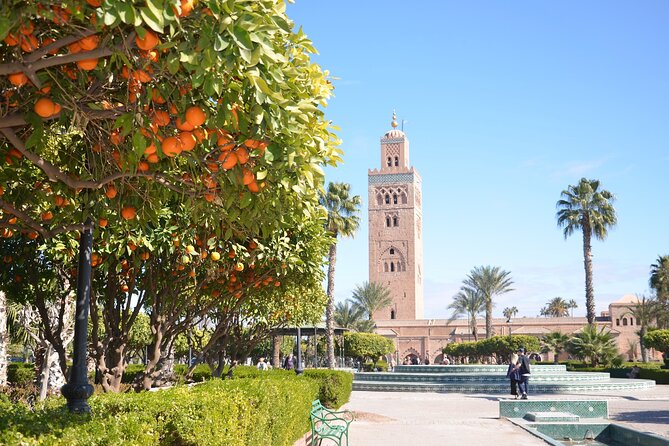
The first monument is the Koutoubia Mosque, Marrakech’s most recognizable landmark. You view it from the outside, since access is restricted to Muslims during prayer times. The stop lasts about 10 minutes and is mainly for orientation, photographs, and an explanation of the mosque’s Almohad design and tall minaret.
Do not book this expecting an interior visit. The value is the setting and the context. Koutoubia helps explain Marrakech’s visual identity, and its minaret is visible from many parts of the city. A good guide can also use this first stop to set the tone for the rest of the walk.
The short visit works well because the tour has a lot to cover. Bring your camera, but listen closely too. This is the point where the guide begins connecting the city’s religious, royal, and commercial quarters.
Bab Agnaou and the Kasbah’s royal past
From Koutoubia, the route moves toward Bab Agnaou, a 12th-century gate viewed from outside. Its carved stone decoration and royal role make it more than a doorway. It marked an important entrance to the Kasbah, the former fortified royal district.
You get about 15 minutes here for photographs and a short explanation. The gate is worth seeing in person because its scale and surface detail are easy to miss in a quick drive past. The stop also introduces the difference between Marrakech’s grand public monuments and the quieter lanes behind them.
The Kasbah visit takes another 15 minutes. Expect a walk through narrow streets and a look at everyday life in this old quarter. This is not a museum-style stop, so the guide’s commentary matters. Guides such as Mustapha and Ayoub have been praised for explaining how different parts of the city relate to one another and for adjusting the route to group interests.
Saadian Tombs: beautiful, popular, and prone to queues
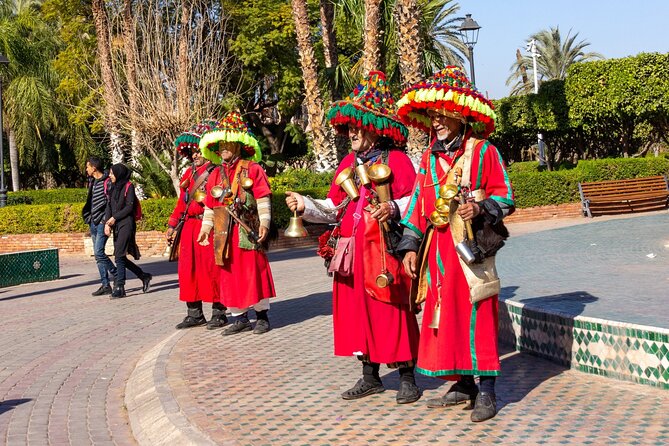
The Saadian Tombs are one of the tour’s main reasons to book. The burial site belonged to the Saadian dynasty and was rediscovered in 1917 after being forgotten for centuries. Inside, you see zellij tilework, marble columns, and decorated ceilings that show the skill and expense devoted to royal burial spaces.
The planned visit is about 40 minutes. That gives your guide time to explain the site and leaves some room for photographs and independent looking. The tombs are compact, so the experience can feel crowded when several groups arrive together.
This is the stop where timing matters most. Lines may still form inside even when the guide helps you get past the initial ticket queue. One private group was advised to start earlier to avoid a long wait, and that advice proved useful. If you have a choice of start times, an earlier visit can be a sensible move.
Construction or temporary work can also affect access. One recent tour did not enter the tombs because of construction, so treat the stop as planned access rather than an absolute guarantee. Your guide should explain any change and adjust the route.
The entry fee is not included. Allow 100 MAD per adult and carry cash. If you are counting every expense, this extra charge is important: the $20 headline price is not the full cost of visiting both paid monuments.
Same stalls, a different way to shop and eat:
- Marrakech Monuments & Souks 3-Hour Tour
★ 3.8 · 1,540 reviews - Marrakech: Saadian Tombs, Bahia Palace, Medina and Souk Tour
★ 4.7 · 673 reviews - Marrakech: Bahia Palace, Ben Youssef Medersa, & Souks Tour
★ 4.3 · 554 reviews - Marrakech: Moroccan Cooking Class with Market Visit and Meal
★ 4.9 · 347 reviews
The Mellah, where architecture tells a social story
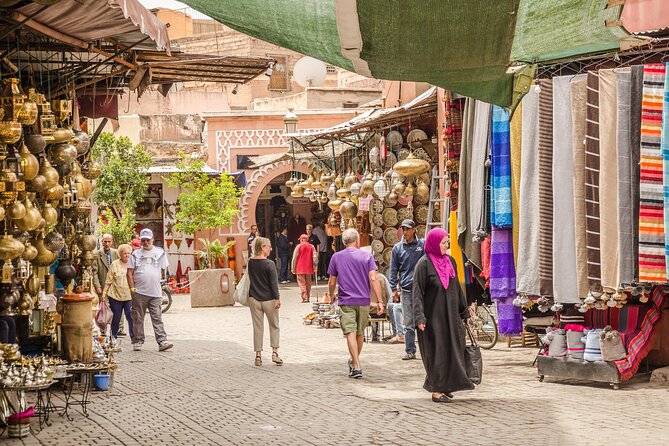
The walk continues into the Mellah, Marrakech’s former Jewish quarter. The planned stop lasts about 15 minutes and combines photographs, sightseeing, and a short guided walk.
You should not expect a separate museum visit here. The interest lies in the street plan, buildings, and the story of a Jewish community that once played an important part in Marrakech. A guide can point out how this quarter differs from the Kasbah and the commercial lanes of the medina.
This is one of the tour’s more valuable stops because it broadens the story beyond sultans and palaces. Marrakech developed through several communities and traditions, and the Mellah gives you a more complete picture of the city. Ask questions here if you want to understand how religion, trade, and neighborhood life shaped the old city.
Bahia Palace and the finest indoor stop
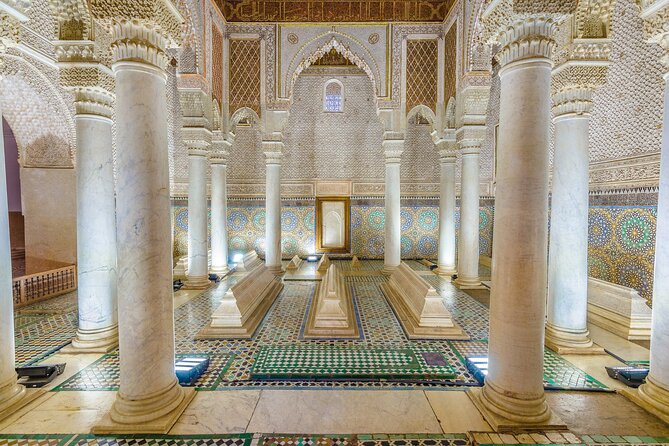
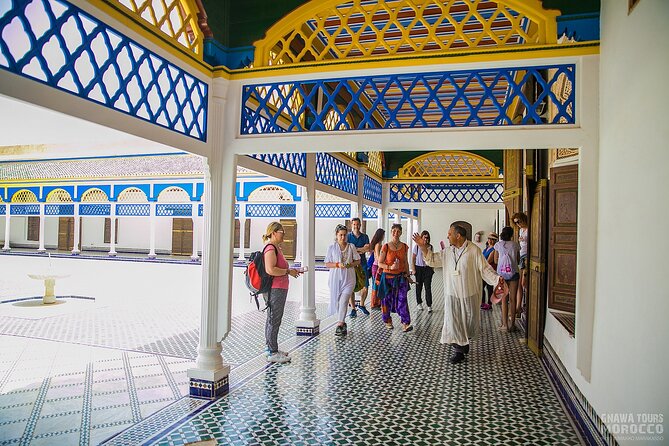
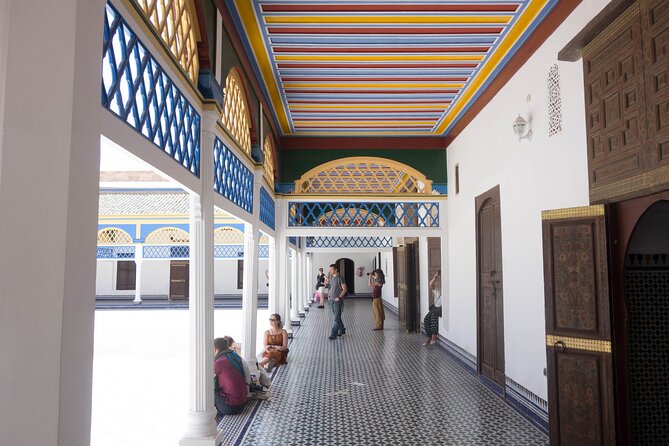
Bahia Palace is scheduled for about 45 minutes, making it the longest monument visit. Built in the 19th century, it was designed to display the finest Moroccan craftsmanship. You move through courtyards and rooms with colorful tilework, carved cedar ceilings, and carefully finished surfaces.
This is likely to be the visual highlight of the day. The palace offers shaded courtyards and a calmer change of pace after the streets. Your guide goes inside with you, explains the rooms, and then allows time to look around and take photographs.
There are steps in parts of the palace, and some areas may be under renovation. The site is accessible to wheelchair users according to the activity details, but the overall tour is not recommended for people with mobility impairments because of the walking, uneven lanes, and steps.
The palace fee is another 100 MAD per adult, paid in cash. Put the money aside before you start. You do not want to spend the morning searching for an ATM while the group waits.
Bahia Palace can also become crowded. The guide may help with the initial ticket line, but that does not guarantee an empty interior. Keep your group in sight and stay close enough to hear the explanation.
Souks, workshops, and the question of shopping
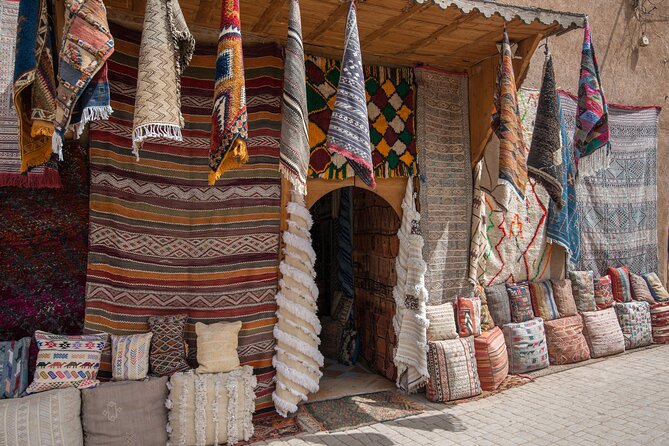
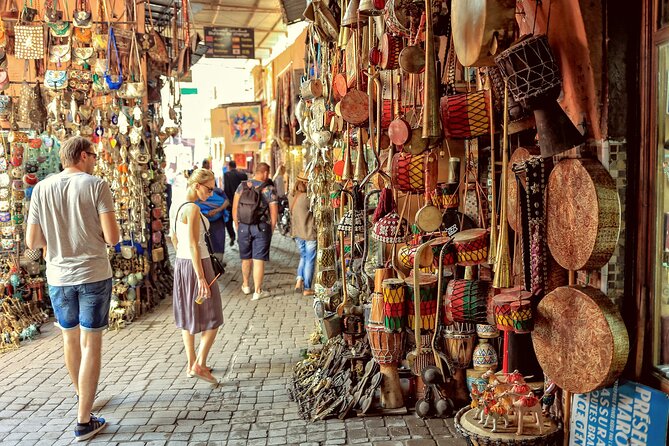
After the monuments, the route enters the souks and the wider medina. This is where Marrakech becomes less about set-piece architecture and more about daily trade. You may pass spice stalls, textiles, leather goods, pottery, woodwork, and metalwork, along with workshops where craftspeople use traditional techniques.
The planned medina portion lasts about 40 minutes, though the route can feel longer because the lanes are slow to walk. Motorbikes, pedestrians, shop displays, and sudden turns all compete for space. Wear shoes with a firm sole and keep your belongings secure without becoming tense. Staying alert is enough.
A guided walk is useful here because the lanes can be difficult to follow. It also gives you a chance to ask how products are made and which areas are worth revisiting. I would treat the shopping element as optional, not as the purpose of the tour.
Some versions of the route include a stop at an herbal shop or an argan-oil and soap demonstration. This can be entertaining and informative, but it can also feel like a sales stop. One person found prices there much higher than in local markets, so do not assume you are getting the best deal. If you have allergies, say so and decline any product demonstration that concerns you.
You can listen, ask questions, and leave without buying. That is the sensible approach. Later, compare prices elsewhere before purchasing spices, oils, soap, or other goods.
Ending at Jemaa el-Fna
The tour finishes at Café de France in Jemaa el-Fna. This is a practical endpoint, not just a formal finish. You are near the square, food options, souk entrances, and routes back into the medina.
The square changes character through the day, so ask your guide what is worth seeing next and where to eat. Several guides have offered useful restaurant suggestions, and one helped a group choose lunch after the walk. These small recommendations can save time when you are hungry and still finding your way around.
You may also want to return to Bahia Palace, the souks, or the square on your own. By ending here, the tour leaves you in the middle of the action rather than at a distant transport stop.
Guide quality and the shared versus private choice
The strongest part of this experience is the guide service. Names that appear often in the feedback include Yassine, Mo, Ayoub, Mouhssine, Mustapha, Hassan, Ismail, Abdul, and Amid. The qualities to look for are clear English, patience, humor, and a willingness to answer questions rather than rush through memorized facts.
Yassine is praised for keeping groups entertained while explaining the monuments. Mo is described as warm, informed, and a good photographer. Ayoub is noted for adapting the route and explaining cultural details carefully. Mouhssine is repeatedly described as friendly, energetic, and well prepared.
Of course, the exact guide depends on the date and language selected. The tour is available in English, French, Spanish, and Italian. The provider sends the guide’s name, meeting point, and useful reminders by WhatsApp before the tour, which helps in a city where several guides may gather near Café de France.
The meeting point can be confusing. The square is busy, and it may not be obvious which person is your guide. Check your messages and contact the provider if you cannot find the right person. A private option may meet you at your riad reception if you are staying inside the medina.
What the $20 price really covers
At $20 per person, this is good value for a four-hour guided walk, particularly if you are new to Marrakech. The price includes a licensed local guide, a private or small-group format depending on the option, guided entry assistance, and time to explore the monuments after the explanation.
But the cost needs to be read correctly. The two main paid sites add 200 MAD per adult in total, and transportation is not included. You also need cash for the monument tickets and any purchases.
The value is highest if you want orientation and context. You can walk through the medina alone for less, but you will likely spend more time finding the monuments and less time understanding them. If you already know Marrakech well and prefer to set your own pace, the tour may feel structured.
The private option is worth considering for families, small groups, or anyone with specific interests. A private guide can slow down at Bahia Palace, move quickly past shopping, or spend more time on architecture. A shared group is the better budget choice, but crowded lanes can make it harder to hear.
Timing, comfort, and practical preparation
Plan on four hours of walking. The route includes narrow streets, uneven surfaces, steps, and busy sections. Bring comfortable shoes, water, sunglasses, a sun hat, and cash.
The tour is listed as wheelchair accessible, but it is not suitable for people with mobility impairments. If you have limited walking ability, contact the provider before booking and ask exactly which sections can be adjusted.
During Ramadan, the supplied schedule changes. From February 18 through March 20, morning tours begin at 9:30 instead of 10:00, and afternoon tours begin at 13:00 instead of 14:00 because monuments close earlier. Check the available start time for your date.
Allow extra time if your group has a dinner reservation. One afternoon group left early for a 5:30 reservation, so a four-hour activity can be difficult to combine with a fixed evening plan.
Should you book this Marrakech medina tour?
Book it if you are visiting Marrakech for the first time, want the major sights in one outing, or value a guide who can explain customs, history, and local neighborhoods as you walk. It is especially useful on your first full day, when the medina still feels like a puzzle.
Choose the private version if you want flexibility, have children, or care about photography and a slower pace. Choose the shared option if you want a lower price and do not mind staying with a group.
Skip it if you dislike guided shopping stops, want to explore entirely alone, or cannot manage several hours on foot. Also budget for the two monument fees and accept that the Saadian Tombs may involve a queue or temporary access change.
For most first-time visitors, I would book this as an orientation walk, not as the complete Marrakech experience. It gives you the layout, the major monuments, and enough local advice to continue exploring on your own.
FAQ
How long does the Marrakech medina tour last?
The tour lasts four hours. It includes guided visits and walking time at Koutoubia Mosque, Bab Agnaou, the Kasbah, Saadian Tombs, Mellah, Bahia Palace, and the medina.
Are Bahia Palace and the Saadian Tombs included in the price?
No. Entry tickets are paid separately in cash on site. Bahia Palace costs 100 MAD per adult, and the Saadian Tombs cost 100 MAD per adult.
Where does the tour begin and end?
The standard meeting point is in front of Café de France in Jemaa el-Fna square. The tour finishes at Café de France Medina. For the private option, pickup from your riad reception is available if you are staying inside the medina.
Can I enter the Koutoubia Mosque?
The tour views Koutoubia Mosque from outside only. Entry is restricted to Muslims during prayer times.
What languages are available?
Live guides are available in English, French, Spanish, and Italian. The exact language depends on the option selected when booking.
What should I bring?
Bring comfortable shoes, sunglasses, a sun hat, water, and cash. Cash is needed for the Bahia Palace and Saadian Tombs entry fees, and may also be useful in the souks.
Just added around Marrakesh
- Souks tour of Marrakech ( 3 hours )★ 5.0 · 5 reviews
- Marrakech: Hidden Souks Shopping Tour with Private Guide★ 4.1 · 53 reviews
- Edgy 8 Dish Private, Fusion Cooking Class, Menu Plan, Market★ 4.9 · 31 reviews
- Marrakech: Half-Day Medina Markets Tour★ 4.5 · 11 reviews
- Marrakech: Vibrant Souks, Local Artisans & Medina Experience★ 4.5 · 66 reviews
- Marrakesh: Private Cooking Class & Local Market Shopping★ 4.7 · 15 reviews
- Marrakech: Bahia Palace, Madrassa & Souks Guided Tour★ 4.8 · 47 reviews
- Marrakech: Refined lunch or dinner at La Table du Marché★ 5.0 · 2 reviews
Marrakech Market Tours, compared.
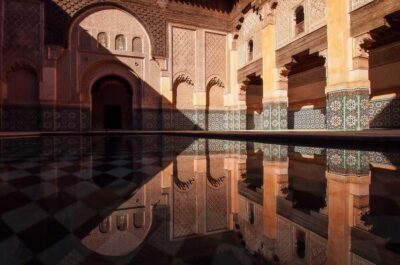
Ben Youssef, Secret Garden, & Souks Walking Tour
Read our review →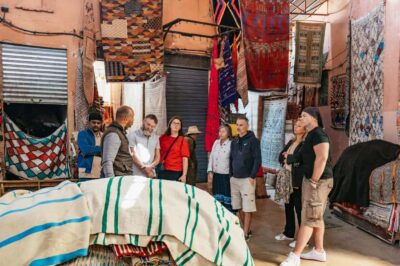
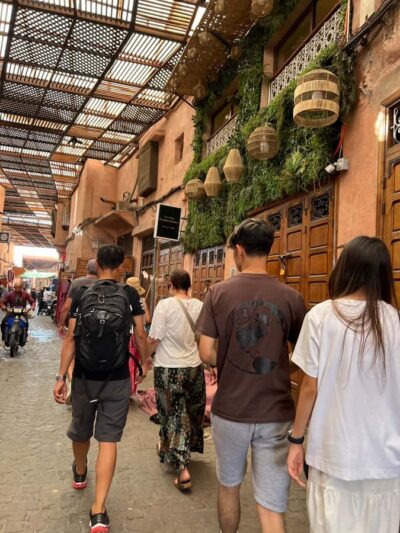
Traditional Moroccan Cooking Class & Market Visit
Read our review →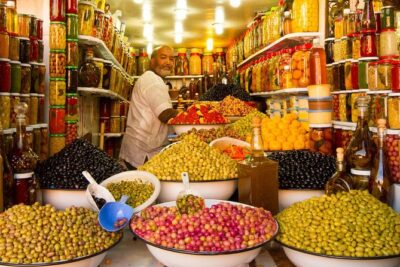
Moroccan Cooking Class & Marrakech Market Visit with Chef Khmisa
Read our review →
Saadian Tombs, Bahia Palace, Medina and Souk Tour
Read our review →
Shopping in the Souks of Marrakech Private Tour
Read our review →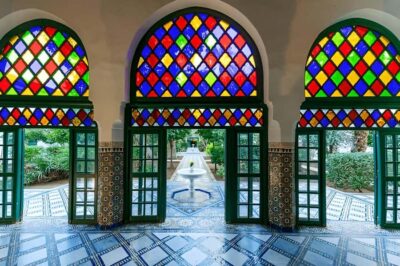
Bahia Palace, Ben Youssef Medersa, & Souks Tour
Read our review →Browse the lists this tour appears in