
Review · CHINA
Old Guangzhou Backstreet Alley Local Market Walking Private Tour
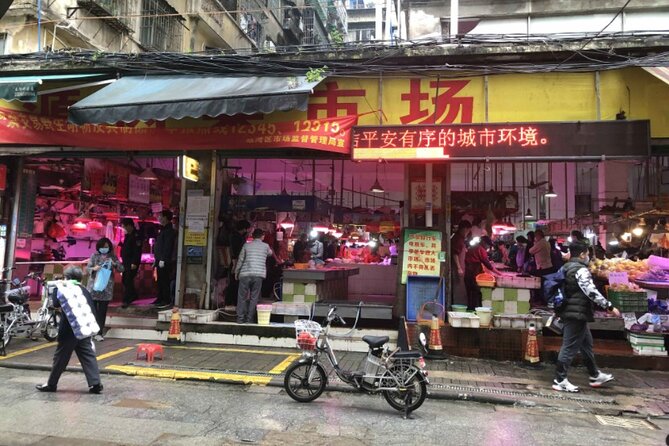
Old Guangzhou is best understood away from its headline sights. This private walk leads you through backstreets, food markets, old residences, and public parks, where the city’s daily rhythm matters more than a checklist of monuments. You may see mahjong games, shuttlecock play, Cantonese opera singing, dancing, and shopping for ordinary household goods.
I like the flexible private format, which lets your guide shape the day around your interests. I also like the mix of places: Yong Qing Fang for old buildings with a newer purpose, Qingping for market life, and Lychee Bay for a quieter public space. The main catch is the price, $180 per person, and the fact that meals, snacks, and hotel drop-off are not included.
Key details to know before booking
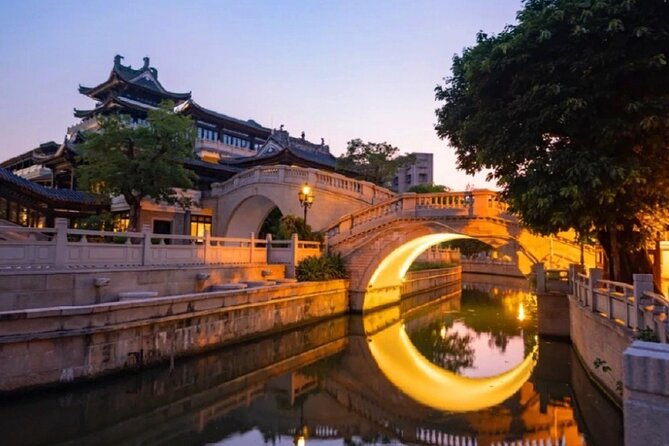
- Old Guangzhou is the focus: You visit traditional residential lanes, Qilou buildings, neighborhood markets, parks, and shopping streets rather than only major tourist attractions.
- The route is private: Only your group takes part, with an English-speaking local guide providing full escort.
- Public transport is part of the experience: Metro and bus tickets are included, giving you a practical look at how people move around the city.
- Damon is a named guide to request if available: He is praised for easy communication and for shaping the day around personal interests.
- The schedule can run from three to ten hours: Your final length depends on the plan arranged for your group.
- The $180 price buys personal attention: It makes more sense for a small group wanting a local escort than for a solo visitor seeking the cheapest sightseeing option.
Why old Guangzhou works better on foot
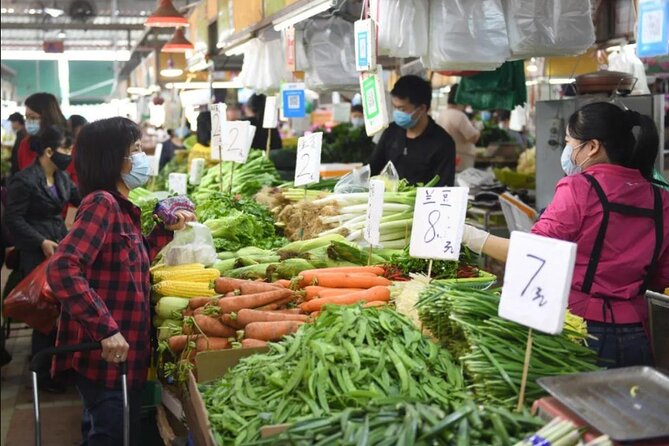
This outing is built around ordinary scenes. Instead of rushing from one famous attraction to another, you move through parts of the old city where shops, homes, public spaces, and markets sit close together. That makes the tour useful if you want to understand how Guangzhou functions beyond its polished visitor districts.
The guide is there to explain what you are seeing and to help you move by metro and bus. That matters in a large Chinese city, especially when signs, neighborhoods, and transport connections may not be easy to read at a glance. You are not simply dropped at a market and left to wander. The full escort gives the day a clear thread.
The private setup also changes the pace. You can spend more time on architecture if that interests you, or give extra attention to markets, local customs, or food. The guide can tailor the activities, as Damon did for two guests who wanted a route shaped around their own interests. He also has experience with larger groups, so the format is not limited to couples or solo visitors.
Still, you should be clear about what this is not. It is not a luxury car tour, a fixed museum package, or a food tour with meals built into the price. It is a walking and public transport experience, and the city itself provides the subject.
More Local Market Tours in China
- Half-Day Chengdu Cooking Class with a Local Market Visit
★ 5.0 · 465 reviews - Half-Day steamed Buns Cooking Class with a Local Market Visit
★ 5.0 · 26 reviews - Half-Day Professional Mapo Tofu Cooking with a Local Market Visit
★ 5.0 · 19 reviews
Yong Qing Fang and the old neighborhood’s new life
The first stop, Yong Qing Fang, shows how an old residential area can be refreshed without wiping away its past. The idea is described as micro modification: small changes that add newer commercial and creative uses while keeping the older neighborhood character.
You get about an hour here, enough time to see the contrast between preserved surroundings and newer shops or public spaces. This is a useful opening because it introduces a question that comes up across old Guangzhou: how can a city keep its traditional streets while making them useful for present-day life?
The area is not presented as a frozen historic set. Its appeal comes from the mix of old homes, renovated corners, and younger energy. You may find this stop more polished than the markets later in the day, but that contrast is part of its value. It shows the city working on its past rather than simply displaying it.
Your guide’s commentary matters here. Without context, you might see attractive old buildings and new businesses but miss the larger point about preservation and commercial change. With a private guide, you can ask why certain areas were kept, what the renovation aims to do, and how local residents fit into the picture.
Qilou buildings and traditional residential lanes
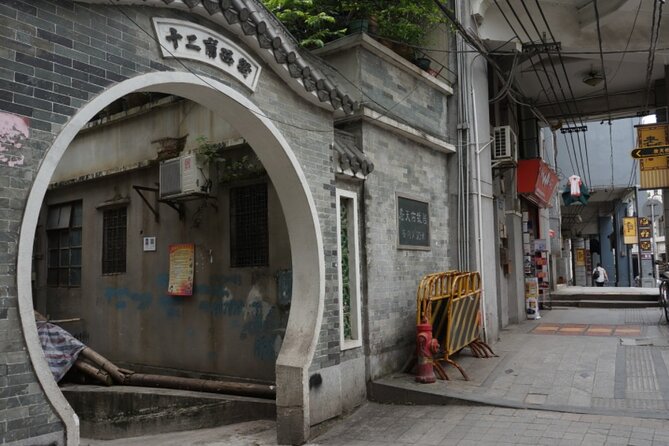
At XiGuan MinSuGuan, you walk into a local neighborhood with traditional Cantonese architecture. The key feature is the Qilou building, a style known for its covered street-facing structure and close relationship between homes and commerce.
You also see large wooden sliding doors associated with older, well-off family homes. The stop lasts about 30 minutes, so expect a focused look rather than an extended architectural tour. It works best as a short walk through the neighborhood, with your guide pointing out details that are easy to miss on your own.
This section gives you a better sense of how people once lived in the old city. The buildings are not only decorative. Their doors, street fronts, and compact arrangement reveal something about family life, business, and the use of public space.
There is a practical limitation: residential areas are not formal museums. The experience depends on the condition of the streets and on how much explanation your guide provides. If you expect grand interiors or a large collection of preserved rooms, adjust your expectations. The reward is the setting itself and the chance to see architecture in a lived-in context.
Lychee Bay, Cantonese opera, and public park life
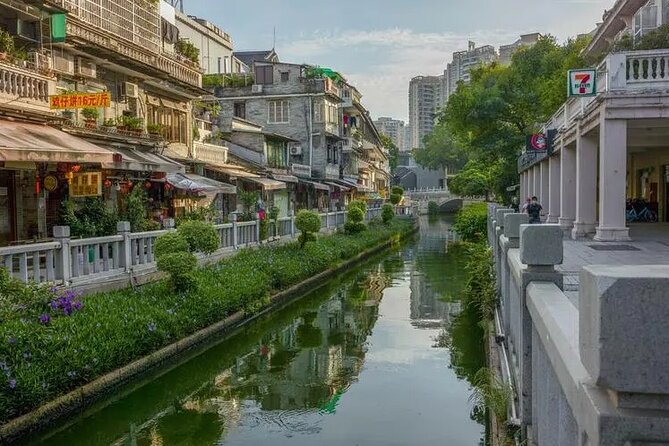
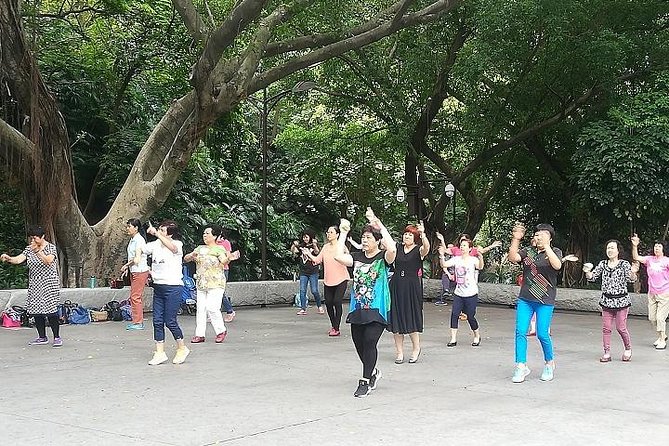
Lychee Bay Scenic Area provides a change of pace. This public park has bridges and pavilions, but the most interesting part may be what local people do there. You might see people playing traditional musical instruments, singing Cantonese opera, or spending time in informal social groups.
The visit lasts around 30 minutes. That is enough for a walk and a look at the park’s daily activity, though it is not a long park excursion. The appeal is less about checking off a scenic viewpoint and more about watching how a public space is used.
If you have only seen Guangzhou through shopping streets and major attractions, this stop adds a needed human scale. Parks in Chinese cities often act as social rooms, exercise areas, performance spaces, and meeting places. Lychee Bay gives you a chance to observe that pattern directly.
The activity may vary by time and day, since public performances and games are part of local life rather than a scheduled show. Your guide can explain what you are seeing, but no fixed Cantonese opera performance is promised at the park itself. Bring curiosity rather than a demand for a formal program.
More Private Market Tours in China
- Private Guangzhou Food Tour Michelin Restaurant&Local Food Market
★ 5.0 · 32 reviews - Private Beijing Markets Tour with Tea Tasting at Hongqiao Pearl Market
★ 5.0 · 18 reviews - 6-Hour Private Beijing Tour: Flower and Fish Market, Panjiayuan Antique Market and 798 Art Zone
★ 5.0 · 7 reviews - Private Tour to Pearl Market Acrobatic Show & Peking Duck Dinner
★ 5.0 · 5 reviews
The Cantonese Opera Art Museum
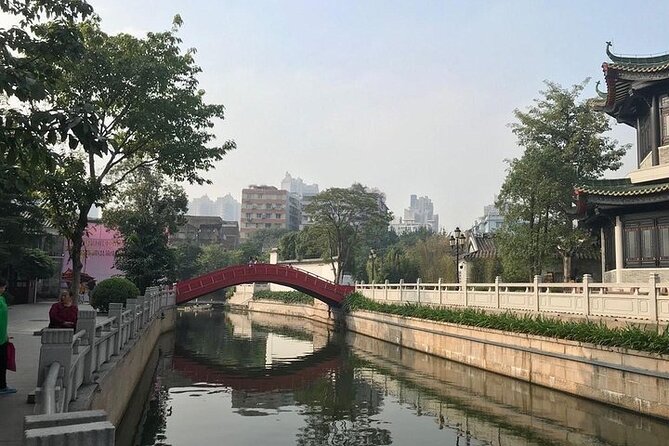
The Cantonese Opera Art Museum offers the most structured cultural stop on the route. You learn about Cantonese opera through its costumes, facial makeup, musical instruments, martial arts, and related traditions.
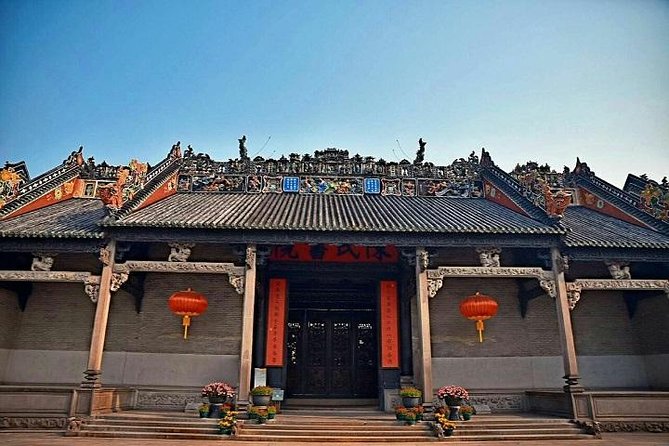
The museum is also part of a visually appealing setting, with traditional design elements that add to the visit. At about 30 minutes, the stop is concise. You get an introduction to the art form rather than an exhaustive museum visit.
That short visit can be useful before or after Lychee Bay. In the park, you might see people singing or playing instruments in a casual setting. At the museum, you can connect those sounds and movements to the formal traditions behind them. The two stops support each other.
Admission fees, if required, are not included for you or the guide. The tour information does not give a fixed admission price, so confirm the current cost when planning your budget. This is one of the few points where the advertised tour price may not cover every expense.
Shangxiajiu Pedestrian Street without the usual sightseeing script
Shangxiajiu Pedestrian Street is a local shopping road rather than a quiet heritage lane. You see shops and street vendors selling clothes, shoes, jewelry, snacks, and other everyday goods. The street also includes typical Chinese decorative details that help give the area its visual character.
You have about an hour here. That gives you time to watch the flow of shoppers, browse storefronts, and stop for a snack if you choose. Food is optional and paid separately for you and your guide, so this can become an informal tasting break, but it is not included as a set food itinerary.
I like this stop because it keeps the tour grounded in present-day life. Old Guangzhou is not only about preserved doors and historic buildings. It is also about where people shop, what they buy, and how older commercial streets continue to serve a local purpose.
The tradeoff is that shoppers may want more time than the schedule allows. If you are serious about buying clothes, jewelry, or local goods, ask your guide early if the route can be adjusted. The private format makes that conversation possible, although changes depend on the overall time available.
Qingping Medicine Market and the city’s working side
The final market section takes you to Qingping Medicine Market and nearby grocery and vegetable stalls. This is one of the most distinctive parts of the route because it shows Guangzhou as a place of trade, supplies, and daily errands.
You can expect a broad display of herbs, spices, and market goods. The tour also gives you a look at the ordinary shopping habits of local residents. This is not a staged cultural exhibit. It is a working market, so the experience is best approached with respect and attention.
The market may be especially useful for visitors who want to understand Chinese traditional medicine in a visual, practical way. You can see the range of materials sold and ask your guide about their general role. Do not assume that every item is intended for casual purchase or personal use, and do not treat the stop as a medical consultation.
The visit is scheduled for about 30 minutes. That is enough for an introduction, but you may want longer if markets are your main interest. The compact timing also helps keep the full route manageable, since the day already includes several different neighborhoods.
How the public transport element changes the day
Metro and bus costs are included, and you move around with your guide rather than using a private vehicle. That is important to understand before booking. Public transport adds local texture, but it also means the day involves walking, transfers, and the normal pace of a city outing.
I see this as a benefit for visitors who want a more genuine sense of Guangzhou. You get to observe how residents travel between neighborhoods, not just pass through the city behind car windows. It also makes the tour feel connected to the places you visit.
The route is near public transportation, and most people can take part. However, the supplied details do not give a precise walking distance or step count. If you have mobility concerns, ask for a route breakdown before booking. A tour built around alleys, markets, pedestrian streets, and public transport may require more walking and standing than a vehicle-based excursion.
Hotel pickup is included. Hotel drop-off is not, so plan your return separately or ask the guide for directions at the end. That small detail matters if you have evening reservations or a train to catch.
What the $180 price really covers
At $180 per person, this is not the low-cost way to see Guangzhou. The value comes from private guiding and route flexibility, not from admission to expensive attractions. The listed stops are mostly free, while transport costs are covered.
For a small group, the price can make sense because you share the guide’s attention only with your own companions. You can ask questions freely, pause at a market, and shape the emphasis around your interests. Group discounts are offered, which may improve the per-person value for a larger private party.
The price is harder to justify if you mainly want to visit the museums and streets on your own. The route uses public transport, and several stops are free, so independent visitors could spend far less. You are paying for orientation, translation help, cultural explanation, and the ease of having someone organize the moving parts.
Budget separately for food, snacks, and any admission charges. The guide’s food and admission costs are also not included if you choose those extras. Since the experience is non-refundable and cannot be changed after booking, confirm your date, group size, and preferred length before paying.
Who will get the most from this private walk
I would choose this tour if you have already seen Guangzhou’s major sights, or if you want your first day in the city to focus on ordinary neighborhoods. It suits people who enjoy markets, architecture, public parks, local shopping, and conversation more than grand monuments.
It is also a good match for families or small groups with different interests. One person can ask about food and markets, another can focus on architecture, and another can learn about Cantonese opera. A private guide can balance those needs better than a fixed group outing.
You should think twice if you dislike walking, public transport, or unstructured market scenes. The day is not designed around luxury comfort. It is designed around seeing how old Guangzhou works.
The duration is listed as roughly three to ten hours, a wide range that reflects the private setup. Confirm the intended length before booking. A short version may touch each area quickly, while a longer day gives you more time for shopping, questions, food, and neighborhood observation.
Should you book the Old Guangzhou Backstreet Alley Tour?
Book it if you want local life over landmark collecting, and if the chance to see parks, markets, Qilou buildings, Cantonese opera culture, and ordinary shopping streets sounds more appealing than a standard sightseeing circuit. The private format and named guide Damon’s record of tailoring activities are strong reasons to consider it.
Skip it if $180 per person feels too high for a route made mainly of free stops, or if you want guaranteed performances, included meals, or hotel drop-off. For the right visitor, the tour’s value lies in access, context, and flexibility. It gives you a practical way to read old Guangzhou, one neighborhood and market at a time.
FAQ
Where does the tour take place?
The experience takes place in old Guangzhou, China, visiting Yong Qing Fang, XiGuan MinSuGuan, Lychee Bay Scenic Area, the Cantonese Opera Art Museum, Shangxiajiu Pedestrian Street, and Qingping Medicine Market.
How long does the tour last?
The approximate duration ranges from three to ten hours. Confirm the planned length for your group when booking.
Is the tour private?
Yes. Only your group participates in the activity.
Is hotel pickup included?
Yes. Hotel pickup is included.
Is hotel drop-off included?
No. Hotel drop-off is not included.
Is public transportation included?
Yes. Metro and bus costs are included in the tour price.
Is an English-speaking guide provided?
Yes. A local English-speaking guide provides full escort during the experience.
Are meals or snacks included?
No. Local food and snacks are optional and paid separately for you and the guide.
Are attraction admission tickets included?
No. Admission tickets, if needed, are not included for you or the guide.
Can most people participate?
The experience is near public transportation, and most people can participate. The supplied details do not provide a specific walking distance or accessibility plan, so ask about the route if you have mobility concerns.
More Shopping Tours in China
- Organic Xiao Long Bao Soup Dumpling Class & Market Walk
★ 5.0 · 62 reviews - Chengdu: Cooking Class with Fresh Market Half Day Experience
★ 5.0 · 42 reviews - Hong Kong Market Walking Tour & Chinese Cooking Class
★ 5.0 · 24 reviews - Shanghai Night River Cruise and Light Tour with Yuyuan Bazaar
★ 5.0 · 11 reviews
More Markets in China
- Mini Group Xian Day Tour to Terracotta Army, City Wall, Pagoda and Muslim Bazaar
★ 5.0 · 1,320 reviews - Shanghai Day Tour to Zhujiajiao Water Town, Yu Garden, Bazaar, Bund
★ 5.0 · 162 reviews - Organic Chinese Dumpling Class with Market Walk
★ 5.0 · 88 reviews - Xi’an: Terracotta Army, Lunch, City Wall, Pagoda, Bazaar
★ 5.0 · 72 reviews
Just added around China
- Three-Hour Private Chengdu Tea Wholesale Market Tour★ 5.0 · 4 reviews
- Half-day Dandan Noodles Cooking Class with a Local Market Visit★ 5.0 · 8 reviews
- 3-Hour Herbal Wholesale TCM Market and a Local Wet Market Tour★ 5.0 · 4 reviews
- Private Tour to Pearl Market Acrobatic Show & Peking Duck Dinner★ 5.0 · 5 reviews
- Private Distinctive Market Tour with Shaomai Lunch and Full Massage in Beijing★ 5.0 · 2 reviews
- Small Group Beijing Temple of heaven and Summer Palace with Pearl market★ 5.0 · 3 reviews
- Lama Temple, Hutong and Silk & Pearl Market Private Day Tour★ 5.0 · 5 reviews
- Full-Day Private Tour Panjiayuan Antique Market and Beijing Capital Museum★ 5.0 · 3 reviews
Local & Farmers Market Tours, compared.
Hanoi Cooking Class: Culture, Local Market & Meaning CSR Impact
Read our review →
Cooking Class and Lunch at a Tuscan Farmhouse with Local Market Tour from Florence
Read our review →
Cooking Class Hoi An:Local Market, Basket Boat, Fishing & Cooking
Read our review →
Hoi An Cooking Class(Local market,Basket Boat,Fishing & Cooking)
Read our review →
Old Dubai tour: Local Market, Tasting, Dubai creek with Abra ride
Read our review →
Half Day Easy Thai Cooking Class & Local Market Tour
Read our review →
Cancun Street Food Tour with Food Stalls, Local Market and Murals
Read our review →
Browse the lists this tour appears in